← People

Charles IV

Charles IV, Holy Roman Emperor (1316–1378) was holy roman emperor and king of bohemia. A ruler rooted in Bohemia, he made Prague an imperial centre and gave royal election a durable framework through the Golden Bull, securing authority by negotiation and dynastic calculation.

Born
1316 CE
Died
1378 CE
Role
Holy Roman Emperor and King of Bohemia
Full name
Charles IV, Holy Roman Emperor
Also known as
Charles IV of Luxembourg, Karel IV, Charles IV of Bohemia

Holy Roman Emperor and King of Bohemia (1316–1378)

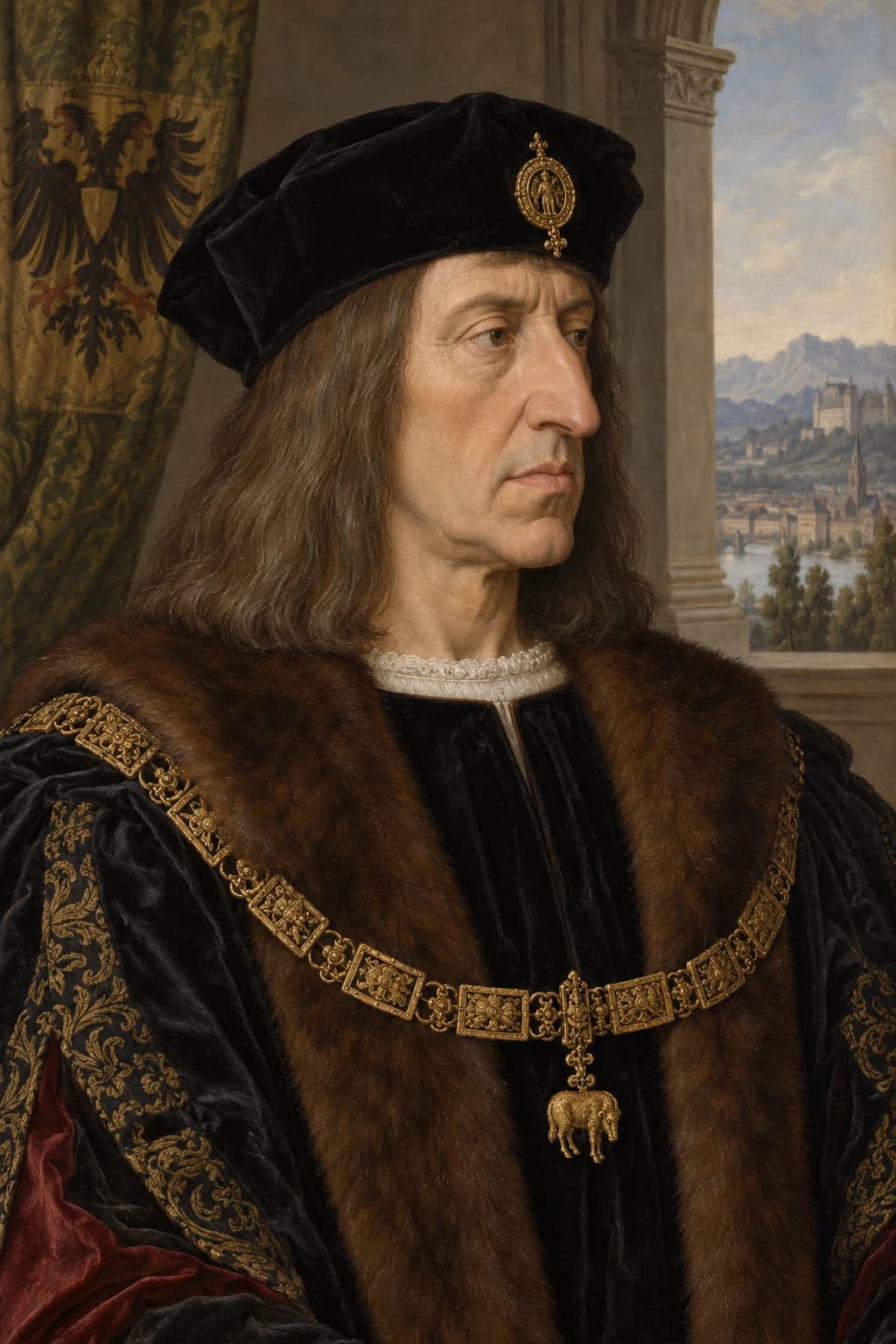
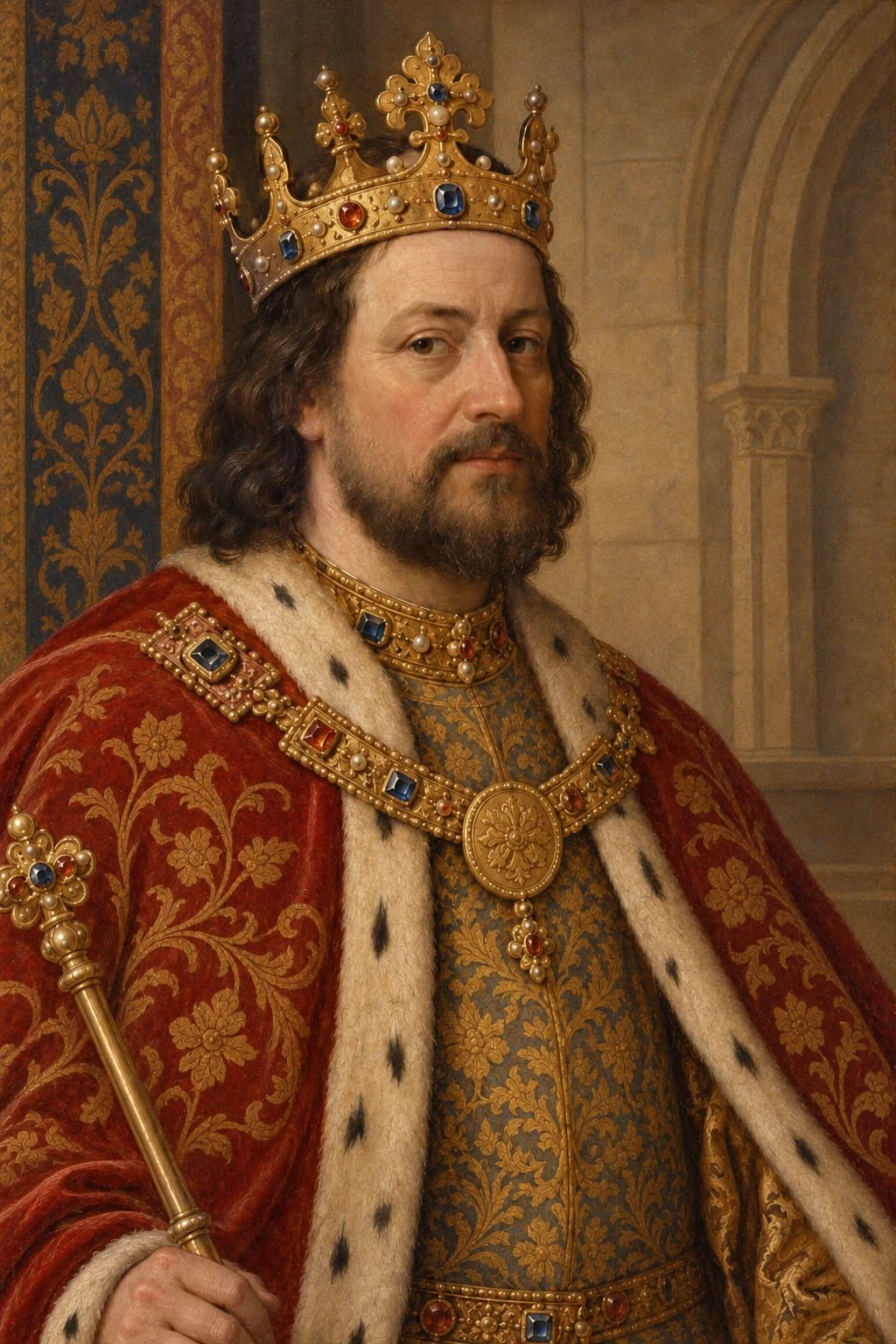
AI-generated portrait of Charles IV, Holy Roman Emperor in period clothing; an illustrative historical reconstruction, not a documentary likeness
AI-assisted historical reconstruction

An illustrative reconstruction based on historical context. It is not a photograph or documentary likeness. Image policy Attribution

Life Journey

The emperor who gave election a lasting framework

Follow Charles from a European royal education to Prague’s transformation and the Golden Bull.

Complete chronology

1316–1323

A prince named Wenceslas

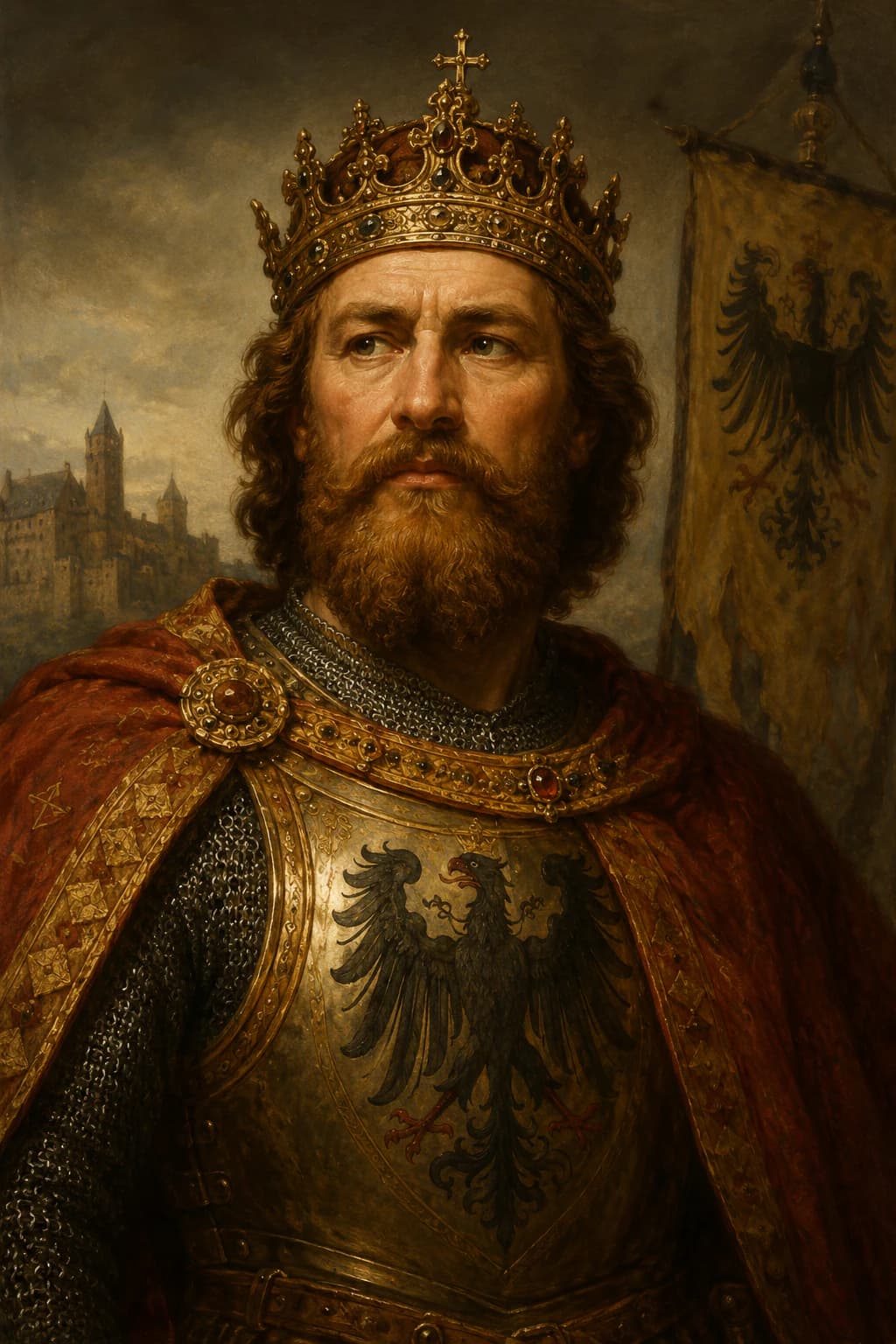
The future emperor was born Wenceslas, a name connected to Bohemia’s royal traditions. His father belonged to the Luxembourg dynasty, while his mother came from the Přemyslid royal house. Those relationships supplied a claim rooted in Bohemia and connections across Europe. They did not make family politics simple, but helped define the resources from which Charles later governed.
1323–1330

An education in France

Charles’s years in France brought him into contact with another royal court and its religious and political culture. Taking the name Charles marked that connection without erasing his Bohemian inheritance. Education, language and patronage later became prominent features of his reign. His authority would rest partly on understanding how to cultivate support beyond a single territory.

1330s–1346

Returning to Bohemian government

The Luxembourg dynasty’s Italian involvement exposed Charles to the difficulty of ruling among competing local powers. His later work in Bohemia gave him a more durable territorial foundation. Governing there required attention to resources, institutions and royal standing. That foundation mattered because an imperial title alone could not supply the money or cooperation needed to make policy effective.

1346–1349

A contested royal election

Support from electors and the papacy enabled Charles to challenge the existing king, but his election did not instantly unite the empire behind him. Louis’s death changed the contest, and additional agreements reduced opposition. Charles’s rise shows why election procedures mattered: rival claims could draw princes into competing camps, leaving recognition to be won after the formal choice.

1348

Building a royal Prague

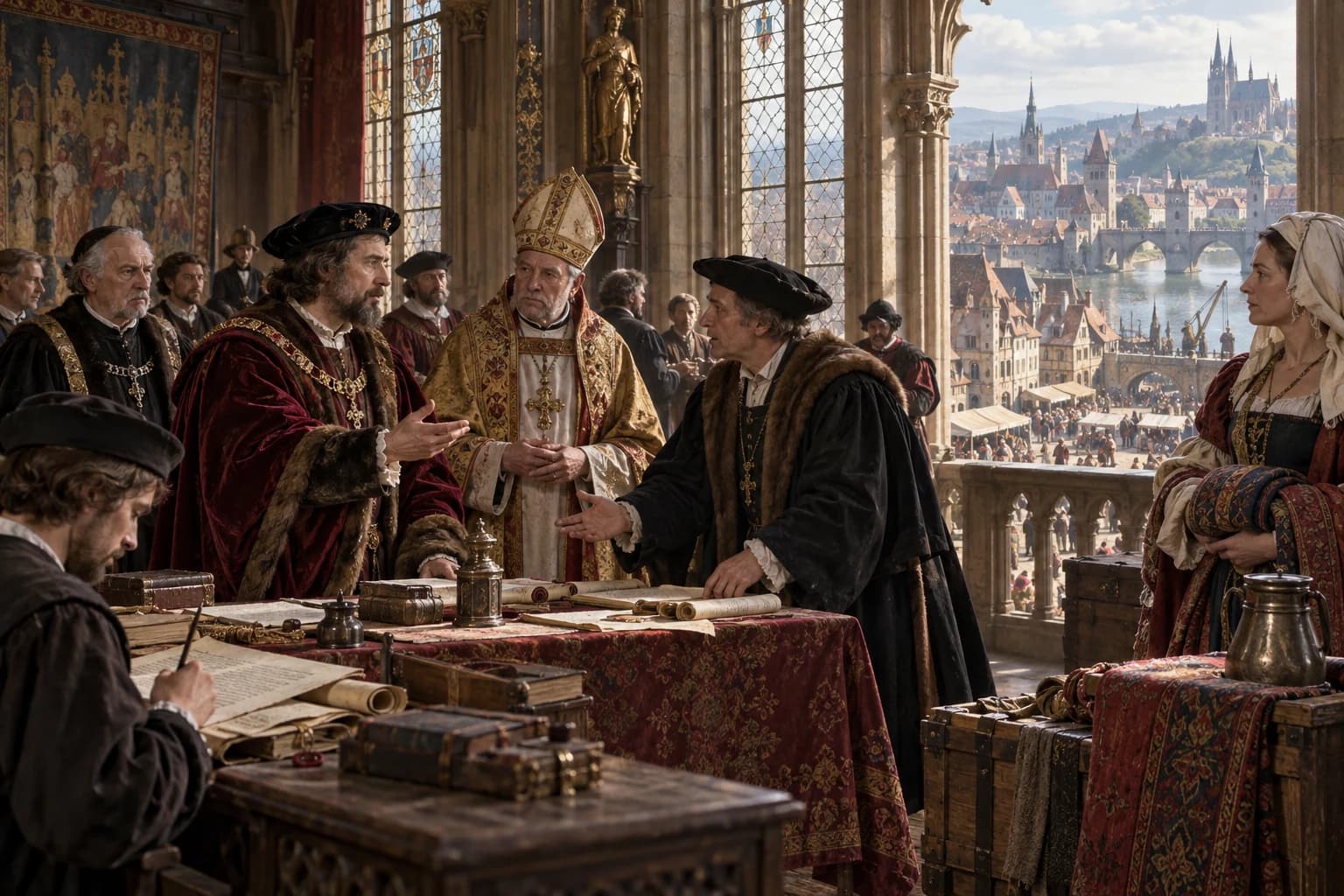
The developments of 1348 brought royal ambition into the city’s streets and institutions. The university connected Prague to international scholarship, while the New Town enlarged the urban setting of Charles’s rule. These foundations served religion, education and prestige as well as practical growth. Prague’s importance came from sustained patronage, not merely the emperor’s presence.

1355

The imperial coronation

The papal coronation in 1355 completed a traditional route from German kingship to imperial dignity. Charles approached Italian politics with negotiated arrangements rather than an attempt to impose lasting direct government everywhere he travelled. His strongest base remained Bohemia. The contrast reveals how the universal language of empire could coexist with a ruler’s deliberately limited practical commitments.

1356

The Golden Bull

The Golden Bull regulated royal election and protected the position of the electoral principalities. Three archbishops and four secular rulers held the decisive votes, with Frankfurt prescribed as the electoral setting. This was an agreement among powerful participants, not popular representation. Charles strengthened predictability by recognising the electors’ authority rather than trying to remove it.

1360s–1376

Securing his dynasty

Charles used acquisitions, marriages and political agreements to strengthen the position of his family. Securing Wenceslas’s royal election in 1376 was a major part of that effort. The achievement did not formally replace election with inheritance: a successor still needed support from the electors. Charles’s career joined constitutional rules with determined efforts to benefit his own dynasty.

1378 and after

A framework that endured

Charles left different kinds of inheritance. Prague retained institutions and monuments supported by his patronage, while the Golden Bull continued to shape royal election for centuries. Later rulers adapted the empire through courts, assemblies and new agreements. Its survival did not require every emperor to govern as Charles had; it depended partly on rules that could remain useful under changing dynasties.

Continue in context

Connected stories

Move from the profile into the wider events and settings this figure belongs to.

Defining related moments

Tertiary paths

Content note

This profile is written for educational use and connects to related Stories of History pages. The main portrait is an AI-assisted historical reconstruction, included as an illustrative aid rather than documentary evidence. Image policy Image attribution

References

Sources & Further Reading

Reliable reference works, archives and reading paths connected to this profile.

Sources used

  1. Charles University, “Notes on the Founding Charter of Charles University, Prague, 7 April 1348,” accessed 2 October 2026.

    University and cultural foundations in the Bohemian setting.

    Open source
  2. Historisches Lexikon Bayerns, “Golden Bull, 1356,” accessed 2 October 2026.

    Electors, majority procedure and constitutional significance.

    Open source
  3. Prague City Tourism, “Wenceslas Square,” accessed 2 October 2026.

    New Town foundation in 1348.

    Open source
  4. Encyclopaedia Britannica, 1911 / Wikisource, “Charles IV (Roman Emperor),” accessed 2 October 2026.

    Public-domain biographical chronology, used critically without its evaluative stereotypes.

    Open source

Further reading

  1. Encyclopaedia Britannica, “Search results for Charles IV,” accessed June 2026.Open source
  2. WorldCat, “Books and library holdings for Charles IV,” accessed June 2026.Open source

Primary sources

  1. Library of Congress, “Search results for Charles IV,” accessed June 2026.Open source

Reviewed claim sources

Loading reviewed claim sources...

A monthly route through history

Find out first about the latest published stories, feature notes and occasional Premium offers in one monthly email.