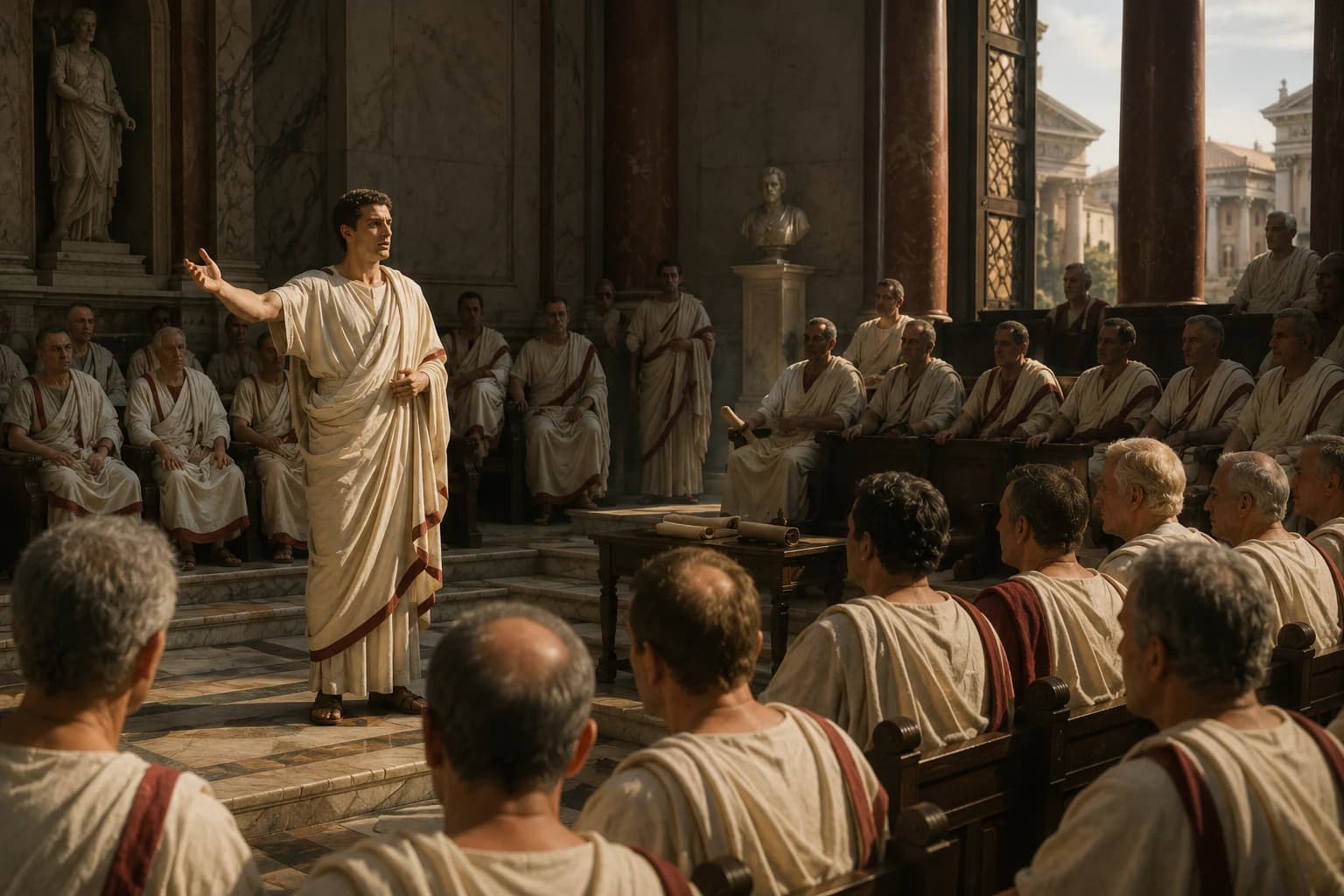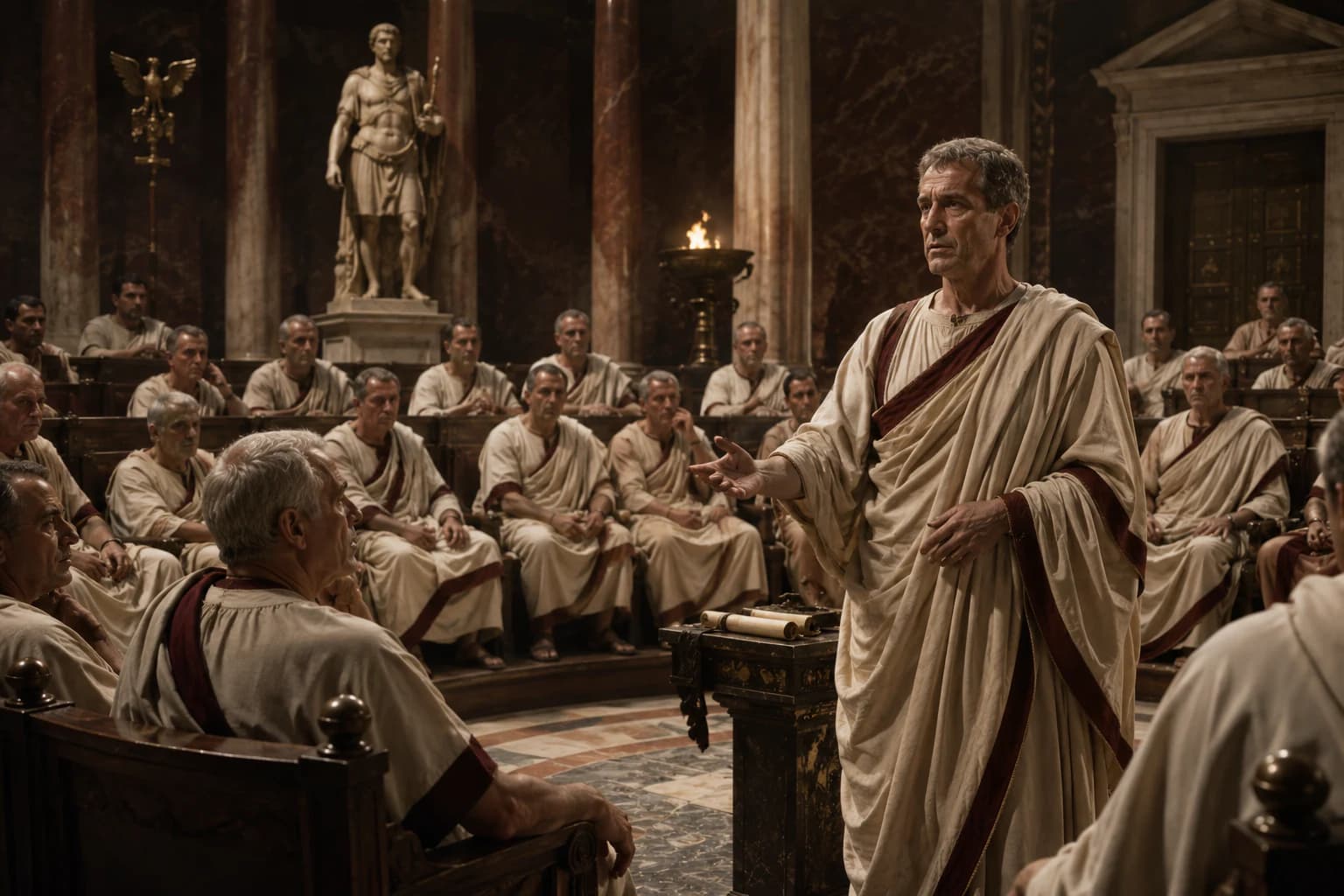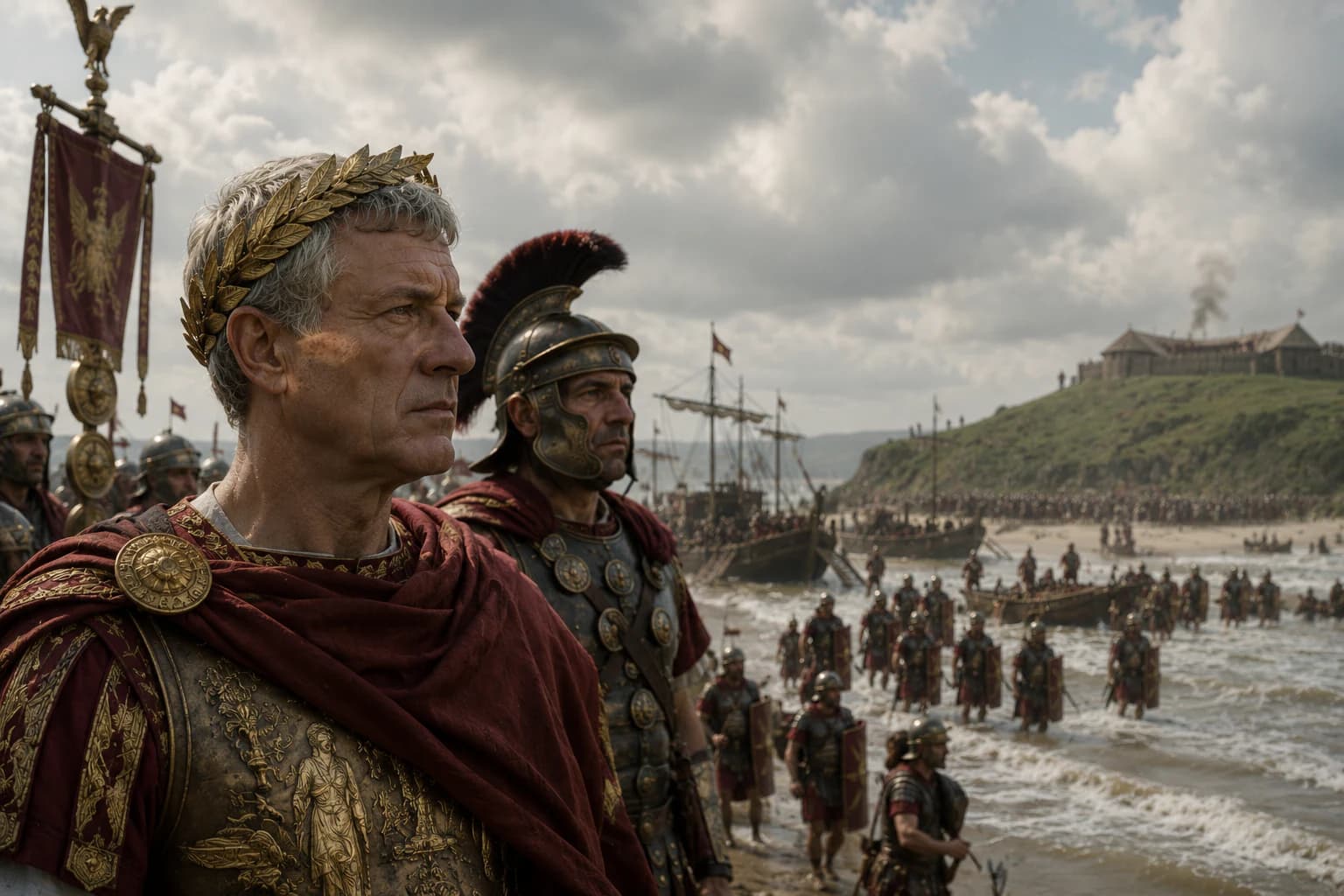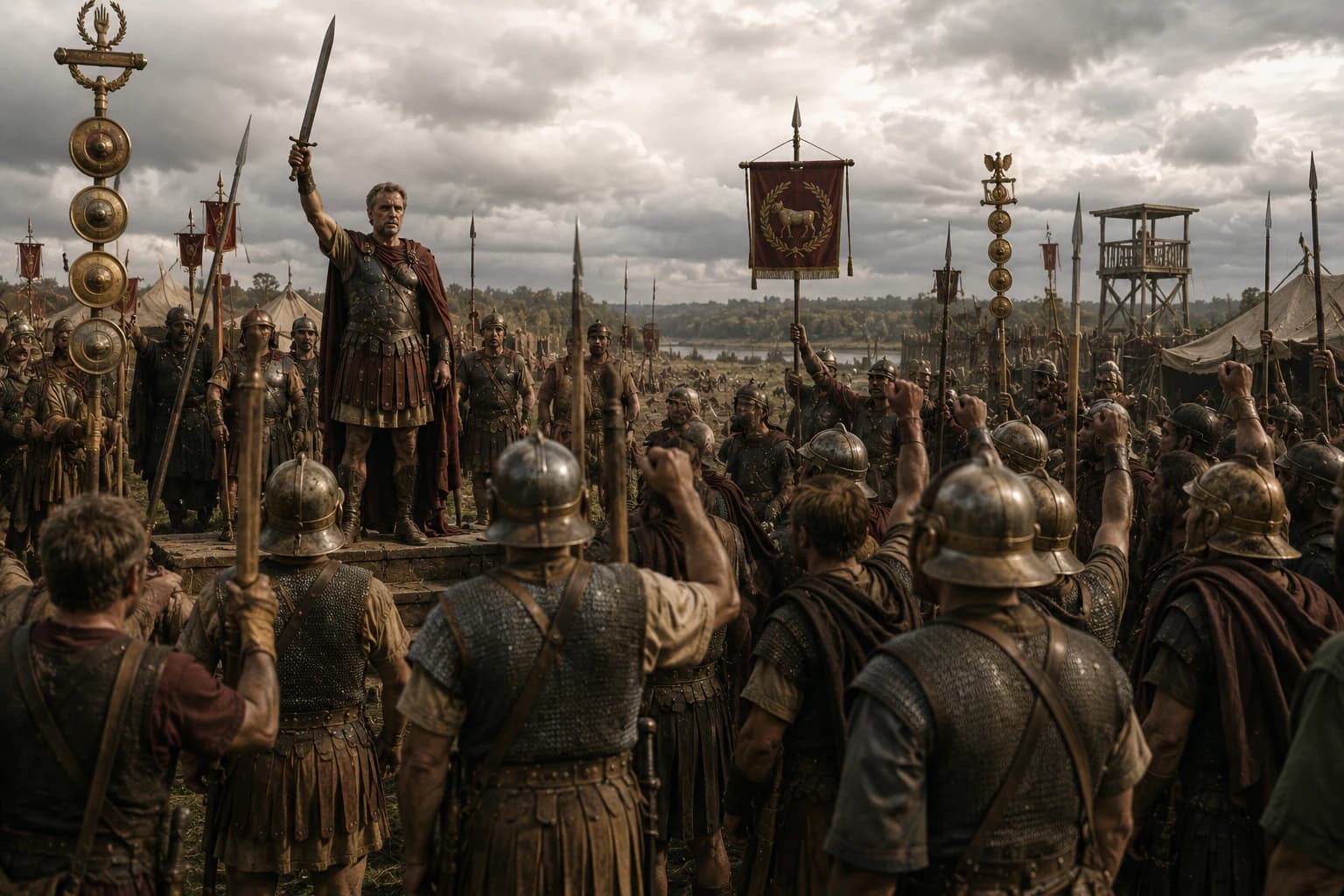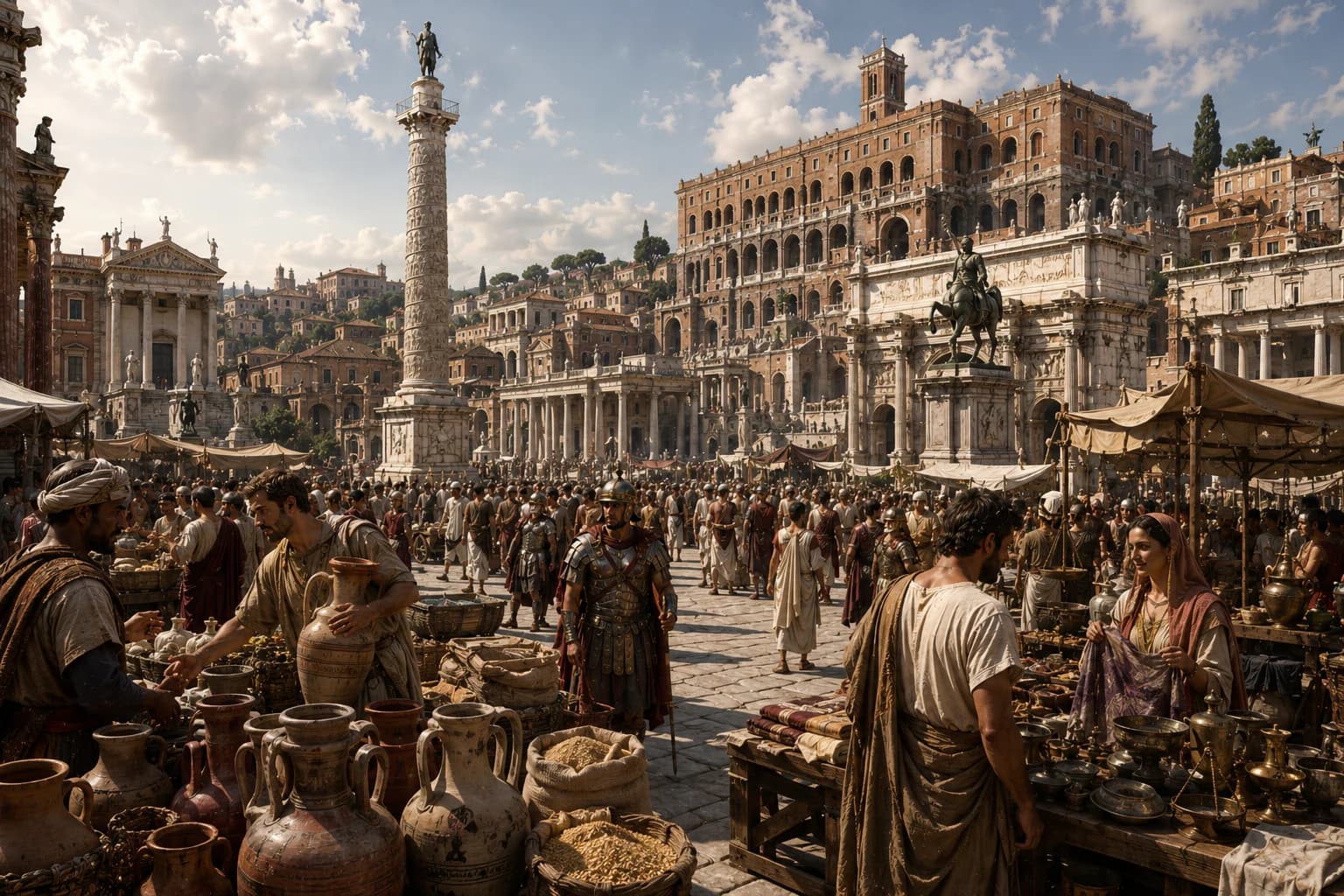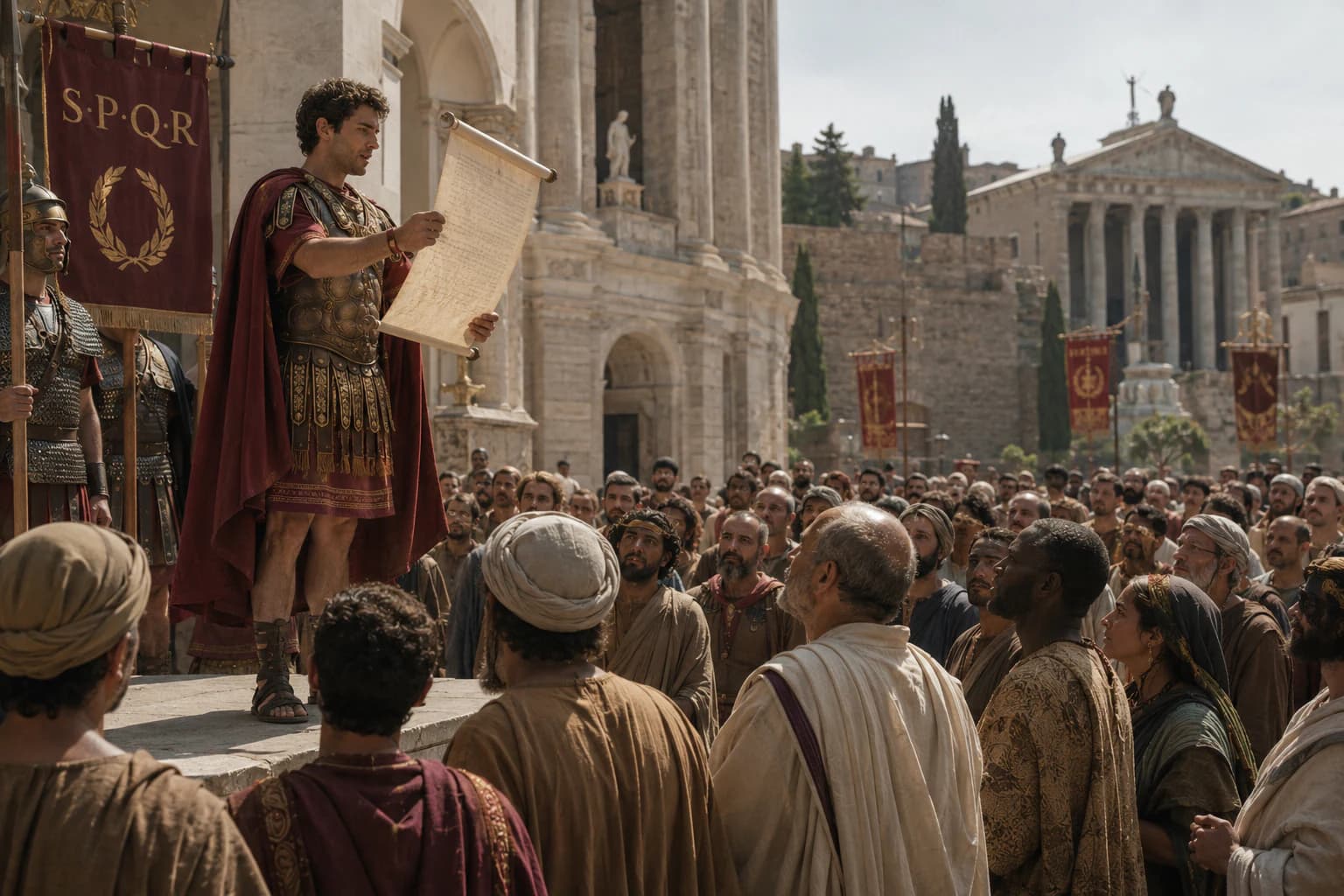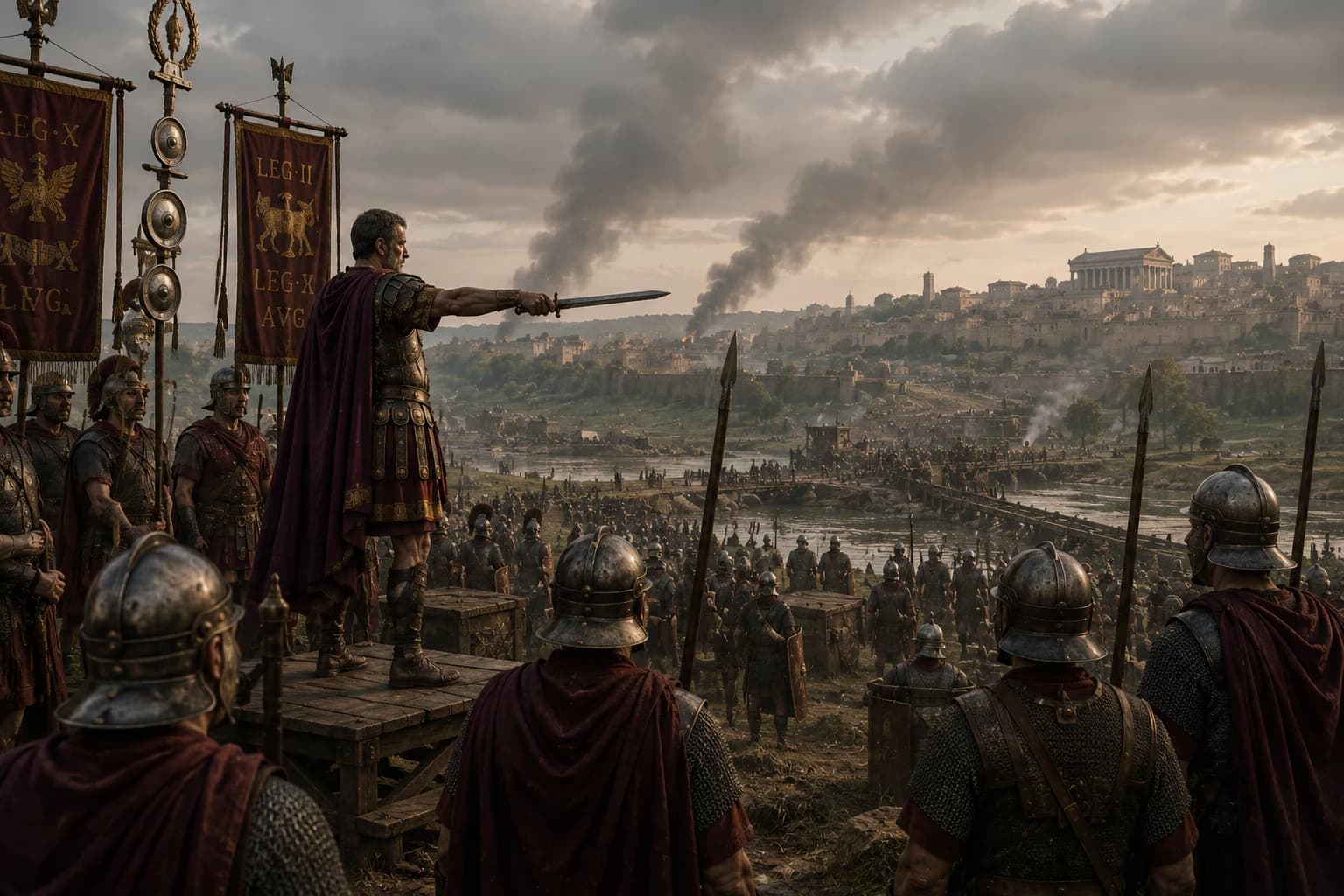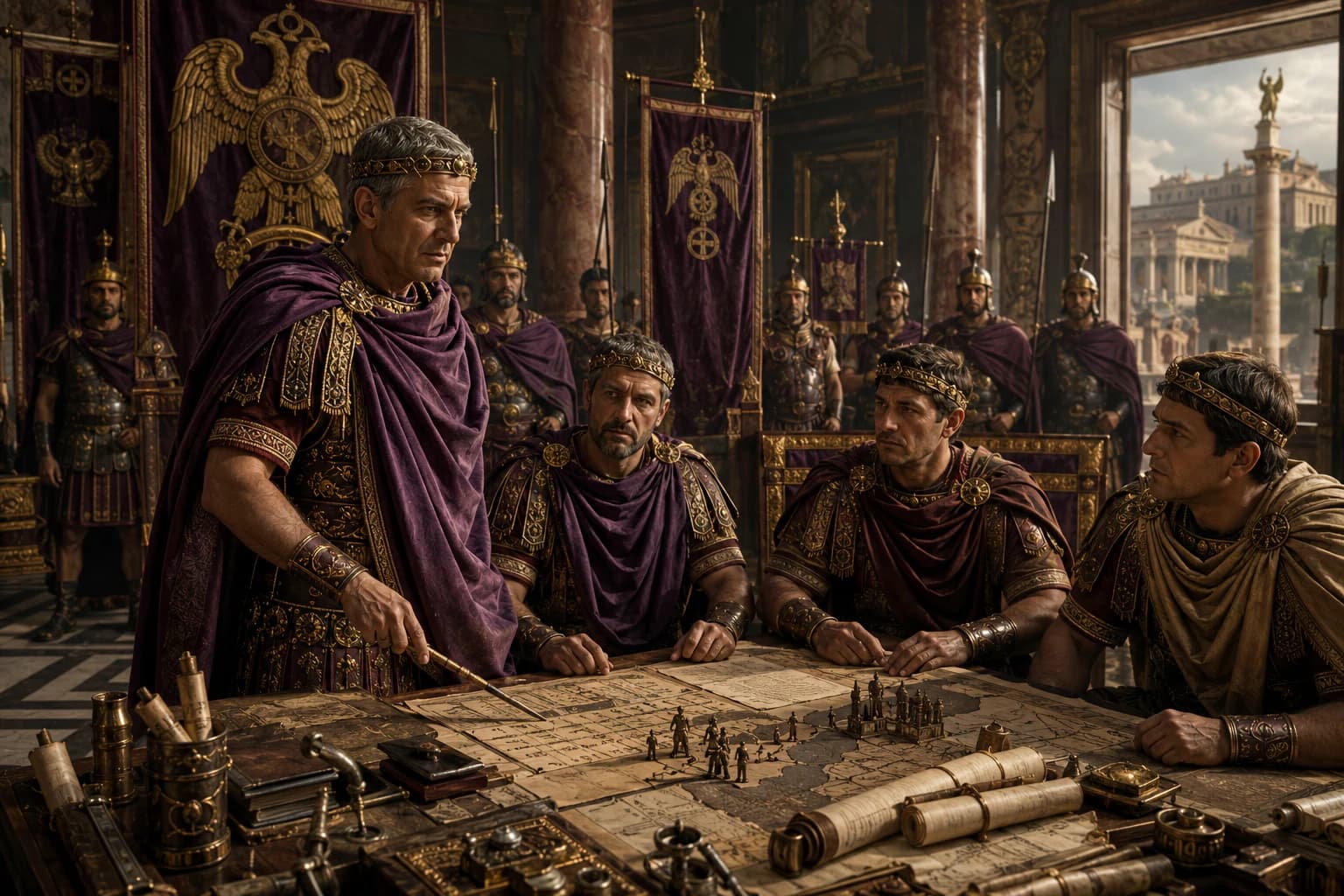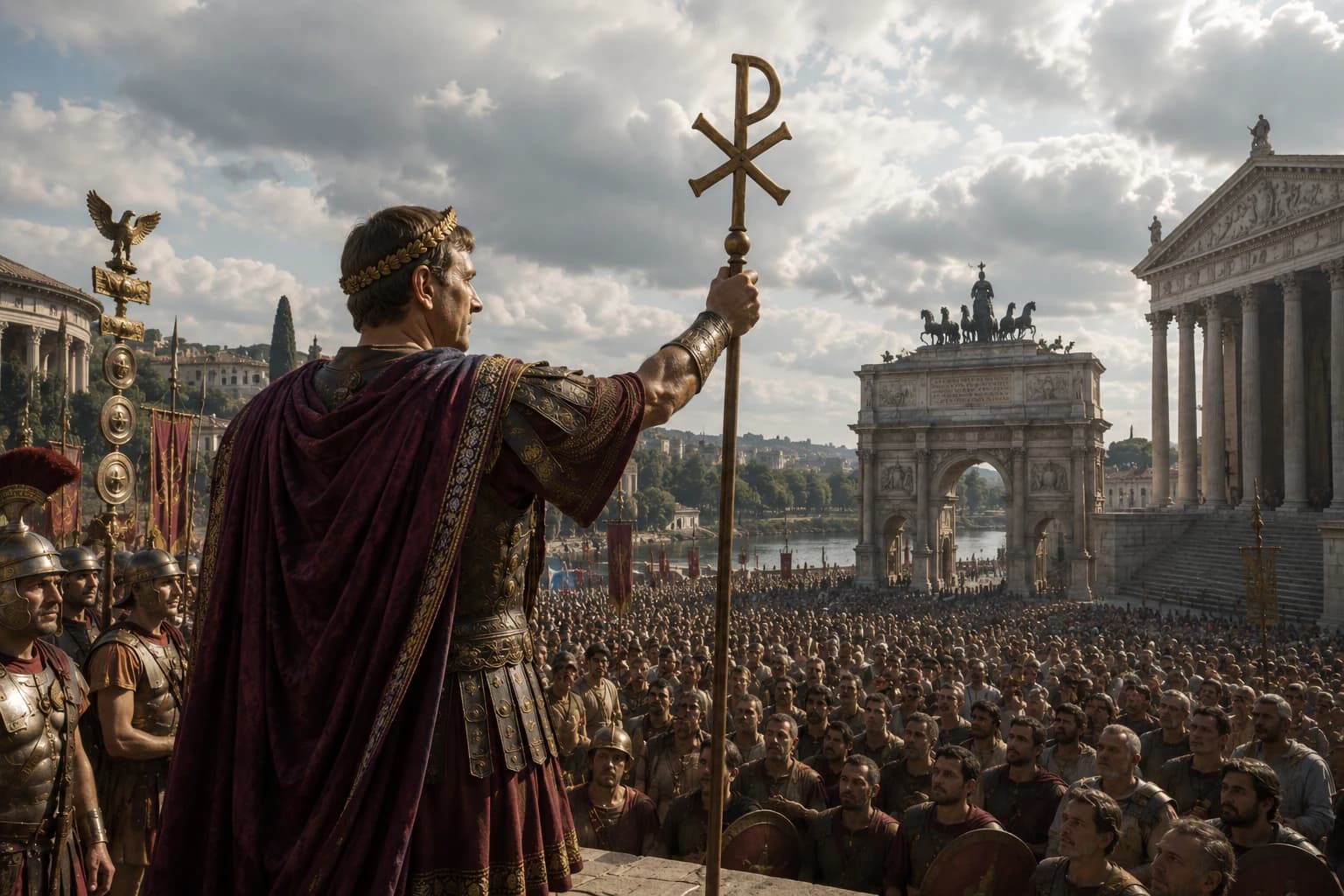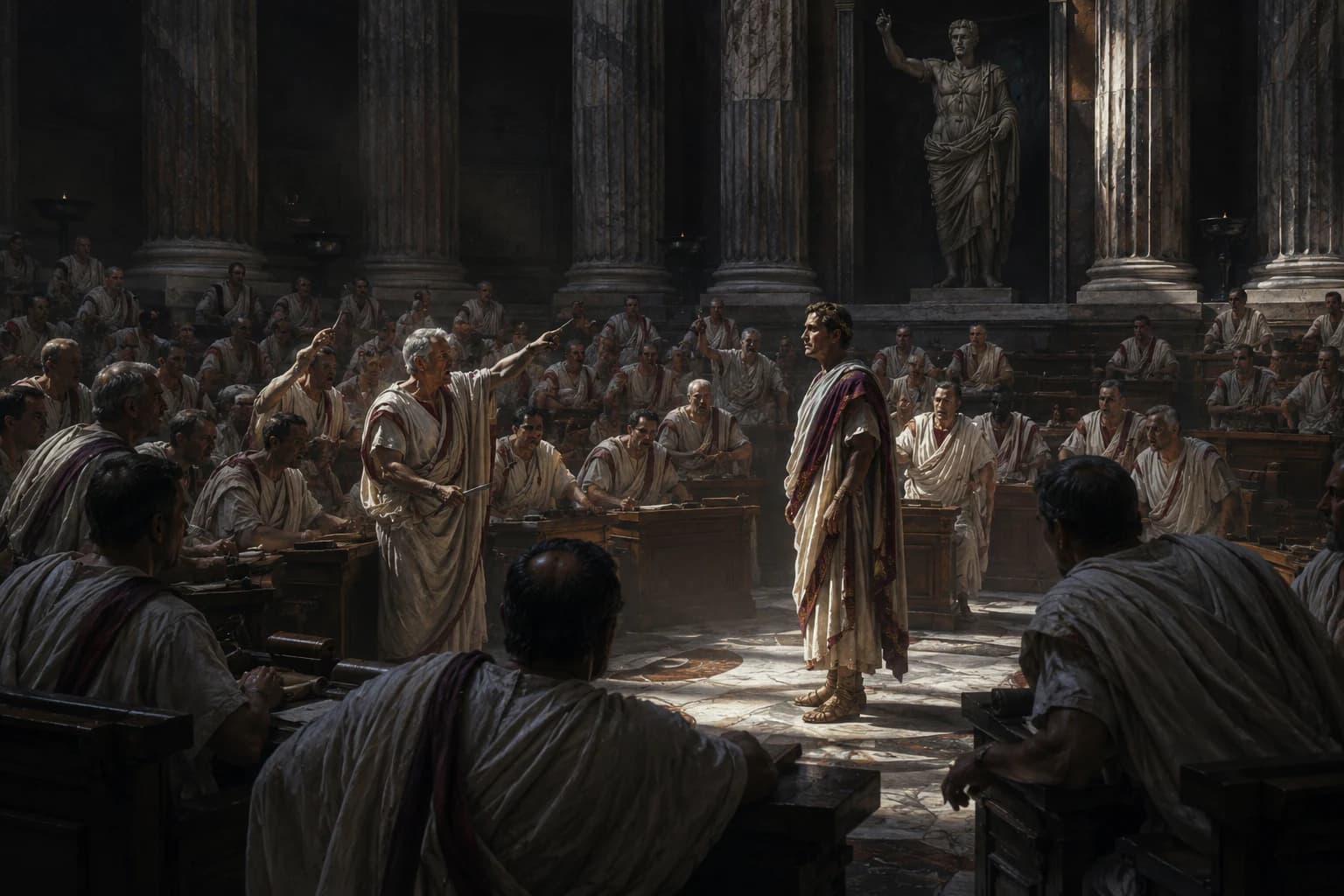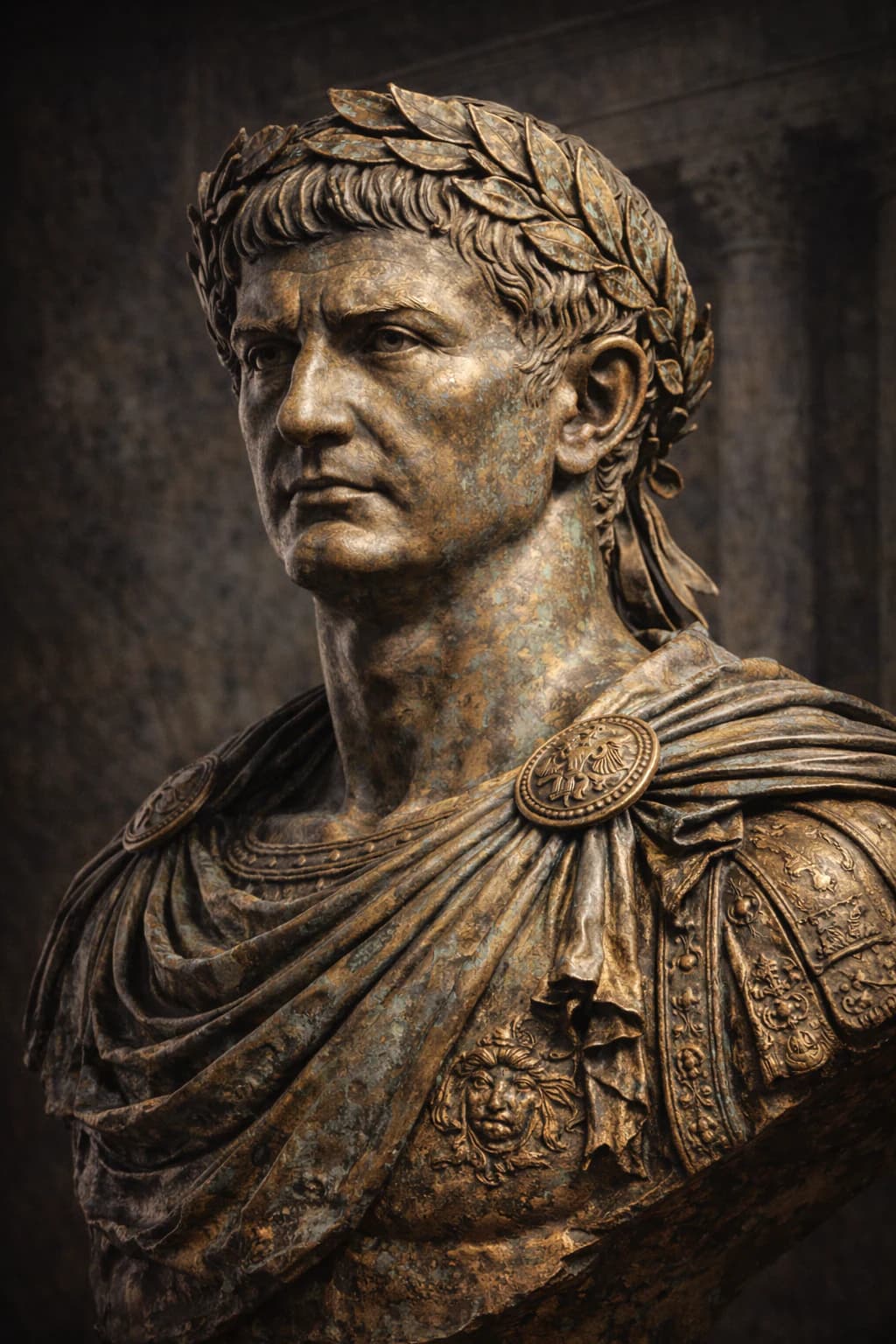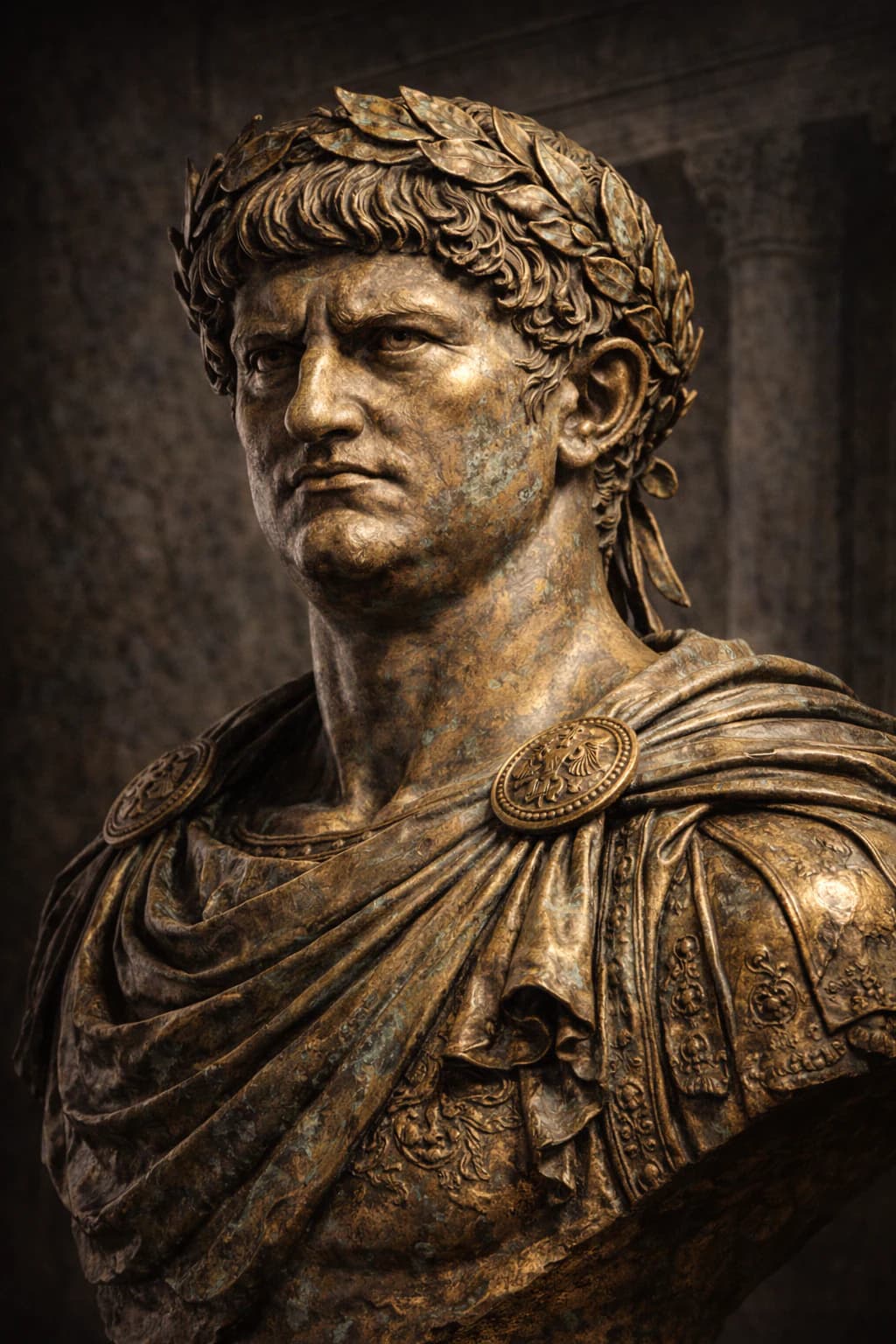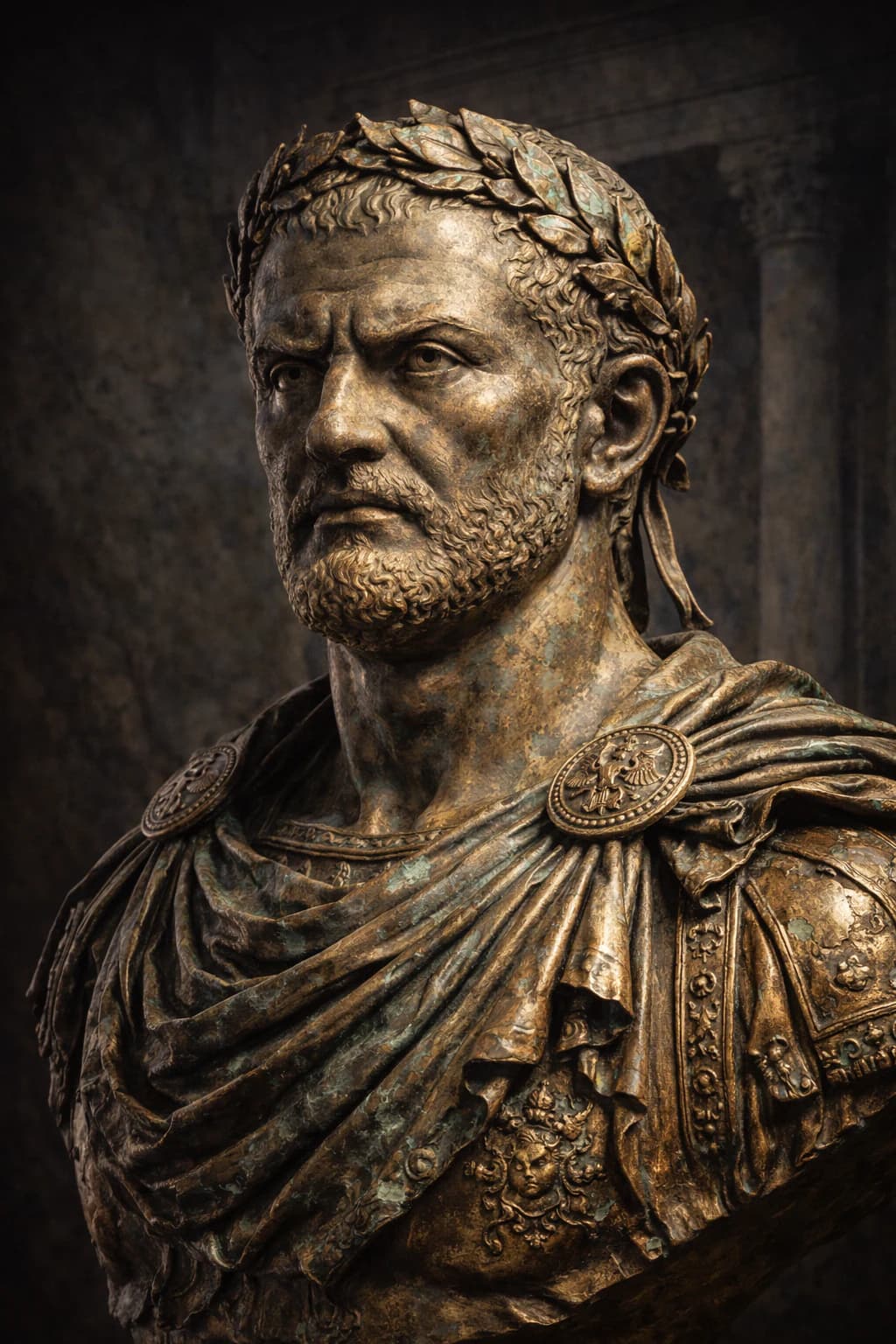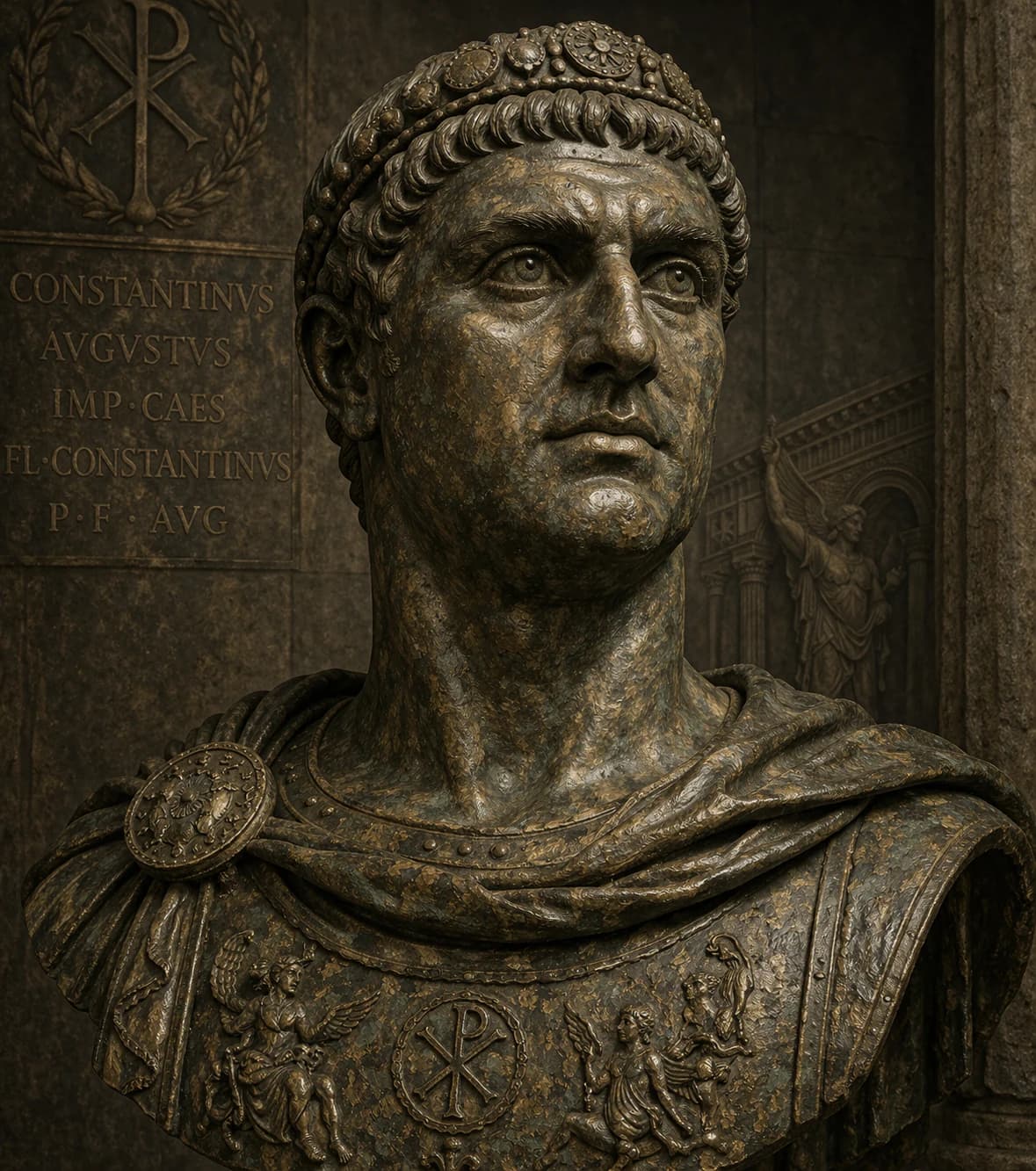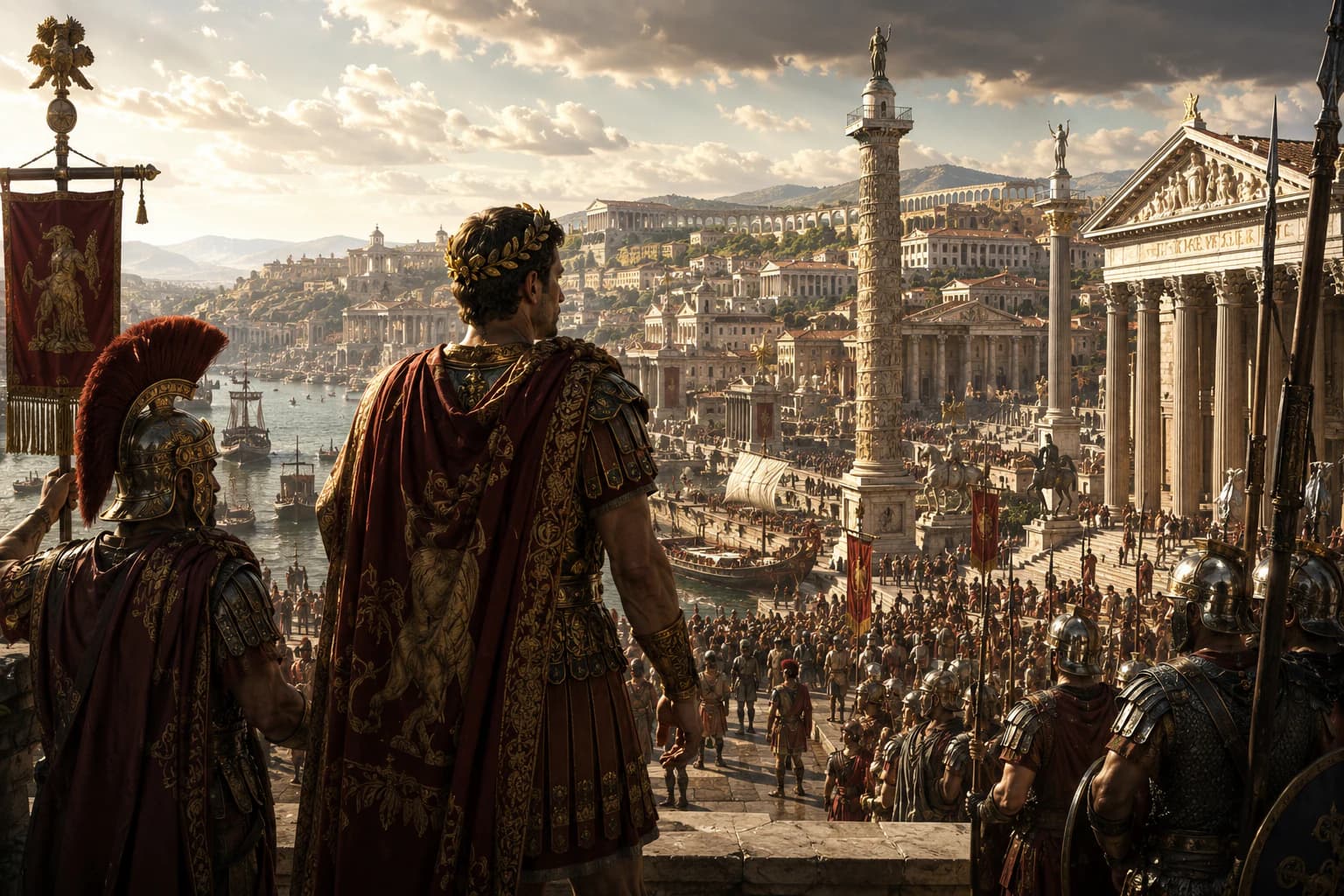
Marble emperors, legionary standards and distant frontiers beneath the light of a vast Mediterranean empire
Free Story

The Roman Empire

Explore the history of the Roman Empire through a clear timeline from Augustus and the Pax Romana to crisis, Christianity, and the fall of the West.

10 chapters

Next
Context

Introduction

Overview

This Roman Empire timeline follows the history of the Roman Empire from Augustus in 27 BCE to the fall of the Western Roman Empire in 476 CE. Across Europe, North Africa, and the Middle East, shaped law, cities, warfare, language, religion, and political memory. Its institutions and cultural influence endured long after imperial rule collapsed in the West.

What you’ll learn: You’ll understand how built and managed an empire, why it enjoyed centuries of power and prosperity, and why the western half eventually gave way after a long period of change and crisis.

Key forces

The Augustan Settlement
27 BCE
Step 1 of 1027 BCEAccessible mode

The Augustan Settlement

After years of chaos, one man found a way to take control without looking like a king.

had been torn apart by civil wars. Powerful generals fought each other, and old political rules no longer worked. People wanted stability more than anything.

Octavian, the adopted son of Julius Caesar, defeated his rivals. Instead of calling himself a dictator, he carefully rebuilt the system to look familiar.

Power stayed in one pair of hands, even if it did not look that way.

In 27 BCE, Octavian gave power back to the Senate on paper. In return, he was granted special authority and the name Augustus. He controlled the army and key provinces.

This created the Principate, where the emperor ruled but kept the appearance of a republic. Many Romans accepted this because it brought peace.

This moment marks the real start of the Roman Empire. It shows how leadership can reshape a system without openly breaking it.

The First Imperial Succession
14 CE
Step 2 of 1014 CEAccessible mode

The First Imperial Succession

When Augustus died, faced a big question. Could the empire survive without its founder?

For decades, Augustus had quietly controlled while keeping old institutions like the senate. Many people depended on his authority, from soldiers to governors in distant provinces.

Before his death, Augustus prepared his stepson Tiberius to take over. He had military experience and knew how the system worked.

The empire did not fall. It adapted.

In AD 14, Tiberius became emperor. He worked with the senate, commanded the army, and managed officials across the empire, just as Augustus had done.

But his rise showed a problem. There were no clear rules for choosing the next emperor, and power depended on support from the army and elites.

This question of succession would shape Roman politics for centuries, influencing how leaders gained and kept control.

Claudius Expands Roman Power
43 CE
Step 3 of 1043 CEAccessible mode

Claudius Expands Roman Power

A new emperor needed respect. So he went to war.

When Claudius became emperor, many Romans doubted him. He was not a famous general, and he had come to power after a palace plot. In , military success was the quickest way to earn trust.

Claudius decided to invade Britain. This island was known but not yet controlled by . Winning new land would bring money, slaves, and glory.

Victory in war made emperors look strong.

Roman legions crossed the sea in 43 CE. They fought local tribes and slowly pushed inland. Claudius himself arrived later to claim the victory and celebrate in .

The conquest made soldiers loyal and filled the empire with wealth. It also showed that the emperor was in charge of expansion.

Today, this idea still feels familiar. Leaders often use success abroad to prove their strength at home.

The Year of the Four Emperors
69 CE
Step 4 of 1069 CEAccessible mode

The Year of the Four Emperors

After Nero died, did not know who should rule next. In one year, four different men claimed the throne, and the empire learned that soldiers could decide everything.

For years, emperors had depended on the army, but many Romans still liked to imagine that power came from the Senate and old traditions.

That illusion broke in 69. Galba replaced Nero, but he lost support fast when he refused rewards and made enemies.

In a crisis, the emperor was the man the armies would fight for.

Otho then seized power, only to face Vitellius, whose troops from Germany defeated him. Before long, eastern armies backed Vespasian, and his forces crushed Vitellius in .

Ordinary people saw chaos, violence, and fear. Provinces and legions suddenly shaped events in the capital instead of just obeying it.

Vespasian restored order, but the lesson stayed clear. Roman emperors needed military support first, and that shaped imperial politics for centuries.

The Empire at Its Height
117 CE
Step 5 of 10117 CEAccessible mode

The Empire at Its Height

By 117, was huge, rich, and confident. Under Emperor Trajan, it reached its widest size and seemed almost unstoppable.

For many people, daily life in the empire felt ordered and predictable. Strong government, paid soldiers, and Roman law helped keep peace across a vast area.

Cities grew because roads, ports, and aqueducts made movement easier. Traders carried grain, oil, wine, metals, and luxury goods from one region to another.

linked millions of people through power, roads, and trade.

Markets, baths, theaters, and public buildings gave urban life a shared Roman look. Many people benefited from jobs, safer travel, and access to goods from far away.

But peace had limits. Frontier wars still happened, taxes could be heavy, and enslaved people and conquered communities paid a high price for Roman success.

This world still feels familiar today. Big states, connected markets, and public infrastructure all echo ideas helped spread across Europe, North Africa, and the Near East.

Citizenship for an Imperial Society
212 CE
Step 6 of 10212 CEAccessible mode

Citizenship for an Imperial Society

was no longer just a city ruling others. It was becoming a shared identity across a vast empire.

At first, Roman citizenship was limited. Most people in the empire lived under Roman rule but were not full citizens. Italy held special status, and many provincials had fewer rights.

Over time, this began to change. People from the provinces served in the army, traded, and adopted Roman customs. Emperors relied more on these regions for soldiers and taxes.

was turning from a city-state into a shared empire.

In 212, Emperor Caracalla granted Roman citizenship to nearly all free men in the empire. This was a huge shift. Suddenly, millions became citizens overnight.

This made the empire feel more united. Laws and rights became more equal, and people from distant lands could now fully belong to .

Today, the idea of shared citizenship across large, diverse countries reflects this change. helped shape what it means to belong to a wider political community.

The Third Century Crisis
235 CE
Step 7 of 10235 CEAccessible mode

The Third Century Crisis

looked huge and powerful, but after 235 it began to feel unstable and unsafe. In just a few decades, the empire faced attacks, rebellions, and a revolving door of emperors.

Before this crisis, the empire depended on strong armies, steady taxes, and an emperor who could keep order across a vast territory.

That balance broke down when generals and soldiers began making and unmaking emperors. Armies backed their own leaders, which pushed into repeated civil wars.

was fighting enemies abroad and itself at the same time.

On the frontiers, Persians pressed in from the east while northern groups crossed or threatened the Rhine and Danube borders. Emperors rushed from one emergency to another, and many ruled only briefly before being killed or replaced.

Trade suffered, prices rose, and people lost confidence in the state. Some regions even split away for a time, making the empire seem close to collapse.

This crisis shows how fast a superpower can weaken when leadership, money, and security all fail at once. It helps explain why later Roman rulers changed the empire so dramatically.

Diocletian Rebuilds Imperial Rule
284 CE
Step 8 of 10284 CEAccessible mode

Diocletian Rebuilds Imperial Rule

The Roman Empire was close to collapse. A new emperor stepped in and rebuilt how it was run.

Before Diocletian, the empire faced chaos. Emperors rose and fell quickly, borders were under attack, and the economy struggled. It was too big for one ruler to manage well.

Diocletian decided the system had to change. He split power between four rulers, each in charge of a different region. This was called the Tetrarchy.

To save the empire, had to change how it ruled.

He strengthened the army, reorganized taxes, and made government more structured. Officials tracked land, people, and resources more closely than before.

Life became more controlled. People had fewer freedoms, and the government demanded more taxes and loyalty. But the empire became more stable.

This shift toward stronger government and divided rule shaped how Europe would be governed for centuries, influencing ideas of administration and state power.

Constantine’s Christian Empire
312 CE
Step 9 of 10312 CEAccessible mode

Constantine’s Christian Empire

In 312, Constantine won a civil war battle that changed far beyond politics. His rise linked imperial power with Christianity in a new way.

Before this, the Roman Empire had many gods, and Christians were often treated with suspicion or attacked.

Constantine came to believe the Christian God had helped him win. That gave him a reason to protect the church and use faith to strengthen his rule.

A new empire was taking shape, with one emperor and one favored faith.

After his victory, Constantine backed Christianity, supported bishops, funded churches, and gave the religion a place near the center of Roman government.

This changed daily life. Christians could worship openly, church leaders gained influence, and religion became tied to power and law.

The Roman world did not turn Christian overnight, but Constantine pushed it in that direction. Europe and the eastern Mediterranean would carry that legacy for centuries.

The Fall of the Western Empire
476 CE
Step 10 of 10476 CEAccessible mode

The Fall of the Western Empire

In 476, the western half of the Roman Empire finally broke apart. It was not one sudden crash, but the end of a long decline.

For centuries, ruled huge lands in western Europe. But by the late empire, the west was harder to defend, poorer, and full of political chaos.

Germanic groups kept crossing the borders, sometimes as enemies and sometimes as hired allies. Emperors changed fast, armies followed powerful generals, and the court grew weaker.

did not fall in a day. It wore out over generations.

In 476, a soldier named Odoacer removed the boy emperor Romulus Augustulus from power in Italy. He did not replace him with a new western emperor.

That meant the western empire no longer had its own ruler. Local kings took over, while the eastern empire in stayed richer, stronger, and more organized.

The Roman world did not vanish, but western Europe changed into a patchwork of new kingdoms. That shift helped shape the map, politics, and culture of Europe that followed.

Continue reading

Finished The Roman Empire?

Choose the next story, explore the people behind this one, or trace the line of power that shaped this world.

Browse stories

References

Sources & Further Reading

Reliable sources, primary-source collections and reading paths connected to this page.

Sources used

  1. Encyclopaedia Britannica, Roman Empire,” Open source
  2. The Metropolitan Museum of Art, The Roman Empire,” Open source

Further reading

  1. Mary Beard, SPQR: A History of Ancient Rome, Profile Books.

Primary sources

  1. University of Chicago, LacusCurtius: Roman history,” Open source

A weekly route through history

Find out first about the latest published stories, feature notes and occasional Premium offers in one weekly email.