Complete chronology
Full overview and deeper context for every journey step.
-63–-44
Humble noble roots
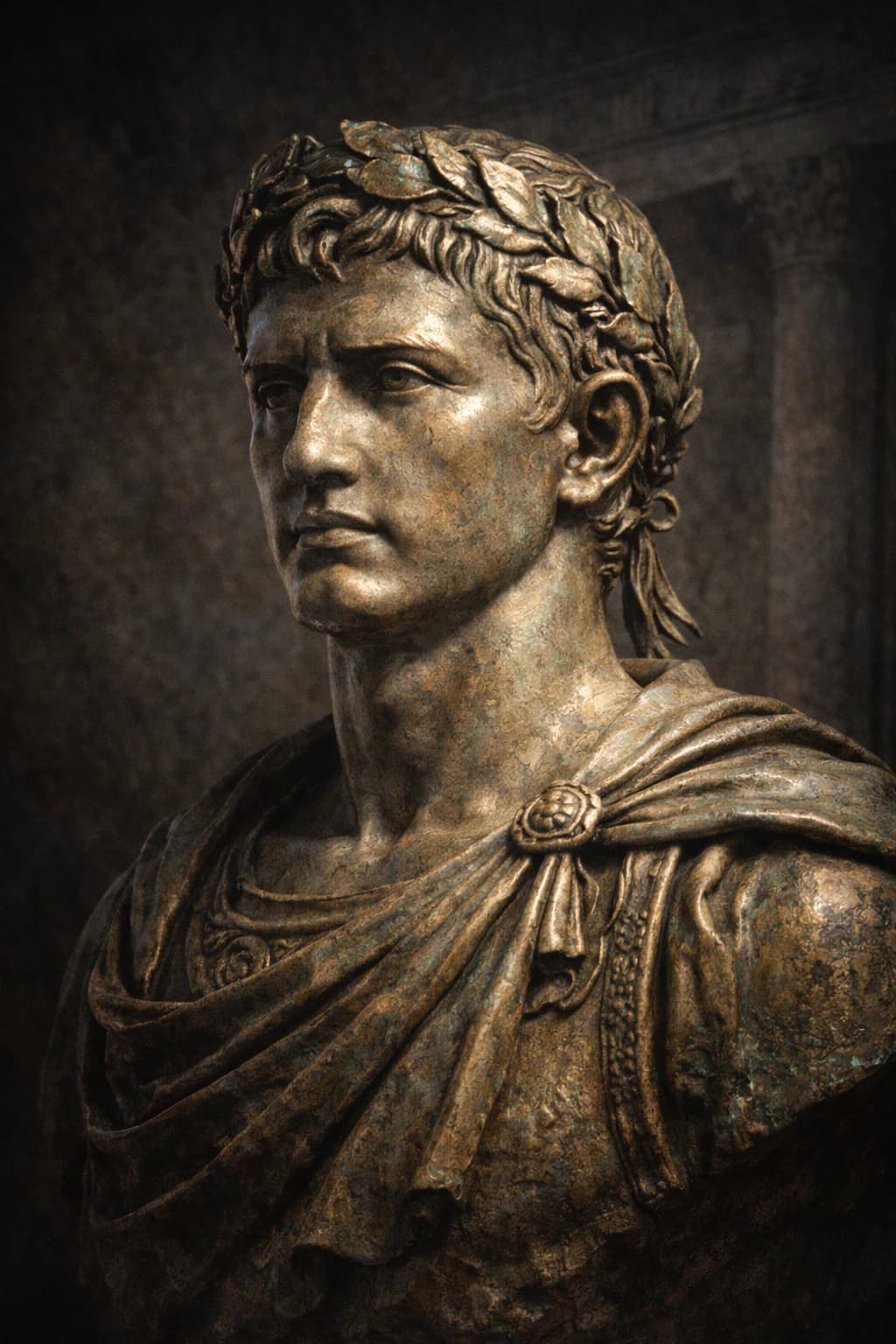
Augustus was born Gaius Octavius in 63 BC at a moment when the Roman Republic was already under severe strain. His family was respectable and connected, but not among the oldest ruling houses that dominated Roman prestige. His mother Atia was Julius Caesar's niece, and that connection changed everything. Octavius grew up watching a republic where elections, law courts, armies, debt, aristocratic rivalry, and street violence increasingly overlapped. Caesar's dictatorship and assassination would later define his life, but the conditions that made Augustus possible existed before him. Rome had become too large, too militarized, and too divided for its old political habits to work easily. When Caesar adopted Octavius in his will, the young man inherited not only a name and fortune, but a claim wrapped in danger. He had to become Caesar's heir before Caesar's enemies or allies destroyed him.
Unexpected inheritance can thrust individuals into roles that demand immediate transformation.
-44–-43
Claiming Caesar’s legacy
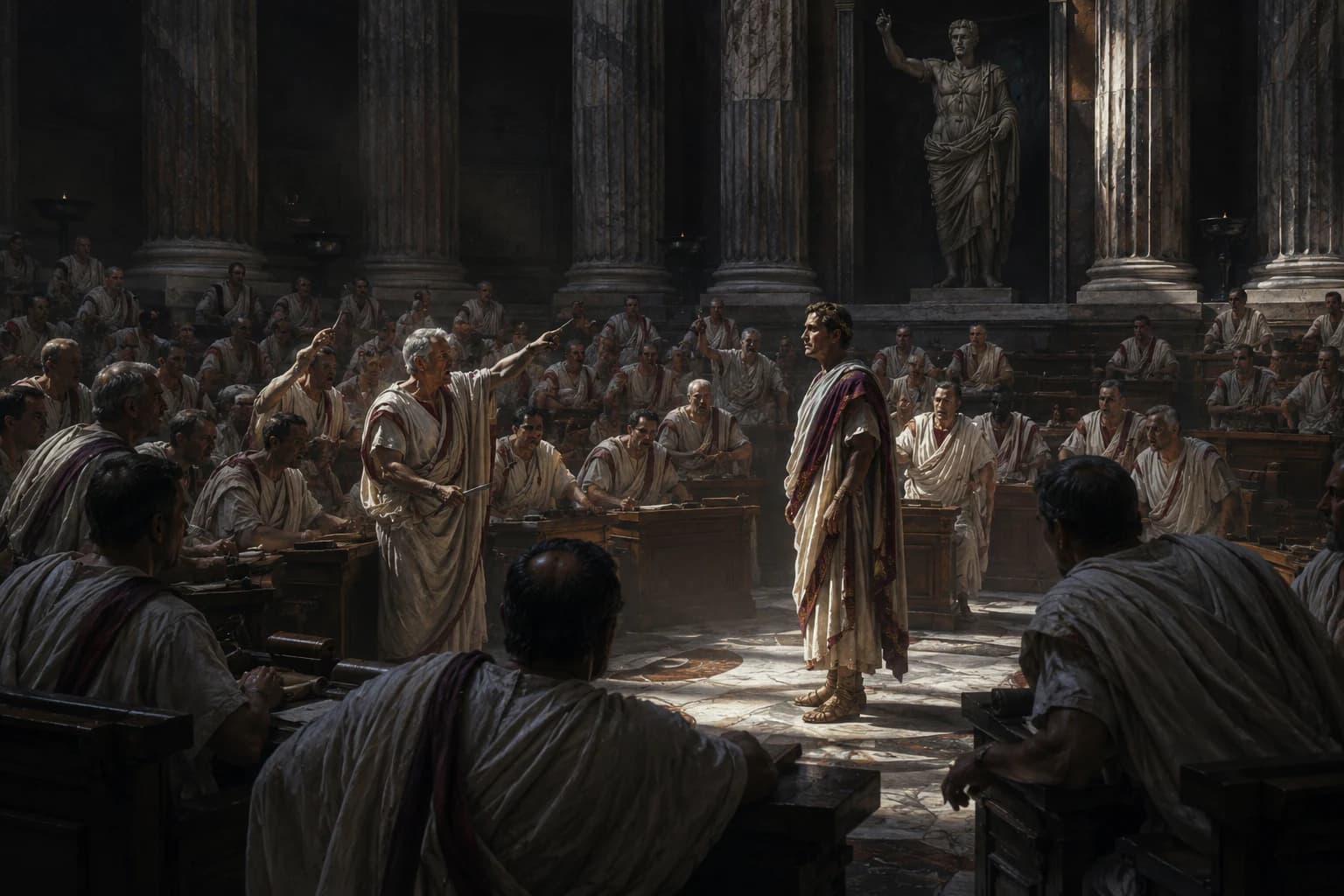
Caesar was assassinated on the Ides of March in 44 BC, and Octavian was still a teenager. Many expected him to be a pawn or a victim. Instead, he accepted Caesar's adoption, took the name Gaius Julius Caesar Octavianus, and began using inheritance as a political weapon. He courted Caesar's veterans, borrowed money, promised payments, and positioned himself against Mark Antony, who had been Caesar's closest lieutenant and seemed the stronger man. Octavian's early genius was not battlefield brilliance but political nerve. He made himself impossible to ignore, first cooperating with the Senate against Antony, then abandoning senatorial respectability when it no longer served him. From the beginning, he understood that legitimacy in late Republican Rome came from several sources at once: name, soldiers, money, public image, and the willingness to move faster than older men thought proper.
Legitimacy in crisis often depends as much on action as on formal claims.
-43–-33
Second Triumvirate
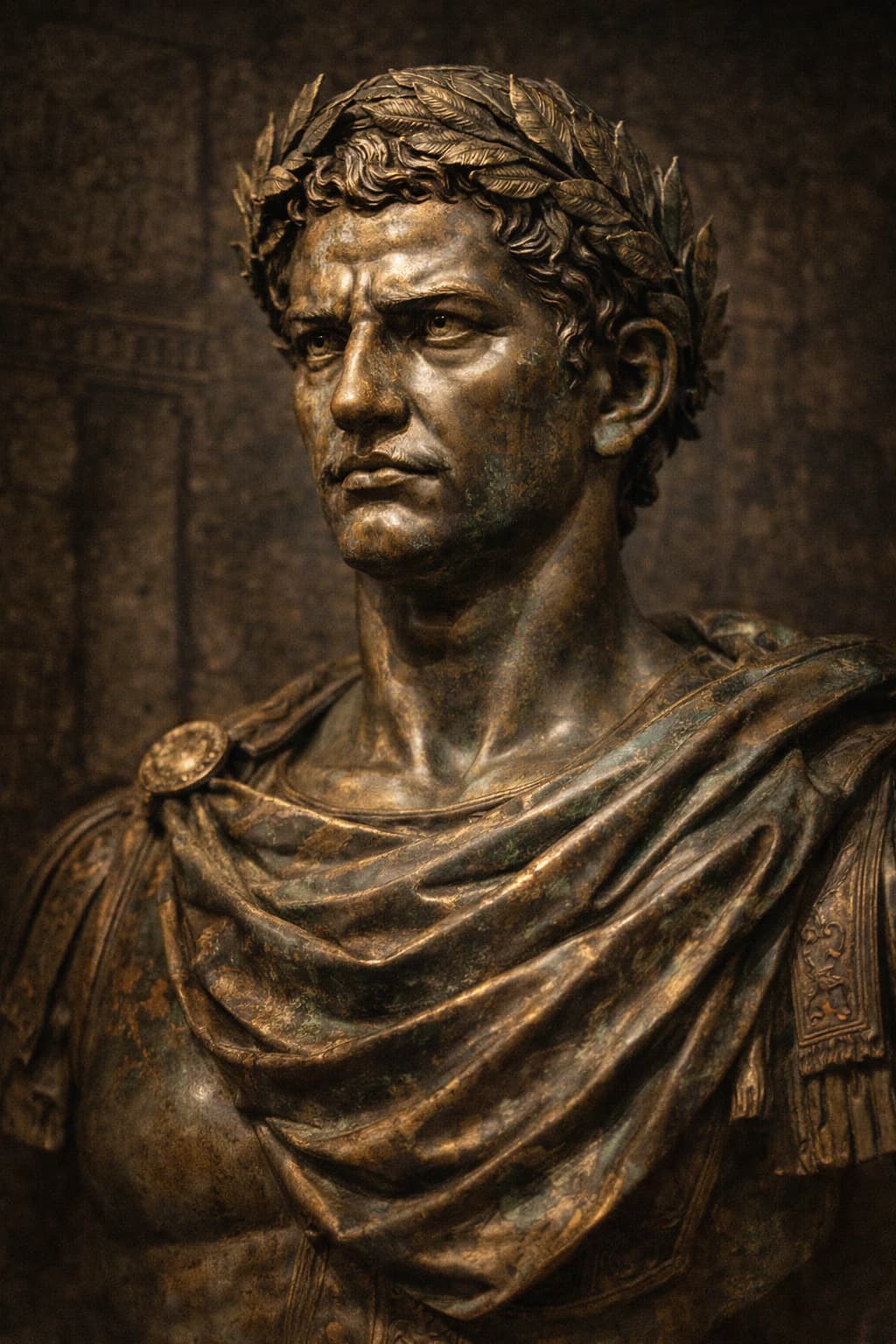
The Second Triumvirate, formed in 43 BC by Octavian, Mark Antony, and Lepidus, was a legal dictatorship created to dominate the Roman world and avenge Caesar. It was also brutally violent. The triumvirs launched proscriptions, naming enemies for death and confiscation; Cicero was among the most famous victims. This was not the future Augustus of marble temples and moral renewal. It was Octavian as a young revolutionary warlord, using terror and legality together. The triumvirs defeated Caesar's assassins Brutus and Cassius at Philippi in 42 BC, then divided Roman territories among themselves. Lepidus faded, while Octavian and Antony became the real rivals. During these years Octavian built his western power base, settled veterans, survived military setbacks, and learned the value of propaganda. He would later present himself as restorer of order, but he had first helped deepen the chaos.
Alliances built on convenience often carry the seeds of future conflict.
-31
Victory at Actium
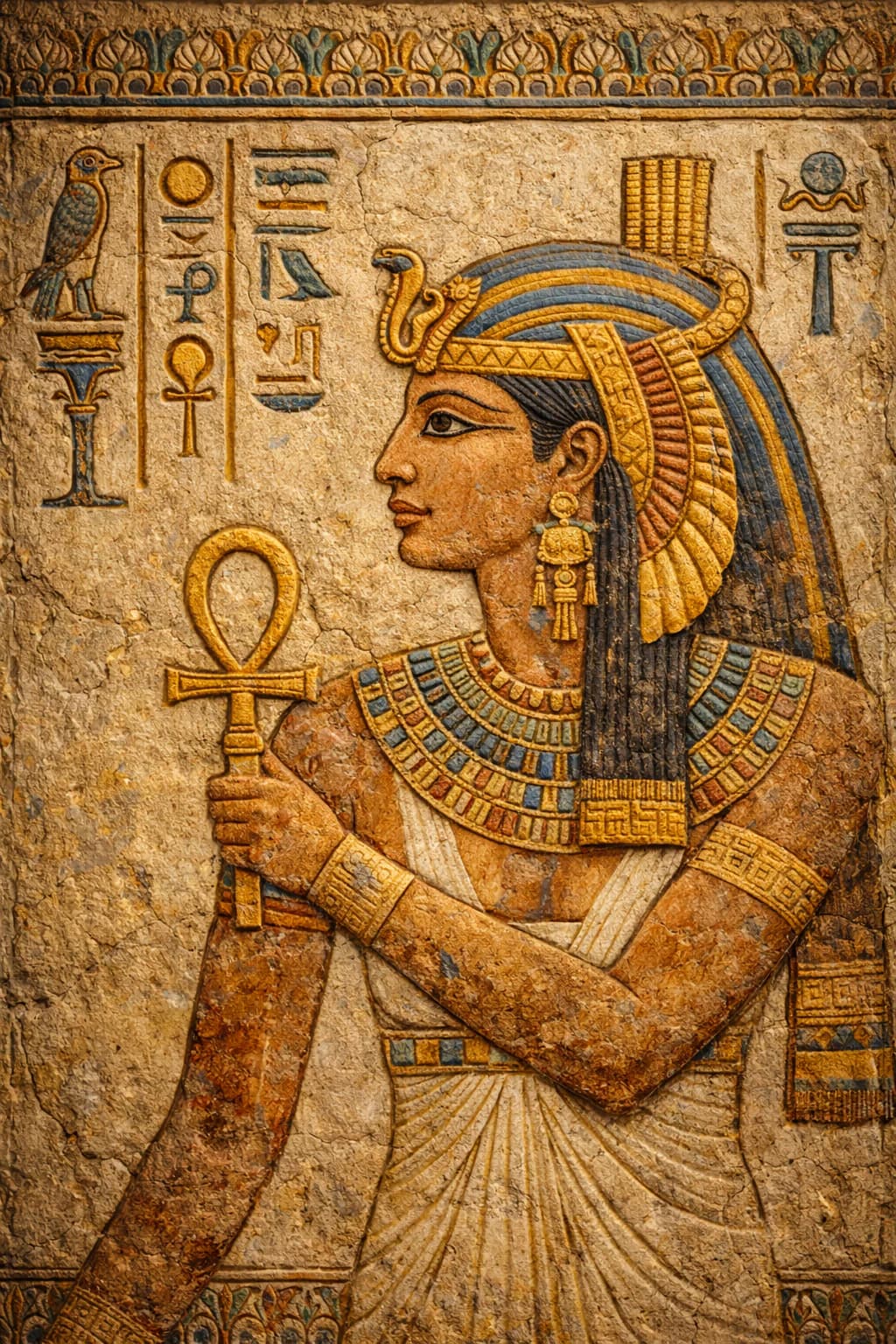
The final struggle was fought as much through image as through arms. Octavian framed Mark Antony as a Roman corrupted by Cleopatra VII and eastern luxury, turning a civil war against a fellow Roman into a patriotic war against foreign danger. The reality was more complex: Antony remained a Roman commander with Roman supporters, and Cleopatra was a powerful Hellenistic monarch defending her dynasty and kingdom. At Actium in 31 BC, Octavian's admiral Agrippa outmaneuvered Antony and Cleopatra's forces in a naval campaign that broke their position. Their deaths in Egypt the following year left Octavian master of the Roman world. Egypt became his personal prize and a crucial source of wealth. Actium mattered because it ended the last great rival power center. For the first time, Octavian could stop fighting for survival and begin designing permanence.
Decisive victories can open the door to reshaping entire political systems.
-27
First emperor
In 27 BC, Octavian staged what looked like a restoration of the Republic. He formally handed powers back to the Senate and Roman people, then received new honors and authority, including the name Augustus. The brilliance of the settlement was its ambiguity. Rome kept consuls, Senate meetings, magistracies, laws, and republican language. Yet Augustus controlled the armies, key provinces, finances, patronage, and the symbolic center of the state. He learned from Caesar's assassination that Romans hated kingship even when they tolerated domination. So he avoided the title king and presented himself as princeps, the leading citizen. The Principate was monarchy disguised in republican clothing, but the disguise mattered. It allowed aristocrats to keep status, citizens to imagine continuity, and Augustus to hold real power without provoking the same coalition that had murdered Caesar.
Lasting power often depends on how it is presented as much as how it is exercised.
-27–14
Pax Romana begins
Augustus's long reign gave Rome something civil war had made precious: predictability. He reorganized provinces, professionalized parts of the army, created the Praetorian Guard, improved tax collection, developed road and courier systems, supported colonies, and invested heavily in Rome's urban fabric. His building program turned architecture into politics, presenting peace, piety, family, and renewal in stone. Writers such as Virgil, Horace, Livy, and Ovid worked in the cultural atmosphere of his age, though not all related to the regime in the same way. The phrase Pax Romana can mislead if it suggests universal peace; Rome still fought wars, conquered territory, and suppressed resistance. But compared with the late Republic's internal bloodletting, Augustus offered order. His achievement was to make one-man rule feel like relief. That is why his system endured.
Stability achieved after conflict can become a defining legacy of leadership.
-2–9
Personal and political strains
The smooth surface of Augustan order concealed deep anxieties. Succession was the most dangerous problem because Augustus had built a monarchy without admitting it was one. He needed an heir, but republican language made hereditary rule awkward. Death repeatedly wrecked his plans: Marcellus, Agrippa, Gaius, and Lucius Caesar all died before they could inherit the system. His daughter Julia, central to dynastic strategy, was exiled under the moral laws her father promoted. Military limits also became clear. In AD 9, the Roman defeat in the Teutoburg Forest destroyed three legions under Varus and ended hopes of easily turning Germania into a province. Augustus could adapt, but he could not control mortality, family scandal, or frontier geography. His reign was stable because he managed crises, not because he escaped them.
Even well-structured systems must contend with uncertainty and loss.
9–14
Last years of rule
In the end, Augustus turned to Tiberius, his stepson, an experienced commander from the Claudian branch of the family. The choice was pragmatic rather than affectionate. Tiberius had ability, military credibility, and dynastic connection through Augustus's wife Livia, but he had not always been Augustus's preferred successor. Gradually he received powers that made succession possible: tribunician authority, military commands, and public recognition as heir. Augustus died at Nola in AD 14, reportedly leaving advice about the empire's limits and a carefully managed image of completion. The transition to Tiberius was not free of tension, but it avoided immediate civil war. That was a monumental success. A regime born from violence had passed from founder to successor. The Republic was not coming back.
A leader’s final test often lies in ensuring stability after their departure.
Post-14
Architect of empire
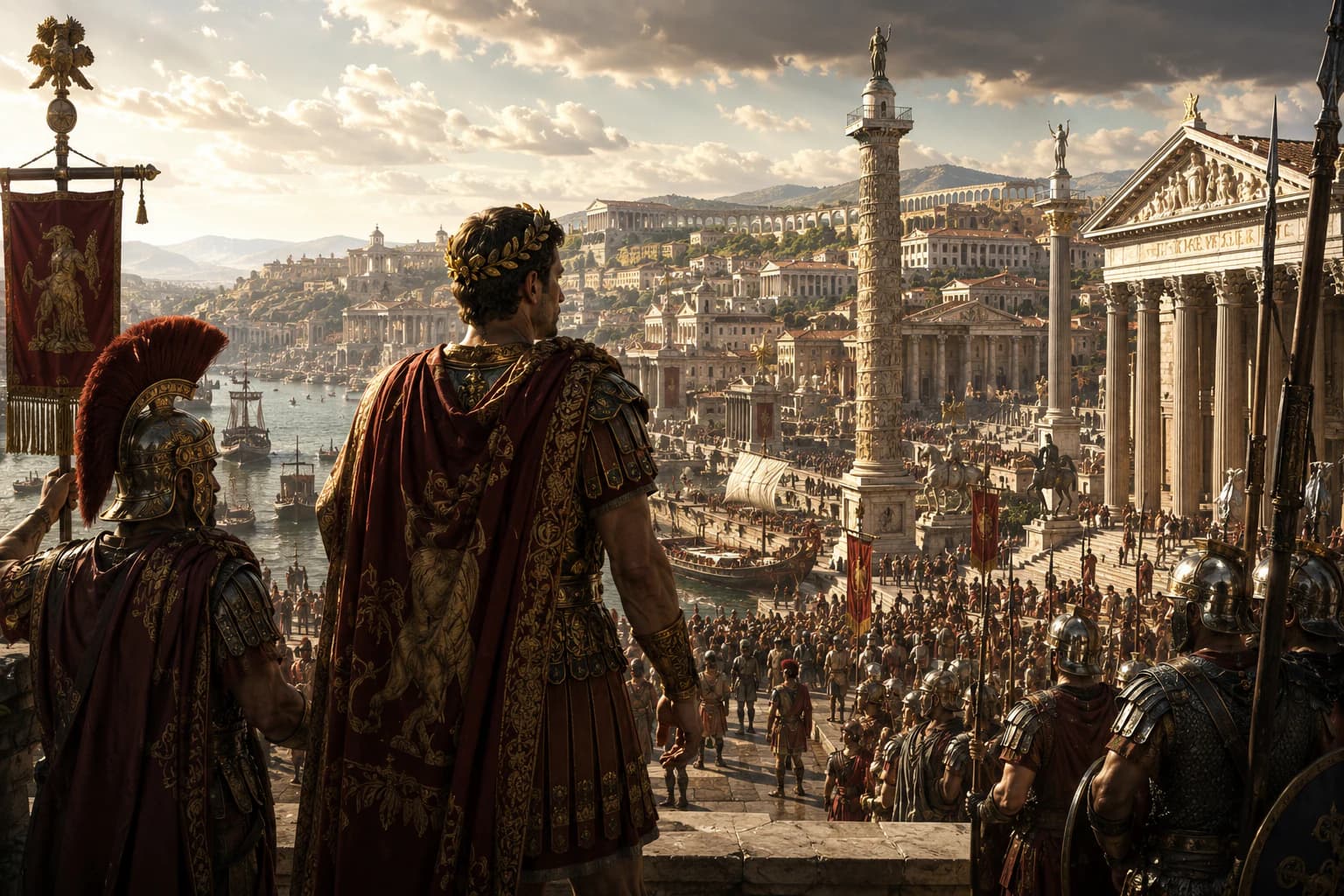
Augustus's legacy is immense because he solved the Roman Republic's crisis by ending the Republic in practice while preserving enough of its language to make the change acceptable. He created the model later emperors inherited: military command, provincial control, dynastic politics, public generosity, moral messaging, and careful management of elite honor. Admirers saw him as the bringer of peace after decades of civil war. Critics, ancient and modern, point out that his peace rested on proscriptions, propaganda, autocracy, and the narrowing of political freedom. Both views are necessary. Augustus was neither merely a savior nor merely a tyrant. He was a master of power who understood that durable rule requires stories, institutions, rituals, and restraint as well as force. To ask why Augustus was important is to ask how Rome became an empire while still telling itself it was Rome.
Enduring influence often comes from building systems that others continue to use and adapt.