People

Odoacer

Odoacer was a Germanic military leader and King of Italy from 476 to 493. He deposed Romulus Augustulus, ended the western imperial office, governed Italy through Roman institutions, and was killed by Theodoric the Great.

Born
433 CE
Died
493 CE
Role
King of Italy

King of Italy (433–493)

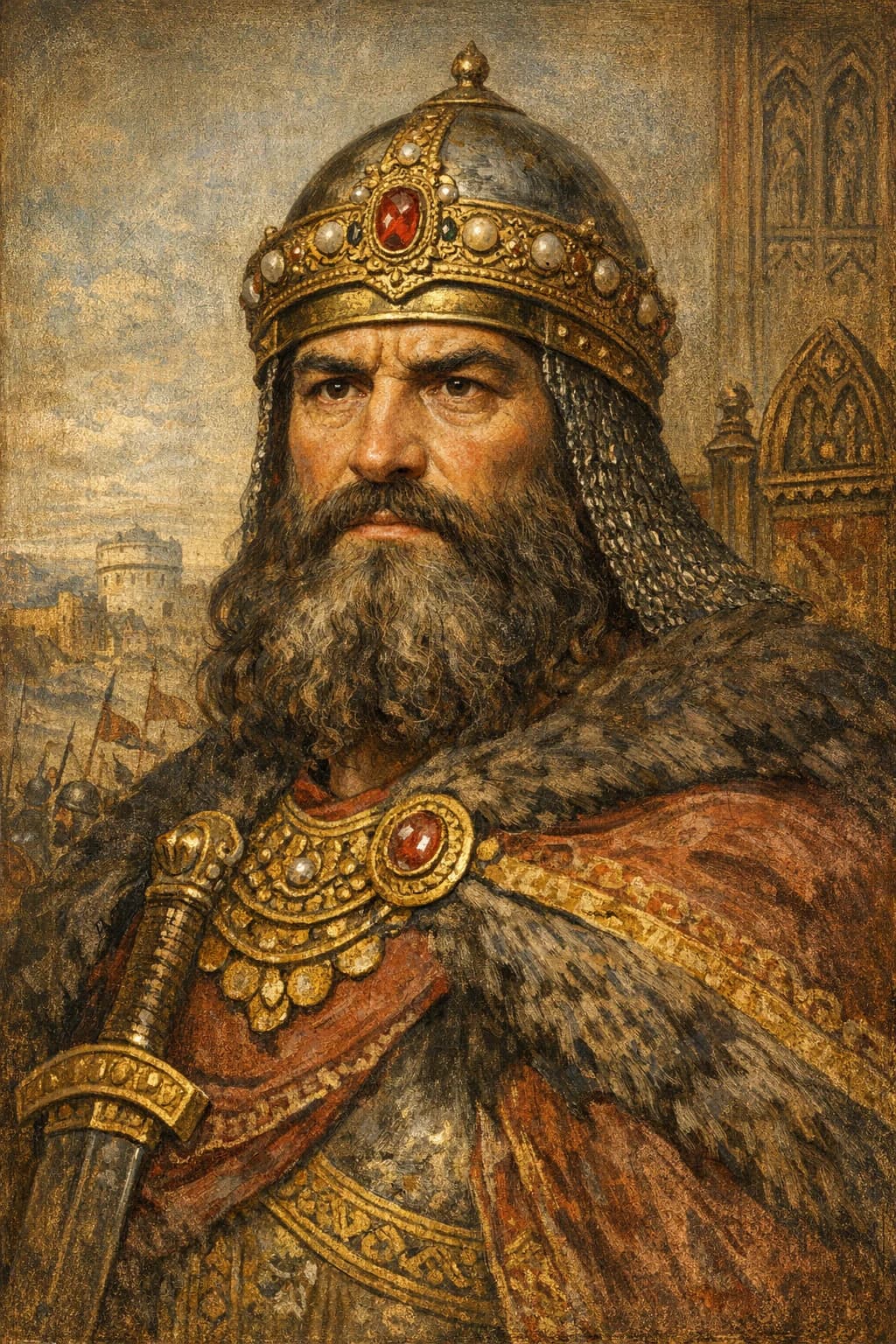
AI-generated portrait of Odoacer, King of Italy
AI-assisted historical reconstruction

An illustrative reconstruction based on historical context. It is not a photograph or documentary likeness. Image policy

Quick answer

Odoacer was a Germanic military leader and King of Italy from 476 to 493. He deposed Romulus Augustulus, ended the western imperial office, governed Italy through Roman institutions, and was killed by Theodoric the Great.

Born
433 CE
Died
493 CE
Role
King of Italy
Years
433-493 CE
Quick facts

Profile details

Additional identity and tagging details that are not already covered in the introduction.

Also known as
Odovacer, Odovacre
Facts

Odoacer timeline facts

Selected specifics from this profile's life story.

433–460s
Barbarian roots

Odoacer was born around 433 into the late Roman frontier world, probably among the Sciri or a related Germanic military people.

476–488
King of Italy

Rather than installing another puppet emperor, Odoacer styled himself King of Italy and sent the imperial regalia to Constantinople, acknowledging nominal eastern authority while ruling effectively as an...

490–493
Siege of Ravenna

Odoacer withstood a three-year siege of Ravenna, which was essentially impregnable, until a negotiated settlement was reached — then was murdered by Theodoric at the peace banquet.

After 493
A practical end

Odoacer matters because he ended the western imperial office without ending Roman Italy, showing how gradual the Roman-to-post-Roman transition could be.

Life Journey

From barbarian soldier to king of a broken empire

Follow the story in a more continuous narrative, with a reading mode that matches how much depth you want.

Complete chronology

433–460s

Barbarian roots

The exact background of Odoacer is debated by scholars. He may have been Scirian, Rugian, Thuringian, or of mixed frontier heritage; ancient sources disagree because ethnic labels in this period were fluid political identities as much as fixed ancestry. What is clear is that he came from the military world created by Rome's reliance on non-Roman soldiers. His father Edeko had served as an envoy of Attila the Hun and later as a leader among his own people. Odoacer grew up where Roman command, Hunnic power, Germanic followings and imperial service overlapped. To call him simply barbarian misses the point. He was a product of a Roman system that had already made outsiders essential to its survival.
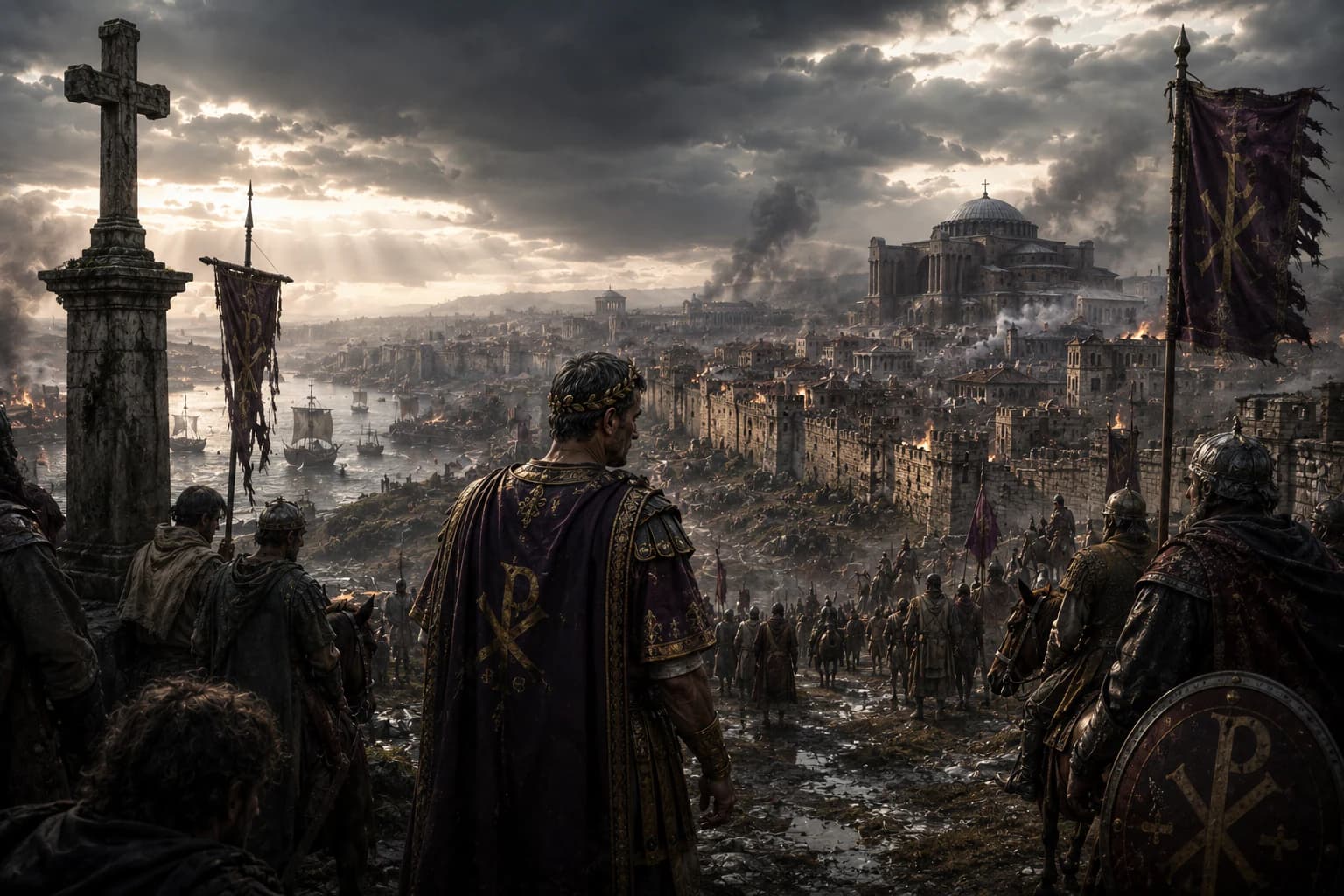
460s–475

Rise in the Roman army

The federate forces — Germanic soldiers serving within the Roman military system — were not a unified force but a collection of different peoples, each with their own leaders, loyalties, and expectations. Odoacer established himself as a prominent figure among them, particularly after serving in campaigns that brought him into contact with the leading Roman commanders of the period. His rise was based on military ability and the kind of personal authority that men who led other fighting men recognised and followed. By the early 470s he was sufficiently prominent that he was a figure of significance in the calculations of those at the top of western Roman politics.

476

Leading the revolt

The immediate trigger for Odoacer's revolt was the refusal of Orestes to give the federate soldiers the one thing they wanted most: land. Earlier generations of Roman soldiers had received land grants on retirement; the federates wanted the same. They demanded a third of Italian land — not an unprecedented demand, given that other Germanic kings had received similar settlements elsewhere in the western territories. Orestes refused. Odoacer led the uprising that resulted, moving quickly through Italy. Orestes was captured and executed at Piacenza. His brother Paulus was killed near Ravenna. The western emperor, Romulus Augustulus, surrendered without a fight and was sent into comfortable exile. The revolt took weeks rather than months.

476–488

King of Italy

The decision not to claim the imperial title was strategically intelligent. Odoacer understood that claiming to be western emperor would provoke the eastern court and was in any case unnecessary. He sent the imperial regalia to Zeno in Constantinople and acknowledged theoretical eastern suzerainty while governing Italy in practice. Zeno was initially reluctant — he pointed out that the legitimate western emperor Julius Nepos was still alive in Dalmatia — but when Nepos was murdered in 480, the fiction of a surviving western emperor collapsed. Odoacer's position became more secure. He governed Italy through the existing Roman administrative apparatus, keeping the Senate functioning and employing Roman aristocrats in their traditional roles.

476–489

Governing Italy

The quality of Odoacer's governance is attested by contemporary sources who were not naturally disposed to praise a barbarian king. He maintained the Roman senatorial class in their positions, continued the legal system, kept the Italian frontiers reasonably secure, and avoided the kind of arbitrary confiscation and violence that had characterised some of his predecessors. He conducted successful military operations in Dalmatia, eliminating the last claim of the legitimate western emperor's family line after Nepos's murder. He also extended his authority into parts of the old western empire. Roman aristocrats who wrote in this period — Sidonius Apollinaris, Cassiodorus's father — describe an Italy that was functioning reasonably well under its new management.

489–490

Theodoric's invasion

Zeno's sponsorship of Theodoric's invasion of Italy was a characteristically Byzantine solution to a problem: rather than confronting Odoacer directly, the eastern emperor set one Germanic leader against another. Theodoric had been a difficult presence in the Balkans, and dispatching him to Italy removed him from the east while potentially solving the Odoacer problem. Theodoric accepted, leading his Ostrogothic people — essentially their entire tribal group, not just an army — into Italy in 489. The first major engagement, at the Isonzo River, was a Theodoric victory. A second battle at Verona followed. Odoacer fell back to Ravenna, his main stronghold, while Theodoric secured most of northern Italy.

490–493

Siege of Ravenna

Ravenna's defences — surrounded by marshes and accessible only by controlled routes — made it nearly impossible to take by assault. Odoacer held out for three years. The siege was punctuated by sorties and counter-operations, and at various points it was unclear whether Theodoric would succeed. Eventually, with both sides exhausted, a peace agreement was negotiated through the mediation of the Bishop of Ravenna. The terms proposed co-rule of Italy. Theodoric hosted a banquet to celebrate. At the banquet, he personally killed Odoacer with a sword stroke. His followers then killed Odoacer's household. The action was deliberate and premeditated, and it shocked contemporaries, though Theodoric justified it as pre-empting a conspiracy.

493

Murder and aftermath

Odoacer died on 15 March 493 — a date whose coincidence with the Ides of March, the anniversary of Julius Caesar's assassination, was noted by some ancient writers, though it is probably coincidental. Theodoric's reported remark as he struck him down — 'Did the wretch find no room to die?' — was the kind of utterance that stuck in the memory of later writers, as it combined contempt with the physical reality of what he had done. Odoacer's family members and supporters were killed in the hours and days that followed. His seventeen years of rule in Italy were erased from official memory by the regime that succeeded him, and the historical assessment of his governance — which was largely positive among contemporaries — was gradually buried under the more dramatic narrative of the founding of the Ostrogothic kingdom.

After 493

A practical end

Odoacer's historical legacy is inevitably shaped by his role as the man who formally ended western Roman imperial rule. Yet the event was quieter than later imagination suggests. In 476 there was still an emperor in Constantinople, Roman senators still held office, taxes still had to be collected, laws still mattered and Italy still needed government. Odoacer had no lasting dynasty, no grand monument and no national tradition built around him. What his reign demonstrates is that the late fifth century was not simply a plunge into darkness. It was a transition in which capable military kings could preserve much of the Roman administrative order while changing the source of power at the top. The Italy Theodoric took from him was recognisably Roman and unmistakably post-imperial at the same time.

Continue in context

Connected stories

Move from the profile into the wider events and settings this figure belongs to.

Tertiary paths

Content note

This profile is written for educational use and connects to related Stories of History pages. The main portrait is an AI-assisted historical reconstruction, included as an illustrative aid rather than documentary evidence. Image policy

References

Sources & Further Reading

Reliable reference works, archives and reading paths connected to this profile.

Further reading

  1. Encyclopaedia Britannica, Search results for Odoacer,” accessed June 2026.Open source
  2. WorldCat, Books and library holdings for Odoacer,” accessed June 2026.Open source

Primary sources

  1. Library of Congress, Search results for Odoacer,” accessed June 2026.Open source

Reviewed claim sources

Loading reviewed claim sources...

A weekly route through history

Find out first about the latest published stories, feature notes and occasional Premium offers in one weekly email.