Complete chronology
Full overview and deeper context for every journey step.
188 CE
A Severan heir
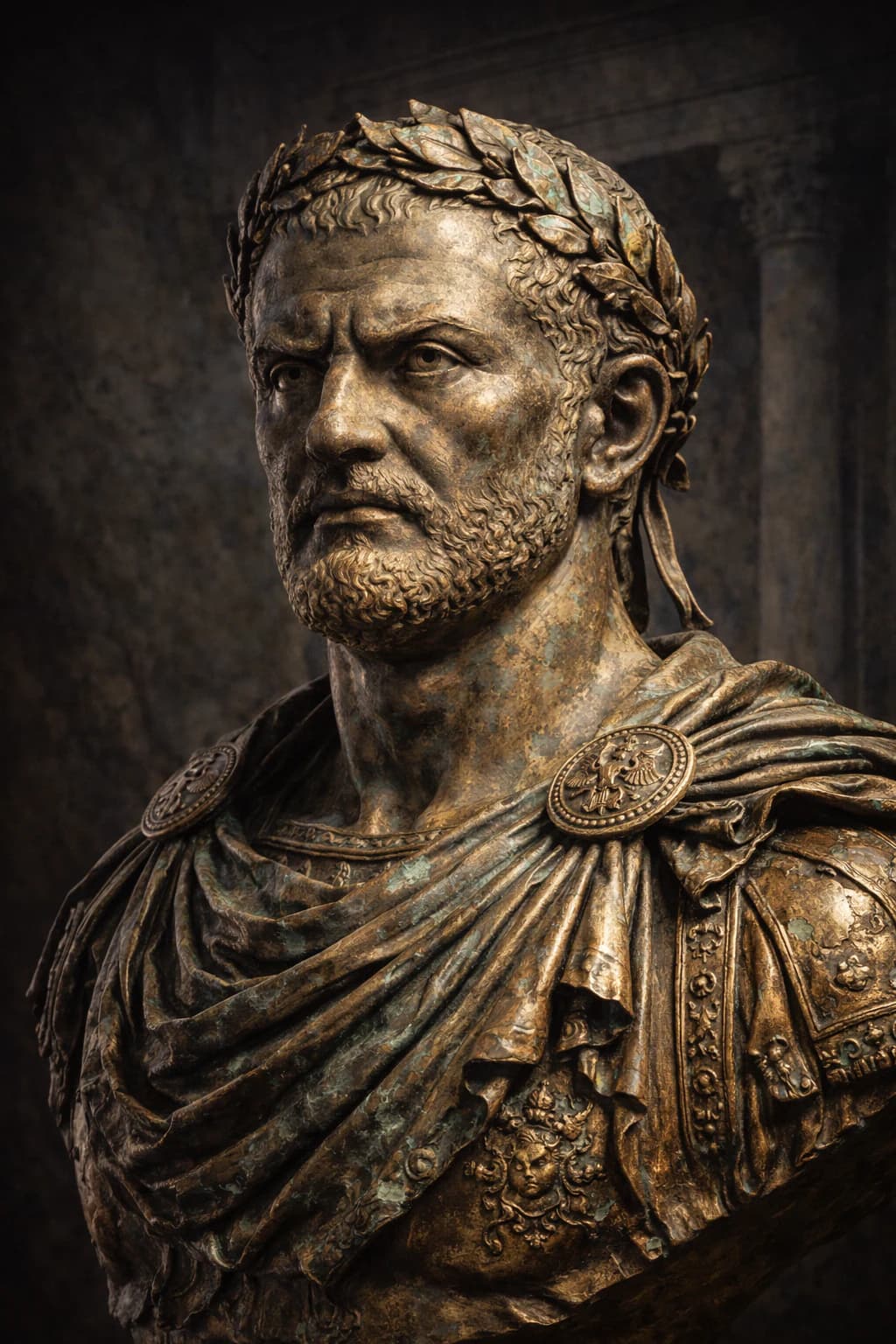
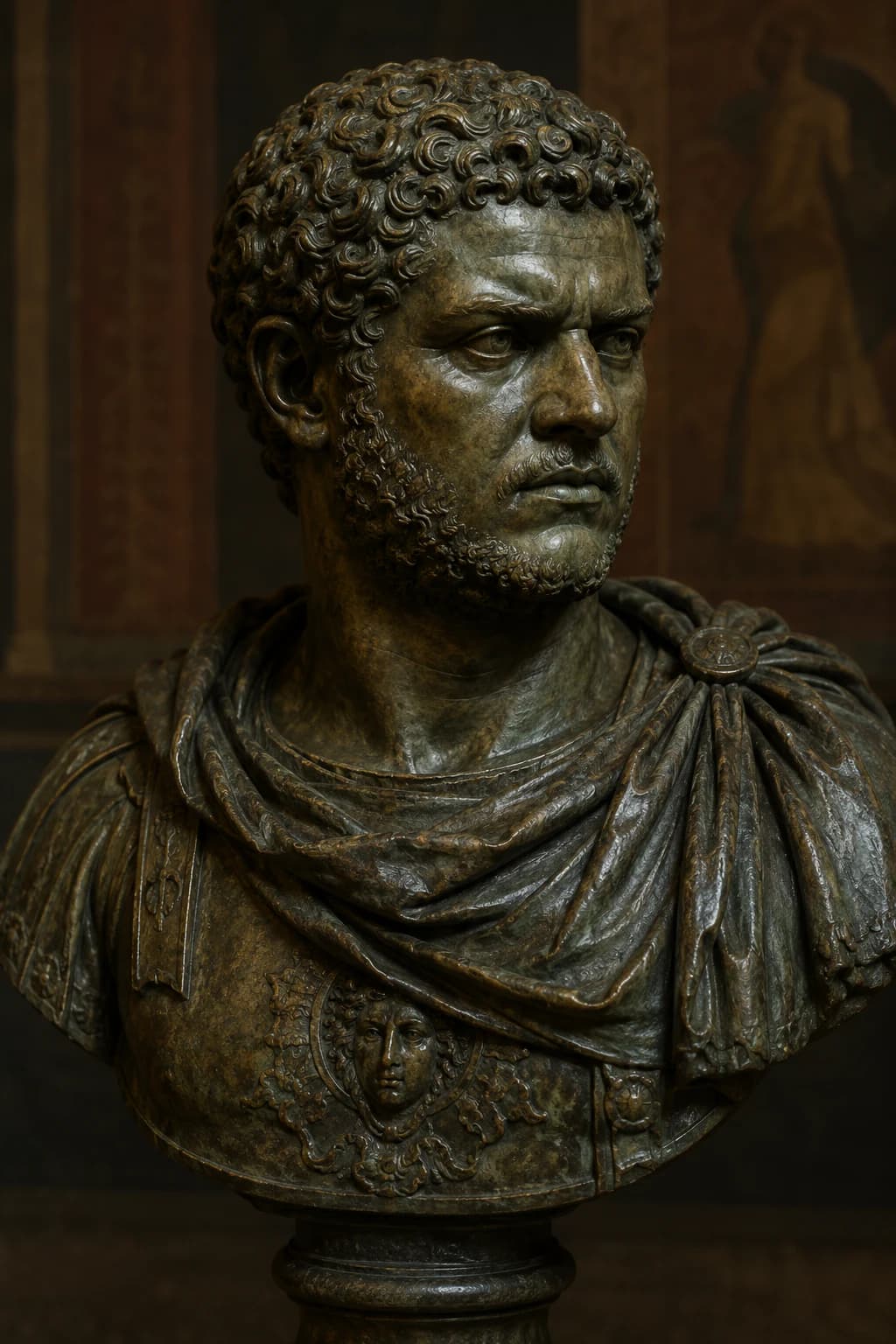
Caracalla was born Lucius Septimius Bassianus in 188 CE at Lugdunum, modern Lyon, while his father Septimius Severus was rising through imperial service. His mother, Julia Domna, came from the powerful priestly family of Emesa in Syria, giving the Severan house a strongly provincial and eastern dimension. After Severus seized power in the civil wars that followed Commodus's death, his son's identity was carefully remade. The boy received the name Marcus Aurelius Antoninus, linking him to the admired Antonine emperors and wrapping the new dynasty in older legitimacy. The nickname Caracalla came from a hooded Gallic cloak associated with him, though it was not his formal imperial name. From the beginning, his life was political theater: titles, portraits, family images, and public honors all presented him as the future of Severan rule.
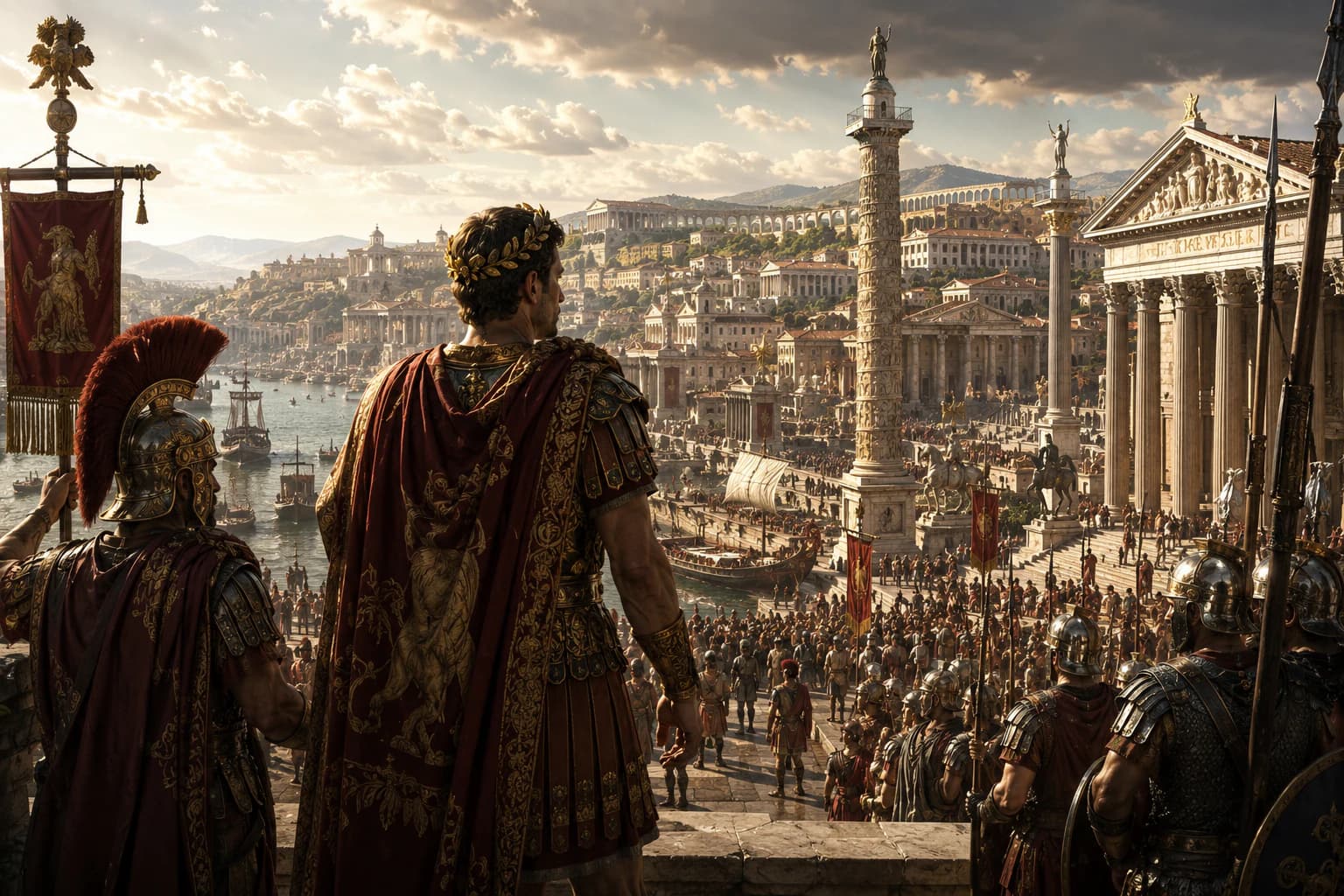
Imperial names could be tools for manufacturing continuity.
211 CE
Brother against brother
Septimius Severus died at Eboracum, modern York, in 211 CE while campaigning in Britain. He left the empire to Caracalla and his younger brother Geta as joint emperors, hoping the dynasty could survive through shared rule. It almost immediately failed. The brothers distrusted one another so intensely that ancient accounts imagine the palace divided into hostile zones. By the end of 211, Caracalla had Geta murdered, reportedly during a meeting arranged through their mother Julia Domna. The details come through hostile sources, but the political result is beyond doubt: Geta was killed, his supporters were purged, and his image was attacked through damnatio memoriae, the official destruction or suppression of memory. The episode made Caracalla sole ruler, but it also stamped his reign with a reputation for intimate violence. He had not defeated a foreign enemy or a rebel general. He had destroyed his own brother to make the throne indivisible.
Dynastic unity could collapse when imperial power had room for only one survivor.
212 CE
Citizenship extended
In 212 CE, Caracalla issued one of the most consequential legal measures in Roman history: the Constitutio Antoniniana. It granted Roman citizenship to almost all free inhabitants of the empire, with limited exceptions that remain debated. The decree did not suddenly make everyone equal in wealth, status, or opportunity. Rome still contained deep hierarchies of class, gender, locality, legal privilege, and enslavement. Yet citizenship had once been one of the most carefully guarded markers of Roman belonging. By Caracalla's reign, centuries of expansion, municipal grants, army service, and provincial integration had already widened it. The decree turned that long process into an imperial fact. Motives are disputed. Fiscal advantage likely mattered, because citizens were liable for certain taxes, especially inheritance and manumission taxes. Ideology may also have played a role: a universal emperor could present a universal citizen body as an act of unity and favor. Whatever Caracalla intended, the measure reshaped Roman law and identity across the Mediterranean world.
The decree transformed what it meant to belong to Rome.
212-217 CE
Soldier emperor
Caracalla understood the lesson his father had taught: in the Severan age, the army was the foundation of imperial survival. He increased soldiers' pay, spent heavily on military loyalty, and cultivated an image of toughness that separated him from softer courtly ideals. That policy was expensive. Higher military spending placed pressure on taxation, currency, and provincial communities, helping explain why a broadening of the tax base may have appealed to him. At Rome, his reign also produced one of the ancient city's most imposing public works, the Baths of Caracalla, a vast complex of bathing, exercise, leisure, and imperial display. Public architecture projected generosity; military culture projected command. Ancient sources, especially Cassius Dio and Herodian, present Caracalla as suspicious, violent, and obsessed with Alexander the Great. Their hostility should not be ignored, but neither should it be accepted without context. Senators had reasons to dislike an emperor who favored soldiers and ruled harshly. Still, the pattern of fratricide, purge, pressure, and campaign ambition makes his reign one of the clearest examples of the empire's drift toward military monarchy.
Military loyalty was expensive, and emperors paid for it politically and financially.
217 CE
Assassinated on campaign
Caracalla's final ambitions lay in the east. He campaigned near the Parthian frontier and pursued a vision of conquest shaped partly by admiration for Alexander the Great. In 217 CE, near Carrhae, he was assassinated by a soldier while away from his guards. The plot was connected to Macrinus, the praetorian prefect, who became emperor afterward despite not belonging to the senatorial imperial tradition. Caracalla's death was abrupt but not surprising in a political world where military favor, court fear, and personal violence were tightly linked. His reputation remained dark in much of the literary tradition: the brother-killer, the suspicious ruler, the emperor who strained finances to satisfy soldiers. Yet his legacy cannot be reduced to cruelty. The Constitutio Antoniniana outlived him and altered the legal landscape of the empire. The Baths of Caracalla remained a monumental statement of imperial power in Rome. His reign shows the contradiction of Roman history at its sharpest: a ruler remembered for brutality could still make decisions that changed citizenship, law, and identity for millions.
A ruler's legacy can depend on one decision more than on personal virtue.