People

Vespasian

Vespasian was Roman emperor from 69 to 79 CE. A successful general, he won power in the Year of the Four Emperors, founded the Flavian dynasty, restored finances, and began the Colosseum.

Born
9 CE
Died
79 CE
Role
Roman emperor

Roman emperor (9-79 CE)

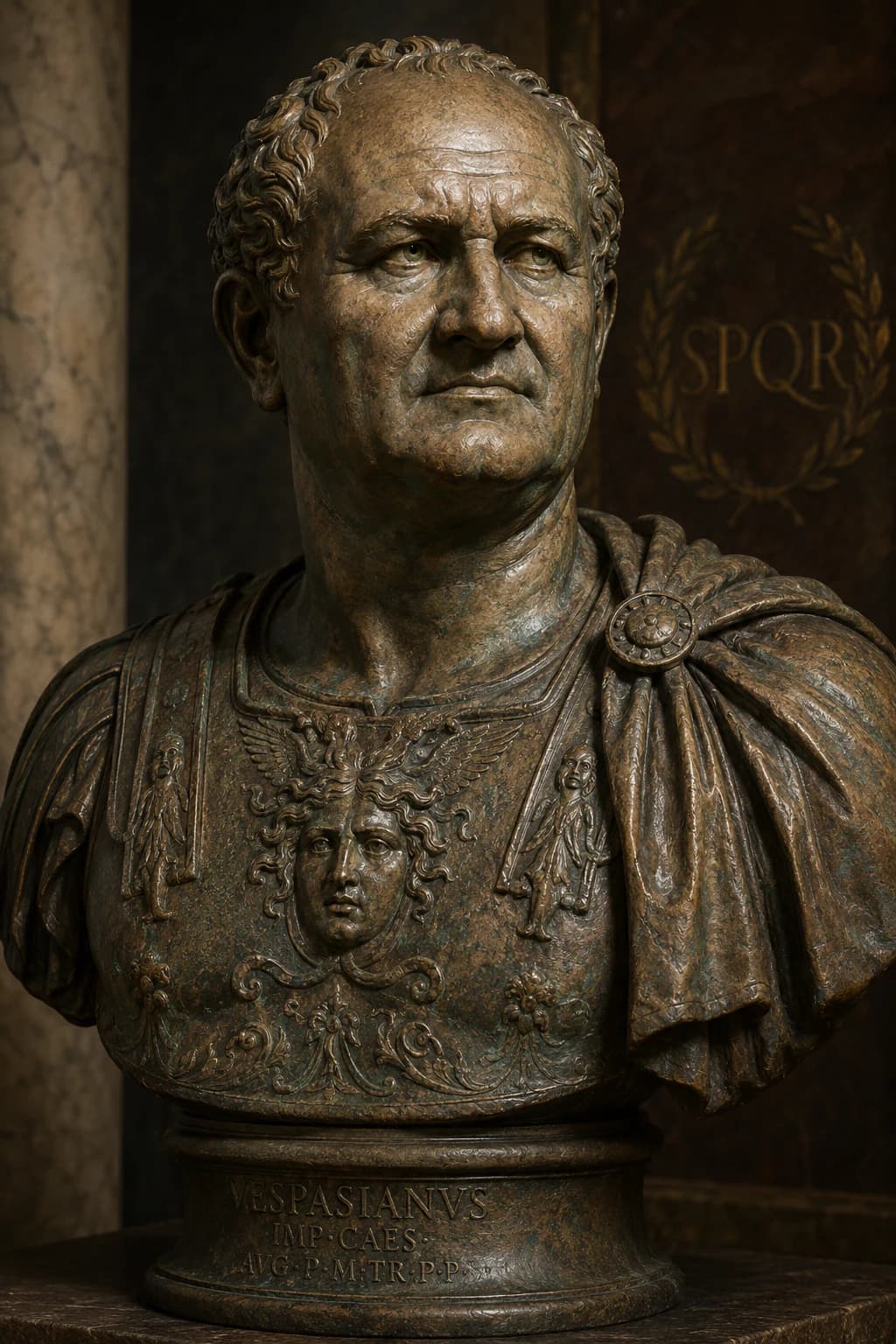
AI-generated portrait of Vespasian in Roman imperial military attire
AI-assisted historical reconstruction

An illustrative reconstruction based on historical context. It is not a photograph or documentary likeness. Image policy

Quick answer

Vespasian was Roman emperor from 69 to 79 CE. A successful general, he won power in the Year of the Four Emperors, founded the Flavian dynasty, restored finances, and began the Colosseum.

Born
9 CE
Died
79 CE
Role
Roman emperor
Years
9-79 CE
Quick facts

Profile details

Additional identity and tagging details that are not already covered in the introduction.

Full name
Titus Flavius Vespasianus
Facts

Vespasian timeline facts

Selected specifics from this profile's life story.

9 CE
A new kind of imperial family

Vespasian was born in 9 CE at Reate into a respectable Italian family, then rose through offices and military commands rather than ancient dynastic prestige.

40s-60s CE
Commander in Britain and Judaea

Vespasian built his reputation as a commander in Britain under Claudius and later in Judaea during the great revolt against Roman rule.

69-79 CE
Restoring stability

As emperor, Vespasian restored finances, rebuilt confidence after civil war, and used public works and discipline to make Flavian rule feel permanent.

After 79 CE
Founder of the Flavians

Vespasian died in 79 CE after establishing the Flavian dynasty and showing that a non-Julio-Claudian emperor could restore Roman power.

Life Journey

The soldier who restored imperial order

Follow Vespasian from provincial commander to founder of the Flavian dynasty.

Complete chronology

9 CE

A new kind of imperial family

Titus Flavius Vespasianus was born in 9 CE at Reate, in the Sabine country of Italy. His family was not obscure, but it did not belong to the old aristocratic circle that had dominated Rome's highest offices for generations. His father worked in finance and tax administration; his mother came from a more locally prominent family. Vespasian's rise therefore depended less on inherited glamour than on service, patience, and competence. He followed the senatorial career path, held magistracies, and built a reputation as a man who could be trusted with difficult responsibilities. That background became politically powerful after Nero's fall. When the Julio-Claudian dynasty disintegrated, Rome needed more than a famous bloodline. Vespasian offered a different claim: tested command, administrative discipline, and a family that could promise continuity without pretending to be descended from Augustus.
40s-60s CE

Commander in Britain and Judaea

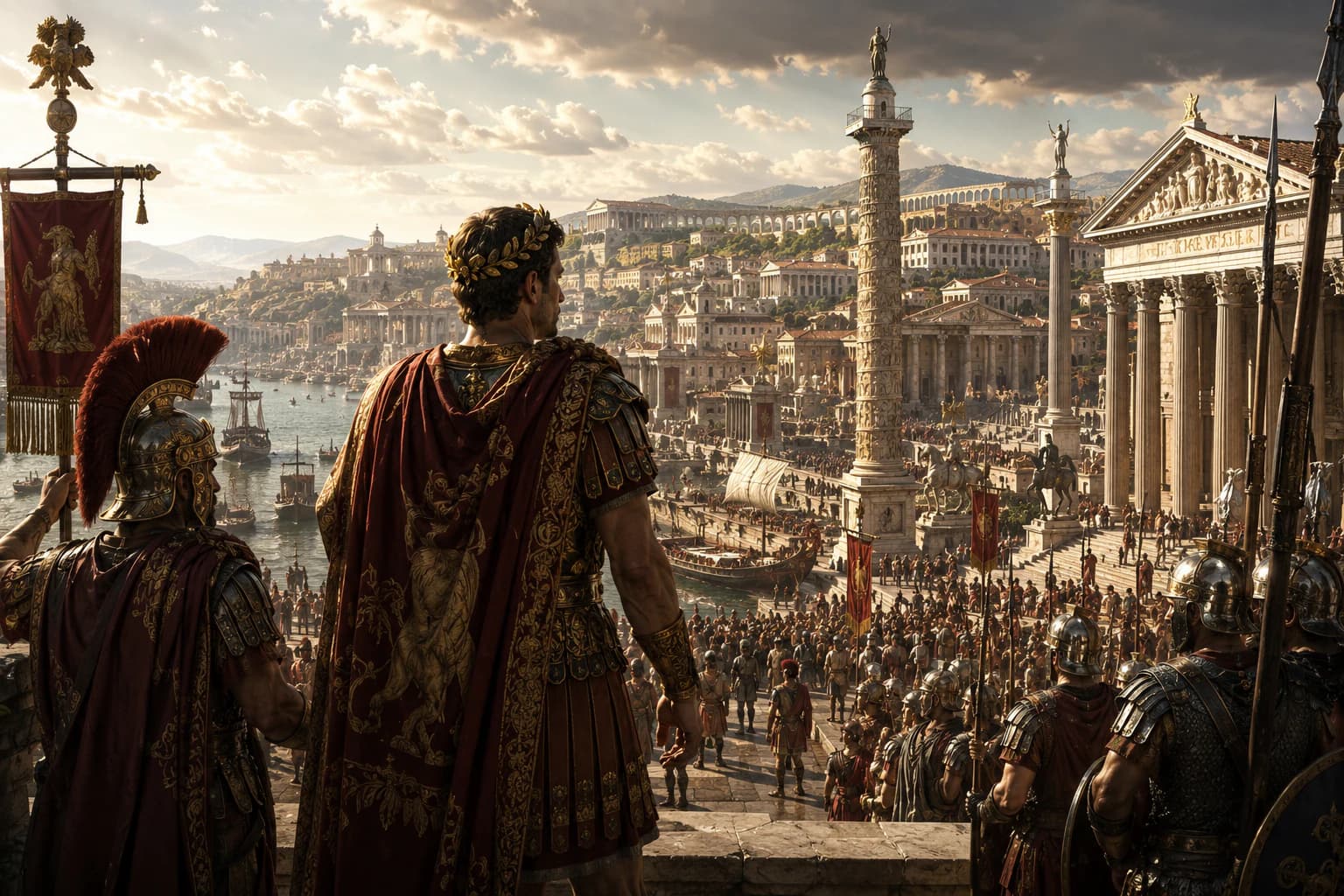
Vespasian's military reputation was made far from the ceremonial center of Rome. During Claudius's invasion of Britain in 43 CE, he commanded the Second Legion and took part in campaigns that extended Roman control across southern Britain. The service gave him prestige, but his career was not a smooth climb; like many senators, he experienced phases of favor and neglect. His decisive opportunity came after the Jewish revolt erupted in 66 CE. Nero chose Vespasian to restore Roman authority in Judaea, a demanding command that required logistics, siege warfare, and political judgment. Vespasian advanced methodically, while his son Titus emerged beside him as a valuable lieutenant. By 68 and 69 CE, as Nero died and claimants fought for the throne, Vespasian controlled experienced troops in a strategically vital eastern theater. He was not the obvious heir to empire, but he possessed what mattered in a civil war: armies, allies, and access to the resources of the eastern provinces.

69 CE

Claiming the throne

The Year of the Four Emperors turned the empire into a map of armed choices. Galba replaced Nero, Otho murdered Galba, and Vitellius defeated Otho. Vespasian waited until his support could become more than ambition. In July 69 CE, troops in Egypt and then Judaea acclaimed him; Syria soon followed, and Danubian forces joined the cause. Egypt mattered not only because of its soldiers but because its grain supply fed Rome. Vespasian's coalition therefore combined military strength with economic leverage. He remained in the east while commanders such as Antonius Primus carried the Flavian campaign into Italy. Vitellius's forces were defeated, and Rome was taken after bitter fighting. Vespasian's rise proved that the imperial center could be seized from the provinces. The capital still mattered, but it no longer monopolized the making of emperors.

69-79 CE

Restoring stability

Vespasian inherited an empire exhausted by civil war, mutiny, debt, and political mistrust. His achievement was not glamorous, but it was essential: he made government work again. He tightened finances, revived neglected taxes, rewarded supporters without surrendering authority to them, and worked carefully with the Senate while never forgetting that soldiers had made his throne possible. Ancient writers remember his blunt humor and financial severity, including jokes about money and taxation, but behind the anecdotes was a larger project of restoration. The Flavian Amphitheatre, later called the Colosseum, was especially symbolic. Built on land associated with Nero's private palace, it converted the memory of autocratic excess into a public monument. Vespasian also promoted his sons Titus and Domitian, making succession visible. He did not claim to be another Augustus by blood. He presented himself as the man who had cleaned up the wreckage and given Rome a future.

After 79 CE

Founder of the Flavians

Vespasian died in 79 CE, reportedly meeting death with the same dry self-awareness that colored many stories about his life. His son Titus succeeded him peacefully, an outcome that mattered enormously after the rapid murders and battlefield decisions of 69 CE. The Flavian dynasty was not as long-lived as Vespasian intended, but his reign changed the empire's expectations. He showed that an emperor did not need Julio-Claudian blood if he could command armies, manage money, respect public ritual, and secure succession. His legacy includes the suppression of revolt, the rise of his sons, the Colosseum, and a more sober vision of monarchy after Nero. Vespasian's importance lies in that transformation: he took a throne won by force and made it appear lawful, useful, and Roman again.

Continue in context

Connected stories

Move from the profile into the wider events and settings this figure belongs to.

Tertiary paths

Content note

This profile is written for educational use and connects to related Stories of History pages. The main portrait is an AI-assisted historical reconstruction, included as an illustrative aid rather than documentary evidence. Image policy

References

Sources & Further Reading

Reliable reference works, archives and reading paths connected to this profile.

Further reading

  1. Encyclopaedia Britannica, Search results for Vespasian,” accessed June 2026.Open source
  2. WorldCat, Books and library holdings for Vespasian,” accessed June 2026.Open source

Primary sources

  1. Library of Congress, Search results for Vespasian,” accessed June 2026.Open source

Reviewed claim sources

Loading reviewed claim sources...

A weekly route through history

Find out first about the latest published stories, feature notes and occasional Premium offers in one weekly email.
