Complete chronology
Full overview and deeper context for every journey step.
244
Humble Origins
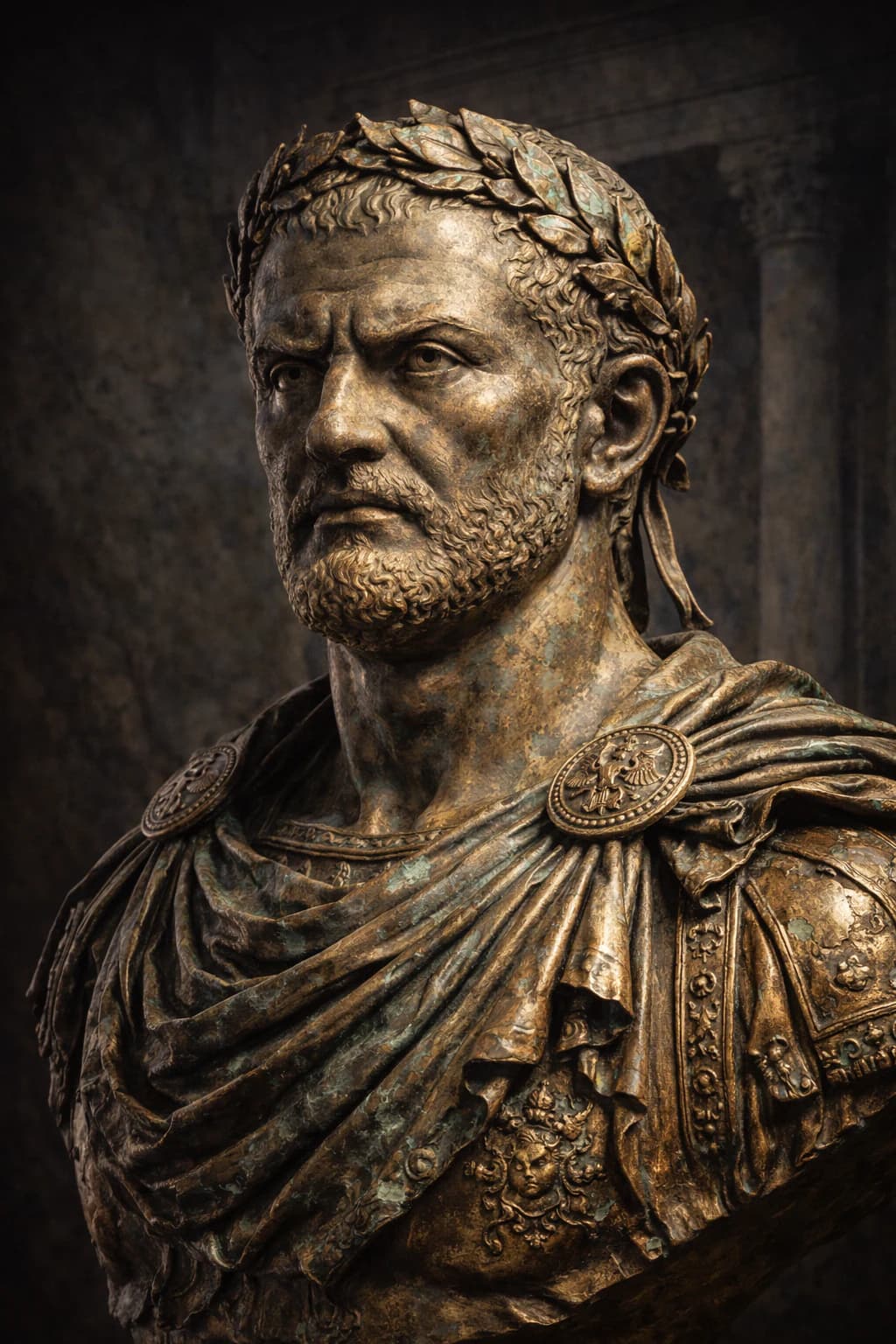
Diocletian was born around 244 in Dalmatia, probably near Salona on the Adriatic coast, far from the old senatorial aristocracy that once dominated Roman politics. His original name was Diocles, and later stories about humble birth may be sharpened by imperial propaganda, but his rise clearly came through the army rather than inherited prestige. That mattered in the third-century empire. Rome had endured civil war, frontier invasion, plague, inflation, breakaway regimes, and a rapid turnover of emperors made and killed by soldiers. The old model of a single ruler commanding a vast empire from the centre had repeatedly failed. Diocletian’s origins in the military provinces gave him a hard practical education: survival required discipline, delegation, and a state strong enough to be present at every frontier at once.
His rise showed how instability could open paths for capable individuals outside traditional elites.
284
Seizing Power
Diocletian came to power in 284 after the death of the emperor Numerian during a Persian campaign. The army proclaimed Diocletian emperor, and he dramatically accused and killed the praetorian prefect Aper, presenting himself as avenger and rightful ruler. He then defeated Numerian’s brother Carinus in 285, securing control of the empire. The accession was violent and opportunistic, but no more so than the age demanded. Diocletian understood that winning the purple was only the first problem. Emperors had been dying because they could not be everywhere, could not trust commanders, and could not manage succession. His early rule therefore focused on legitimacy through victory and control. He would not simply restore the old system. He would redesign the office of emperor itself.
In times of crisis, authority often rests on the support of those who can enforce it.
284–293
Stabilizing the Empire
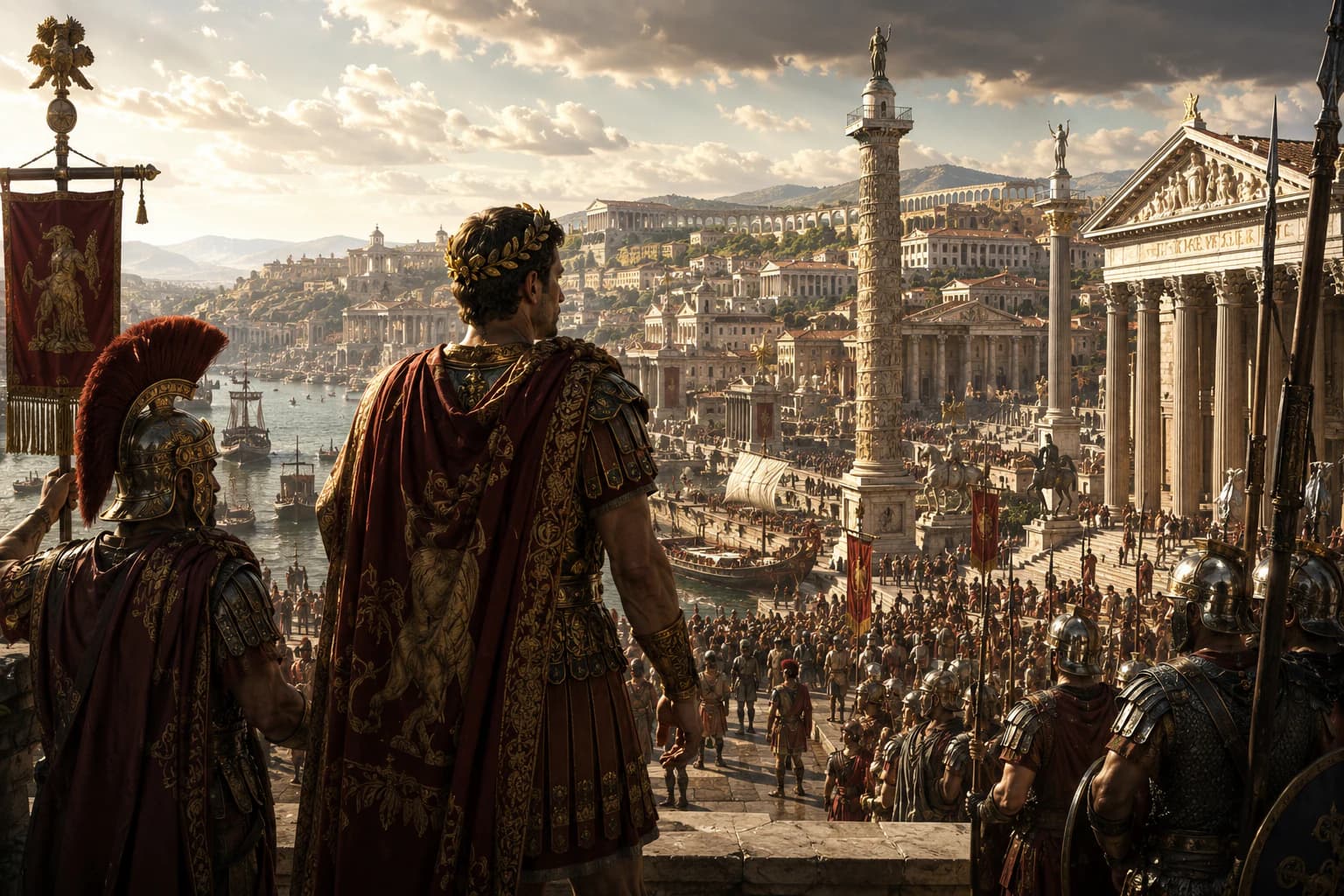
Diocletian first stabilized the empire by accepting that its scale required more than one active ruler. In 286 he appointed Maximian as co-emperor in the west while he retained senior authority in the east. The arrangement was not a confession of weakness but a strategic division of labour. Maximian could respond to threats in Gaul, Britain, and Africa while Diocletian dealt with the Danube, Persia, Egypt, and the eastern provinces. Imperial image changed too. Diocletian elevated ceremony, distance, and divine association, making the emperor less a first citizen than a sacred, commanding figure. Modern readers may see this as arrogance, but it served a purpose. After decades of military mutiny, emperorship needed awe, hierarchy, and a language of obedience strong enough to hold armies and administrators together.
Restoring stability required both immediate action and long-term planning.
293
Creating the Tetrarchy
In 293 Diocletian expanded shared rule into the Tetrarchy: two senior Augusti, Diocletian and Maximian, and two junior Caesars, Galerius and Constantius Chlorus. Each ruler had regional responsibilities, military authority, and a place in a planned succession. The system attacked several problems at once. It put emperors closer to crises, reduced the need for dangerous usurping generals, and offered an orderly path from Caesar to Augustus. It also used adoption, marriage alliances, and carefully managed propaganda to create an imperial college bound by loyalty rather than bloodline alone. The Tetrarchy worked impressively while Diocletian’s authority held it together. Its weakness was hidden in that success: a system designed to overcome personal rule still depended heavily on one man’s prestige.
Dividing power was his solution to managing an empire too large for one leader.
290s
Administrative Reforms
Diocletian’s administrative reforms reshaped the Roman state. Provinces were divided into smaller units, grouped into dioceses, and supervised by a larger bureaucracy. Civil and military authority were increasingly separated to prevent governors from becoming regional warlords. Taxation was regularized through assessments of land, labour, and productive capacity, giving the state a more predictable base for funding armies and administration. These reforms made government heavier, more intrusive, and more capable. They also marked a turning point from the flexible imperial structures of the early empire toward the more centralized late Roman state. Diocletian did not create a modern bureaucracy, but he gave Rome a stronger administrative skeleton, one that Constantine and later emperors would adapt rather than abandon.
Greater administrative detail allowed for tighter control over a vast territory.
301
Economic Measures
The empire Diocletian inherited had suffered severe inflation, debased coinage, disrupted trade, and the immense costs of defense. He reformed the coinage and tax system, but his most famous economic measure was the Edict on Maximum Prices in 301. It attempted to set legal ceilings for wages and thousands of goods across the empire, backed by harsh penalties. The edict is invaluable to historians because it reveals the range of goods, services, and anxieties in the late Roman economy. As policy, it was nearly impossible to enforce consistently. Prices vary by place, scarcity, transport, and trust; imperial command could not repeal economic reality. The edict showed both Diocletian’s ambition and the limits of coercive order. He knew the state needed stability, but he overestimated how far law could impose it.
His economic policies showed both ambition and the limits of centralized control.
303–311
Religious Policies
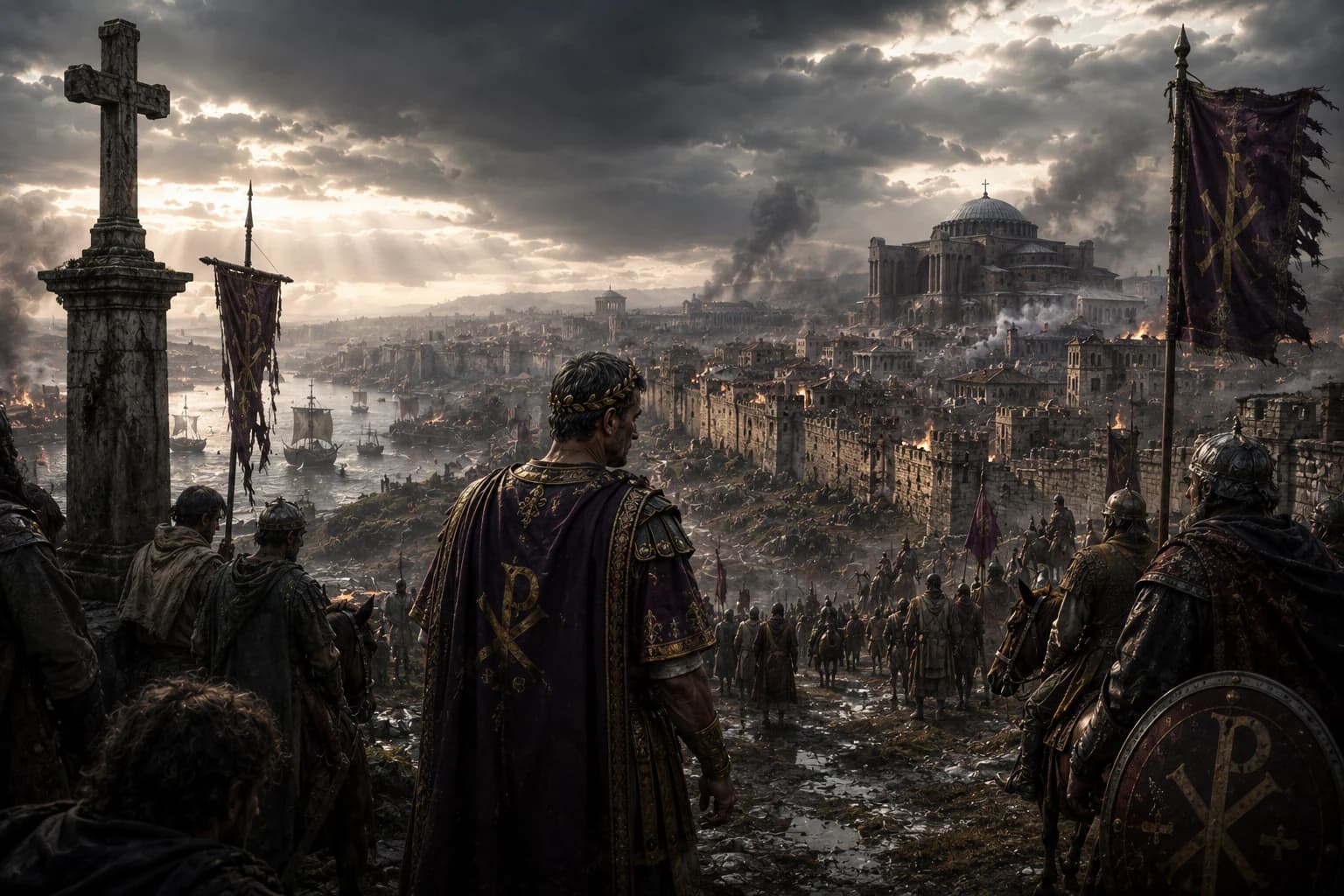
Diocletian’s religious policy began from the Roman assumption that public worship protected the state. In 303, under the influence of imperial ideology and probably pressure from Galerius, his government launched what became known as the Great Persecution against Christians. Churches were destroyed, scriptures seized, clergy imprisoned, and sacrifices demanded. The intensity varied by region, and some officials enforced the edicts more brutally than others. The persecution failed. It damaged Christian communities and created martyrs, but it did not restore religious unity or stop Christianity’s growth. Within a generation, Constantine would favour the religion Diocletian had tried to discipline. This reversal is one of history’s sharper ironies. Diocletian strengthened the late Roman state, but his attempt to bind it to traditional cult exposed how much the empire’s religious landscape had already changed.
Attempts to enforce unity can sometimes deepen divisions instead of resolving them.
305
Voluntary Abdication
In 305 Diocletian did something almost unimaginable in Roman politics: he abdicated voluntarily and compelled Maximian to do the same. The Caesars, Galerius and Constantius, became Augusti, and new Caesars were appointed. The act was meant to prove that the Tetrarchy was a system, not merely Diocletian’s personal dominance. He retired to his palace near Salona, later remembered for the story that he preferred growing cabbages to returning to power. The anecdote may be polished, but the retirement was real. Unfortunately, the succession soon began to fracture. Dynastic claims from Constantine and Maxentius, ambition among the tetrarchs, and army loyalties reopened the very problem Diocletian had tried to solve. His abdication was magnificent in principle and unstable in practice.
Stepping down showed his belief in systems over personal rule.
After 311
Lasting Transformation
Diocletian died around 311, watching from retirement as his tetrarchic order collapsed into renewed civil war. Yet failure of the succession plan should not obscure the scale of his achievement. He ended the worst phase of third-century instability, rebuilt imperial administration, strengthened frontier response, regularized taxation, and made shared rule thinkable even when the exact Tetrarchy failed. Constantine dismantled parts of his political arrangement but inherited much of his administrative world. Later divisions between eastern and western imperial government owed something to Diocletian’s recognition that Rome was too large for one centre to manage easily. His legacy is therefore double. He was a persecutor and an authoritarian reformer, but also one of the emperors who made Roman survival possible. Diocletian did not restore the old empire. He created the late Roman state.
He is remembered for redesigning the system rather than merely preserving it.