Related Moment
The Last Night of Pompeii
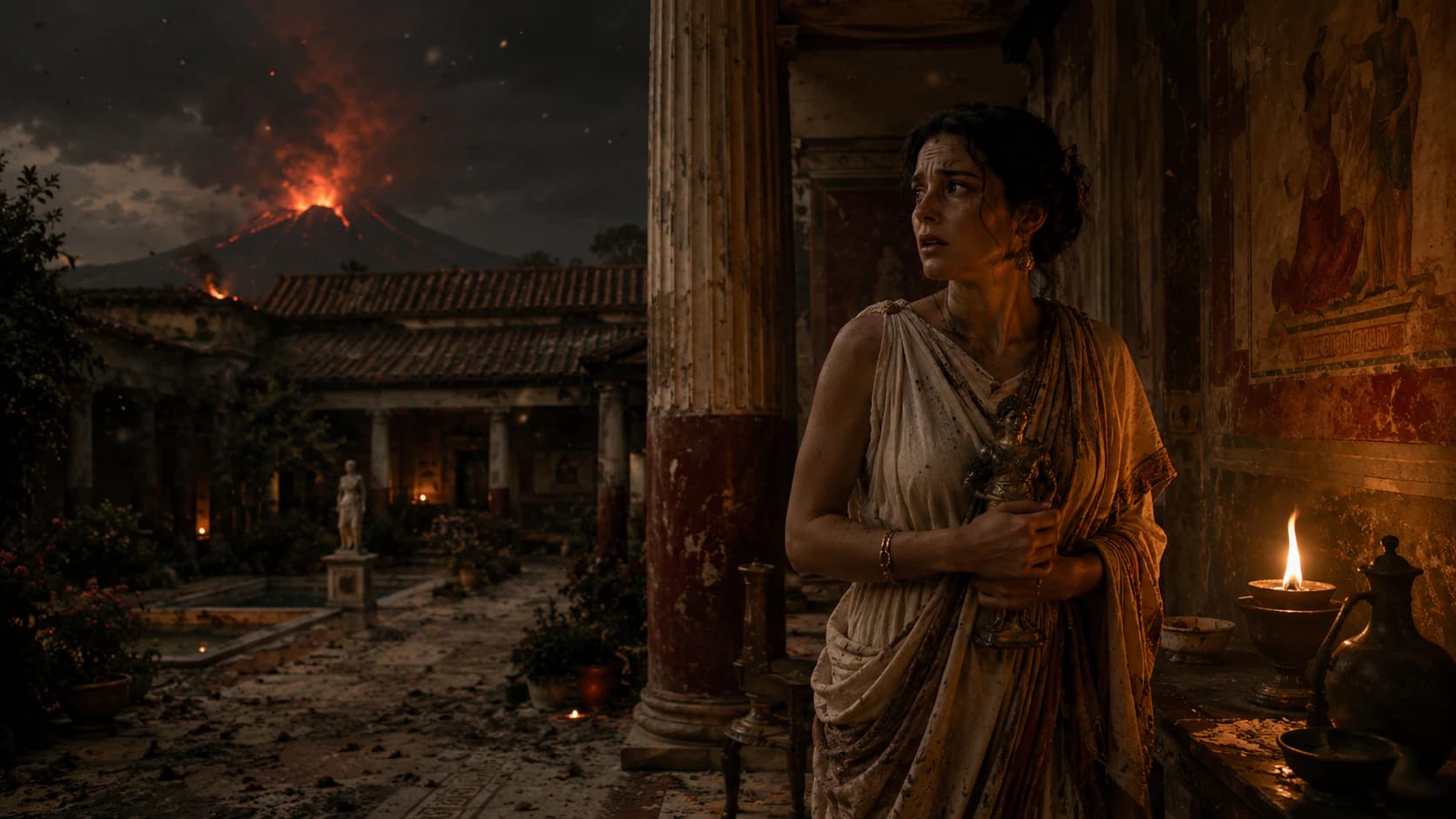
By evening, the mountain had begun to fall from the sky.
In AD 79, Vesuvius buried Pompeii beneath ash and pumice, destroying a Roman town while preserving an extraordinary record of daily life.
By evening, the mountain had begun to fall from the sky. Ash drifted over in soft grey flakes, settling on rooftops, market stalls, garden fountains, and unfinished meals. At first, it may have looked almost harmless: strange weather from a restless mountain.
Then the roofs began to groan. sat near the Bay of Naples, a prosperous Roman town of merchants, craftsmen, slaves, freedmen, politicians, tavern-keepers, and families. rose nearby, familiar and silent. Few understood it as a volcano.
Inside , life had been ordinary only hours before. In late summer or autumn of AD 79, that ordinary world was interrupted by a massive eruption that sent a column of ash and pumice high into the sky. Winds carried the debris south-east, directly over the town.
Pumice rained down hour after hour, filling streets, blocking doors, and piling on roofs. People who stayed indoors found their homes becoming traps. People who fled stumbled through darkness, coughing, shielding their faces, carrying children, money, keys, jewellery, or nothing at all.
By night, the falling debris had buried parts of several metres deep. Doors could no longer open. Roofs collapsed. The air thickened with dust.
In the early morning, superheated surges of gas, ash, and volcanic material swept down from . These pyroclastic currents moved with terrifying speed. They did not simply bury . They overwhelmed it.
There was no battle, no warning trumpet, no final speech. Just heat, pressure, darkness, and silence. When the eruption ended, was gone.
Its streets, houses, temples, bakeries, baths, brothels, and courtyards lay sealed beneath volcanic debris. The survivors, if they returned, found no living town to reclaim. Over time, memory faded. The city disappeared from the surface of the world.
But the burial also preserved what destruction had taken. Centuries later, excavators uncovered walls still painted red and yellow, bread still in ovens, election slogans on plaster, shrines in kitchens, and human forms left in the ash: not statues, but the spaces where bodies had been.
had died suddenly enough to become a frozen fragment of Roman life. Rome is often remembered through emperors, armies, laws, and monuments. The discovery of Pompeii showed the empire at street level: its food, jokes, shops, class divisions, domestic rituals, religious habits, and daily anxieties.
Its last night was a disaster. Its rediscovery became a revelation.