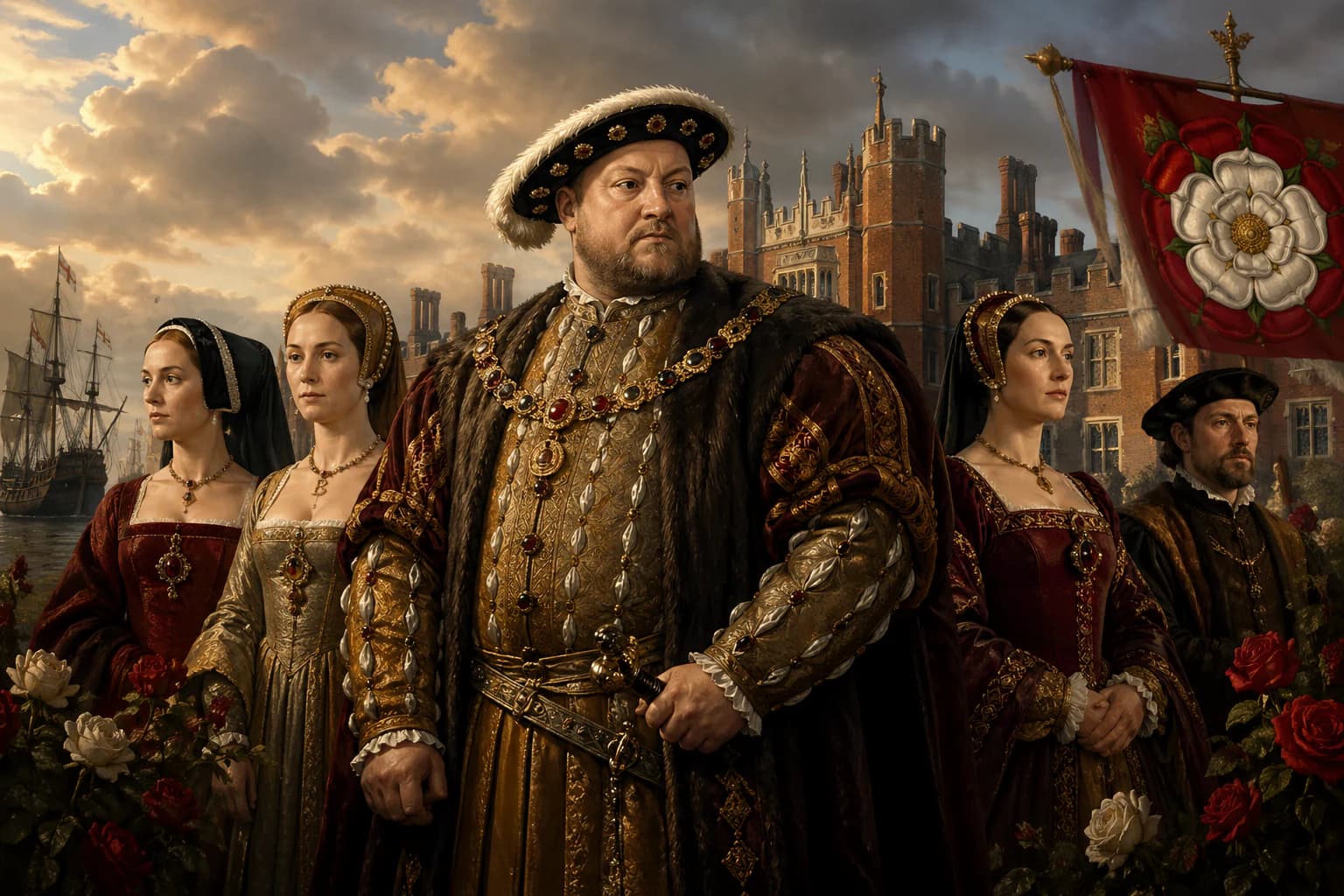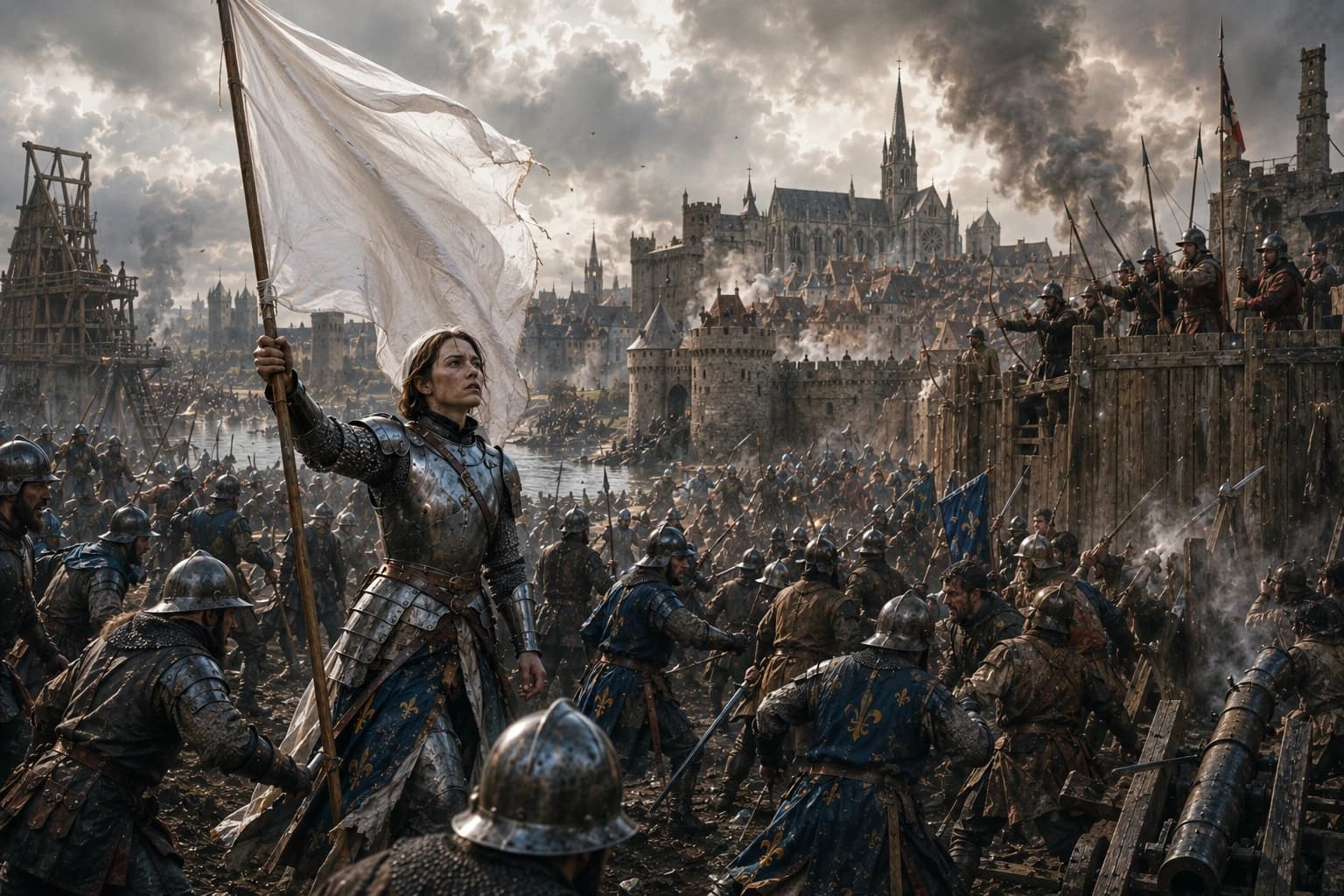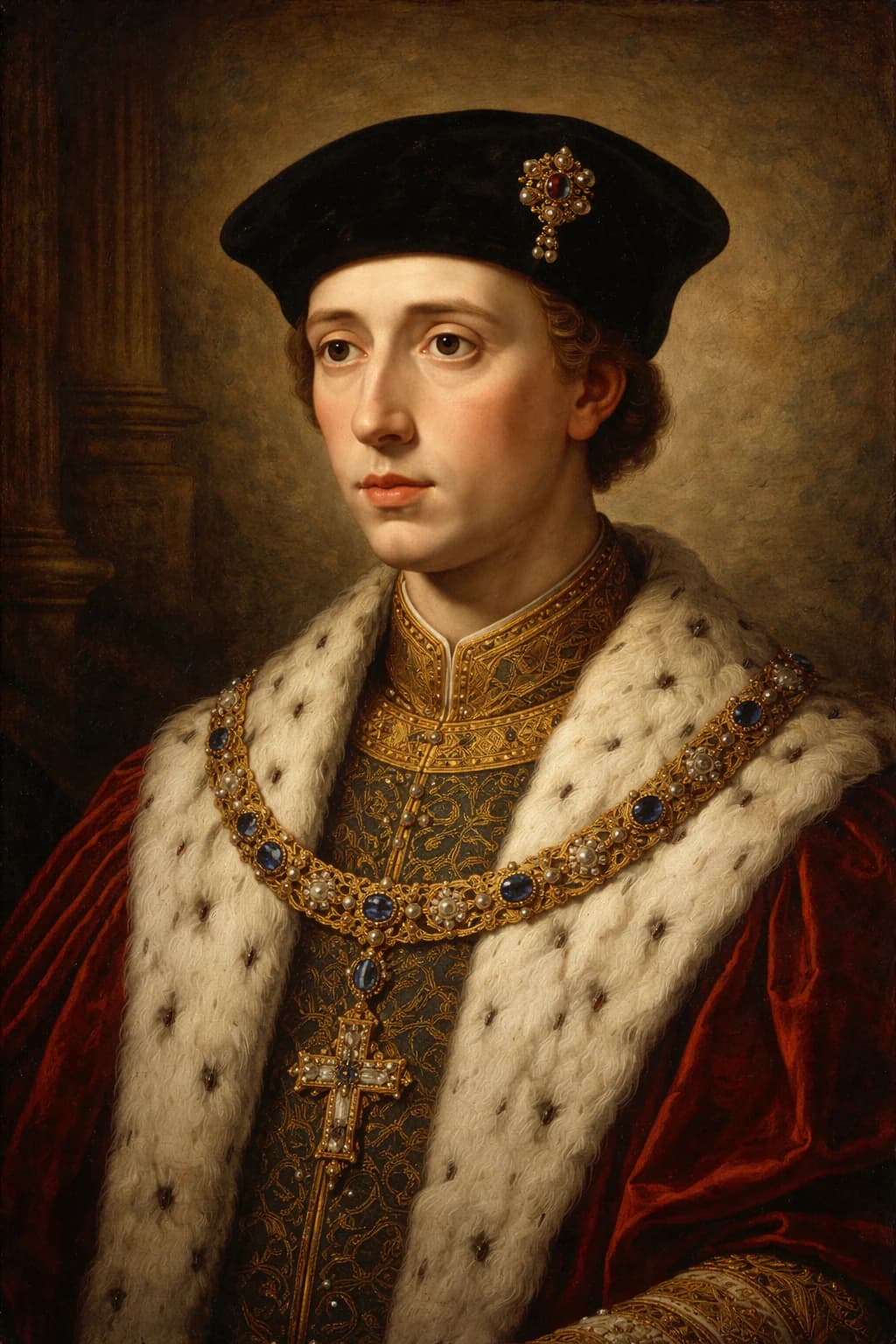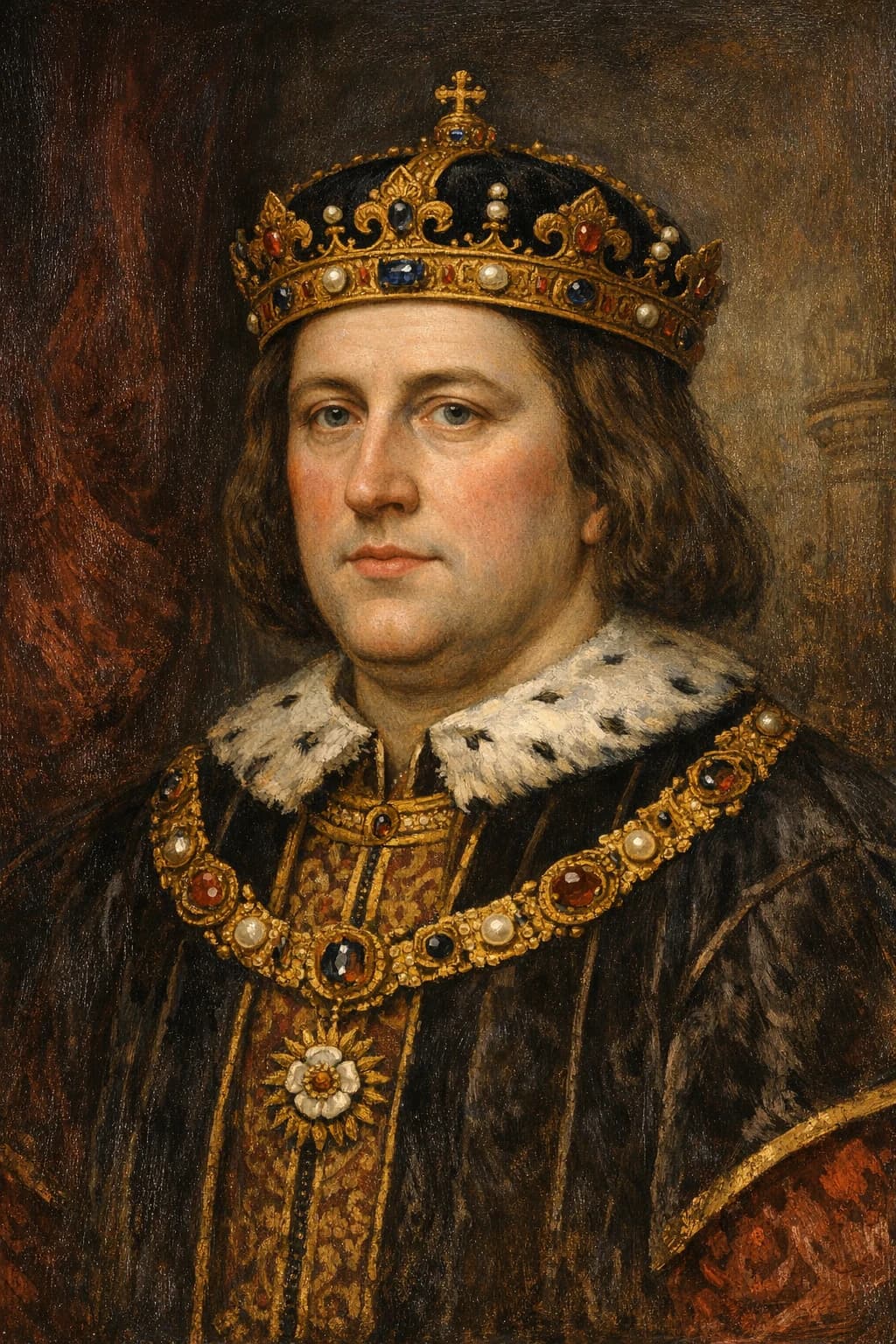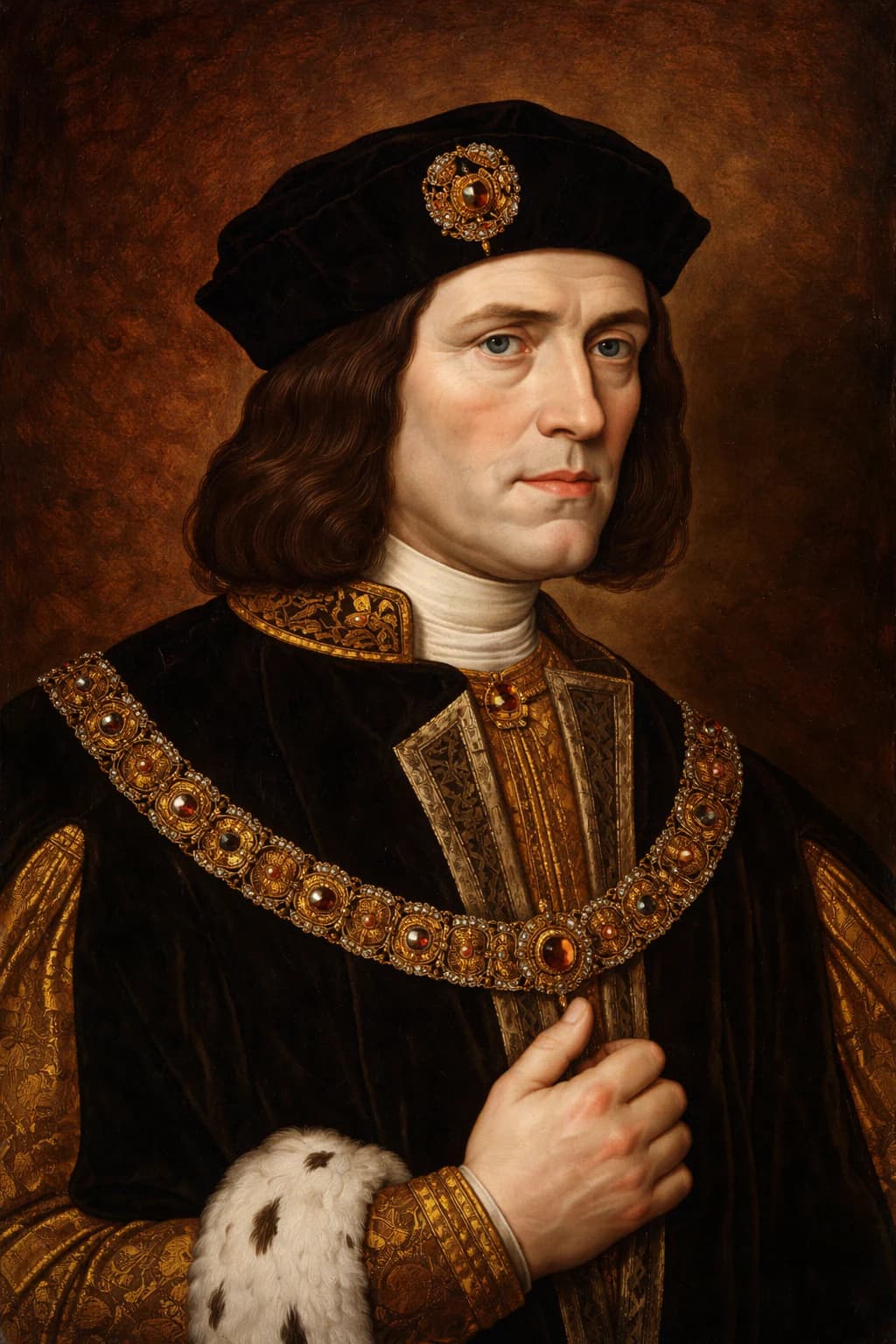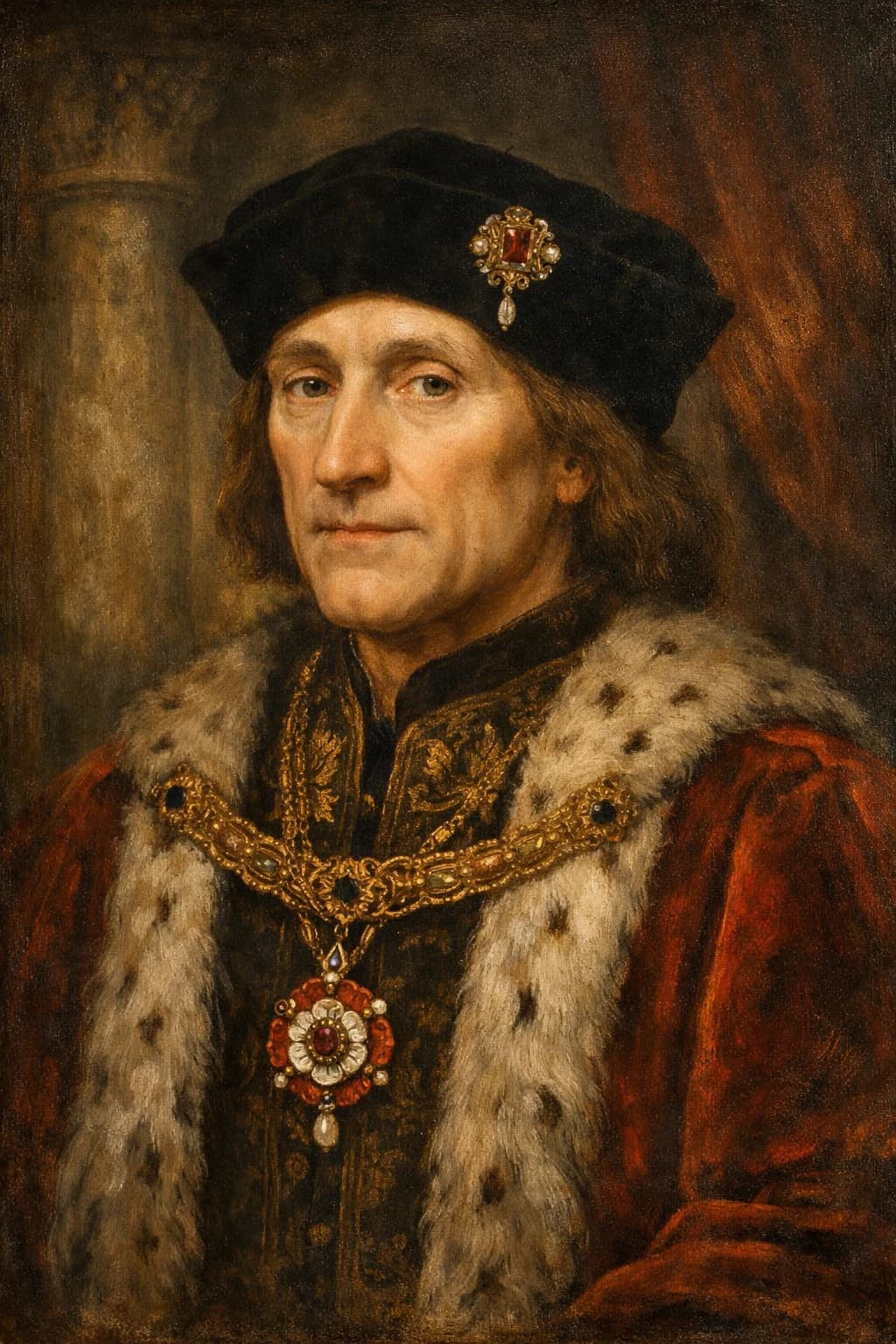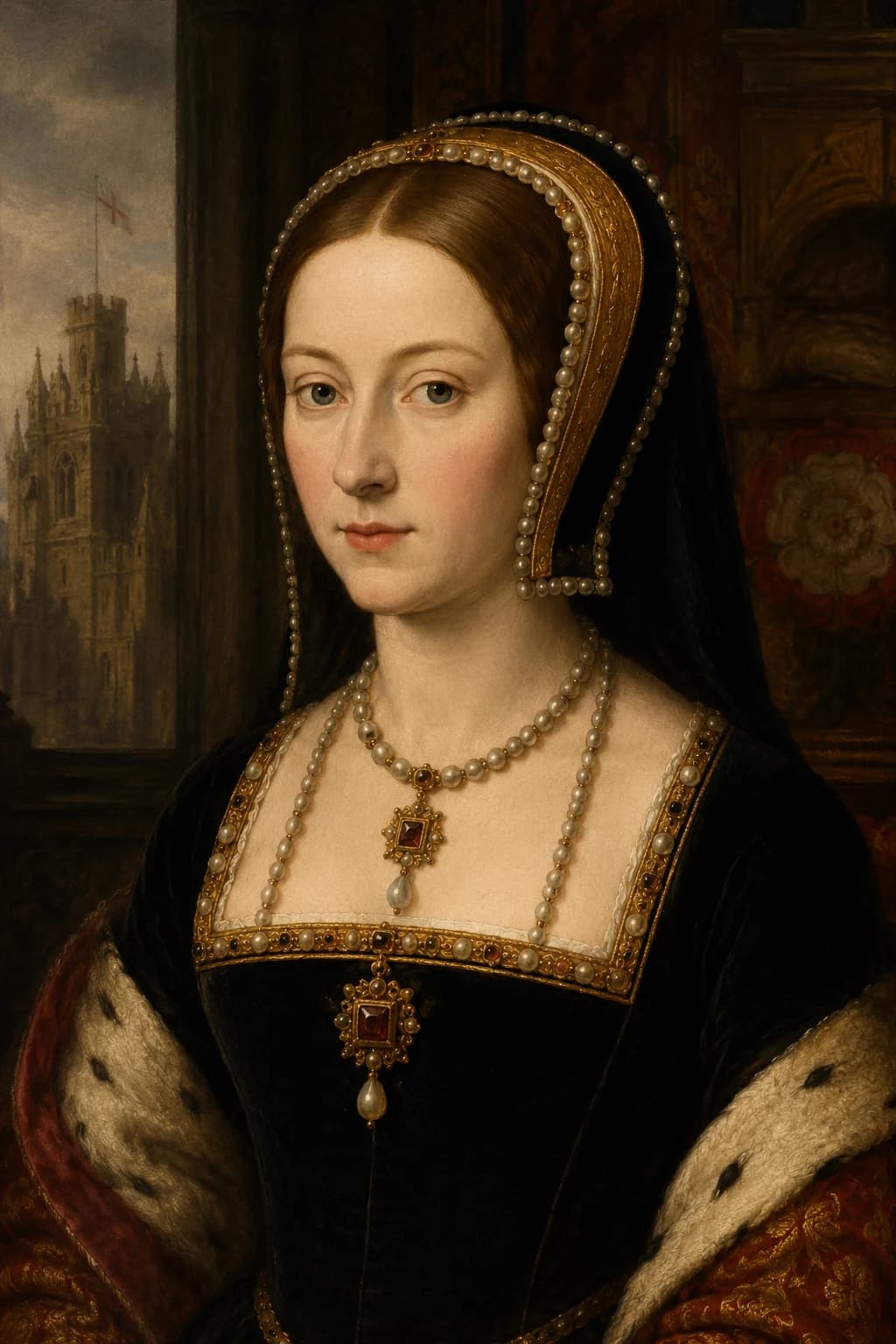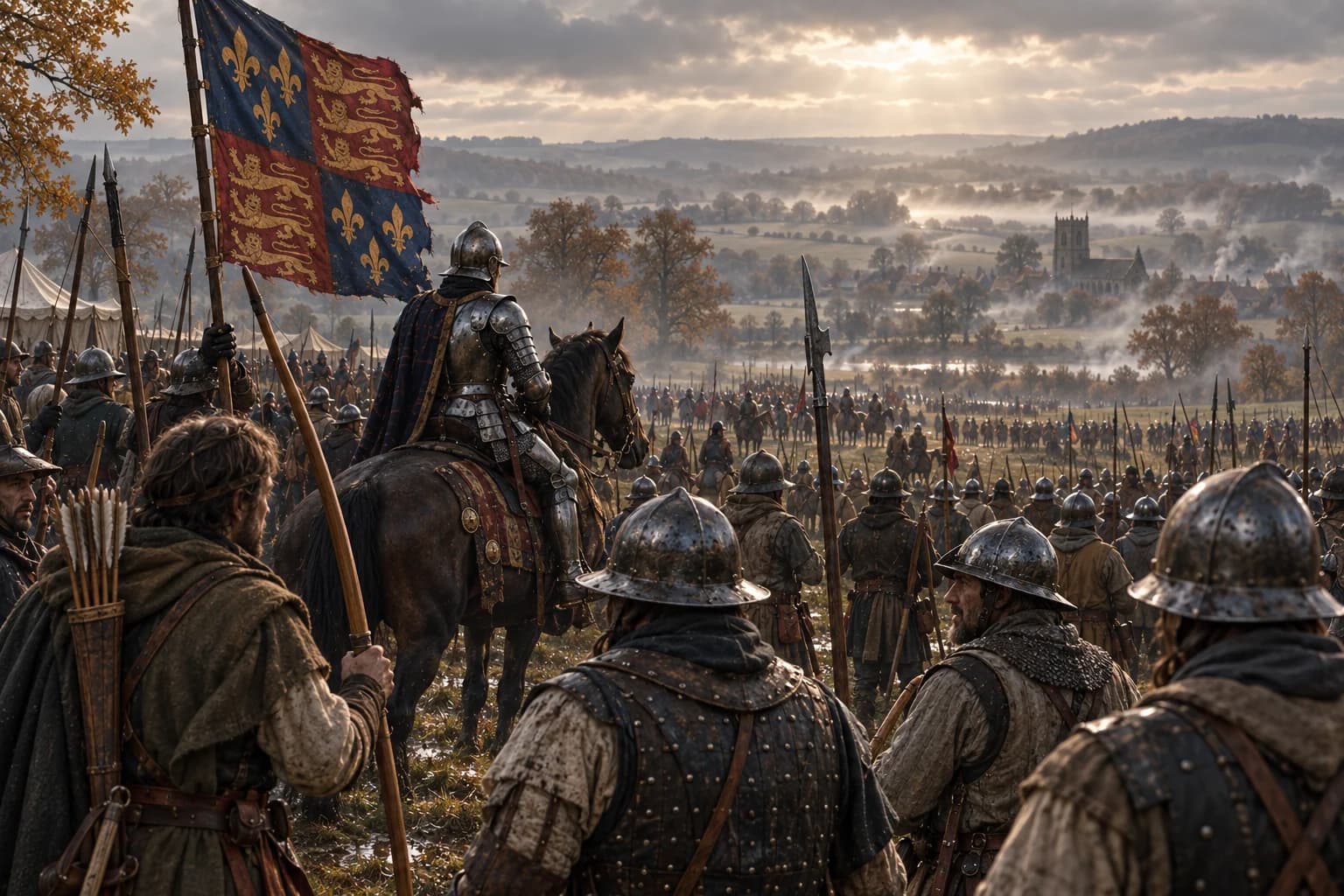
Illustrative reconstruction of a late-fifteenth-century English royal army assembling under a royal banner on misty fields.
Free Story

The Wars of the Roses

Follow the struggle for England’s crown from St Albans and Towton to Warwick’s reversals, Richard III, Bosworth and Stoke.

10 chapters · 20 min read

Next
Context

Introduction

Overview

Rival branches of the Plantagenet family fought to control England’s government and crown. The struggle moved through changing alliances, competing kings and disputed successions before Henry Tudor’s victory opened a contested new settlement.

What you’ll learn: You will see how government became a struggle for the crown, why allies changed sides, and why a battlefield victory could not by itself settle England’s succession.

Key forces

Illustrative reconstruction: councillors discuss royal government while Henry VI sits apart in a medieval chamber.
1453 CE
Step 1 of 101453 CEAccessible mode

A Crown Without Direction

Before rival kings fought for England, rival nobles fought to control the king.

Henry VI became king as a baby in 1422. His father, Henry V, had conquered much of France. But by 1453, England had lost almost all its French lands, keeping only Calais.

War had drained money and damaged the crown’s reputation. At home, powerful families argued over who should advise the king and control his government.

Richard, Duke of York, was rich, powerful and descended from earlier kings. He clashed with Edmund Beaufort, Duke of Somerset, but at first he did not openly claim the crown.

“When the king could not rule, whoever guided him could shape the kingdom.”

In 1453, Henry became so ill that he could not govern. York was made protector in 1454. Queen Margaret of Anjou had also given birth to a son, Edward of Westminster, securing an heir for Henry’s family.

Henry recovered, and York lost his role. Somerset returned to power. York and his allies feared that losing influence could leave them facing charges of treason. The question was no longer just how to help a weak king. It was who could safely hold power around him.

Illustrative reconstruction: armed retainers pass a barricade in a narrow street at St Albans in 1455.
1455 CE
Step 2 of 101455 CEAccessible mode

Blood in St Albans

On 22 May 1455, a fight over who advised the king became a battle in an English town.

York marched with Richard Neville, Earl of Salisbury, and Salisbury’s son, the Earl of Warwick. At , north of London, they faced Henry VI and his supporters.

Talks failed. Fighting spread through the streets. The king’s supporters had blocked the roads, but Warwick’s men found a way through.

Edmund Beaufort, Duke of Somerset, the Earl of Northumberland and Lord Clifford were killed. Henry was wounded and captured. York’s side had removed several of its strongest rivals by force.

“A victory over the king’s advisers left their families seeking revenge.”

York’s leaders said they were still loyal to Henry. They claimed they wanted to remove bad advisers, not replace the king.

But the dead nobles left sons, estates and deep anger behind them. Margaret of Anjou fought to protect her husband’s authority and her son’s future. Peace was still possible, but after , both sides had reason to doubt it.

Illustrative reconstruction: Richard, Duke of York, and his retinue prepare for a winter campaign outside Sandal Castle.
1460 CE
Step 3 of 101460 CEAccessible mode

York’s Claim and Wakefield

In 1460, York stopped asking only for better government. He claimed the crown.

Warwick and his allies returned from Calais. They defeated the royal army at Northampton in July and captured Henry VI.

York came back from Ireland and put forward his claim. Both the York and Lancaster families descended from Edward III. York’s claim came through an older line on his mother’s side; Henry ruled through the Lancastrian line.

Even some of York’s allies were startled. Parliament agreed to a compromise in October: Henry would stay king for life, then York and his heirs would inherit the throne.

“The agreement settled who came next, but it did not settle the war.”

The deal, called the Act of Accord, cut Henry’s son out of the succession. Margaret of Anjou and her supporters would not accept a settlement that denied the prince his future.

York marched north. Near , the Lancastrians defeated his army and killed him in December 1460; his death is usually dated to 30 December. His son Edmund also died. Salisbury was captured and later executed. York never became king. His eldest son, Edward IV, inherited the claim—and the fight to win it.

Illustrative reconstruction: longbowmen face wind-driven snow on the open fields near Towton in 1461.
1461 CE
Step 4 of 101461 CEAccessible mode

Edward IV and Towton

The Yorkist cause survived . York’s eldest son, Edward IV, took up the fight.

Edward won at Mortimer’s Cross in February 1461. Later that month, the Lancastrians won at the second battle of and freed Henry VI from Warwick’s army.

The Lancastrians failed to take London. Edward reached the city and was proclaimed king in March. Now both sides had a king of their own.

On 29 March, the armies met near in Yorkshire. It was Palm Sunday. Snow and wind swept across the battlefield as archers and soldiers fought for hours.

“Edward had won a crown. He still had to persuade the country to accept him.”

Edward’s army won. Henry, Margaret and their son escaped north. The victory made Edward’s rule much stronger.

is remembered as one of England’s bloodiest battles, though the exact number of soldiers and dead is unknown. Edward had won the throne, but many people remained loyal to Lancaster. He still had to turn victory into lasting rule.

Illustrative reconstruction: Warwick’s followers prepare to board a ship at a Channel harbour in 1470.
1470 CE
Step 5 of 101470 CEAccessible mode

Warwick Turns Against Edward IV

Warwick had helped Edward IV win the crown. Now the king was making his own decisions.

Warwick expected a say in royal policy, foreign alliances and who received rewards. Edward did not always agree.

Edward’s marriage to Elizabeth Woodville in 1464 changed who had influence at court. Her relatives gained important positions, and disagreements about foreign alliances pushed Edward and Warwick further apart.

Warwick joined Edward’s brother George, Duke of Clarence, in rebellion. They briefly captured Edward in 1469, but ruling through a captive king did not work.

“The men who put a king on the throne could fall out over how he ruled.”

After another failed revolt in 1470, Warwick and Clarence fled to France. There, Warwick made a startling deal with Margaret of Anjou, the very person he had fought against.

Warwick returned with support. Edward fled overseas, and Henry VI was restored in autumn 1470. This new government depended on a shaky alliance between former enemies. In this war, family loyalty did not always decide which side someone joined.

Illustrative reconstruction: Edward IV’s men advance through fog near Barnet in April 1471.
1471 CE
Step 6 of 101471 CEAccessible mode

The King Returns

Edward IV returned from exile before his enemies could secure their victory.

In March 1471, Edward landed in Yorkshire with a small force. As he marched south, more people joined him. A risky return became a real campaign for the crown.

Clarence switched sides and rejoined his brother. Edward reached London, took back the city and placed Henry VI in custody.

On Easter Sunday, 14 April, Edward’s army met Warwick’s near . Thick fog made it hard for soldiers to see who was moving where.

“Warwick was dead, but the fighting was not over.”

Edward won. Warwick and his brother John Neville, Marquess of Montagu, were killed. The man known as the kingmaker could no longer decide who ruled.

Edward had regained control of London, but another Lancastrian army was gathering in the southwest. Margaret of Anjou and her son had landed there. Edward had to move fast: his rivals still had an heir and supporters.

Illustrative reconstruction: infantry retreat through hedged fields with Tewkesbury Abbey in the distance.
1471 CE
Step 7 of 101471 CEAccessible mode

Victory at Tewkesbury

Less than three weeks after , Lancaster lost its strongest chance to regain the throne.

Margaret of Anjou’s army marched west, hoping to cross the Severn and find more support. Edward IV caught up with it near .

On 4 May 1471, the armies fought over fields and hedges south of the town. The Lancastrians were defeated.

Edward of Westminster, Henry VI’s only son, died during the battle or soon after. Margaret was captured. Lancaster had lost its heir, and its leading champion was now a prisoner.

“The Lancastrian defeat did not end arguments inside the Yorkist family.”

Later that month, Henry VI died in the . He was probably killed, but historians cannot be certain exactly how he died or who was responsible.

Edward IV now ruled more securely, and England had a longer spell of relative calm. But rivalries remained within his own family. George, Duke of Clarence, was executed in 1478. The Yorkists had beaten Lancaster, yet conflict could still erupt within their own house.

Illustrative reconstruction: a sentry guards a doorway in the medieval Tower of London in 1483.
1483 CE
Step 8 of 101483 CEAccessible mode

Richard III and the Princes

When Edward IV died, the struggle moved inside the family that had won the throne.

Edward died in April 1483. His twelve-year-old son became Edward V. The late king’s brother, Richard, Duke of Gloucester, took charge as protector.

Richard took control of the young king and removed several of his rivals. The Woodville family, relatives of Edward IV’s queen, lost power at court.

Edward V and his younger brother Richard were taken to the . The Tower was a royal home as well as a fortress and prison. Edward’s coronation never happened.

“The princes disappeared. No one can say for certain what happened to them.”

An earlier marriage was said to make Edward IV’s children illegitimate. Using that claim, Richard took the crown in June and was crowned Richard III in July.

The boys were never seen in public again. Their fate is still unknown. Many people suspect Richard III was responsible, but historians cannot prove who killed them or when. Richard’s seizure of the throne split Yorkist supporters. Some began to look to Henry Tudor, an exiled rival, as another possible king.

Illustrative reconstruction: armoured cavalry cross the low fields of Leicestershire during the Bosworth campaign.
1485 CE
Step 9 of 101485 CEAccessible mode

Bosworth Changes the Crown

In August 1485, Henry Tudor returned from exile and defeated Richard III.

Henry had spent years abroad. His claim to the throne came through his mother, Margaret Beaufort, and the Lancastrian family. Several other descendants had stronger claims by birth.

With help from France and English exiles, Henry landed in Wales. As he marched toward Richard’s army, more supporters joined him.

The armies met in Leicestershire on 22 August. The Stanley brothers commanded troops whose choice of side could shape the battle.

“Winning the battle gave Henry the crown. Keeping it would take more work.”

Richard led a mounted charge toward Henry. William Stanley’s intervention helped turn the battle against the king. Richard was killed, and Henry won.

Henry became the first Tudor king. ended Richard’s reign and the Plantagenet dynasty’s rule, but not everyone accepted the new king. Henry needed allies, recognition and an heir. Victory gave him a chance to secure the crown; it did not guarantee success.

Illustrative reconstruction: exhausted royal infantry stand near the River Trent after Stoke Field in 1487.
1487 CE
Step 10 of 101487 CEAccessible mode

Stoke and an Unfinished Peace

The Tudor rose promised to unite rival families. Henry VII still had to defeat a challenge to his rule.

Henry married Elizabeth of York in January 1486. She was Edward IV’s eldest daughter. Their marriage joined the new king to the Yorkist family and offered a strong symbol of peace.

But opposition continued. In 1487, rebels presented Lambert Simnel as the Earl of Warwick, a Yorkist claimant. The real Warwick was being held by Henry.

John de la Pole, Earl of Lincoln, helped lead the rebellion. Support from Ireland and troops paid for by Margaret of Burgundy turned Simnel’s claim into an invasion.

“A symbol of peace could not end the fighting on its own.”

On 16 June 1487, Henry’s army defeated the rebels at , near the River Trent. Lincoln was killed. Simnel survived and was given a job in the royal household.

Stoke is often called the last major battle of the Wars of the Roses. Tudor rule grew stronger, but later plots showed that opposition had not disappeared. The wars had changed England’s ruler again and again. A king needed more than a family claim or a battlefield win: people had to accept his rule.

Continue reading

Finished The Wars of the Roses?

Choose the next story, follow a connected moment, or explore the people behind this story.

Browse stories

References

Sources & Further Reading

Reliable sources, primary-source collections and reading paths connected to this page.

Sources used

  1. The National Archives, “The Wars of the Roses,” Open source
  2. The Royal Family, “Henry VI,” Open source
  3. The Battlefields Trust, “First Battle of St Albans,” Open source
  4. Historic England, “Battle of Towton, 1461,” Open source
  5. The Royal Family, “Edward IV,” Open source
  6. Historic England, “Battle of Tewkesbury, 1471,” Open source
  7. Historic Royal Palaces, “The Princes in the Tower: murdered or survived?,” Open source
  8. Historic England, “Battle of Bosworth Field, 1485,” Open source
  9. Historic England, “Battle of Stoke Field, 1487,” Open source
  10. Historic England, “Battle of Barnet, 1471,” Open source
  11. Paul L. Dawson and David Grummitt, “The “Battle” of Wakefield of 1460 Reconsidered (abstract),”

    The conventional date and circumstances of York’s death are debated; no ambush or death scene is reconstructed as fact.

    Open source
  12. Historic Royal Palaces, “Elizabeth of York,” Open source

Further reading

  1. Encyclopaedia Britannica, “Search results for The Wars of the Roses,” Open source
  2. WorldCat, “Library holdings for The Wars of the Roses,” Open source

Primary sources

  1. Library of Congress, “Search results for The Wars of the Roses,” Open source

Image references

  1. Royal Armouries, “The Hundred Years’ War 1337–1453: fifteenth-century arms and armour,” Open source

Reviewed claim sources

Loading reviewed claim sources...

A monthly route through history

Find out first about the latest published stories, feature notes and occasional Premium offers in one monthly email.