People

Henry V

Henry V was King of England from 1413 to 1422. He won the Battle of Agincourt, renewed the Hundred Years' War, forced the Treaty of Troyes, married Catherine of Valois, and nearly united the English and French crowns.

Born
1386 CE
Died
1422 CE
Role
King of England

King of England (1386–1422)

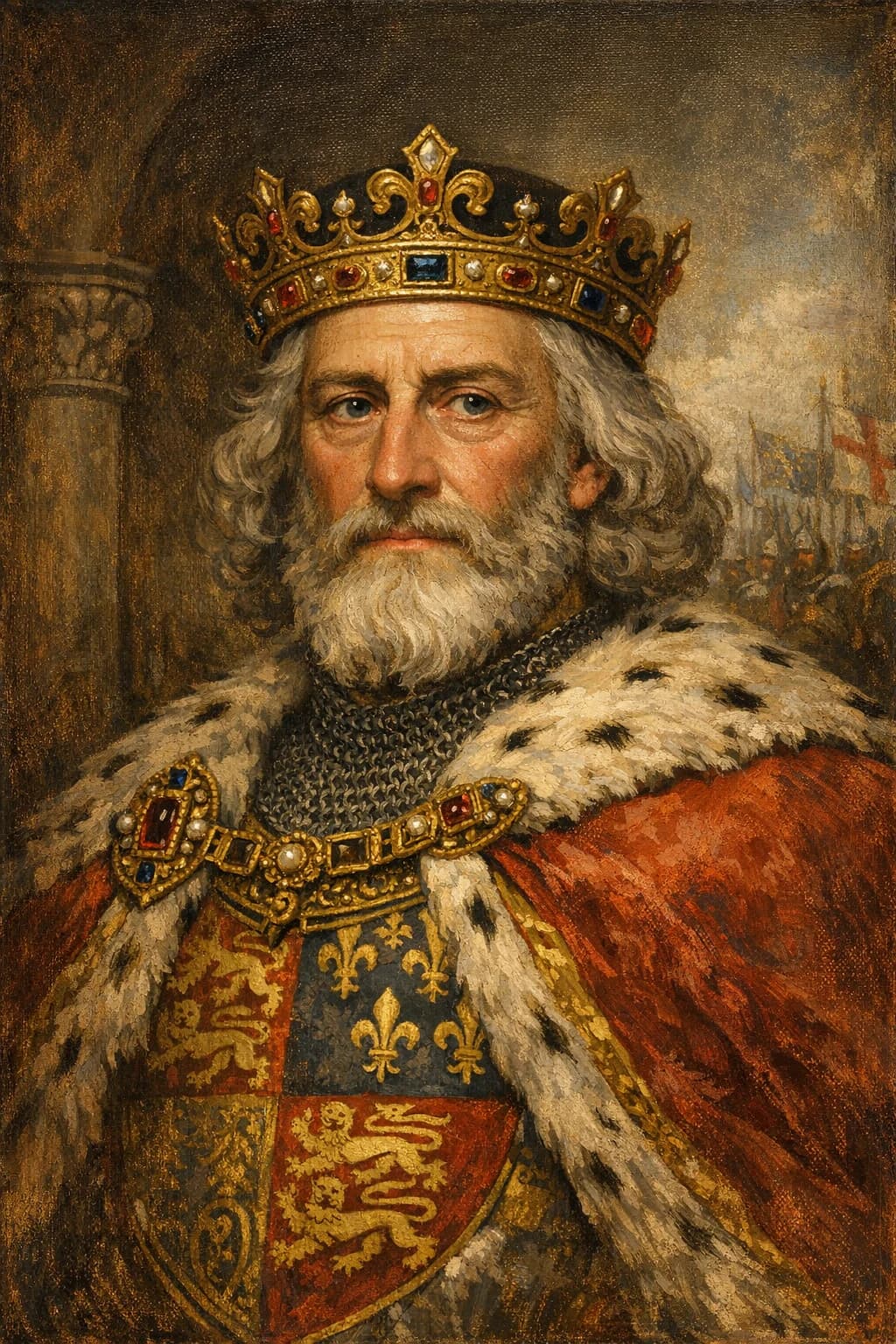
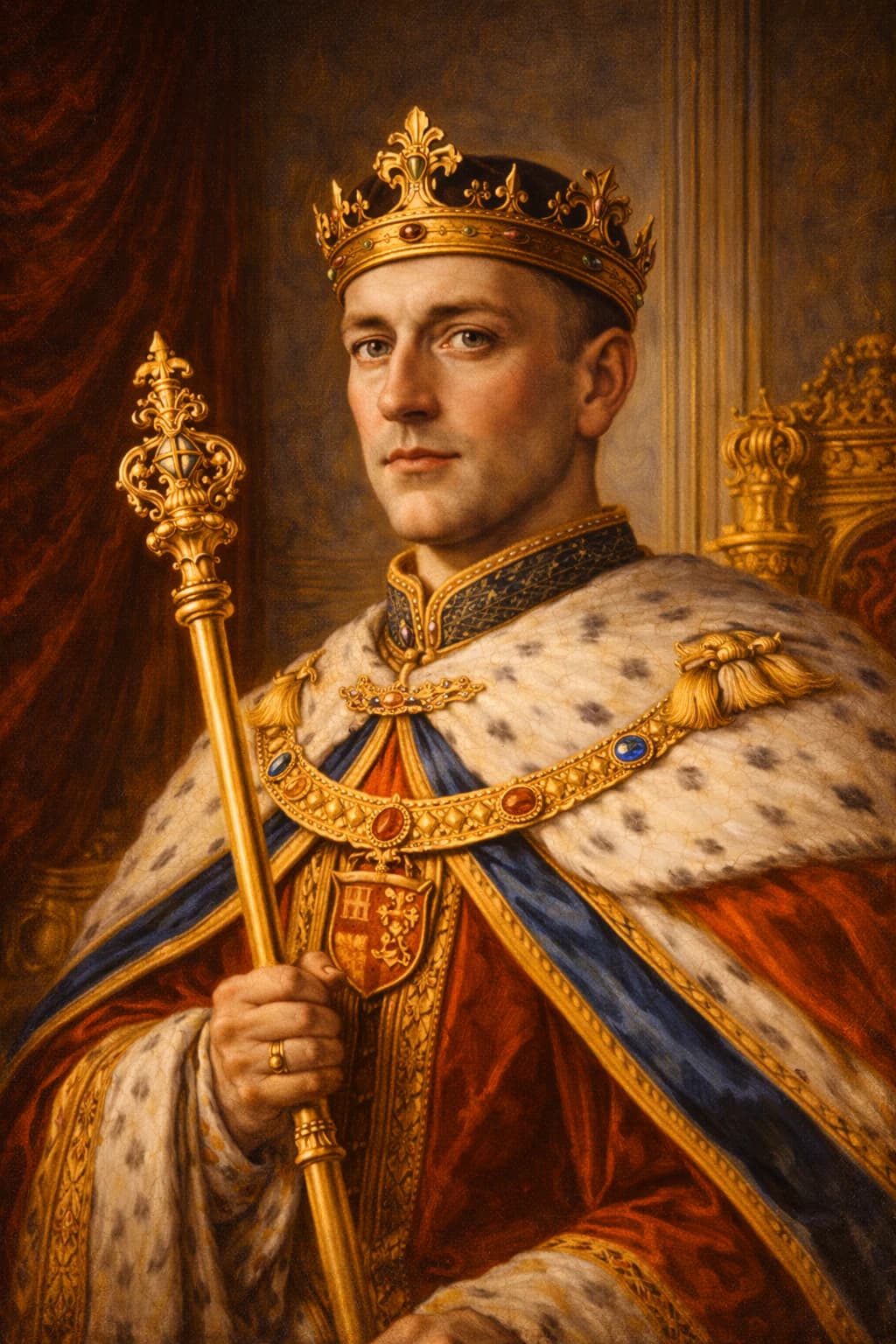
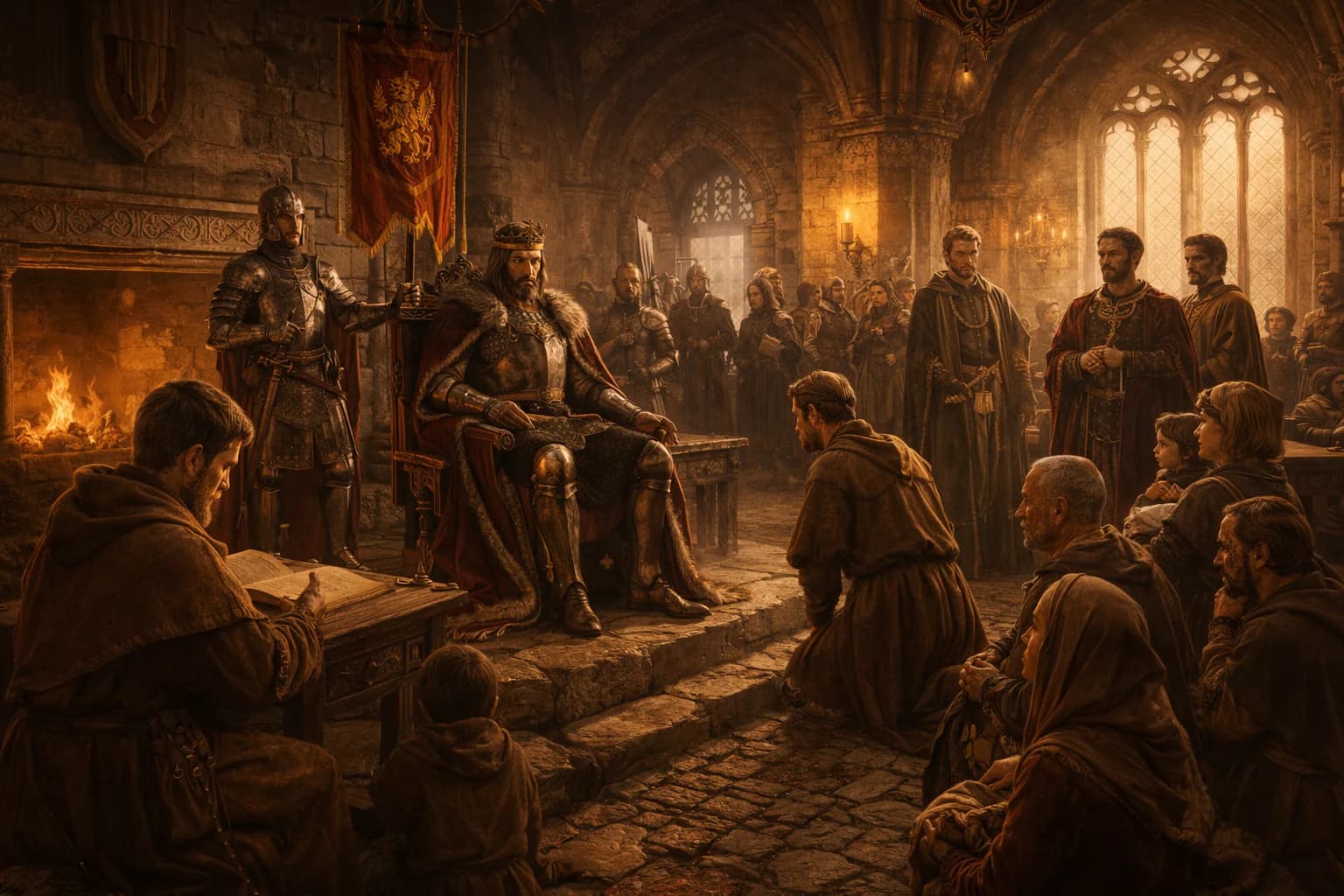
AI-generated portrait of Henry V in medieval royal armour
AI-assisted historical reconstruction

An illustrative reconstruction based on historical context. It is not a photograph or documentary likeness. Image policy

Quick answer

Henry V was King of England from 1413 to 1422. He won the Battle of Agincourt, renewed the Hundred Years' War, forced the Treaty of Troyes, married Catherine of Valois, and nearly united the English and French crowns.

Born
1386 CE
Died
1422 CE
Role
King of England
Years
1386-1422 CE
Facts

Henry V timeline facts

Selected specifics from this profile's life story.

1386
Born to uncertainty

Henry of Monmouth was born in 1386 or 1387, before his father seized the throne, into a Plantagenet world thick with mistrust.

1413
From heir to king

When Henry became king in 1413, he moved quickly to project piety, justice, unity, and a sharper sense of purpose than his father's troubled reign.

1416–1419
War without pause

After Agincourt, Henry returned to France for systematic conquest, taking Normandy through sieges, occupation, and administrative control.

1422 and beyond
A triumph cut short

Henry died of illness in 1422, leaving an infant heir, an unfinished conquest, and a legend far stronger than the settlement behind it.

Life Journey

From troubled prince to conquering king

Follow the story in a more continuous narrative, with a reading mode that matches how much depth you want.

Complete chronology

1386

Born to uncertainty

Henry V was not born expecting to become king. His father, Henry Bolingbroke, was a great nobleman and cousin to Richard II, but the politics of Richard's later reign made even the highest birth dangerous. The younger Henry's childhood was shaped by royal favour, exile, inheritance crisis, and then sudden dynastic revolution when his father returned in 1399 and became Henry IV. That background mattered. Henry inherited not a serene royal tradition, but a crown acquired by deposition and defended through rebellion. Later legends imagined him as the reckless prince transformed into a perfect king. The historical Henry was more disciplined and more serious: a ruler formed by instability, war, and the need to make Lancastrian kingship look legitimate.
1390s

A prince in training

Henry's education was unusually practical. He received the training expected of a royal heir, but his real formation came through the problems his father's reign could not avoid: Welsh rebellion, financial pressure, noble mistrust, and the constant need to prove Lancastrian authority. He joined councils, negotiated with powerful men, and learned that kingship was performance backed by force. His piety, discipline, and concern for public order were not decorative qualities. They were political tools. He understood that the son of a usurper had to look more lawful, more purposeful, and more divinely favoured than kings whose title no one questioned.

1400s

Wales and hard lessons

The Welsh war was Henry's apprenticeship in the unglamorous realities of power. Owain Glyndwr's revolt was mobile, locally rooted, and difficult to crush. It demanded garrisons, supply, negotiation, punishment, and patience rather than one clean heroic victory. Henry was wounded in the face by an arrow at Shrewsbury in 1403 while fighting the Percy rebellion, a reminder that his later image as a warrior king was earned in real danger. Wales taught him how rebellion survived through terrain, loyalty, and time. It also taught him that conquest required administration after the battle. Those lessons would shape the methodical campaigns he later launched in France.

1413

From heir to king

Henry's accession allowed the Lancastrian monarchy to reset itself. He reburied Richard II at Westminster, a gesture that acknowledged the wound of 1399 while claiming to heal it. He acted firmly against disorder, cultivated a reputation for religious seriousness, and presented himself as a king of law rather than faction. His early reign also dealt with threats, including the Southampton Plot of 1415, which revealed that dynastic doubts had not vanished. Henry's response was controlled and severe. Before he crossed to France, he worked to make England look politically aligned behind him. War abroad would only strengthen his crown if the realm believed the king's cause was legitimate.

1413–1415

A kingdom aligned

Henry's French campaign was not a youthful adventure. It was built through claims, negotiation, taxation, shipping, recruitment, and religious justification. The French kingdom was divided by civil conflict between Armagnac and Burgundian factions, while King Charles VI's mental illness weakened central authority. Henry saw opportunity in that disorder. He demanded territory and recognition of rights that reached back into the Hundred Years' War, then prepared for invasion when diplomacy failed to produce what he wanted. Parliament supported him, and the campaign was framed as lawful recovery rather than naked aggression. This framing mattered because Henry wanted victory to look like justice.

1415

Agincourt

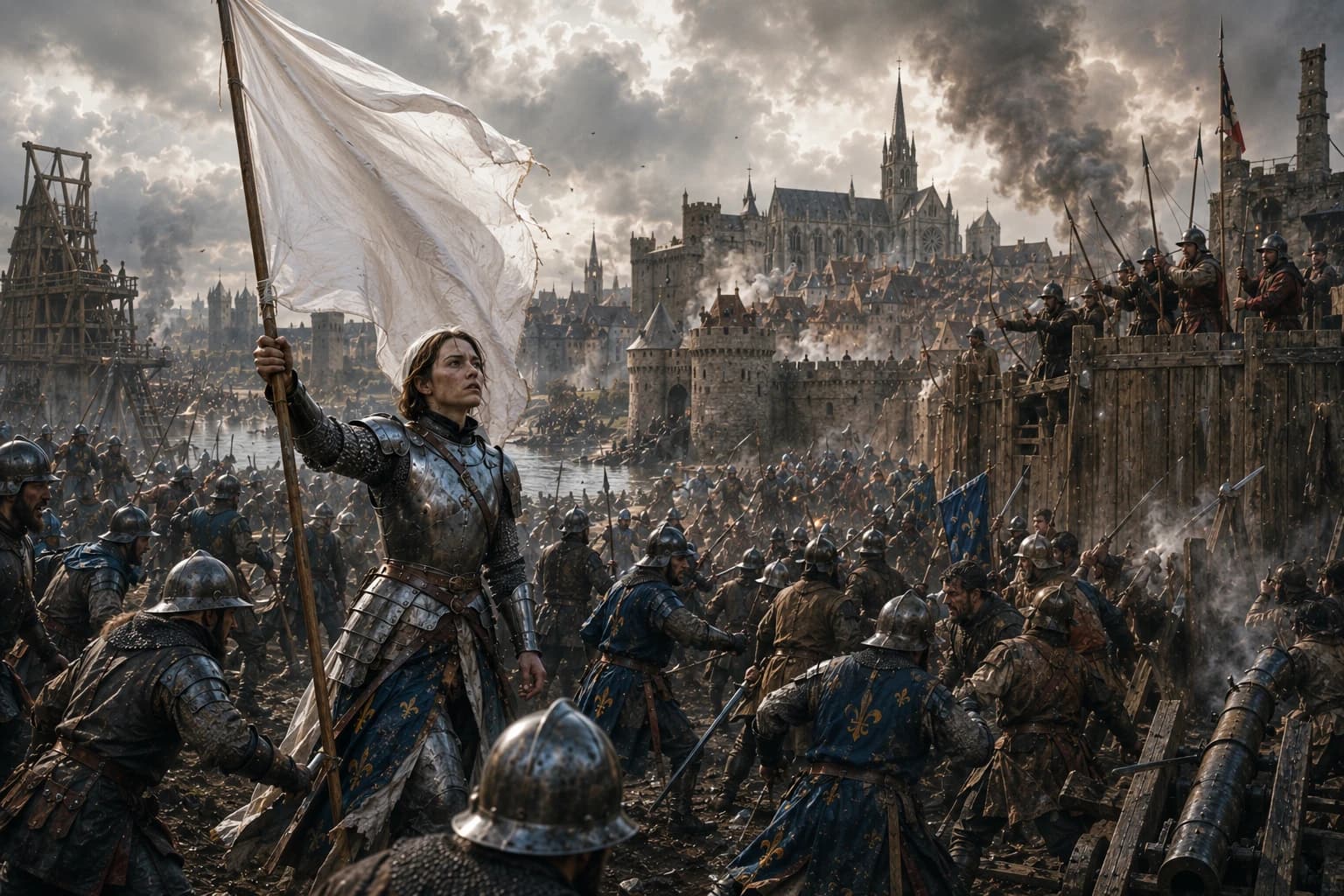
Agincourt was born from danger. Henry had captured Harfleur, but disease weakened his army and the march toward Calais left his men hungry, tired, and exposed. The French blocked his route with a far larger force of nobles and men-at-arms. The English victory depended on terrain, mud, disciplined defensive positioning, and the devastating effect of longbowmen against crowded French attacks. It was not magic, and it was not inevitable. Henry's command mattered, but so did French overconfidence and battlefield conditions. The killing of prisoners remains one of the battle's grim controversies, rooted in fear that renewed fighting could overwhelm the English. Agincourt made Henry legendary, but the legend should not sand away the brutality.

1416–1419

War without pause

Henry's greatness as a commander lies as much after Agincourt as at Agincourt. He did not settle for a celebrated raid. From 1417 he launched a sustained conquest of Normandy, taking Caen, Falaise, Rouen, and other strongholds through siege warfare and pressure. This phase was slow, expensive, and administratively demanding. Garrisons had to be supplied, towns governed, taxes collected, and loyalty managed. Henry combined severity with order, presenting himself as a rightful lord while using the hard tools of occupation. By converting battlefield prestige into territorial control, he forced French politics to reckon with him not as a raider but as a ruler.

1420

Heir to France

The Treaty of Troyes was the peak of Henry's achievement and the boldest expression of his ambition. Backed by Burgundian alliance after the murder of John the Fearless, the treaty disinherited the Dauphin Charles, married Henry to Catherine of Valois, and named him heir to the French throne after Charles VI. It did not mean all France accepted him. Large areas still supported the Dauphin, and the settlement rested on military occupation, factional division, and the continuing illness of the French king. Even so, Troyes transformed Henry's claim. He was no longer merely demanding lands; he was positioned as future king of France. The dream of dual monarchy seemed suddenly possible.

1422 and beyond

A triumph cut short

Henry died at Vincennes in August 1422, probably from dysentery contracted on campaign, only weeks before Charles VI of France. He was thirty-five or thirty-six. His son Henry VI inherited the English crown as an infant and, under the terms of Troyes, the claim to France as well. But the entire structure depended on momentum, military pressure, Burgundian cooperation, and the authority of a king who was no longer alive. Henry V's reputation became immense: disciplined, pious, eloquent in later memory, and devastating in war. Yet his achievement was also fragile. He had nearly remade western European monarchy, but he died before conquest could become durable government. His legacy is therefore both triumph and warning: glory can outrun what institutions can hold.

Continue in context

Connected stories

Move from the profile into the wider events and settings this figure belongs to.

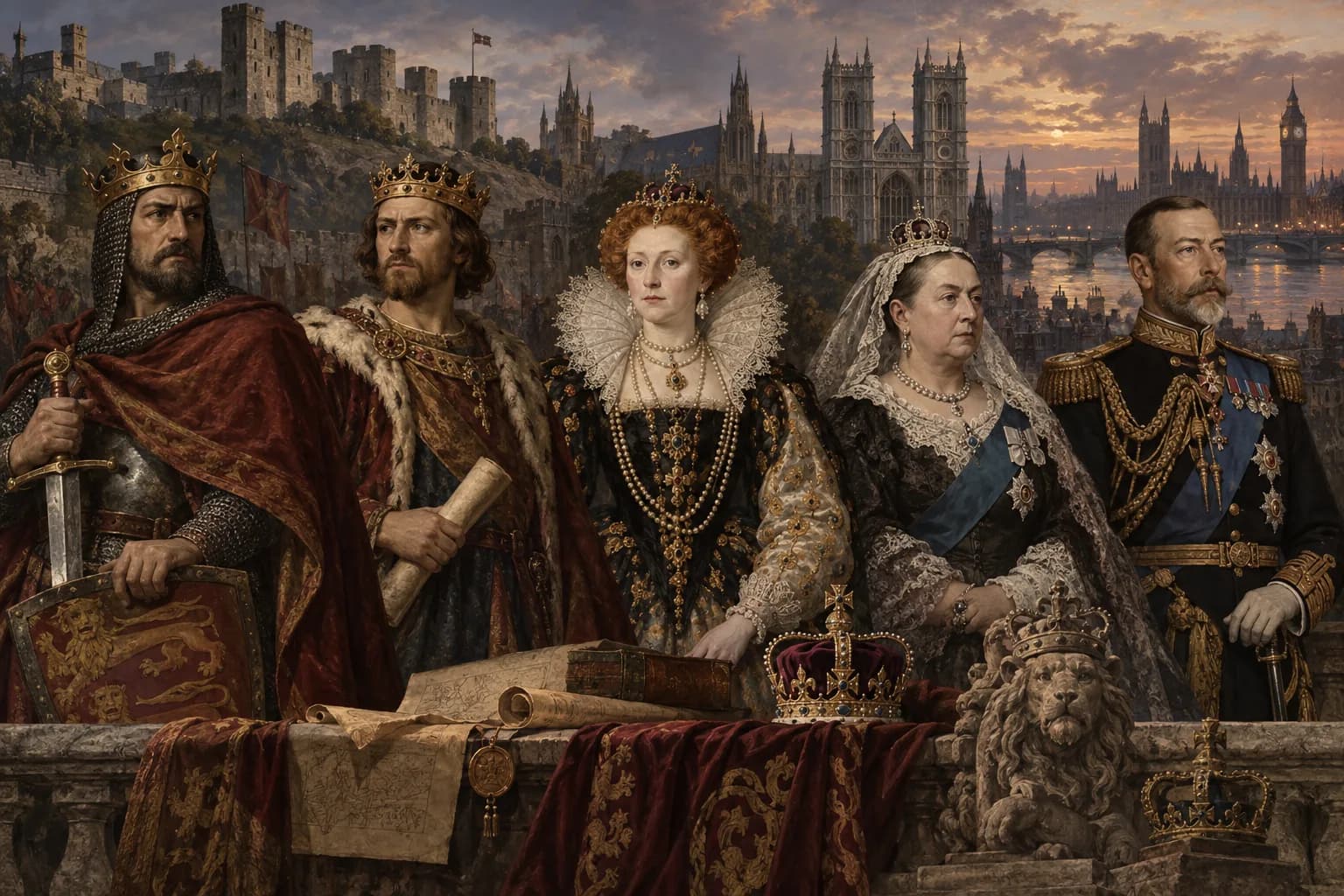
British Monarchs lineage
Lineage42 rulers
British Monarchs
1066 CE–present

Trace the English and later British monarchy from William I to today.

View lineage
Tertiary paths

Content note

This profile is written for educational use and connects to related Stories of History pages. The main portrait is an AI-assisted historical reconstruction, included as an illustrative aid rather than documentary evidence. Image policy

References

Sources & Further Reading

Reliable reference works, archives and reading paths connected to this profile.

Further reading

  1. Encyclopaedia Britannica, Search results for Henry V,” accessed June 2026.Open source
  2. WorldCat, Books and library holdings for Henry V,” accessed June 2026.Open source

Primary sources

  1. Library of Congress, Search results for Henry V,” accessed June 2026.Open source

Reviewed claim sources

Loading reviewed claim sources...

A weekly route through history

Find out first about the latest published stories, feature notes and occasional Premium offers in one weekly email.