People

Henry VI

Henry VI was King of England from 1422 to 1461 and again briefly in 1470-1471. The last Lancastrian king, he inherited Henry V's French ambitions, suffered mental collapse, lost most English lands in France, faced Yorkist opposition, and died in the Tower of London.

Born
1421 CE
Died
1471 CE
Role
Last Lancastrian king of England

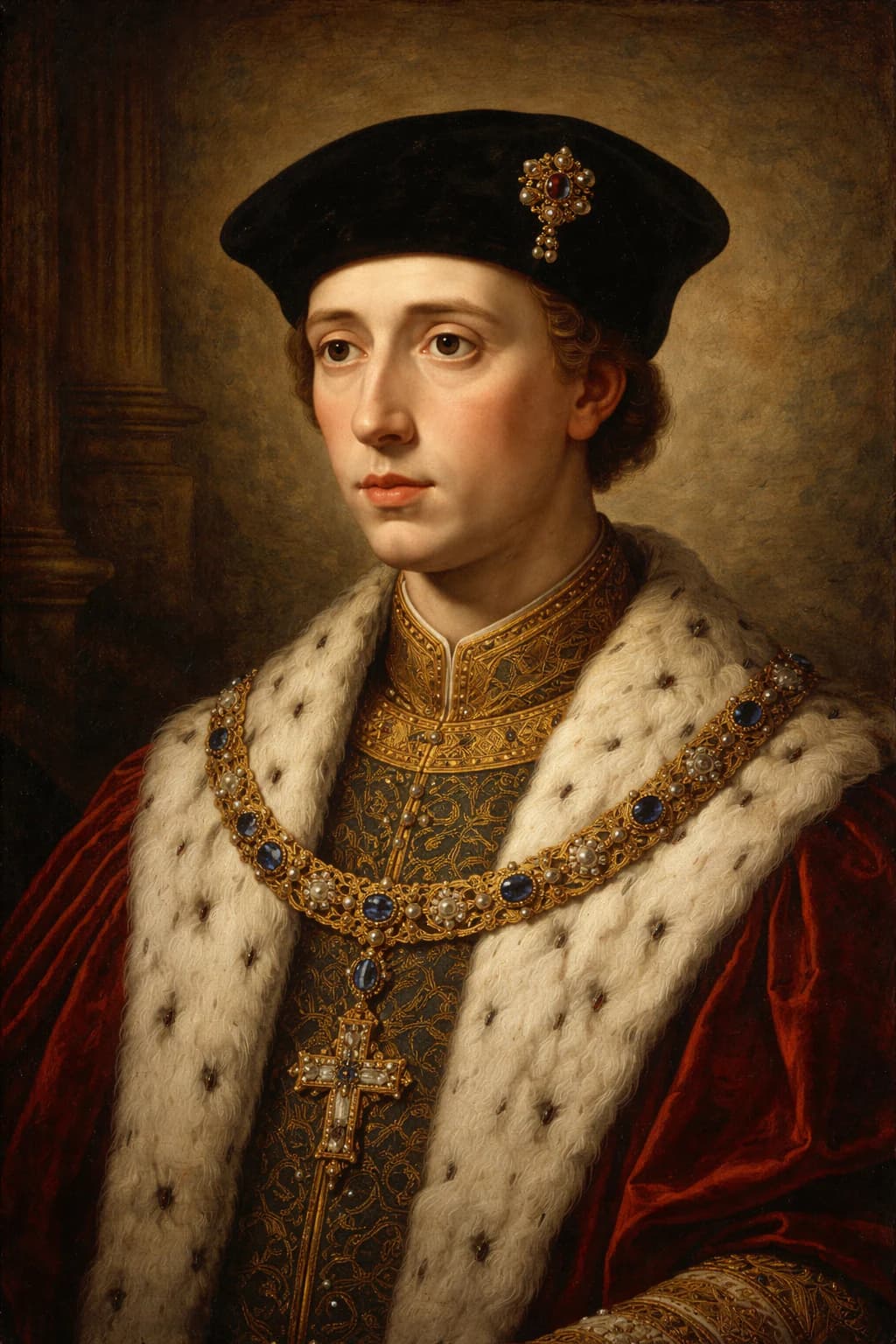
Last Lancastrian king of England (1421–1471)

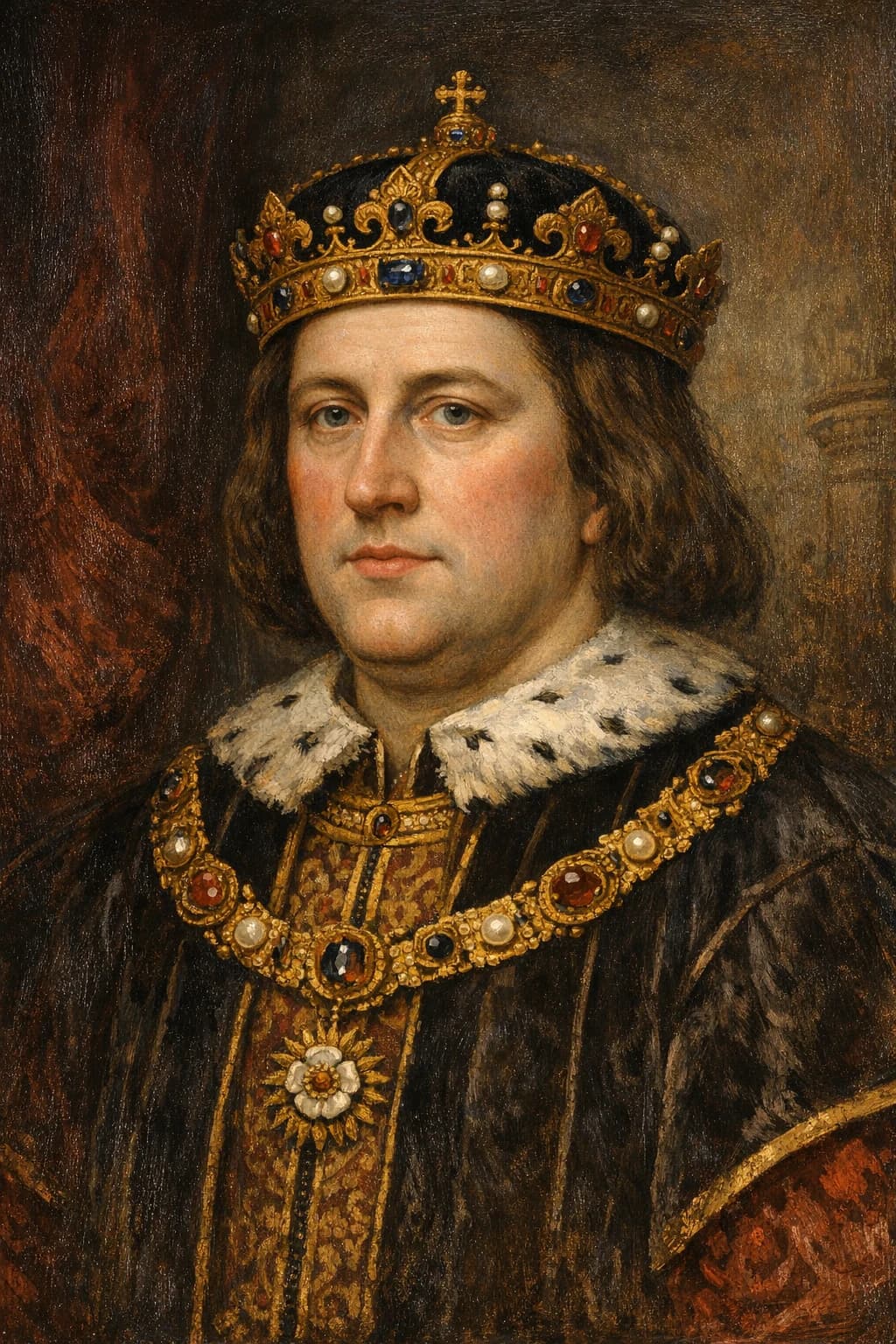
AI-generated portrait of Henry VI in medieval royal attire
AI-assisted historical reconstruction

An illustrative reconstruction based on historical context. It is not a photograph or documentary likeness. Image policy

Quick answer

Henry VI was King of England from 1422 to 1461 and again briefly in 1470-1471. The last Lancastrian king, he inherited Henry V's French ambitions, suffered mental collapse, lost most English lands in France, faced Yorkist opposition, and died in the Tower of London.

Born
1421 CE
Died
1471 CE
Role
Last Lancastrian king of England
Years
1421-1471 CE
Facts

Henry VI timeline facts

Selected specifics from this profile's life story.

1421–1422
Infant king

Henry VI became king of England at nine months old and was recognised by his supporters as king of France before he could speak.

1445–1453
Marriage and lost France

Henry's marriage to Margaret of Anjou was meant to support peace, but English losses in Normandy and Gascony made the court look disastrous.

1461–1470
Deposition and exile

Edward of York seized the throne in 1461, and Henry spent most of the following decade as a fugitive or prisoner, briefly restored in 1470.

Post-1471
Sainthood and consequence

Henry VI was venerated as a saint after his death, and his failure reshaped English kingship by demonstrating what happened when royal authority collapsed.

Life Journey

A crown inherited too soon, lost too completely

Follow the story in a more continuous narrative, with a reading mode that matches how much depth you want.

Complete chronology

1421–1422

Infant king

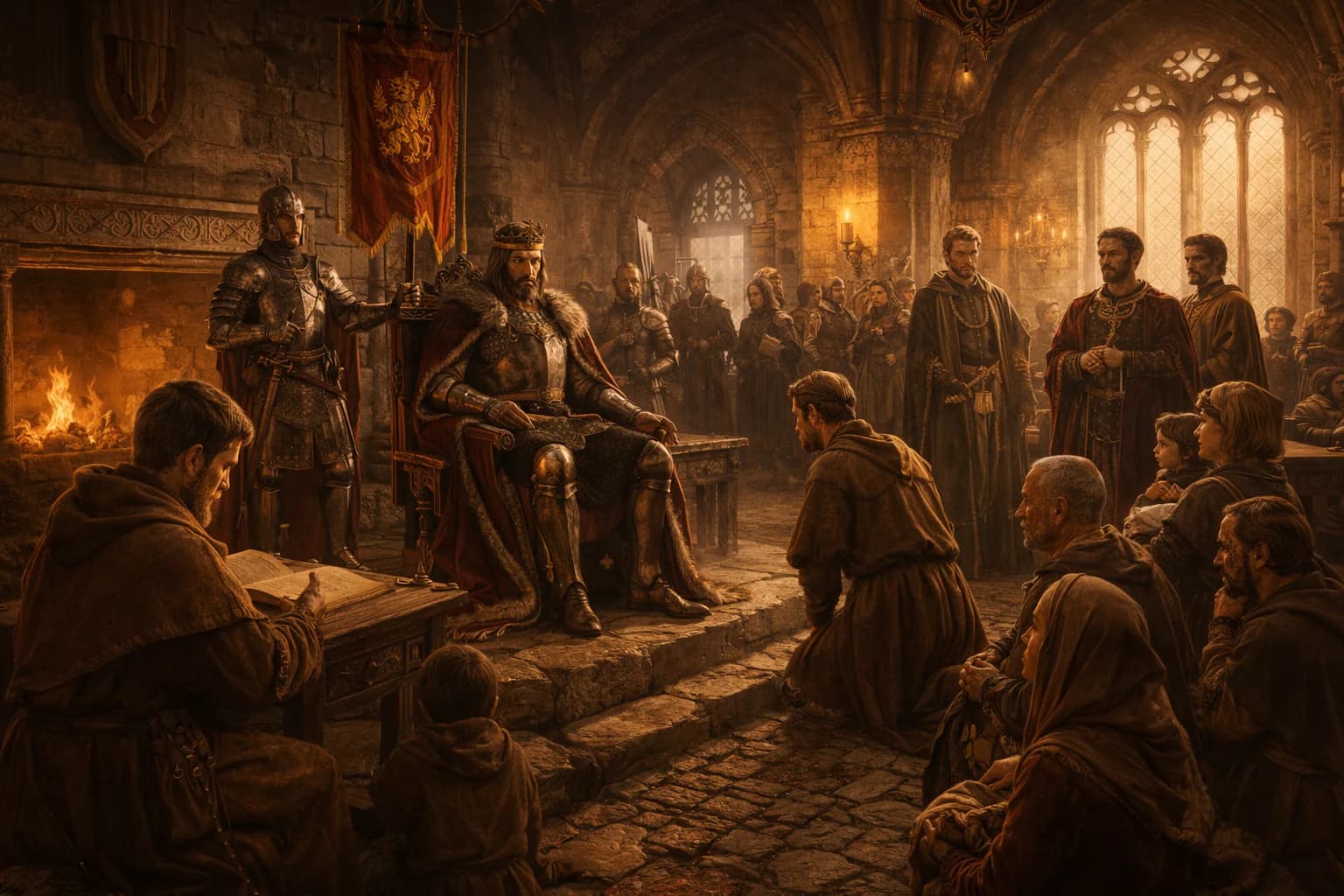
Henry VI was born in December 1421 into the triumph and fragility of his father's conquests. Henry V had forced the Treaty of Troyes, married Catherine of Valois, and secured recognition as heir to the French throne, but he died in August 1422 before that settlement could become stable. The infant Henry inherited England and, in English-controlled areas, the claim to France after Charles VI died weeks later. The Dauphin Charles, rejected by Troyes, continued to resist from the south. The child king's reign therefore began as an administrative impossibility: a dual monarchy claimed in law, contested in arms, and dependent on regents who had to preserve a warrior father's achievement without the warrior himself.
1422–1437

Governed by regents

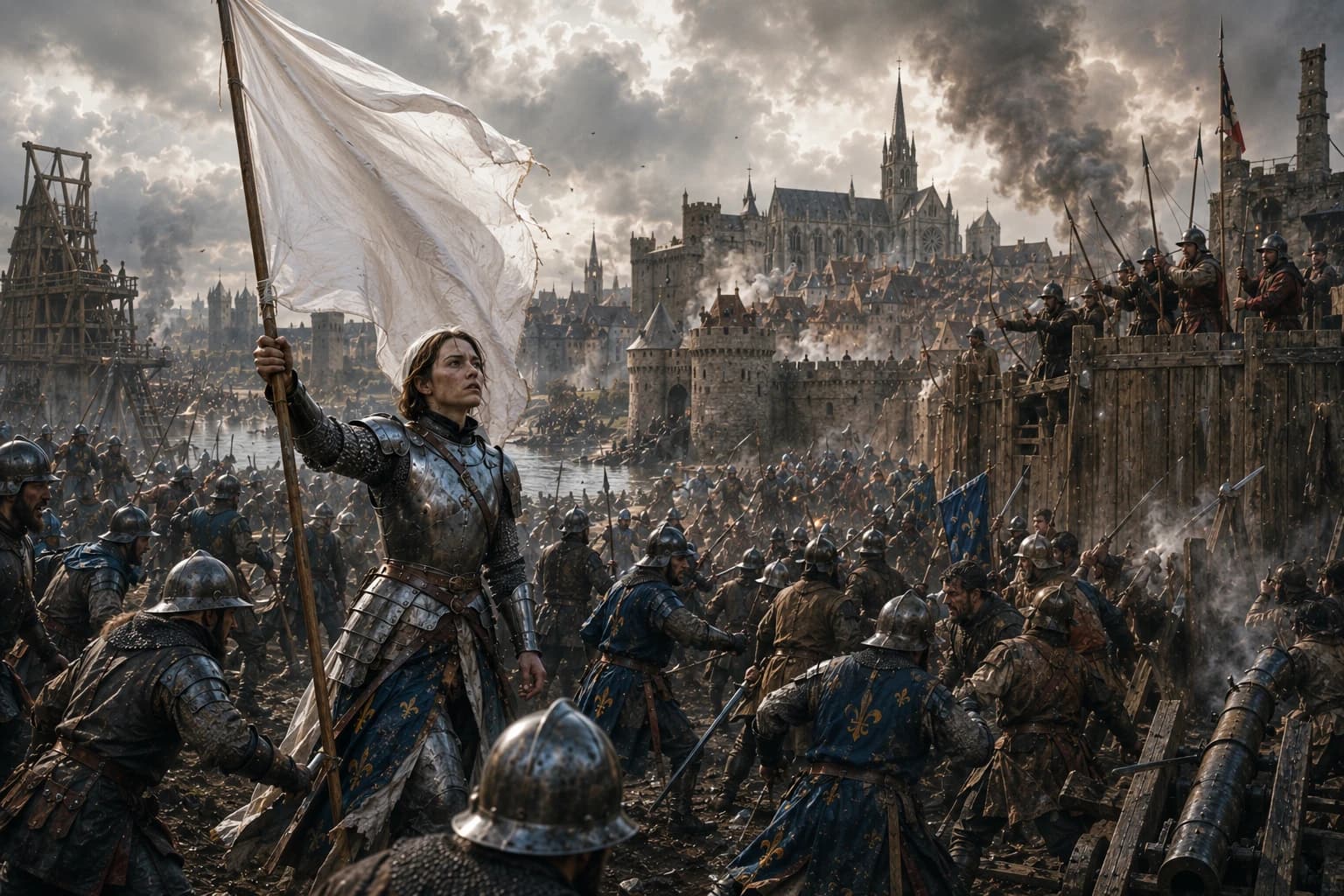
The minority government depended on men of formidable ambition: Humphrey, Duke of Gloucester; John, Duke of Bedford; Cardinal Beaufort; and other magnates whose rivalries shaped policy. Bedford held much of the French project together with skill, but the rise of Joan of Arc and the coronation of Charles VII at Reims in 1429 changed the emotional and political balance of the war. Henry himself grew into a gentle, pious, and studious boy, more drawn to devotion and learning than to command. Those qualities later supported foundations such as Eton College and King's College, Cambridge, but they were poorly matched to a kingship built on conquest. While Henry prayed and studied, the world he inherited was becoming harder to hold.

1437–1445

Personal rule begins

Henry's personal rule exposed the gap between saintly temperament and political necessity. He was capable of kindness, generosity, and sincere religious feeling, but he lacked the suspicion, energy, and authority needed to discipline a competitive nobility. Patronage flowed to favourites such as William de la Pole, Duke of Suffolk, while men outside the court circle blamed misgovernment for defeat abroad and disorder at home. Henry wanted peace in France, partly from conviction and partly from exhaustion, but peace looked like surrender to those raised on the memory of Agincourt. He was not malicious and not stupid. His tragedy was that his virtues were not the virtues his inheritance required.

1445–1453

Marriage and lost France

Margaret of Anjou brought intelligence, courage, and political will into a court that badly needed energy. Yet the marriage settlement, associated with concessions in France, gave opponents a powerful weapon. As Normandy fell in 1449-1450 and Gascony followed in 1453, the achievements of Henry V seemed to vanish. The shock was national as well as military. Men had paid taxes, served campaigns, and believed in English honour across the Channel. Now they saw defeat, debt, corruption, and favourites. Jack Cade's rebellion in 1450 gave popular form to these grievances, attacking misrule in the language of reform. Margaret increasingly defended the Lancastrian interest because Henry could not, but her strength also made enemies depict the regime as foreign-influenced and factional.

1453–1455

Mental breakdown

In 1453 Henry entered a prolonged state of incapacity. Contemporary descriptions suggest near-total withdrawal: he did not respond to people around him and could not perform the basic functions of kingship. Modern diagnoses are speculative, though some historians note possible inherited vulnerability through his French grandfather Charles VI. The timing could hardly have been worse. News of catastrophe in France arrived, Margaret gave birth to Edward of Westminster, and Richard, Duke of York, stood as the leading adult prince of the blood outside the court faction. York's protectorate during Henry's illness gave him lawful authority; Henry's recovery in 1455 and reversal of York's position made armed confrontation much more likely. Illness turned faction into constitutional crisis.

1455–1461

Wars of the Roses

At the First Battle of St Albans, Yorkist forces attacked the king's party and killed key Lancastrian leaders. Henry was wounded and captured, an image that captured the reality of the next phase: power belonged to whoever controlled the king's person. Attempts at reconciliation, including the Loveday of 1458, could not overcome distrust. Margaret of Anjou became the driving force of Lancastrian resistance, protecting her son's inheritance with a determination Henry lacked. York advanced from reformer to claimant, and after his death his son Edward carried the Yorkist cause forward. The conflict was not inevitable from birth, but by the late 1450s weak kingship, factional revenge, and dynastic argument had fused into civil war.

1461–1470

Deposition and exile

After Yorkist victories in 1460 and 1461, Edward IV was proclaimed king, and Henry's reign appeared over. Henry fled to Scotland and then wandered as a fugitive in the north of England, relying on the loyalty of scattered Lancastrian supporters. He was captured in 1465 and held in the Tower of London, a demotion from fugitive to prisoner that stripped away even the pretence of freedom. In 1470, a temporary political realignment brought about his readeption — a brief restoration to the throne — but this proved to be an interlude rather than a recovery. Edward IV returned, defeated the Lancastrian forces, and Henry was back in the Tower.

1471

Murder in the Tower

The Battle of Tewkesbury in May 1471 ended the Lancastrian cause. Henry's son Edward was killed in the fighting, eliminating the dynastic future that Margaret had spent years trying to secure. Henry, already back in the Tower, died on the night of 21 May 1471. The official account attributed his death to grief, but the political logic was clear: with his son gone, Henry was the last Lancastrian claim, and his continued existence posed a permanent risk. He was almost certainly killed, whether by direct order or by the permissive silence of those who needed the problem to disappear. He was buried without ceremony, his reign ending as it had lived — without agency.

Post-1471

Sainthood and consequence

The cult that developed around Henry VI after his death was partly political and partly genuine. His piety and reputation for personal holiness made him a candidate for popular veneration, and efforts were made for his canonisation, though Rome never formally obliged. His reign's true legacy was less spiritual than constitutional: it demonstrated in the most brutal terms what happened when a king lacked the capacity to govern. The Wars of the Roses that his weakness had permitted reshaped the political culture of the Yorkist and early Tudor periods, in which kings went out of their way to project strength, competence, and decisive authority. Henry VI became a cautionary example that his successors studied carefully.

Continue in context

Connected stories

Move from the profile into the wider events and settings this figure belongs to.

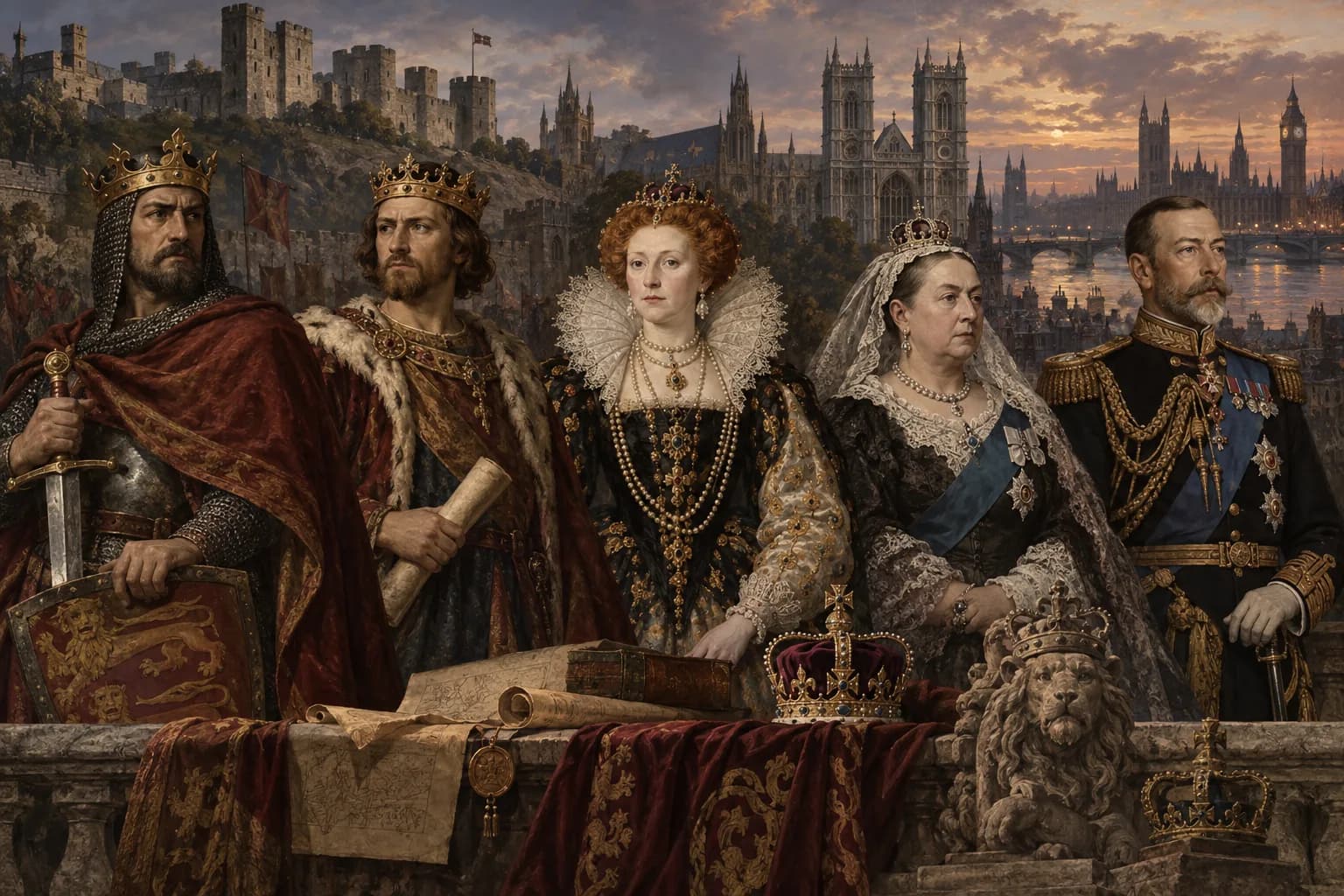
British Monarchs lineage
Lineage42 rulers
British Monarchs
1066 CE–present

Trace the English and later British monarchy from William I to today.

View lineage
Tertiary paths

Content note

This profile is written for educational use and connects to related Stories of History pages. The main portrait is an AI-assisted historical reconstruction, included as an illustrative aid rather than documentary evidence. Image policy

References

Sources & Further Reading

Reliable reference works, archives and reading paths connected to this profile.

Further reading

  1. Encyclopaedia Britannica, Search results for Henry VI,” accessed June 2026.Open source
  2. WorldCat, Books and library holdings for Henry VI,” accessed June 2026.Open source

Primary sources

  1. Library of Congress, Search results for Henry VI,” accessed June 2026.Open source

Reviewed claim sources

Loading reviewed claim sources...

A weekly route through history

Find out first about the latest published stories, feature notes and occasional Premium offers in one weekly email.