People

Elizabeth of York

Elizabeth of York was Queen of England from 1486 to 1503 as the wife of Henry VII. The daughter of Edward IV and Elizabeth Woodville, she helped unite Yorkist and Lancastrian claims after the Wars of the Roses and was the mother of Henry VIII.

Born
1466 CE
Died
1503 CE
Role
Queen consort of England

Queen of England (1466-1503)

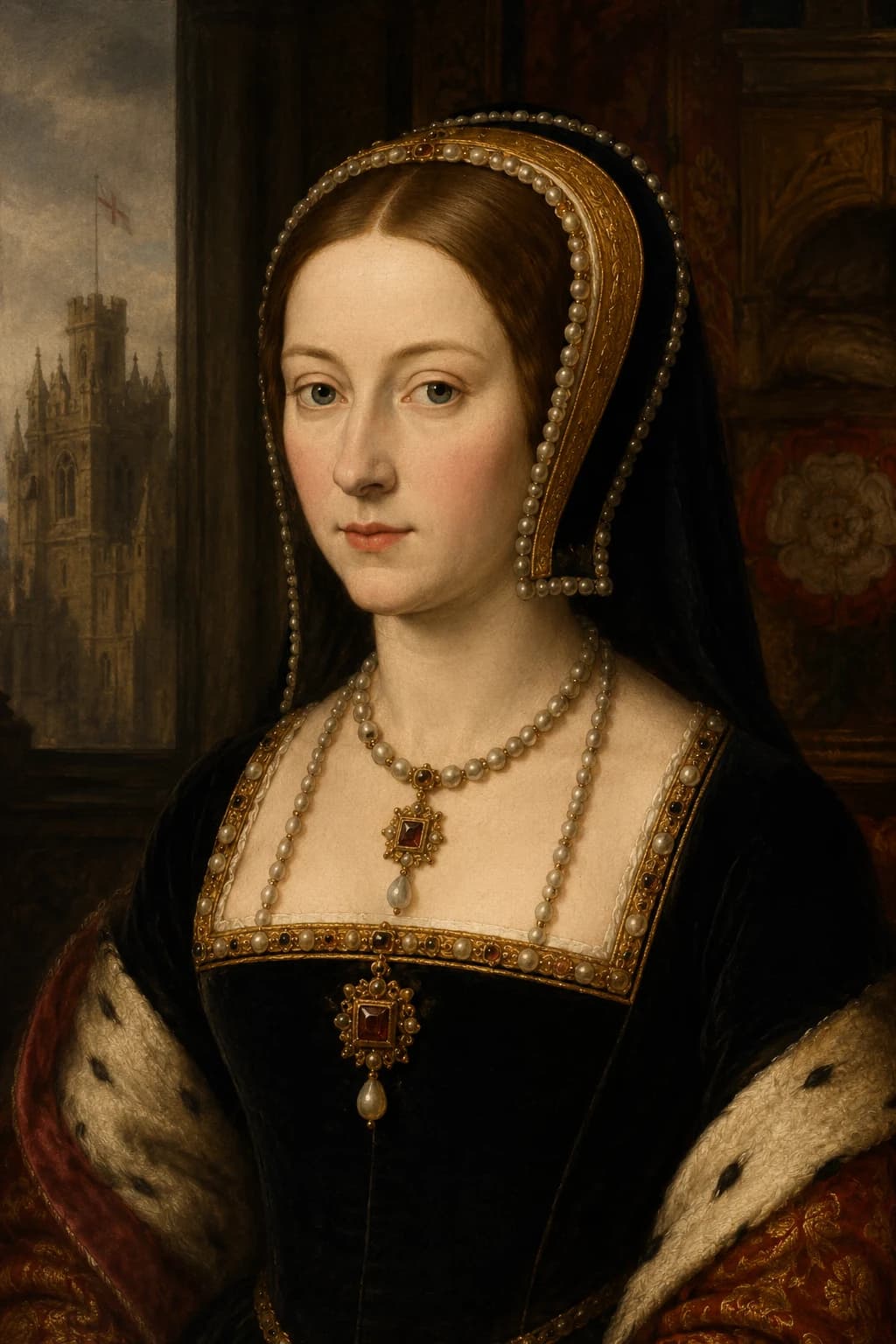
AI-generated portrait of Elizabeth of York in late Tudor court dress
AI-assisted historical reconstruction

An illustrative reconstruction based on historical context. It is not a photograph or documentary likeness. Image policy

Quick answer

Elizabeth of York was Queen of England from 1486 to 1503 as the wife of Henry VII. The daughter of Edward IV and Elizabeth Woodville, she helped unite Yorkist and Lancastrian claims after the Wars of the Roses and was the mother of Henry VIII.

Born
1466 CE
Died
1503 CE
Role
Queen consort of England
Years
1466-1503 CE
Facts

Elizabeth of York timeline facts

Selected specifics from this profile's life story.

1466-1483
Yorkist princess

Elizabeth was born in 1466 as the eldest daughter of Edward IV and Elizabeth Woodville, placing her close to the centre of Yorkist royal power.

1483-1485
Crisis after Edward IV

After Edward IV died, Elizabeth's brothers disappeared from public life and Richard III took the throne, making her Yorkist blood politically crucial.

1486-1502
Queen and mother

As queen, Elizabeth helped anchor the new dynasty and gave birth to children whose marriages shaped Britain and Europe.

1503
Death and legacy

Elizabeth died in 1503 after childbirth, leaving Henry VII personally shaken and the Tudor succession narrowed.

Life Journey

The Yorkist queen at the heart of Tudor legitimacy

Follow the story in a more continuous narrative, with a reading mode that matches how much depth you want.

Complete chronology

1466-1483

Yorkist princess

Elizabeth of York grew up inside the most successful phase of Yorkist rule. Her father Edward IV had won the crown during the Wars of the Roses, and her mother Elizabeth Woodville brought a powerful but controversial family network into the court. As the king's eldest daughter, Elizabeth was valuable in dynastic diplomacy, but her place depended on the stability of a royal house that still had enemies. The Yorkist victory looked strong in the 1470s, yet it rested on a political world where legitimacy could change quickly when a king died.
1483-1485

Crisis after Edward IV

Edward IV's death in 1483 threw Elizabeth's family into danger. Her brothers, Edward V and Richard, Duke of York, were placed in the Tower and then disappeared from public life. Richard III took the crown after declaring Edward IV's children illegitimate. Elizabeth and her mother spent time in sanctuary, while opposition to Richard began to gather around Henry Tudor. Henry's pledge to marry Elizabeth gave his weak Lancastrian claim a broader political appeal. He could present himself not simply as a conqueror, but as the man who would unite the divided royal houses.

1486

Marriage to Henry VII

Henry VII won the crown at Bosworth in 1485, but victory did not automatically make his dynasty secure. His marriage to Elizabeth of York in January 1486 gave the new regime a stronger story. The union joined Henry's Lancastrian-linked claim with Elizabeth's Yorkist descent from Edward IV. It also produced the symbol of the Tudor rose, combining red Lancaster and white York into a language of reconciliation. The marriage did not end all threats, but it helped make the Tudors look like more than another faction in a civil war.

1486-1502

Queen and mother

Elizabeth's queenship was less confrontational than the politics that had brought her to the throne, but it mattered deeply. She gave Henry VII a line of heirs, including Arthur, Margaret, Henry, and Mary. Arthur's marriage to Catherine of Aragon was meant to secure an alliance with Spain; Margaret's marriage to James IV of Scotland later connected the Tudor and Stuart lines; Henry became Henry VIII. Elizabeth's public role was built around dynasty, household, patronage, ceremony, and motherhood. Those roles could look quiet beside battles and statutes, but they were central to making a new royal house appear stable.

1503

Death and legacy

Elizabeth died on 11 February 1503, her thirty-seventh birthday, after giving birth to a daughter who also died. The loss came less than a year after the death of Prince Arthur, and it left Henry VII more isolated in the final years of his reign. Her legacy was larger than personal grief. Through Henry VIII, she remained central to the Tudor succession; through Margaret Tudor, she became an ancestor of James VI of Scotland, who inherited the English throne in 1603. Elizabeth's life shows how dynastic politics could turn a princess, wife, and mother into the hinge between warring houses and future kingdoms.

Continue in context

Connected stories

Move from the profile into the wider events and settings this figure belongs to.

Tertiary paths

Content note

This profile is written for educational use and connects to related Stories of History pages. The main portrait is an AI-assisted historical reconstruction, included as an illustrative aid rather than documentary evidence. Image policy

References

Sources & Further Reading

Reliable reference works, archives and reading paths connected to this profile.

Further reading

  1. Encyclopaedia Britannica, Search results for Elizabeth of York,” accessed June 2026.Open source
  2. WorldCat, Books and library holdings for Elizabeth of York,” accessed June 2026.Open source

Primary sources

  1. Library of Congress, Search results for Elizabeth of York,” accessed June 2026.Open source

Reviewed claim sources

Loading reviewed claim sources...

A weekly route through history

Find out first about the latest published stories, feature notes and occasional Premium offers in one weekly email.