People

Henry VII

Henry VII was King of England from 1485 to 1509 and the first Tudor monarch. He defeated Richard III at Bosworth, married Elizabeth of York, ended the Wars of the Roses, defeated pretenders, rebuilt royal finances, and founded the Tudor dynasty.

Born
1457 CE
Died
1509 CE
Role
First Tudor king of England

First Tudor king of England (1457–1509)

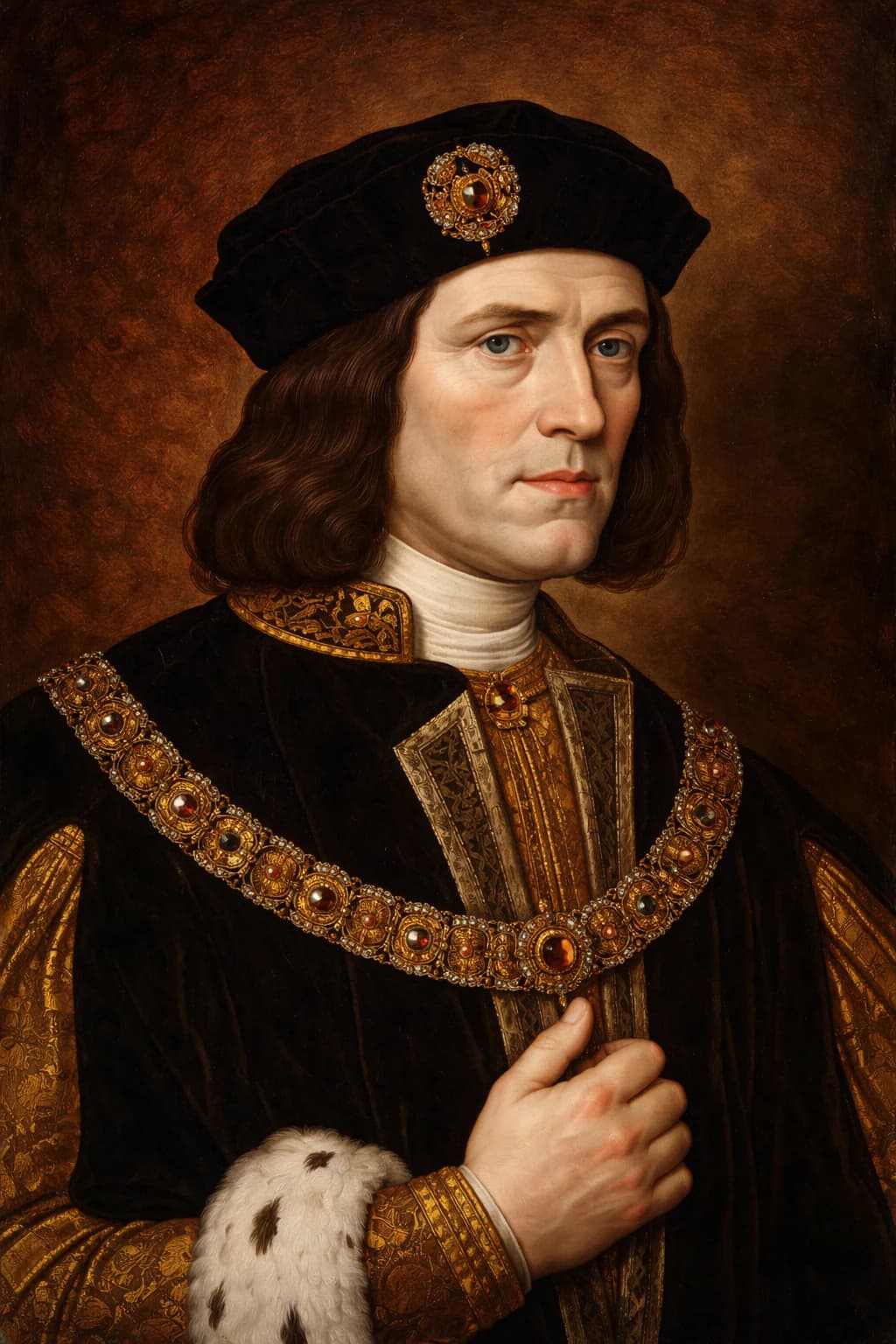
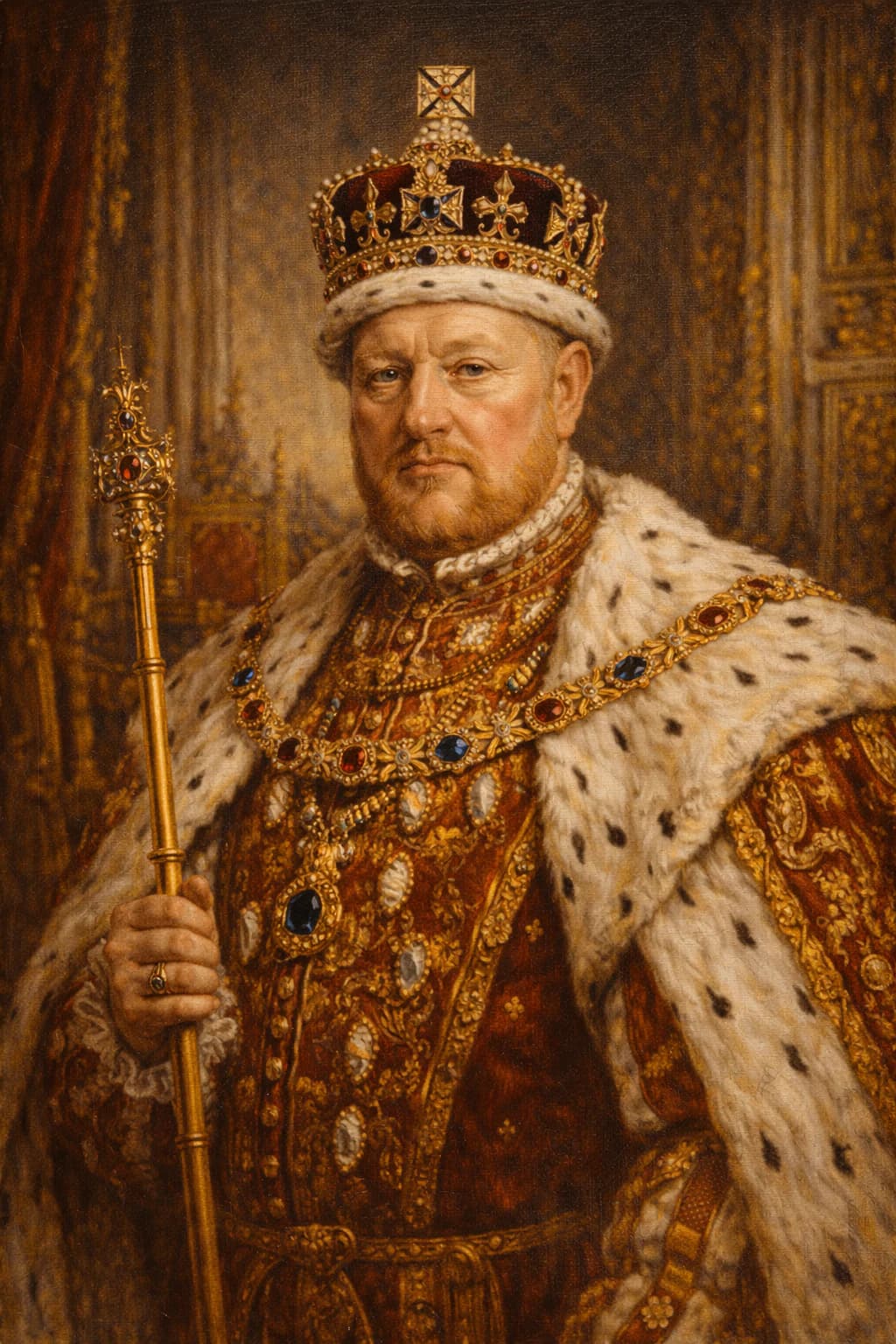
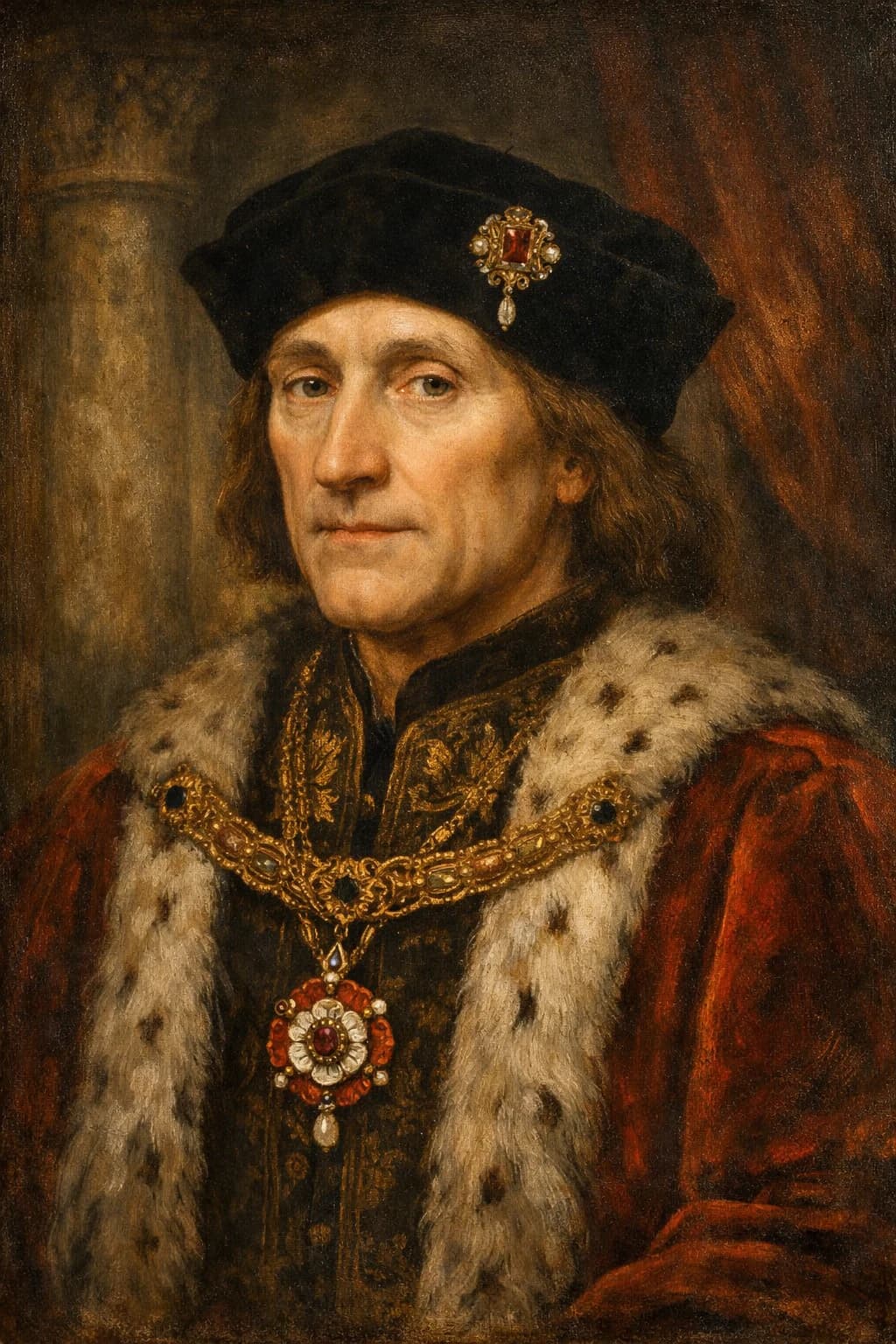
AI-generated portrait of Henry VII in Tudor royal attire
AI-assisted historical reconstruction

An illustrative reconstruction based on historical context. It is not a photograph or documentary likeness. Image policy

Quick answer

Henry VII was King of England from 1485 to 1509 and the first Tudor monarch. He defeated Richard III at Bosworth, married Elizabeth of York, ended the Wars of the Roses, defeated pretenders, rebuilt royal finances, and founded the Tudor dynasty.

Born
1457 CE
Died
1509 CE
Role
First Tudor king of England
Years
1457-1509 CE
Facts

Henry VII timeline facts

Selected specifics from this profile's life story.

1457–1471
Lancastrian exile

Henry Tudor was born at Pembroke Castle in 1457, a Lancastrian-linked child whose claim looked remote until almost everyone ahead of him was dead.

August 1485
Bosworth and the crown

Henry landed at Milford Haven in August 1485 and won the crown at Bosworth when Richard III was killed in battle.

1502–1503
Personal losses

The deaths of his eldest son Arthur and then his wife Elizabeth of York within a year left Henry increasingly isolated and suspicious in his later years.

Post-1509
The Tudor foundation

Henry VII's greatest achievement was not any single act but the creation of stable conditions in which the Tudor dynasty could endure for over a century.

Life Journey

From fugitive exile to founder of a dynasty

Follow the story in a more continuous narrative, with a reading mode that matches how much depth you want.

Complete chronology

1457–1471

Lancastrian exile

Henry's beginnings were precarious. His father Edmund Tudor died before he was born; his mother Margaret Beaufort was only thirteen when she gave birth. His claim came through the Beaufort line, descended from John of Gaunt and Katherine Swynford, later legitimised but politically complicated. During the Wars of the Roses he was less a future king than a valuable hostage, ward, and symbol. After Edward IV's restoration in 1471 destroyed the main Lancastrian line, Henry and his uncle Jasper Tudor fled to Brittany. Exile kept him alive, but it also left him dependent on foreign protection and diplomatic bargaining. His future depended on patience and other people's mistakes.
1471–1483

Years in Brittany

Henry's exile was not romantic wandering. It was a long education in vulnerability. The Duke of Brittany could protect him, but also considered using him as a bargaining chip with Edward IV. Henry learned that promises, pensions, marriages, and safe-conducts could decide a man's fate as surely as swords. This experience helps explain the king he became: watchful, calculating, financially alert, and deeply suspicious of noble overmighty subjects. He had spent too long as a pawn not to understand the board. When opportunity finally came, he was ready to present himself not as a purely Lancastrian avenger, but as the safest available solution to a divided kingdom.

1483–1485

Focus for opposition

The disappearance of Edward IV's sons, remembered as the Princes in the Tower, and Richard III's controversial accession changed the political map. Many Yorkists who would never have supported a Lancastrian restoration could support Henry if he promised to marry Elizabeth of York, Edward IV's daughter. That pledge, made publicly at Rennes in 1483, was political genius. It made Henry a vehicle for union rather than revenge. Buckingham's failed rebellion showed the danger but also the scale of discontent. French support gave Henry ships, troops, and a chance. His claim was weak in strict hereditary terms, but by 1485 legitimacy was no longer only genealogy. It was the promise of settlement.

August 1485

Bosworth and the crown

Henry's invasion was a gamble. He landed in Wales, drew on Tudor ancestry and anti-Ricardian support, and marched inland while powerful families waited to see which side would prevail. At Bosworth, Richard III launched a direct attack that nearly reached Henry. The intervention of the Stanley forces, whose loyalty had been deliberately ambiguous, proved decisive. Richard was killed, and Henry was proclaimed king on the field. He dated his reign from the day before the battle, turning opponents into traitors by legal fiction. That detail reveals the mind of the new king. Victory was not enough; it had to be converted immediately into law, legitimacy, and control.

1485–1490s

Securing the dynasty

Henry's marriage to Elizabeth of York in 1486 gave the Tudor regime its most powerful symbol: red rose and white rose joined after decades of civil conflict. Symbols did not remove danger. Lambert Simnel's rising ended at Stoke Field in 1487, often treated as the last battle of the Wars of the Roses. Perkin Warbeck proved more persistent, gaining support abroad by claiming to be Richard of York, one of Edward IV's missing sons. Henry met these threats with force, intelligence, diplomacy, pardons, and financial intimidation. Bonds and recognisances made noble behaviour measurable in money. The policy could be oppressive, but it answered the central problem of the 15th century: magnates had to learn that rebellion would ruin them.

1490s–1500s

Financial reconstruction

Henry VII treated money as security. Earlier kings had been dragged into dependence by war costs and weak revenue; Henry wanted the crown solvent enough to choose its own course. He revived income from crown lands, watched customs, exploited feudal dues, and scrutinised accounts with a personal intensity unusual for a king. His councillors Richard Empson and Edmund Dudley became notorious for legalistic extraction, especially in the later reign. The result was resentment, but also a stronger monarchy. Henry's thrift was not mere miserliness. A full treasury meant fewer parliaments, fewer desperate concessions, and less need to trust overmighty subjects. Finance was his fortress.

1502–1503

Personal losses

Henry's final years were shadowed by personal loss. His eldest son Arthur died in April 1502, just months after his marriage to Catherine of Aragon, depriving the dynasty of its carefully prepared heir. His wife Elizabeth died in February 1503, following a childbirth. These losses changed Henry visibly. He became more withdrawn, more suspicious, and more relentless in the financial extraction that marked his later government. He investigated the possibility of remarrying, sending agents to assess potential brides with the same meticulous approach he applied to revenue. None of the marriages materialised. The warmth and personal confidence of his earlier reign gave way to a harder, more isolated figure.

1503–1509

The later reign

The last years of Henry VII's reign were successful by most objective measures while becoming increasingly unloved. He secured a major diplomatic agreement with the Netherlands, arranged a prestigious marriage for his daughter Margaret to the King of Scots, and managed the transition of his heir Henry from secondary prince to crown prince with care. His councillors Empson and Dudley continued their aggressive revenue extraction, which generated enough ill-feeling that Henry VIII had them both executed within months of inheriting the throne — a calculated piece of popular politics by the new king. Henry VII died in April 1509, leaving a stable throne, a full treasury, and an heir. This was far more than almost anyone would have predicted in 1485.

Post-1509

The Tudor foundation

Henry VII is not the most dramatic of the Tudors — that distinction belongs to his son — but he is arguably the most consequential. He took a kingdom exhausted and destabilised by thirty years of civil conflict, with royal finances ruined and noble power dangerously unchecked, and rebuilt it into a functioning, solvent, and reasonably secure state. The dynasty he founded lasted until 1603. The political settlement he achieved ended the cycle of baronial rebellion that had destroyed both Lancastrian and Yorkist lines. He was careful, calculating, and not always kind, but the England he handed over was infinitely more governable than the one he had inherited. That was his real achievement, and it was enormous.

Continue in context

Connected stories

Move from the profile into the wider events and settings this figure belongs to.

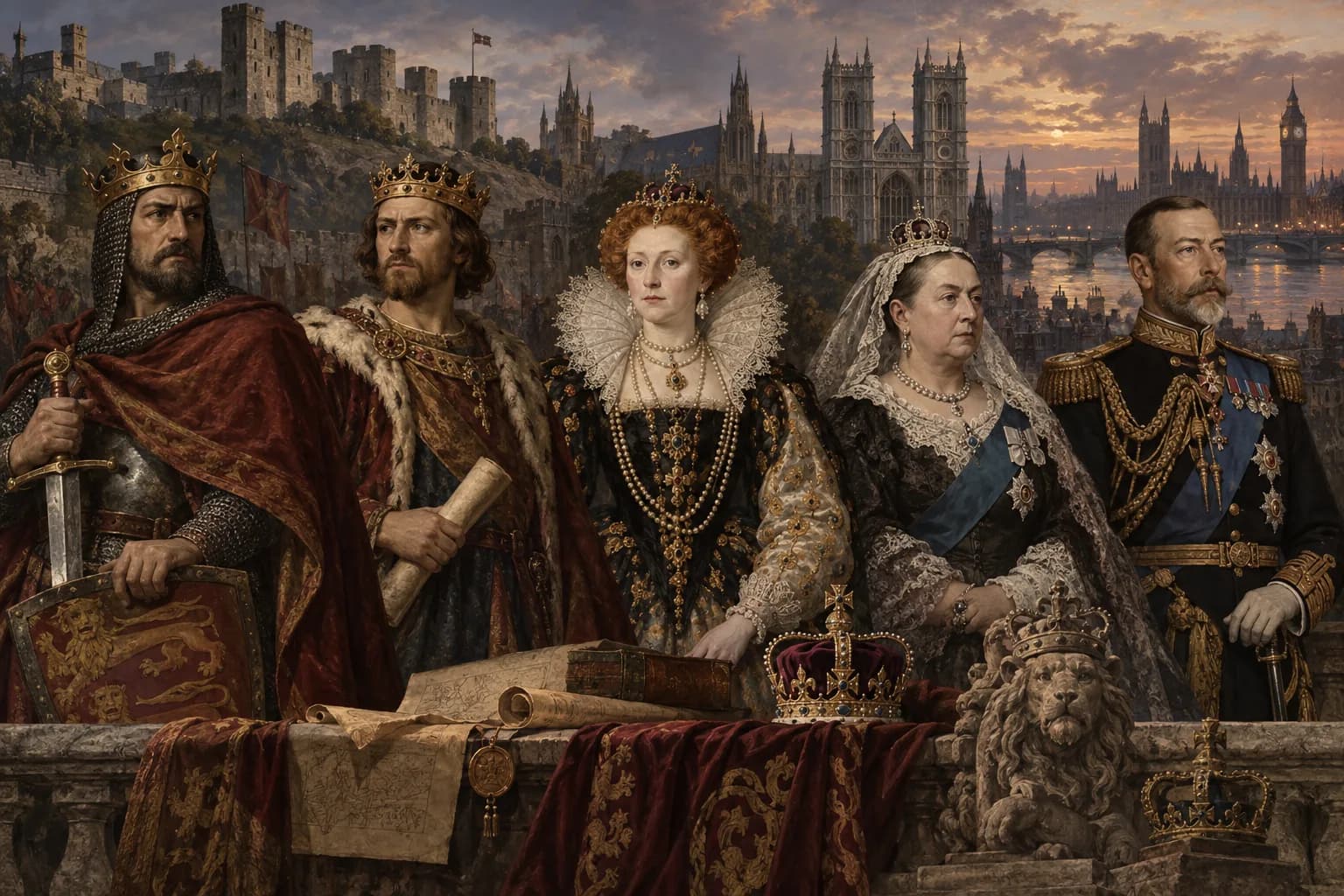
British Monarchs lineage
Lineage42 rulers
British Monarchs
1066 CE–present

Trace the English and later British monarchy from William I to today.

View lineage
Tertiary paths

Content note

This profile is written for educational use and connects to related Stories of History pages. The main portrait is an AI-assisted historical reconstruction, included as an illustrative aid rather than documentary evidence. Image policy

References

Sources & Further Reading

Reliable reference works, archives and reading paths connected to this profile.

Further reading

  1. Encyclopaedia Britannica, Search results for Henry VII,” accessed June 2026.Open source
  2. WorldCat, Books and library holdings for Henry VII,” accessed June 2026.Open source

Primary sources

  1. Library of Congress, Search results for Henry VII,” accessed June 2026.Open source

Reviewed claim sources

Loading reviewed claim sources...

A weekly route through history

Find out first about the latest published stories, feature notes and occasional Premium offers in one weekly email.