People

Elizabeth I

Elizabeth I ruled England from 1558 to 1603 as the last Tudor monarch. Her reign stabilized the Protestant settlement, survived Catholic plots and the Spanish Armada, encouraged maritime expansion, and became associated with Shakespeare, court politics and the Elizabethan Age.

Born
1533 CE
Died
1603 CE
Role
Tudor queen

Tudor queen (1533–1603)

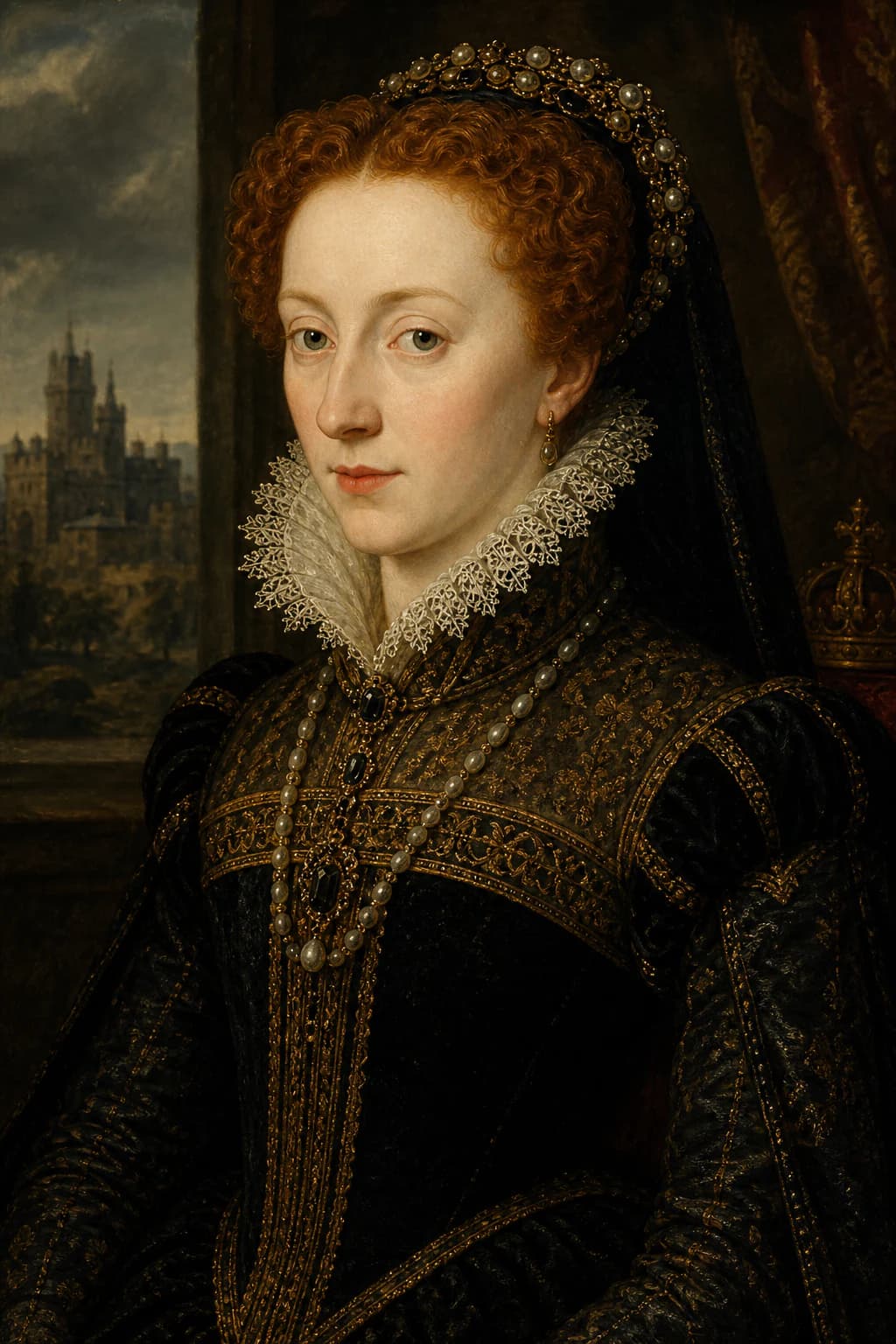
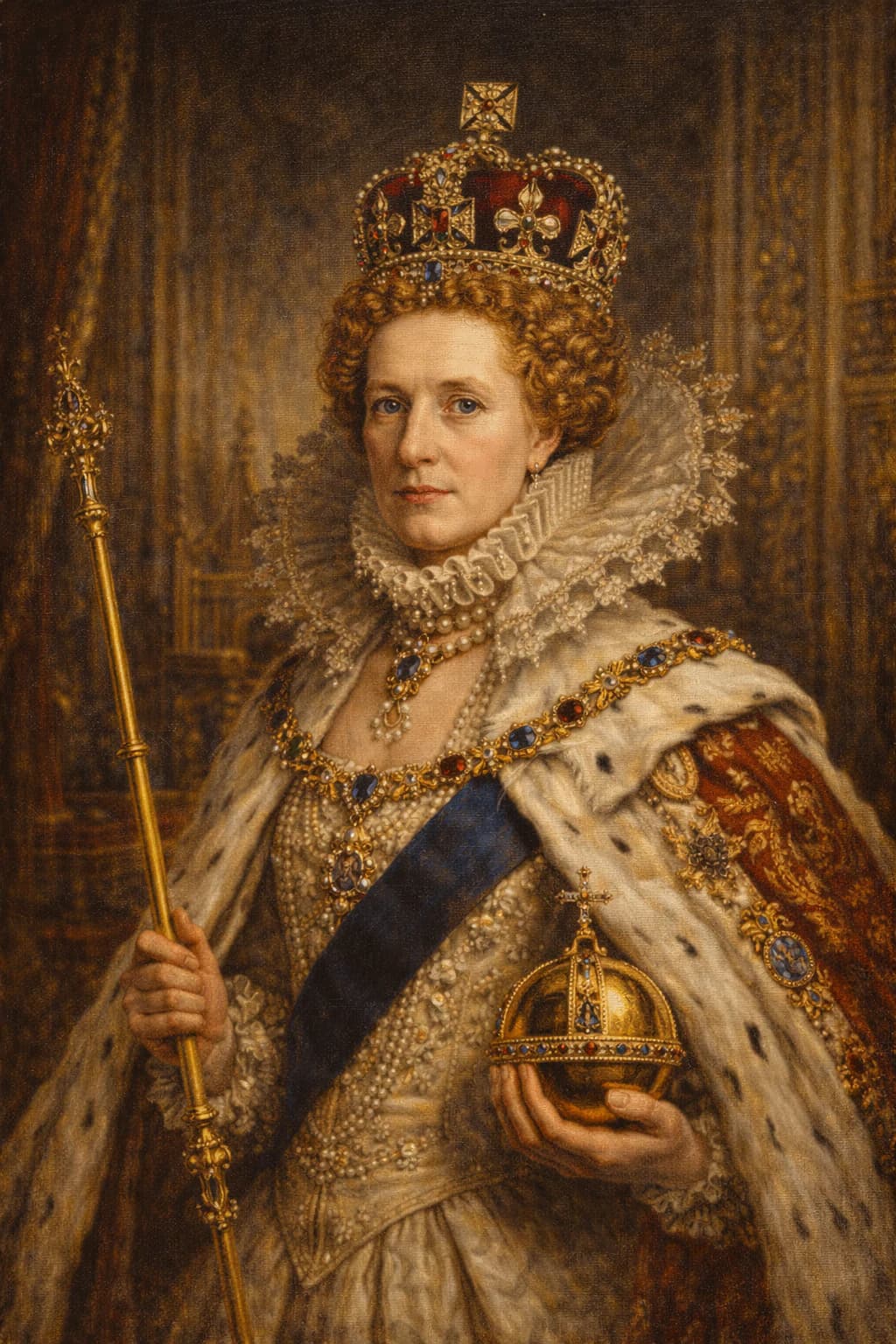
AI-generated portrait of Elizabeth I in Elizabethan royal regalia
AI-assisted historical reconstruction

An illustrative reconstruction based on historical context. It is not a photograph or documentary likeness. Image policy

Quick answer

Elizabeth I ruled England from 1558 to 1603 as the last Tudor monarch. Her reign stabilized the Protestant settlement, survived Catholic plots and the Spanish Armada, encouraged maritime expansion, and became associated with Shakespeare, court politics and the Elizabethan Age.

Born
1533 CE
Died
1603 CE
Role
Tudor queen
Years
1533-1603 CE
Facts

Elizabeth I timeline facts

Selected specifics from this profile's life story.

1533
Royal Beginnings

Elizabeth was born in 1533 to Henry VIII and Anne Boleyn, a princess whose childhood was overturned by execution, illegitimacy and religious revolution.

1558
Ascending the Throne

Elizabeth became queen in November 1558, inheriting a kingdom divided by religion, weakened by war and uncertain about female rule.

1588
Defeating the Armada

The defeat of the Spanish Armada in 1588 became the central legend of Elizabeth's reign, though victory depended on ships, weather, logistics and Spanish miscalculation.

1603
Enduring Legacy

When Elizabeth died in 1603, the Tudor dynasty ended, but her reign had given England a durable Protestant settlement, a sharper national identity and a powerful royal myth.

Life Journey

A reign of caution, resolve, and enduring influence

Follow the story in a more continuous narrative, with a reading mode that matches how much depth you want.

Complete chronology

1533

Royal Beginnings

Elizabeth's life began inside the most dangerous marriage in Tudor history. Henry VIII had broken with Rome partly to secure his union with Anne Boleyn and the male succession he hoped she would provide. Instead Anne gave birth to a daughter in September 1533, and less than three years later she was executed. Elizabeth was declared illegitimate and moved from cherished princess to political uncertainty almost overnight. That early reversal mattered. She grew up knowing that blood, title and affection could be rearranged by power. Her childhood passed through the reigns of Henry VIII, Edward VI and Mary I, each with different religious and political pressures. Long before she ruled, Elizabeth learned that survival required silence, timing and self-command.
1540s

Humanist Education

Elizabeth's education was exceptional by any standard. Tutors including William Grindal and Roger Ascham trained her in Latin, Greek, French, Italian, rhetoric, theology and classical literature. This learning was not decorative. In a court where speeches, letters and translations could carry political meaning, Elizabeth's command of language became a weapon. She could address universities, parliaments, ambassadors and hostile councillors with unusual precision. Her learning also sharpened her instinct for ambiguity. She understood that words could reveal policy, conceal intention or keep several possibilities alive at once. Later critics sometimes mistook her caution for indecision, but her education helped her make delay itself a political instrument.

1553–1558

Years of Suspicion

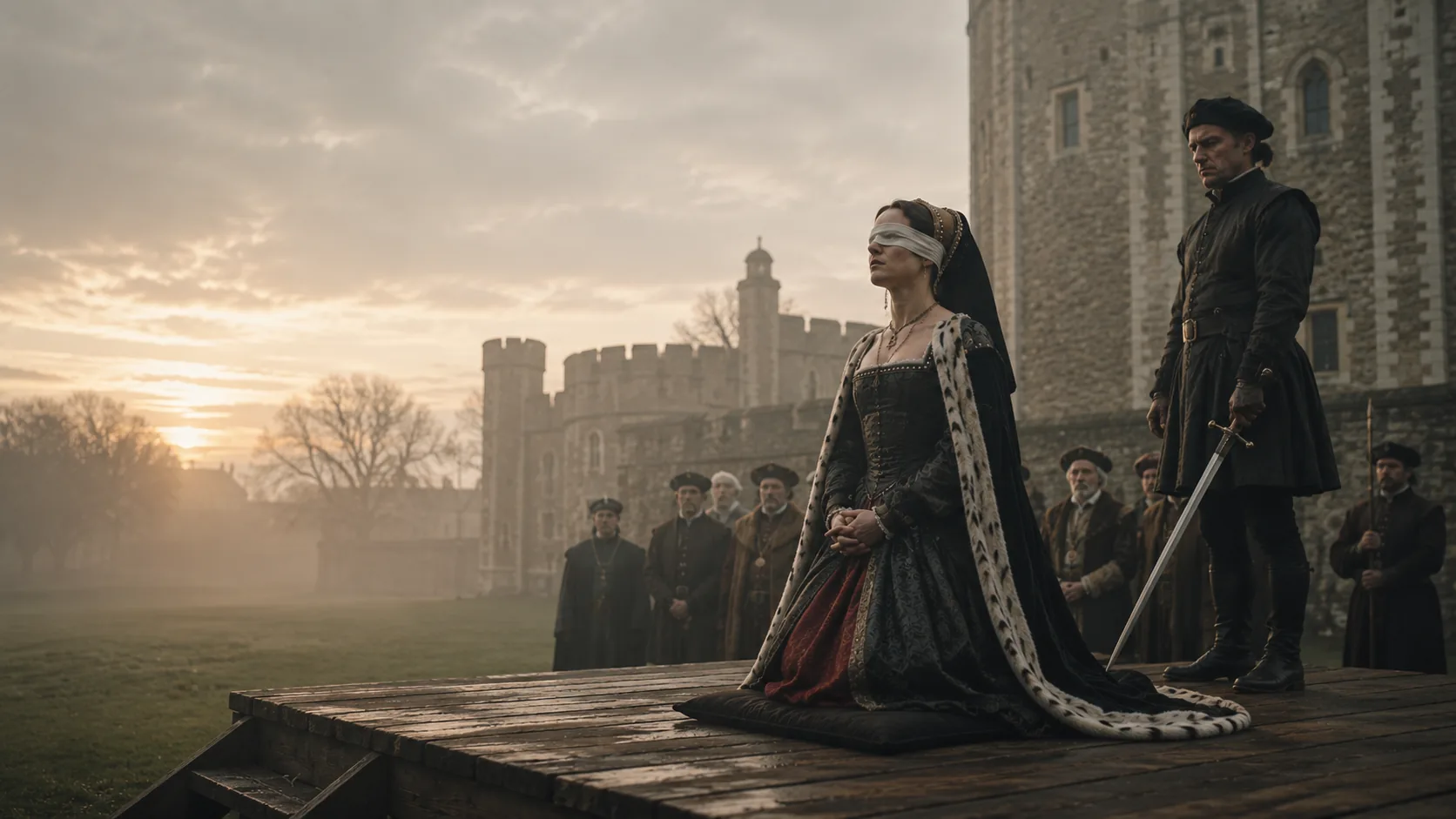
Mary I's reign placed Elizabeth in real danger. England returned to Catholic obedience, Mary's marriage to Philip of Spain was unpopular, and Protestant rebels could imagine Elizabeth as an alternative queen whether she encouraged them or not. After Wyatt's Rebellion in 1554, Elizabeth was sent to the Tower of London and later kept under close watch. She denied involvement, and evidence against her was uncertain, but innocence was not always protection in Tudor politics. These years formed her political temperament. She learned the cost of being used as a symbol by others, the value of controlled expression and the danger of forcing decisions before circumstances were ready.

1558

Ascending the Throne

When Mary died in 1558, Elizabeth inherited more than a crown. England was financially strained, had lost Calais to France, and had endured years of religious reversal. Many European observers doubted that an unmarried woman could govern without being controlled by a husband, faction or foreign power. Elizabeth's first answer was personnel. She relied heavily on William Cecil, later Lord Burghley, and built a council that mixed experience with loyalty. Her second answer was image. She presented herself as legitimate, providential and careful, not as a revolutionary. The early months of her reign showed the pattern of the next forty-five years: bold enough to survive, cautious enough to make survival last.

1559

Religious Balance

Elizabeth's religious settlement was one of the great acts of Tudor statecraft. The Acts of Supremacy and Uniformity restored the monarch's authority over the English church and required use of the Book of Common Prayer, but the settlement avoided some language that would have made compromise impossible. It was Protestant in doctrine, episcopal in structure and cautious in enforcement at the start. Elizabeth wanted outward conformity more than a hunt for private conscience, though that tolerance narrowed when Catholic threats became political. The settlement satisfied neither committed Catholics nor radical Protestants, but it gave the kingdom a functioning religious framework. In an age when confessional conflict tore states apart, that mattered enormously.

1560s–1587

Rival Claimants

Elizabeth's refusal to marry and name a successor kept control in her own hands, but it also made the succession a permanent danger. Mary, Queen of Scots, Henry VII's great-granddaughter and a Catholic with a claim to the English throne, became the center of that danger after she fled to England in 1568. Elizabeth held her for nearly nineteen years, reluctant to free her, hand her to enemies or execute an anointed queen. Plots including the Ridolfi, Throckmorton and Babington conspiracies made the problem sharper, especially after papal excommunication in 1570 encouraged the view that Elizabeth could be lawfully resisted. Mary's execution in 1587 removed a threat but crossed a line Elizabeth had long feared.

1588

Defeating the Armada

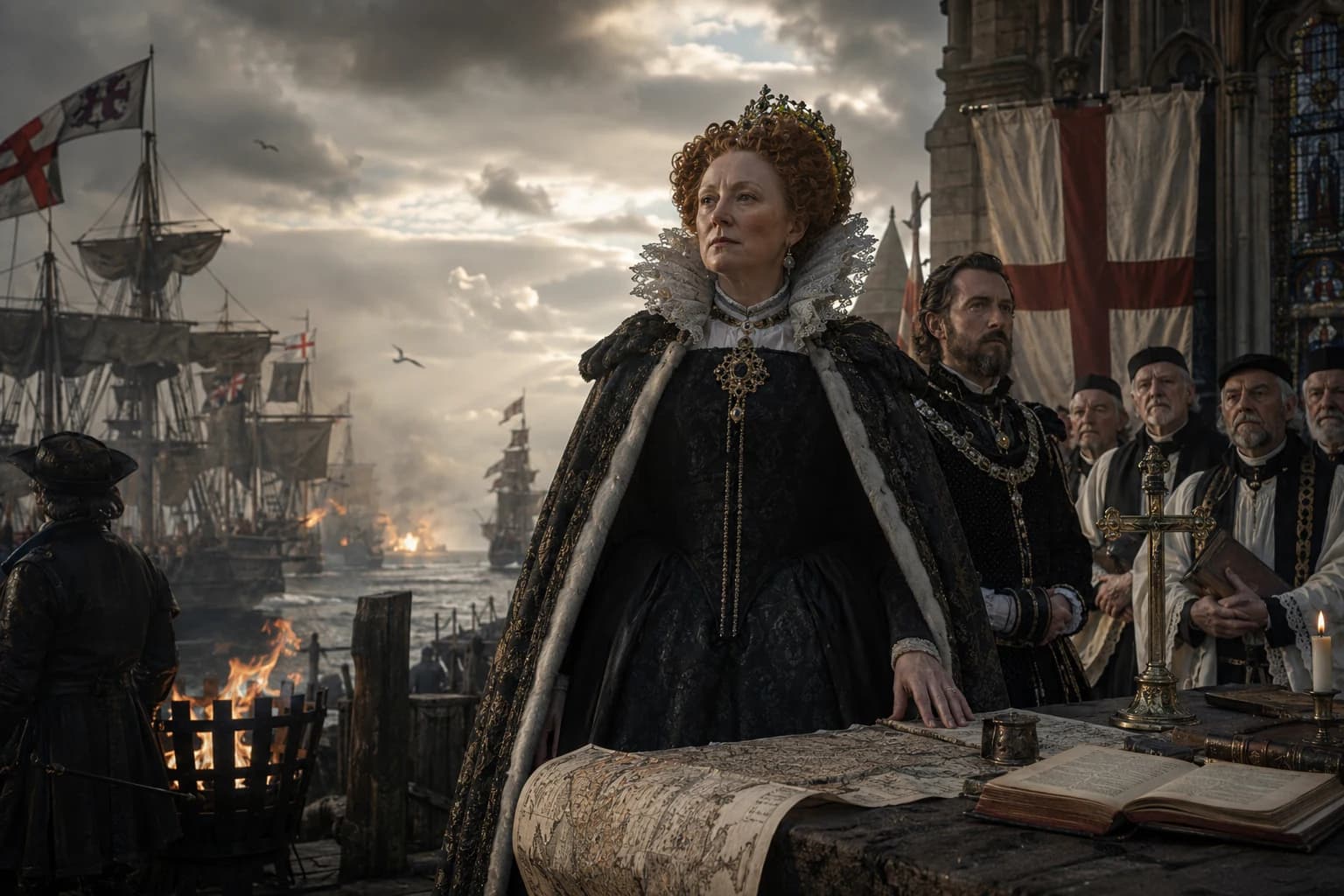
The Armada crisis grew from years of religious conflict, privateering, English support for Dutch rebels and Philip II's determination to overthrow Elizabeth's regime. In 1588 Spain launched a fleet intended to secure the Channel and support invasion from the Netherlands. English ships harried the Armada, fireships disrupted its formation at Calais, and weather helped scatter the fleet around the British Isles. Elizabeth's speech at Tilbury, whether transmitted in exact form or later polished, captured the political meaning of the moment: the queen identified her body with the kingdom's courage. The victory did not end the war with Spain, and English counterattacks later failed badly, but the Armada became a durable story of Protestant survival and national confidence.

1590s

Strains of Rule

Elizabeth's later years were harder than the golden memory suggests. War with Spain dragged on, harvest failures deepened poverty, parliament pressed grievances over monopolies, and the Nine Years' War in Ireland consumed money and men. The deaths of trusted servants such as Burghley left a changing court around an ageing queen. Robert Devereux, Earl of Essex, rose as a favorite and fell as a rebel after failure in Ireland and frustration at court. His 1601 revolt collapsed quickly, but it revealed how faction, ambition and royal ageing could destabilize the political world Elizabeth had managed for decades. The queen remained formidable, yet the tools of her earlier reign worked less smoothly in a harsher final decade.

1603

Enduring Legacy

Elizabeth died at Richmond Palace in March 1603, and the crown passed peacefully to James VI of Scotland, becoming James I of England. That peaceful succession was itself an achievement after decades of anxiety. Her legacy is layered. She did not create modern Britain, found an empire or rule a conflict-free golden age. Her government punished dissent, struggled with poverty, fought brutal campaigns in Ireland and left unresolved tensions for the Stuarts. Yet she held together a vulnerable kingdom through religious danger, foreign threat and dynastic uncertainty. The arts flourished in her reign, from Shakespeare and Marlowe to Spenser, but the deeper achievement was political endurance. Elizabeth made monarchy theatrical, cautious, learned and resilient, and that image still shapes how her age is remembered.

Continue in context

Connected stories

Move from the profile into the wider events and settings this figure belongs to.

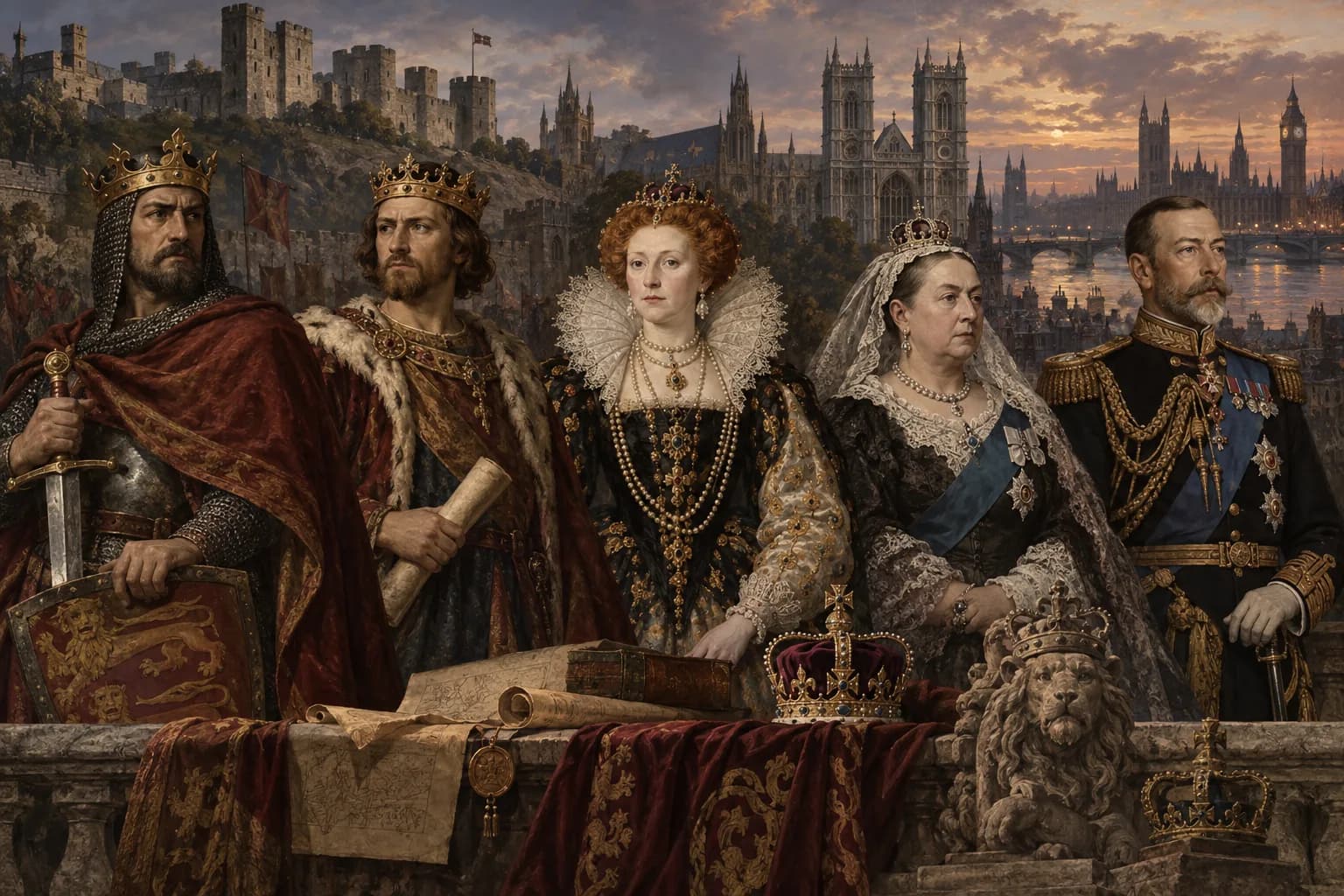
British Monarchs lineage
Lineage42 rulers
British Monarchs
1066 CE–present

Trace the English and later British monarchy from William I to today.

View lineage
Tertiary paths

Content note

This profile is written for educational use and connects to related Stories of History pages. The main portrait is an AI-assisted historical reconstruction, included as an illustrative aid rather than documentary evidence. Image policy

References

Sources & Further Reading

Reliable reference works, archives and reading paths connected to this profile.

Sources used

  1. Encyclopaedia Britannica, Elizabeth I,” accessed June 2026.Open source
  2. The British Library, Elizabeth I,” accessed June 2026.Open source

Further reading

  1. Susan Doran, Elizabeth I and Her Circle, Oxford University Press, 2015.

Image references

  1. National Portrait Gallery, Queen Elizabeth I,” accessed June 2026.Open source

Reviewed claim sources

Loading reviewed claim sources...

A weekly route through history

Find out first about the latest published stories, feature notes and occasional Premium offers in one weekly email.