People

Anne Boleyn

Anne Boleyn was Queen of England from 1533 to 1536 and the mother of Elizabeth I. Henry VIII's pursuit of marriage to Anne helped drive the annulment crisis and the English Reformation before her execution.

Born
c. 1501 CE
Died
1536 CE
Role
Queen of England

Queen of England (c.1501-1536)

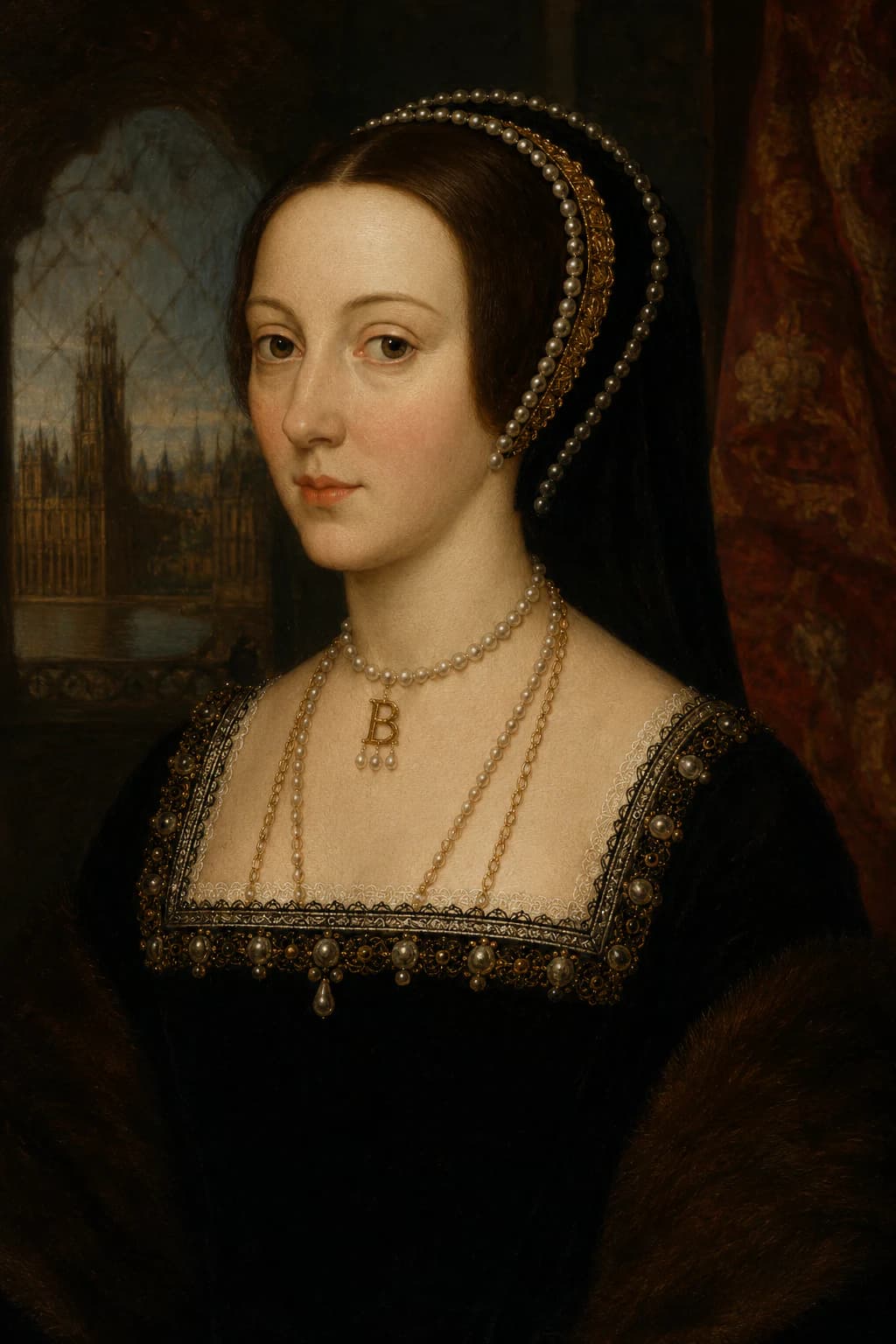
AI-generated portrait of Anne Boleyn in Tudor court dress
AI-assisted historical reconstruction

An illustrative reconstruction based on historical context. It is not a photograph or documentary likeness. Image policy

Quick answer

Anne Boleyn was Queen of England from 1533 to 1536 and the mother of Elizabeth I. Henry VIII's pursuit of marriage to Anne helped drive the annulment crisis and the English Reformation before her execution.

Born
c. 1501 CE
Died
1536 CE
Role
Queen of England
Years
c. 1501-1536 CE
Facts

Anne Boleyn timeline facts

Selected specifics from this profile's life story.

1510s
Continental polish

Anne Boleyn spent formative years in European courts before returning to England with unusual confidence and sophistication.

1520s
Refusing the role

Anne refused to become Henry VIII's mistress, making marriage rather than affair the condition of the king's pursuit.

1533
Elizabeth's birth

Anne gave birth to Elizabeth in September 1533, a daughter rather than the male heir Henry expected.

1536
Fall and execution

Anne was arrested, convicted of adultery and treason, and executed in May 1536 on charges that remain historically disputed.

Life Journey

A courtier whose rise changed England

Follow the story in a more continuous narrative, with a reading mode that matches how much depth you want.

Complete chronology

1510s

Continental polish

Anne Boleyn's early life is not fully documented, but her years in the Low Countries and France gave her a courtly education that mattered. She learned manners, language, music, fashion and the politics of elite households. When she returned to England, she stood out not simply because of beauty, but because of wit, presence and confidence. She moved in circles where religious reformist ideas also circulated, making her later role in Henry's court more than decorative.
1520s

Refusing the role

Anne's refusal to become merely Henry's mistress changed the stakes of the king's desire. Henry had had mistresses before; a mistress did not require a constitutional revolution. A queen did. Anne's insistence on marriage intersected with Henry's fear that Catherine of Aragon would never give him a male heir. Desire, succession anxiety, theology and pride fused into a single crisis. Anne did not create every part of the King's Great Matter, but her position gave it urgency and focus.

1533

Queen and reform

Anne's marriage to Henry VIII became possible only as England moved away from papal jurisdiction. Thomas Cranmer declared Henry's marriage to Catherine invalid and confirmed Anne's marriage as lawful. Anne supported reform-minded clergy and had an interest in evangelical writing, though she was not the sole architect of religious change. Her queenship symbolised the new order: Rome had been bypassed, royal authority had prevailed, and the succession would now depend on Anne's children.

1533

Elizabeth's birth

Elizabeth's birth was not the dynastic result Henry had hoped for. A princess could still matter, but Henry had broken with Rome and overturned his first marriage in pursuit of a secure male succession. Anne's position remained strong for a time, yet it depended on future pregnancies and court politics that could turn quickly. The irony is immense: the daughter who seemed a disappointment in 1533 later became the Tudor monarch whose religious settlement endured.

1536

Fall and execution

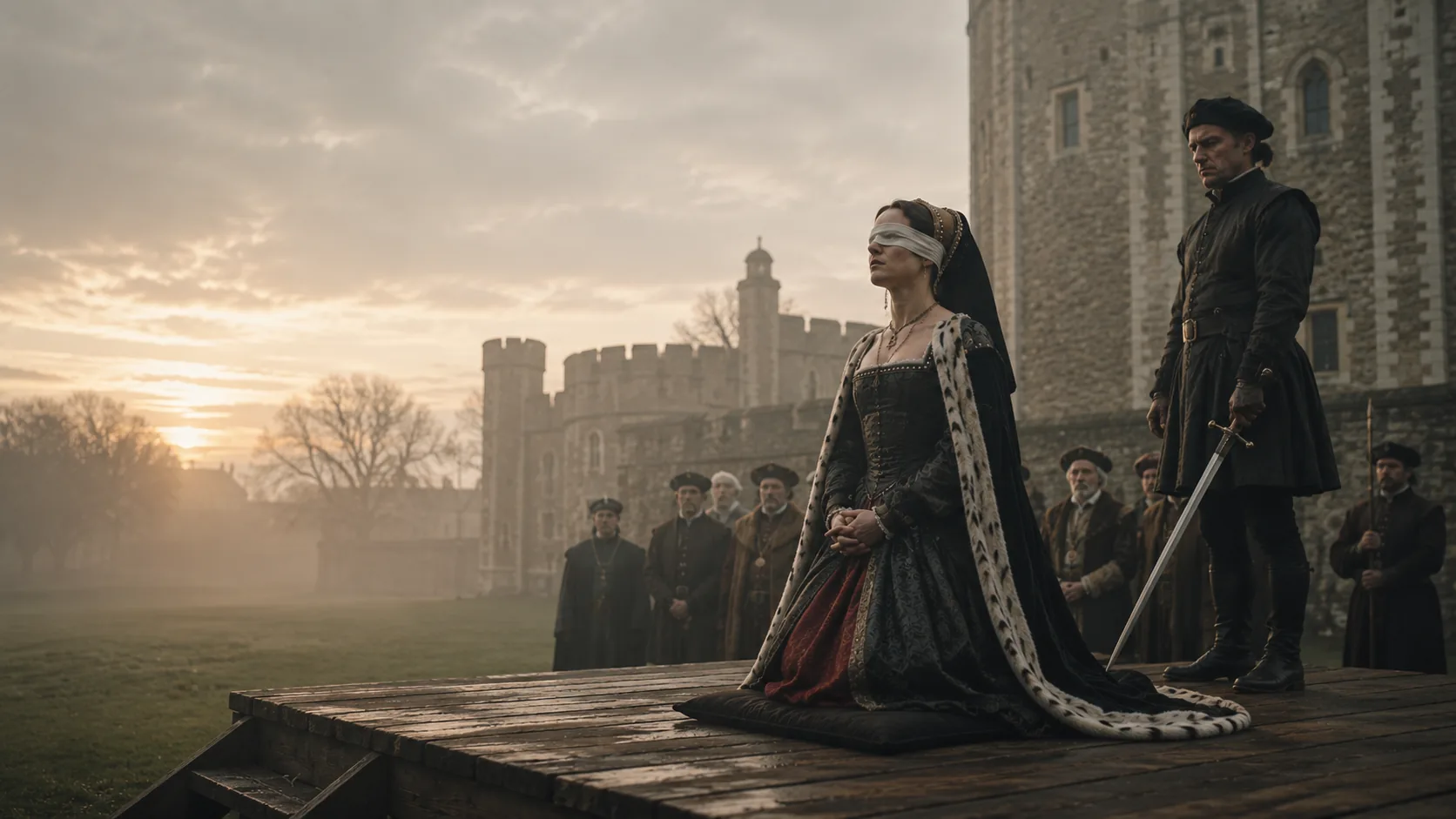
Anne's fall was sudden and brutal. In 1536 she was accused of adultery, incest and treason, charges many historians regard with deep suspicion. Her enemies at court, Henry's impatience, miscarriage, factional politics and the king's interest in Jane Seymour all contributed to the danger around her. She was executed at the Tower of London on 19 May 1536. Her marriage was annulled before her death, and Elizabeth was declared illegitimate. Yet Anne's legacy survived through Elizabeth and through the religious transformation her rise had helped accelerate.

Continue in context

Connected stories

Move from the profile into the wider events and settings this figure belongs to.

Tertiary paths

Content note

This profile is written for educational use and connects to related Stories of History pages. The main portrait is an AI-assisted historical reconstruction, included as an illustrative aid rather than documentary evidence. Image policy

References

Sources & Further Reading

Reliable reference works, archives and reading paths connected to this profile.

Further reading

  1. Encyclopaedia Britannica, Search results for Anne Boleyn,” accessed June 2026.Open source
  2. WorldCat, Books and library holdings for Anne Boleyn,” accessed June 2026.Open source

Primary sources

  1. Library of Congress, Search results for Anne Boleyn,” accessed June 2026.Open source

Reviewed claim sources

Loading reviewed claim sources...

A weekly route through history

Find out first about the latest published stories, feature notes and occasional Premium offers in one weekly email.