People

Sir Walter Raleigh

Sir Walter Raleigh, also spelled Walter Ralegh, was an English courtier, explorer, writer and favourite of Elizabeth I. Knighted in 1585, he promoted English colonisation in North America, sponsored the Roanoke ventures, searched for Guiana and El Dorado, wrote The History of the World in the Tower of London, and was executed under James I in 1618.

Born
1554 CE
Died
1618 CE
Role
English courtier, explorer and writer

English courtier, explorer and writer (c. 1554-1618)

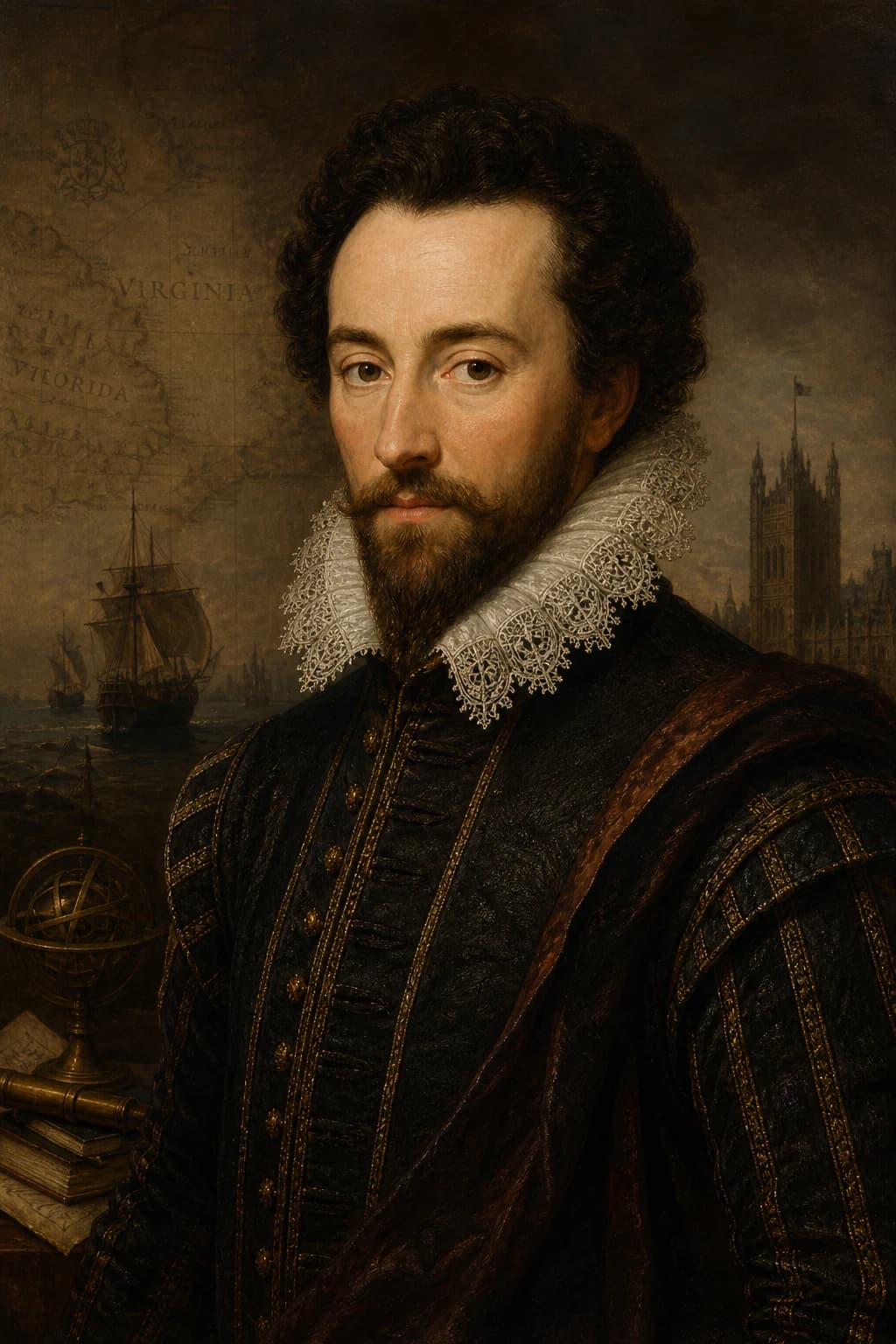
AI-generated portrait of Sir Walter Raleigh in Elizabethan dress before maps and ships
AI-assisted historical reconstruction

An illustrative reconstruction based on historical context. It is not a photograph or documentary likeness. Image policy

Quick answer

Sir Walter Raleigh, also spelled Walter Ralegh, was an English courtier, explorer, writer and favourite of Elizabeth I. Knighted in 1585, he promoted English colonisation in North America, sponsored the Roanoke ventures, searched for Guiana and El Dorado, wrote The History of the World in the Tower of London, and was executed under James I in 1618.

Born
1554 CE
Died
1618 CE
Role
English courtier, explorer and writer
Years
1554-1618 CE
Quick facts

Profile details

Additional identity and tagging details that are not already covered in the introduction.

Also known as
Walter Raleigh, Walter Ralegh
Facts

Sir Walter Raleigh timeline facts

Selected specifics from this profile's life story.

c. 1554
Devon beginnings

Walter Raleigh was born at Hayes Barton in Devon, probably in 1554, into a Protestant gentry family connected to seafaring, war and Elizabethan expansion.

1580s
Elizabeths favourite

Raleigh rose quickly at Elizabeth I's court, gaining favour, monopolies, offices and a knighthood in 1585.

1595-1596
Guiana and El Dorado

In 1595 Raleigh led an expedition to the Orinoco region, searching for gold and promoting the possibility of an English foothold in Guiana.

1616-1618
The final voyage and execution

Released but not pardoned, Raleigh led a final expedition to Guiana. After failure and conflict with Spain, James I revived the old sentence and Raleigh was executed on October 29, 1618.

Life Journey

Ambition at the edge of empire

Follow the story in a more continuous narrative, with a reading mode that matches how much depth you want.

Complete chronology

c. 1554

Devon beginnings

Devon placed Raleigh near the Atlantic world that would shape his imagination. His family ties connected him to Humphrey Gilbert and other promoters of overseas ventures. The Protestant politics of his household also mattered in an age when religion and foreign policy were inseparable. Raleigh grew up in a realm that feared Catholic Spain, looked westward for opportunity and rewarded bold men who could make themselves useful to the crown.
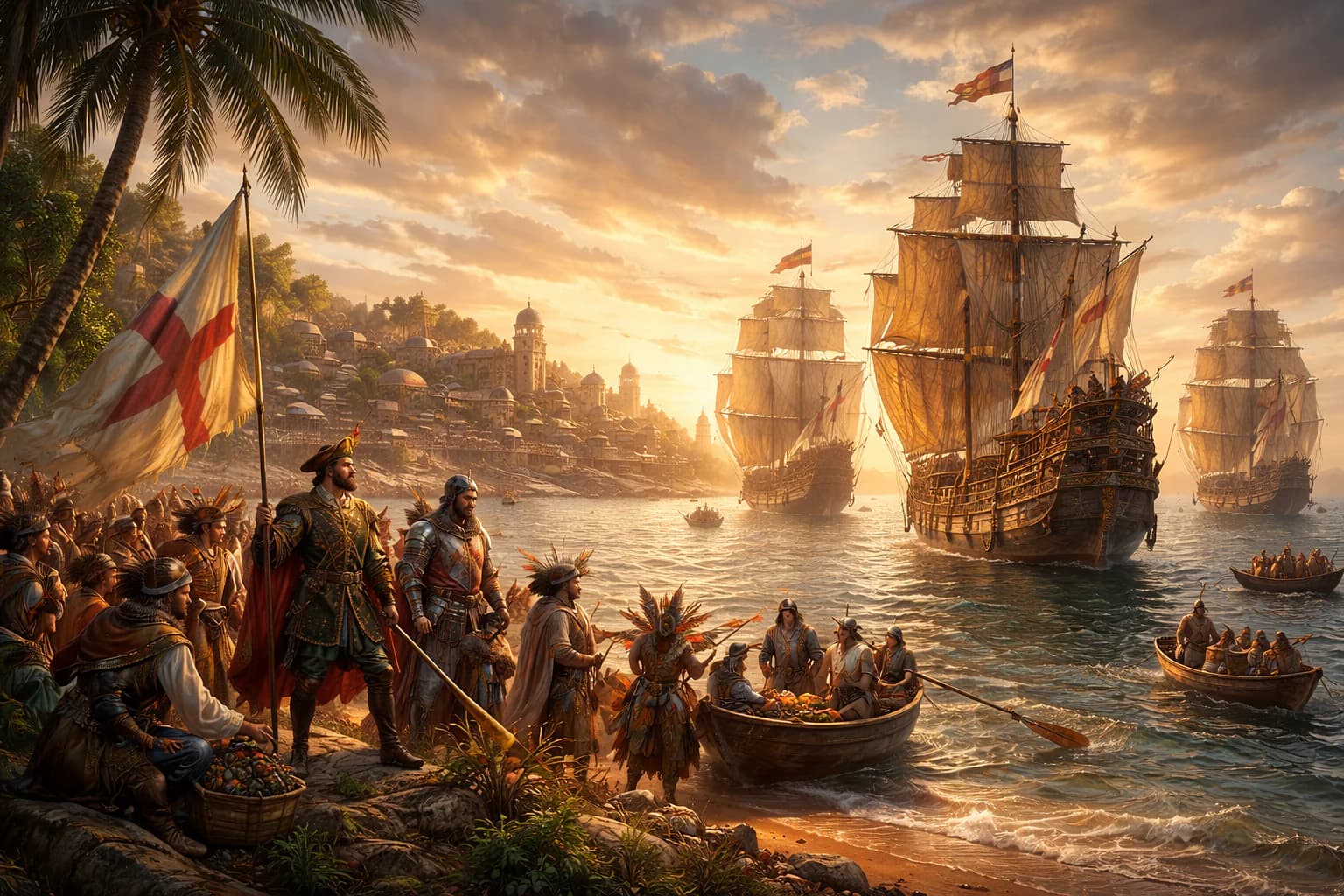
1569-1581

War in France and Ireland

Raleigh's early career was formed by violence on the edges of English power. In France he encountered the religious wars that made Protestant survival feel urgent. In Ireland he took part in colonial war, where English authority was imposed through confiscation, settlement and military force. His service in Munster helped bring him to Elizabeth I's attention, but it also tied his rise to the harsher realities of Tudor expansion.

1580s

Elizabeths favourite

Raleigh's success depended on charisma, calculation and the queen's favour. He acquired offices linked to Cornwall, Devon and the royal household. He was not simply an adventurer; he was a court politician operating in a world where access to the monarch could make or destroy a career. His rise also created enemies who resented the queen's affection and his appetite for advancement.

1584-1590

Virginia and Roanoke

Raleigh never personally settled Roanoke, but his patronage helped make English colonisation in North America a serious project. The expeditions of the 1580s produced maps, reports, encounters with Algonquian peoples and the unresolved mystery of the Lost Colony. These ventures failed as settlements, but they kept alive an English claim and an English vocabulary for Atlantic empire.

1592

Secret marriage and disgrace

Court favour was personal, and Raleigh misjudged its limits. His marriage challenged the queen's control over her household and favourites. Both husband and wife were imprisoned. Raleigh eventually regained some freedom and wealth, but he never recovered the effortless ascendancy he had enjoyed in the 1580s. A man could imagine continents and still be ruined by the emotional politics of court.

1595-1596

Guiana and El Dorado

Raleigh's Discoverie of Guiana blended observation, persuasion and fantasy. He believed, or wanted others to believe, that Guiana could provide wealth and strategic advantage against Spain. The search for Manoa and El Dorado belonged to a wider European hunger for American riches, but Raleigh gave it an English political edge. The gap between promise and proof would haunt him.

1603-1616

Treason charge and the Tower

The arrival of James I transformed Raleigh's world. His anti-Spanish instincts clashed with the king's desire for peace, and his enemies moved quickly. The 1603 trial was controversial, relying heavily on written accusations from Lord Cobham. Raleigh defended himself with force, but he was convicted. In the Tower he wrote, studied and composed The History of the World, turning confinement into literary survival.

1616-1618

The final voyage and execution

Raleigh's last voyage was a desperate attempt to turn old dreams into vindication. It failed disastrously. His son Walter was killed, no promised mine was secured, and the attack on a Spanish settlement violated the conditions under which James had allowed the expedition. Raleigh returned to England knowing that failure overseas had become fatal at home. His death made him appear to many as the last great figure of Elizabeth's more daring age.

Continue in context

Connected stories

Move from the profile into the wider events and settings this figure belongs to.

Tertiary paths

Content note

This profile is written for educational use and connects to related Stories of History pages. The main portrait is an AI-assisted historical reconstruction, included as an illustrative aid rather than documentary evidence. Image policy

References

Sources & Further Reading

Reliable reference works, archives and reading paths connected to this profile.

Further reading

  1. Encyclopaedia Britannica, Search results for Sir Walter Raleigh,” accessed June 2026.Open source
  2. WorldCat, Books and library holdings for Sir Walter Raleigh,” accessed June 2026.Open source

Primary sources

  1. Library of Congress, Search results for Sir Walter Raleigh,” accessed June 2026.Open source

Reviewed claim sources

Loading reviewed claim sources...

A weekly route through history

Find out first about the latest published stories, feature notes and occasional Premium offers in one weekly email.