People

Mary Queen of Scots

Mary Queen of Scots, also known as Mary Stuart, was Queen of Scotland from 1542 to 1567 and queen consort of France from 1559 to 1560. A Catholic claimant to the English succession, she became the imprisoned rival of Elizabeth I, was implicated in plots against the English crown, and was executed at Fotheringhay Castle in 1587.

Born
1542 CE
Died
1587 CE
Role
Queen of Scots and queen consort of France

Queen of Scots and queen consort of France (1542-1587)

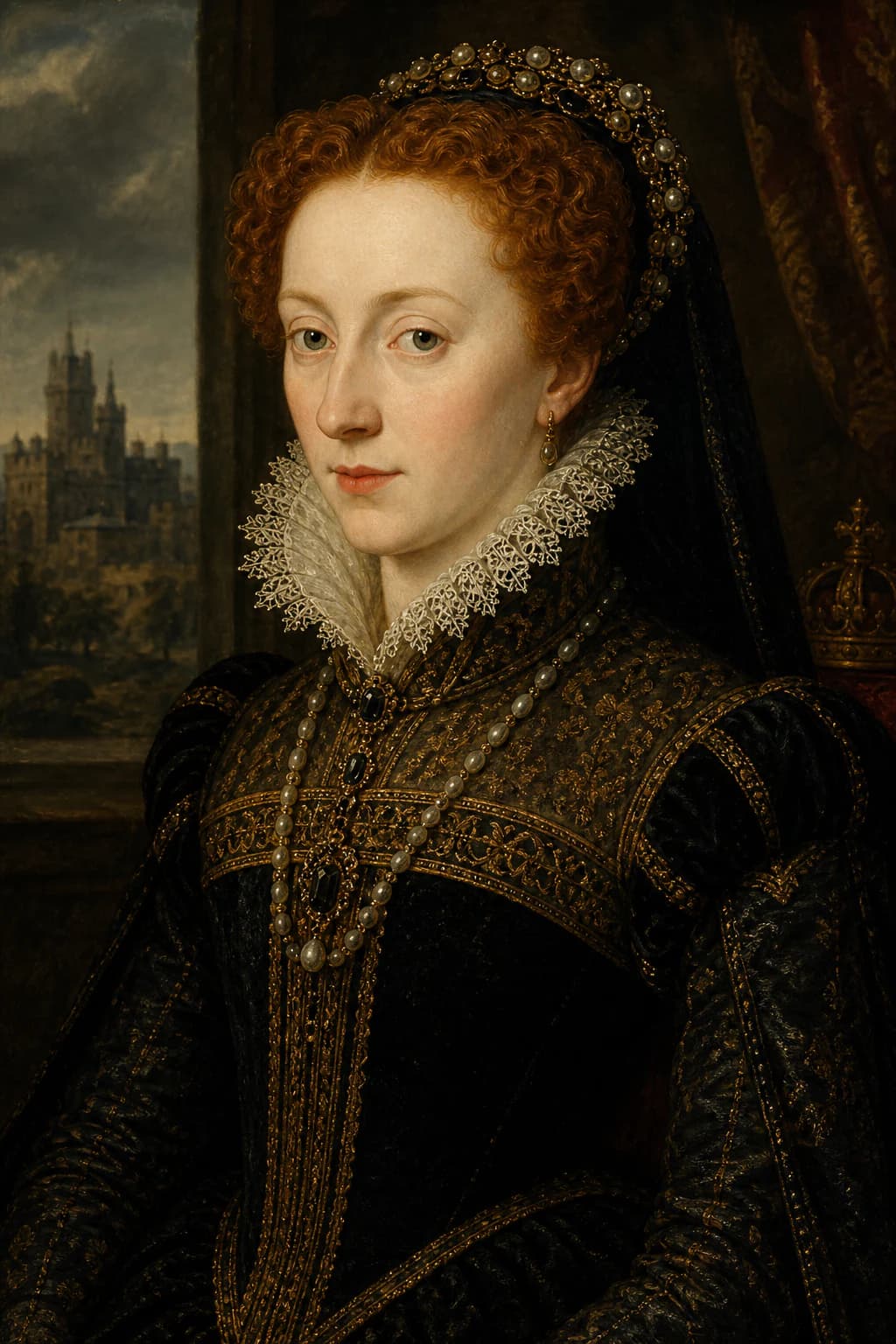
AI-generated portrait of Mary Queen of Scots in black court dress
AI-assisted historical reconstruction

An illustrative reconstruction based on historical context. It is not a photograph or documentary likeness. Image policy

Quick answer

Mary Queen of Scots, also known as Mary Stuart, was Queen of Scotland from 1542 to 1567 and queen consort of France from 1559 to 1560. A Catholic claimant to the English succession, she became the imprisoned rival of Elizabeth I, was implicated in plots against the English crown, and was executed at Fotheringhay Castle in 1587.

Born
1542 CE
Died
1587 CE
Role
Queen of Scots and queen consort of France
Years
1542-1587 CE
Quick facts

Profile details

Additional identity and tagging details that are not already covered in the introduction.

Full name
Mary Stuart, Queen of Scots
Also known as
Mary Stuart, Mary Stewart, Mary, Queen of Scots
Facts

Mary Queen of Scots timeline facts

Selected specifics from this profile's life story.

1542
Queen at six days old

Mary Stuart was born at Linlithgow Palace on December 8, 1542. Six days later her father, James V of Scotland, died, leaving her Queen of Scots as an infant.

1559-1560
Queen consort of France

When Francis II became king in 1559, Mary became queen consort of France. His death in December 1560 ended her French queenship and forced a return to Scotland.

1567-1568
Abdication and flight

Scottish nobles rebelled against Mary, imprisoned her at Lochleven, forced her abdication in favour of her infant son James VI, and defeated her attempted comeback at Langside.

1586-1587
Babington Plot and execution

In 1586, Walsingham's intelligence network intercepted letters linking Mary to the Babington Plot against Elizabeth. Mary was tried and executed at Fotheringhay Castle on February 8, 1587.

Life Journey

A crown inherited, lost and turned into legend

Follow the story in a more continuous narrative, with a reading mode that matches how much depth you want.

Complete chronology

1542

Queen at six days old

Mary's life began inside a dynastic crisis. Scotland was a small kingdom under pressure from England and France, and an infant queen created immediate questions of regency, marriage and foreign influence. Through her grandmother Margaret Tudor, Mary also carried Tudor blood, giving her a place in arguments about the English succession. Before she could speak, she was already a political fact.
1548-1558

Raised in France

France gave Mary polish, language, Catholic confidence and royal splendour. Her marriage to Francis in 1558 seemed to secure a powerful Franco-Scottish alliance. For a brief moment, Mary stood near the centre of European monarchy: Queen of Scots, dauphine of France and a claimant whose supporters could imagine her as a Catholic alternative to Elizabeth Tudor.

1559-1560

Queen consort of France

Mary's French reign was brief, but its consequences were lasting. She had known the highest ceremonial world in Europe, then suddenly found herself a young widow with a Scottish crown to manage. Her return to Scotland in 1561 placed a Catholic queen over a kingdom transformed by Protestant reform. The contrast between Mary's upbringing and Scotland's new religious order became one of the central tensions of her reign.

1561-1565

Return to Scotland

Mary's early Scottish rule was more skilful than later legend sometimes allows. She accepted, at least practically, the Protestant settlement while maintaining her own Catholic worship. Yet the problem of marriage and succession remained. Mary needed an heir and a political partner, but every possible husband carried diplomatic and domestic consequences. Her choice of Henry Stuart, Lord Darnley, turned a difficult reign into a crisis.

1565-1567

Darnley, Riccio and collapse

Darnley was handsome, royal-blooded and disastrous. In 1566 conspirators murdered Mary's secretary David Riccio in her presence. In 1567 Darnley was murdered after an explosion at Kirk o' Field. Mary was never legally convicted of involvement, but suspicion attached to her, especially after her rapid marriage to James Hepburn, Earl of Bothwell, widely believed to be implicated. Her authority shattered.

1567-1568

Abdication and flight

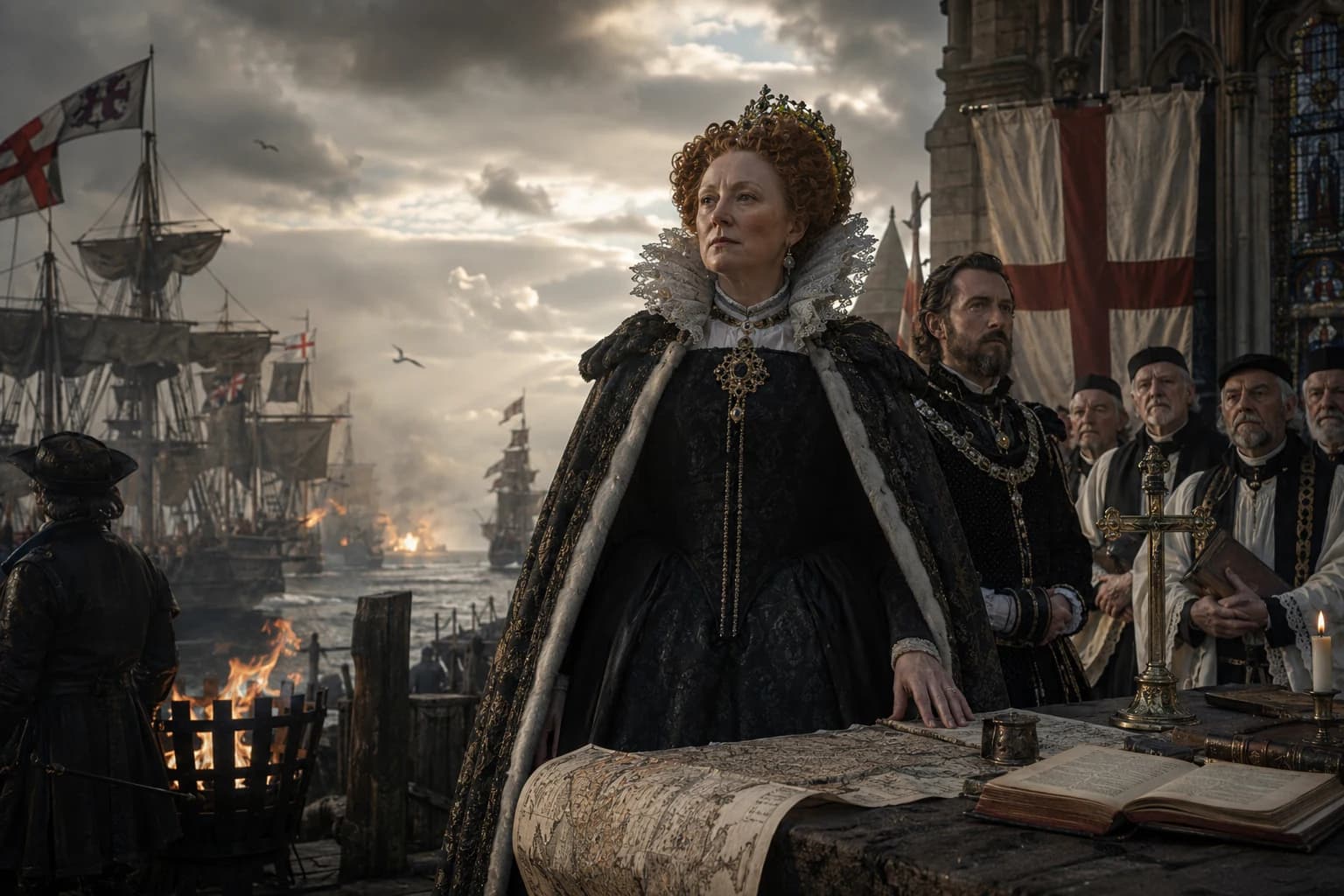
Mary's fall was swift. At Lochleven she was compelled to surrender the crown. Her son became James VI, while regents governed in his name. Mary escaped and tried to recover power, but defeat at Langside ended her immediate Scottish prospects. Her decision to flee into England in 1568 was one of the great miscalculations of her life. She hoped Elizabeth I might help restore an anointed queen. Instead, Elizabeth saw a dynastic rival.

1568-1587

Nineteen years in England

Mary's captivity was comfortable compared with a dungeon, but it was still captivity. She became a living problem for Elizabeth's government. English Catholics and foreign powers could use her as a focus for schemes to replace Elizabeth and restore Catholic monarchy. Mary did not command all these plots, but her claim made them plausible. The longer she remained alive, the more she became a potential alternative sovereign.

1586-1587

Babington Plot and execution

The Babington Plot gave Elizabeth's ministers evidence that Mary could be tied to a plan involving Elizabeth's assassination. The fairness of the process remains debated, especially because Mary was a sovereign queen tried by an English tribunal. Elizabeth hesitated before signing the warrant and later distanced herself from the execution, yet Mary died on the scaffold with composure that strengthened her posthumous image.

Continue in context

Connected stories

Move from the profile into the wider events and settings this figure belongs to.

Tertiary paths

Content note

This profile is written for educational use and connects to related Stories of History pages. The main portrait is an AI-assisted historical reconstruction, included as an illustrative aid rather than documentary evidence. Image policy

References

Sources & Further Reading

Reliable reference works, archives and reading paths connected to this profile.

Further reading

  1. Encyclopaedia Britannica, Search results for Mary Queen of Scots,” accessed June 2026.Open source
  2. WorldCat, Books and library holdings for Mary Queen of Scots,” accessed June 2026.Open source

Primary sources

  1. Library of Congress, Search results for Mary Queen of Scots,” accessed June 2026.Open source

Reviewed claim sources

Loading reviewed claim sources...

A weekly route through history

Find out first about the latest published stories, feature notes and occasional Premium offers in one weekly email.