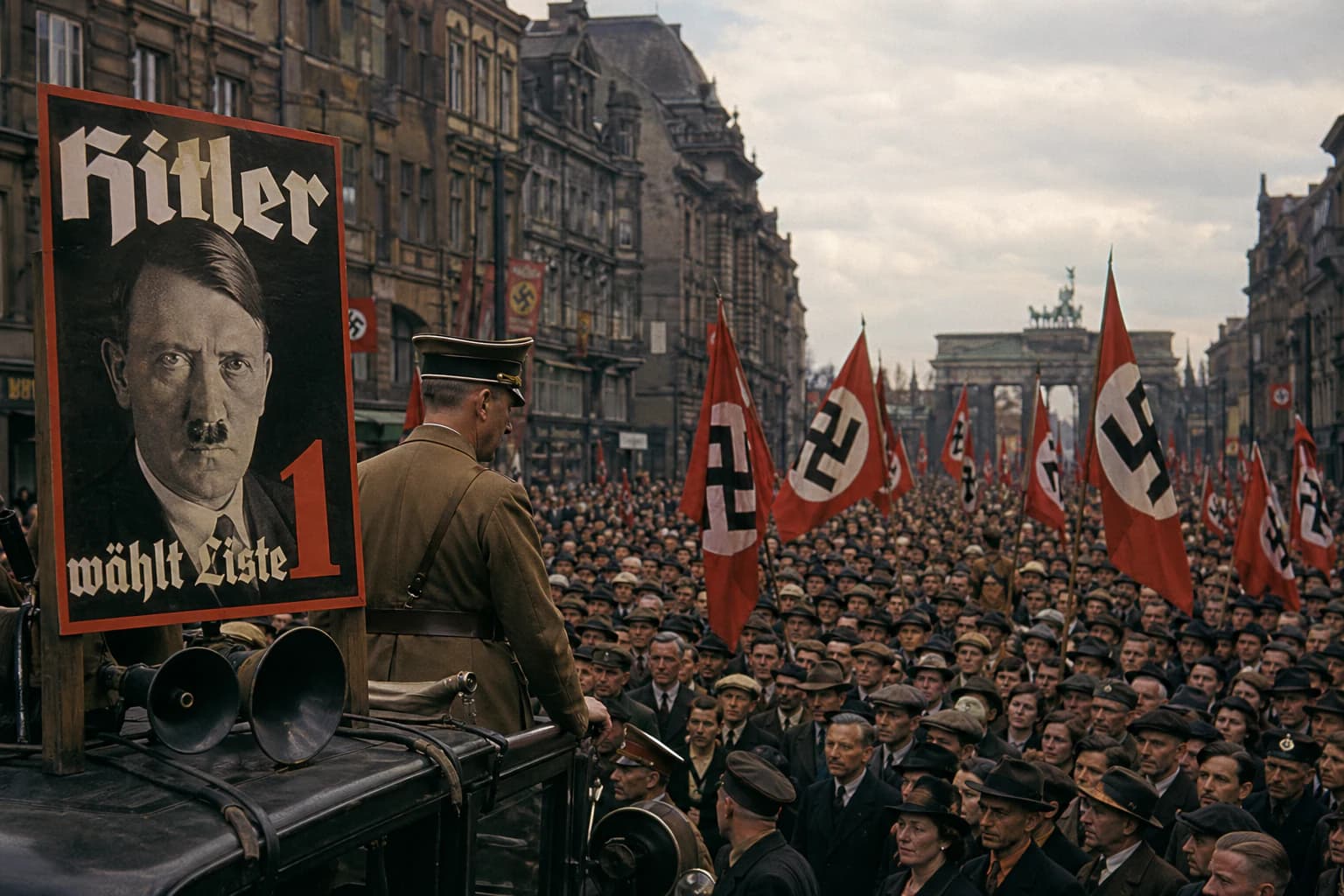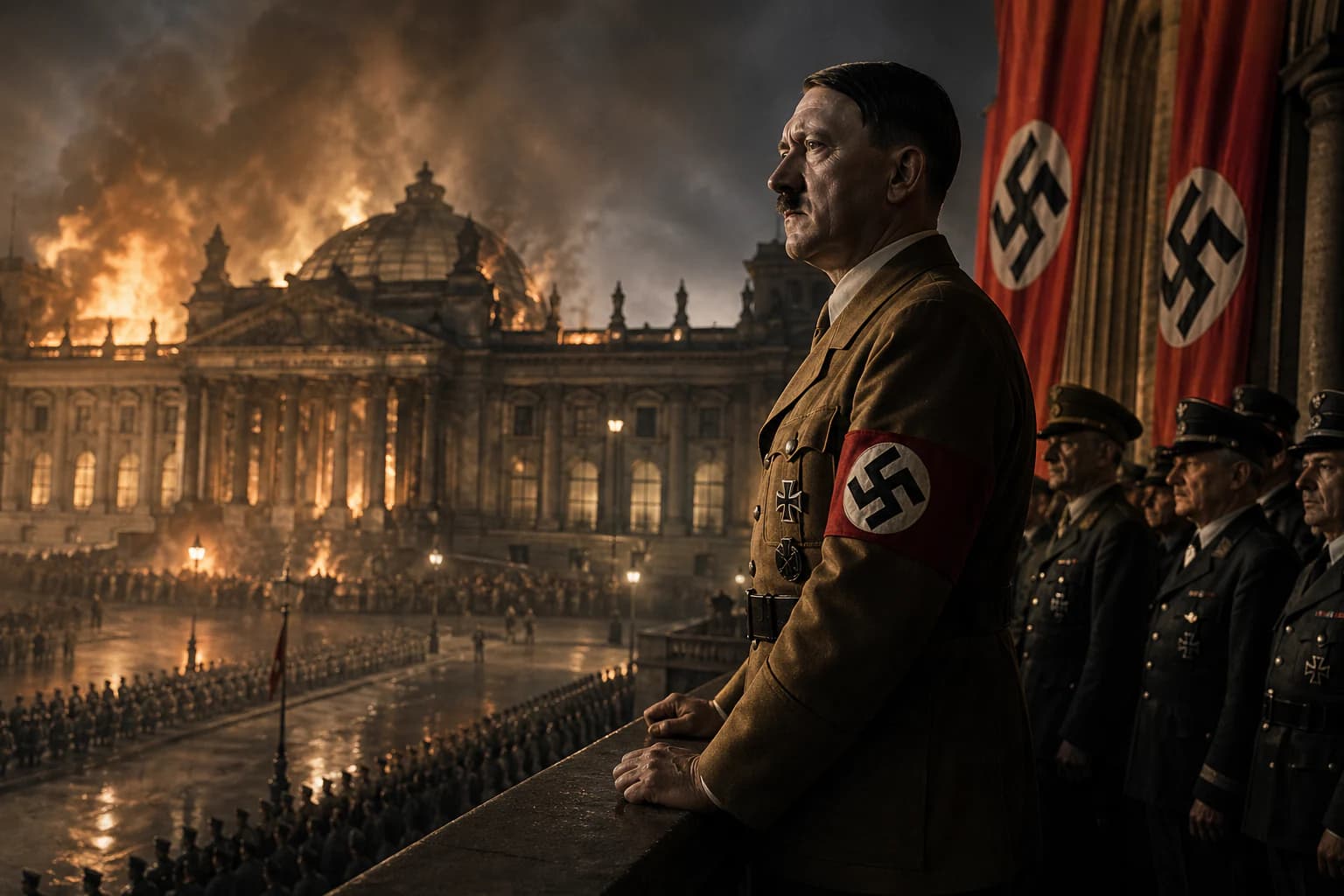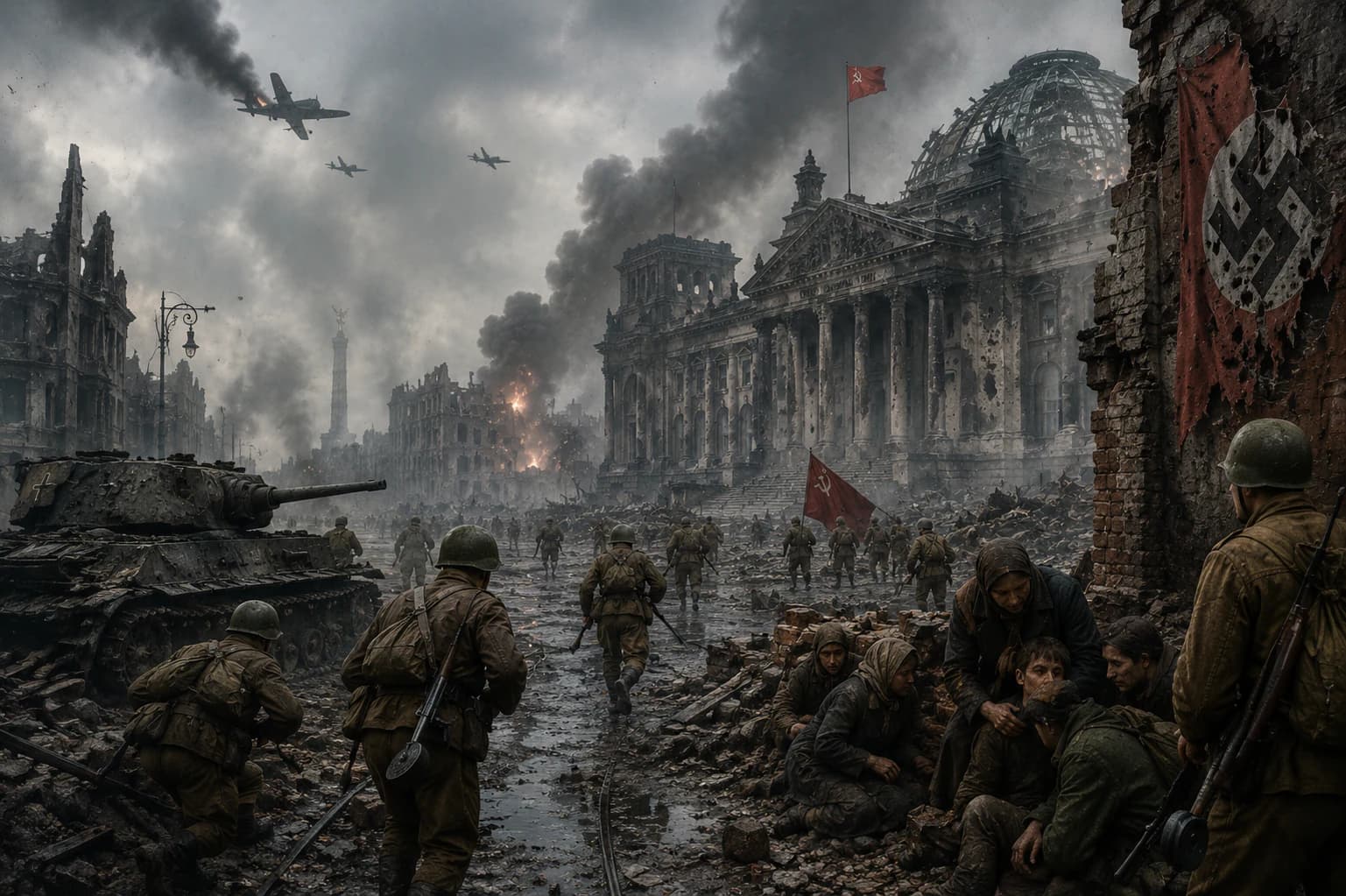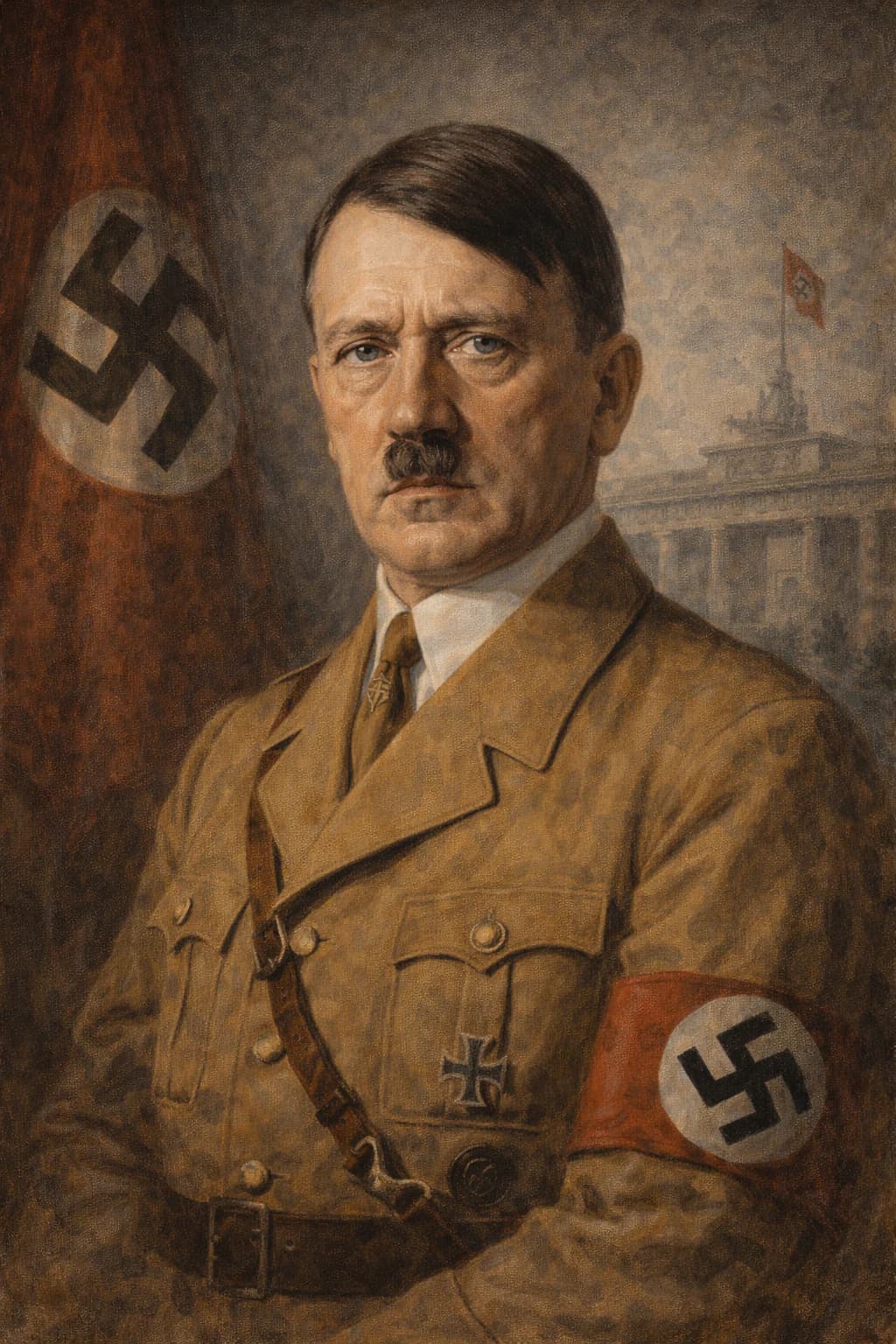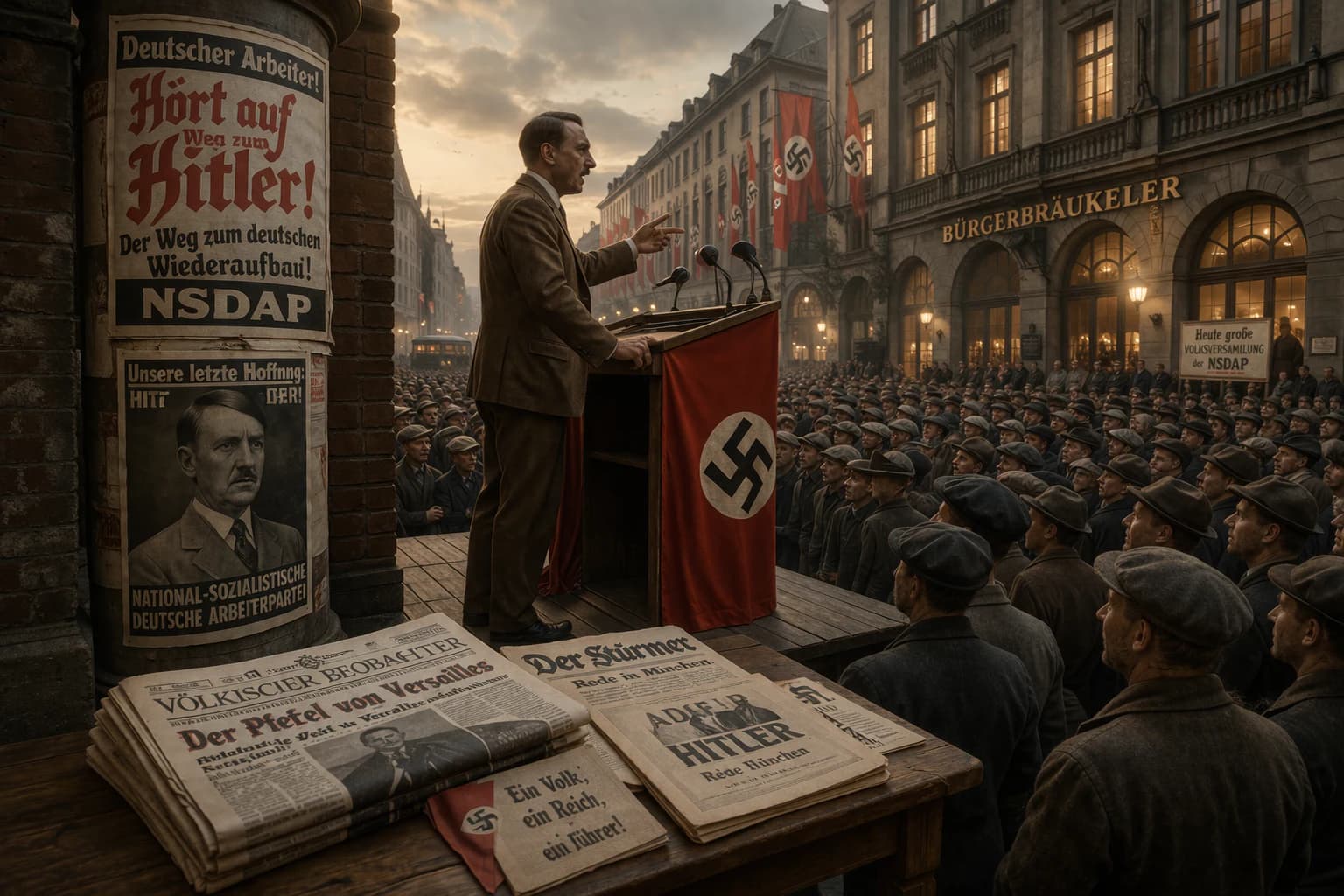
Adolf Hitler addressing vast crowds at a Nazi rally in Nuremberg, surrounded by swastika banners and ranks of uniformed supporters
Premium Story

The Rise of Adolf Hitler

See how Adolf Hitler exploited crisis, propaganda, violence, and elite weakness to destroy German democracy.

11 chapters

Next

Content note

This story discusses violence, persecution, mass death, and human suffering in an educational historical context.

Context

Introduction

What you'll learn: You'll understand Hitler's ideology and its origins, how the Weimar Republic created conditions for extremism, why millions of Germans voted for the Nazis, and how Hitler destroyed democracy once in power.

Key forces

Postwar Germany in Crisis
1919 CE
Step 1 of 101919 CEAccessible mode

Postwar Germany in Crisis

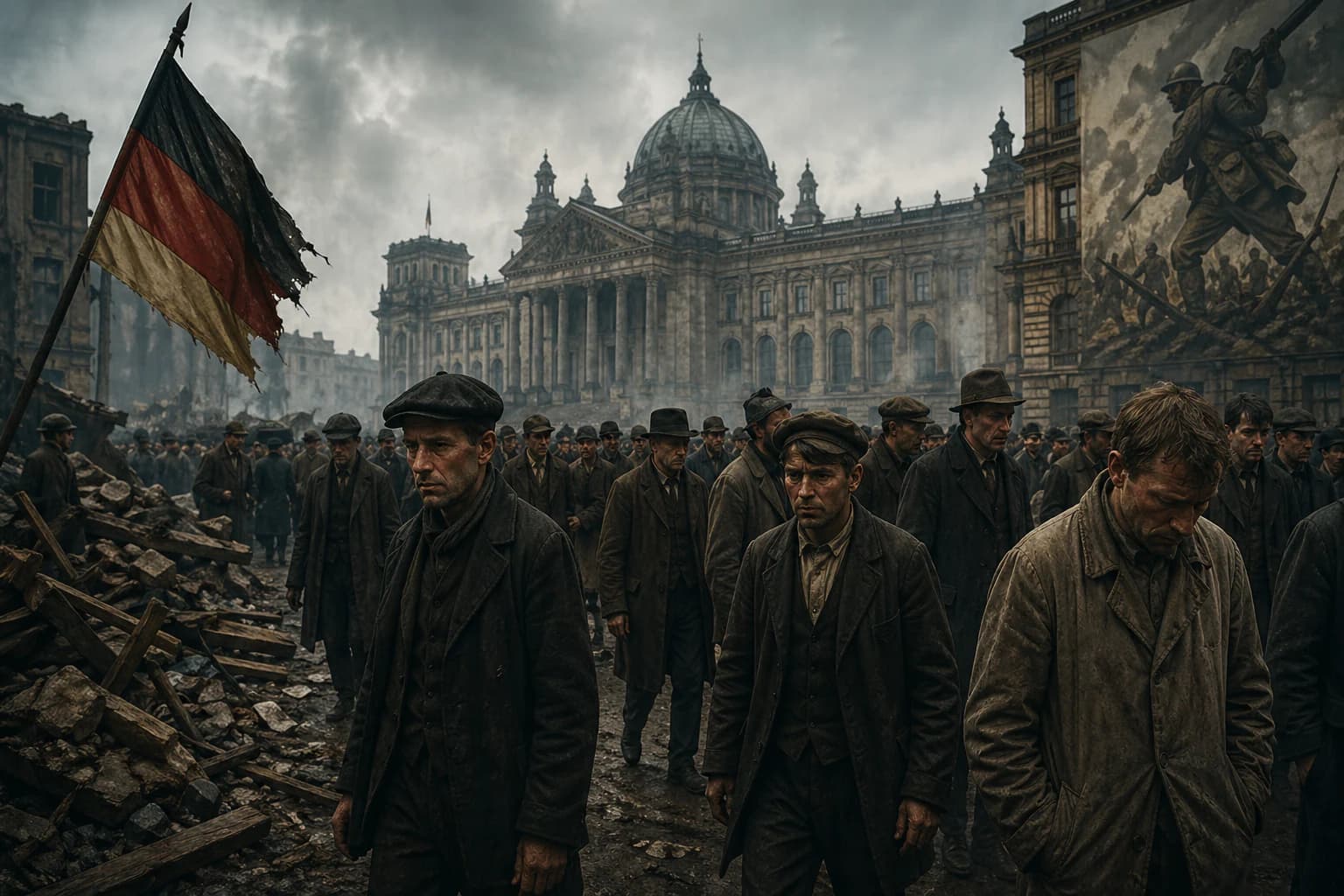
Germany's defeat in the First World War did not just end a war. It destroyed an empire — and left millions of people looking for someone to blame.

In November 1918, the Kaiser abdicated and revolution swept through German cities. A new democratic government, called the Weimar Republic, was set up almost overnight to handle the collapse.

The peace treaty that followed, signed at Versailles in 1919, was brutal. Germany lost large amounts of territory, was stripped of its military, and was forced to accept full responsibility for starting the war. Massive reparations were demanded.

Germany's new democracy had to sign a humiliating peace before it had even found its feet.

Veterans came home bitter and unemployed. Armed groups fought in the streets. A myth spread quickly: Germany had not really lost the war — it had been betrayed at home by traitors and weak politicians.

This anger and instability created a perfect opening for extreme politics. The far right now had an audience ready to listen.

Hitler Joins the German Workers' Party
1919 CE
Step 2 of 101919 CEAccessible mode

Hitler Joins the German Workers' Party

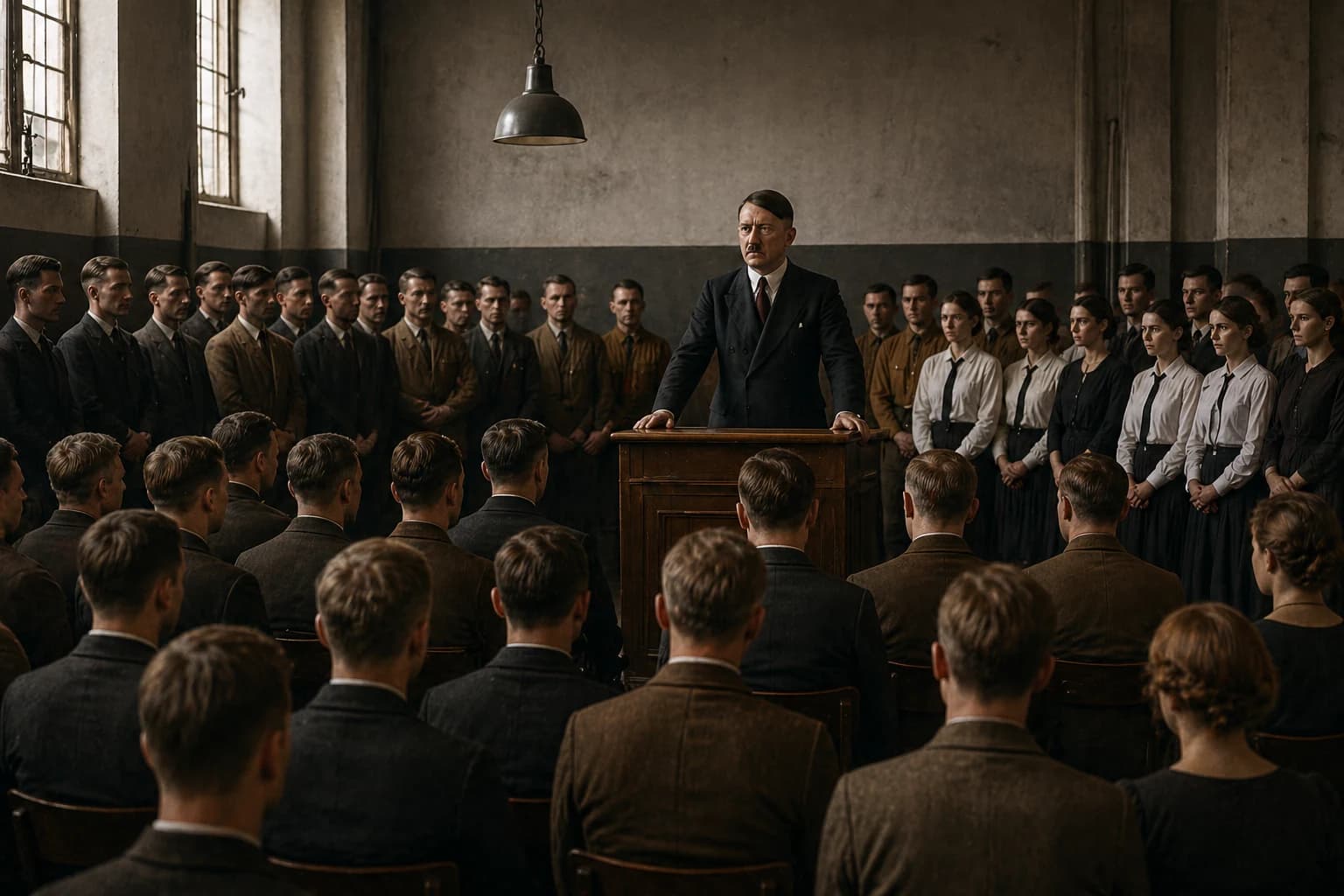
In 1919, Adolf Hitler was a nobody. He had no money, no real job, and no clear future. What he did have was hatred — and a voice that could hold a room.

Hitler had served as a corporal in the German army during the war, winning the Iron Cross for bravery. When the war ended in defeat, he was devastated. He stayed in the army, working as a political informer watching extremist groups in .

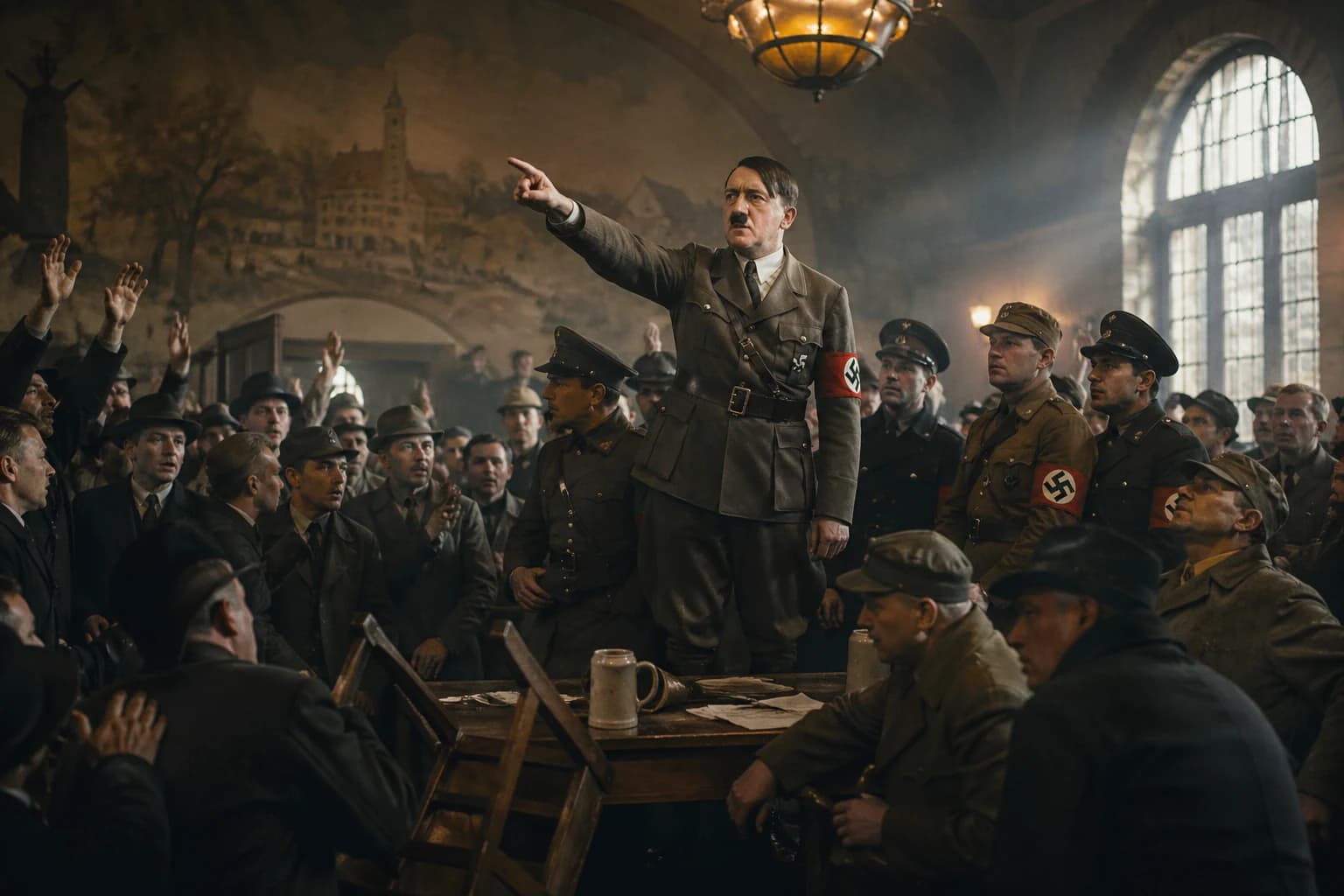
In September 1919, he was sent to observe a small nationalist group called the German Workers' Party. He found about fifty people in a beer hall, complaining about Jews, Marxists, and the government.

Hitler didn't just attend the meeting — he took it over with his voice.

He stood up, argued passionately, and stunned the room. The party founder Anton Drexler was amazed and invited Hitler to join. Hitler agreed — and discovered, for the first time, that he had a purpose.

His talent for public speaking was extraordinary. It would become the most powerful political weapon of the twentieth century.

The Nazi Party Takes Shape
1920 CE
Step 3 of 101920 CEAccessible mode

The Nazi Party Takes Shape

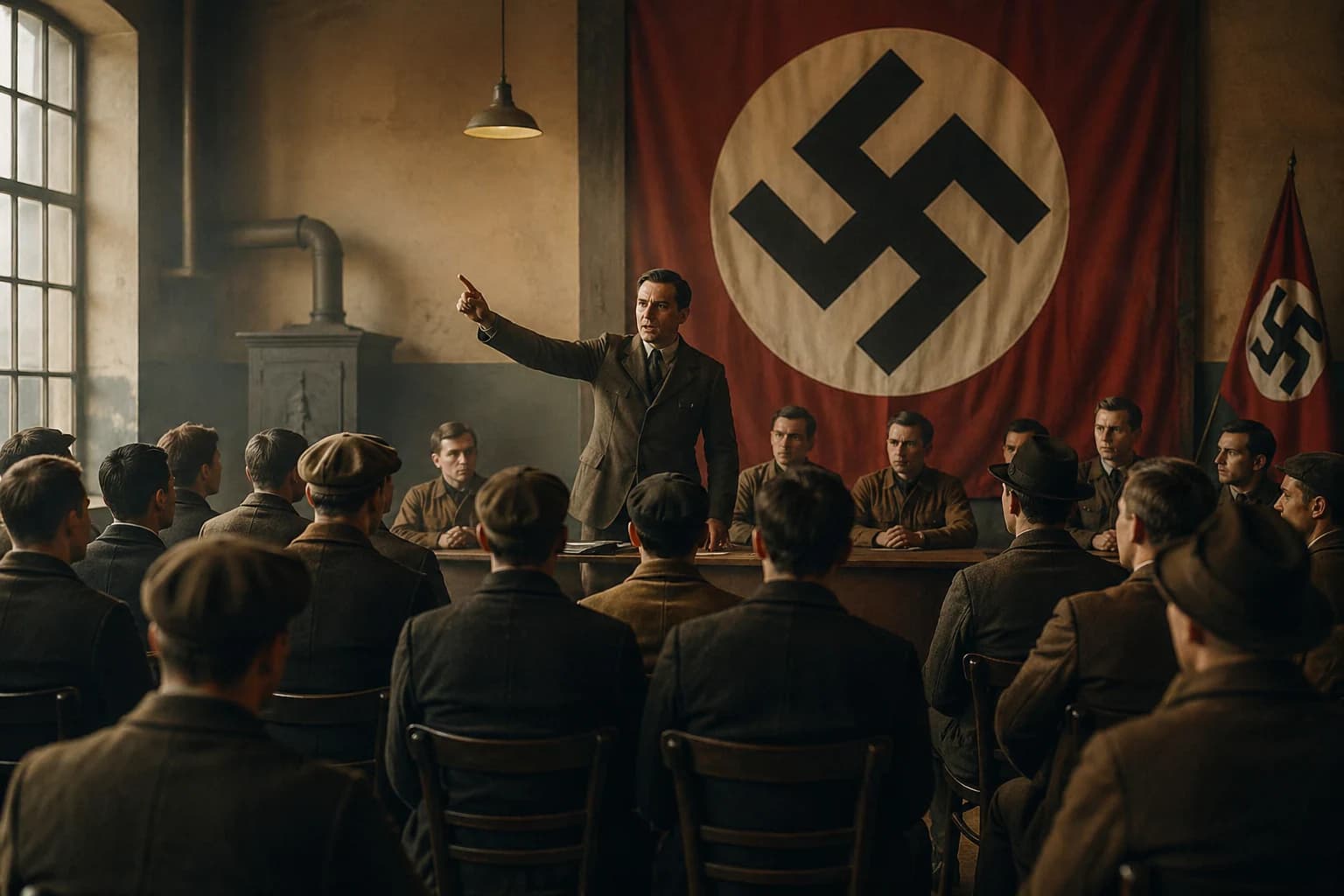
In 1920, Hitler's small group relaunched as the National Socialist German Workers' Party — the Nazis. They had a flag, a programme, and a paramilitary force.

The party published its Twenty-Five Point Programme, mixing nationalism, anti-Semitism, and social policy. It called for German expansion, the stripping of citizenship from Jews, and a strong centralised state.

The swastika became the party symbol. The Roman salute and brown shirts were adopted. These gave the movement a military look that strongly appealed to veterans who missed the camaraderie of the army.

The Nazis didn't just have policies. They had spectacle, symbols, and muscle — designed to make people feel part of something powerful.

The SA stormtroopers provided armed force at meetings and intimidated opponents. Violence was part of the message: the Nazis were serious, and they were not constrained by polite rules.

By 1921, Hitler had seized full personal control of the party. He would accept no rivals. The Nazi movement was his.

Premium

You've reached the turning point

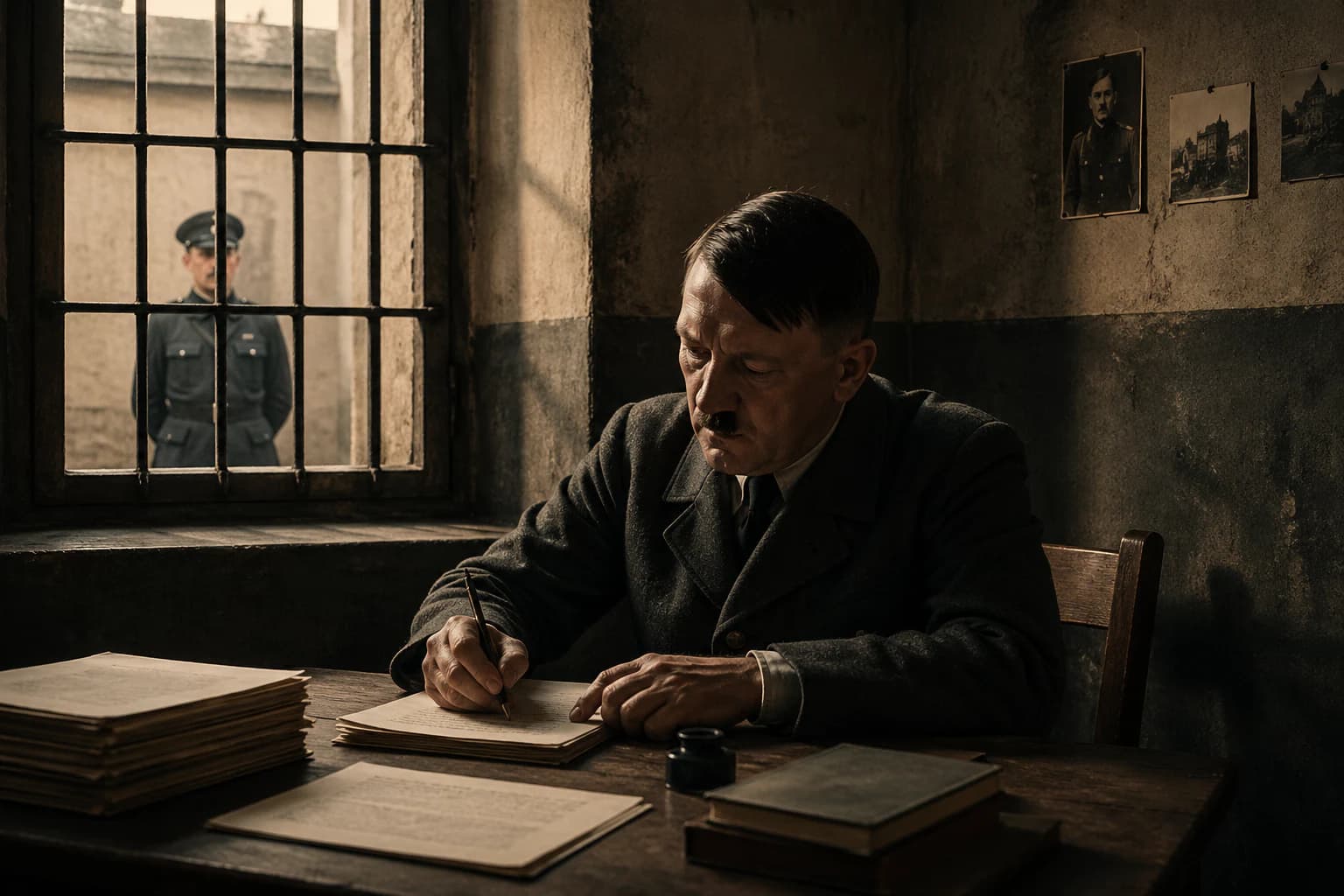
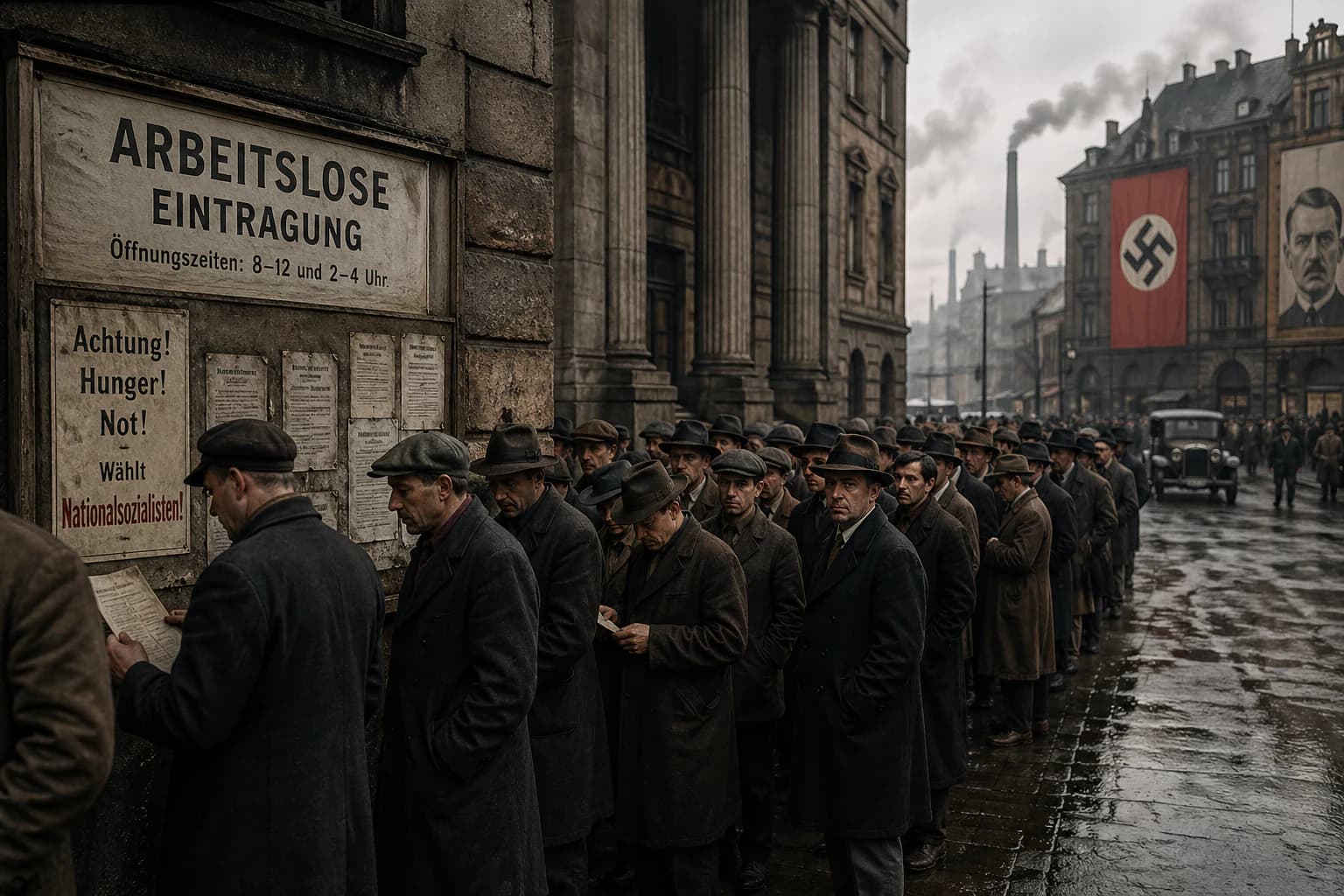
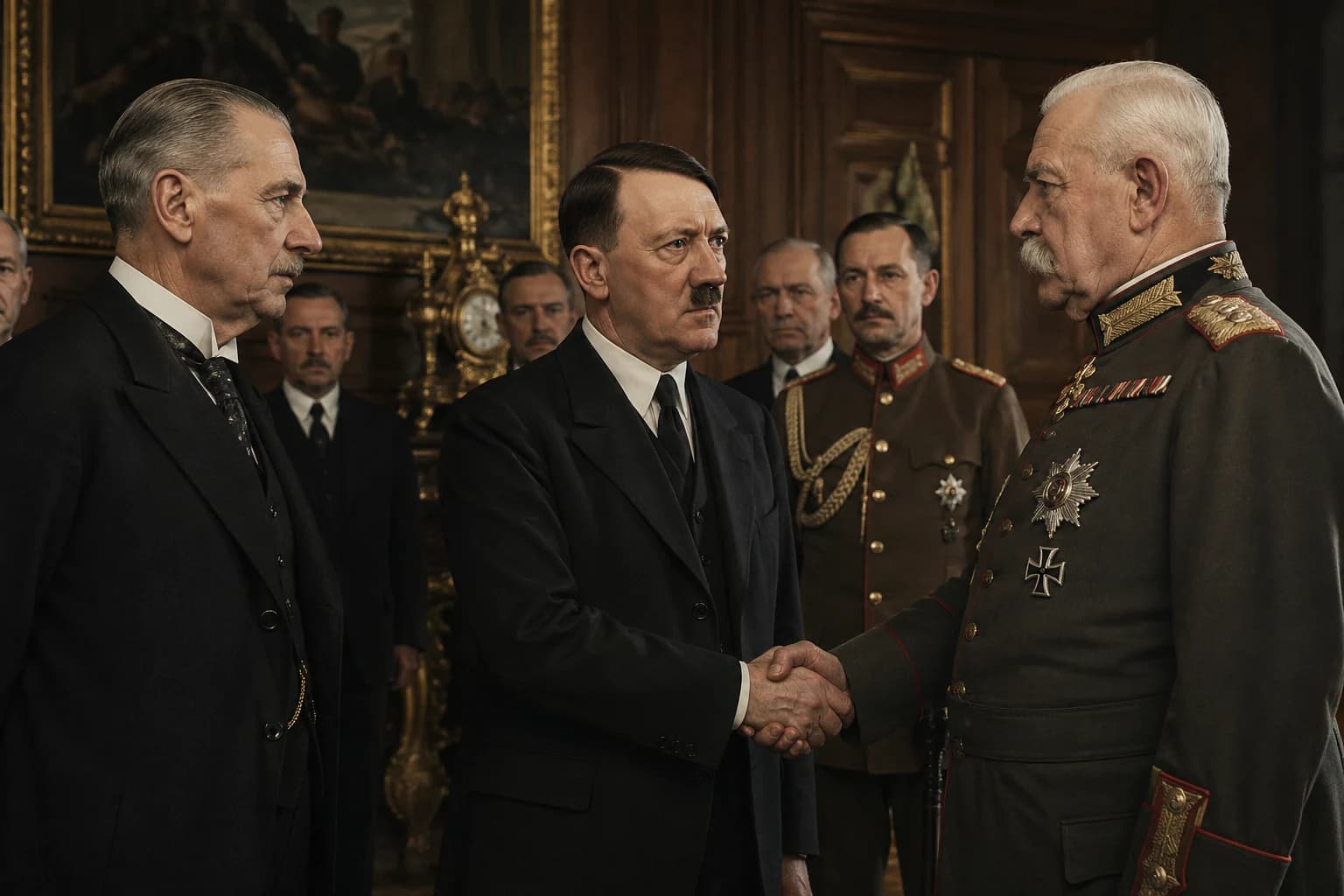
The opening chapters show Hitler entering politics in a defeated and unstable Germany. Premium follows how failure becomes strategy: prison, propaganda and economic crisis help rebuild the Nazi movement until democratic institutions hand power to the man who will destroy them.

Continue into the reversals, crises and human stakes that make the story matter.

Unlock full story

What Premium unlocks next

  1. 4The Beer Hall Putsch
  2. 5Prison and Mein Kampf
  3. 6Rebuilding the Nazi Machine
  4. 7The Great Depression Breaks Weimar
  5. 8The Nazis Become a Mass Party
  6. 9Hitler Is Made Chancellor
  7. 10Democracy Is Destroyed

Browse stories

Browse stories for free

Explore the people connected to this turning point or enjoy one of our free stories.

Unlock full storyBrowse stories

References

Sources & Further Reading

Reliable sources, primary-source collections and reading paths connected to this page.

Sources used

  1. United States Holocaust Memorial Museum, Adolf Hitler,” Open source
  2. German History in Documents and Images, Nazi Germany, 1933-1945,” Open source

Further reading

  1. Ian Kershaw, Hitler: 1889-1936 Hubris, W. W. Norton.

Primary sources

  1. Yale Law School, Avalon Project: Nuremberg Trial Proceedings,” Open source

A weekly route through history

Find out first about the latest published stories, feature notes and occasional Premium offers in one weekly email.