Complete chronology
Full overview and deeper context for every journey step.
1889–1903
Austrian Beginnings
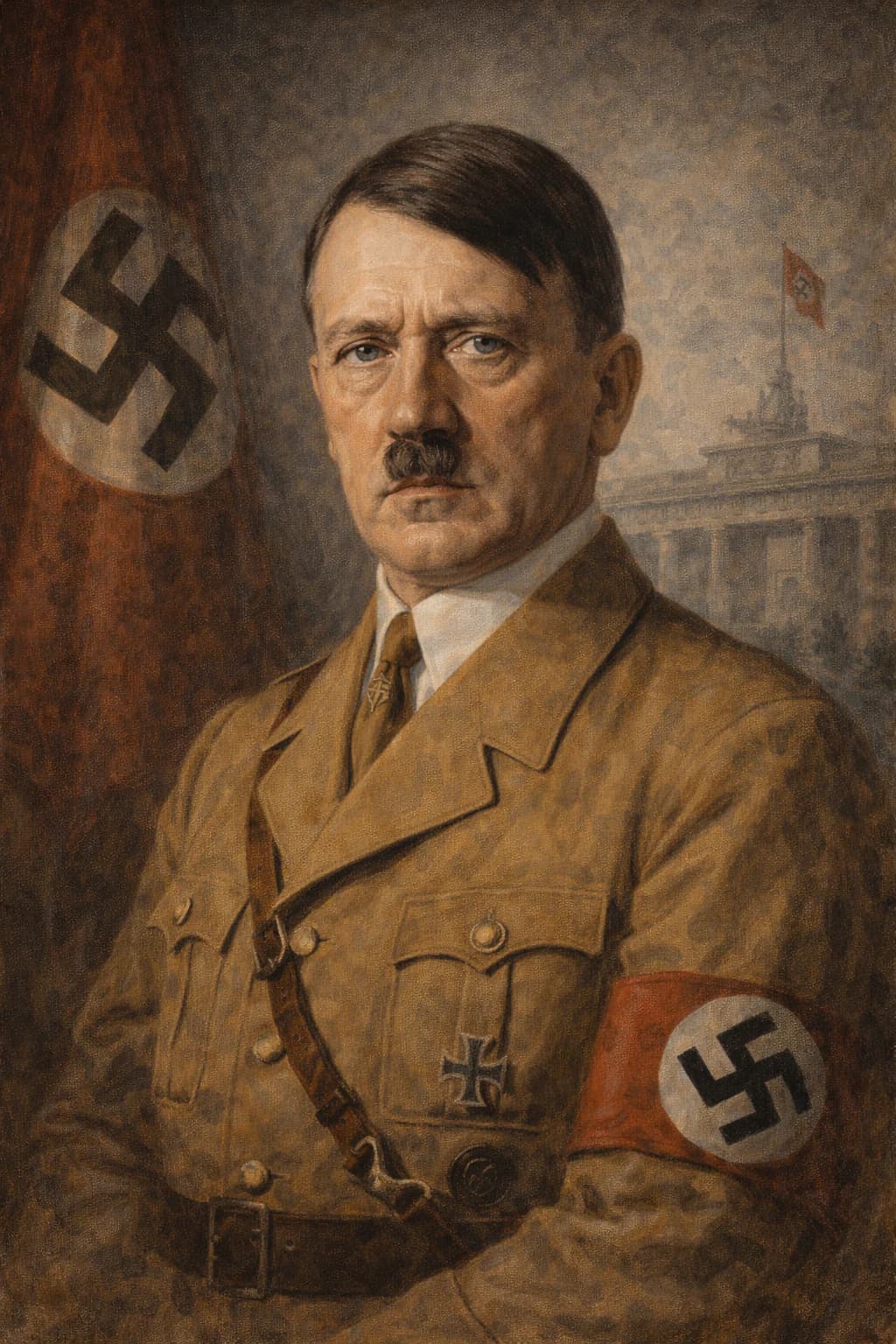
Adolf Hitler was born on 20 April 1889 in Braunau am Inn, an Austrian town near the German border. He was not born into German politics, but he grew up in a region where questions of empire, language, and national identity were already charged. His father, Alois, was a customs official whose authority at home was severe; his mother, Klara, was a central emotional figure in his childhood. Hitler's school record was uneven, and his youthful ambition focused less on disciplined achievement than on an imagined artistic future. Nothing in these early years made dictatorship inevitable. That matters. His later crimes cannot be explained away by childhood hardship. But the young Hitler did develop habits that became politically dangerous: resentment of failure, contempt for compromise, attraction to heroic national myths, and a need to turn personal grievance into a story of betrayal.
Early environments do not determine outcomes, but they can shape how individuals respond to later challenges and failures.
1907–1913
Struggles in Vienna
Hitler moved to Vienna hoping to become an artist, but the Academy of Fine Arts rejected him twice. After his mother's death in 1907, his life became increasingly unstable. He lived in cheap lodgings and men's hostels, sold small paintings and postcards, and drifted through a city that was both modern and deeply divided. Vienna exposed him to mass politics: pan-German nationalism, antisemitic agitation, Catholic social politics, socialist organizing, and resentment toward the multiethnic Habsburg Empire. Historians debate exactly how fully formed his antisemitism was during these years, but Vienna clearly gave him a language of blame. He learned to explain complexity through conspiracy, to despise parliamentary compromise, and to imagine national renewal as purification. The city did not create him alone, but it supplied many of the political poisons he later carried into Germany.
Personal failure can be redirected into growth or resentment, depending on how individuals interpret their circumstances.
1914–1918
First World War
When war broke out in 1914, Hitler volunteered for the Bavarian army and served mostly as a dispatch runner on the Western Front. He was decorated for bravery, including the Iron Cross First Class, and the army gave him something civilian life had not: belonging, routine, hierarchy, and a cause that seemed larger than himself. The trauma and mass death of the war did not make him reject militarism. Instead, he romanticized front-line comradeship and came to see violence as cleansing. Germany's defeat in 1918 shattered that worldview. Like many nationalists, he embraced the false 'stab-in-the-back' myth, claiming that Germany had been betrayed by socialists, republicans, Jews, and internal enemies rather than defeated militarily. This lie became one of the emotional engines of Nazism.
Moments of national crisis can be interpreted in ways that either unite societies or deepen divisions and blame.
1919–1923
Entry into Politics
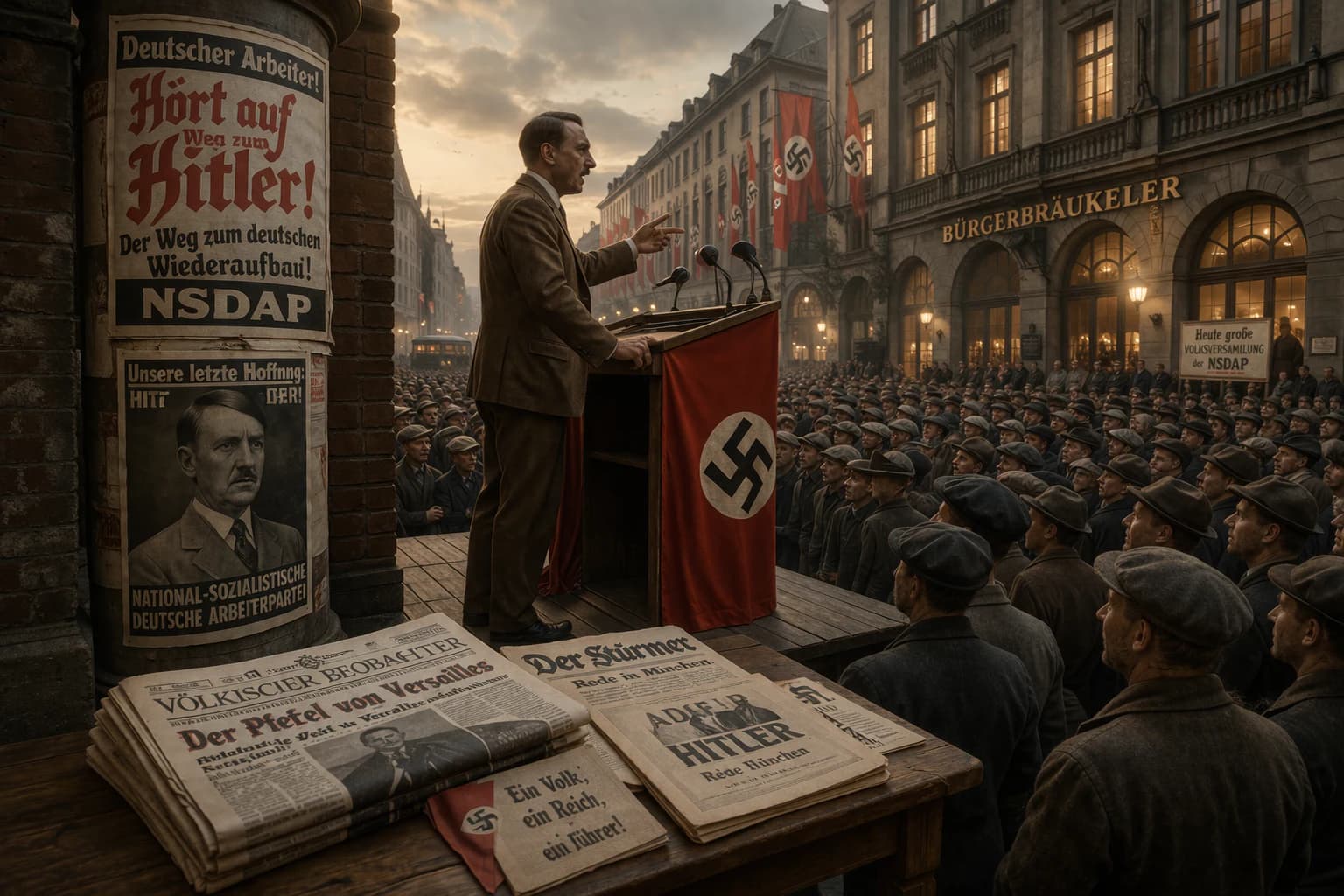
Postwar Munich was a place of revolution, counterrevolution, paramilitary violence, and fear of communism. Hitler remained connected to the army and was sent to observe political groups. One of them, the German Workers' Party, was tiny but receptive to the nationalist and antisemitic message he delivered with unusual force. He joined, became its most important speaker, and helped remake it as the National Socialist German Workers' Party. The movement combined racial ideology, anti-Marxism, resentment over the Treaty of Versailles, hatred of democracy, and theatrical propaganda. Its brown-shirted SA intimidated opponents and made politics feel like combat. In November 1923, Hitler attempted to seize power in Munich in the Beer Hall Putsch. The coup failed, but the trial gave him national attention. He learned that martyrdom, spectacle, and legality could be more useful than premature rebellion.
Charisma and timing can transform marginal voices into influential movements, especially during uncertainty.
1924
Prison and Ideology
Hitler's prison sentence was lenient, and he served only part of it at Landsberg. There he dictated Mein Kampf to Rudolf Hess and others, producing a sprawling text that mixed autobiography, propaganda, racial fantasy, antisemitic conspiracy, hatred of Marxism, contempt for parliamentary democracy, and plans for German expansion in eastern Europe. It was not a secret blueprint in the sense that no one could read it; the danger was that many dismissed its extremism as performance. Prison also changed his method. He concluded that the Nazi Party should seek power through elections, alliances, propaganda, intimidation, and manipulation of the constitution rather than another immediate coup. The ideology remained violent. The route to power became more patient.
Periods of setback can become moments of strategic recalibration rather than defeat.
1930–1933
Seizing Leadership
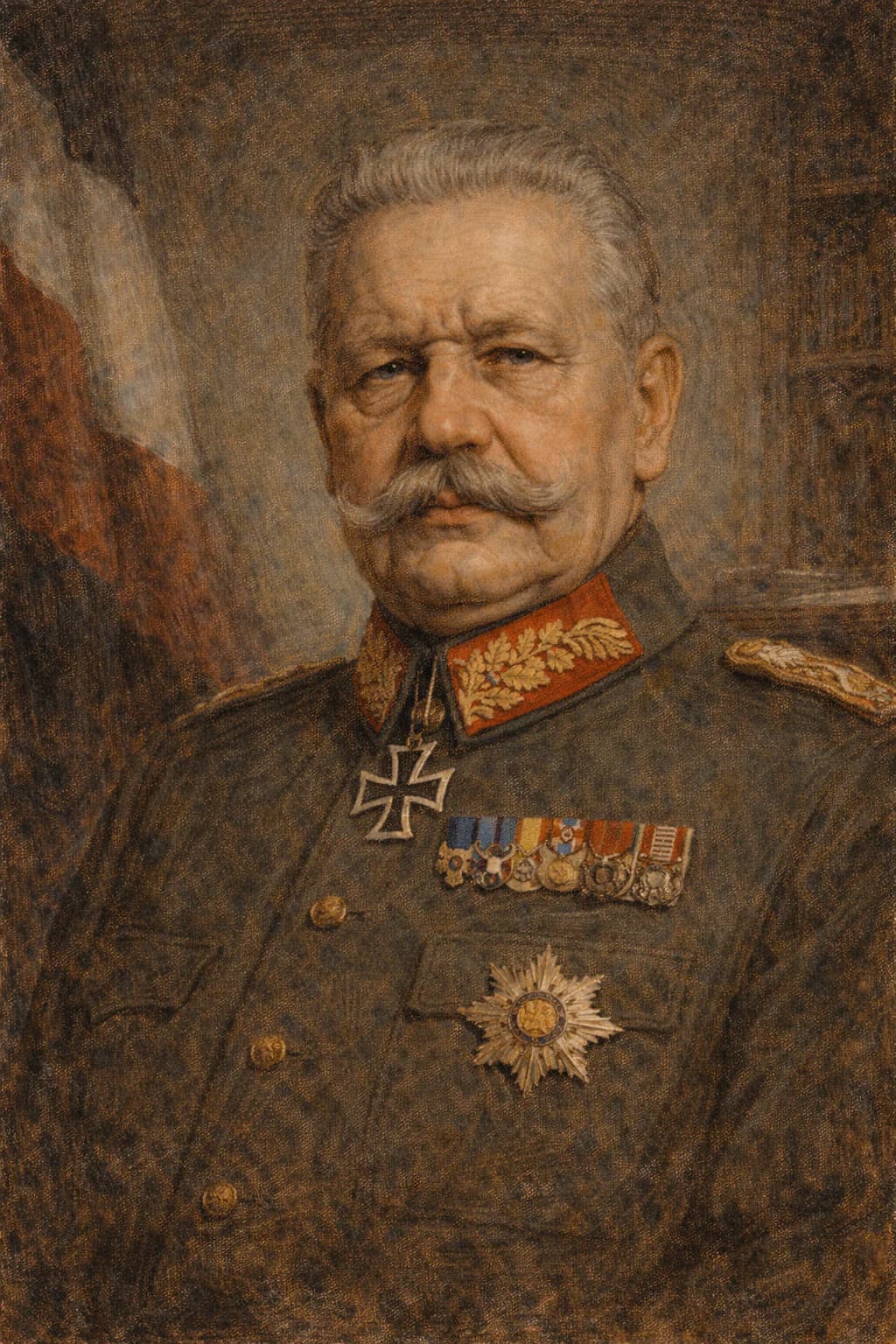
The Nazi breakthrough came from crisis, not inevitability. The Great Depression devastated Germany after 1929, creating mass unemployment, fear, and fury at the Weimar Republic's inability to provide stability. Nazi propaganda offered different promises to different audiences: jobs, national revival, order, revenge against Versailles, protection from communism, and racial unity. Hitler did not win an outright democratic majority, but the Nazi Party became the largest party in the Reichstag. Conservative politicians around President Paul von Hindenburg believed they could use and contain him. On 30 January 1933, Hitler was appointed chancellor. Within months, the Reichstag Fire Decree, the Enabling Act, arrests of opponents, destruction of trade unions, Gleichschaltung, and terror by the SA and SS turned constitutional office into dictatorship. The collapse of Weimar was not a single event. It was a sequence of choices, cowardice, violence, and institutional surrender.
Democratic systems can erode rapidly when institutions fail to resist concentrated power.
1933–1939
Total Control
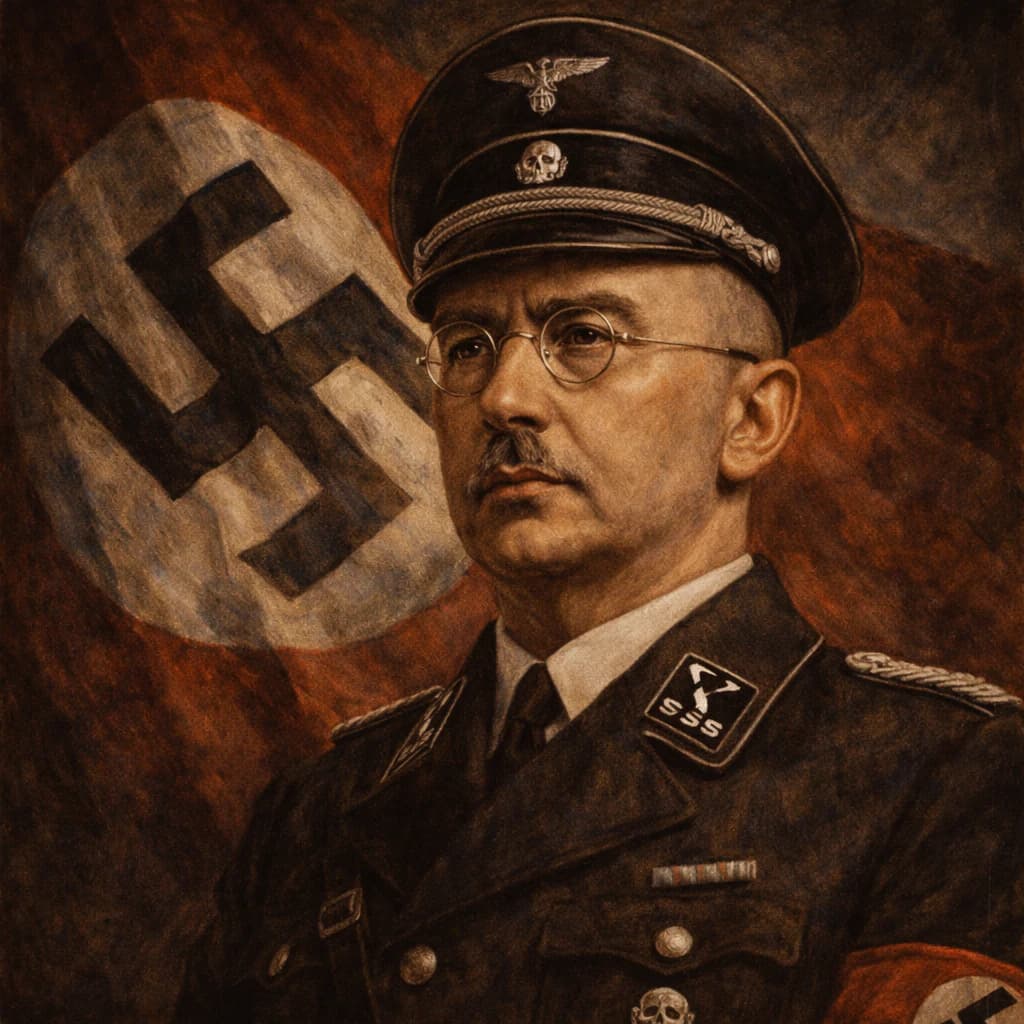
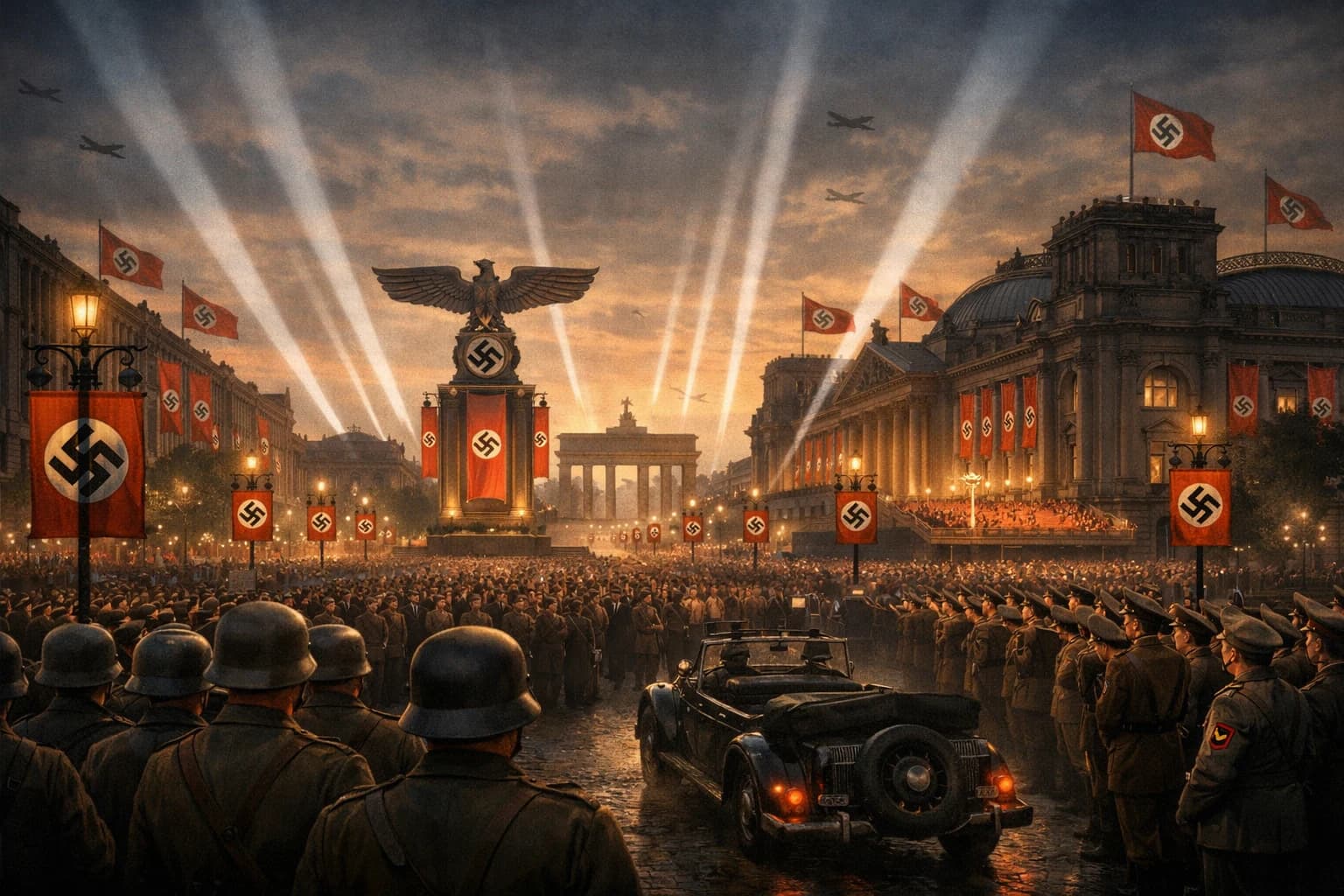
From 1933 to 1939, Hitler's regime destroyed civil society and reshaped Germany around racial dictatorship. Joseph Goebbels's propaganda ministry cultivated the image of national renewal, while the Gestapo, SS, courts, camps, and informant networks made dissent dangerous. The regime excluded Jews from public life, stripped them of citizenship through the Nuremberg Laws of 1935, encouraged boycotts and humiliation, and escalated violence dramatically during Kristallnacht in 1938. Other groups, including Roma, disabled people, political opponents, gay men, Jehovah's Witnesses, and others, were targeted in different ways. Abroad, Hitler rearmed, remilitarized the Rhineland, annexed Austria, dismantled Czechoslovakia, and repeatedly gambled that Britain and France would avoid war. Economic recovery and public works helped win consent from many Germans, but that recovery was tied to rearmament, coercion, plunder, and preparation for conquest.
Control over information and fear can sustain authority even when policies cause widespread harm.
1939–1945
War and Destruction
On 1 September 1939, Germany invaded Poland. Britain and France declared war, and Europe entered catastrophe. Early German victories in Poland, Norway, the Low Countries, France, the Balkans, and North Africa made Hitler appear unstoppable, but his ambitions outran Germany's capacity. The invasion of the Soviet Union in June 1941 turned the war into an ideological and racial war of annihilation. Behind the front, Einsatzgruppen murdered Jewish communities, Soviet prisoners of war died in enormous numbers, and occupation regimes starved, deported, and exploited civilians. The Holocaust developed into industrialized genocide through ghettos, shootings, deportations, and killing centers such as Auschwitz-Birkenau, Treblinka, Sobibor, and Belzec. Hitler did not manage every detail, but his worldview, authority, and decisions made the regime's radicalization possible. As defeat approached after Stalingrad, El Alamein, Allied bombing, and D-Day, he chose escalation over preservation, sacrificing Germany itself to a war he had made unwinnable.
Unchecked ideology combined with absolute power can lead to consequences on a vast and devastating scale.
1945
Collapse and Death
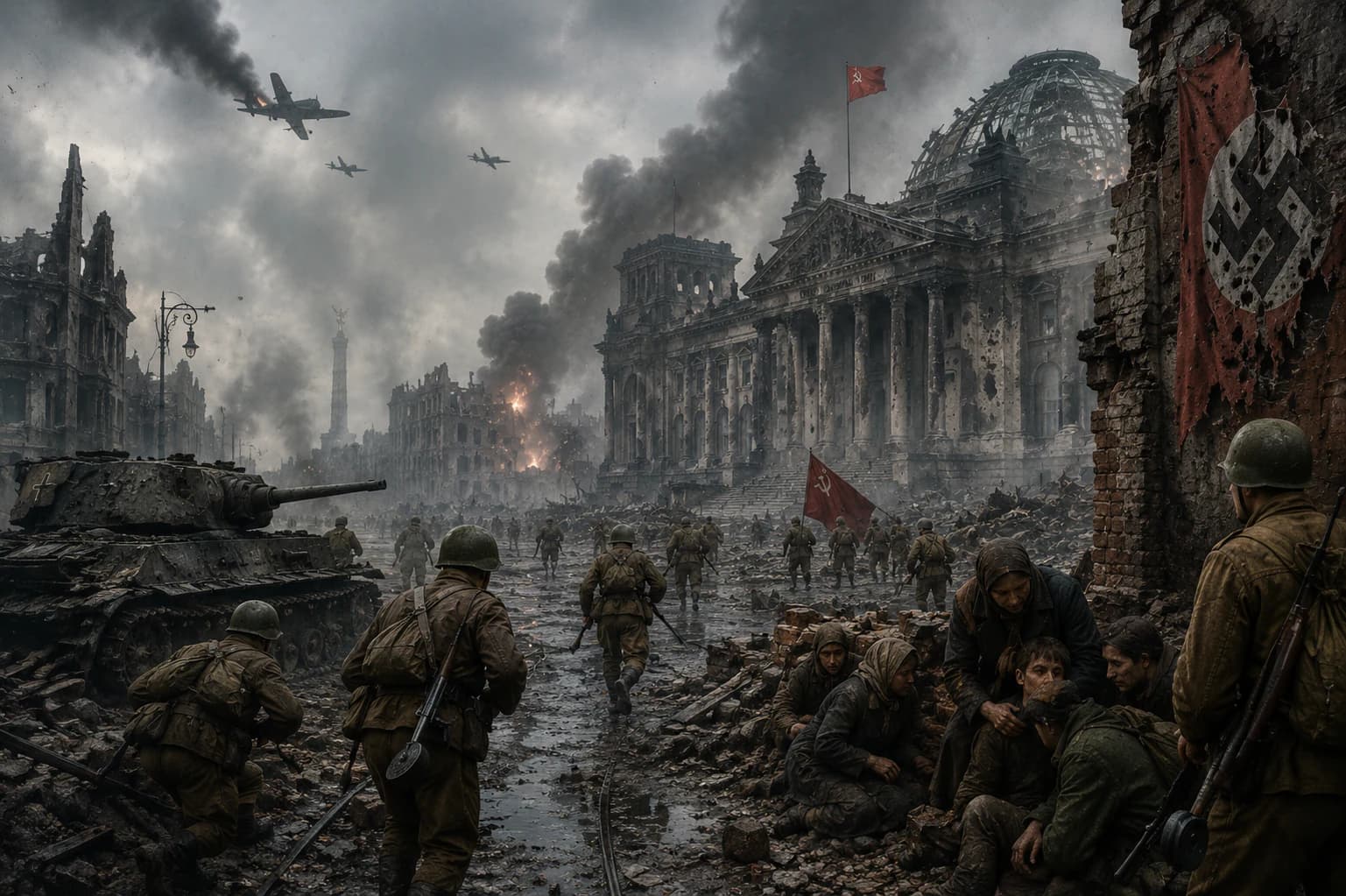
By 1945, the Third Reich was collapsing from east and west. Hitler withdrew into the Führerbunker beneath Berlin, still issuing orders to units that no longer existed and blaming Germans for failing to deserve victory. The final weeks exposed the emptiness of the regime's promises. Civilians suffered, child soldiers and old men were thrown into hopeless defense, and Nazi leaders maneuvered for survival. Hitler married Eva Braun on 29 April 1945 and died by suicide the next day. Germany surrendered in May. His legacy is not mystery or dark fascination but warning: a modern state can be captured by conspiracy, racial hatred, spectacle, and obedience; democratic institutions can be destroyed from within; and dehumanizing language can become policy, law, deportation, and murder. Studying Hitler matters because the damage he caused was historical, human, and deliberate.
The end of absolute rule often arrives abruptly, leaving lasting consequences far beyond the leader’s lifetime.