People

Mehmed II

Mehmed II, known as Mehmed the Conqueror, was the Ottoman sultan who captured Constantinople in 1453 and ended the Byzantine Empire.

Born
1432 CE
Died
1481 CE
Role
Sultan of the Ottoman Empire

Ottoman sultan (1432-1481)

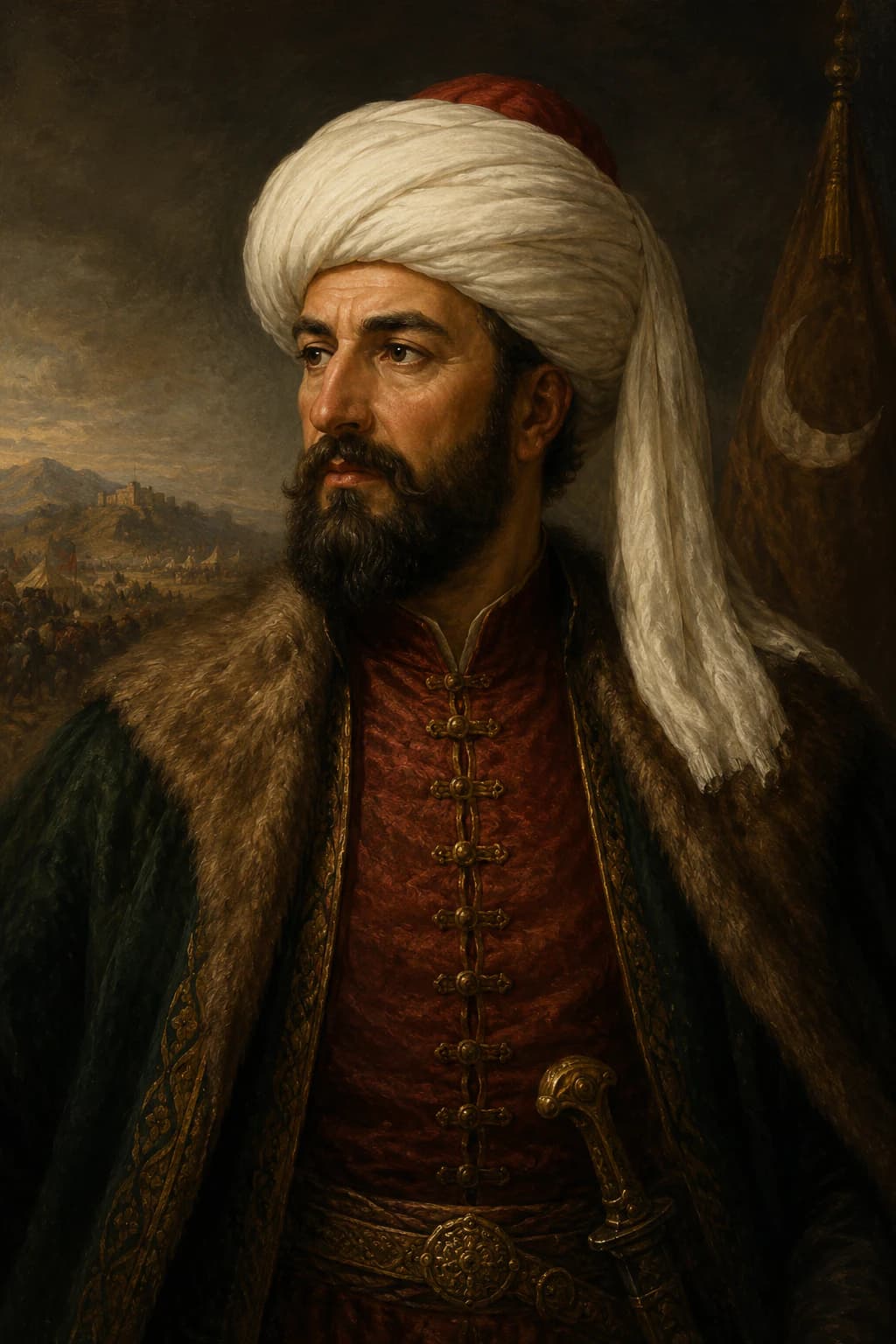
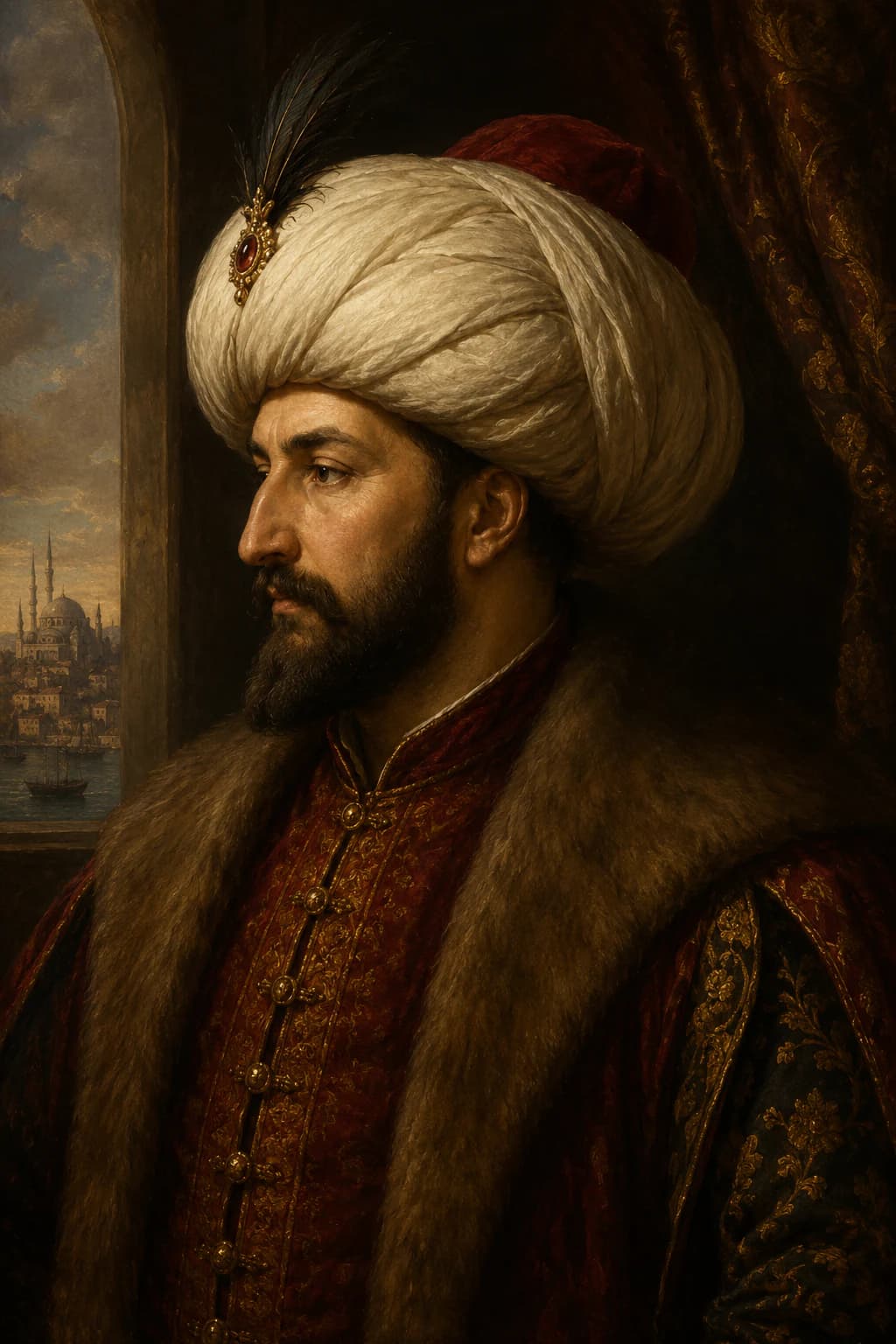
AI-generated portrait of Mehmed II in Ottoman royal dress
AI-assisted historical reconstruction

An illustrative reconstruction based on historical context. It is not a photograph or documentary likeness. Image policy

Quick answer

Mehmed II, known as Mehmed the Conqueror, was the Ottoman sultan who captured Constantinople in 1453 and ended the Byzantine Empire.

Born
1432 CE
Died
1481 CE
Role
Sultan of the Ottoman Empire
Years
1432-1481 CE
Quick facts

Profile details

Additional identity and tagging details that are not already covered in the introduction.

Also known as
Mehmed the Conqueror, Mehmet II, Fatih Sultan Mehmed
Facts

Mehmed II timeline facts

Selected specifics from this profile's life story.

1432
Prince of empire

Mehmed was born in Edirne, heir to an Ottoman dynasty already powerful but still seeking its imperial centre.

1452-1453
Siege preparations

Mehmed prepared the siege through fortification, artillery, naval planning and diplomatic isolation of the city.

1450s-1470s
Imperial expansion

Mehmed expanded Ottoman power across the Balkans, Anatolia and the Black Sea world.

1481
Death and legacy

Mehmed died in 1481, leaving an empire transformed by conquest, centralisation and a new capital.

Life Journey

The conqueror who made Constantinople Ottoman

Follow the story in a more continuous narrative, with a reading mode that matches how much depth you want.

Complete chronology

1432

Prince of empire

Mehmed II was born on 30 March 1432 in Edirne, then a major Ottoman capital in Europe. He was the son of Sultan Murad II, a ruler who had fought Balkan enemies, Anatolian rivals and crusading coalitions. Mehmed grew up in a multilingual, militarised and intellectually ambitious court. Tutors trained him in Islamic learning, languages, administration and the arts of command. He inherited not only land but a dynasty with a historical problem: Constantinople, the old Roman and Byzantine capital, still stood inside Ottoman territory as a symbol of unfinished conquest.
1444-1446

First reign

In 1444, Murad II abdicated in favour of the young Mehmed, but the transition was unstable. The new sultan faced internal court tensions and external danger, including renewed crusading pressure. Murad returned to command and defeated a crusader army at Varna in 1444, then later resumed direct rule. Mehmed's first reign ended in 1446, a humiliation that may have sharpened rather than broken him. It taught him that kingship required more than birth. A sultan had to master soldiers, viziers, janissaries, ulema and rival expectations.

1451

Second accession

Mehmed became sultan again in 1451 after his father's death. This time he moved with greater resolve. He managed potential rivals, asserted control over powerful military interests and prepared for the campaign that would define him. Constantinople was weakened, but not irrelevant. Its walls were legendary, its location controlled movement between the Mediterranean and Black Sea, and its prestige reached across Christian and Islamic worlds. Mehmed understood that capturing it would do more than remove a strategic obstacle. It would allow the Ottoman sultan to claim the mantle of universal empire.

1452-1453

Siege preparations

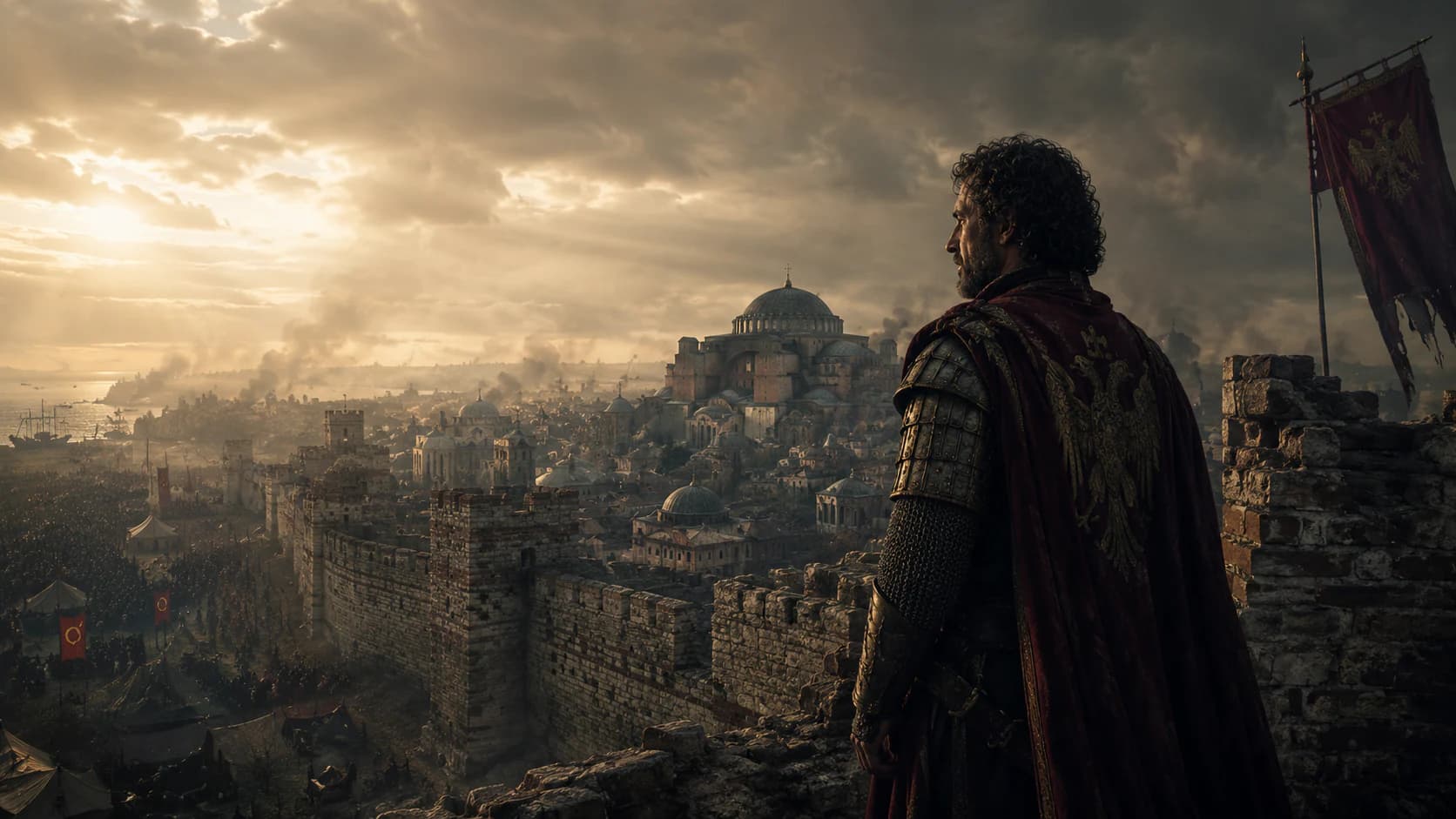
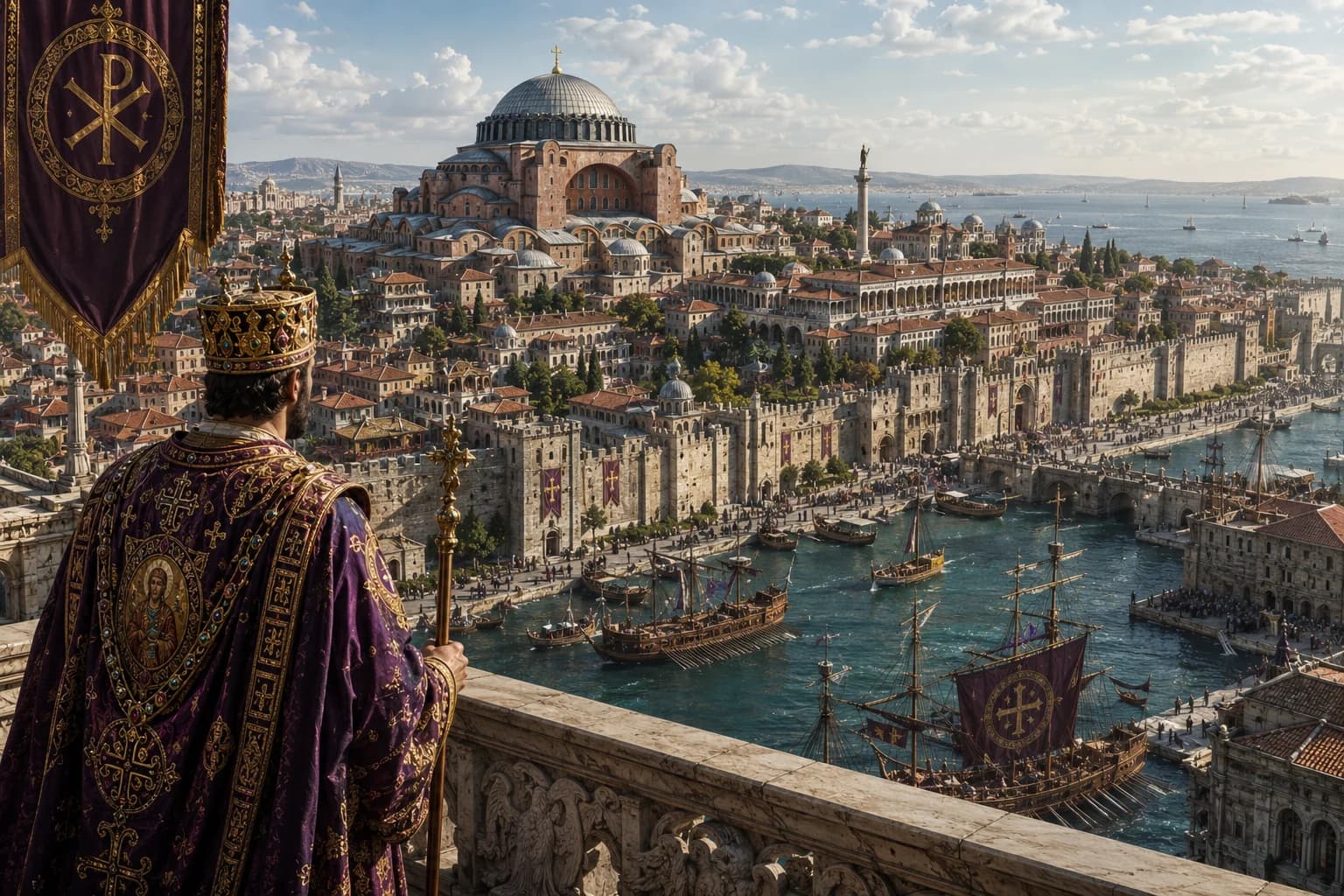
Mehmed's preparations were methodical. He built Rumeli Hisari on the Bosporus to tighten control over access to Constantinople and limit outside assistance. He assembled a large army, brought heavy artillery including massive cannon, and organised naval forces to challenge the city's seaward defences. The Byzantine emperor Constantine XI sought help from the West, but aid was limited and politically complicated by church union disputes. Mehmed's achievement lay in combining pressure from land and sea with enough logistical organisation to sustain a major siege against one of the most famous fortified cities in history.

1453

Fall of Constantinople

The siege of Constantinople culminated on 29 May 1453. Ottoman assaults breached the defences after weeks of bombardment, attrition and pressure. Emperor Constantine XI died in the fighting, and the Byzantine Empire, heir to the eastern Roman world, came to an end. Mehmed entered the city as conqueror and claimed it as his capital. The event shook Europe and the Islamic world alike. It did not, by itself, end the Middle Ages, but it marked a profound transfer of power: the city of Constantine became the city of the Ottoman sultan.

1450s-1470s

Building Istanbul

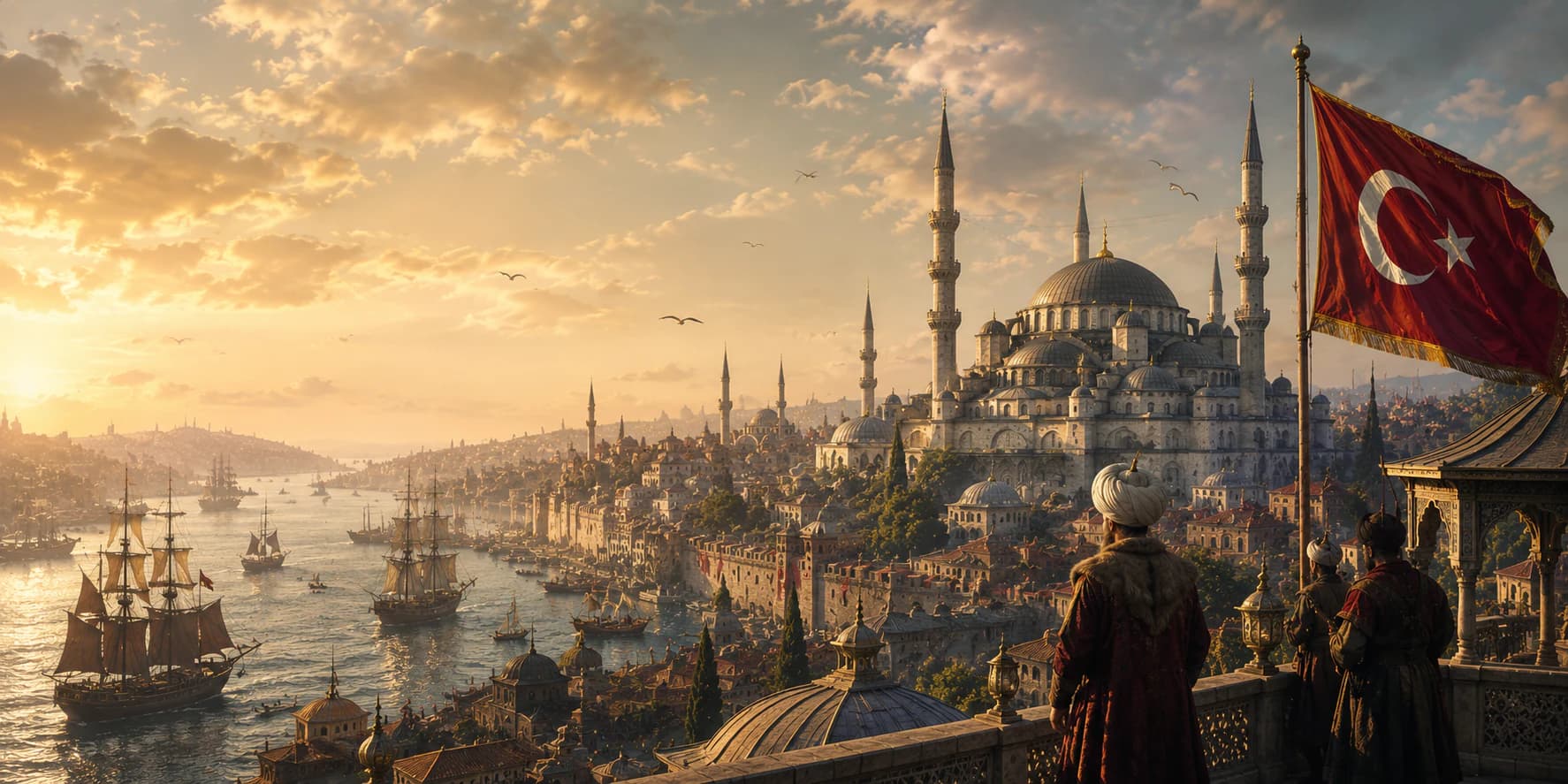
Conquest left Constantinople damaged and underpopulated, so Mehmed set about remaking it. He encouraged and compelled settlement by Muslims, Christians and Jews, restored economic life, built mosques and palaces, and developed the city as an imperial capital. Hagia Sophia became a mosque, while the Orthodox patriarchate was preserved under Ottoman authority. Mehmed's policy was practical as well as symbolic. A conqueror needed a living city, not a trophy of ruins. Istanbul became the stage on which Ottoman universal monarchy could be displayed.

1450s-1470s

Imperial expansion

After 1453, Mehmed continued campaigning with relentless ambition. He absorbed or pressured Serbia, Bosnia, parts of Greece, Trebizond and key Black Sea positions, while also confronting rivals in Anatolia. The conquest of Trebizond in 1461 ended another Byzantine successor state. War with Venice showed the maritime dimension of Ottoman power, and conflict with Uzun Hasan of the Aq Qoyunlu tested Mehmed's eastern policy. His reign was not only the story of Constantinople. It was a broader imperial project that linked Balkan, Anatolian and Mediterranean strategy.

Later reign

Law and authority

Mehmed's rule combined military ambition with institutional consolidation. He issued law codes, strengthened palace administration and shaped the image of the sultan as an imperial sovereign above competing elites. His court drew on Islamic, Turkic, Persian, Byzantine and Italian influences. He invited scholars and artists, including the Venetian painter Gentile Bellini, whose portrait helped project Mehmed's image beyond Ottoman lands. Yet his centralisation could be severe, and later tradition associated his reign with harsh dynastic measures. Mehmed understood rulership as performance, law and force working together.

1481

Death and legacy

Mehmed II died in 1481 while preparing for another campaign. His death triggered succession conflict between his sons Bayezid and Cem, showing that even a centralised empire remained vulnerable to dynastic rivalry. His legacy, however, was secure. He had ended the Byzantine Empire, made Istanbul the Ottoman capital, expanded Ottoman authority and given the sultanate a new imperial identity. Later Ottoman rulers inherited a state far larger and more self-confident than the one he had received. Mehmed the Conqueror matters because he changed the map and the imagination of power around the eastern Mediterranean.

Continue in context

Connected stories

Move from the profile into the wider events and settings this figure belongs to.

Tertiary paths

Content note

This profile is written for educational use and connects to related Stories of History pages. The main portrait is an AI-assisted historical reconstruction, included as an illustrative aid rather than documentary evidence. Image policy

References

Sources & Further Reading

Reliable reference works, archives and reading paths connected to this profile.

Further reading

  1. Encyclopaedia Britannica, Search results for Mehmed II,” accessed June 2026.Open source
  2. WorldCat, Books and library holdings for Mehmed II,” accessed June 2026.Open source

Primary sources

  1. Library of Congress, Search results for Mehmed II,” accessed June 2026.Open source

Reviewed claim sources

Loading reviewed claim sources...

A weekly route through history

Find out first about the latest published stories, feature notes and occasional Premium offers in one weekly email.