Complete chronology
Full overview and deeper context for every journey step.
c. 1258
Anatolian frontier
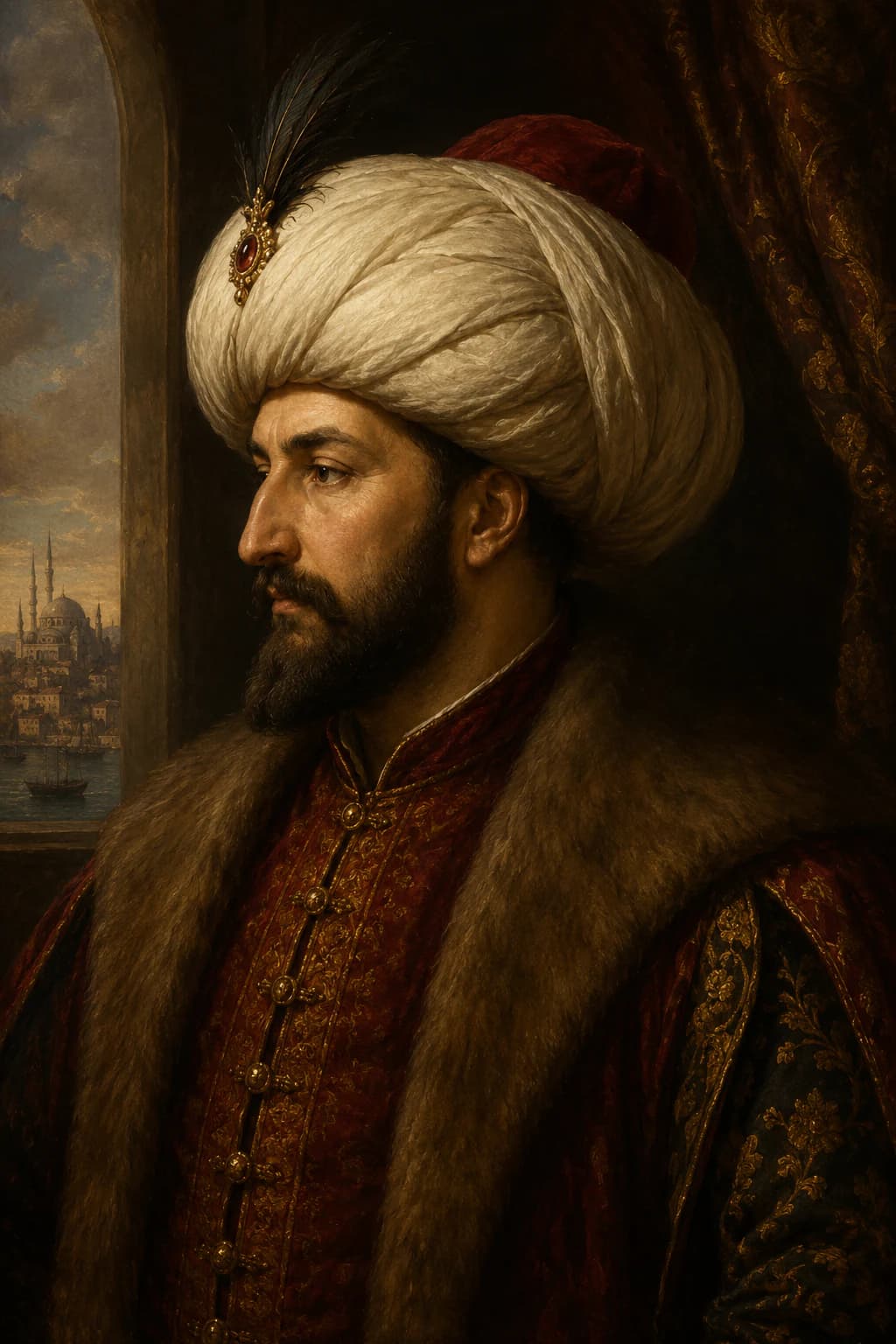
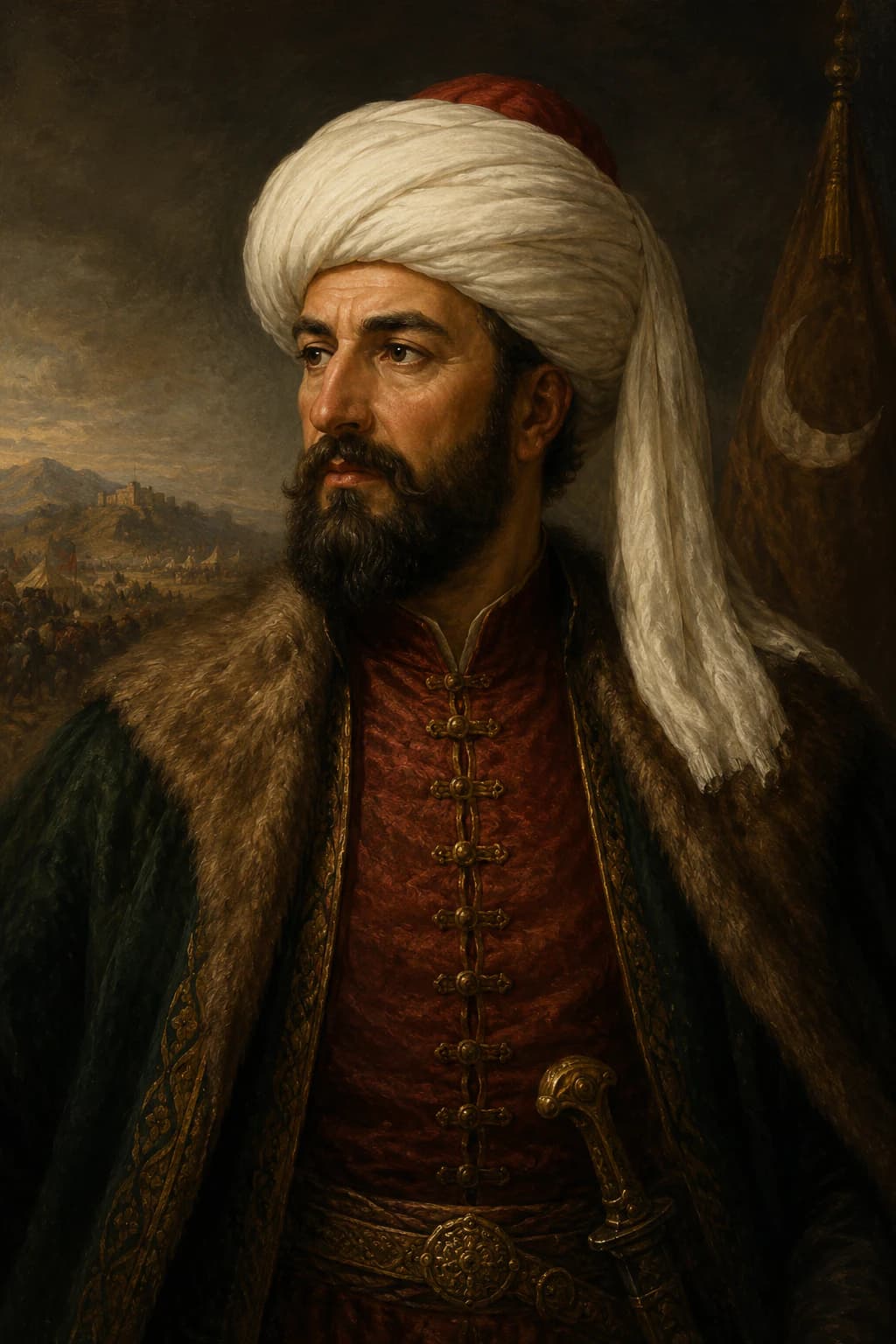
Osman I, known in Turkish tradition as Osman Gazi, was probably born around 1258. The details of his early life are difficult to separate from later Ottoman legend, because the dynasty's origins were written down after it had become powerful. What is clear is the setting. Northwestern Anatolia was a frontier zone where Turkic pastoral groups, Muslim warriors, local Christians, Byzantine towns and rival beyliks interacted constantly. Seljuk authority was weakening under Mongol pressure, leaving ambitious local leaders space to build power. Osman emerged from that fluid world, not from an already formed empire.
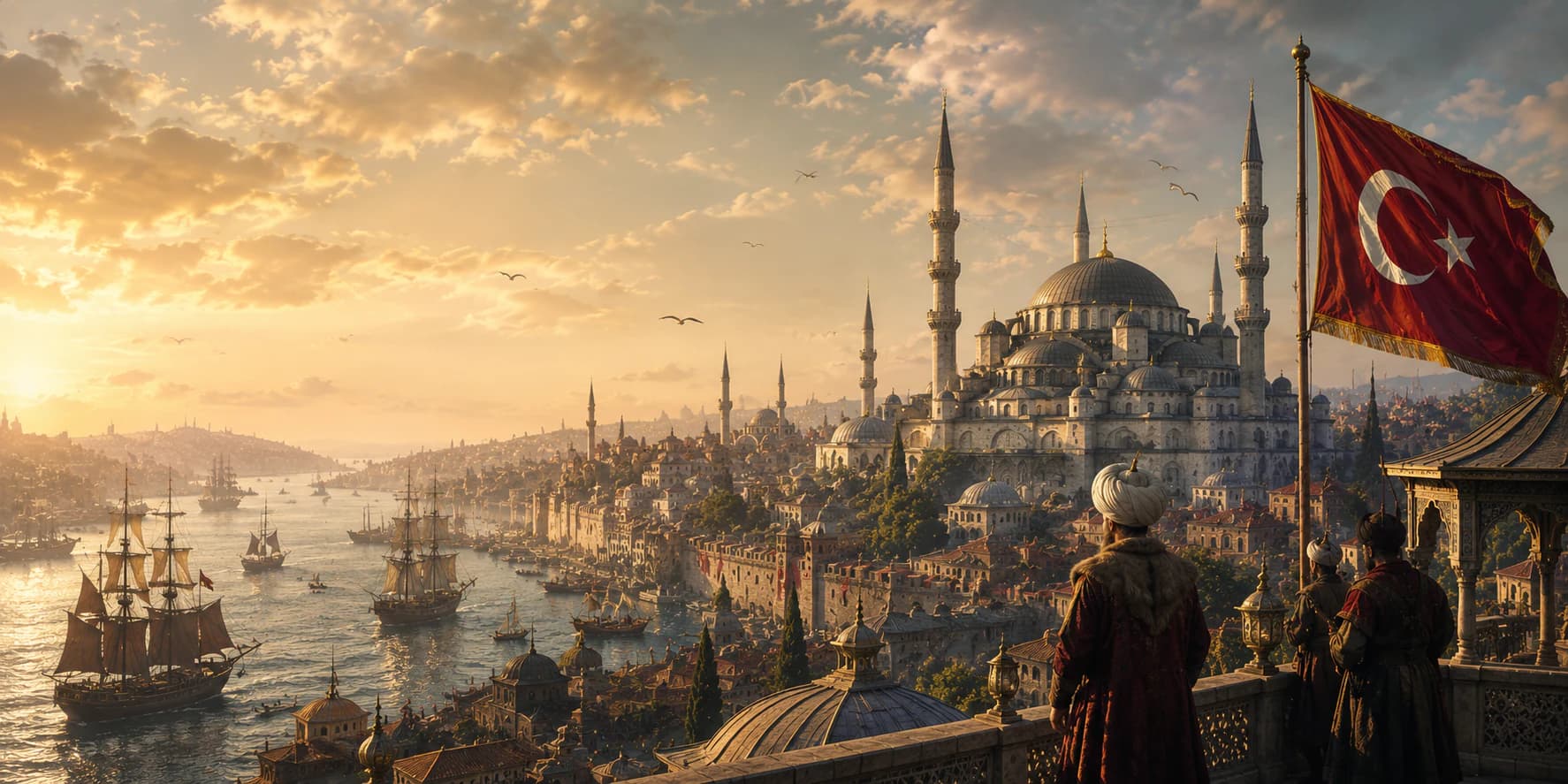
The Ottoman story began in a borderland where opportunity mattered more than inherited grandeur.
13th century
House of Ertugrul
Ottoman tradition identifies Osman as the son of Ertugrul, a frontier leader connected with the Kayi branch of the Oghuz Turks. Historians treat some of these genealogical claims cautiously, because early Ottoman memory was shaped by the needs of later legitimacy. Even so, Osman's family clearly belonged to the political-military environment of the Anatolian marches. Authority depended on followers, raids, alliances, marriage ties and the ability to distribute opportunity. Osman inherited or built a small power base around Sogut and nearby frontier lands, from which he began pressing against Byzantine-held territory.
His origins are partly veiled by legend, but the frontier logic of his rise is unmistakable.
c. 1280s
Beylik leader
By the late thirteenth century, Osman had become the leading figure of a small principality, or beylik. His authority was personal and martial rather than bureaucratic. He attracted ghazi warriors, tribal followers and local allies by offering plunder, land, protection and religious prestige. The Byzantine Empire still held important towns in northwestern Anatolia, but its power was stretched and uneven. Osman exploited this weakness through raids and gradual encirclement. His rise was not a single conquest but a steady accumulation of followers and fortified positions.
Osman's strength came from turning frontier raiding into durable leadership.
1302
Battle of Bapheus
The Battle of Bapheus in 1302 is one of the first firm historical landmarks in Osman's career. A Byzantine force sent to check his expansion was defeated near Nicomedia. The victory did not conquer the empire, but it greatly enhanced Osman's prestige. More warriors and settlers were drawn to his banner, and Byzantine authority in the surrounding countryside weakened further. For later Ottoman memory, Bapheus became a foundation moment: proof that the small frontier principality could challenge imperial power and survive.
Bapheus mattered because reputation was a form of recruitment.
1300s-1320s
Around Bursa
Osman's later years were dominated by pressure on Byzantine strongholds, especially Bursa. Rather than relying only on sudden assault, Ottoman expansion often used blockade, raiding and the isolation of towns from their surrounding countryside. Bursa's importance was strategic and symbolic. It stood near the heart of the region where the Ottoman principality was taking shape, and its capture would give the dynasty an urban centre worthy of growing ambitions. Osman may not have lived to see the city fall, but the campaign belonged to the political world he created.
The move toward Bursa signalled the shift from frontier camp to state formation.
Later memory
Faith and legend
Later Ottoman chronicles surrounded Osman with powerful legends, especially the famous dream in which a tree grows from him and spreads over the world. Such stories should not be read as literal biography. They reveal how the dynasty wanted to explain itself: as chosen, expansive, pious and rooted in sacred destiny. The historical Osman was probably a pragmatic frontier leader who used Islamic legitimacy alongside alliance with diverse local groups. The legend matters because it shows how a ruling house converted rough frontier origins into a language of universal empire.
The myths around Osman tell us less about what happened and more about what the dynasty needed its origins to mean.
c. 1324
Death and succession
Osman died around 1323 or 1324, probably before or shortly around the Ottoman capture of Bursa. He was succeeded by his son Orhan, who took Bursa in 1326 and made it a centre of early Ottoman rule. That succession is crucial. Many frontier lordships rose and vanished, but Osman's house survived because leadership passed effectively to the next generation. Orhan expanded the beylik, developed institutions and pushed into Europe. Osman's achievement was therefore not only conquest; it was founding a dynasty capable of outliving its founder.
His greatest legacy was a political inheritance that did not collapse at his death.
After 1324
Ottoman legacy
Osman could not have imagined the full scale of what later bore his name. The Ottoman dynasty expanded from a northwestern Anatolian principality into an empire that captured Constantinople, ruled much of the Balkans and Middle East, controlled major trade routes and survived into the twentieth century. Yet the roots of that empire lay in Osman's world: flexible frontier politics, military entrepreneurship, religious legitimacy, alliance-making and pressure on Byzantine weakness. His biography is thin compared with later sultans, but his historical significance is immense. He founded the house whose name became Ottoman.
Osman matters because a small frontier lordship became one of history's most consequential empires.