People

Michael VIII

Michael VIII Palaiologos was the Byzantine emperor who restored Constantinople in 1261, founded the Palaiologos dynasty, and ruled a revived but fragile empire.

Born
c. 1223 CE
Died
1282 CE
Role
Byzantine emperor

Byzantine emperor (1259-1282)

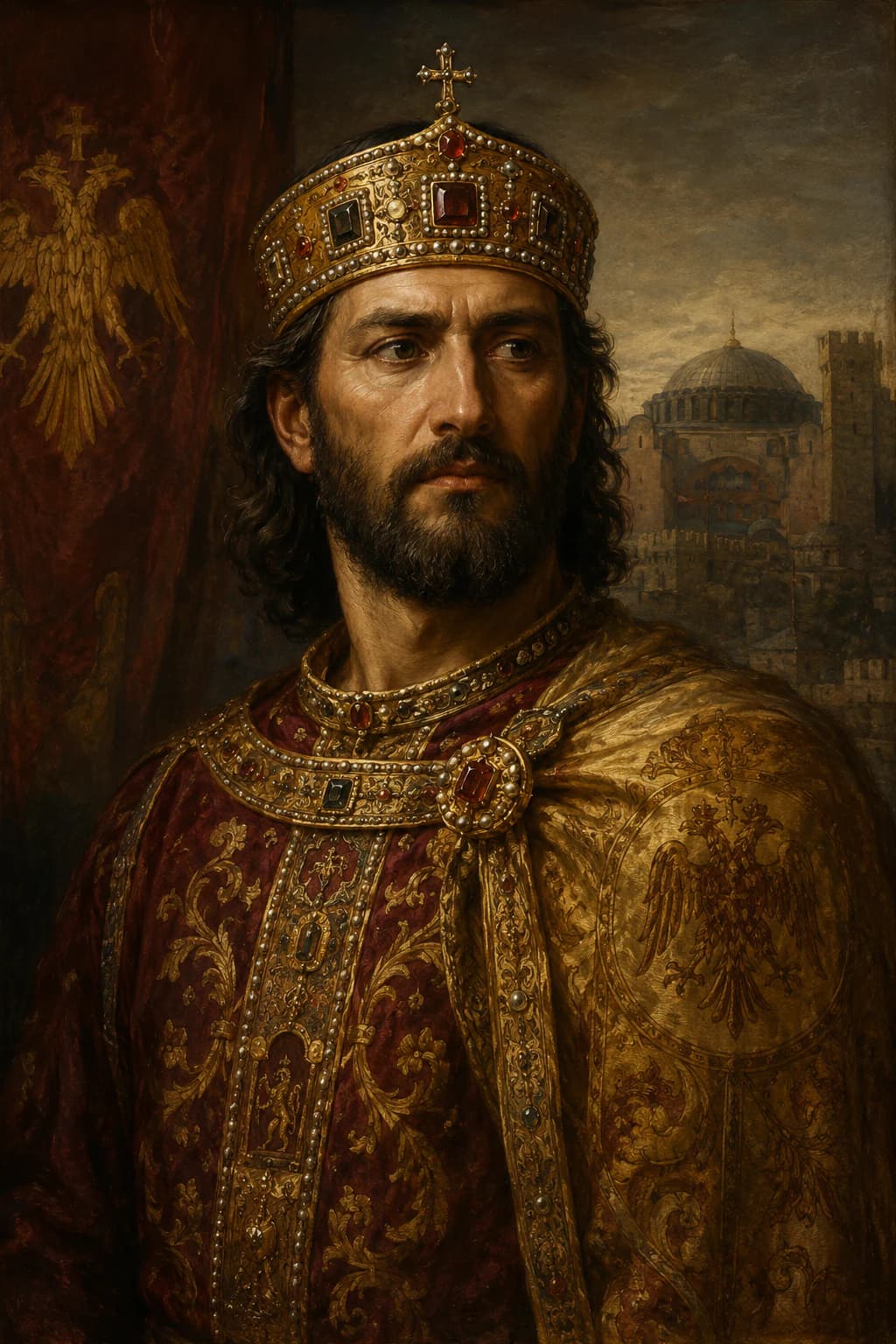
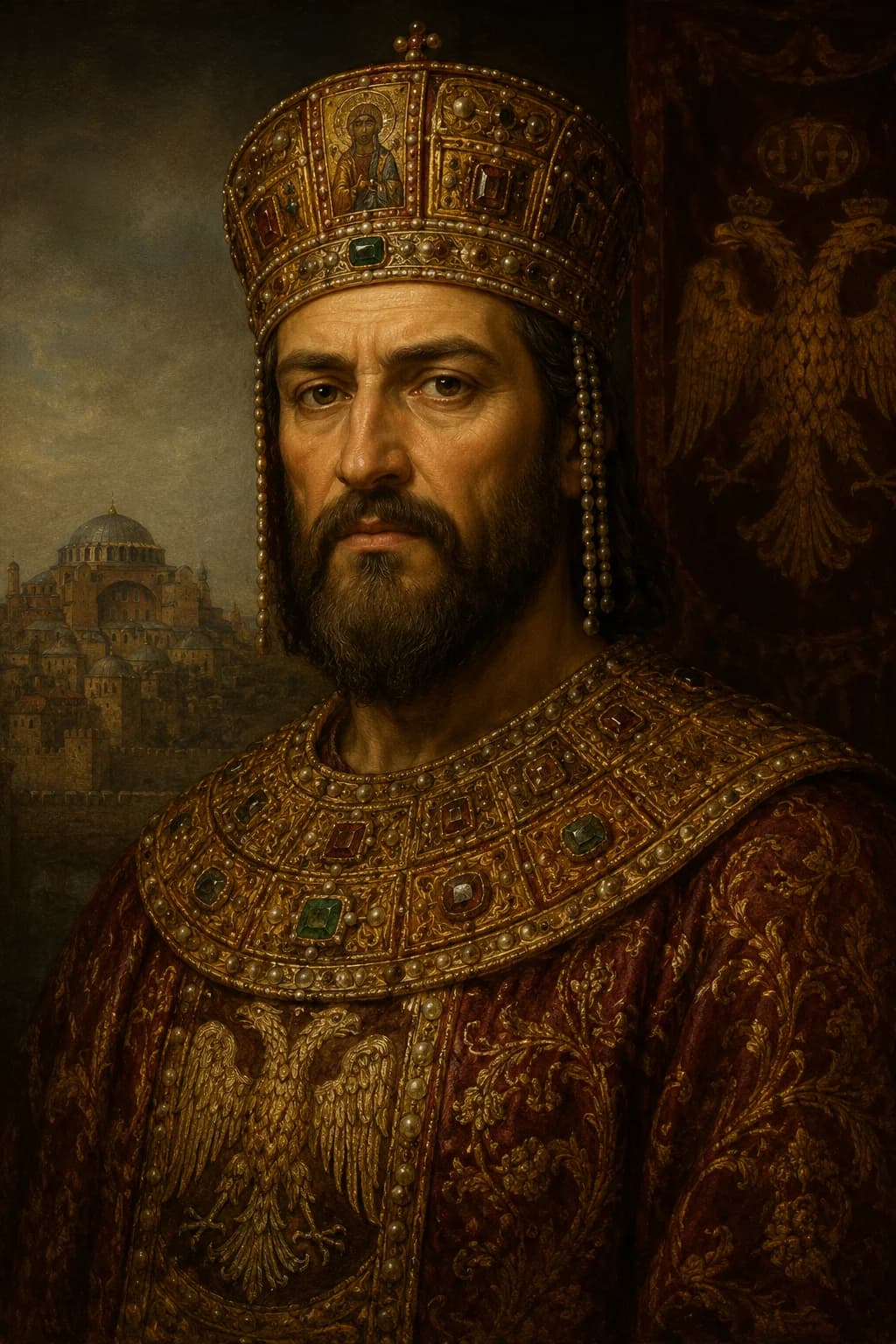
AI-generated portrait of Michael VIII Palaiologos in Byzantine imperial dress
AI-assisted historical reconstruction

An illustrative reconstruction based on historical context. It is not a photograph or documentary likeness. Image policy

Quick answer

Michael VIII Palaiologos was the Byzantine emperor who restored Constantinople in 1261, founded the Palaiologos dynasty, and ruled a revived but fragile empire.

Born
c. 1223 CE
Died
1282 CE
Role
Byzantine emperor
Years
c. 1223-1282 CE
Quick facts

Profile details

Additional identity and tagging details that are not already covered in the introduction.

Full name
Michael VIII Palaiologos
Also known as
Michael Palaiologos, Michael Palaeologus
Facts

Michael VIII timeline facts

Selected specifics from this profile's life story.

c. 1223
Born after catastrophe

Michael VIII Palaiologos was born after the Fourth Crusade had broken Byzantine power and forced Greek successor states to compete for legitimacy.

1258-1259
Taking imperial power

After Theodore II Laskaris died, Michael became regent for the young John IV Laskaris and then secured the imperial title for himself.

1261
A brutal consolidation

Michael secured his dynasty by removing the young John IV Laskaris, an act that caused deep religious and political outrage.

1282 and after
A fragile legacy

Michael died in 1282, leaving a restored capital and a Palaiologos dynasty, but also a weakened empire surrounded by danger.

Life Journey

The emperor who restored Constantinople

Follow Michael VIII from the fragmented world after 1204 to restoration, controversy, church union, and the fragile Palaiologos legacy.

Complete chronology

c. 1223

Born after catastrophe

Michael VIII Palaiologos was born around 1223 into an aristocratic Byzantine family during the long aftermath of the Fourth Crusade. Constantinople had been captured by crusaders in 1204, and the old imperial order had splintered into rival successor states. Nicaea, Epirus, and Trebizond all preserved claims to Byzantine legitimacy, while a Latin Empire held Constantinople itself. Michael's world was therefore shaped by exile, competition, and the question of who could credibly claim to be Roman emperor without the Roman capital.
1240s-1250s

Rising in Nicaea

The Empire of Nicaea became the most effective Greek successor state after 1204. It preserved court institutions, military organisation, Orthodox identity, and the strongest claim to recover Constantinople. Michael advanced inside that world as a capable aristocrat and commander, but his status also made him politically dangerous. Late Byzantine politics mixed family prestige, court suspicion, military need, and personal ambition. Michael learned that restoring empire required more than loyalty to inherited structures. It required controlling the people and offices through which legitimacy was recognised.

1258-1259

Taking imperial power

The death of Theodore II Laskaris in 1258 opened a succession crisis because his heir, John IV, was still a child. Michael moved quickly through the politics of regency, aristocratic support, military power, and court pressure. By 1259 he had been crowned co-emperor. His rise gave Nicaea energetic leadership at a critical moment, but it also placed him in a morally and politically unstable position. He claimed to defend the empire while displacing the dynasty that had preserved it in exile.

1261

Constantinople restored

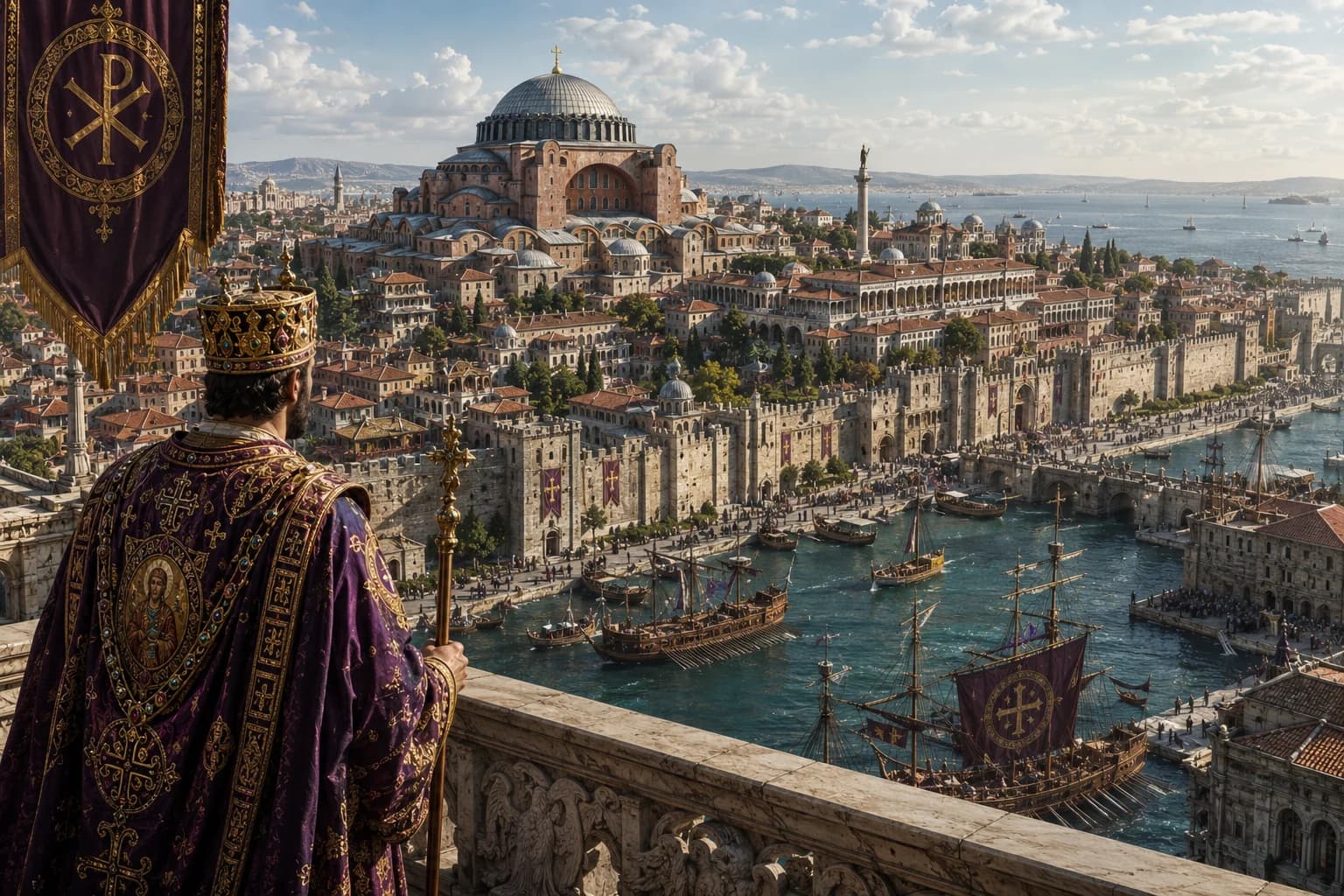
In July 1261, a Nicaean force under Alexios Strategopoulos entered Constantinople and ended the Latin occupation. The recovery was almost startling in its speed: the city that had defined Byzantine loss was suddenly back in Greek hands. Michael VIII entered Constantinople as restorer, and Hagia Sophia returned to Orthodox worship. The symbolism was immense. A Byzantine emperor again ruled from the city of Constantine. Yet restoration was not the same as recovery of old power. The capital was damaged, the empire's resources were thinner, and rival powers still pressed from every side.

1261

A brutal consolidation

Michael's most damaging decision came after the restoration. John IV Laskaris, the legitimate child emperor, was blinded and removed from power. The act secured Michael's dynasty, but it badly wounded his moral authority. Patriarch Arsenios excommunicated him, and the resulting Arsenite conflict divided Byzantine religious and political life for years. Michael could present himself as the restorer of Constantinople, but many Byzantines remembered that restoration had been joined to dynastic violence.

1274

Church union as diplomacy

Michael VIII spent much of his reign trying to prevent a renewed western assault, especially from powers that wanted to restore Latin control or exploit Byzantine weakness. His most controversial answer was church union with Rome. At the Council of Lyon in 1274, Byzantine representatives accepted union with the papacy. Michael hoped this would blunt western crusading pressure and buy security for the restored empire. Many Byzantine clergy and laypeople rejected the policy, seeing it as submission to Rome under political pressure. The strategy was understandable, but it deepened mistrust at home.

1282 and after

A fragile legacy

Michael VIII died in 1282. His legacy is powerful because it is double-edged. He achieved what generations after 1204 had desired: Constantinople was restored to Byzantine rule, and the Palaiologos dynasty would last until the empire's final fall in 1453. Yet the restored empire was poorer, smaller, and more exposed than the Byzantine state before the Fourth Crusade. Michael's reign showed both the brilliance and the limits of late Byzantine recovery. He could revive imperial ceremony, diplomacy, and cultural confidence, but he could not rebuild the resources that had once made Byzantium a Mediterranean great power.

Continue in context

Connected stories

Move from the profile into the wider events and settings this figure belongs to.

Tertiary paths

Content note

This profile is written for educational use and connects to related Stories of History pages. The main portrait is an AI-assisted historical reconstruction, included as an illustrative aid rather than documentary evidence. Image policy

References

Sources & Further Reading

Reliable reference works, archives and reading paths connected to this profile.

Further reading

  1. Encyclopaedia Britannica, Search results for Michael VIII,” accessed June 2026.Open source
  2. WorldCat, Books and library holdings for Michael VIII,” accessed June 2026.Open source

Primary sources

  1. Library of Congress, Search results for Michael VIII,” accessed June 2026.Open source

Reviewed claim sources

Loading reviewed claim sources...

A weekly route through history

Find out first about the latest published stories, feature notes and occasional Premium offers in one weekly email.