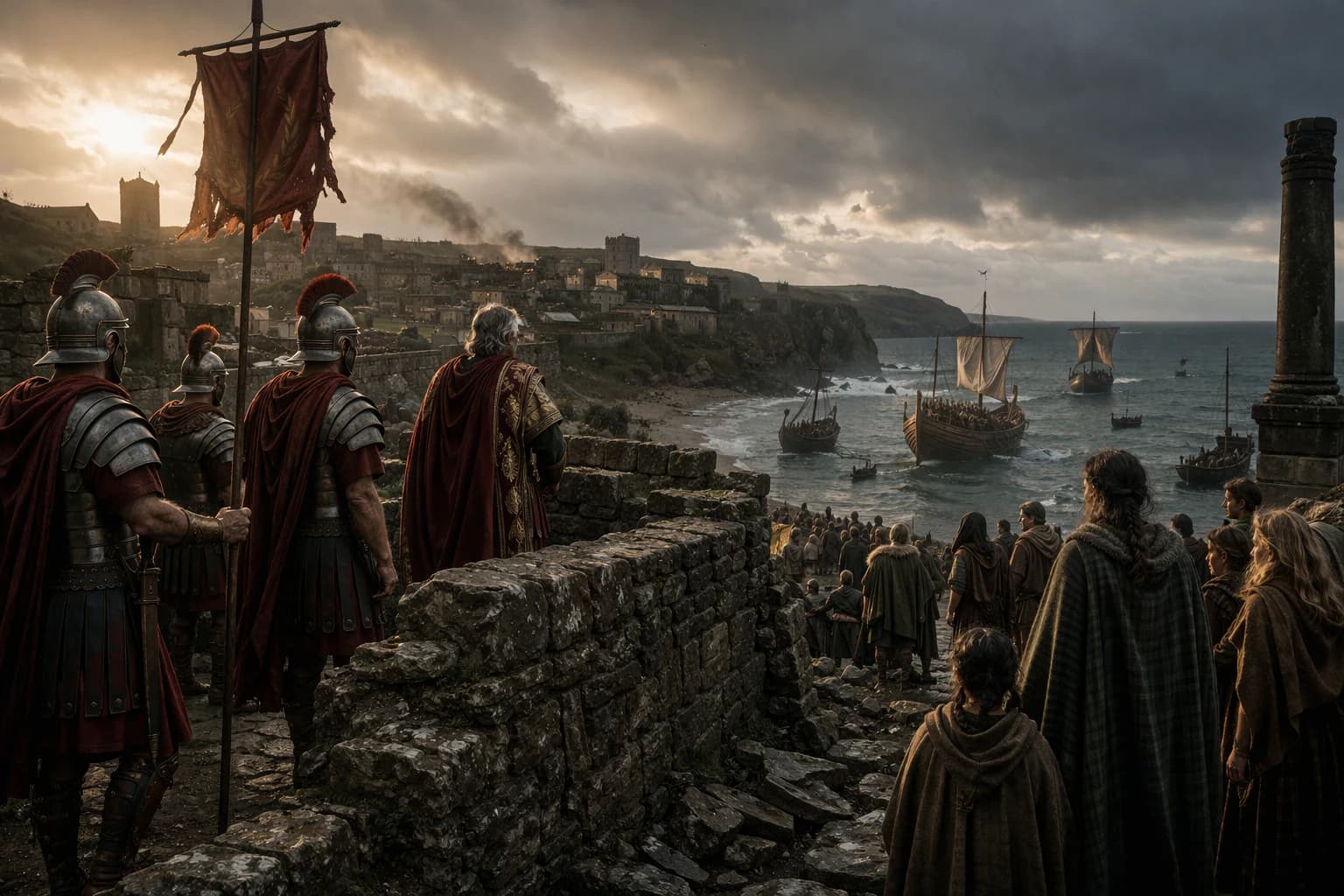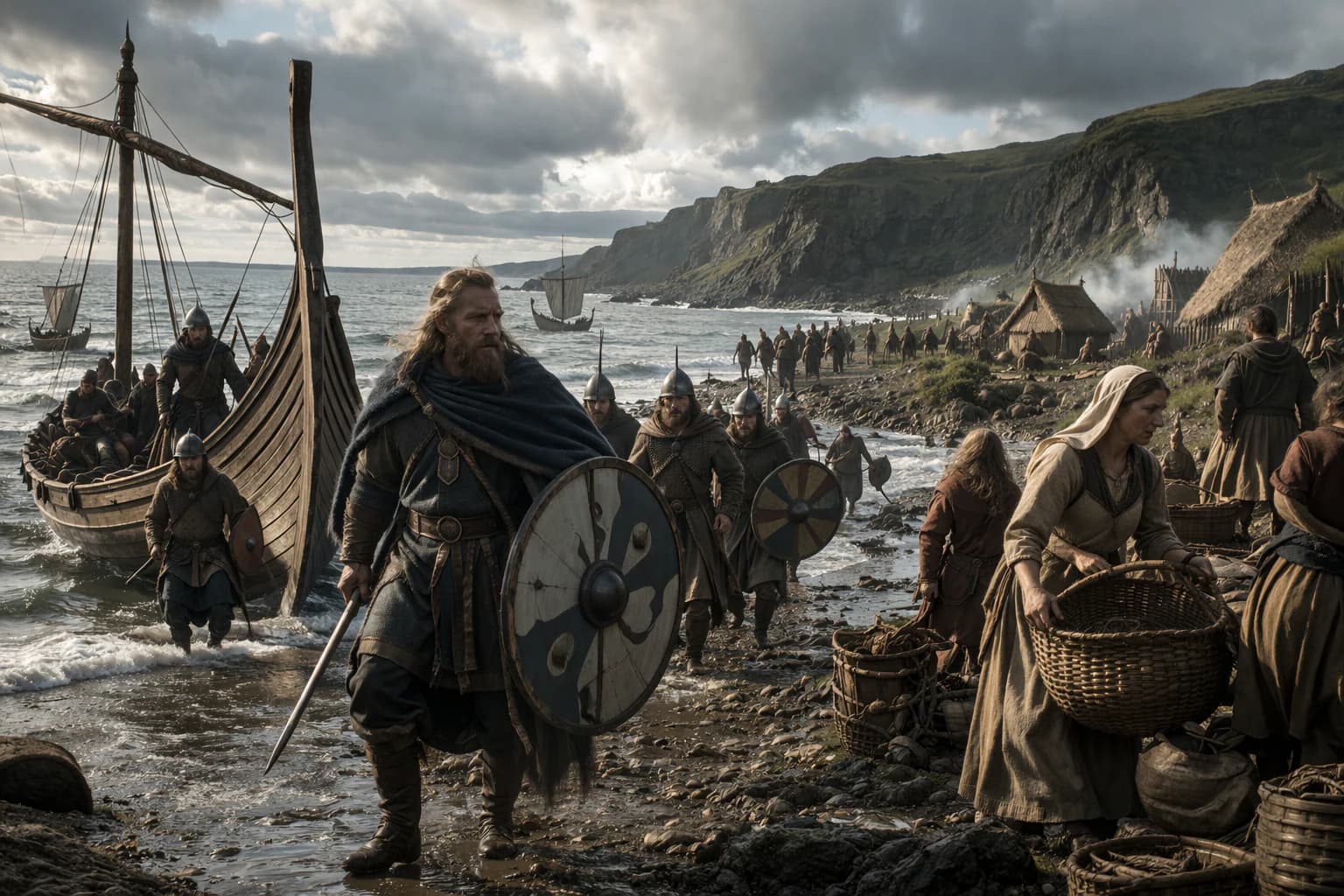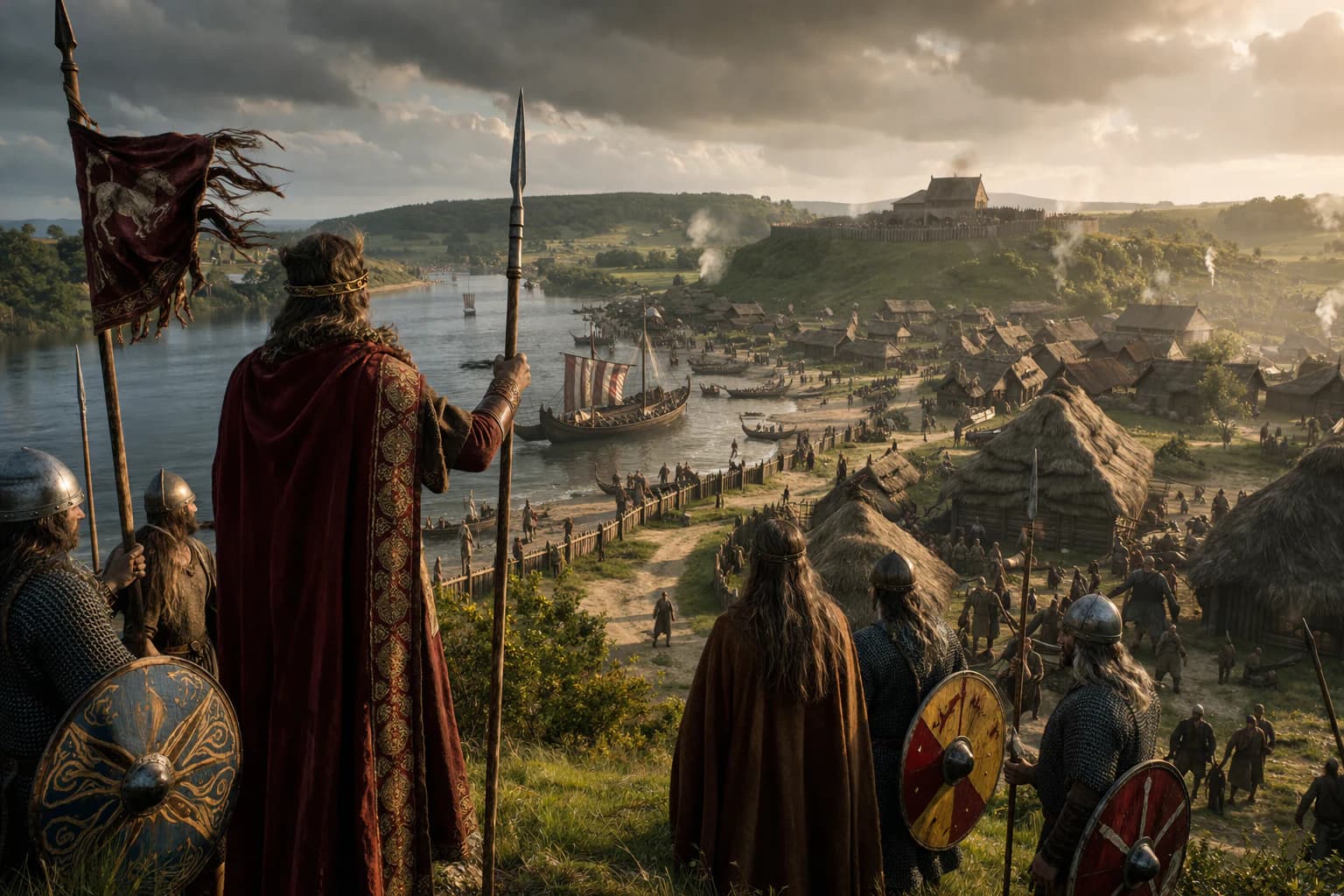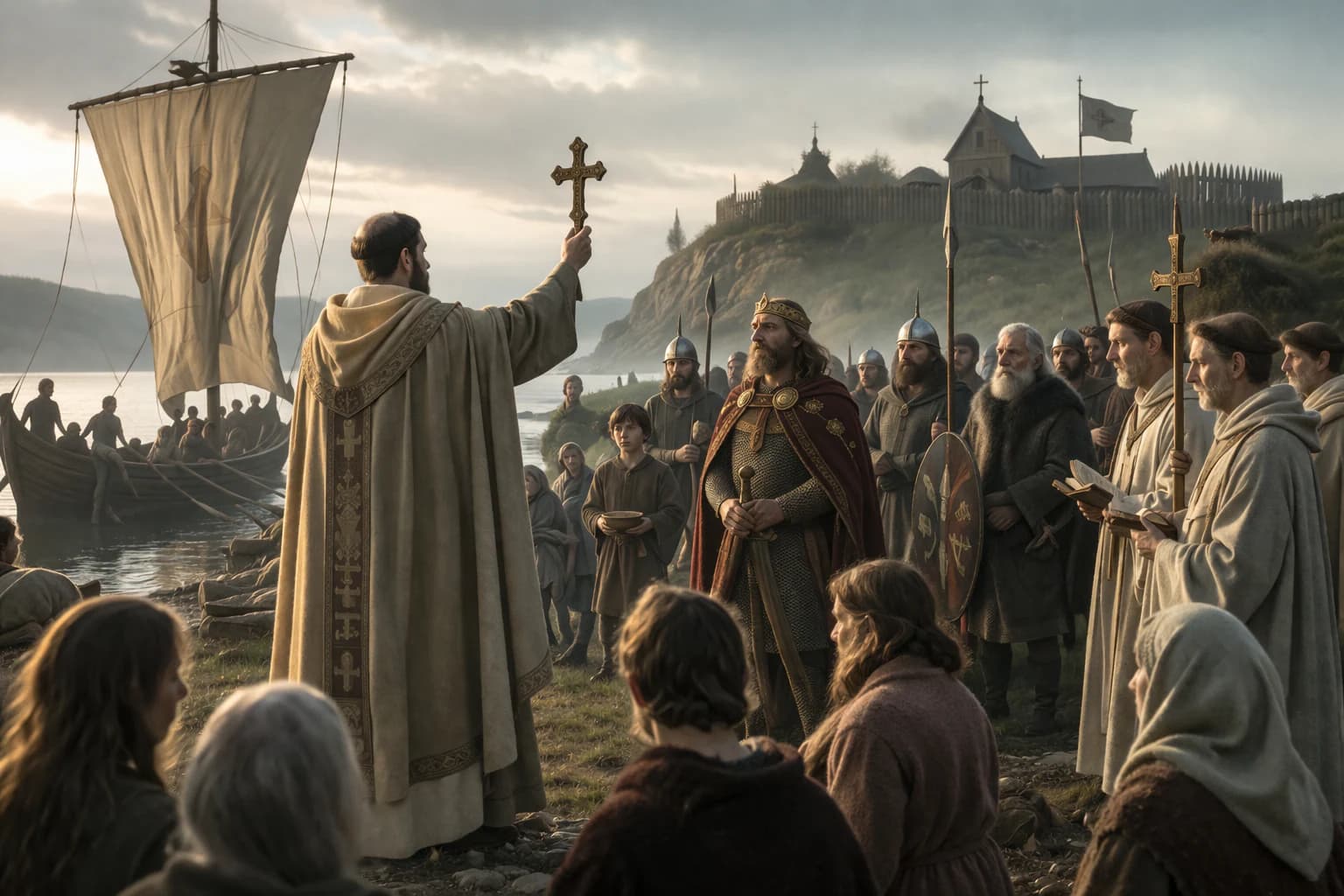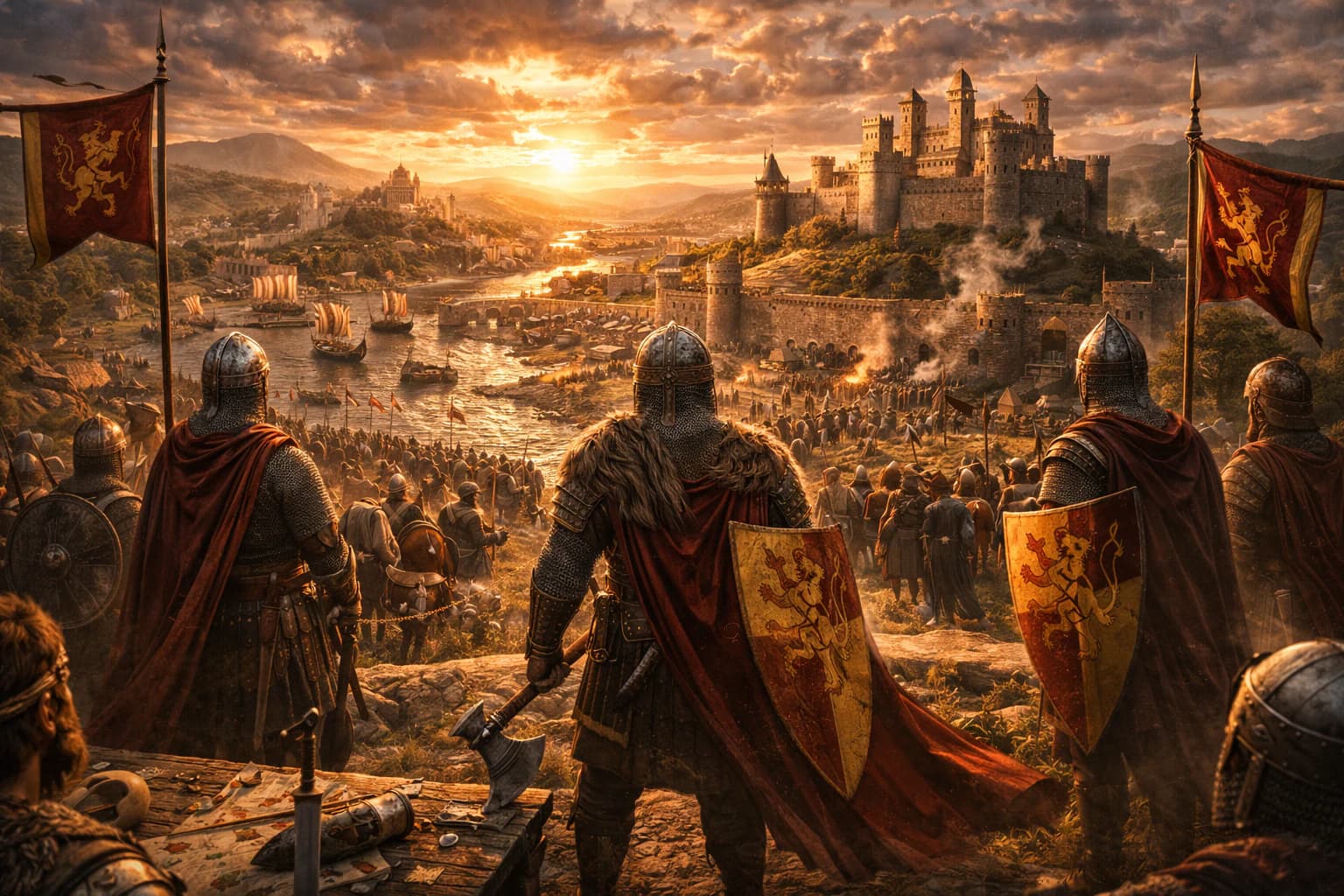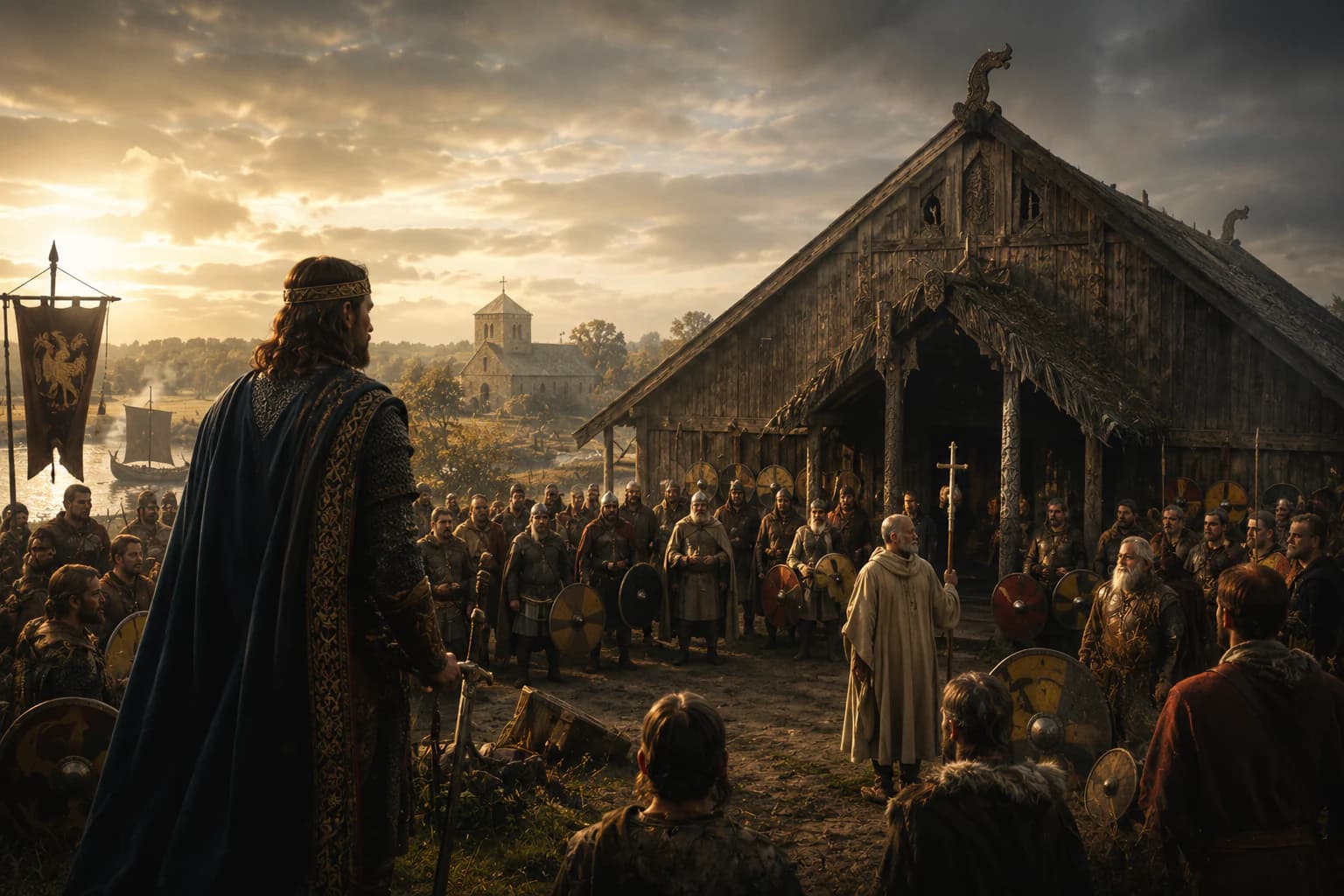
Timber halls, misty fields, shield walls and monastery towers in Anglo-Saxon England.
Free Story

The Anglo-Saxons

Explore the Anglo-Saxons in Britain, from post-Roman migration and Anglo-Saxon kingdoms to Christianity, Vikings, Alfred the Great and 1066.

10 chapters

Next
Context

Introduction

Overview

The Anglo-Saxons were the peoples and kingdoms that shaped Anglo-Saxon England after the end of Roman rule in Britain. From migration and settlement in Anglo-Saxon Britain to Christian conversion, Viking attacks, Alfred the Great, and the road to 1066, Anglo-Saxon history explains how early medieval England took form. Their language, laws, kingdoms, monasteries, and political traditions left a lasting mark on English identity before the Norman Conquest transformed the realm.

What you’ll learn: You’ll see how migration, warfare, religion, and outside invasion shaped the world of the Anglo-Saxons. By the end, you’ll understand why this era was central to the creation of early England.

Key forces

Rome Leaves Britain
410 CE
Step 1 of 10410 CEAccessible mode

Rome Leaves Britain

For centuries, Roman rule had shaped life in Britain. Then, in 410, that system broke apart and people had to fend for themselves.

Before this, towns, roads, taxes, and soldiers tied Britain to the Roman Empire. Local leaders worked inside that system, and many people still lived in a Roman way.

But the empire was under huge strain. Roman forces were pulled away to deal with crises elsewhere, leaving Britain exposed.

When Rome stepped back, Britain did not go quiet. It became contested.

Without Roman governors and armies, Romano-British elites tried to lead their own regions. Communities faced raids from Picts, Scots, and seaborne attackers, while old imperial authority faded fast.

Power became local. Some areas held together, others weakened, and new warriors and migrants found openings to settle and lead.

This turning point helps explain how Roman Britain became early medieval Britain, and why new Anglo-Saxon kingdoms would soon rise.

Settlers Cross the North Sea
450 CE
Step 2 of 10450 CEAccessible mode

Settlers Cross the North Sea

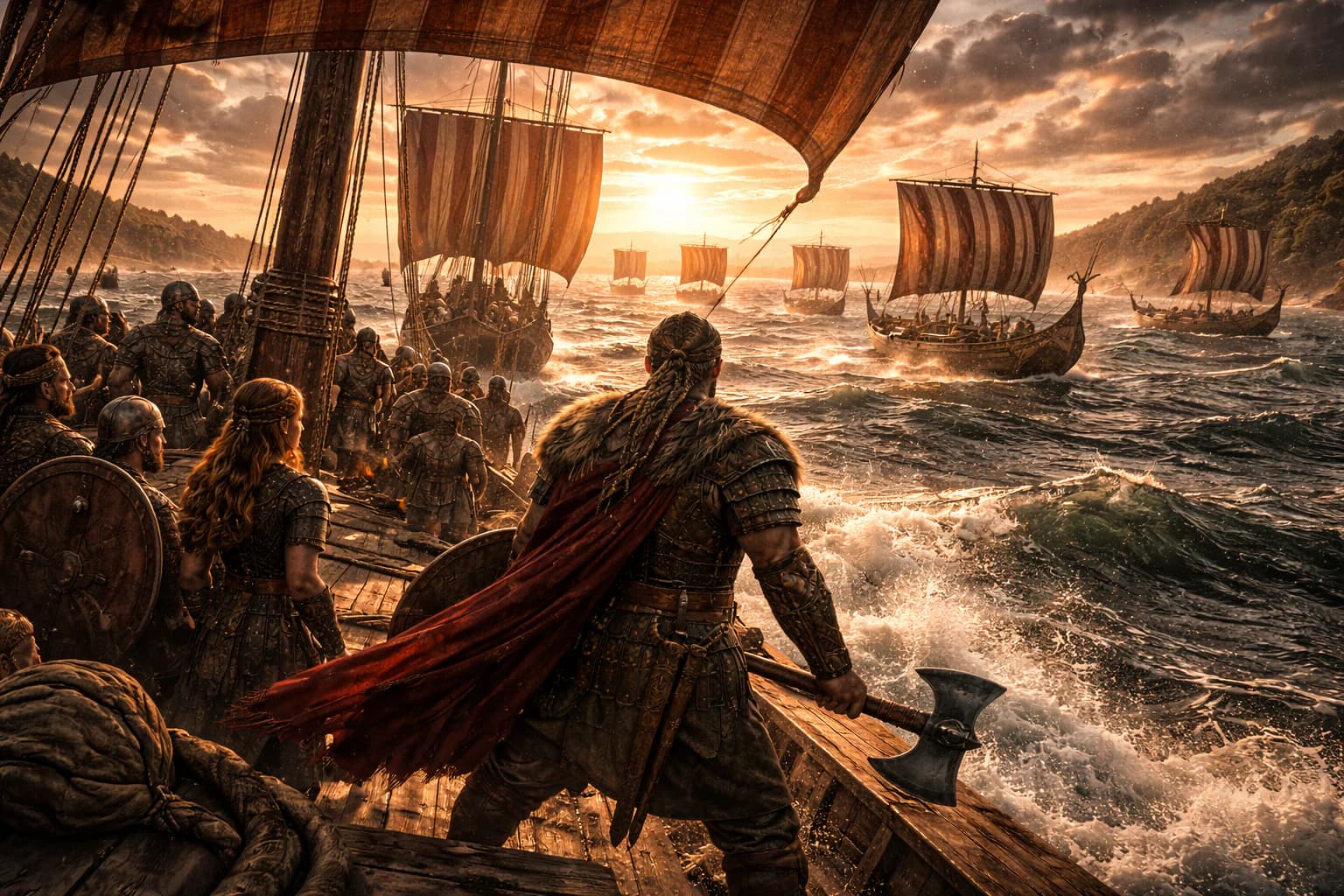
After Roman rule faded, Britain was exposed. New groups crossed the North Sea looking for land, safety, and a fresh start.

Life in Britain was unstable. Roman soldiers had gone, local leaders competed for power, and many communities had to defend themselves.

Angles, Saxons, and Jutes first came in small groups. Some may have been hired as fighters, but more kept arriving.

They did not just raid Britain. They began to remake it.

There was fighting, but there was also settlement. Families crossed the sea, farms were built, and villages took shape in eastern and southern Britain.

That changed daily life. New languages, customs, and leaders spread across the countryside, and these settlers began putting down roots.

This was the beginning of Anglo-Saxon England. Many place names, local identities, and early ideas of English society grew from these communities.

The First Anglo-Saxon Kingdoms
500 CE
Step 3 of 10500 CEAccessible mode

The First Anglo-Saxon Kingdoms

At first, Anglo-Saxon Britain was not a land of big kingdoms. It was a patchwork of villages, local war leaders, and small farming communities.

After Roman rule ended, different groups settled in different regions. People cleared land, built homes, farmed, and defended their own areas.

Over time, some leaders gained more followers. They made alliances, fought rivals, and took control of better land, rivers, and routes for trade.

Kingdoms began as local power made stronger by land, loyalty, and force.

Small territories slowly grew into early kingdoms such as , , , , and . Each one built power in its own region.

This changed daily life. More people now lived under rulers who could demand service, settle disputes, and protect borders.

These early kingdoms helped shape the map and politics of England for centuries. Later kings and rivalries grew out of this first stage.

The Coming of Christianity
597 CE
Step 4 of 10597 CEAccessible mode

The Coming of Christianity

In 597, a group of monks landed in with a new religion and a new way of seeing power. Their arrival helped reshape how Anglo-Saxon kings ruled and how people learned, prayed, and recorded the world.

Before this, most Anglo-Saxons followed older pagan beliefs. Religion was tied to local rulers, family custom, and sacred places in the landscape.

Pope Gregory sent Augustine to , where King Aethelberht ruled and Queen Bertha was already Christian. 's links to the Continent made it the best place for this mission to begin.

Conversion was not only about faith. It also changed how kingdoms worked.

Aethelberht allowed Augustine to preach, and he was later baptized. When rulers converted, their courts often followed, and churches began to spread across their lands.

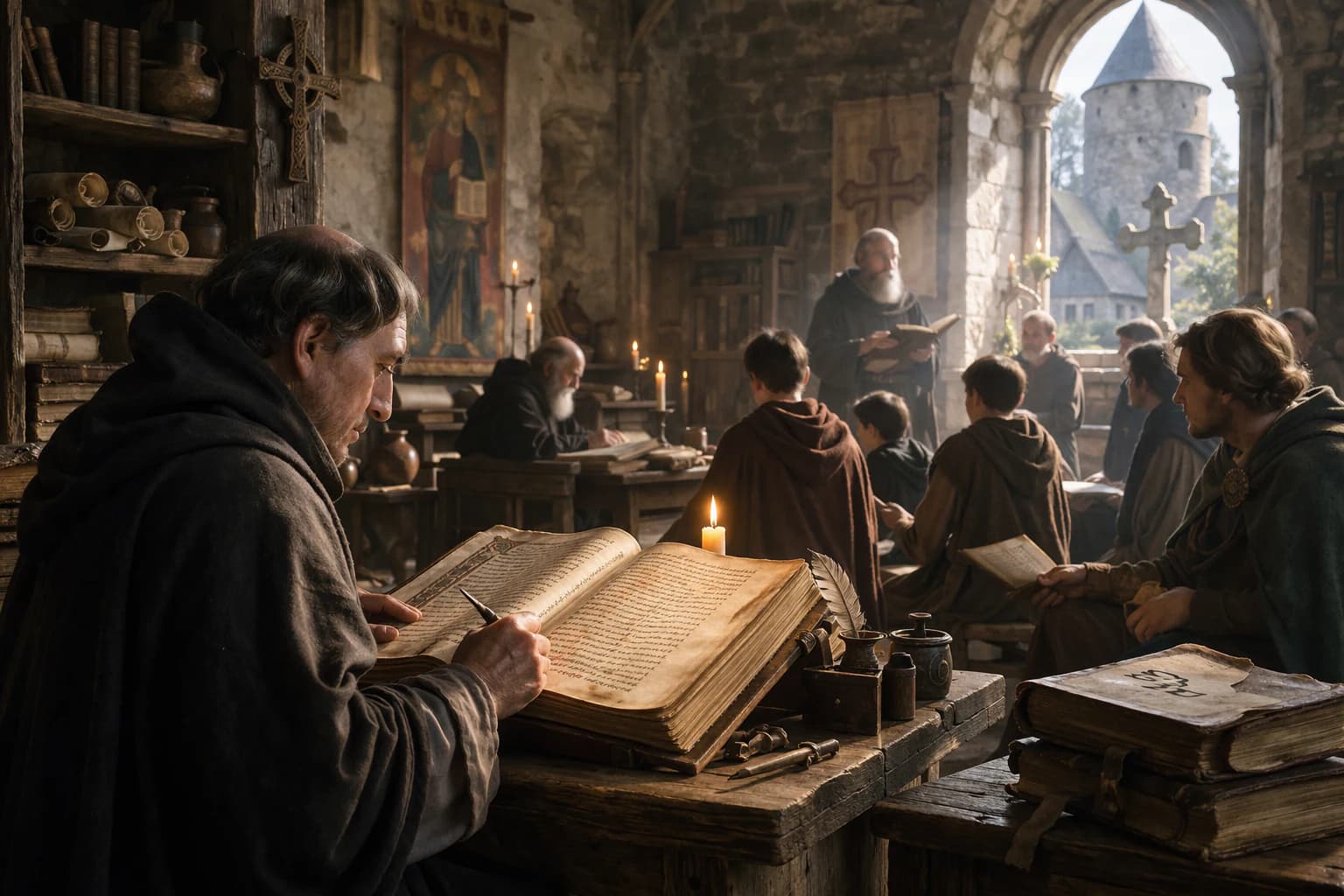
Christianity brought priests, books, and writing in Latin. Monasteries became places of worship, learning, charity, and advice for kings.

This linked Anglo-Saxon England more closely to Rome and to wider Europe. It helped create written law, recorded history, and institutions that would shape English life for centuries.

Northumbria and Mercia Rise
700 CE
Step 5 of 10700 CEAccessible mode

Northumbria and Mercia Rise

England was not one country yet. Around 700, the biggest kingdoms fought to see who would lead the rest.

The Anglo-Saxon world was split into several kingdoms, often called the heptarchy. Each king wanted land, wealth, and loyalty from smaller rulers.

grew strong in the north. Mercia expanded in the midlands. Both used war, marriage, and alliances to pull other regions under their control.

Power went to the king who could win battles and keep others paying.

Kings demanded tribute, led armies, and rewarded followers with land and treasure. When one kingdom defeated another, it could force obedience without ruling every village directly.

This changed everyday life. People paid taxes or tribute to distant rulers, served in war, and lived with shifting borders and loyalties.

These struggles helped create a bigger idea: that one ruler might dominate much of England. Later kings would build on that path toward a more united English kingdom.

A Culture of Learning and Law
731 CE
Step 6 of 10731 CEAccessible mode

A Culture of Learning and Law

Anglo-Saxon England was not only a land of kings and battles. It was also becoming a place where books, rules, and ideas could travel.

Before this, learning was scattered. Most people lived locally, and knowledge stayed in small communities.

Christianity changed that. Monasteries brought writing, record keeping, and links to other parts of Europe.

Books and laws helped turn many small kingdoms into a shared culture.

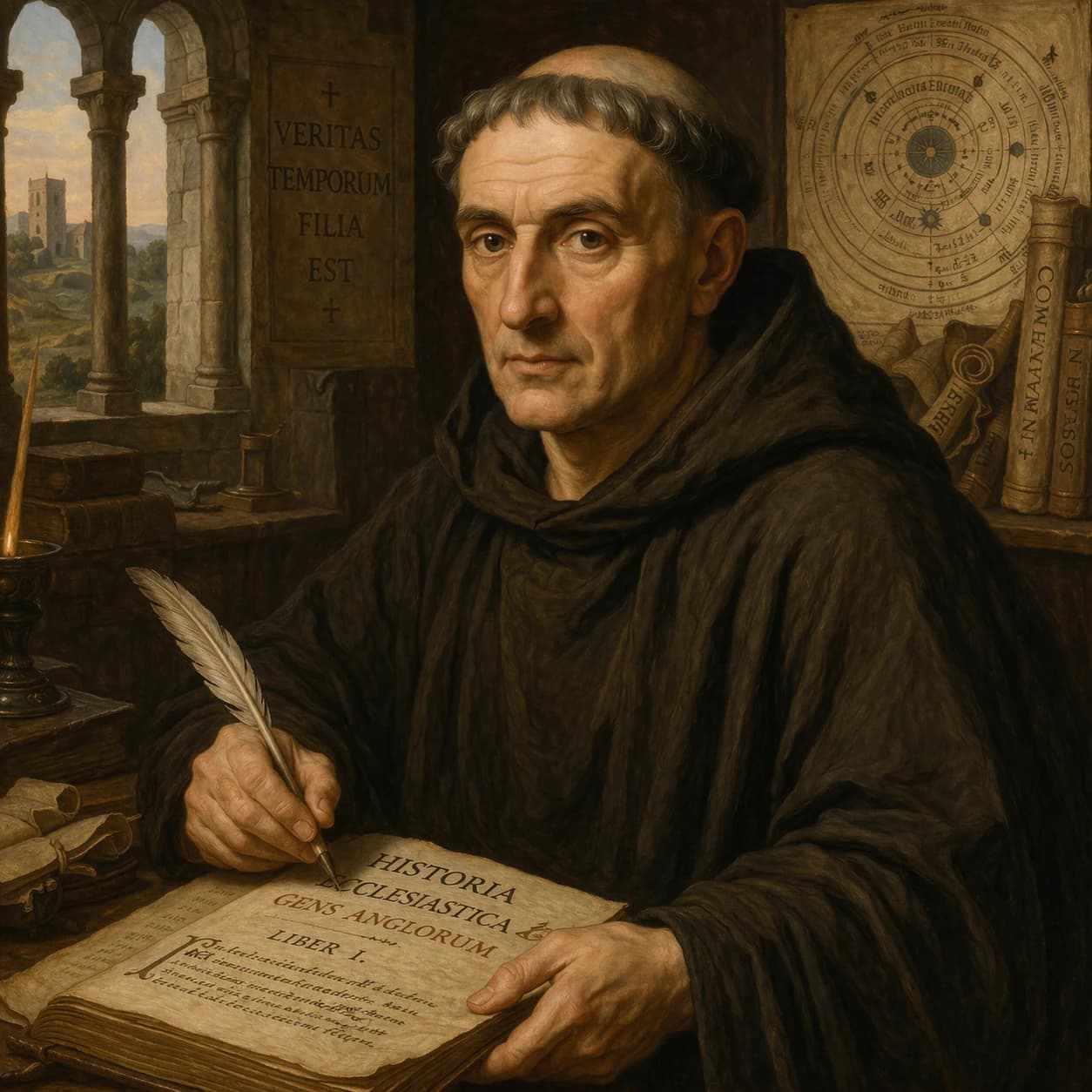
Writers like Bede showed this new world in action. In 731, his history of the English people gathered stories, dates, and rulers into one bigger picture.

Kings also issued law codes, and monks copied texts in both Latin and Old English. That gave religion, government, and everyday speech a stronger place on the page.

This world still feels familiar now. Schools, written law, and the idea of a shared national story all grew stronger in this period.

Offa Builds Mercian Power
757 CE
Step 7 of 10757 CEAccessible mode

Offa Builds Mercian Power

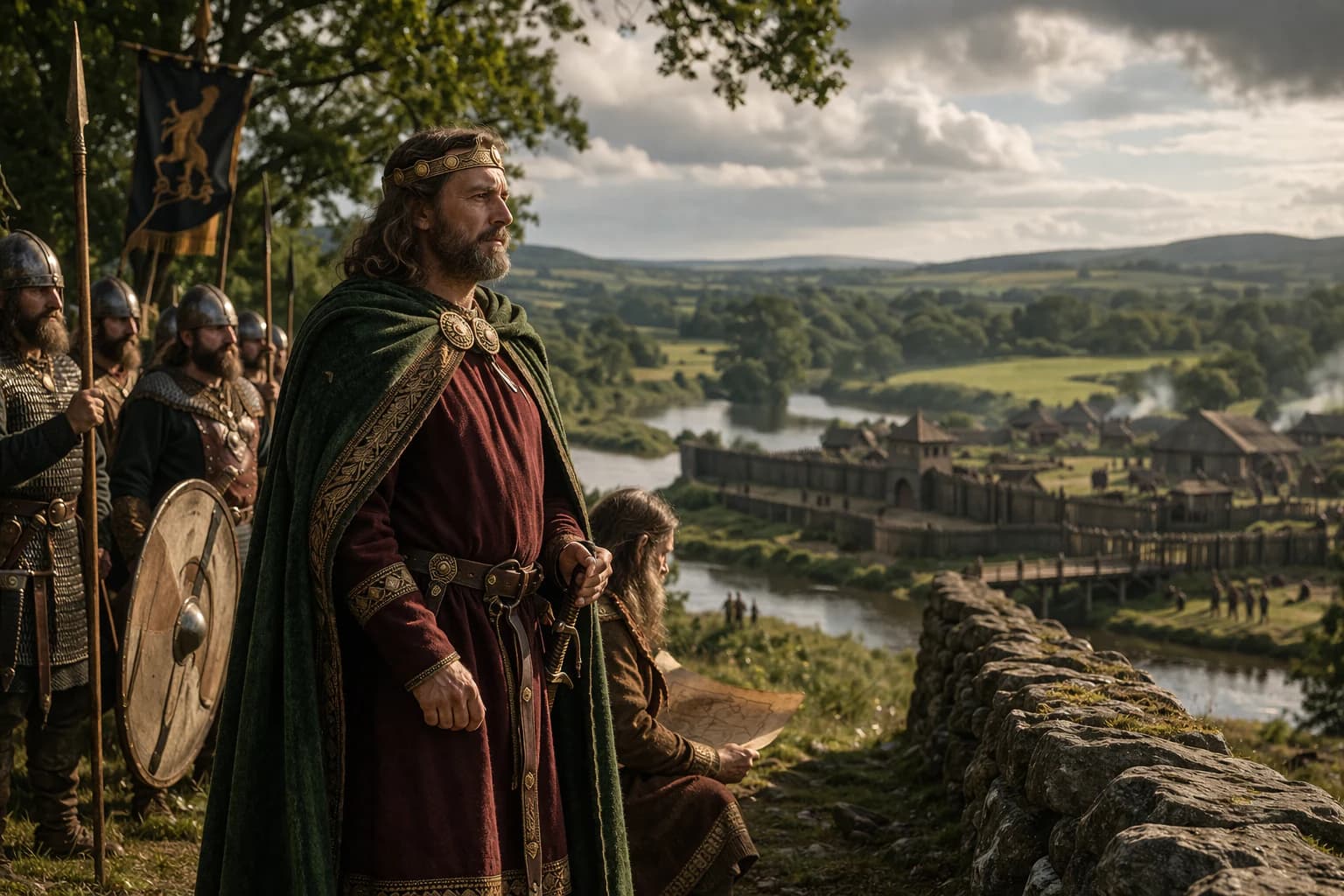
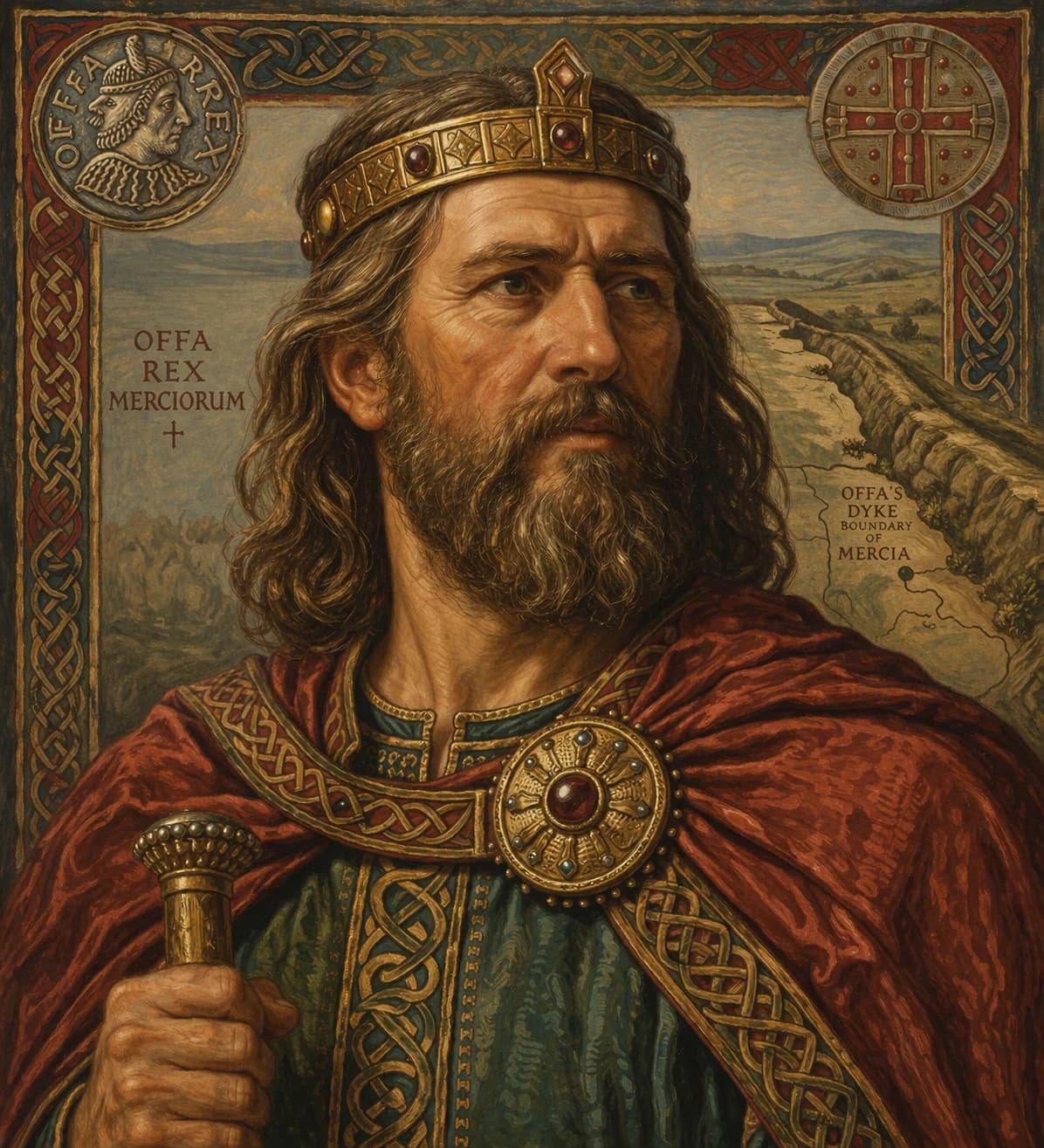
By the late 700s, one king stood above the rest in England. Offa of Mercia used force, money, and careful control to make his kingdom stronger than its rivals.

Before Offa, Anglo-Saxon England was split between several kingdoms. Power often depended on war, loyalty, and personal reputation.

Offa tried to make that power last. He pushed into borderlands with Wales, dealt with other rulers, and built up Mercia's reach.

A strong king needed more than victories. He needed systems that kept working after the battle ended.

He is linked with , the great earthwork along the Welsh frontier. He also backed trade and issued silver coins that showed royal control.

These moves helped people see Mercia as more than a war band. It became a kingdom with borders, money, and a ruler who could reach into daily life.

That pattern shaped later English kingship. Offa showed how military success, border rule, and trade could be turned into lasting authority.

The Raid on Lindisfarne
793 CE
Step 8 of 10793 CEAccessible mode

The Raid on Lindisfarne

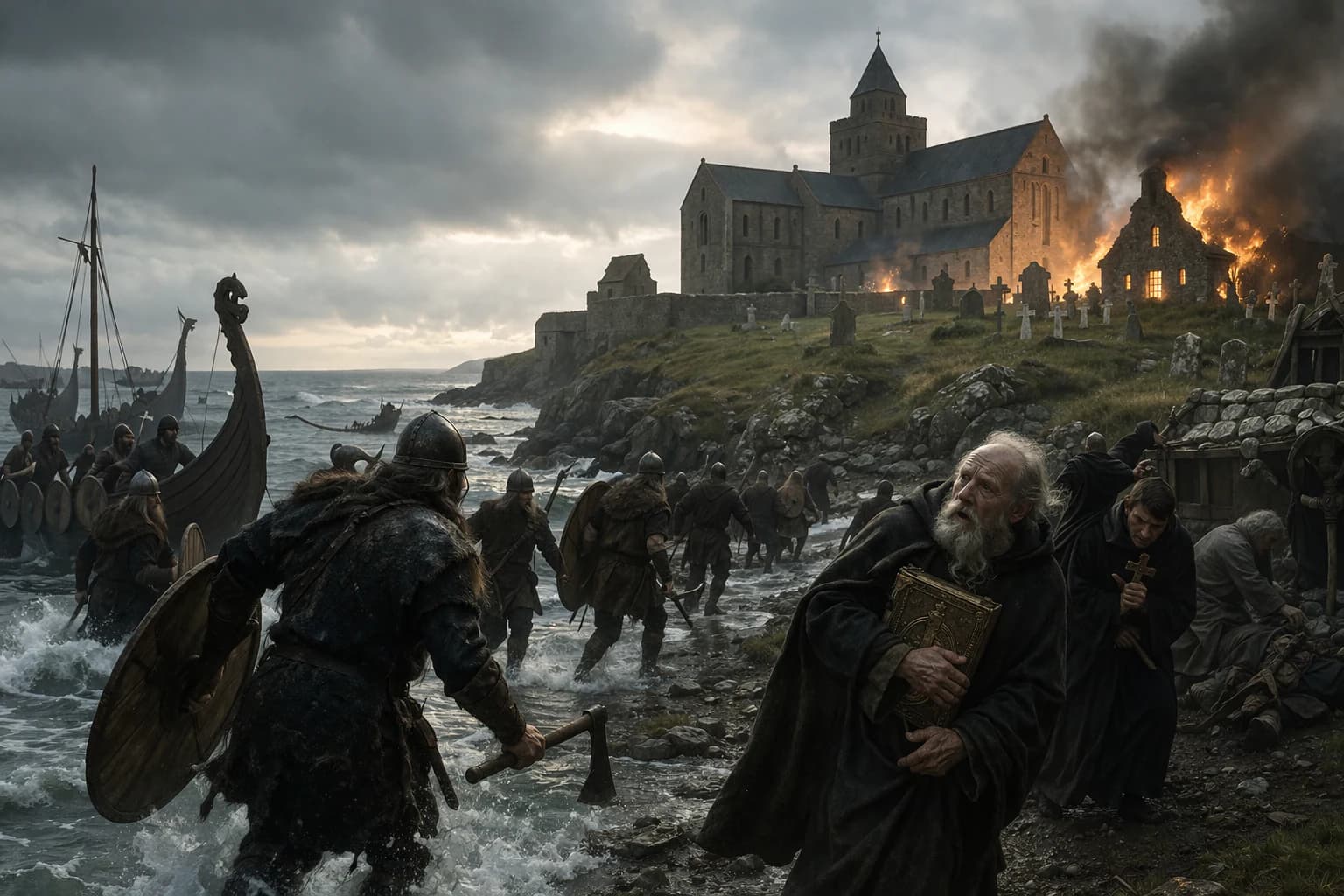
In 793, Vikings attacked the monastery at . It was a small place, but the shock spread across England.

Monasteries were not built like forts. They held books, silver, food, and holy objects, so they were rich and weak at the same time.

was also deeply respected. It was linked to Saint Cuthbert, so people saw it as a sacred place under God’s care.

A raid on one island felt like a wound to the whole kingdom.

When the Vikings came by sea, they killed, took treasure, and left quickly. Local rulers could not respond fast enough.

That changed how people saw danger. Trouble was no longer only from nearby rivals. It could come suddenly from across the sea.

The raid became a symbol of a new age. It showed how exposed England was and foreshadowed centuries of Viking pressure and change.

The Great Heathen Army
865 CE
Step 9 of 10865 CEAccessible mode

The Great Heathen Army

For years, Vikings came, stole, and left. In 865, that changed when a huge force arrived to stay and take kingdoms.

Before this, Anglo-Saxon England was split into separate kingdoms like , Mercia, , and . They shared language and religion, but each had its own rulers and rivalries.

The new Viking army was not just looking for quick loot. It wanted land, power, and control, and the divided kingdoms found it hard to act together.

England was easier to break because it was not yet united.

fell first, then , and Mercia was badly weakened. Only held on, fighting again and again against the invaders.

These wars brought fear, ruin, and big political change. They also forced leaders in to become better organized and more determined.

This moment helped push England toward unity. The danger showed that small competing kingdoms could not easily survive on their own.

Alfred the Great and the Shape of England
878 CE
Step 10 of 10878 CEAccessible mode

Alfred the Great and the Shape of England

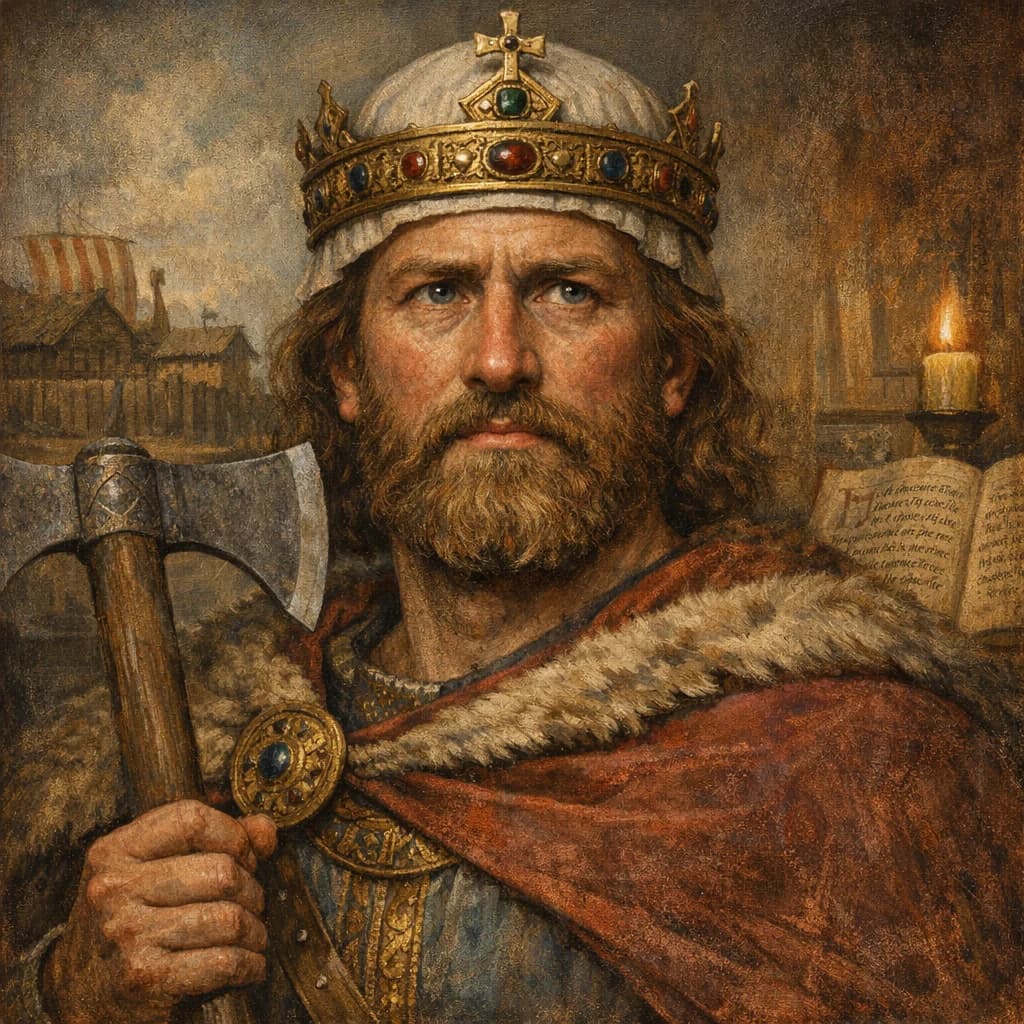
In 878, England could easily have broken apart. Alfred of stopped that from happening.

Before Alfred’s fight with Guthrum, Viking armies had smashed several Anglo-Saxon kingdoms. was one of the last big areas still resisting.

Alfred saw that old ways of fighting were not enough. He reorganized his army so some men fought while others stayed home to farm, and he built defended towns called burhs.

Alfred did not just win a battle. He built a stronger system.

After defeating Guthrum at , Alfred forced a settlement that secured and created a clearer line between his lands and Viking rule.

These changes gave people more safety, better defenses, and a ruler who seemed able to protect them in a crisis.

That pressure from Viking attack helped people think beyond small kingdoms. It was an early step toward seeing themselves as part of one English people.

Continue reading

Finished The Anglo-Saxons?

Choose the next story, explore the people behind this one, or trace the line of power that shaped this world.

Browse stories

References

Sources & Further Reading

Reliable sources, primary-source collections and reading paths connected to this page.

Sources used

  1. The British Library, Anglo-Saxons,” Open source
  2. The British Museum, Sutton Hoo and Europe,” Open source

Further reading

  1. Nicholas J. Higham and Martin J. Ryan, The Anglo-Saxon World, Yale University Press.

Primary sources

  1. Fordham University, Internet Medieval Sourcebook,” Open source

A weekly route through history

Find out first about the latest published stories, feature notes and occasional Premium offers in one weekly email.