Complete chronology
Full overview and deeper context for every journey step.
c. 730
Uncertain beginnings
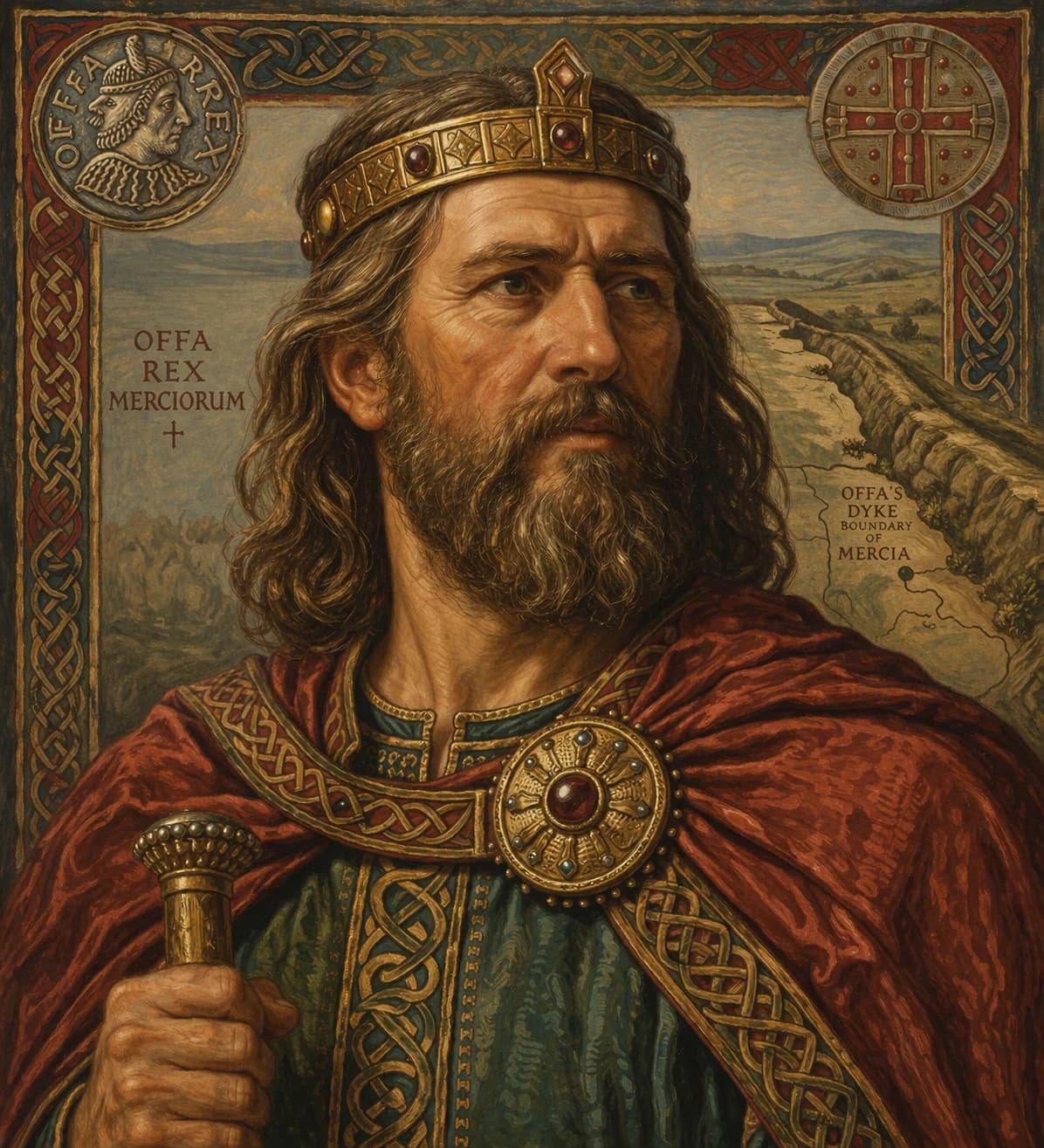
Offa's early life is poorly documented, which is itself a reminder of how difficult eighth-century English history can be. He belonged to the Mercian royal kindred, probably descended from Eowa, brother of the earlier king Penda. Mercia was already one of the strongest Anglo-Saxon kingdoms, but royal authority was never automatic. Kings had to manage aristocratic lineages, rival claimants, neighbouring kingdoms, churchmen and warfare along shifting frontiers. Offa grew up in a political culture where legitimacy came from blood, but survival came from force and recognition. His later reign suggests a man who understood that power had to be made visible: in charters, coins, church privileges, border works and the obedience of other kings.
Early exposure to political uncertainty often produces rulers who prioritise control above all else.
757
Seizing the crown
The Mercian throne opened violently in 757 when King Aethelbald was killed by his own bodyguards. A rival named Beornred briefly seized power, but Offa defeated him and took the kingship. The episode matters because Offa's long reign began not with settled inheritance but with civil conflict. He had to prove that he could command Mercia's leading men and restore momentum after instability. Once established, he ruled for nearly four decades, an unusually long span in early medieval politics. That longevity allowed him to do what short-lived rulers could not: build authority across generations, integrate regions, cultivate the church and project Mercian supremacy far beyond his own heartland.
A ruler who gains power through conflict often governs with a sharpened focus on preventing future rivals.
760s
Expanding influence
Once secure, Offa pushed Mercia toward the greatest dominance it had yet achieved. Kent was brought under heavy Mercian influence, Sussex appears in his orbit, and East Anglia faced fatal pressure; its king Aethelberht was executed on Offa's orders in 794, an act later remembered through saintly legend and political horror. Offa defeated Wessex at Bensington in 779 and secured influence along the Thames valley. His power was not a neat map of direct rule. It was overlordship, tribute, intimidation, dynastic marriage and selective intervention. In an England not yet united, Offa came close to acting as a southern English hegemon, the king other rulers had to calculate around.
Power grows fastest when it combines visible strength with calculated diplomacy.
770s
Royal authority asserted
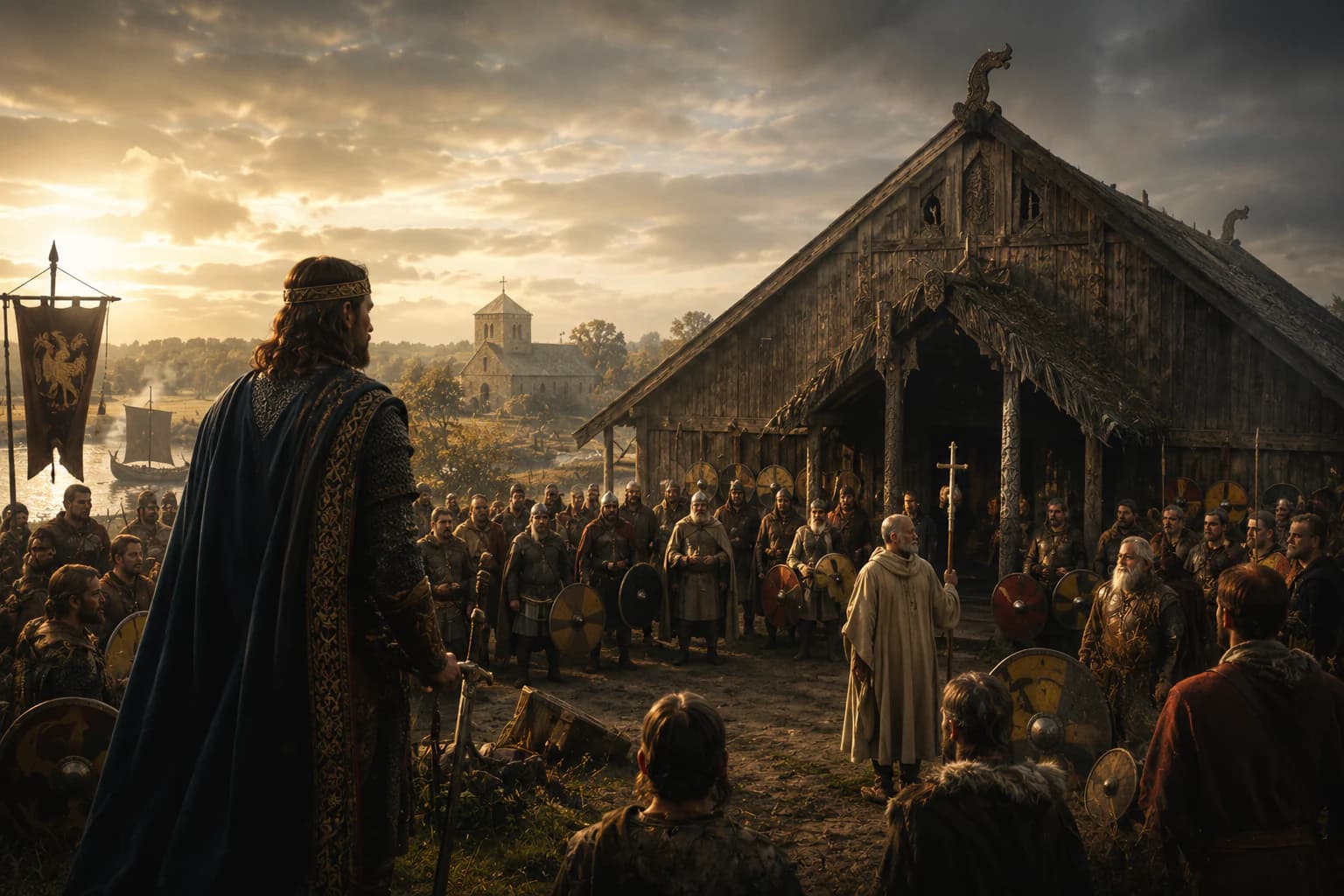
Offa understood that kingship needed sacred architecture as well as armies. He worked closely with church leaders, issued charters, endowed religious houses and sought to strengthen Mercia's ecclesiastical independence. His most dramatic move was the creation of an archbishopric at Lichfield in 787, reducing Canterbury's authority and giving Mercia a prestige structure closer to its political power. He also had his son Ecgfrith consecrated as king during his own lifetime, a rare act in Anglo-Saxon England and a clear attempt to secure dynastic succession. Church politics, royal ritual and family strategy were all connected. Offa was building not just dominance, but a Mercian monarchy that looked permanent.
Control over institutions can be as powerful as control over armies.
c. 775
Coinage reform
Offa's silver pennies are one of the clearest signs of his political imagination. They were high-quality, varied in design and often carried his name in ways that made royal authority part of daily exchange. Some coins of his wife Cynethryth are especially remarkable: few early medieval queens appeared on coinage at all. The reform helped standardise currency, support trade and broadcast Mercian prestige. One famous gold coin imitates an Abbasid dinar with Arabic inscription, probably not because Offa understood the religious content, but because Islamic gold coinage carried international authority. Through money, Offa linked economy, kingship and image. His power travelled in people's hands.
A ruler’s image can travel further through commerce than through conquest.
c. 780s
Offa’s Dyke
Offa's Dyke remains the most visible monument attached to his name, though its exact date, continuity and purpose are still debated. The earthwork runs along parts of the Anglo-Welsh frontier, with bank and ditch arranged to face west. It was probably not a wall in the later castle sense, but a boundary, barrier, lookout line and statement of domination. Building it required labour mobilisation on a scale that reveals Mercia's organisational reach. The dyke also reminds us that Offa's England was not an island story alone. Welsh kingdoms were active neighbours, enemies and trading partners. The frontier was a zone of war, negotiation and identity, and Offa made it visible in earth.
Physical boundaries can express political power as clearly as written laws.
780s–790s
Diplomatic reach
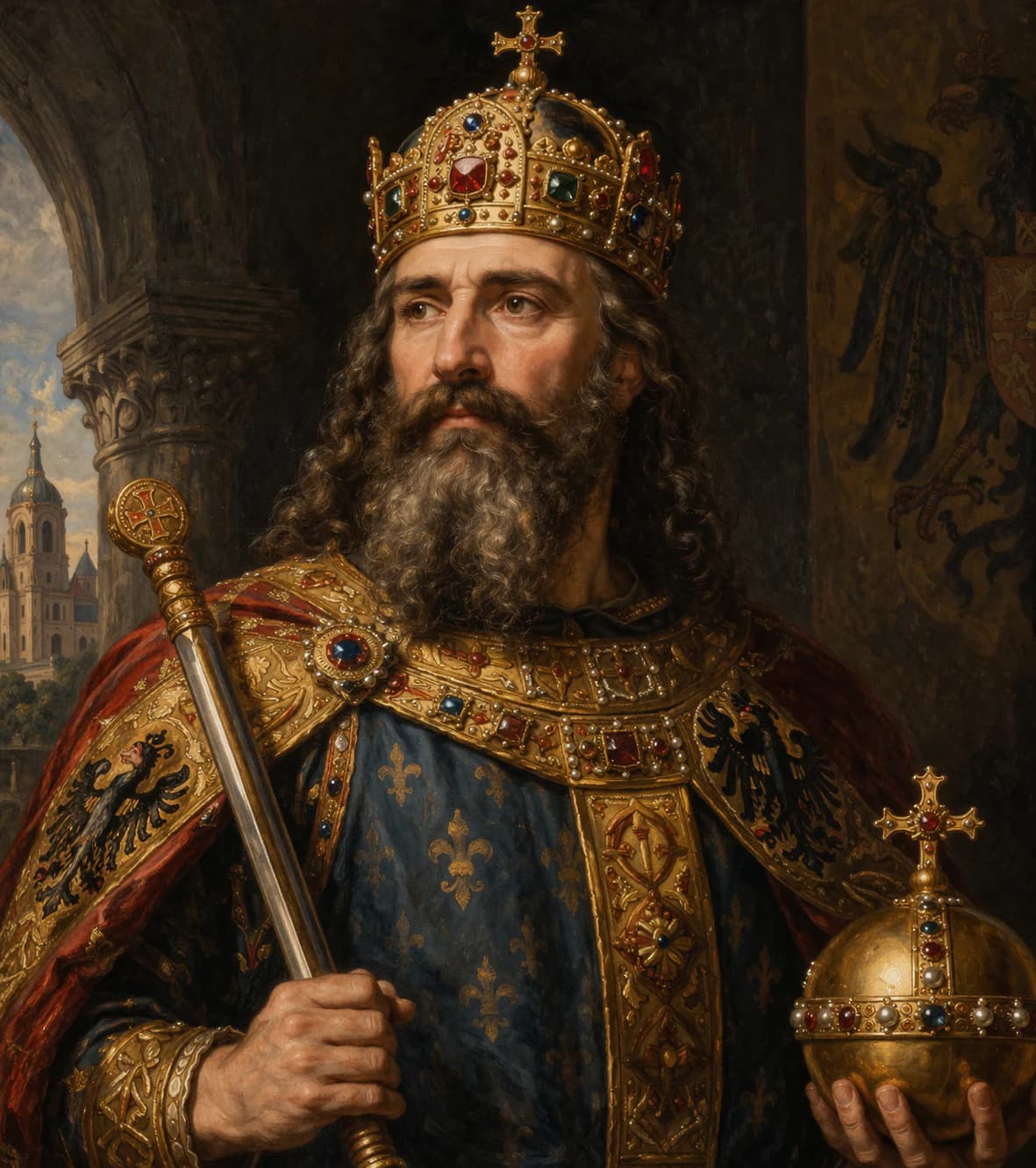
Offa's reach extended across the Channel. His correspondence with Charlemagne reveals trade disputes, diplomatic tension and the remarkable fact that the Frankish ruler treated the Mercian king as a significant counterpart. Marriage negotiations between their children failed, and trade was temporarily disrupted, but the relationship resumed through diplomacy. Offa also had dealings with the papacy, including matters connected to Lichfield and ecclesiastical organisation. These contacts show a ruler aware that prestige abroad strengthened authority at home. Offa was not a local warlord looking only at neighbouring shires. He ruled within a European Christian political world of letters, merchants, bishops and royal reputation.
Recognition from distant powers can strengthen authority at home.
790s
Final years
Offa's later politics focused increasingly on continuity. His son Ecgfrith was consecrated king during Offa's lifetime, a deliberate attempt to avoid the violent succession struggles that had marked Mercian history. But dynastic planning could not manufacture lasting strength by itself. Offa died in 796, and Ecgfrith followed him within months. Later writers implied that Offa's elimination of rivals had left his line cursed or politically isolated. Whether moral judgement or political memory, the result was real: the personal dominance Offa had built did not pass smoothly to his descendants. Mercia remained powerful, but the extraordinary supremacy of Offa's reign was hard to reproduce without Offa.
The true test of power lies in what endures after a ruler is gone.
796 and beyond
Enduring legacy
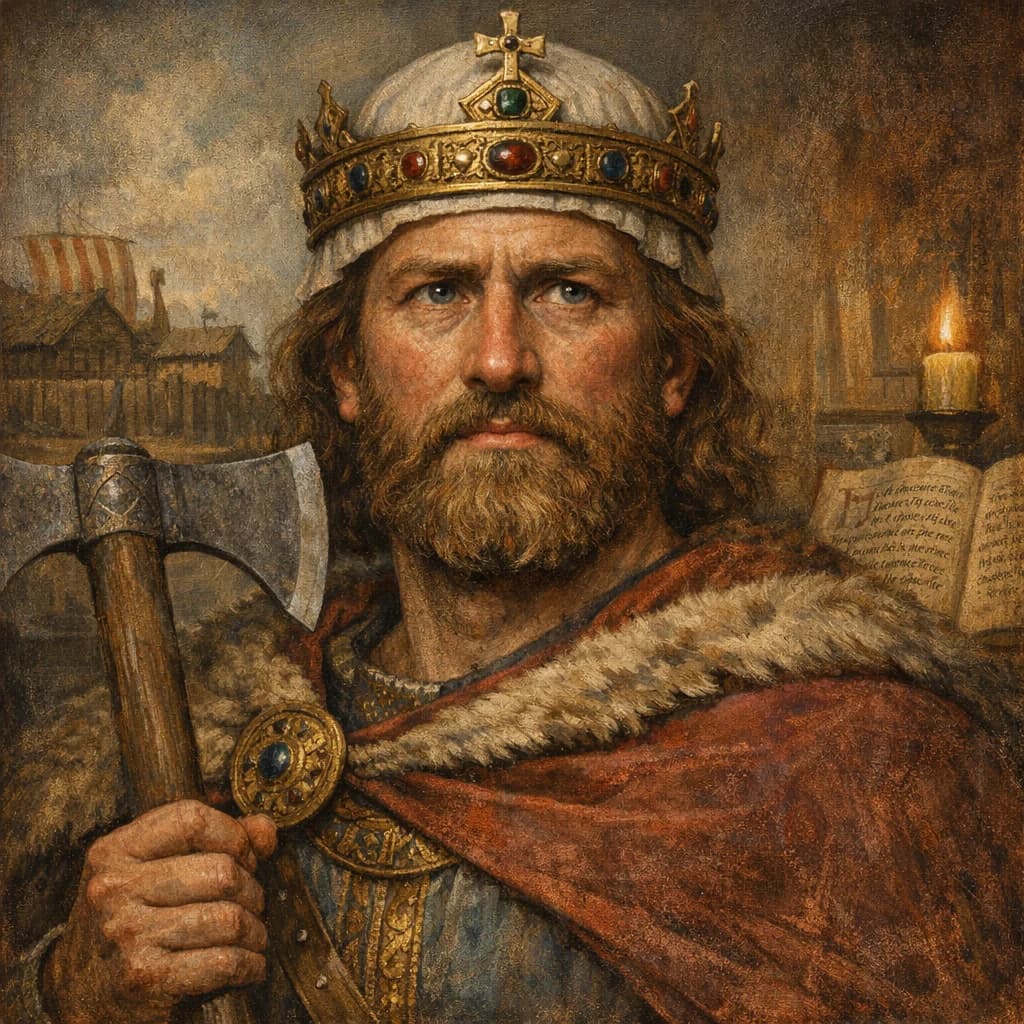
Offa matters because he shows how close Mercia came to shaping the future of England before Wessex became dominant. He controlled or intimidated much of southern England, projected authority through coinage and charters, manipulated church structures, negotiated with Charlemagne and left a frontier monument that still carries his name. Yet he did not create England, and his dynasty failed almost immediately after his death. That failure helped later memory shrink him. The story of English origins became Alfred, Wessex and the struggle against the Vikings, leaving Offa as a powerful earlier possibility. He was not a national king in the later sense, but he revealed the scale of kingship possible in Anglo-Saxon Britain before national monarchy existed.
Lasting influence often comes from redefining what leadership looks like, not just holding power.