People

Bede

Bede was an 8th-century Northumbrian monk and scholar whose Ecclesiastical History of the English People is a foundational source for early medieval England.

Born
673 CE
Died
735 CE
Role
8th-century English monk and scholar

8th-century English monk and scholar (673–735)

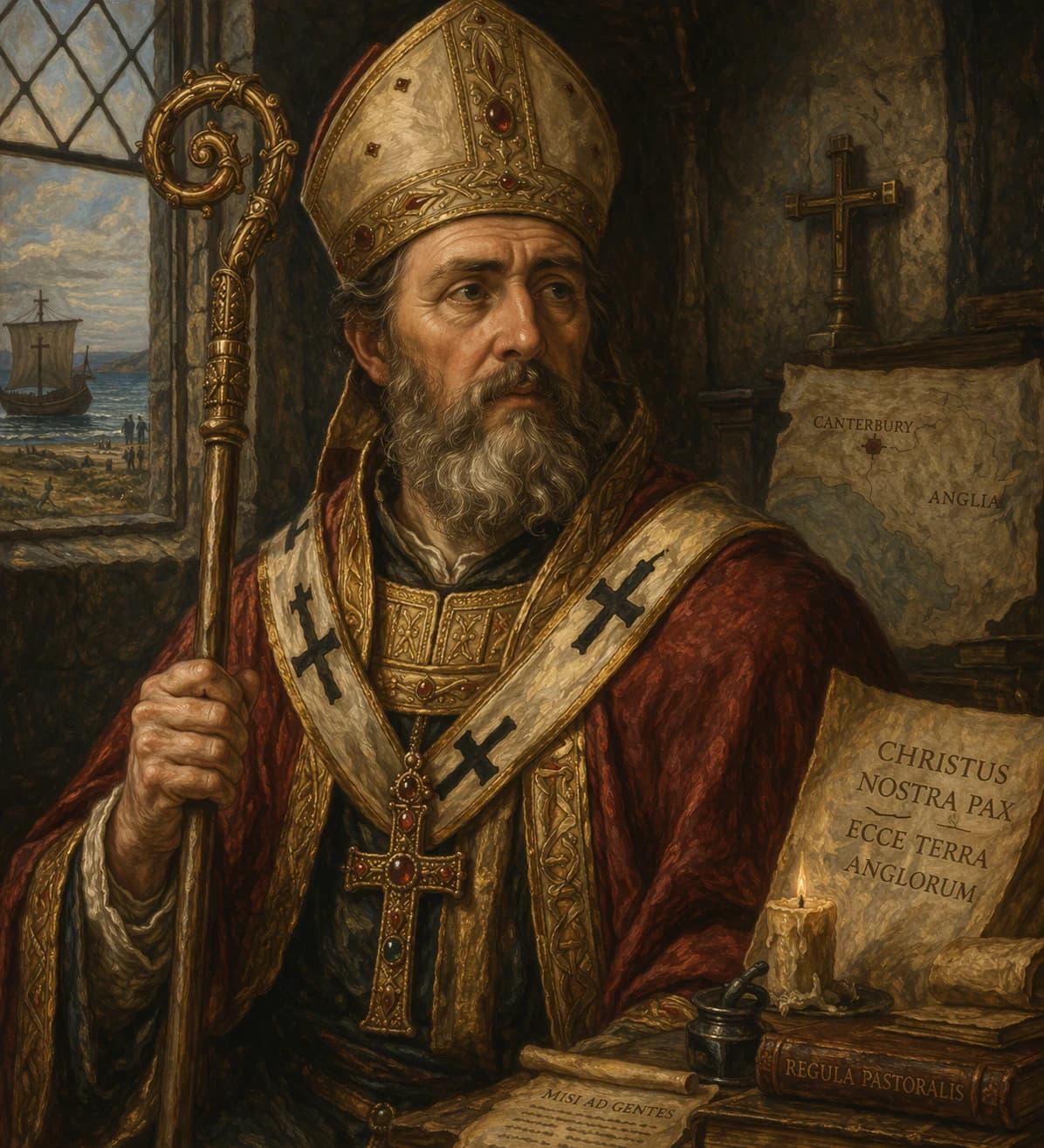
AI-generated portrait of the Venerable Bede in monastic robes
AI-assisted historical reconstruction

An illustrative reconstruction based on historical context. It is not a photograph or documentary likeness. Image policy

Quick answer

Bede was an 8th-century Northumbrian monk and scholar whose Ecclesiastical History of the English People is a foundational source for early medieval England.

Born
673 CE
Died
735 CE
Role
8th-century English monk and scholar
Years
673-735 CE
Facts

Bede timeline facts

Selected specifics from this profile's life story.

673
Born in Northumbria

Bede was born in the Anglo-Saxon kingdom of Northumbria, a region where Christianity and learning were beginning to take deeper root.

700s
Prolific writer

Bede produced numerous works on theology, science, and education, establishing himself as one of the most learned figures of his time.

730s
Intellectual influence

Bede’s writings spread widely, influencing scholars and helping standardise methods of studying history and timekeeping.

Post 735
Enduring legacy

After his death, Bede was remembered as a foundational historian whose work shaped how early English history was understood for centuries.

Life Journey

A life devoted to learning and memory

Follow the story in a more continuous narrative, with a reading mode that matches how much depth you want.

Complete chronology

673

Born in Northumbria

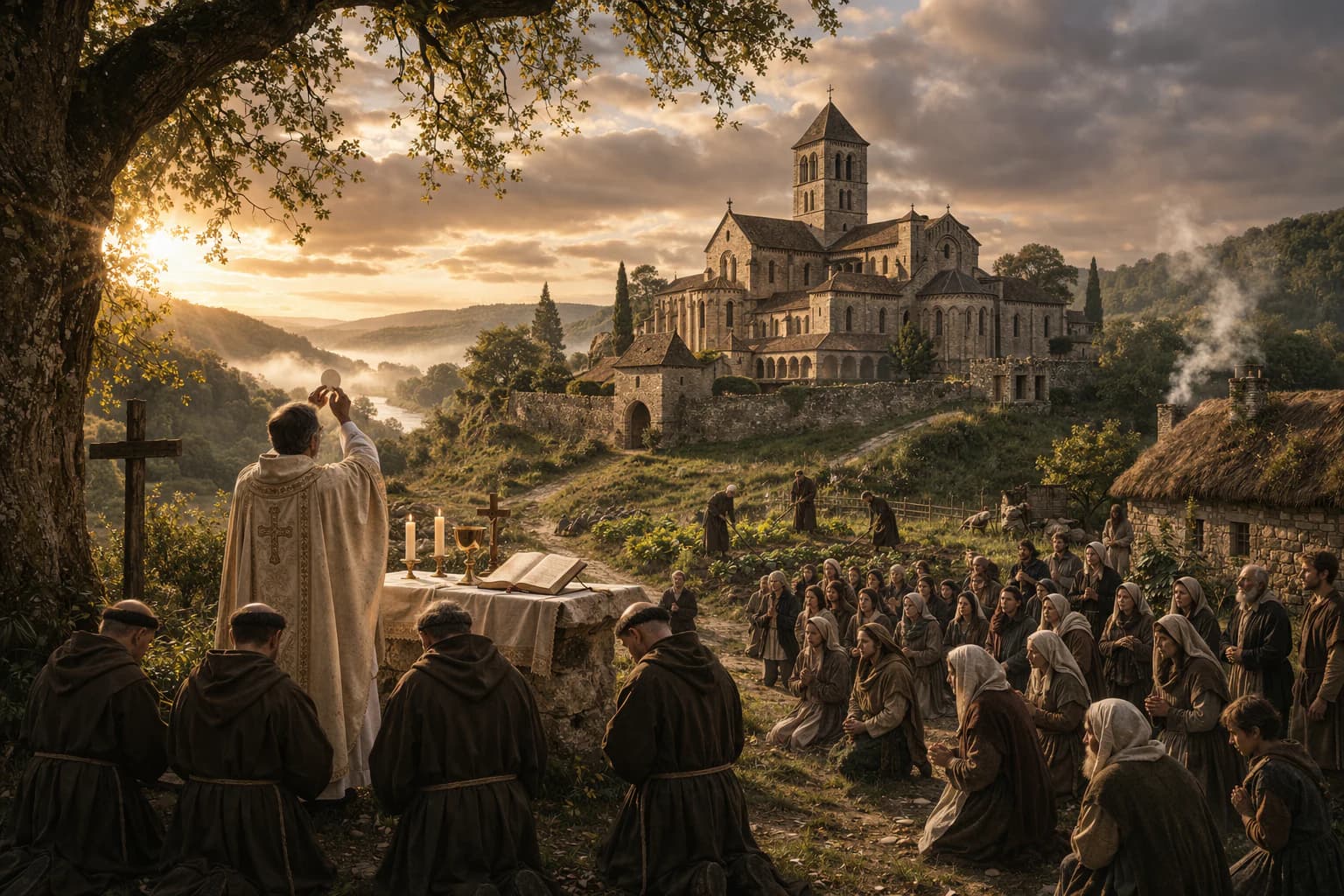
Bede was born in 673 in the kingdom of Northumbria, probably on lands connected to the twin monasteries of Wearmouth and Jarrow. Northumbria was then one of the most intellectually vibrant regions of Anglo-Saxon England, shaped by royal patronage, Irish and Roman Christian influences, and contacts stretching across the North Sea and the wider Latin Church. At about seven, Bede was entrusted to monastic care, first under Benedict Biscop and later Ceolfrith. That decision defined his whole life. He grew up not in a court or battlefield world, but among psalms, manuscripts, teaching, calculation, and disciplined routine. Monasteries like Wearmouth-Jarrow were not retreats from history; they were engines of memory. They preserved books, trained minds, and connected a northern English child to the learning of Rome, Gaul, Ireland, and the Mediterranean.

680s

Monastic upbringing

Wearmouth-Jarrow gave Bede one of the best libraries in western Europe. Benedict Biscop had traveled repeatedly to Rome and returned with books, relics, art, and craftsmen, creating a monastic culture unusually open to continental learning. Bede studied Latin scripture, grammar, rhetoric, biblical commentary, music, computus, natural science, and chronology. This was not modern secular education, but it was intellectually demanding. To calculate Easter correctly, interpret scripture, and order sacred history required mathematics, astronomy, languages, and disciplined reading. Bede's world was small geographically but vast textually. He seems to have spent almost his entire life in the monastery, yet through books and correspondence he inhabited a much wider Christian universe. His later authority came from this combination: local rootedness and international learning held together in one careful mind.

c. 692–703

Ordained young

Bede was ordained deacon at about nineteen and priest at about thirty, ages that suggest his community recognized unusual ability and maturity. Ordination placed him more deeply inside the teaching and liturgical life of the monastery. He was not a bishop, abbot, or political actor; his authority came through study, explanation, and reliability. Bede taught younger monks, commented on scripture, and built a habit of making difficult material clear without making it shallow. That clarity became one of his great strengths. Early medieval scholarship could be dense, derivative, or polemical, but Bede often wrote with a teacher's instinct for order. His influence spread because he made knowledge usable. He turned inherited learning into something students, monks, and later historians could actually work with.

700s

Prolific writer

Bede wrote far more than history. His works included biblical commentaries, sermons, saints' lives, hymns, letters, educational texts, and treatises on time and nature. Computus, the calculation of the calendar and especially the date of Easter, was one of his specialties. To modern readers that may sound technical, but for Bede it joined astronomy, theology, universal history, and church unity. His writing also helped popularize the use of anno Domini dating, counting years from the Incarnation of Christ, a system that later became standard across much of Europe. Bede's method was careful by medieval standards: he named sources, compared accounts, asked correspondents for information, and organized material so readers could follow the argument. His scholarship was devotional, but it was not careless. Faith gave him purpose; discipline gave him authority.

720s

Historical ambition

Bede's historical ambition grew from a problem: the story of Christianity among the English was scattered across letters, local traditions, Roman records, oral reports, and regional memories. Anglo-Saxon England was not yet a unified kingdom. It was a landscape of Northumbrians, Mercians, West Saxons, East Anglians, Kentish rulers, Brittonic communities, Irish missionaries, Roman missions, and shifting overlordships. Bede set out to give this fragmented world a meaningful Christian history. He gathered material from bishops, abbots, letters, earlier texts, and trusted informants, then shaped it into a narrative of conversion, conflict, error, correction, and providence. His purpose was not neutral modern history. He wanted to show how God worked through peoples and churches. Yet his care with evidence made the work invaluable even for readers who do not share his assumptions.

731

Ecclesiastical history

Completed in 731, the Ecclesiastical History of the English People became Bede's masterpiece. It begins with geography and Roman Britain, then follows the arrival of Anglo-Saxon peoples, the Gregorian mission to Kent, the work of Irish and Roman missionaries, the Synod of Whitby, royal conversions, monastic foundations, miracles, conflicts, and the growth of a Christian English identity. Bede's title matters: he helped make the Angli, the English, imaginable as a people with a shared sacred past despite political division. His narrative favored Roman ecclesiastical order and Northumbrian learning, and it sometimes treated Brittonic Christians harshly. Those biases matter. But the work's power lies in its combination of story, source-consciousness, chronology, and interpretation. Without Bede, much of early English history would be dimmer, thinner, and harder to connect.

730s

Intellectual influence

Bede's writings circulated widely during and after his lifetime, becoming standard texts for monastic education. His influence rested on trust. Readers believed he had read deeply, ordered carefully, and explained honestly within the limits of his world. His work on time helped medieval scholars place biblical, Roman, and local events into a single chronological structure. His biblical commentaries trained generations in how to read scripture. His history gave later English churchmen and rulers a usable past. This influence did not mean he was always right. He depended on the information available to him, and his theological commitments shaped his judgments. But his method raised the standard for historical writing in early medieval Europe. He showed that memory could be gathered, tested, arranged, and taught.

735

Final years

Bede's final days were recorded by his student Cuthbert in one of the most moving accounts of early medieval scholarship. As illness weakened him in 735, Bede continued teaching and working, including on a translation of the Gospel of John into Old English and excerpts from Isidore of Seville. The scene may be shaped by hagiographic reverence, but its central truth fits the life: Bede remained a teacher to the end. He distributed small possessions, sang, prayed, dictated, and corrected. His death was remembered not as dramatic martyrdom but as scholarly faithfulness completed. That matters because Bede's holiness, in his community's memory, was inseparable from intellectual labor. He served God by making knowledge clear, preserving memory, and helping others understand the world in sacred time.

Post 735

Enduring legacy

Bede's legacy is difficult to overstate. He became known as the Venerable Bede and was later recognized as a Doctor of the Church. Historians still depend on him, even while reading him critically, because he preserved information found nowhere else and shaped the framework through which early English Christianity is understood. His work also contributed to the idea of English history as a coherent subject. That was not inevitable in a divided island. Bede's England was partly a spiritual construction, but constructions can become historically powerful when later generations inherit them. His limits are real: he wrote from a monastic, Northumbrian, Roman-oriented perspective. Yet those limits do not diminish his achievement. A monk who rarely traveled became the central guide to a whole age because he understood that the past must be organized before it can be remembered.

Continue in context

Connected stories

Move from the profile into the wider events and settings this figure belongs to.

Tertiary paths

Content note

This profile is written for educational use and connects to related Stories of History pages. The main portrait is an AI-assisted historical reconstruction, included as an illustrative aid rather than documentary evidence. Image policy

References

Sources & Further Reading

Reliable reference works, archives and reading paths connected to this profile.

Further reading

  1. Encyclopaedia Britannica, Search results for Bede,” accessed June 2026.Open source
  2. WorldCat, Books and library holdings for Bede,” accessed June 2026.Open source

Primary sources

  1. Library of Congress, Search results for Bede,” accessed June 2026.Open source

Reviewed claim sources

Loading reviewed claim sources...

A weekly route through history

Find out first about the latest published stories, feature notes and occasional Premium offers in one weekly email.