People

King Aethelberht

King Aethelberht of Kent was an early Anglo-Saxon ruler who received Augustine of Canterbury's mission in 597, converted to Christianity, issued an influential Kentish law code, and helped establish Canterbury as a lasting centre of the English Church.

Born
550 CE
Died
616 CE
Role
King of Kent

King of Kent and early royal convert to Christianity (c. 550-616)

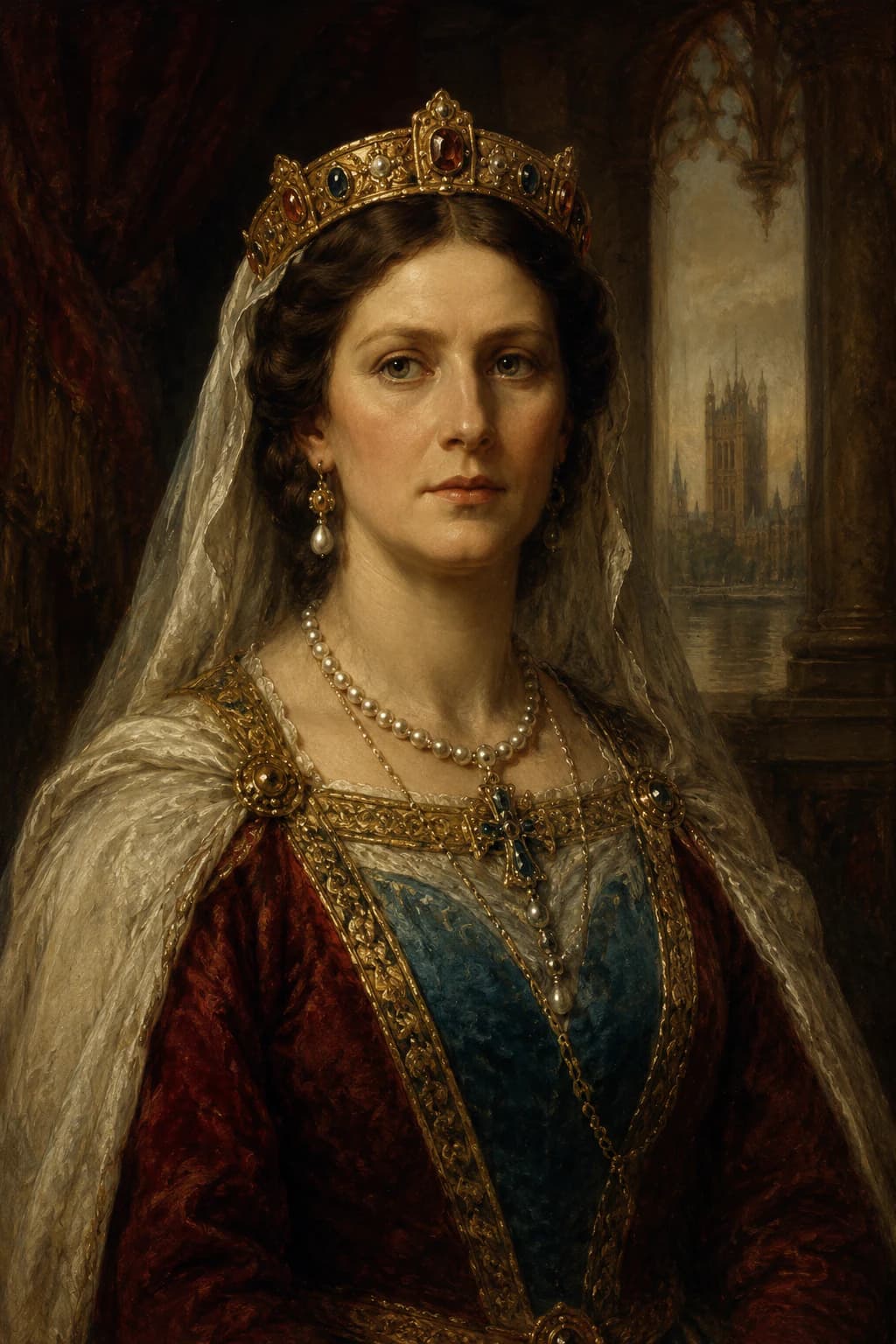
AI-generated portrait of King Aethelberht of Kent in Anglo-Saxon royal attire
AI-assisted historical reconstruction

An illustrative reconstruction based on historical context. It is not a photograph or documentary likeness. Image policy

Quick answer

King Aethelberht of Kent was an early Anglo-Saxon ruler who received Augustine of Canterbury's mission in 597, converted to Christianity, issued an influential Kentish law code, and helped establish Canterbury as a lasting centre of the English Church.

Born
550 CE
Died
616 CE
Role
King of Kent
Years
550-616 CE
Quick facts

Profile details

Additional identity and tagging details that are not already covered in the introduction.

Full name
King Aethelberht of Kent
Also known as
Aethelberht, Aethelberht of Kent, Æthelberht
Facts

King Aethelberht timeline facts

Selected specifics from this profile's life story.

late 6th century
King of Kent

Aethelberht ruled Kent, a south-eastern Anglo-Saxon kingdom whose wealth and Channel links made it unusually open to continental influence.

c. 580s
Marriage to Bertha

Aethelberht married Bertha, a Frankish Christian princess whose faith, household, and continental connections changed the atmosphere of his court.

early 7th century
Conversion and law

Aethelberht converted to Christianity and became associated with one of the earliest surviving written law codes in an English language.

616 and beyond
Enduring importance

After Aethelberht's death, Kentish Christianity faced a dangerous reversal, yet the Canterbury foundation he protected survived.

Life Journey

The Kentish king who opened a Christian doorway

Follow the story in a more continuous narrative, with a reading mode that matches how much depth you want.

Complete chronology

late 6th century

King of Kent

Aethelberht ruled Kent in a Britain still politically fragmented after the end of Roman rule. There was no England in the later sense, only rival Anglo-Saxon kingdoms, surviving Brittonic communities, regional dynasties, and shifting networks of tribute, marriage, and war. Kent's position made it distinctive. It faced the Continent across the narrowest part of the Channel, and its rulers were drawn into trade and diplomacy with the Frankish kingdoms of Gaul more directly than many inland powers. That geography gave Aethelberht access to prestige goods, foreign contacts, and Christian royal culture before most Anglo-Saxon courts had any stable connection with Rome. Bede later described him as a ruler of exceptional standing among the English kingdoms, though the exact reach of his overlordship is hard to measure. What matters is that Augustine did not arrive at a marginal court. He came to a king whose authority, wealth, and continental links made Kent the obvious place for a Roman mission to begin.


c. 580s

Marriage to Bertha

Aethelberht's marriage to Bertha was more than a private alliance. Bertha was a Frankish Christian princess, usually identified as the daughter of Charibert I of Paris, and her arrival connected Kent to the Merovingian world. The marriage appears to have protected her right to practise Christianity, probably with Bishop Liudhard as part of her household. In Canterbury she used the church of St Martin, a surviving or restored Roman-period Christian site outside the city walls. This did not make Kent Christian before Augustine arrived, and it should not be turned into a simple story of Bertha converting her husband by herself. Early medieval conversion was rarely that neat. But her presence mattered deeply. Christianity was already visible at court, attached to royal marriage, continental status, liturgy, and a living place of worship. When Augustine came, he was not stepping into a religious vacuum. Aethelberht had already been exposed to Christian practice through the most important relationship in his household.

597

Augustine arrives

Augustine of Canterbury arrived in 597 as the leader of the mission sent by Pope Gregory I to convert the Anglo-Saxons. The famous scene preserved by Bede places the first meeting in the open air, because Aethelberht was wary of possible magic if the strangers met him indoors. Whether that detail records exact memory or literary colour, it captures something historically plausible: the king was curious, careful, and politically alert. He did not instantly surrender his kingdom's customs to Rome. He listened, gave permission, and allowed the missionaries to settle at Canterbury, where Bertha's church at St Martin provided an immediate Christian setting. That decision was decisive. Missions could fail through hunger, language, fear, or royal hostility. Aethelberht gave Augustine safety, audience, and space. Royal protection did not force every Kentish person into belief, but in an early medieval kingdom it made preaching socially possible and institutionally durable.

early 7th century

Conversion and law

Aethelberht's conversion, probably after Augustine had begun preaching in Kent, gave the mission a different level of security. A Christian king could grant land, support churches, protect clergy, and make the new faith part of public authority rather than merely private devotion. Canterbury's later importance grew from that royal opening. Aethelberht is also remembered for a law code, preserved much later but associated with his reign by Bede. It is often treated as the earliest surviving written law code in an English language and one of the earliest pieces of extended English prose. Its contents are revealing. The code is not a modern statute book, nor is it simply a Christian manifesto. It sets compensation for injuries, theft, household violations, ranks, dependants, and church property. Much of it probably reflects older oral custom, now placed into writing in a world newly connected to Roman and Frankish literacy. That combination is exactly why Aethelberht matters: under him, Kentish kingship began to speak through both conversion and law.

616 and beyond

Enduring importance

Aethelberht died in 616, though some chronologies allow a small margin of uncertainty. His death exposed how fragile early conversion could be. His son Eadbald initially rejected Christianity, and the Kentish church suddenly lost the kind of royal favour on which it had depended. That reversal is important because it prevents the story from becoming too smooth. Aethelberht did not create a permanently Christian England in one act, and the mission did not advance in a straight line. Yet the foundations he had allowed were strong enough to recover. Canterbury endured, later becoming the senior see of the English Church and one of the most important religious centres in Britain. Aethelberht's legacy is therefore not that he completed conversion, but that he made it possible on a lasting institutional footing. He stands at the meeting point of Anglo-Saxon kingship, Frankish diplomacy, Roman mission, written law, and the slow emergence of an English Christian identity.

Continue in context

Connected stories

Move from the profile into the wider events and settings this figure belongs to.

Tertiary paths

Content note

This profile is written for educational use and connects to related Stories of History pages. The main portrait is an AI-assisted historical reconstruction, included as an illustrative aid rather than documentary evidence. Image policy

References

Sources & Further Reading

Reliable reference works, archives and reading paths connected to this profile.

Further reading

  1. Encyclopaedia Britannica, Search results for King Aethelberht,” accessed June 2026.Open source
  2. WorldCat, Books and library holdings for King Aethelberht,” accessed June 2026.Open source

Primary sources

  1. Library of Congress, Search results for King Aethelberht,” accessed June 2026.Open source

Reviewed claim sources

Loading reviewed claim sources...

A weekly route through history

Find out first about the latest published stories, feature notes and occasional Premium offers in one weekly email.