Complete chronology
Full overview and deeper context for every journey step.
6th century
Frankish princess
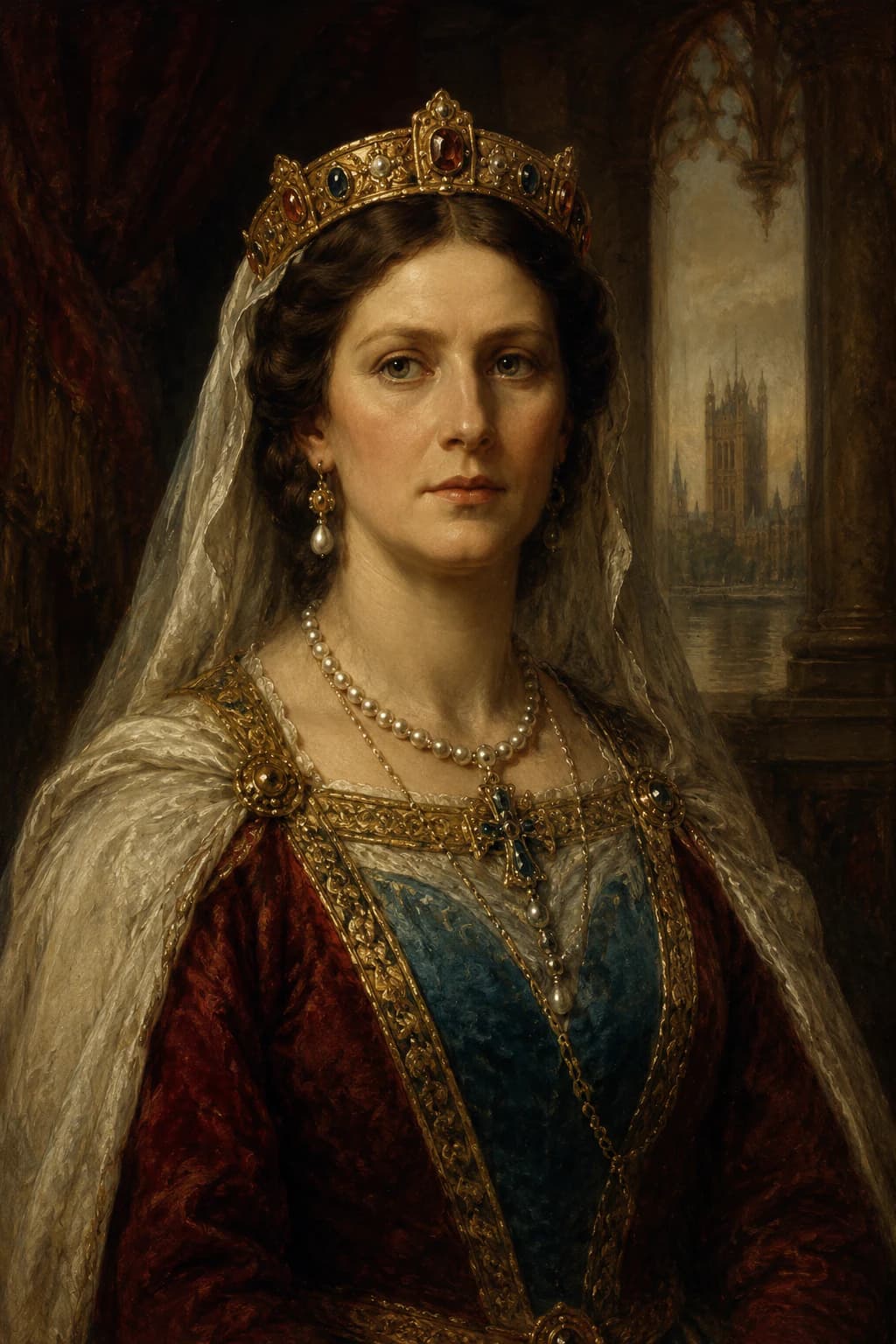
Bertha was a Frankish princess, usually identified as the daughter of Charibert I of Paris and Ingoberga. That ancestry placed her inside the Merovingian world, a political culture where royal marriage, Christian bishops, aristocratic rivalry, and saintly prestige all mattered. The Frankish kingdoms were not models of calm Christian virtue; they were often violent, competitive, and dynastically unstable. But they were Christian kingdoms, deeply entangled with churches, relics, clergy, and Latin learning. When Bertha married Aethelberht of Kent, she carried that world across the Channel. She did not arrive as a missionary in the formal sense, and the sources do not show her preaching or governing policy. Her importance lay in connection. Through her, Kent's court was tied to Christian Gaul, to Merovingian prestige, and to a religious tradition that Anglo-Saxon rulers could begin to understand as royal rather than foreign.
A marriage alliance can carry ideas as well as political advantage.
c. 580s
Queen in Kent
Bertha's marriage appears to have included permission for her to continue practising Christianity in Kent. Bede connects her with St Martin's in Canterbury, an old church associated with Roman Christian survival and later restored or used for her worship. Bishop Liudhard, sometimes rendered Leodhard, was attached to her household, giving her faith a clerical and liturgical presence rather than leaving it as private belief. This matters because Augustine's mission did not create the first Christian sound ever heard in Canterbury. Before 597 there was already a queen, a bishop, a church, and a small courtly Christian presence. The scale should not be exaggerated. Kent remained an Anglo-Saxon kingdom with its own religious traditions, and Bertha's worship did not automatically convert Aethelberht or his people. But it made Christianity visible at the centre of power. It gave the future mission a place to stand.
Sustained visibility can prepare people for changes that seem sudden later.
597
Augustine's opening
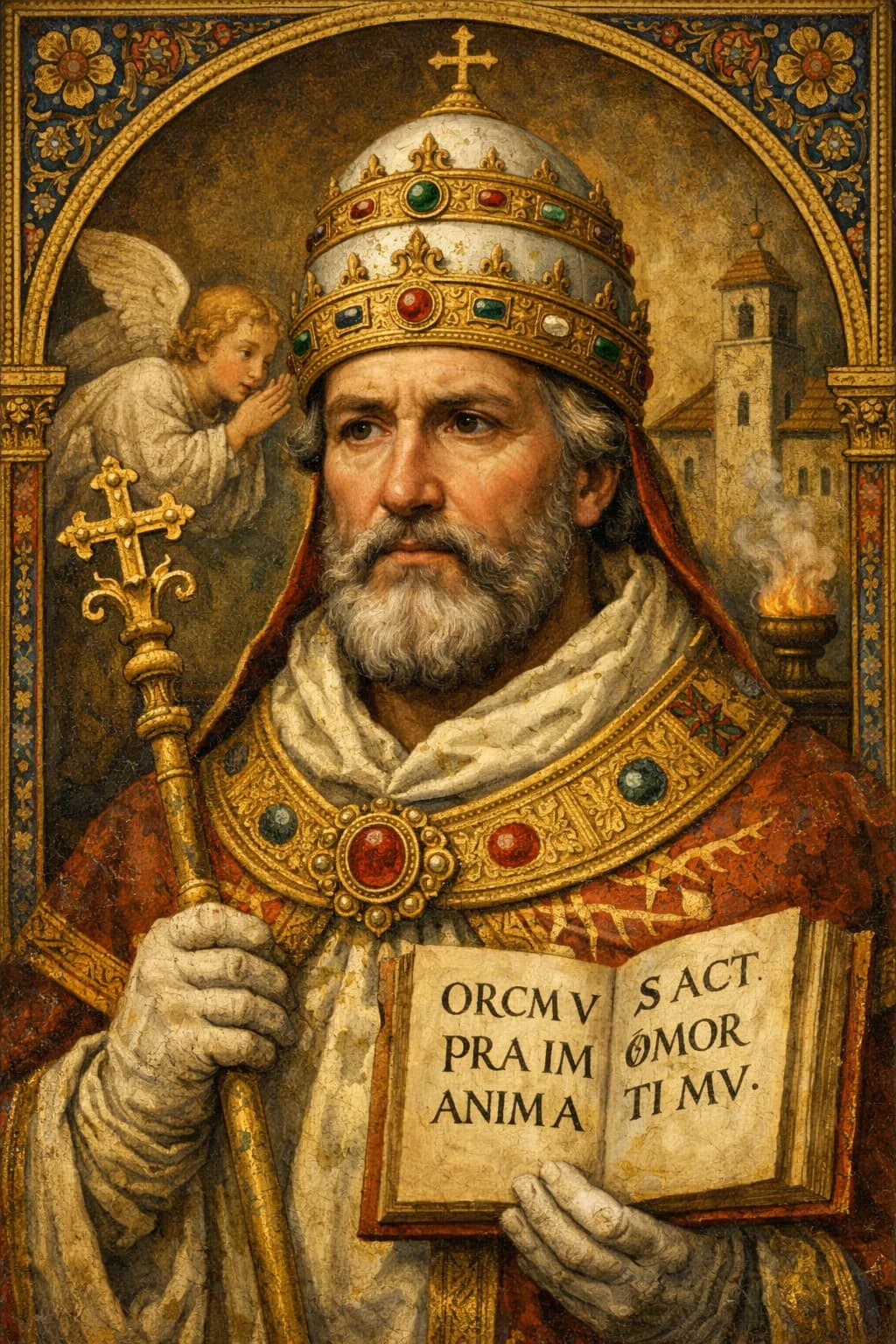
Pope Gregory I sent Augustine to preach among the Anglo-Saxons, but a mission required more than intention from Rome. It needed a route, interpreters, political protection, and a ruler willing to listen. Kent supplied those conditions better than any other Anglo-Saxon kingdom. Its Channel links mattered, Aethelberht's power mattered, and Bertha mattered. Her Christian identity meant Augustine could be received at a court where Roman Christianity was unfamiliar but not unimaginable. St Martin's gave the missionaries an immediate worshipping base. Her Frankish background may also have eased the practical movement of the mission through Gaul before it reached Britain. None of this means Bertha controlled Aethelberht or designed Gregory's strategy. The evidence is too thin for that. But the cause-and-effect is still strong: without a Christian queen already established in Kent, Augustine's arrival would have been colder, riskier, and much less likely to gain a protected foothold.
Influence often works by making a difficult choice feel possible.
late 590s
Quiet influence
Bertha's life has to be handled with care because the surviving evidence is narrow and mostly written by men interested in the Church's success rather than a queen's inner life. Bede presents her as a Christian presence at court, and Pope Gregory later wrote to her in terms that suggest Rome expected her to encourage the work of conversion. Those traces are valuable, but they are not a diary. They do not tell us exactly what she said to Aethelberht, how much influence she exercised, or how she understood her own role. That uncertainty is part of the truth. Bertha should not be inflated into the sole converter of England, a neat saintly heroine moving history by private persuasion. Nor should she be treated as decorative. Early medieval queens could shape diplomacy, religious patronage, household culture, and dynastic legitimacy. Bertha's agency was probably exercised through those channels: worship maintained, contacts preserved, reception softened, and Christianity made compatible with royal dignity.
The absence of many recorded words does not mean the absence of historical agency.
7th century and beyond
Legacy
Bertha's later life and death are uncertain, which is fitting for a figure whose historical profile survives through consequences more than biography. The conversion of Kent did not become secure immediately. After Aethelberht's death, his son Eadbald initially rejected Christianity, showing how fragile a court conversion could be when dynastic power shifted. Even so, the Canterbury foundation endured. That endurance is Bertha's legacy as much as Aethelberht's or Augustine's. She helped create the first courtly bridge between the Anglo-Saxon kingdoms and the Latin Christian world. Later English Christianity would be shaped by many forces: Roman missionaries, Irish and Northumbrian monasticism, royal law, local custom, and political rivalry. Bertha belongs at the opening of that long process. Her significance is not that she completed it, but that she made the beginning less abrupt. She turned Christianity from a distant continental faith into something already present in the royal household of Kent.
History often turns on people who prepare the room before others enter it.