Complete chronology
Full overview and deeper context for every journey step.
849
Royal Beginnings
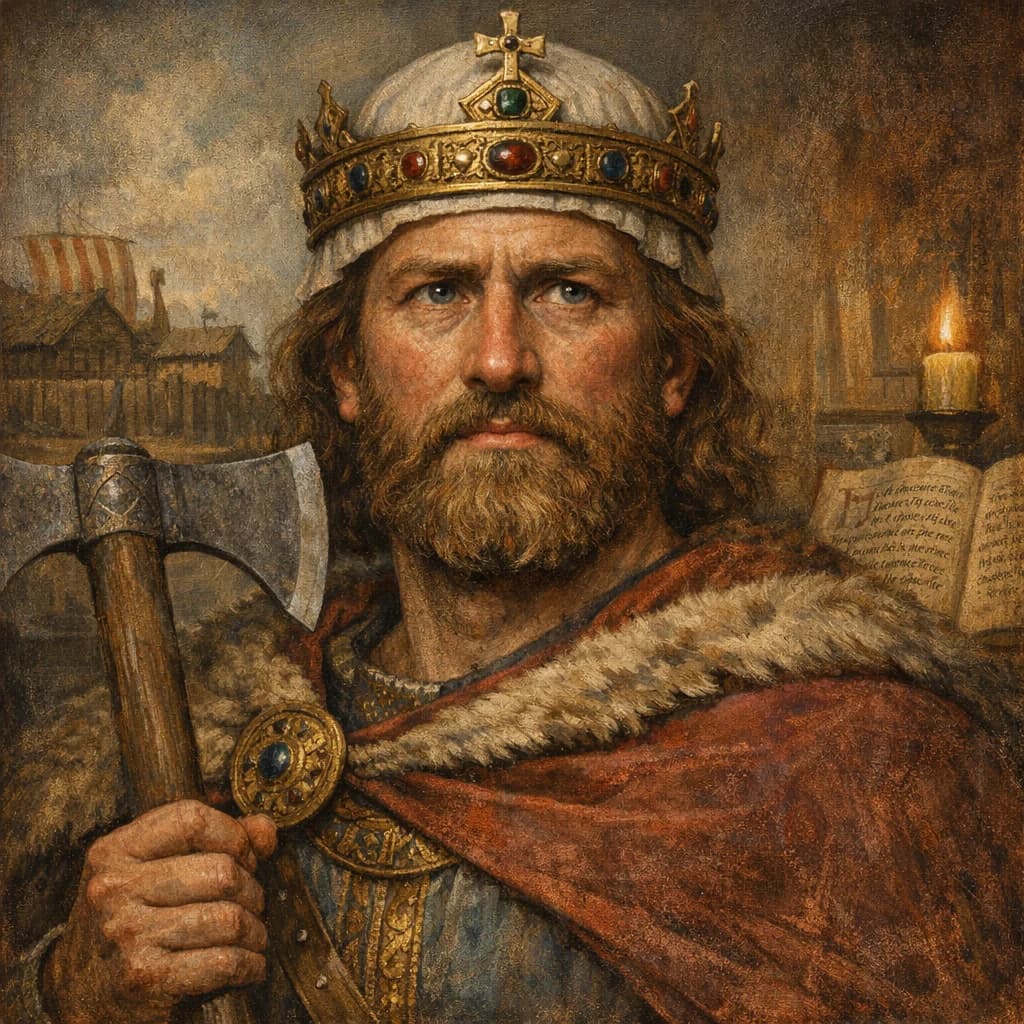
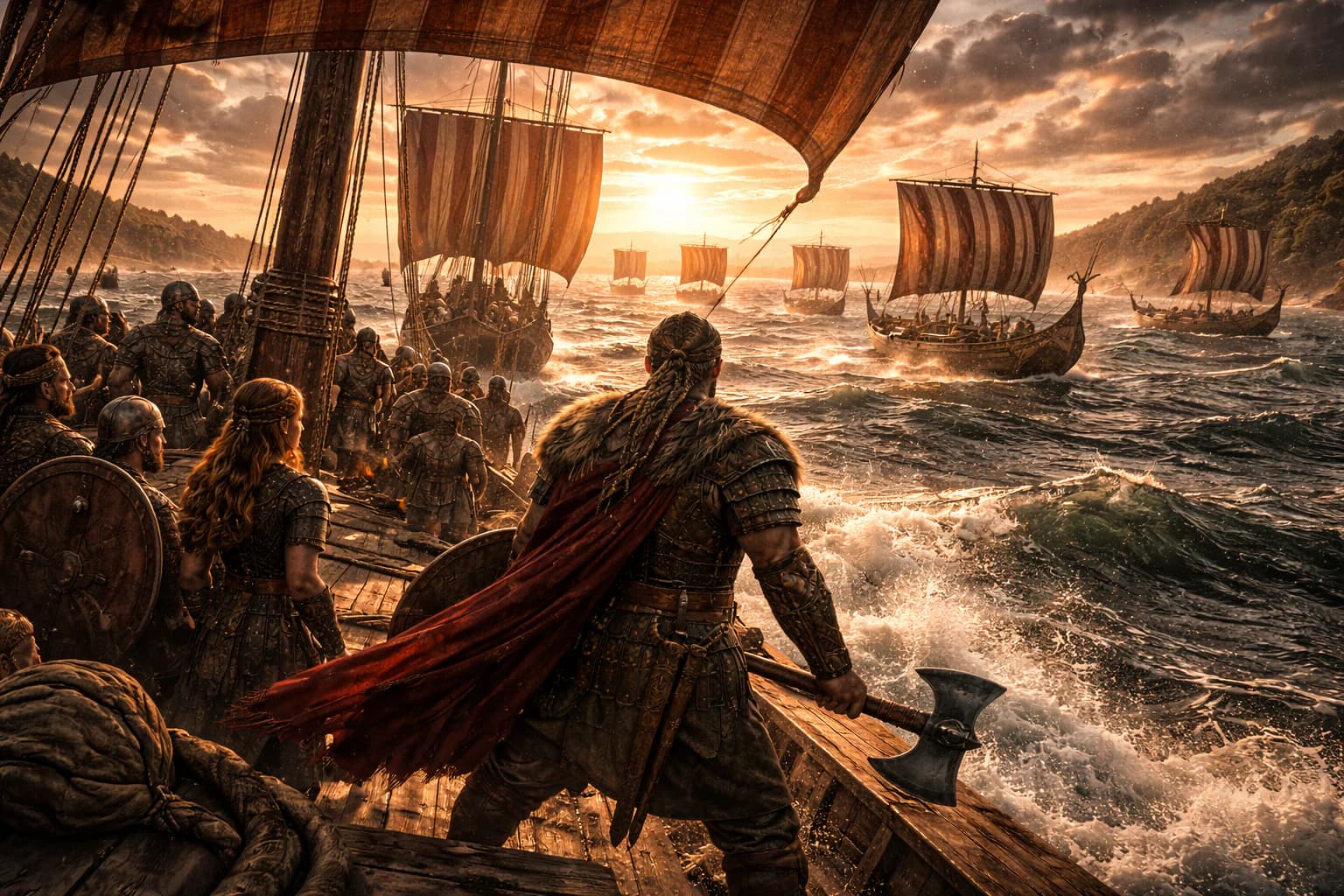
Alfred was born in 849 at Wantage, in what is now Oxfordshire, into the ruling dynasty of Wessex. As the youngest son of King Aethelwulf, he was not the obvious heir. That position may have given him a different kind of formation: royal but not guaranteed power, close to authority but not certain to inherit it. Ninth-century England was divided among kingdoms such as Wessex, Mercia, Northumbria, and East Anglia, and Viking raiding was becoming something more dangerous than coastal plunder. The Great Heathen Army would soon turn raids into conquest and settlement. Alfred's childhood also included religious experience and a reported journey to Rome, which later tradition used to emphasize his piety. Whether every detail of those stories is secure or not, Alfred grew up at the junction of kingship, Christianity, and existential military danger.
Being unlikely to rule allowed Alfred to develop a broader perspective than many heirs bound strictly to power.
860s
Learning and Curiosity
The image of Alfred as a scholar-king comes partly from later admiration, but it rests on real features of his reign. Asser, his Welsh biographer, presents Alfred as a ruler hungry for learning despite limited early training in Latin. The famous story of a book promised to whichever royal child could memorize it first may be polished by memory, but it captures something important about how Alfred wanted to be seen: not only as a warrior, but as a seeker of wisdom. In a period when warfare could consume all political energy, Alfred came to believe that ignorance weakened a kingdom. His later translation program and court scholarship were not hobbies. They were part of a governing theory: rulers, judges, clergy, and officials needed access to knowledge if Christian kingship was to survive crisis.
A ruler shaped by curiosity can see strength in knowledge where others see only weapons.
871
Unexpected Kingship
Alfred's accession was shaped by emergency. His brothers had ruled before him, and the Viking Great Army had already destroyed or dominated several Anglo-Saxon kingdoms. In 871, the year Alfred became king, Wessex endured repeated battles. Some were victories, many were costly, and the pressure did not end with a coronation. Alfred inherited a kingdom that could still fight but could not assume survival. The Vikings were not a temporary raiding party. They were mobile, experienced, politically adaptive, and capable of forcing tribute, taking land, and breaking royal authority. Alfred's early reign therefore began with a question larger than personal rule: could any independent Anglo-Saxon kingdom remain unconquered?
Leadership forged in crisis often demands clarity before confidence has time to form.
870s
Struggle for Survival
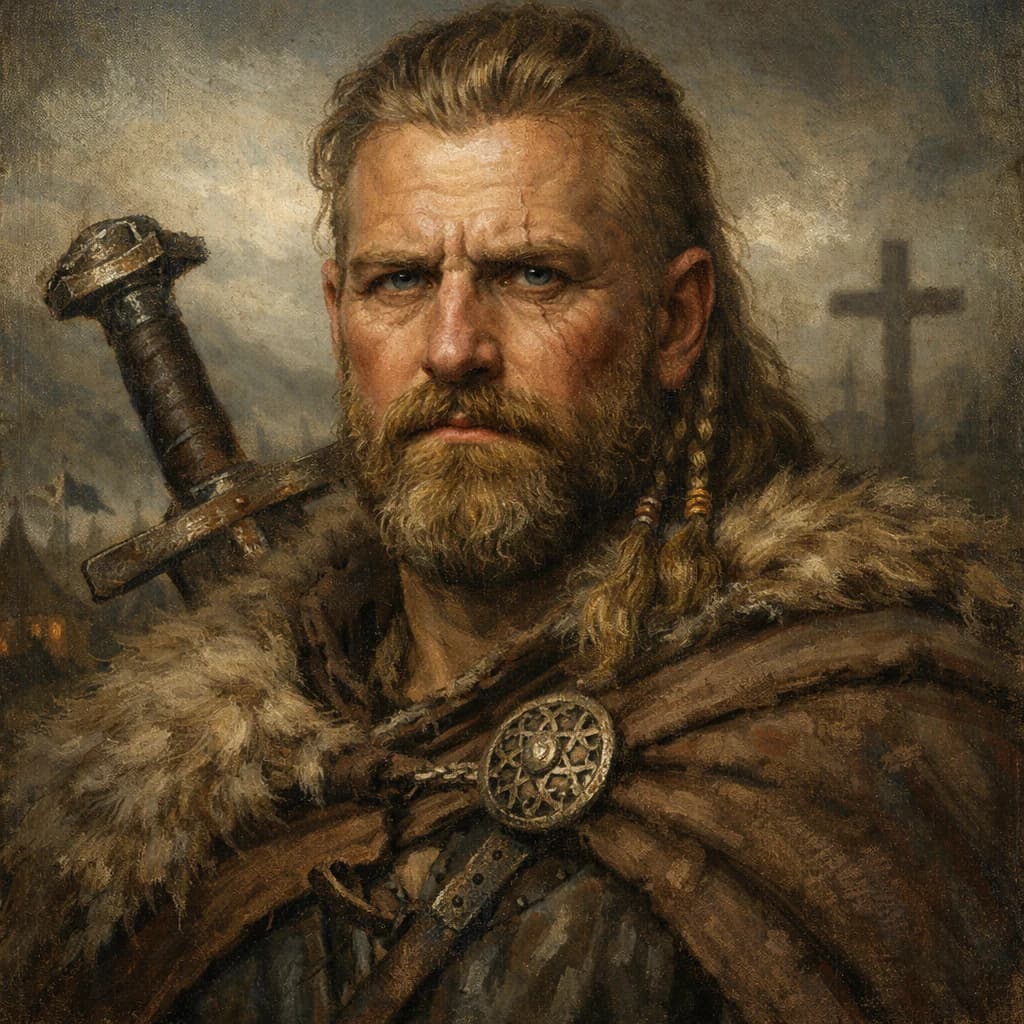
The crisis of 878 became the defining drama of Alfred's life. Guthrum's Viking army struck at Chippenham in winter, a moment when campaigning was less expected, and Alfred's position collapsed. He withdrew to the marshland stronghold of Athelney in Somerset, where later legend placed the famous story of the burned cakes. The cake story is almost certainly a moral tale rather than reliable fact, but the deeper truth is clear: Alfred came close to losing everything. From Athelney he gathered loyal followers, maintained resistance, and prepared a counterattack. This episode matters because it transformed his kingship. Survival required more than courage in battle. It required intelligence, local support, communication, patience, and the ability to turn humiliation into renewed legitimacy.
Moments of retreat can become the space where stronger strategies take shape.
878
Turning the Tide
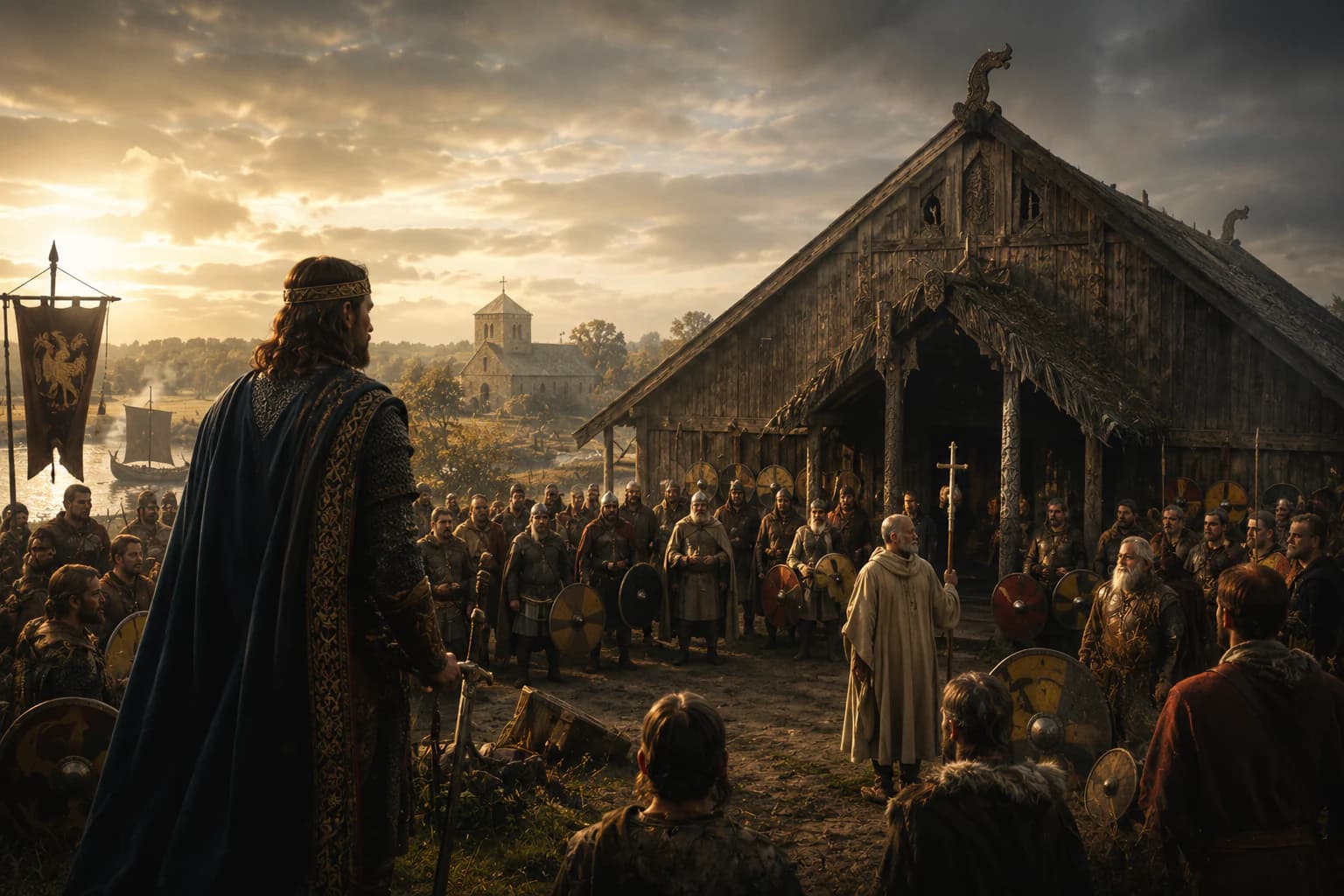
After emerging from Athelney, Alfred gathered forces from Somerset, Wiltshire, and Hampshire and defeated Guthrum at Edington. The victory did not expel all Vikings from England, but it saved Wessex and changed the terms of the conflict. Guthrum accepted baptism, with Alfred as sponsor, and a settlement eventually defined boundaries between Alfred's sphere and the Viking-controlled Danelaw. The religious symbolism of Guthrum's baptism should not be missed. Alfred framed political peace through Christian kingship, turning a military victory into a moral and diplomatic settlement. Edington made later English recovery possible. Without it, Wessex might have followed Northumbria and East Anglia into defeat. With it, Alfred gained the time to build systems that could withstand the next assault.
A single well-timed victory can transform survival into stability.
880s
Rebuilding the Kingdom
Alfred's greatness lies not only in winning Edington but in learning from near-disaster. He developed a network of fortified towns known as burhs, positioned so communities could seek protection and armies could respond more effectively. The Burghal Hidage, though preserved later, reflects this system of defense tied to land assessment and obligation. Alfred also reorganized military service so part of the force could remain available while others worked the land, reducing the old problem of armies dissolving when harvest or exhaustion called men home. He experimented with ships to counter Viking mobility at sea and strengthened royal administration. These reforms did not create modern England overnight, but they turned Wessex into a more resilient political organism. Alfred converted fear into infrastructure.
Lasting security comes from systems that endure beyond a single victory.
880s–890s
Promoting Learning
Alfred believed the Viking wars had damaged not only buildings and borders but learning itself. In the preface associated with his translation program, he lamented that few south of the Humber could understand Latin well. His response was practical and ambitious. He invited scholars from Mercia, Wales, the Continent, and elsewhere; encouraged education for freeborn young men with the means to study; and supported translations into Old English of works considered essential for wisdom and Christian governance. Texts associated with his program include Gregory the Great's Pastoral Care, Boethius, Augustine's Soliloquies, and Orosius, though the exact degree of Alfred's personal authorship remains debated. What matters is the political vision. Alfred treated vernacular learning as a tool of reform. A kingdom defended by walls also needed minds trained for judgment.
Expanding access to knowledge strengthens both culture and governance at once.
890s
Later Rule
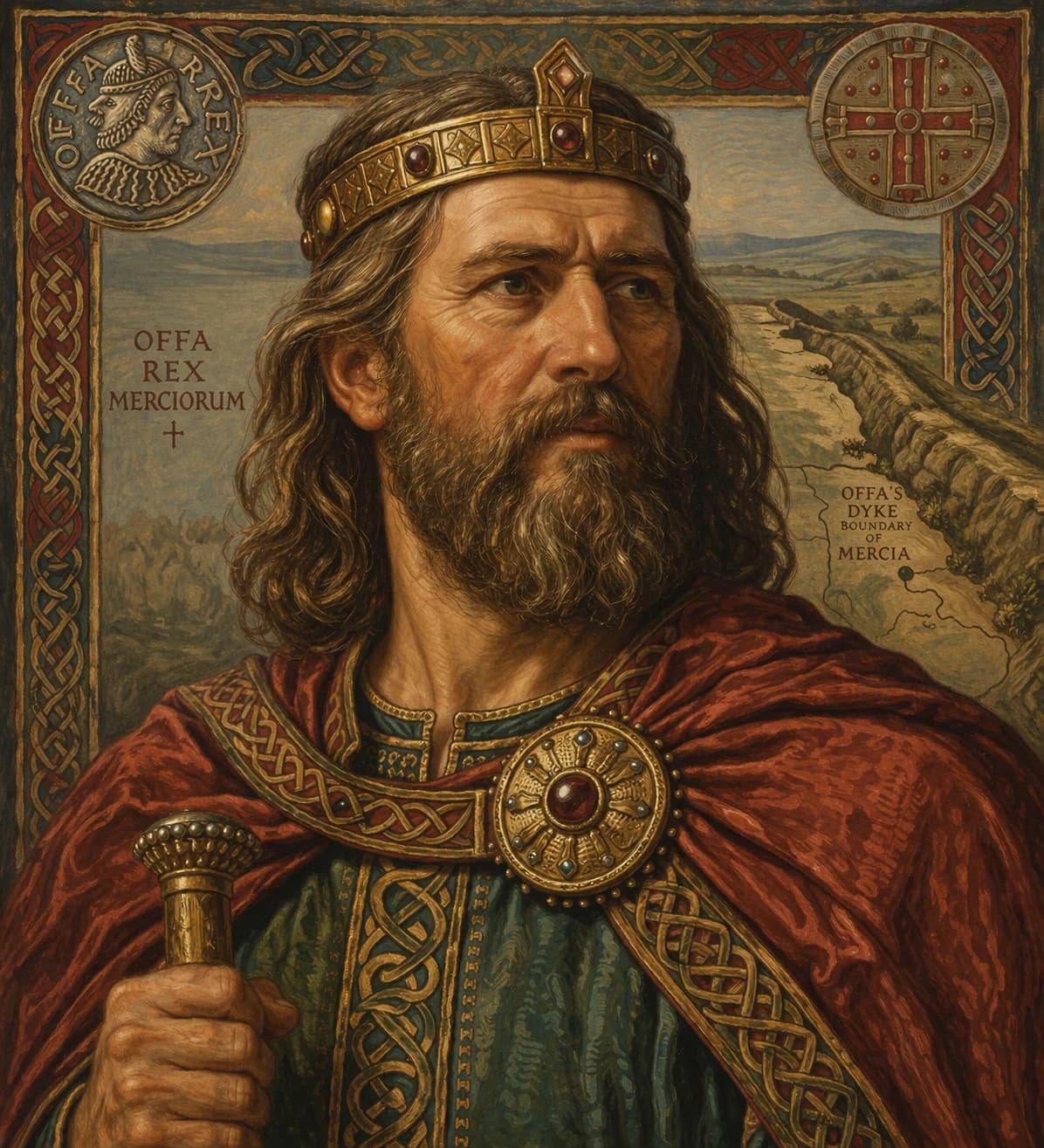
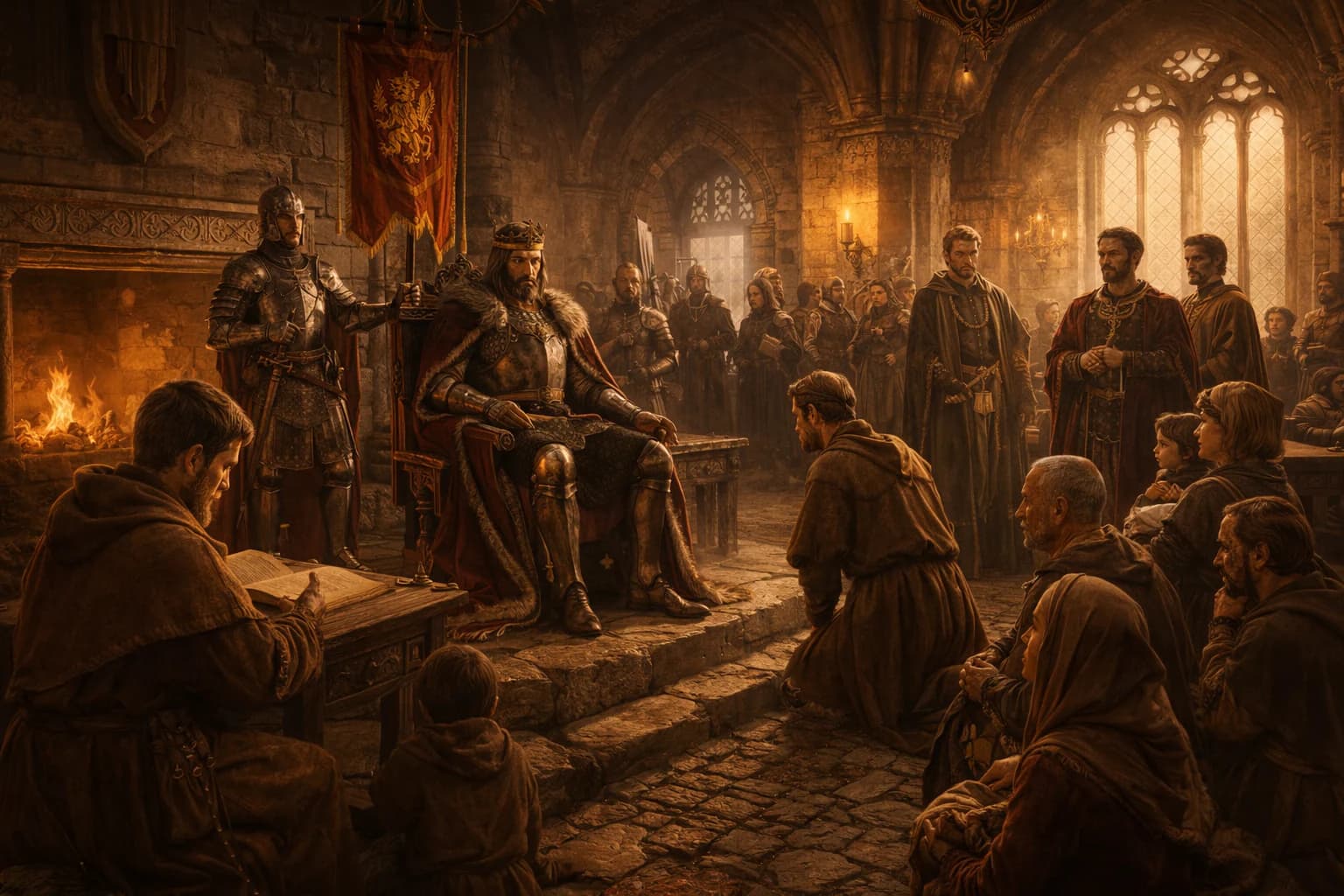
Alfred's later years were not peaceful retirement. Viking forces returned in the 890s, testing the defensive system he had built. This time Wessex did not collapse as it had in 878. Burhs, logistics, local mobilization, and political coordination allowed Alfred's kingdom to absorb pressure and respond. He also worked with Mercian allies, especially Aethelred and his daughter Aethelflaed, helping create the conditions for a wider English recovery under his children and grandchildren. Alfred's title and authority are debated in detail, but his ambition clearly stretched beyond Wessex alone. He presented himself as ruler of the Anglo-Saxons, a claim that pointed toward future unification. His reign moved from survival to leadership of a broader English resistance.
Sustaining progress often requires as much effort as achieving it in the first place.
899
Enduring Legacy
Alfred died in 899 and was succeeded by his son Edward the Elder. His immediate legacy was a Wessex that had survived the worst crisis of the Viking age and possessed stronger defenses, clearer administration, and a revived sense of purpose. His longer legacy came through the rulers who built on his foundations: Edward, Aethelflaed of Mercia, Aethelstan, and others who pushed back the Danelaw and moved toward a kingdom recognizable as England. Alfred's reputation was carefully cultivated, especially through Asser's biography and later memory, so historians must separate evidence from admiration. Yet the admiration is not empty. Alfred mattered because he joined battlefield resilience to institutional imagination. He was not simply the king who hid in a marsh and returned. He was the ruler who asked why the kingdom had nearly fallen and then rebuilt it so the answer would be different next time.
A legacy endures when practical achievements and ideas reinforce each other across generations.