People

Zachary Taylor

Zachary Taylor was the 12th President of the United States and a Mexican-American War general. His biography includes frontier service, victories at Palo Alto, Monterrey and Buena Vista, the slavery crisis and his death in 1850.

Born
1784 CE
Died
1850 CE
Role
12th President of the United States

12th President of the United States (1784–1850)

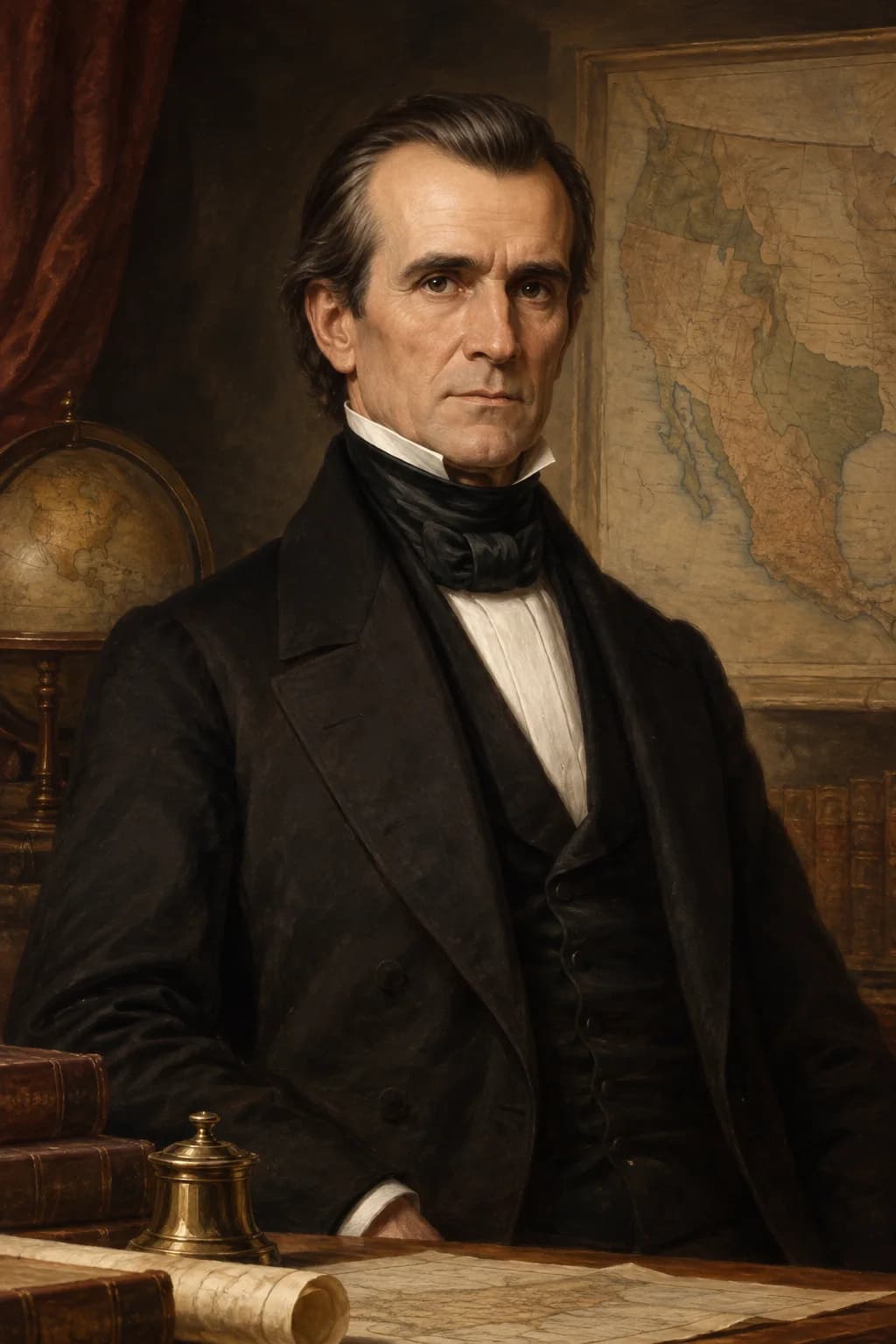
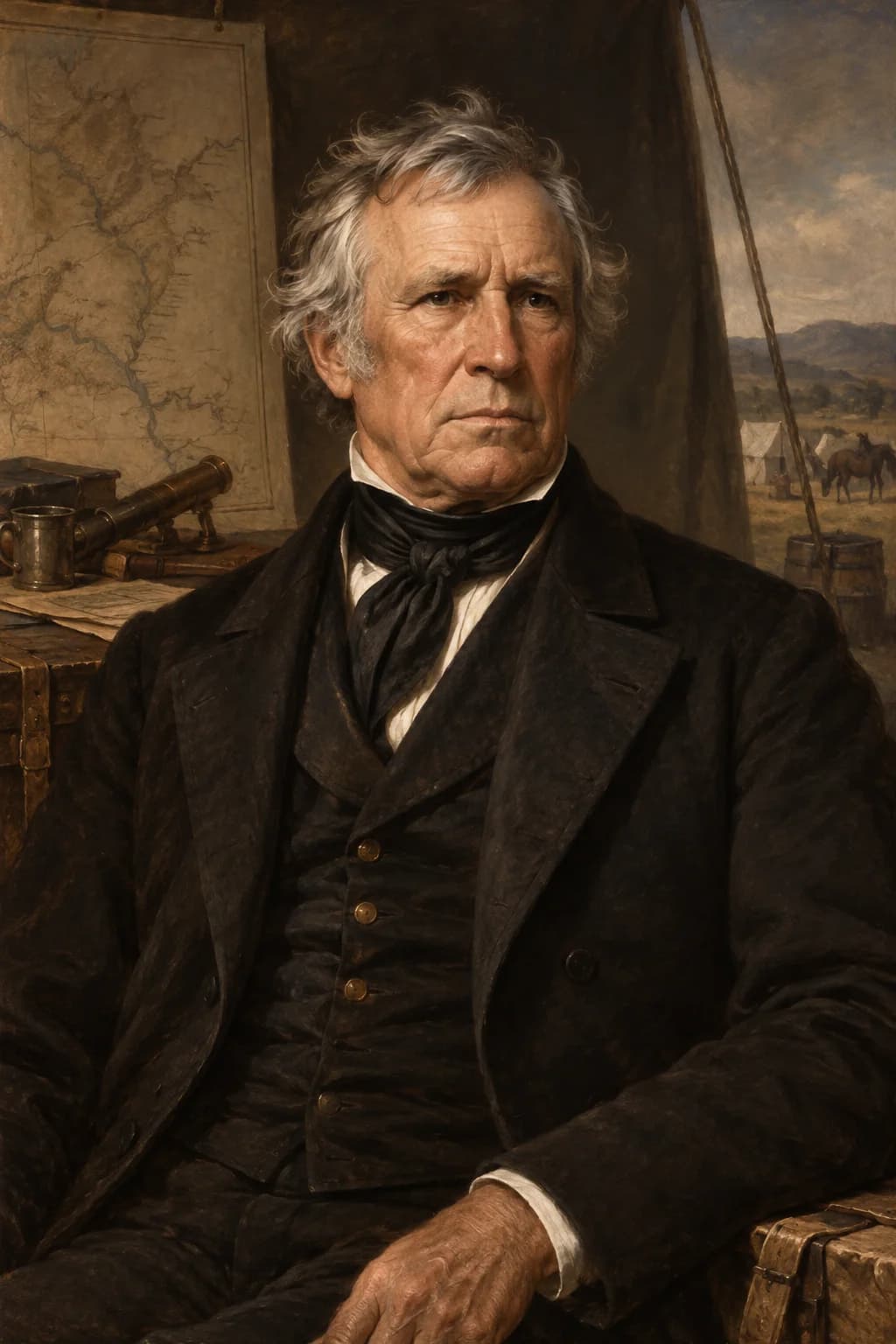
AI-generated portrait of Zachary Taylor in military uniform
AI-assisted historical reconstruction

An illustrative reconstruction based on historical context. It is not a photograph or documentary likeness. Image policy Attribution

Quick answer

Zachary Taylor was the 12th President of the United States and a Mexican-American War general. His biography includes frontier service, victories at Palo Alto, Monterrey and Buena Vista, the slavery crisis and his death in 1850.

Born
1784 CE
Died
1850 CE
Role
12th President of the United States
Years
1784-1850 CE
Facts

Zachary Taylor timeline facts

Selected specifics from this profile's life story.

1784
Frontier childhood

Zachary Taylor was born in Virginia in 1784 and raised in Kentucky, where frontier life shaped the practical soldier later known as Old Rough and Ready.

1840s
Rising reputation

Taylor became nationally famous when the United States went to war with Mexico in 1846 and his army won early victories near the Rio Grande.

1849–1850
Presidential challenges

As president, Taylor urged California and New Mexico toward statehood without first organising them as slave territories, angering many southern politicians.

Post-1850
Legacy of leadership

Taylor's legacy rests on military fame, an unexpectedly firm Unionist presidency and the unanswered question of how he might have handled the slavery crisis.

Life Journey

Old Rough and Ready, war fame, and a presidency cut short

Follow the story in a more continuous narrative, with a reading mode that matches how much depth you want.

Complete chronology

1784

Frontier childhood

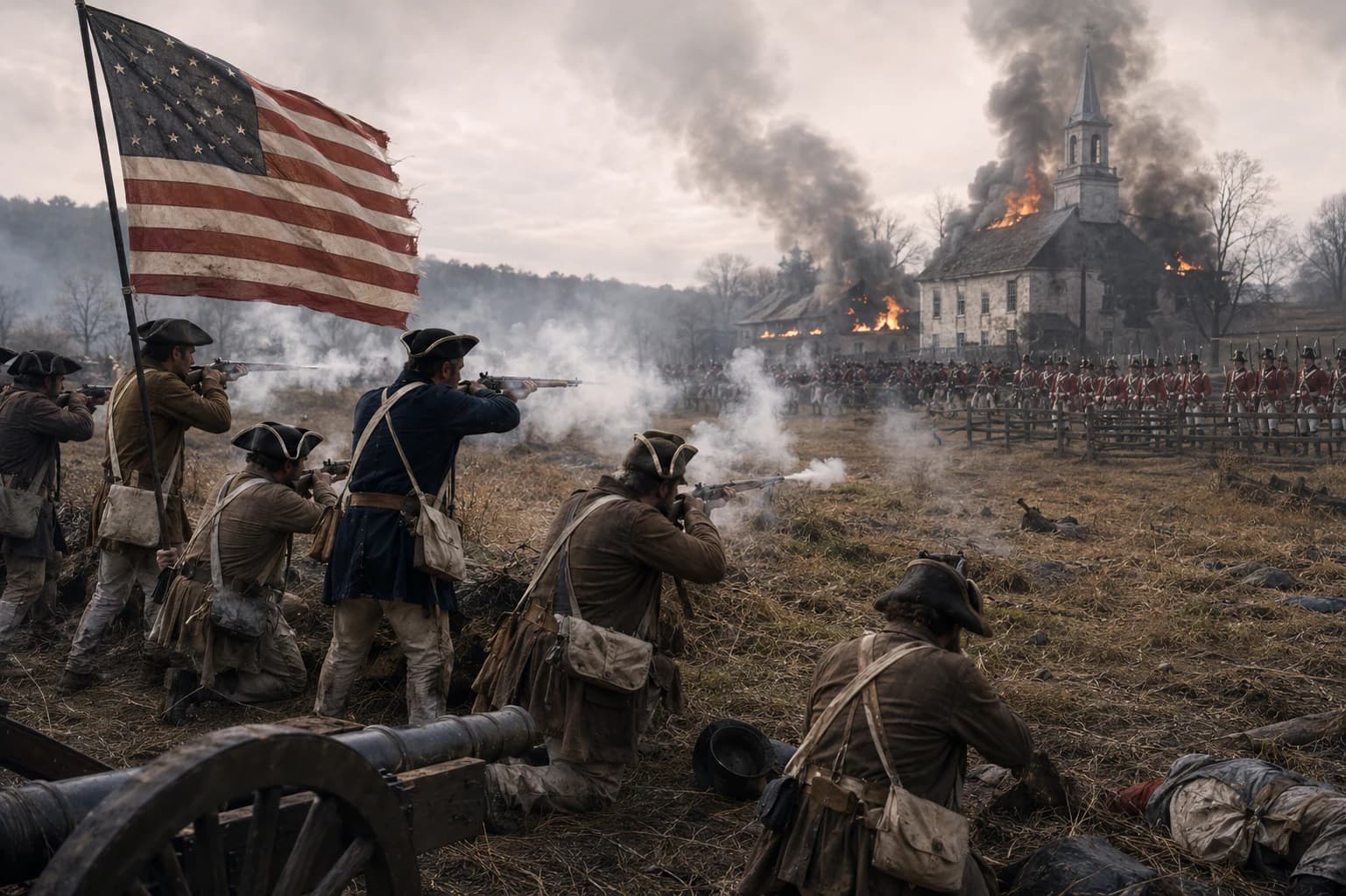
Taylor was born into a Virginia family that moved west to Kentucky when the American republic was still young and expansion was reshaping its borders. His upbringing was not poor, but it was rougher and more practical than the world of eastern political polish. The Taylors became substantial landholders, and Zachary grew up in a slaveholding frontier society where military service, land, Indigenous dispossession and national growth were tightly connected. He received little formal education and never became an elegant speaker. His authority came instead from endurance, plain manners and a willingness to share hardship with soldiers, qualities that later made his nickname politically valuable.
1808

Military entry

Taylor entered the army as tensions with Britain and Native nations sharpened across the frontier. His early career involved garrisons, supply problems, disease, rough roads and conflicts that rarely resembled the tidy battles imagined in patriotic memory. During the War of 1812, his defence of Fort Harrison against Native forces brought recognition and promotion. He learned command in isolated posts where discipline depended on trust as much as ceremony. Taylor was not a theorist of war. He was a professional regular officer whose habits were formed by distance, scarcity and the practical needs of men in the field.

1810s–1830s

Frontier conflicts

For much of his career, Taylor operated in the zones where federal policy, settler ambition and Native resistance collided. He served during the Black Hawk War and became especially associated with the Second Seminole War in Florida, where the fighting was brutal, difficult and morally entangled with forced removal. His victory at Lake Okeechobee in 1837 increased his reputation, though the war itself exposed the cost of expansion. Taylor's soldiers respected his informality, old clothes and calm under pressure. The public image of Old Rough and Ready was not manufactured from nothing; it grew from decades of service in hard conditions.

1840s

Rising reputation

President James K. Polk ordered Taylor to the disputed Texas border, where the movement of U.S. troops helped trigger the Mexican-American War. Taylor won at Palo Alto and Resaca de la Palma in May 1846, victories that made him a national name almost overnight. He then advanced into northern Mexico, becoming the face of American success before Winfield Scott's campaign to Mexico City took centre stage. Taylor's appeal lay partly in contrast: he looked plain, spoke plainly and seemed uninterested in political calculation. In a republic suspicious of professional politicians, that image was powerful.

1846–1848

War achievements

Taylor's capture of Monterrey in 1846 was controversial because he granted the Mexican defenders an armistice that Polk considered too lenient. At Buena Vista in February 1847, heavily outnumbered American forces under Taylor resisted Santa Anna's army in a battle that became central to his legend. The victory did not end the war, but it made Taylor politically irresistible. At the same time, the territory gained from Mexico reopened the deepest question in American politics: would slavery expand westward? Taylor himself enslaved people and owned plantations, yet his later presidency would not follow the most aggressive southern line. That tension made him more complicated than his campaign image.

1848

Presidential election

Taylor had never held elected office and had shown limited interest in party doctrine, but that was part of his attraction. The Whig Party had struggled to unite northern and southern voters around economic policy while slavery grew more explosive. A victorious general allowed the party to campaign on character, patriotism and ambiguity. Taylor defeated Democrat Lewis Cass and former president Martin Van Buren, who ran as the Free Soil candidate. His election showed the power of military fame, but it also placed an inexperienced politician in office just as the Mexican Cession forced decisions that ambiguity could no longer postpone.

1849–1850

Presidential challenges

Taylor's brief presidency was dominated by the territorial crisis after the Mexican-American War. Rather than support a prolonged territorial stage in which slavery might be fought over county by county, he encouraged California and New Mexico to apply directly for statehood. California's constitution prohibited slavery, infuriating pro-slavery southerners who expected access to lands won partly by southern blood and money. Taylor, though a slaveholder, took a nationalist line. He threatened to enforce federal law against secessionist resistance and showed little patience for congressional bargaining. Henry Clay's compromise efforts were still unfolding when Taylor's health failed.

1850

Sudden death

Taylor fell ill after attending Fourth of July ceremonies in Washington and died on 9 July 1850. Contemporary accounts blamed a digestive illness, and later rumours of poisoning were investigated in the twentieth century without supporting evidence. His death immediately changed the politics of compromise. Vice President Millard Fillmore was more sympathetic to Clay's settlement, which admitted California as a free state, strengthened the Fugitive Slave Act and organised other territories without immediate restriction on slavery. Had Taylor lived, the path might have been different, though not necessarily peaceful. His death removed a stubborn nationalist at a critical moment.

Post-1850

Legacy of leadership

Taylor is often remembered as a brief president between larger crises, but his life reveals several important American patterns. He was a soldier of expansion who became president because military victory could be converted into democratic legitimacy. He was a slaveholder who nevertheless resisted the most aggressive pro-slavery territorial demands when he believed they threatened the Union. He was politically inexperienced, yet not as passive as his enemies hoped. His presidency was too short to resolve the crisis that led toward civil war, but long enough to show that sectional identity did not always predict policy. Zachary Taylor matters because his unfinished administration sits at the edge of the 1850s, when compromise, coercion and Union all began to change meaning.

Continue in context

Connected stories

Move from the profile into the wider events and settings this figure belongs to.

American Presidents lineage
Lineage47 presidents
American Presidents
1789 CE–present

The succession of American presidents from George Washington to today.

View lineage
Tertiary paths

Content note

This profile is written for educational use and connects to related Stories of History pages. The main portrait is an AI-assisted historical reconstruction, included as an illustrative aid rather than documentary evidence. Image policy Image attribution

References

Sources & Further Reading

Reliable reference works, archives and reading paths connected to this profile.

Further reading

  1. Encyclopaedia Britannica, Search results for Zachary Taylor,” accessed June 2026.Open source
  2. WorldCat, Books and library holdings for Zachary Taylor,” accessed June 2026.Open source

Primary sources

  1. Library of Congress, Search results for Zachary Taylor,” accessed June 2026.Open source

Reviewed claim sources

Loading reviewed claim sources...

A weekly route through history

Find out first about the latest published stories, feature notes and occasional Premium offers in one weekly email.