People

Millard Fillmore

Millard Fillmore was the 13th U.S. President, serving from 1850 to 1853 after Zachary Taylor's death. He backed the Compromise of 1850, enforced the Fugitive Slave Act, and sent the Perry expedition to Japan.

Born
1800 CE
Died
1874 CE
Role
13th President of the United States

13th President of the United States (1800–1874)

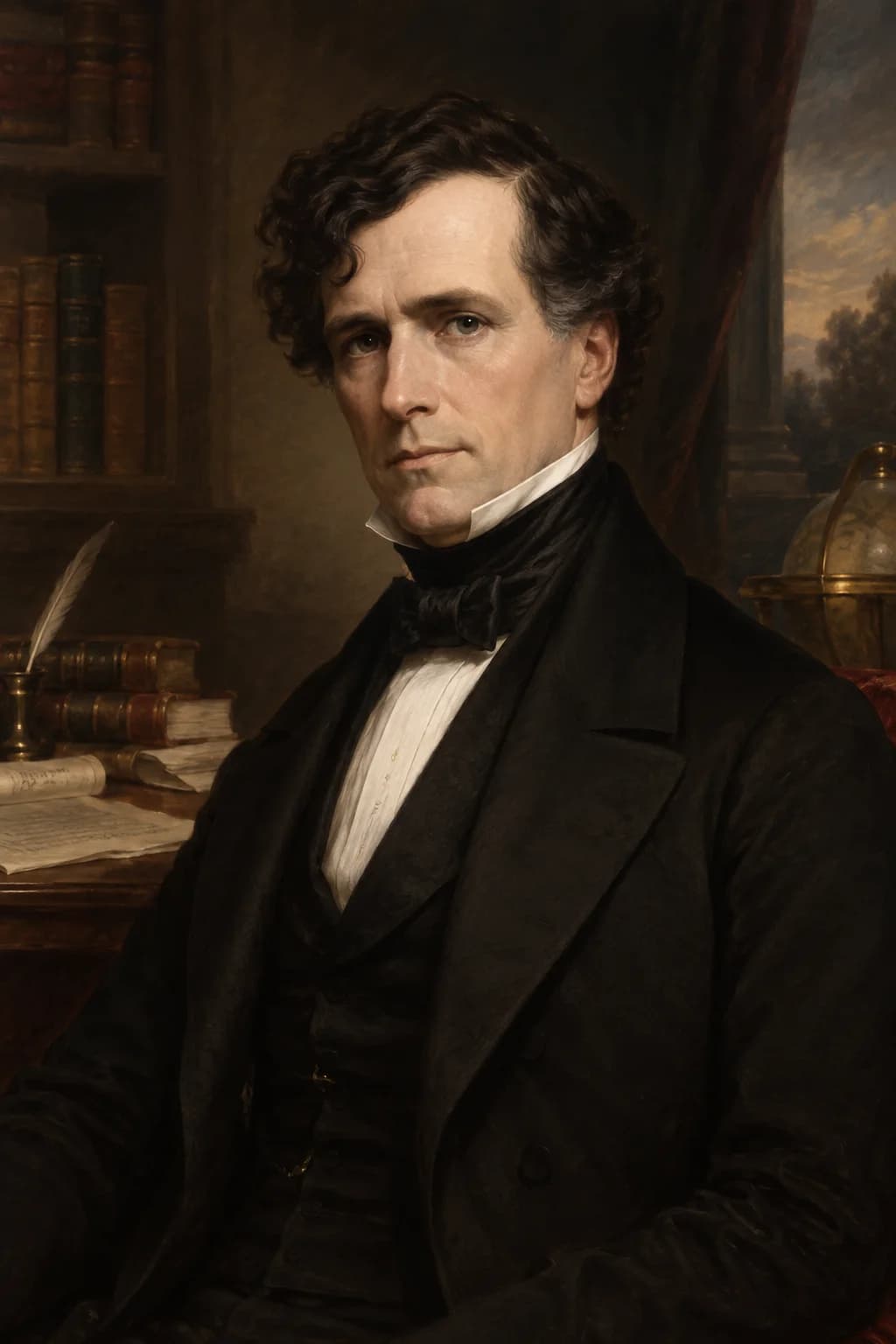
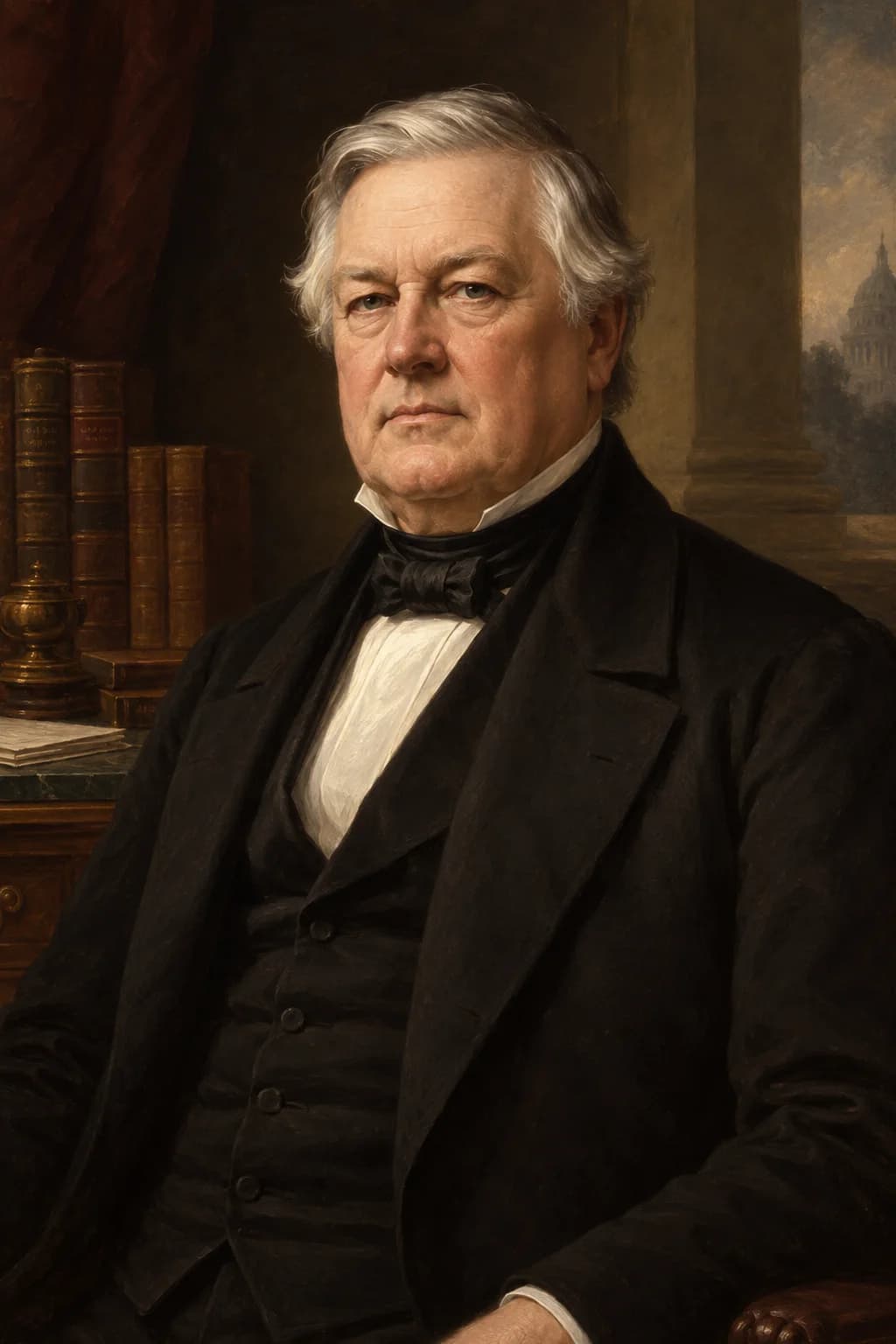
AI-generated portrait of Millard Fillmore in formal presidential attire
AI-assisted historical reconstruction

An illustrative reconstruction based on historical context. It is not a photograph or documentary likeness. Image policy Attribution

Quick answer

Millard Fillmore was the 13th U.S. President, serving from 1850 to 1853 after Zachary Taylor's death. He backed the Compromise of 1850, enforced the Fugitive Slave Act, and sent the Perry expedition to Japan.

Born
1800 CE
Died
1874 CE
Role
13th President of the United States
Years
1800-1874 CE
Facts

Millard Fillmore timeline facts

Selected specifics from this profile's life story.

1800–1819
Frontier upbringing

Millard Fillmore was born in 1800 in rural New York, growing up in poverty and building his future through self-education.

1830s–1848
National prominence

In Congress, Fillmore worked on tariff and financial policy, gaining enough national standing to become a vice-presidential choice in 1848.

1850–1853
Compromise measures

The Compromise of 1850 admitted California as free, settled territorial questions, and imposed a harsh Fugitive Slave Act that stained Fillmore's legacy.

1856–1874
Later life and legacy

Fillmore spent his later life in Buffalo civic work, while history remembered him as a president whose compromises exposed the limits of moderation.

Life Journey

A path through compromise, conflict and uneasy balance

Follow the story in a more continuous narrative, with a reading mode that matches how much depth you want.

Complete chronology

1800–1819

Frontier upbringing

Millard Fillmore's early life was harsher than the polished portraits of nineteenth-century presidents suggest. Born in a log cabin in the Finger Lakes region of New York, he had little formal schooling and was apprenticed as a teenager in conditions he later remembered bitterly. Books became a means of escape and self-fashioning. Like several leaders of the era, he made respectability through discipline, reading and law rather than inherited privilege. This origin shaped his public image: steady, self-made, cautious and practical. It also helps explain his lifelong attraction to order. Fillmore did not come to politics as a crusader. He came as a man who believed institutions, education and compromise could hold ambition and conflict within bounds.
1819–1823

Legal training

Fillmore's legal training was practical, local and transformative. He studied under Judge Walter Wood, married Abigail Powers, who had encouraged his education, and established himself as a lawyer in East Aurora and then Buffalo. Law offered more than income. It provided public credibility, access to clients, familiarity with property and commercial disputes, and a path into civic leadership. Buffalo was growing rapidly, tied to canals, trade and western expansion, and Fillmore's career developed with that world. He became a figure of order in a changing region: not brilliant in the theatrical sense, but reliable, diligent and attentive to procedure. Those traits would carry him upward, though they would later seem painfully insufficient in a nation tearing over slavery.

1820s–1830s

Entry into politics

Fillmore's first political home was the Anti-Masonic movement, a powerful force in western New York after the disappearance of William Morgan. The movement mixed suspicion of secret elites with reform energy, and it helped train a generation of organisers who later entered the Whig Party. Fillmore served in the New York Assembly and then Congress, where he developed a reputation for committee work and party reliability. He was aligned with Henry Clay's American System: tariffs, internal improvements and economic development guided by a constructive federal role. His politics were moderate, unionist and institutional. He was not a charismatic mass leader. His value lay in steadiness, which was useful in ordinary politics and dangerous when ordinary politics stopped being enough.

1830s–1848

National prominence

Fillmore's congressional career was serious if not spectacular. As chairman of the House Ways and Means Committee, he helped shape tariff policy and public finance, areas central to Whig economic thought. He also lost and won offices in New York, including an unsuccessful gubernatorial race and service as state comptroller. By 1848, the Whigs needed a ticket that balanced region and faction. Zachary Taylor, a Louisiana slaveholder and Mexican War hero, gave the party military popularity; Fillmore, a northern Whig from New York, reassured another wing. The pairing was politically useful but personally thin. Taylor and Fillmore were not close, and the vice president entered office with limited influence over an administration soon consumed by sectional crisis.

1849–1850

Vice presidency

The vice presidency placed Fillmore in the Senate just as the United States confronted the consequences of victory in the Mexican-American War. California sought admission as a free state, New Mexico and Utah raised territorial questions, Texas claimed disputed boundaries, Washington's slave trade was under attack, and southern politicians demanded stronger protection for slavery. Henry Clay proposed a package of compromises, while Daniel Webster, John C. Calhoun and younger figures such as Stephen Douglas fought over union and sectional power. Fillmore's role was formally limited, but he watched the crisis closely. Taylor resisted parts of the compromise and seemed willing to confront southern threats directly. His death in July 1850 abruptly placed Fillmore in command of a different course.

1850

Assuming presidency

When Taylor died, Fillmore inherited not only the presidency but a sectional emergency. He replaced Taylor's cabinet and supported the compromise measures moving through Congress. His instinct was preservation. Like many unionists, he believed the immediate danger was disunion and that concession on several fronts could cool the crisis. This was not cowardice in his own mind; it was constitutional duty. But the moral centre of the conflict was slavery, and compromise with slavery carried a cost that later generations would judge severely. Fillmore's presidency therefore began with the central dilemma of the 1850s: how far could leaders go to preserve the Union before preservation itself became complicity?

1850–1853

Compromise measures

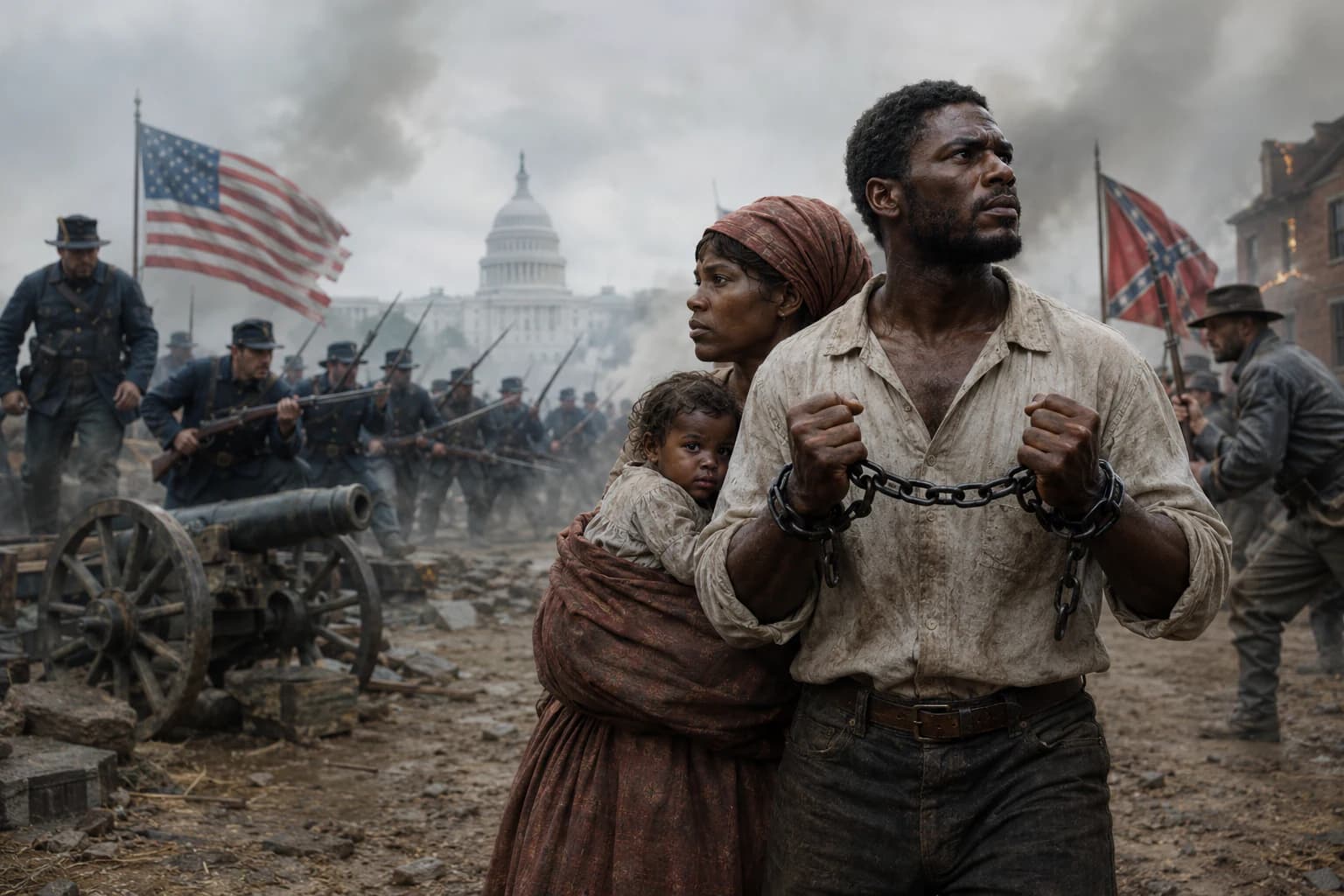
The Compromise of 1850 was not one law but a cluster of measures. California entered the Union as a free state; New Mexico and Utah were organised without immediate restrictions on slavery; Texas accepted compensation for boundary claims; the slave trade, though not slavery itself, ended in Washington, D.C.; and a new Fugitive Slave Act gave federal power to the recovery of escaped enslaved people. Fillmore signed and enforced the package. The compromise may have delayed secession, but the Fugitive Slave Act radicalised northern opinion by forcing free communities to participate in slavery's reach. Black Americans faced kidnapping, commissioners were financially incentivised toward return decisions, and resistance cases became national dramas. Fillmore believed he was enforcing law. Many citizens saw the law reveal the brutality of the system it protected.

1852–1856

Political decline

Fillmore did not receive the Whig nomination in 1852. The party was fragmenting under the pressure of slavery, sectional resentment and the inability of old compromises to satisfy either side. After leaving office he travelled abroad, returned to a changed political landscape, and accepted the 1856 presidential nomination of the American Party, commonly known as the Know Nothings. Fillmore tried to present himself as a Union candidate above sectional extremes, but the movement's nativist hostility to immigrants and Catholics has become an unavoidable part of his later reputation. His campaign finished third. By then the Whigs were effectively dead, the Republicans were rising, and the old centre in which Fillmore had lived politically was disappearing.

1856–1874

Later life and legacy

Fillmore remained active in Buffalo's civic life, supporting education, charities and public institutions, and he lived long enough to see the Civil War prove that the crisis of 1850 had only been postponed. He supported the Union, though he was critical of Abraham Lincoln's administration in ways that reflected his old conservative unionism. His legacy is uncomfortable because his virtues were real but inadequate. He was self-made, diligent, public-spirited and serious about law. Yet the central law he enforced helped extend slavery's coercive power into free states. He also authorised the expedition led by Commodore Matthew Perry to Japan, a major step in U.S. Pacific expansion. Still, his historical meaning rests on the Compromise of 1850. Fillmore shows how moderation can become morally compromised when the middle ground is built across human bondage.

Continue in context

Connected stories

Move from the profile into the wider events and settings this figure belongs to.

American Presidents lineage
Lineage47 presidents
American Presidents
1789 CE–present

The succession of American presidents from George Washington to today.

View lineage
Tertiary paths

Content note

This profile is written for educational use and connects to related Stories of History pages. The main portrait is an AI-assisted historical reconstruction, included as an illustrative aid rather than documentary evidence. Image policy Image attribution

References

Sources & Further Reading

Reliable reference works, archives and reading paths connected to this profile.

Further reading

  1. Encyclopaedia Britannica, Search results for Millard Fillmore,” accessed June 2026.Open source
  2. WorldCat, Books and library holdings for Millard Fillmore,” accessed June 2026.Open source

Primary sources

  1. Library of Congress, Search results for Millard Fillmore,” accessed June 2026.Open source

Reviewed claim sources

Loading reviewed claim sources...

A weekly route through history

Find out first about the latest published stories, feature notes and occasional Premium offers in one weekly email.