People

Franklin Pierce

Franklin Pierce was the 14th U.S. President. His support for the Kansas-Nebraska Act, pro-Southern policies, and weak response to Bleeding Kansas deepened the crisis over slavery before the Civil War.

Born
1804 CE
Died
1869 CE
Role
14th President of the United States

14th President of the United States (1804–1869)

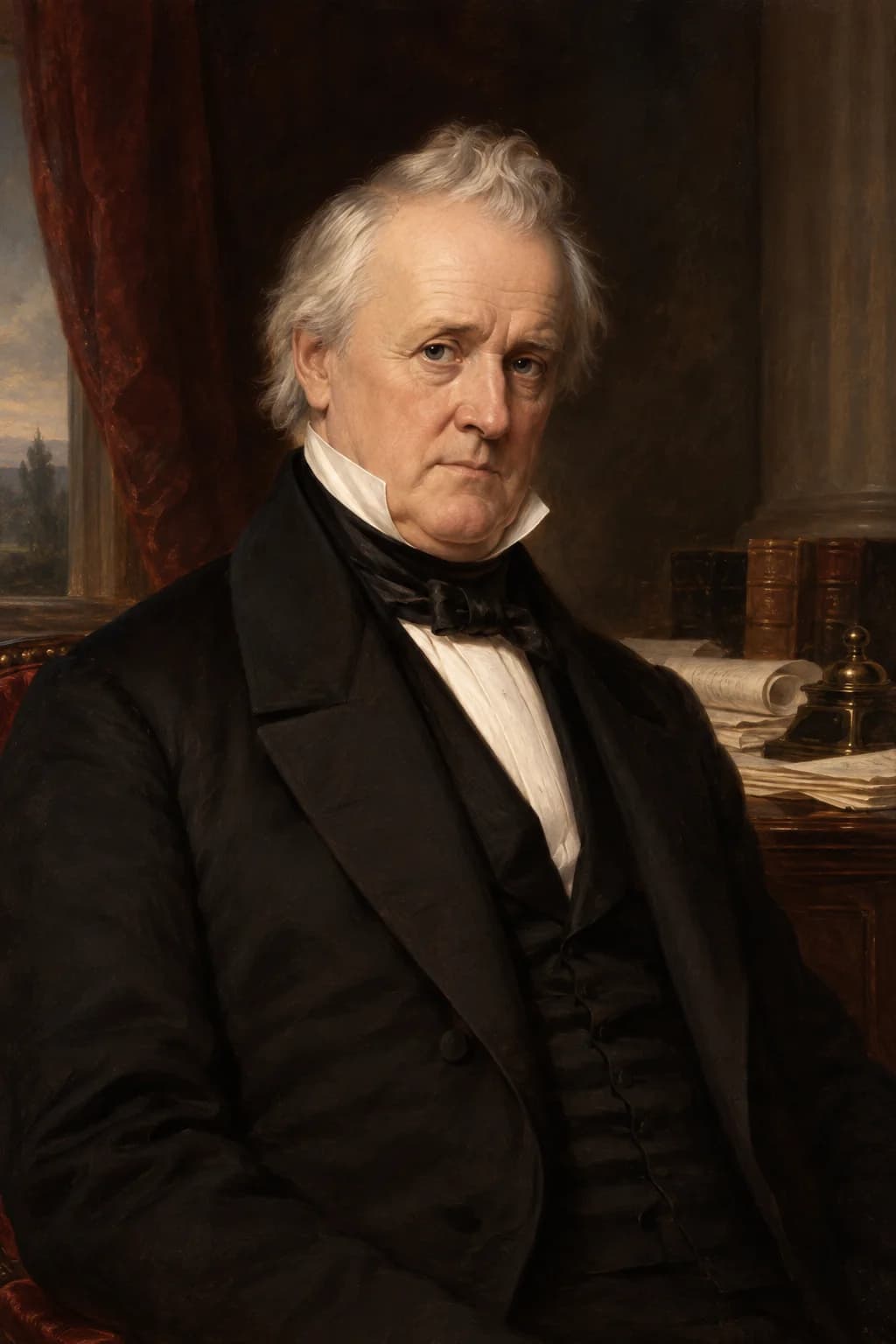
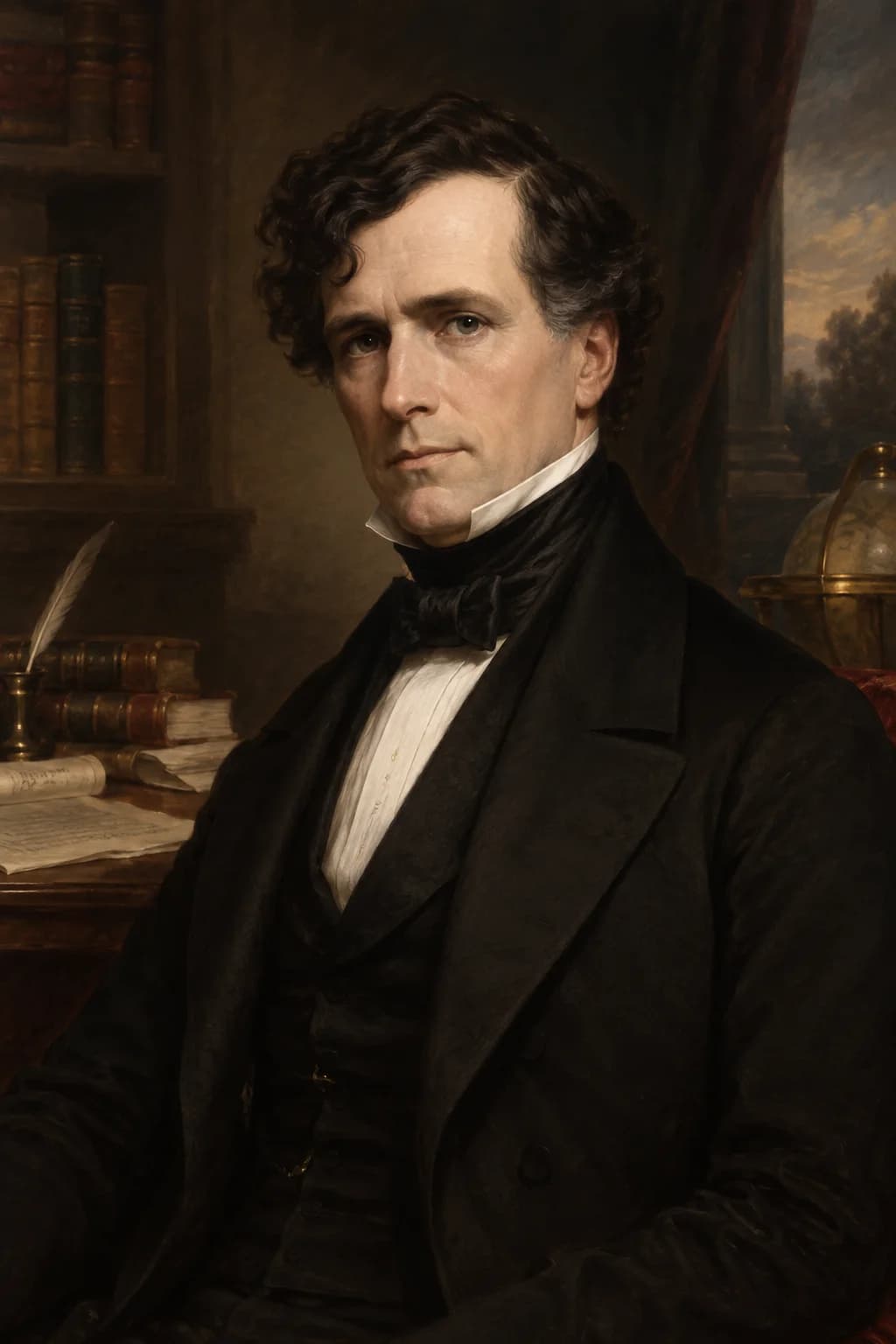
AI-generated portrait of Franklin Pierce in formal presidential attire
AI-assisted historical reconstruction

An illustrative reconstruction based on historical context. It is not a photograph or documentary likeness. Image policy Attribution

Quick answer

Franklin Pierce was the 14th U.S. President. His support for the Kansas-Nebraska Act, pro-Southern policies, and weak response to Bleeding Kansas deepened the crisis over slavery before the Civil War.

Born
1804 CE
Died
1869 CE
Role
14th President of the United States
Years
1804-1869 CE
Facts

Franklin Pierce timeline facts

Selected specifics from this profile's life story.

1804
New England roots

Franklin Pierce was born in New Hampshire in 1804 into a political family, inheriting Union loyalty, Democratic instincts, and the confidence to seek public office.

1846–1848
Military service

Pierce served as a brigadier general in the Mexican-American War, gaining patriotic credentials despite an uneven and injury-marked military record.

1854–1856
Kansas–Nebraska crisis

Pierce's support for the Kansas-Nebraska Act destroyed the Missouri Compromise line and helped turn Kansas into a battleground over slavery.

1857–1869
Final years and legacy

After leaving office, Pierce opposed many Republican wartime policies and died in 1869 remembered as a president who hastened the road to Civil War.

Life Journey

A presidency caught in the storm of division

Follow the story in a more continuous narrative, with a reading mode that matches how much depth you want.

Complete chronology

1804

New England roots

Franklin Pierce grew up in Hillsborough, New Hampshire, the son of Benjamin Pierce, a Revolutionary War veteran who became governor. Politics was part of the household atmosphere, not a distant profession. The young Pierce inherited a belief in public service, party loyalty, and the importance of the Union as the great achievement of the Revolutionary generation. He also belonged to a northern Democratic culture that valued compromise with the South as a way to preserve national harmony. That instinct would become fatal to his reputation. Pierce's tragedy was not that he wanted disunion. It was that he misunderstood how deeply slavery had already poisoned the compromises meant to contain it. His early life gave him the habits of a party man and unionist, but not the moral imagination needed for the crisis he would face.
1820s

Education and law

Pierce attended Bowdoin College, where his classmates included Nathaniel Hawthorne, a lifelong friend who later wrote a campaign biography for him. He was not remembered as the most disciplined student, but he developed social ease, loyalty, and a talent for making people feel personally valued. Law gave those qualities a professional form. As an attorney, Pierce learned to speak fluently, read audiences, and convert warmth into trust. These were real political gifts. In an age when public men were judged through speeches, letters, dinners, and personal networks, Pierce's affability mattered. But charm could also conceal thinness. His education and legal career prepared him to rise within a party system. They did not prepare him to rethink that system when its assumptions collapsed.

1829–1842

Early political rise

Pierce's early political rise was swift. He served in the New Hampshire legislature, became Speaker, entered the U.S. House of Representatives, and then the Senate while still a young man. He aligned with Andrew Jackson's Democratic Party, supporting limited federal power, party discipline, and suspicion of reform movements that seemed to threaten national cohesion. On slavery, Pierce was a northern Democrat willing to accommodate southern demands in the name of preserving the Union. That position was common in his party, but it carried increasing moral and political cost. He was not a great legislative architect. His value lay in reliability: he could be trusted by party allies, including southern Democrats, not to disturb the balance they prized. That trust later made him presidential material and historically disastrous.

1846–1848

Military service

The Mexican-American War gave Pierce a chance to add military service to his political resume. He accepted a commission and rose to brigadier general, joining a conflict that expanded U.S. territory and intensified the slavery debate by raising the question of whether slavery would enter lands taken from Mexico. Pierce's own battlefield performance was mixed. Injury and mishaps made him vulnerable to later mockery, yet simply serving mattered in nineteenth-century politics. War credentials could imply courage, nationalism, and masculine authority even when tactical achievement was limited. Pierce returned with stronger public standing and deeper attachment to expansionist Democratic politics. The irony is sharp: the war that helped make him nationally viable also produced the territorial questions that would later consume his presidency.

1852

Unexpected nomination

The Democratic convention of 1852 deadlocked among better-known contenders, then turned to Pierce as a candidate who offended fewer factions. That was his political strength: he was northern, personally likable, loyal to the party, and trusted by the South. He ran after the Compromise of 1850, when many politicians hoped the slavery question had been settled by law and exhaustion. Pierce campaigned as a unifying figure, and the Whig Party's weakness helped him win decisively. Yet the very reasons for his nomination reveal the danger. He was selected because he seemed safe, not because he had a profound answer to the nation's central problem. The United States did not need a pleasant custodian of old formulas. It needed leadership equal to a sectional crisis. Pierce entered office with the wrong kind of confidence.

1853–1854

Presidential agenda

Pierce's presidency began under a shadow. Just weeks before his inauguration, his only surviving child was killed in a train accident witnessed by Pierce and his wife, Jane. The grief was crushing and shaped the emotional atmosphere of his administration. Politically, he tried to hold together the Democratic Party and prevent sectional conflict by enforcing existing compromise. In practice, that meant leaning toward policies acceptable to southern slaveholding interests. His administration supported expansionist schemes, including interest in Cuba reflected in the Ostend Manifesto, and treated anti-slavery agitation as a threat to national peace. Pierce believed he was defending the Union from fanaticism. But by treating slavery's critics as the chief danger while accommodating slavery's expansion, he helped convince many northerners that the federal government had become an instrument of the Slave Power.

1854–1856

Kansas–Nebraska crisis

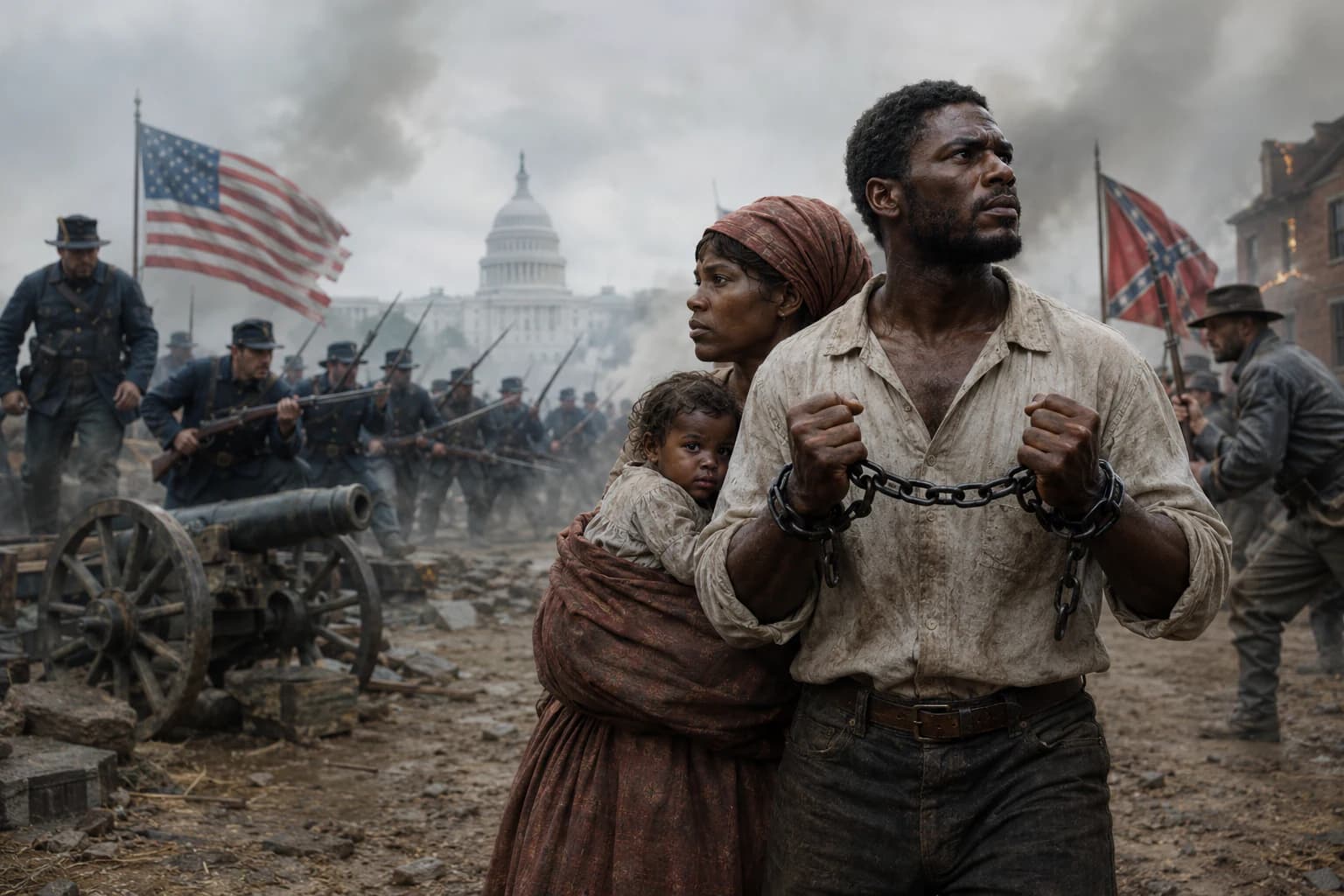
The Kansas-Nebraska Act of 1854 became the central disaster of Pierce's presidency. Sponsored by Stephen A. Douglas and supported by Pierce, it organized western territories under the principle of popular sovereignty, allowing settlers to decide whether slavery would be permitted. To do so, it effectively repealed the Missouri Compromise restriction on slavery north of 36°30'. Pierce and Douglas presented local choice as a way to remove the issue from Congress. Instead, it nationalized the conflict. Pro-slavery and anti-slavery settlers poured into Kansas, rival governments claimed legitimacy, election fraud inflamed tensions, and violence gave the territory the name Bleeding Kansas. Pierce's administration recognized a pro-slavery territorial government despite serious irregularities, further damaging northern trust. The act shattered the Whigs, helped give birth to the Republican Party, and made compromise look like surrender.

1856

Political collapse

Pierce's collapse was unusually stark. Presidents often lose popularity, but sitting presidents are rarely rejected by their own party when eligible to run again. In 1856, Democrats turned instead to James Buchanan, who had been abroad as minister to Britain and could present himself as untouched by Kansas-Nebraska's worst fallout. Pierce's failure reflected more than bad luck. He had mistaken party unity for national healing and enforcement for legitimacy. Northern voters increasingly viewed him as submissive to slaveholding power; southern Democrats no longer needed him if he could not win. His personal qualities, once strengths, now seemed irrelevant. Pleasant manners could not quiet armed conflict in Kansas or restore trust in the political system. His presidency ended not with a single scandal, but with the broader judgment that he had made the central crisis worse.

1857–1869

Final years and legacy

Pierce's later years were lonely and politically bleak. He criticized aspects of Abraham Lincoln's wartime leadership and remained attached to a Democratic constitutionalism that many northerners now associated with appeasement of slavery. The Civil War exposed the failure of the compromises Pierce had tried to preserve. He had not wanted the Union to collapse, but his presidency helped destroy confidence in peaceful settlement by backing policies that reopened the slavery question with explosive force. Personal sorrow, ill health, and alcohol shadowed his final years. He died in 1869, after the world he had tried to hold together had been remade by war, emancipation, and Reconstruction. Franklin Pierce matters not because he was uniquely malicious, but because he shows how conventional leadership can become catastrophic when a political system's central compromise has become morally and practically impossible.

Continue in context

Connected stories

Move from the profile into the wider events and settings this figure belongs to.

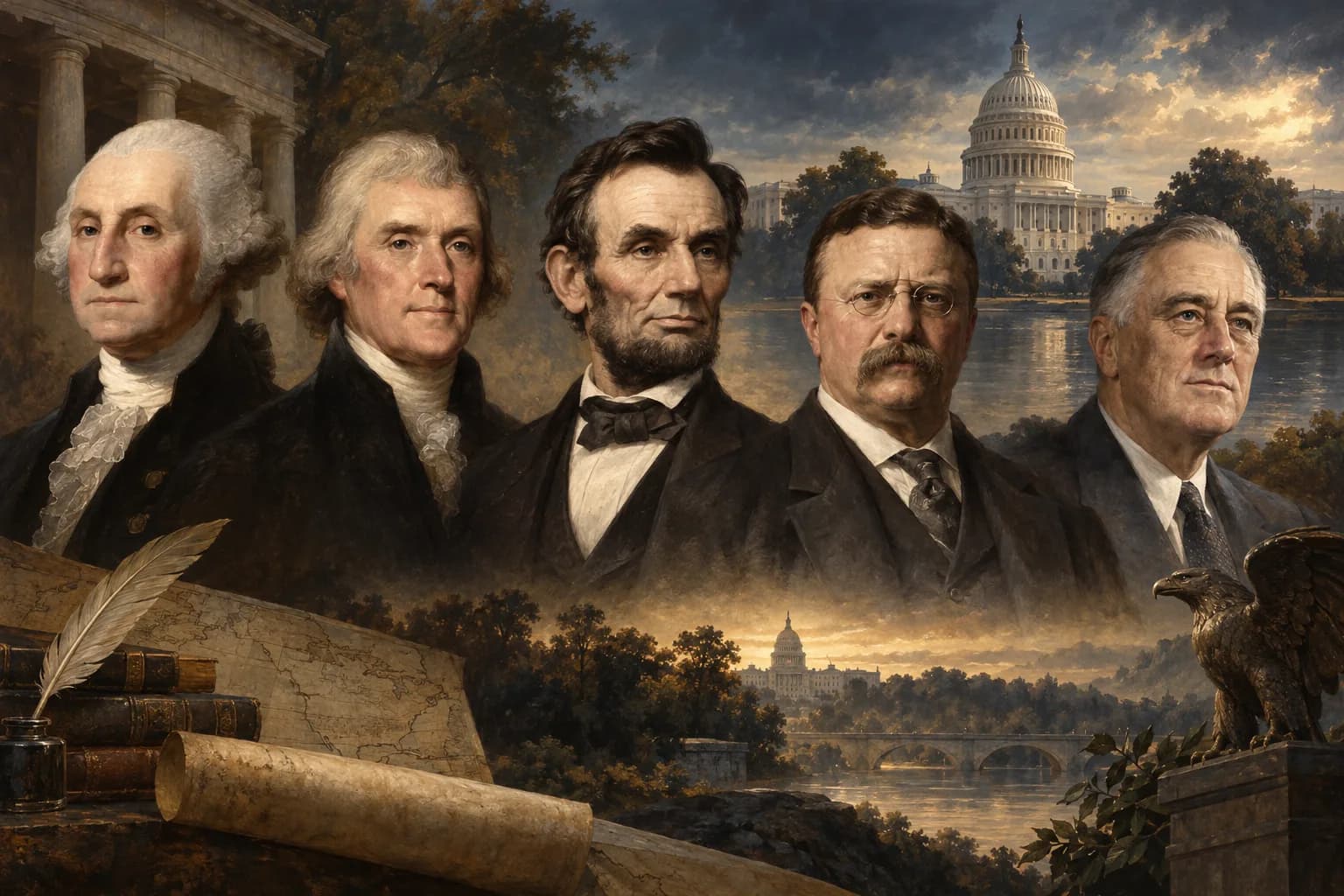
American Presidents lineage
Lineage47 presidents
American Presidents
1789 CE–present

The succession of American presidents from George Washington to today.

View lineage
Tertiary paths

Content note

This profile is written for educational use and connects to related Stories of History pages. The main portrait is an AI-assisted historical reconstruction, included as an illustrative aid rather than documentary evidence. Image policy Image attribution

References

Sources & Further Reading

Reliable reference works, archives and reading paths connected to this profile.

Further reading

  1. Encyclopaedia Britannica, Search results for Franklin Pierce,” accessed June 2026.Open source
  2. WorldCat, Books and library holdings for Franklin Pierce,” accessed June 2026.Open source

Primary sources

  1. Library of Congress, Search results for Franklin Pierce,” accessed June 2026.Open source

Reviewed claim sources

Loading reviewed claim sources...

A weekly route through history

Find out first about the latest published stories, feature notes and occasional Premium offers in one weekly email.