People

John Tyler

John Tyler was the 10th U.S. President, the first vice president to become president after a death in office and a key figure in Texas annexation.

Born
1790 CE
Died
1862 CE
Role
10th President of the United States

10th President of the United States (1790–1862)

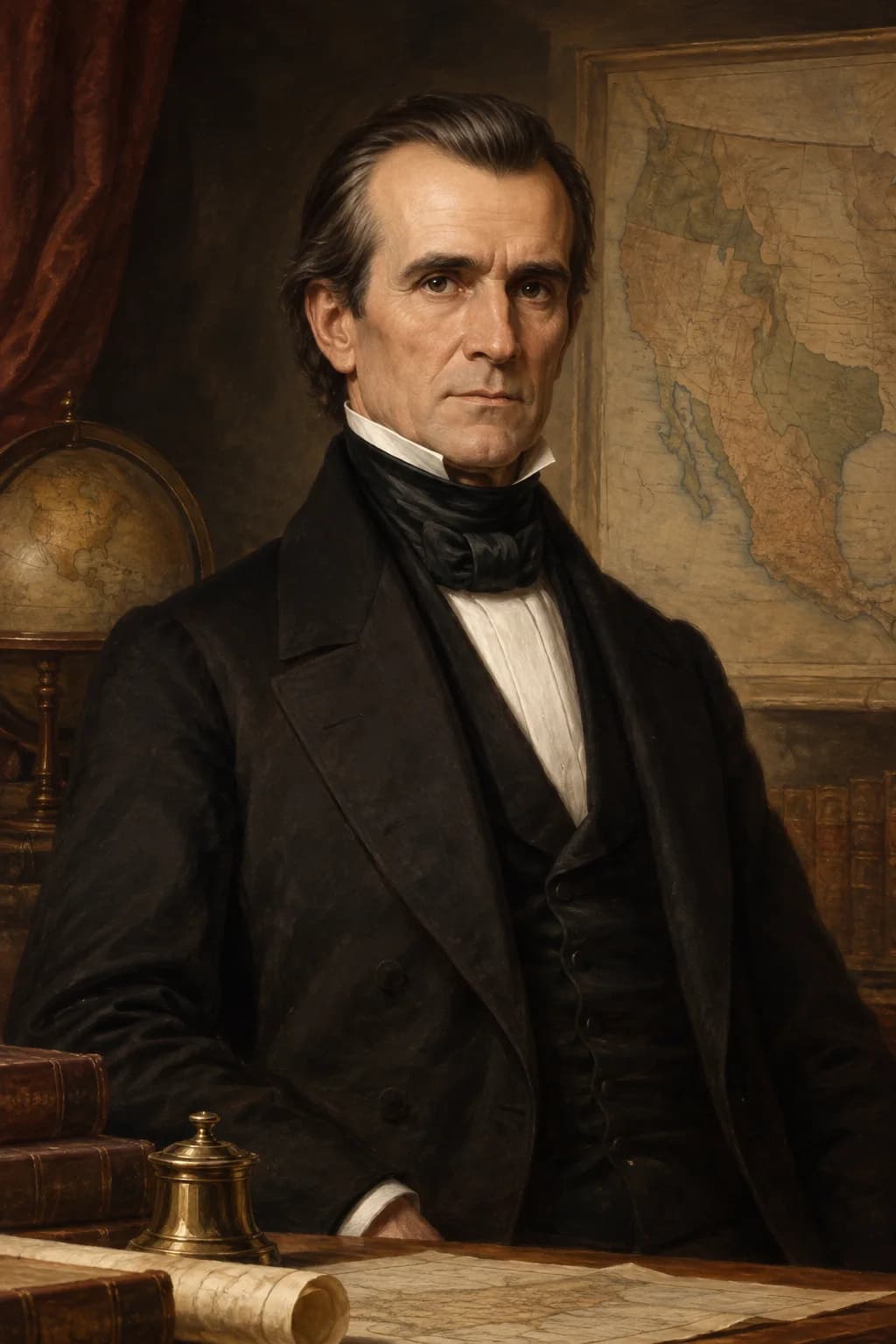
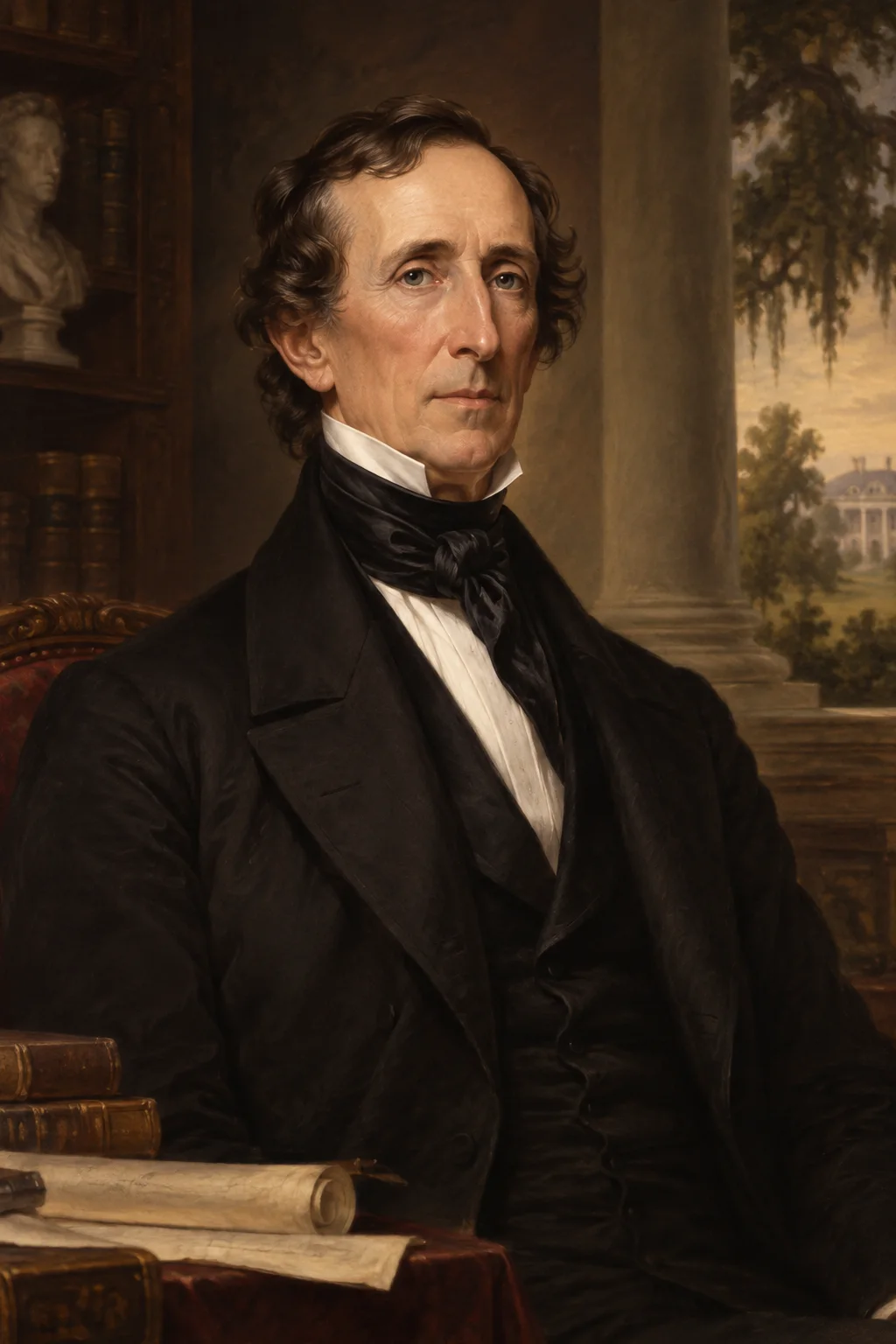
AI-generated portrait of John Tyler in formal presidential attire
AI-assisted historical reconstruction

An illustrative reconstruction based on historical context. It is not a photograph or documentary likeness. Image policy Attribution

Quick answer

John Tyler was the 10th U.S. President, the first vice president to become president after a death in office and a key figure in Texas annexation.

Born
1790 CE
Died
1862 CE
Role
10th President of the United States
Years
1790-1862 CE
Facts

John Tyler timeline facts

Selected specifics from this profile's life story.

1790–1807
Virginia upbringing

John Tyler was born in Virginia in 1790 into a slaveholding political family committed to states' rights and planter republicanism.

1841
Vice presidency

Chosen as William Henry Harrison's running mate in 1840, Tyler balanced the Whig ticket but did not share much of the party's programme.

1841–1845
Policy achievements

Tyler's major achievement was pushing Texas annexation, a decision that expanded the United States and intensified the slavery crisis.

1861–1862
Final years

Tyler died in 1862 after being elected to the Confederate Congress, the only former U.S. president buried under a rebel flag.

Life Journey

A presidency shaped by precedent, conflict and independence

Follow the story in a more continuous narrative, with a reading mode that matches how much depth you want.

Complete chronology

1790–1807

Virginia upbringing

John Tyler was born on 29 March 1790 in Charles City County, Virginia, into a world of plantations, law and public office. His father was a judge and governor, and Tyler inherited both political opportunity and the assumptions of Virginia's slaveholding elite. He grew up believing that liberty meant limited federal power, local authority and protection for property, including enslaved people. That ideology gave his career consistency, but also tied him to the deepest contradiction in American republicanism. Tyler's life would show how states' rights language could defend constitutional principle and slavery at the same time.


1807–1825

Legal and political start

Tyler entered politics young, serving in the Virginia legislature and then the U.S. House of Representatives. He opposed many nationalist policies associated with the postwar American System, including broad federal spending and expansive interpretations of constitutional power. As governor of Virginia and later U.S. senator, he presented himself as a guardian of republican limits. Yet he was not simply anti-government. He believed power should remain where Virginia planters like himself had influence. His constitutional views were sincere, but they also protected a social order built on slavery.

1825–1840

National presence

Tyler's path to the Whig Party was uneasy. He shared Democratic suspicion of banks and federal activism, but he recoiled from Andrew Jackson's forceful presidency, especially during the nullification crisis and disputes over executive authority. The Whigs were a coalition of people who opposed Jackson for different reasons, and Tyler represented its states' rights wing. This made him useful but awkward. He could help broaden a ticket, especially in the South, but he did not share the economic program of Whig leaders like Henry Clay. The contradiction was waiting to explode.

1841

Vice presidency

The Whigs nominated William Henry Harrison in 1840 and paired him with Tyler under the slogan Tippecanoe and Tyler Too. Tyler helped attract southern states' rights voters while Harrison carried the campaign's broader anti-Democratic appeal. No one expected the vice presidency to matter much. It was a balancing device, not a governing partnership. But Harrison died only a month after taking office, and a coalition built for election suddenly had to face the fact that its new president was not really a Clay Whig at all.

1841

Unexpected presidency

Harrison's death created the first presidential succession crisis in U.S. history. The Constitution said presidential powers and duties devolved on the vice president, but it was unclear whether the vice president became president or merely acted as one. Tyler moved quickly, took the oath and insisted on the full title and authority of president. Critics called him His Accidency, but he did not yield. The Tyler Precedent governed later successions until the Twenty-Fifth Amendment made the principle explicit. Whatever else one thinks of Tyler, this was a major constitutional act of nerve and clarity.

1841–1844

Party conflict

Henry Clay and congressional Whigs expected Tyler to sign their programme, especially a new national bank. Tyler vetoed bank legislation twice, arguing that it violated his constitutional principles. The party reaction was explosive. Most of his cabinet resigned, Whigs expelled him from the party, and he became a president without a reliable political home. The conflict revealed how fragile party government still was. Tyler believed he was honoring principle; Whigs believed he had betrayed the voters who elected the ticket. Both claims had force. The result was one of the strangest presidencies in American history.

1841–1845

Policy achievements

Tyler's most consequential policy was Texas annexation. The Republic of Texas had won independence from Mexico, and many southern expansionists wanted it admitted to the United States as slaveholding territory. Tyler embraced annexation after other political avenues failed, using it to build a new coalition and shape the 1844 election. The Senate rejected a treaty, but annexation moved forward by joint resolution in the final days of his presidency. The result was enormous. Texas entered the Union, relations with Mexico deteriorated, and the question of slavery's expansion became still more dangerous. Tyler succeeded, but his success helped lead toward war and sectional breakdown.

1845–1861

Later political stance

Tyler left the presidency in 1845 and returned to Virginia, but he did not disappear entirely. As sectional conflict deepened, his old states' rights commitments pulled him toward the South. In 1861 he chaired the Washington Peace Conference, a last attempt to find compromise after several states had seceded. The effort failed. When Virginia left the Union, Tyler chose his state and supported the Confederacy. This final allegiance was not an eccentric late-life reversal. It flowed from the same constitutional and sectional loyalties that had shaped his career from the beginning.

1861–1862

Final years

Tyler was elected to the Confederate House of Representatives but died on 18 January 1862 before taking his seat. The United States government did not officially mourn him in the way it mourned other former presidents. His legacy is sharply divided. He established the principle of full vice-presidential succession, defended executive independence and accomplished Texas annexation. He also advanced the expansion of slaveholding territory and ultimately sided with a rebellion against the United States. To ask why John Tyler was important is to see how constitutional precedent and moral failure can live in the same biography.

Continue in context

Connected stories

Move from the profile into the wider events and settings this figure belongs to.

American Presidents lineage
Lineage47 presidents
American Presidents
1789 CE–present

The succession of American presidents from George Washington to today.

View lineage
Tertiary paths

Content note

This profile is written for educational use and connects to related Stories of History pages. The main portrait is an AI-assisted historical reconstruction, included as an illustrative aid rather than documentary evidence. Image policy Image attribution

References

Sources & Further Reading

Reliable reference works, archives and reading paths connected to this profile.

Further reading

  1. Encyclopaedia Britannica, Search results for John Tyler,” accessed June 2026.Open source
  2. WorldCat, Books and library holdings for John Tyler,” accessed June 2026.Open source

Primary sources

  1. Library of Congress, Search results for John Tyler,” accessed June 2026.Open source

Reviewed claim sources

Loading reviewed claim sources...

A weekly route through history

Find out first about the latest published stories, feature notes and occasional Premium offers in one weekly email.