People

William Henry Harrison

William Henry Harrison was the 9th President of the United States, a frontier general and victor of Tippecanoe. He served the shortest presidency, dying in 1841 after 31 days.

Born
1773 CE
Died
1841 CE
Role
9th President of the United States

9th President of the United States (1773–1841)

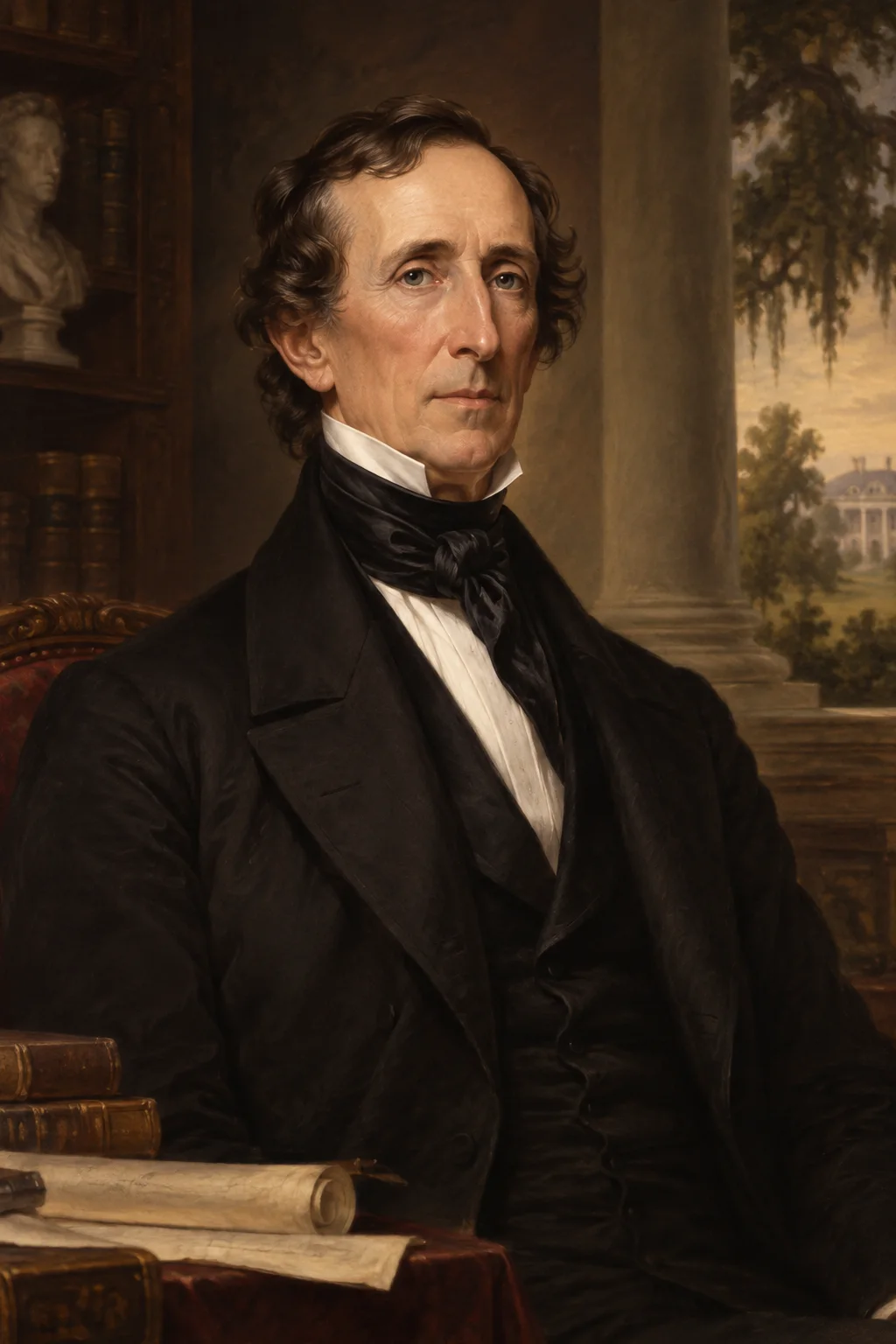
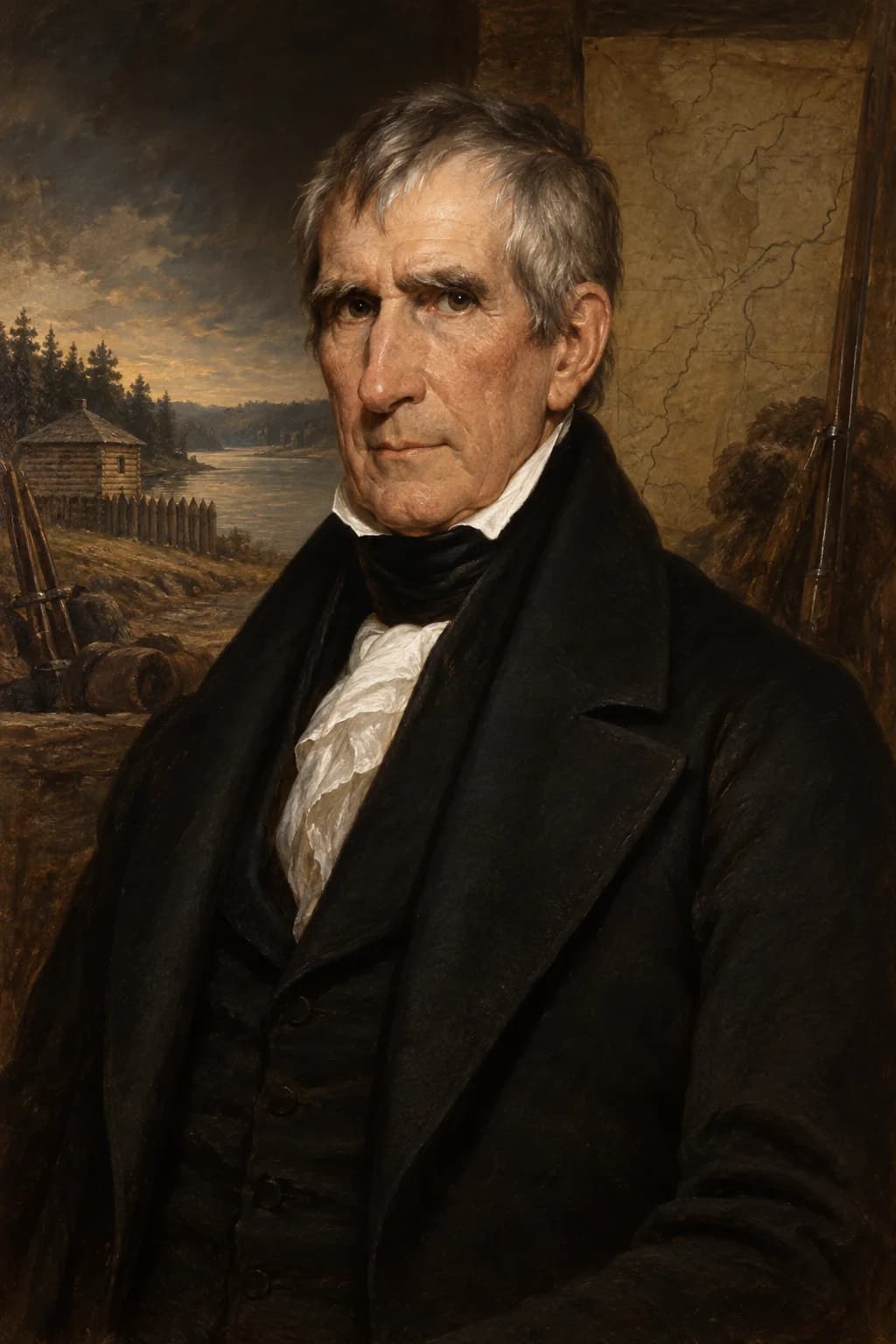
AI-generated portrait of William Henry Harrison in formal presidential attire
AI-assisted historical reconstruction

An illustrative reconstruction based on historical context. It is not a photograph or documentary likeness. Image policy Attribution

Quick answer

William Henry Harrison was the 9th President of the United States, a frontier general and victor of Tippecanoe. He served the shortest presidency, dying in 1841 after 31 days.

Born
1773 CE
Died
1841 CE
Role
9th President of the United States
Years
1773-1841 CE
Facts

William Henry Harrison timeline facts

Selected specifics from this profile's life story.

1773
Virginia upbringing

William Henry Harrison was born in Virginia in 1773 into a prominent revolutionary family before making his career on the western frontier.

1811
Battle reputation

The Battle of Tippecanoe in 1811 made Harrison nationally famous, though its meaning was more contested than campaign legend later admitted.

1840
Presidential campaign

The 1840 Whig campaign turned Harrison into the log-cabin and hard-cider candidate, pioneering modern mass political marketing.

Post-1841
Historical memory

Harrison is remembered for Tippecanoe, the 1840 campaign and the constitutional precedent created by his death more than for presidential policy.

Life Journey

Tippecanoe, mass campaigning, and the shortest presidency

Follow the story in a more continuous narrative, with a reading mode that matches how much depth you want.

Complete chronology

1773

Virginia upbringing

Harrison's origins were elite. His father, Benjamin Harrison V, signed the Declaration of Independence and served as governor of Virginia. William Henry therefore grew up close to the revolutionary generation's language of duty and public service. Yet his adult reputation was not made in Tidewater drawing rooms. It was made in the contested lands of the Northwest Territory, where U.S. expansion collided with Native sovereignty and British imperial interests. Harrison's biography bridges two worlds: inherited Virginia status and the violent frontier politics of the early republic.
1790s

Military beginnings

Harrison entered military service as the United States fought Native confederacies resisting expansion north of the Ohio River. Under General Anthony Wayne, he participated in the campaign that culminated at Fallen Timbers in 1794 and the Treaty of Greenville in 1795. These events opened large areas to U.S. settlement while dispossessing Native peoples. Harrison learned logistics, diplomacy and the politics of land hunger. Frontier command was never simply military. It involved treaties, settlers, militias, federal authority and Indigenous resistance. That combination would define his public life long before he reached the presidency.

1801–1812

Territorial governor

Harrison's governorship made him one of the key agents of U.S. expansion in the Old Northwest. He negotiated a series of treaties that transferred millions of acres from Native nations to the United States, often through pressure, unequal bargaining and contested claims of authority. Settlers celebrated him as a builder of American opportunity. Native leaders increasingly saw him as a central threat. The Shawnee leader Tecumseh and his brother Tenskwatawa, the Prophet, built a resistance movement rejecting further land sales and calling for Indigenous unity. Harrison's administrative success therefore helped create the conflict that made him famous.

1811

Battle reputation

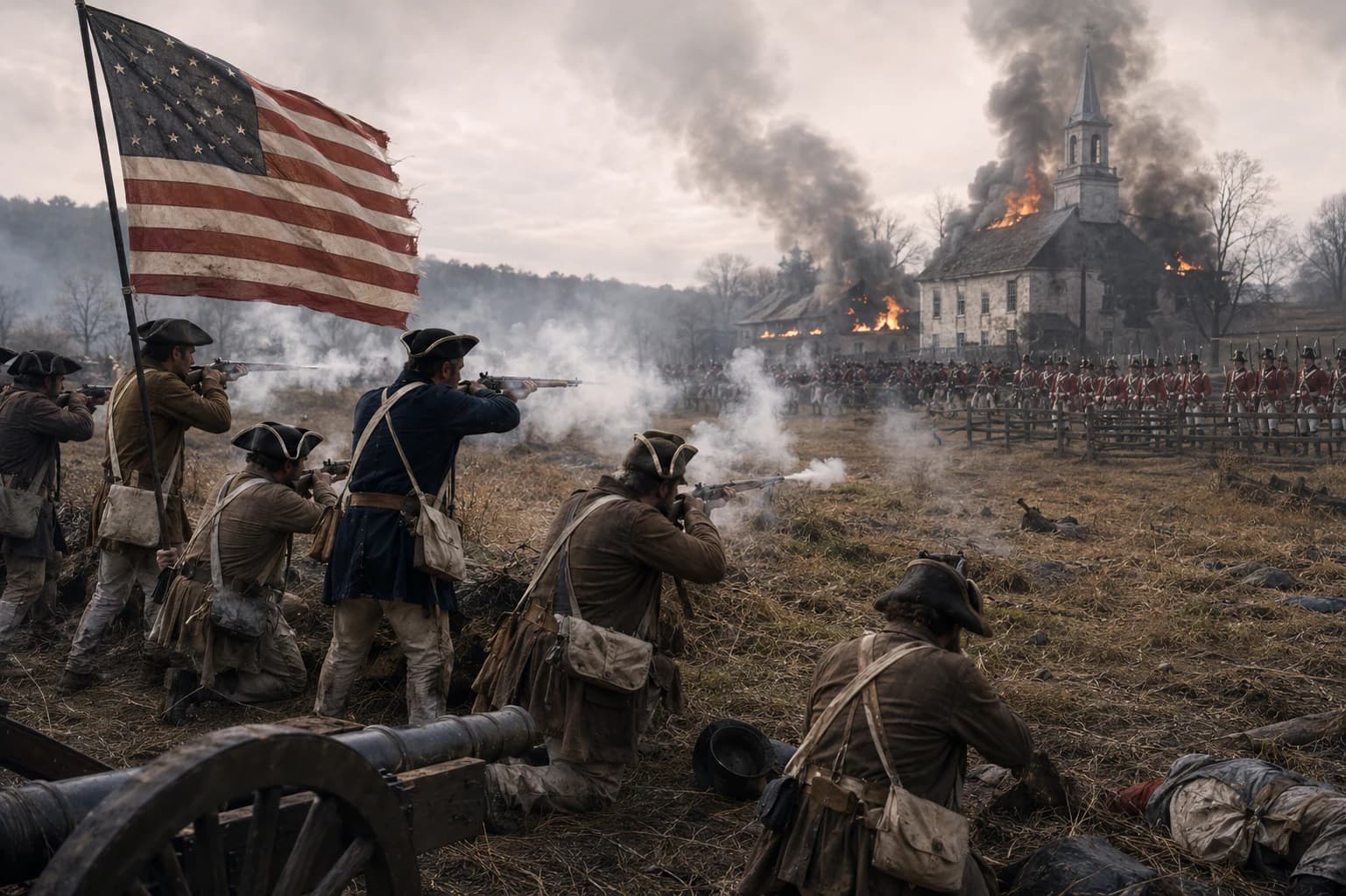
In 1811, Harrison marched toward Prophetstown while Tecumseh was away recruiting allies. Fighting broke out near the Tippecanoe River, and Harrison's forces held the field after a fierce attack. Americans claimed victory and destroyed Prophetstown, but the battle did not end Native resistance. It did, however, create a durable political myth. Harrison became 'Old Tippecanoe,' the frontier commander who supposedly defended settlement and national honour. For Native communities, the episode was part of a broader struggle against dispossession. Harrison's fame rested on a battle whose human meaning depended sharply on where one stood.

1812–1814

War of 1812 role

The War of 1812 turned Harrison's frontier reputation into national capital. After setbacks in the Northwest, he organised forces to recover Detroit and pursue British and Native allies into Upper Canada. At the Battle of the Thames in 1813, his army defeated British-led forces, and Tecumseh was killed, a devastating blow to the pan-Indigenous confederacy. The victory strengthened U.S. control in the region and elevated Harrison as a war hero. It also marked a turning point in Native resistance east of the Mississippi. Harrison's political future would be built on this military memory, simplified into slogans for voters far from the battlefield.

1820s–1830s

Political career

Harrison's postwar career was long but uneven. He served in the House, Senate and as minister to Gran Colombia, but he was never a dominant legislator. His value to national politics lay in what he symbolised: frontier victory, old republican service and a name that could unite anti-Democratic voters. The Whig Party, formed against Andrew Jackson and Democratic dominance, needed candidates who could appeal beyond congressional elites. Harrison's military reputation made him useful, first in the 1836 election and then far more successfully in 1840. He became less a policy architect than a political vessel.

1840

Presidential campaign

The 1840 campaign was one of the first great spectacles of American mass politics. Democrats mocked Harrison as an old man fit for a log cabin and hard cider; Whigs turned the insult into branding. Rallies, songs, banners, parades and souvenirs presented him as a plain frontier hero, even though he had been born into Virginia privilege. The slogan 'Tippecanoe and Tyler Too' fused military memory with ticket politics. The campaign said relatively little about detailed policy and much about identity, mood and image. Harrison defeated Martin Van Buren amid economic distress after the Panic of 1837, proving the electoral power of political storytelling.

1841

Brief presidency

Harrison's presidency barely began. His inaugural address lasted nearly two hours, a performance meant to show seriousness and constitutional principle after a campaign heavy on image. The common story that he died simply because he spoke too long in bad weather is too neat; modern historians note that his illness may have involved enteric infection from contaminated water as well as respiratory disease. Whatever the medical cause, he became gravely ill within weeks and died on 4 April 1841. His death created an immediate constitutional question: did Vice President John Tyler become president or only acting president? Tyler's firm claim shaped succession practice.

Post-1841

Historical memory

Because Harrison served only thirty-one days, his presidency cannot be judged by legislation or administration in the usual way. His historical significance lies elsewhere. As a territorial governor and general, he was a major figure in U.S. expansion and Native dispossession. As a candidate, he helped demonstrate the power of mass campaigning, image-making and popular slogans. As the first president to die in office, he forced the country to clarify succession, with John Tyler establishing that the vice president became president in full. Harrison's life is therefore larger than the trivia of a short term. It connects frontier conquest, electoral theatre and constitutional development.

Continue in context

Connected stories

Move from the profile into the wider events and settings this figure belongs to.

American Presidents lineage
Lineage47 presidents
American Presidents
1789 CE–present

The succession of American presidents from George Washington to today.

View lineage
Tertiary paths

Content note

This profile is written for educational use and connects to related Stories of History pages. The main portrait is an AI-assisted historical reconstruction, included as an illustrative aid rather than documentary evidence. Image policy Image attribution

References

Sources & Further Reading

Reliable reference works, archives and reading paths connected to this profile.

Further reading

  1. Encyclopaedia Britannica, Search results for William Henry Harrison,” accessed June 2026.Open source
  2. WorldCat, Books and library holdings for William Henry Harrison,” accessed June 2026.Open source

Primary sources

  1. Library of Congress, Search results for William Henry Harrison,” accessed June 2026.Open source

Reviewed claim sources

Loading reviewed claim sources...

A weekly route through history

Find out first about the latest published stories, feature notes and occasional Premium offers in one weekly email.