People

Martin Van Buren

Martin Van Buren was the 8th U.S. President, a founder of the Democratic Party, Andrew Jackson's vice president, and the leader whose presidency was overwhelmed by the Panic of 1837.

Born
1782 CE
Died
1862 CE
Role
8th President of the United States

8th President of the United States (1782–1862)

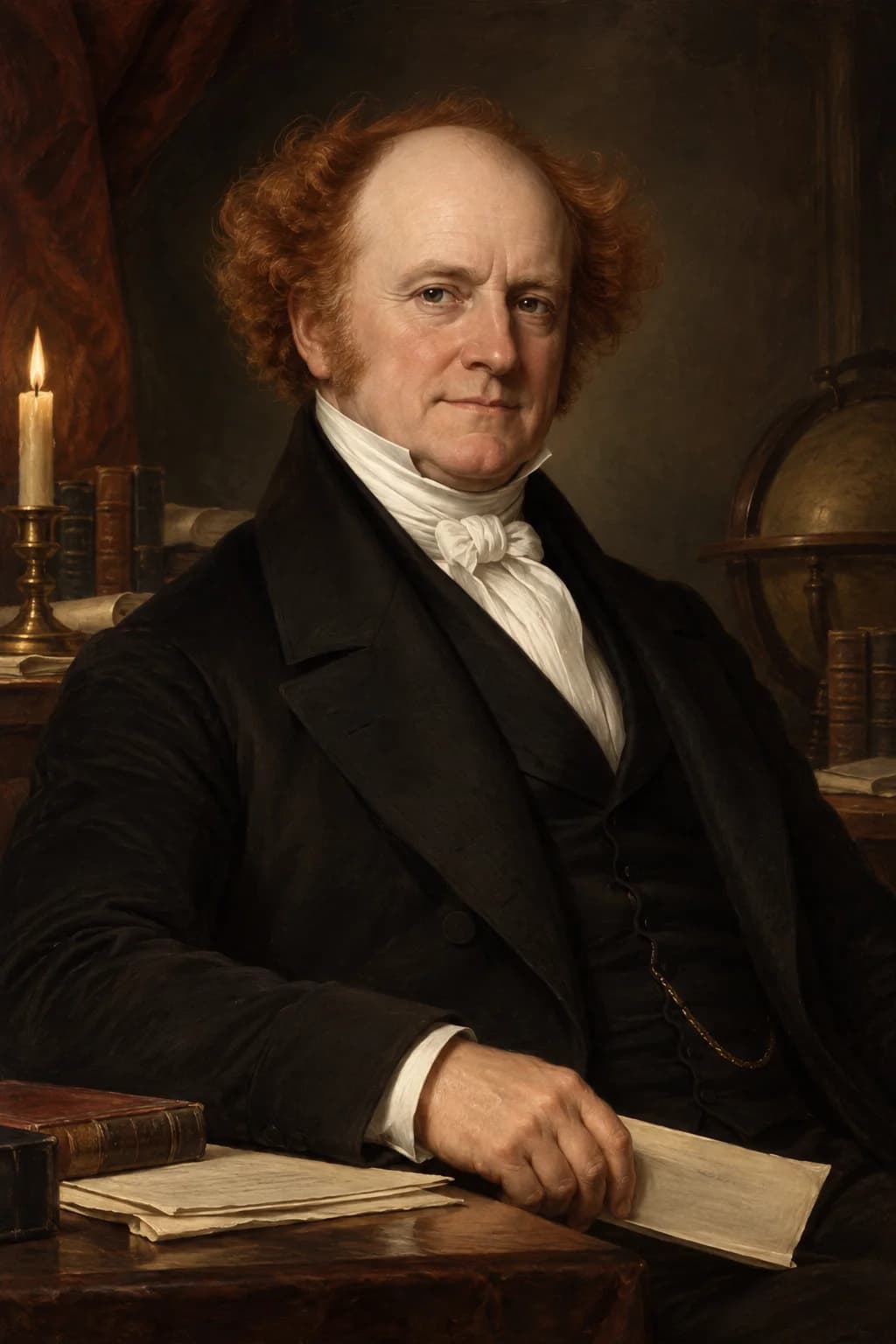
AI-generated portrait of Martin Van Buren in formal presidential attire
AI-assisted historical reconstruction

An illustrative reconstruction based on historical context. It is not a photograph or documentary likeness. Image policy Attribution

Quick answer

Martin Van Buren was the 8th U.S. President, a founder of the Democratic Party, Andrew Jackson's vice president, and the leader whose presidency was overwhelmed by the Panic of 1837.

Born
1782 CE
Died
1862 CE
Role
8th President of the United States
Years
1782-1862 CE
Facts

Martin Van Buren timeline facts

Selected specifics from this profile's life story.

1782–1800
Humble beginnings

Martin Van Buren was born in Kinderhook, New York, in 1782, the first future U.S. president born after independence from Britain.

1820s–1830s
National rise

Van Buren moved from senator to governor to secretary of state, becoming Andrew Jackson's most skilled political ally.

1837–1841
Economic crisis

The Panic of 1837 dominated Van Buren's presidency, bringing bank failures, unemployment, business collapse and intense political blame.

1841–1862
Later years and legacy

Van Buren later broke with pro-slavery Democratic expansionism, ran as a Free Soil candidate in 1848, and left a legacy larger than his presidency.

Life Journey

A career of political strategy, leadership and economic challenge

Follow the story in a more continuous narrative, with a reading mode that matches how much depth you want.

Complete chronology

1782–1800

Humble beginnings

Martin Van Buren's origins were modest but politically fertile. He was born in Kinderhook, a Dutch-speaking community in upstate New York, and grew up around his father's tavern, where lawyers, farmers, travellers and local politicians talked business. Unlike the Virginia planters and revolutionary grandees who dominated early presidential history, Van Buren did not inherit national prestige. He learned politics as conversation, favour, timing and memory. He also grew up bilingual in Dutch and English, a reminder that early America was less culturally uniform than its founding mythology sometimes suggests. His importance begins with this practical education. Van Buren understood that democracy was not only speeches and constitutions. It was organisation.
1800–1812

Legal training

Van Buren entered law through apprenticeship rather than elite college education. That route suited his temperament. Legal practice taught him argument, procedure, negotiation and the value of knowing local people in detail. He became a successful attorney and then a county surrogate, using professional credibility to enter public life. In New York's fiercely competitive politics, he learned to combine principle with management. He was rarely a grand ideological writer. His talent was reading incentives: who needed office, who needed recognition, who could be brought into coalition, and how local loyalties could be connected to state and national goals. Later critics called this machine politics. Van Buren saw it as democratic discipline.

1810s–1820s

Political organization

Van Buren's great innovation was to treat parties not as temporary evils but as necessary democratic institutions. In New York he helped build the Albany Regency, a disciplined network of editors, officeholders and organisers who could mobilise voters and maintain loyalty between elections. At a time when many founders had warned against faction, Van Buren argued by practice that parties could channel conflict peacefully. They gave voters choices, rewarded participation and prevented politics from becoming the property of personal cliques. This was not pure idealism. Patronage and calculation were everywhere. But Van Buren grasped something modern: mass democracy needed structure. Without parties, popular politics could dissolve into personal ambition and sectional chaos.

1820s–1830s

National rise

Van Buren rose nationally by recognising the political power of Andrew Jackson. Jackson embodied military fame, frontier nationalism and resentment against entrenched elites; Van Buren supplied organisation. He helped build the coalition that became the Democratic Party, linking southern planters, northern workers, western settlers and urban political networks around limited government, white male suffrage and hostility to concentrated privilege. As Jackson's secretary of state, Van Buren proved loyal and tactful during cabinet conflict, especially the Eaton affair, where social scandal exposed deeper factional tensions. His resignation helped Jackson reorganise the administration and elevated Van Buren as the president's chosen successor. Few American politicians have been better at turning loyalty into power.

1833–1837

Vice presidency

The vice presidency gave Van Buren the formal place he needed in the succession. Jackson trusted him, Democratic organisation supported him, and the opposition had not yet fully unified. But the inheritance was mixed. Jackson's war against the Second Bank of the United States, the movement of federal deposits, speculative land buying and the Specie Circular all helped create a fragile financial environment. Van Buren did not design every part of this system, but he was tied to it as Jackson's heir. His political skill had put him exactly where he wanted to be. It also placed him on the edge of an economic crisis that would make the presidency a trap.

1836

Presidential election

Van Buren's election in 1836 was an organisational victory. The Democrats ran a disciplined national campaign, while the Whigs tried a regional strategy with multiple candidates to throw the contest into the House of Representatives. Van Buren won clearly, becoming the first president from New York and the first whose birth came after the Declaration of Independence. His victory suggested that American politics had entered a new phase. Parties could now manage succession, mobilise voters and present continuity beyond a single heroic personality. Yet Van Buren lacked Jackson's aura. He was polished, careful and strategic, not magnetic. The public would forgive Jackson things it would not forgive his successor.

1837–1841

Economic crisis

Within weeks of Van Buren's inauguration, the Panic of 1837 erupted. Banks suspended specie payments, credit contracted, businesses failed, land values fell and unemployment spread through towns and cities. The causes were tangled: speculative lending, Jacksonian banking policy, international credit conditions, cotton prices and fragile state banks all played roles. Van Buren's answer was the Independent Treasury, a plan to separate federal funds from private banks. To supporters, it protected public money and completed the Jacksonian attack on privileged finance. To critics, it looked cold and inadequate in the face of suffering. Van Buren's refusal to use expansive federal intervention reflected his constitutional beliefs, but it also made him appear passive while citizens experienced economic ruin.

1840

Political defeat

The 1840 election was a lesson in the politics Van Buren had helped create. The Whigs mastered popular campaigning, symbols and emotional messaging, presenting William Henry Harrison as the log-cabin war hero and Van Buren as an elegant insider detached from hardship. Much of the image was manufactured, but it worked. Economic distress gave the campaign force, and turnout surged. Van Buren lost decisively. The irony was sharp: the organiser of modern party politics was defeated by opponents who had learned the new rules. His presidency ended after one term, not because he lacked intelligence, but because organisational genius could not overcome depression, symbolism and the hunger for change.

1841–1862

Later years and legacy

Van Buren's later career complicates the image of a mere party manager. He sought the Democratic nomination again but lost influence as the party's southern and expansionist wings hardened around Texas and slavery. In 1848 he ran for president as the Free Soil candidate, opposing the extension of slavery into western territories. This did not make him an abolitionist in the modern sense, but it did show his alarm at slavery's power to dominate national politics and fracture the party system he had built. He died in 1862, during the Civil War that party organisation had failed to prevent. Van Buren's importance lies less in presidential achievement than in architecture. He helped build the Democratic Party and the habits of mass politics, then lived long enough to see sectional conflict overwhelm them.

Continue in context

Connected stories

Move from the profile into the wider events and settings this figure belongs to.

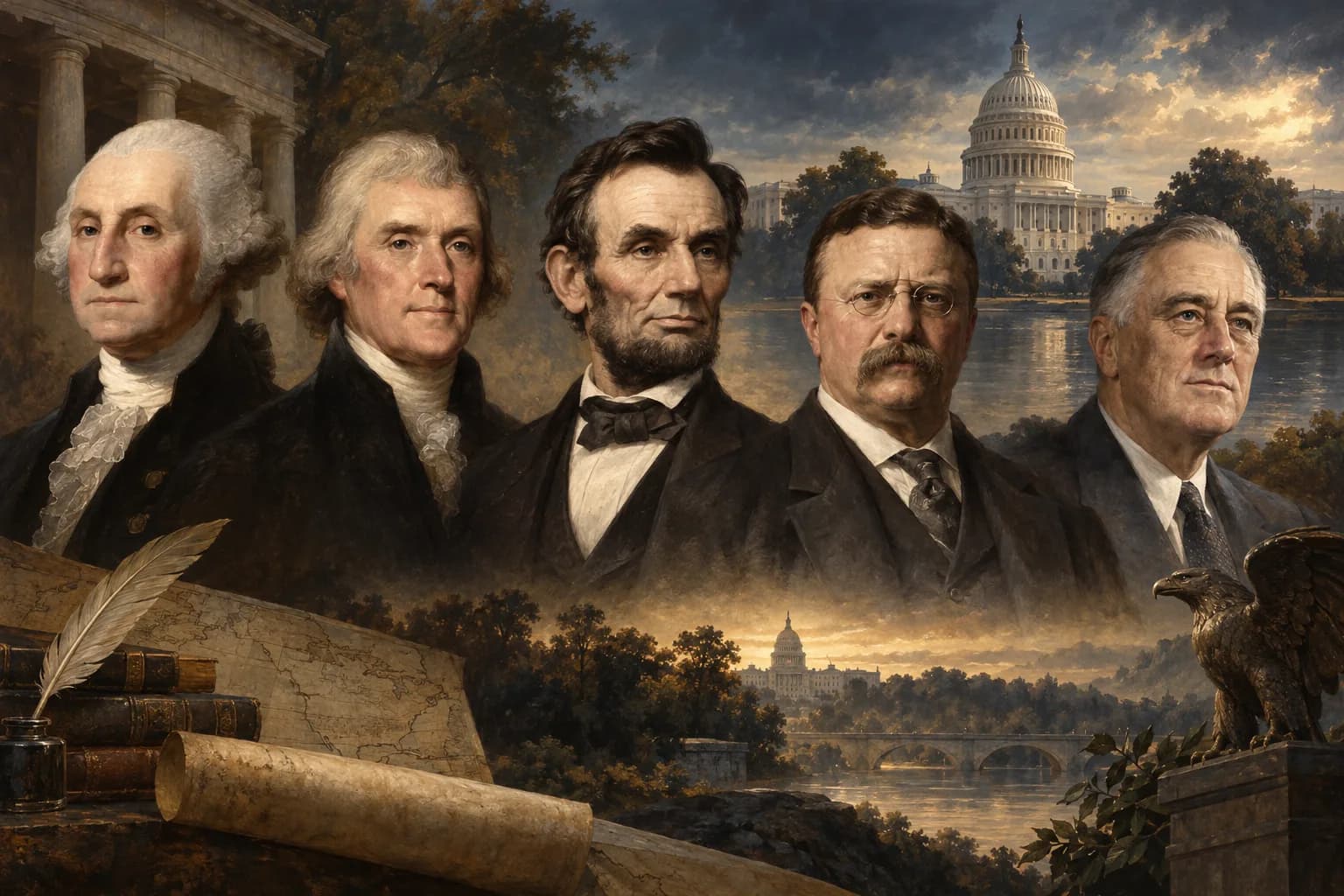
American Presidents lineage
Lineage47 presidents
American Presidents
1789 CE–present

The succession of American presidents from George Washington to today.

View lineage
Tertiary paths

Content note

This profile is written for educational use and connects to related Stories of History pages. The main portrait is an AI-assisted historical reconstruction, included as an illustrative aid rather than documentary evidence. Image policy Image attribution

References

Sources & Further Reading

Reliable reference works, archives and reading paths connected to this profile.

Further reading

  1. Encyclopaedia Britannica, Search results for Martin Van Buren,” accessed June 2026.Open source
  2. WorldCat, Books and library holdings for Martin Van Buren,” accessed June 2026.Open source

Primary sources

  1. Library of Congress, Search results for Martin Van Buren,” accessed June 2026.Open source

Reviewed claim sources

Loading reviewed claim sources...

A weekly route through history

Find out first about the latest published stories, feature notes and occasional Premium offers in one weekly email.