People

Andrew Jackson

Andrew Jackson was the 7th U.S. President, a War of 1812 general, founder of Jacksonian Democracy, opponent of the Second Bank of the United States, and architect of Indian removal policy.

Born
1767 CE
Died
1845 CE
Role
7th President of the United States

7th President of the United States (1767–1845)

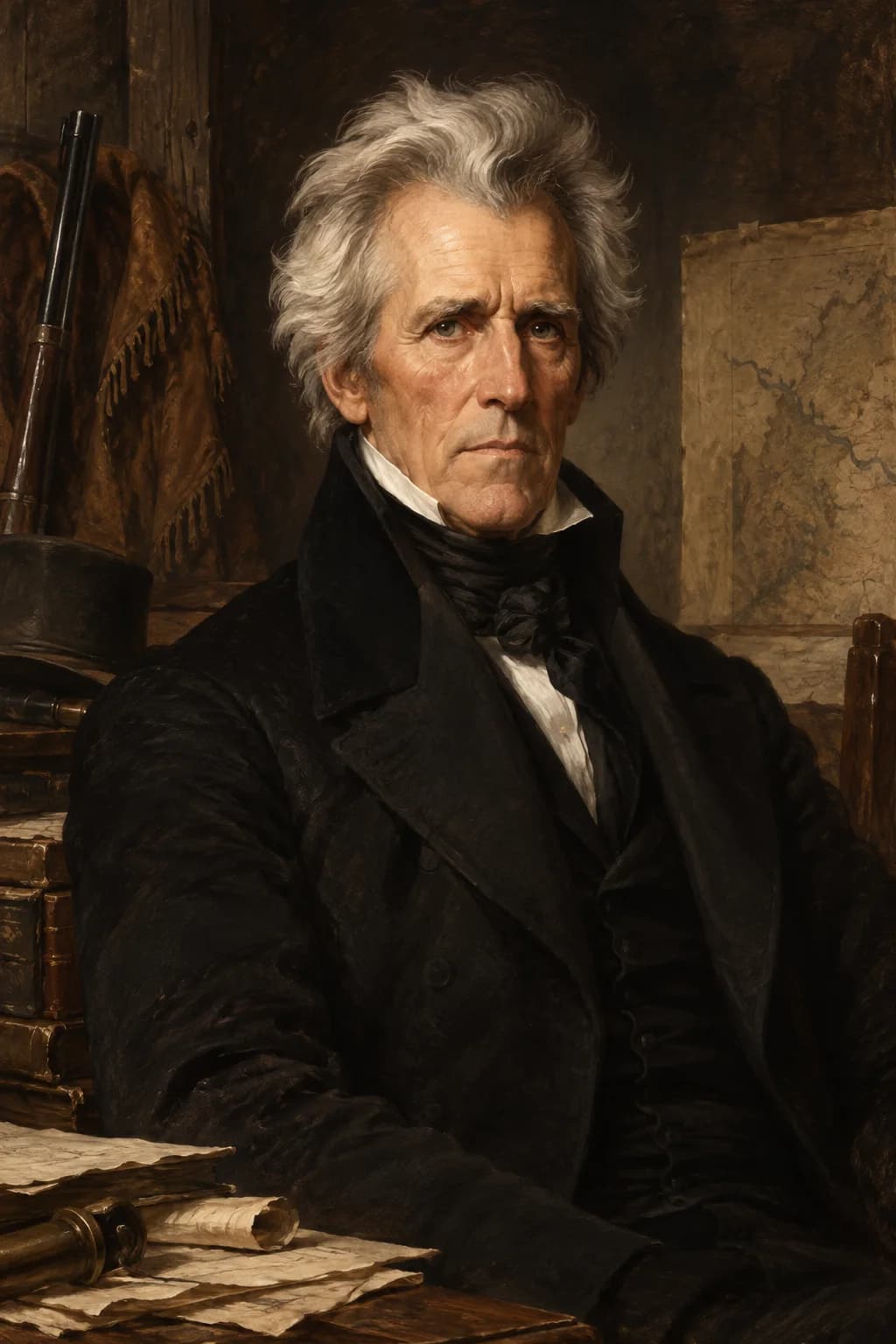
AI-generated portrait of Andrew Jackson in formal presidential attire
AI-assisted historical reconstruction

An illustrative reconstruction based on historical context. It is not a photograph or documentary likeness. Image policy Attribution

Quick answer

Andrew Jackson was the 7th U.S. President, a War of 1812 general, founder of Jacksonian Democracy, opponent of the Second Bank of the United States, and architect of Indian removal policy.

Born
1767 CE
Died
1845 CE
Role
7th President of the United States
Years
1767-1845 CE
Facts

Andrew Jackson timeline facts

Selected specifics from this profile's life story.

1767–1781
Frontier beginnings

Born in a rough border region, Jackson lost his family during the Revolutionary War, shaping his lifelong toughness and distrust of authority.

1824–1828
Political breakthrough

After a disputed election loss in 1824, Jackson rallied popular support and won the presidency in 1828 as a champion of the common voter.

1830s
Indian removal policy

Jackson enforced policies that forced Native American nations from their lands, leading to widespread suffering and displacement known as the Trail of Tears.

Post-1845
Enduring legacy

Jackson’s legacy remains deeply divided, remembered for expanding democracy for some while enacting policies that caused profound harm to others.

Life Journey

From frontier orphan to commanding president

Follow the story in a more continuous narrative, with a reading mode that matches how much depth you want.

Complete chronology

1767–1781

Frontier beginnings

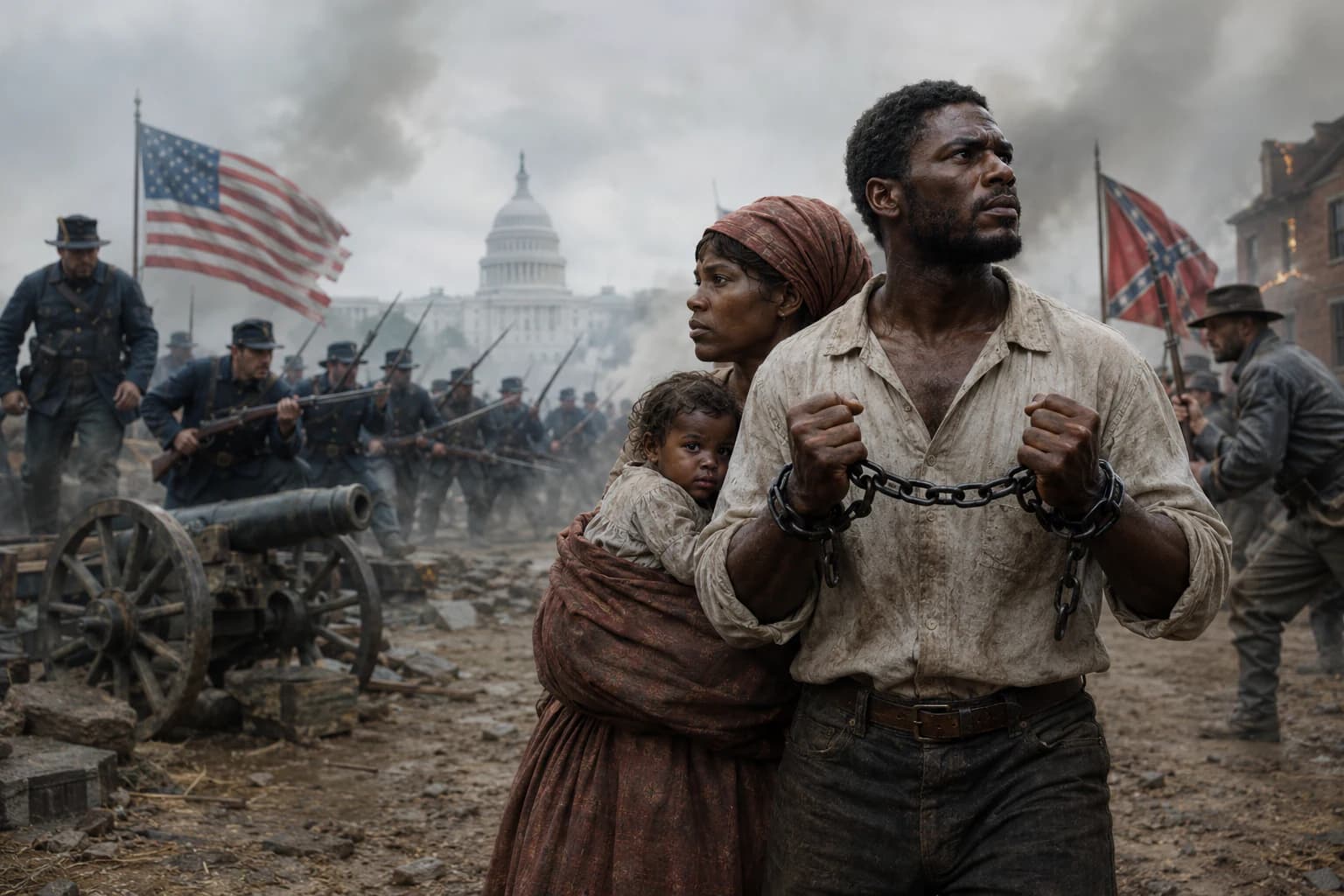
Andrew Jackson was born in the Waxhaws region on the border of the Carolinas, a place where family memory, frontier insecurity, and imperial war overlapped. His father died before he was born, and the American Revolution reached him not as an abstract patriotic drama but as hunger, violence, imprisonment, and grief. As a teenager he was captured by British forces and reportedly scarred after refusing to clean an officer's boots. His mother and brothers died during or soon after the conflict, leaving him orphaned before adulthood. That early biography mattered because Jackson carried it like evidence. He learned to distrust distant authority, honor personal courage, and answer insult with confrontation. The same habits that made him magnetic to supporters would later make his presidency combative, unforgiving, and dangerous to those outside his circle of sympathy.

1780s–1790s

Law and ambition

Jackson's move westward placed him in the raw political economy of Tennessee, where land, credit, speculation, slavery, and local reputation shaped power. He trained as a lawyer, served as a prosecutor, acquired property, and became deeply involved in the networks that turned frontier settlements into state institutions. His ascent was not the story of a humble outsider untouched by privilege. Jackson became a landowner, enslaver, businessman, judge, congressman, senator, and militia officer, using law and politics to build status in a society expanding at Native peoples' expense. He also cultivated a fierce code of honor, fighting duels and defending his marriage to Rachel Donelson Jackson against gossip. By the 1790s, he had become a man people either followed or feared: ambitious, volatile, socially mobile, and skilled at turning personal loyalty into political capital.

1812–1814

Military emergence

The War of 1812 gave Jackson the national stage that local politics could not. His campaigns against the Red Stick Creeks culminated in the Battle of Horseshoe Bend in 1814, a devastating defeat for Creek resistance that opened vast Native lands to American control through the Treaty of Fort Jackson. Later that year, he took command at New Orleans, assembling regulars, militia, free men of color, enslaved laborers, Choctaw allies, and privateers into a defensive force against a veteran British army. The victory on 8 January 1815 came after the Treaty of Ghent had been signed but before news had crossed the Atlantic. Its timing did not diminish its political force. To Americans hungry for proof that the republic could defend itself, Jackson became the embodiment of hard national confidence.

1824–1828

Political breakthrough

Jackson's road to the White House began with fury. In 1824 he won the largest share of the popular and electoral vote, but no candidate secured an Electoral College majority, sending the choice to the House of Representatives. When John Quincy Adams became president with support from Henry Clay, Jackson's supporters denounced a 'corrupt bargain.' The charge was politically potent even where the evidence was disputed, because it captured a broader resentment toward insider politics. Over the next four years Jackson's allies built a disciplined national movement, using newspapers, local committees, rallies, and a language of popular vindication. His 1828 victory marked the arrival of mass party politics and a more openly democratic political style for white men, while women, Black Americans, and Native nations remained excluded from the democracy celebrated in his name.

1829–1832

Expanding presidential power

Jackson entered office convinced that the president was the only national official chosen by all the people and therefore entitled to act as their direct representative. That claim changed the tone of executive power. He used the veto not merely to block bills he considered unconstitutional but to reject policies he thought unjust or politically wrong. He relied on trusted advisers, rewarded loyalists through patronage, and treated opposition as evidence of entrenched privilege defending itself. Critics called him King Andrew, fearing that he wrapped personal will in democratic language. Supporters saw something different: a president finally willing to confront banks, bureaucrats, and congressional managers. The result was a stronger, more personal presidency, one that made popular mandate a weapon in constitutional politics.

1832–1836

Bank conflict

Jackson's war on the Second Bank of the United States was both ideological and personal. He believed the bank concentrated financial power in unelected hands, favored wealthy insiders, and threatened republican independence. Bank president Nicholas Biddle and Jackson's political enemies tried to force the issue early by seeking recharter in 1832, hoping a veto would cost Jackson reelection. Instead, Jackson turned the veto into a campaign statement, casting the bank as a privileged monopoly. After winning reelection, he removed federal deposits and placed them in selected state banks, intensifying the struggle. The bank's defenders warned that he had attacked a stabilizing institution; Jacksonians answered that liberty required breaking concentrated privilege. The eventual panic of 1837 had multiple causes, but Jackson's financial policies remain central to debates over whether he defended democracy or destabilized it.

1830s

Indian removal policy

Indian removal is the deepest moral wound in Jackson's presidency. He supported the Indian Removal Act of 1830 and pressed for the relocation of Native nations east of the Mississippi, including the Cherokee, Muscogee, Chickasaw, Choctaw, and Seminole peoples. Jackson framed removal as a practical answer to conflict between expanding states and sovereign Native communities, but the policy served settler hunger for land and ignored treaty rights, legal claims, and the rooted societies Native nations had built. The Supreme Court's decision in Worcester v. Georgia recognized limits on state authority over Cherokee territory, yet federal protection proved hollow. Forced migration brought dispossession, disease, hunger, and death, most famously on the Cherokee Trail of Tears after Jackson left office but under the policy framework he championed. Any biography of Andrew Jackson must hold this alongside his democratic appeal: he widened political power for some while using state power catastrophically against others.

1837–1845

Later years

Jackson left office in 1837 but not politics. From the Hermitage in Tennessee, he remained the patriarch of a movement that became the Democratic Party, advising Martin Van Buren and other allies, defending his record, and watching national conflicts with undiminished intensity. His final years were marked by chronic pain, debt concerns, religious reflection, and continued commitment to the causes that had defined him, including hard-money suspicion of banks and support for territorial expansion. He also remained an enslaver until his death, a fact inseparable from his wealth and household power. Jackson's retirement shows how thoroughly he had personalized politics. Even away from Washington, his approval mattered, his enemies still provoked him, and his image as the old soldier of democracy continued to shape how Americans argued about authority.

Post-1845

Enduring legacy

Andrew Jackson's legacy is powerful because it is unresolved. He helped create the age of mass party politics, made the presidency more assertive, and convinced millions of white voters that national leadership could speak in their language rather than the language of inherited deference. He also defended slavery, removed Native peoples with devastating consequences, punished opponents fiercely, and treated compromise as weakness when he believed principle or honor was at stake. For generations, admirers made him a symbol of democratic energy; later critics have emphasized the exclusions and violence hidden inside that democracy. Both readings are necessary. Jackson matters not because he offers a clean model of leadership, but because he reveals a central tension in American history: popular power can challenge elites while still resting on conquest, racial hierarchy, and the suffering of those denied a place in the people it claims to represent.

Continue in context

Connected stories

Move from the profile into the wider events and settings this figure belongs to.

American Presidents lineage
Lineage47 presidents
American Presidents
1789 CE–present

The succession of American presidents from George Washington to today.

View lineage
Tertiary paths

Content note

This profile is written for educational use and connects to related Stories of History pages. The main portrait is an AI-assisted historical reconstruction, included as an illustrative aid rather than documentary evidence. Image policy Image attribution

References

Sources & Further Reading

Reliable reference works, archives and reading paths connected to this profile.

Further reading

  1. Encyclopaedia Britannica, Search results for Andrew Jackson,” accessed June 2026.Open source
  2. WorldCat, Books and library holdings for Andrew Jackson,” accessed June 2026.Open source

Primary sources

  1. Library of Congress, Search results for Andrew Jackson,” accessed June 2026.Open source

Reviewed claim sources

Loading reviewed claim sources...

A weekly route through history

Find out first about the latest published stories, feature notes and occasional Premium offers in one weekly email.