People

Xenophon

Xenophon was an Athenian soldier and author, born around 430 BC. His Anabasis described the march of the Ten Thousand after Cyrus the Younger's failed revolt against Artaxerxes II.

Born
c. 430 BCE
Died
c. 354 BCE
Role
Soldier and writer

Athenian soldier and writer (c. 430-c. 354 BC)

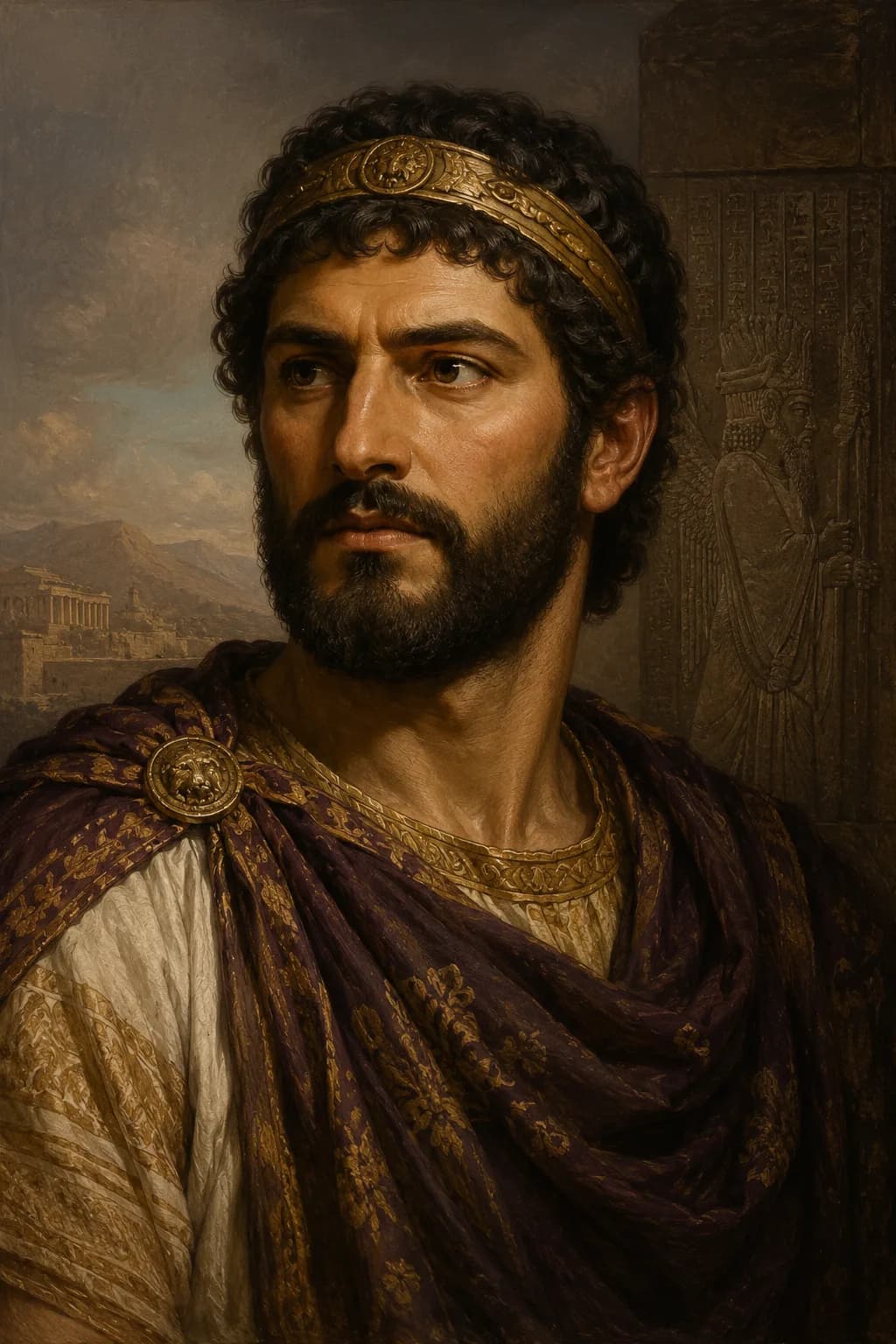
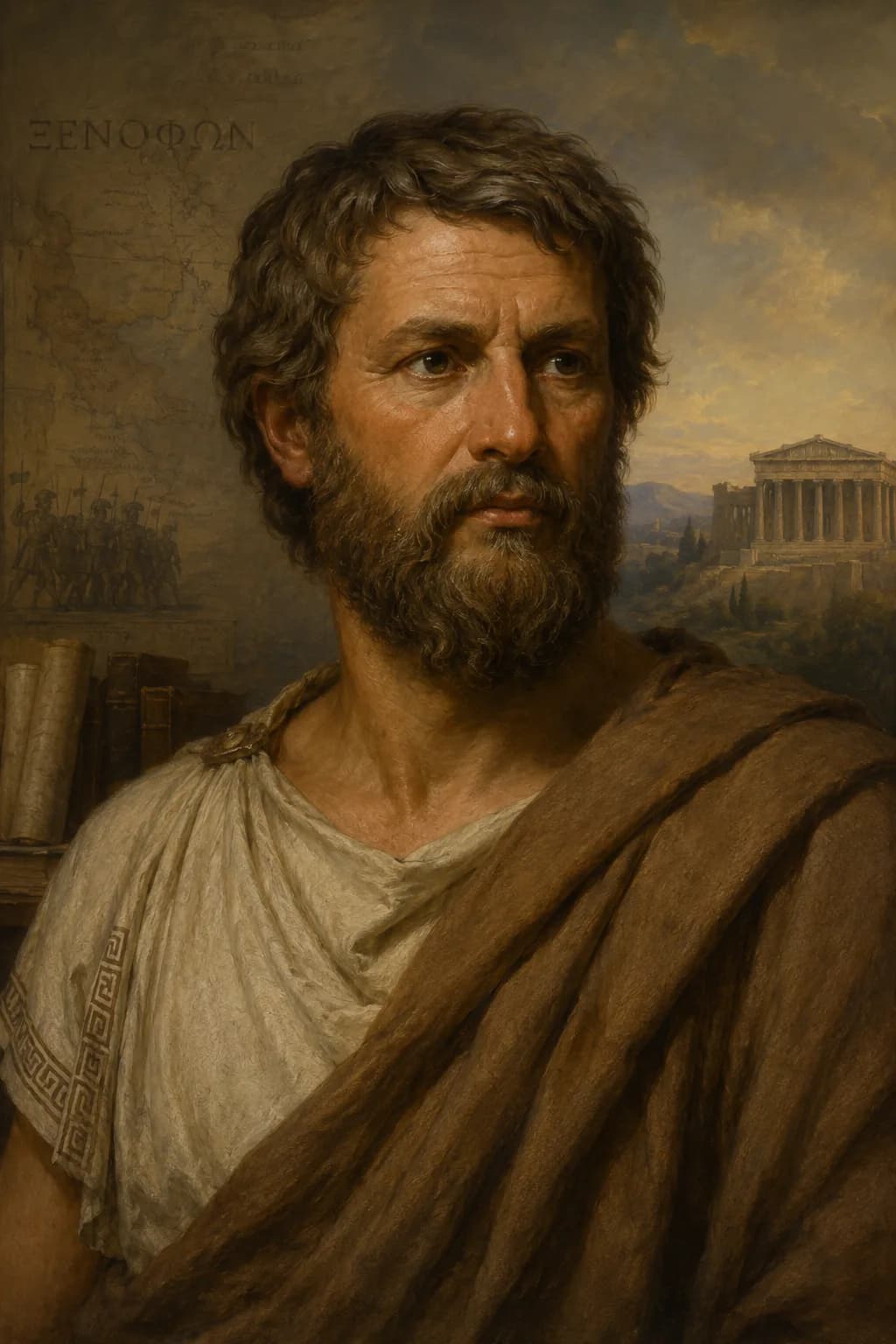
AI-generated portrait of Xenophon in Greek dress
AI-assisted historical reconstruction

An illustrative reconstruction based on historical context. It is not a photograph or documentary likeness. Image policy

Quick answer

Xenophon was an Athenian soldier and author, born around 430 BC. His Anabasis described the march of the Ten Thousand after Cyrus the Younger's failed revolt against Artaxerxes II.

Born
c. 430 BCE
Died
c. 354 BCE
Role
Soldier and writer
Years
c. 430-c. 354 BCE
Quick facts

Profile details

Additional identity and tagging details that are not already covered in the introduction.

Also known as
Xenophon of Athens
Region
Greece, Persia, Anatolia, Greece and Persia
Facts

Xenophon timeline facts

Selected specifics from this profile's life story.

c. 430 BC
Athenian world

Xenophon was born into the Greek world of Athens during the late fifth century BC, an age shaped by war and philosophy.

401 BC
Cyrus's campaign

Xenophon joined the Greek mercenary army connected to Cyrus the Younger's attempt to overthrow Artaxerxes II.

4th century BC
Writer and witness

Xenophon later wrote the Anabasis and other works that shaped Greek memory of Persia, Socrates, leadership, and war.

After c. 354 BC
Influence

Xenophon's account helped shape later Greek and Macedonian ideas about Persia's strengths and vulnerabilities.

Life Journey

The writer who marched through Persia

Follow Xenophon from Athens to the Ten Thousand, the Anabasis, and his long influence on Greek views of empire.

Complete chronology

c. 430 BC

Athenian world

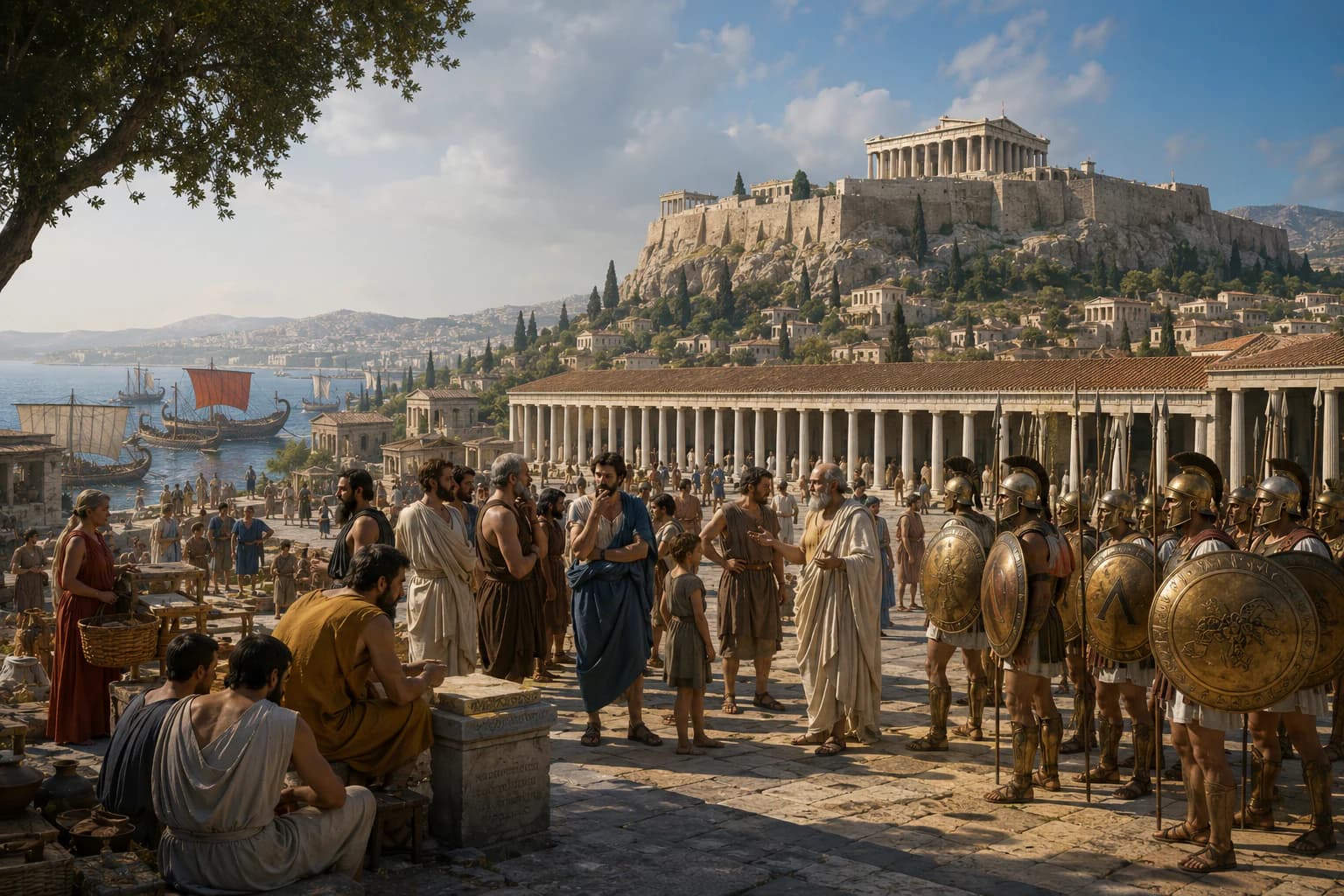
Xenophon grew up in a Greek world transformed by the Peloponnesian War, the rivalry of Athens and Sparta, and the intellectual culture associated with Socrates. He was not only a soldier or only a writer. His life crossed politics, military service, estate management, philosophy, and historical memory. That range made him one of the most useful witnesses to the uneasy connection between Greece and Persia.
401 BC

Cyrus's campaign

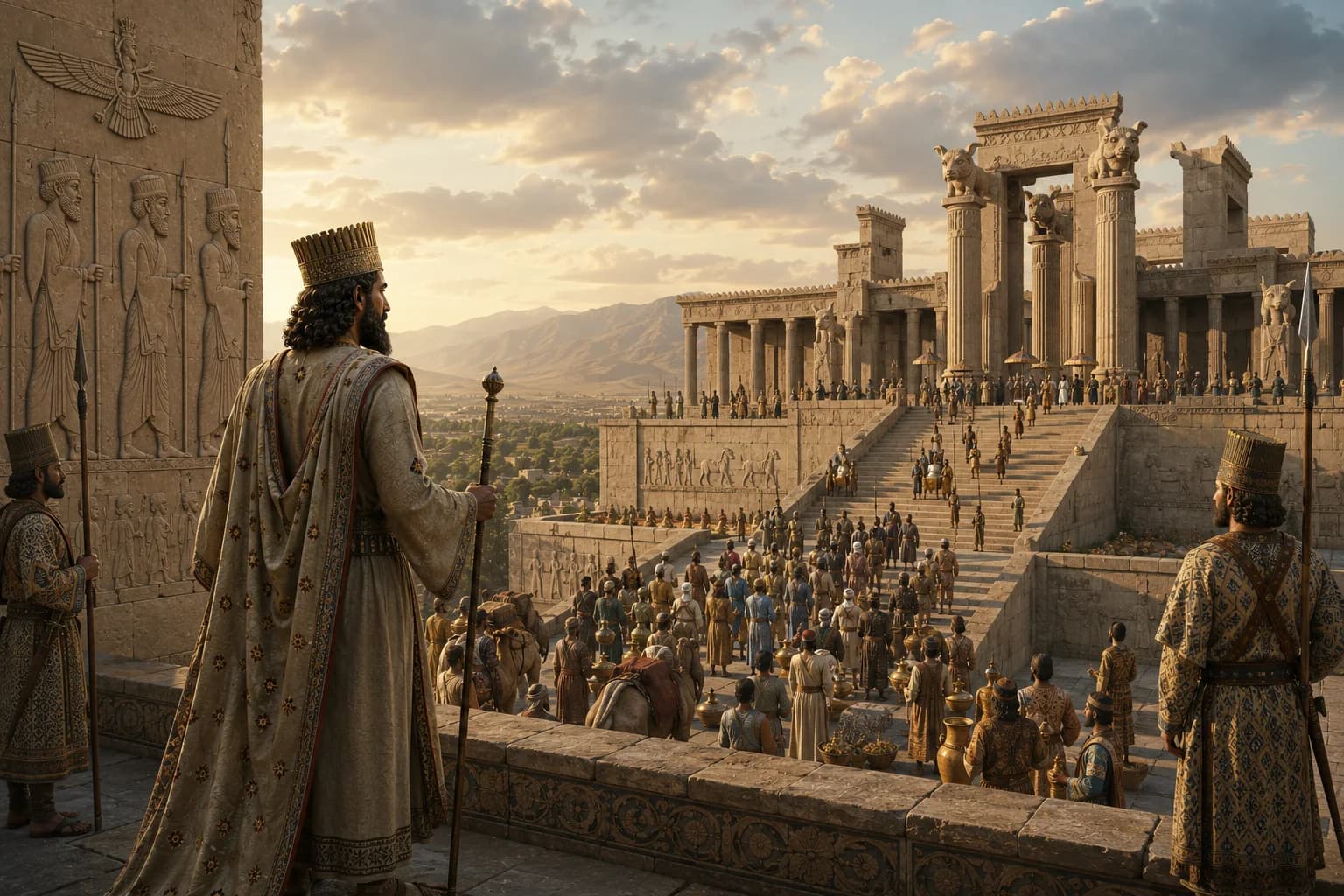
In 401 BC, Xenophon became part of the expedition associated with Cyrus the Younger. The Greek mercenaries did not initially represent a grand Greek invasion of Persia. They were hired soldiers drawn into a Persian dynastic struggle. When Cyrus died at Cunaxa, the political purpose of the campaign collapsed, leaving the Greek force deep inside imperial territory and suddenly dependent on its own cohesion.

401-400 BC

The Ten Thousand

The retreat of the Ten Thousand became famous because it turned disaster into endurance. Cut off from their original employer and far from home, the Greeks had to choose leaders, maintain discipline, handle local enemies, cross difficult landscapes, and survive Persian pressure. Xenophon presented himself as one of the figures who helped guide the army. The account is self-shaped, but its power is undeniable.

4th century BC

Writer and witness

Xenophon wrote in a clear, practical style that made his works influential for centuries. The Anabasis was not a neutral transcript. It was memory, explanation, self-presentation, and military narrative. But it gave later readers a vivid picture of Greek soldiers moving through Persian territory. He also wrote about Socrates, household management, command, cavalry, and education, revealing a mind interested in how people and institutions are governed.

After c. 354 BC

Influence

Xenophon did not cause Alexander's conquest, and the Anabasis should not be treated as a simple blueprint. Still, his account mattered. It suggested that disciplined Greek soldiers could survive deep inside the Persian Empire, even when abandoned by politics. That idea fed into a wider Greek conversation about Persia, monarchy, military professionalism, and opportunity. Xenophon remains important because he stood at the crossing of experience and interpretation.

Continue in context

Connected stories

Move from the profile into the wider events and settings this figure belongs to.

Tertiary paths

Content note

This profile is written for educational use and connects to related Stories of History pages. The main portrait is an AI-assisted historical reconstruction, included as an illustrative aid rather than documentary evidence. Image policy

References

Sources & Further Reading

Reliable reference works, archives and reading paths connected to this profile.

Further reading

  1. Encyclopaedia Britannica, Search results for Xenophon,” accessed June 2026.Open source
  2. WorldCat, Books and library holdings for Xenophon,” accessed June 2026.Open source

Primary sources

  1. Library of Congress, Search results for Xenophon,” accessed June 2026.Open source

Reviewed claim sources

Loading reviewed claim sources...

A weekly route through history

Find out first about the latest published stories, feature notes and occasional Premium offers in one weekly email.