People

Alexander the Great

Alexander the Great was king of Macedon from 336 to 323 BC. He conquered the Persian Empire, founded Alexandria, campaigned as far as India, and transformed the ancient Mediterranean and Near East.

Born
356 BCE
Died
323 BCE
Role
Macedonian king

Macedonian king (356 BC–323 BC)

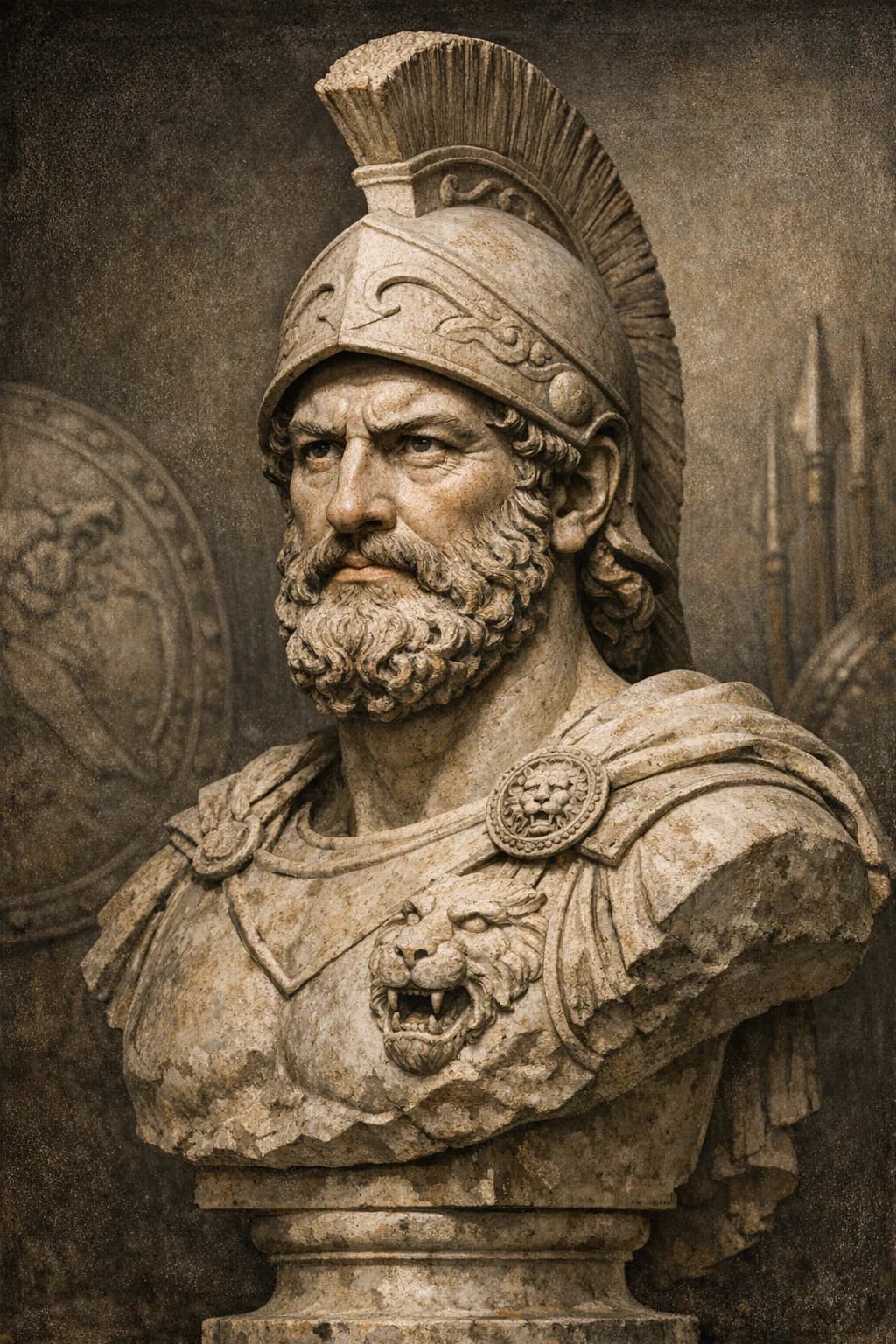
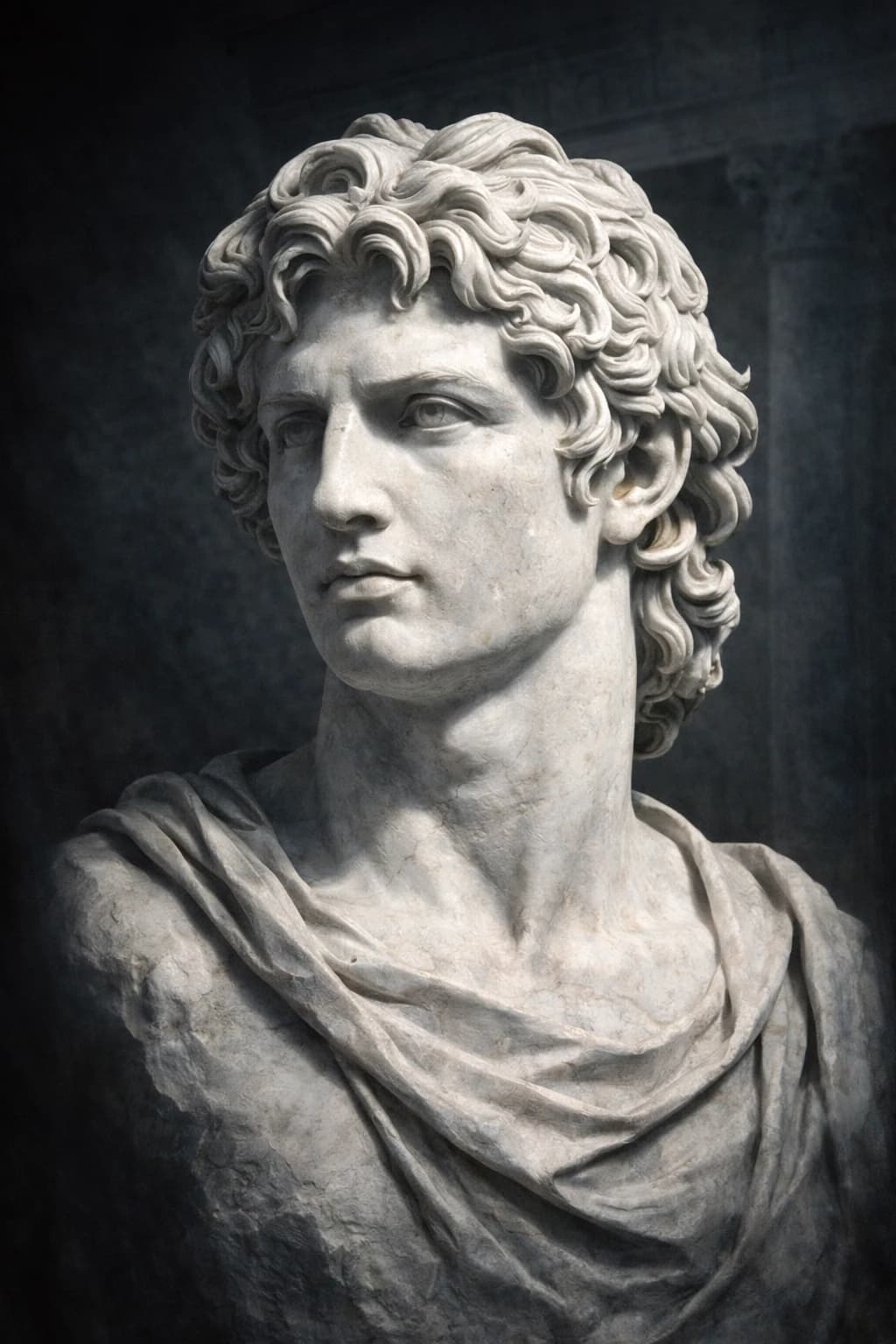
AI-generated portrait of Alexander the Great in ancient military armour
AI-assisted historical reconstruction

An illustrative reconstruction based on historical context. It is not a photograph or documentary likeness. Image policy

Quick answer

Alexander the Great was king of Macedon from 336 to 323 BC. He conquered the Persian Empire, founded Alexandria, campaigned as far as India, and transformed the ancient Mediterranean and Near East.

Born
356 BCE
Died
323 BCE
Role
Macedonian king
Years
356-323 BCE
Facts

Alexander the Great timeline facts

Selected specifics from this profile's life story.

-356
Royal beginnings

Alexander the Great was born at Pella in 356 BC, heir to Philip II of Macedon and Olympias of Epirus, in a kingdom already becoming the dominant military power in Greece.

-334
Crossing into Asia

In 334 BC Alexander crossed into Asia Minor, turning Philip's planned war against Persia into a personal campaign of conquest.

-327 to -325
Reaching India

Alexander pushed beyond the Persian Empire into Central Asia and India, but after the Hydaspes his exhausted army refused to march farther east.

-323 and beyond
Unfinished legacy

Alexander died in Babylon in 323 BC without a stable adult heir, leaving his generals to divide his empire while his cultural impact spread through the Hellenistic world.

Life Journey

A sweeping march across continents

Follow the story in a more continuous narrative, with a reading mode that matches how much depth you want.

Complete chronology

-356

Royal beginnings

Alexander's biography begins with inheritance, danger, and expectation. Born in 356 BC at Pella, he was the son of Philip II, the king who transformed Macedon from a northern kingdom often dismissed by southern Greeks into a disciplined military power. His mother, Olympias, came from Epirus and carried her own dynastic prestige, religious intensity, and political will. Alexander grew up in a court where assassination, alliance, hostage-taking, marriage diplomacy, and war were normal instruments of power. He also inherited a family mythology that linked him to heroes such as Achilles and Heracles. That mattered because Alexander did not see kingship as administration alone. From childhood, he was taught to imagine rule as glory, conquest, and personal destiny. Philip created the army that made empire possible; Alexander inherited both the weapon and the appetite to use it.
-343

Philosopher’s pupil

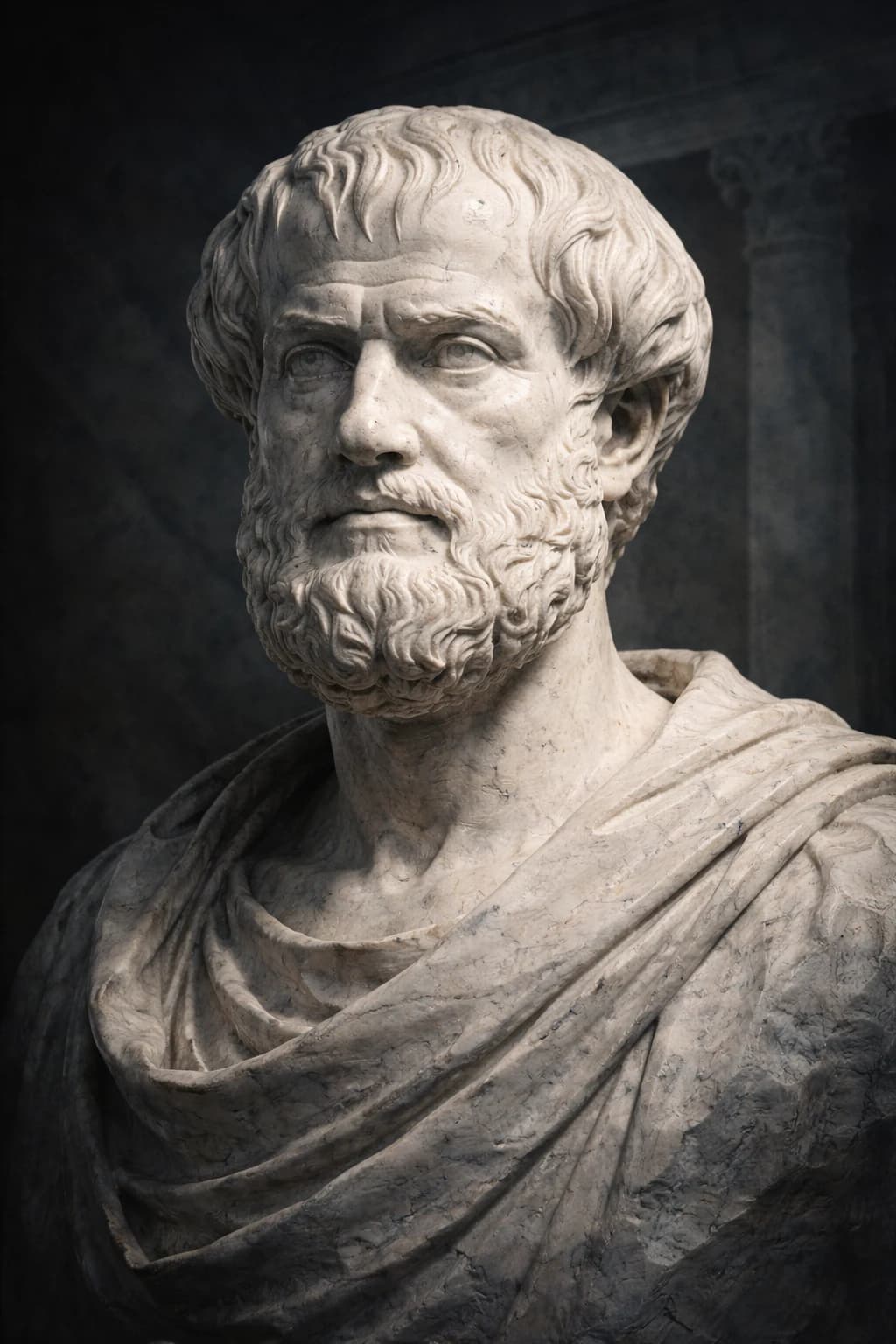
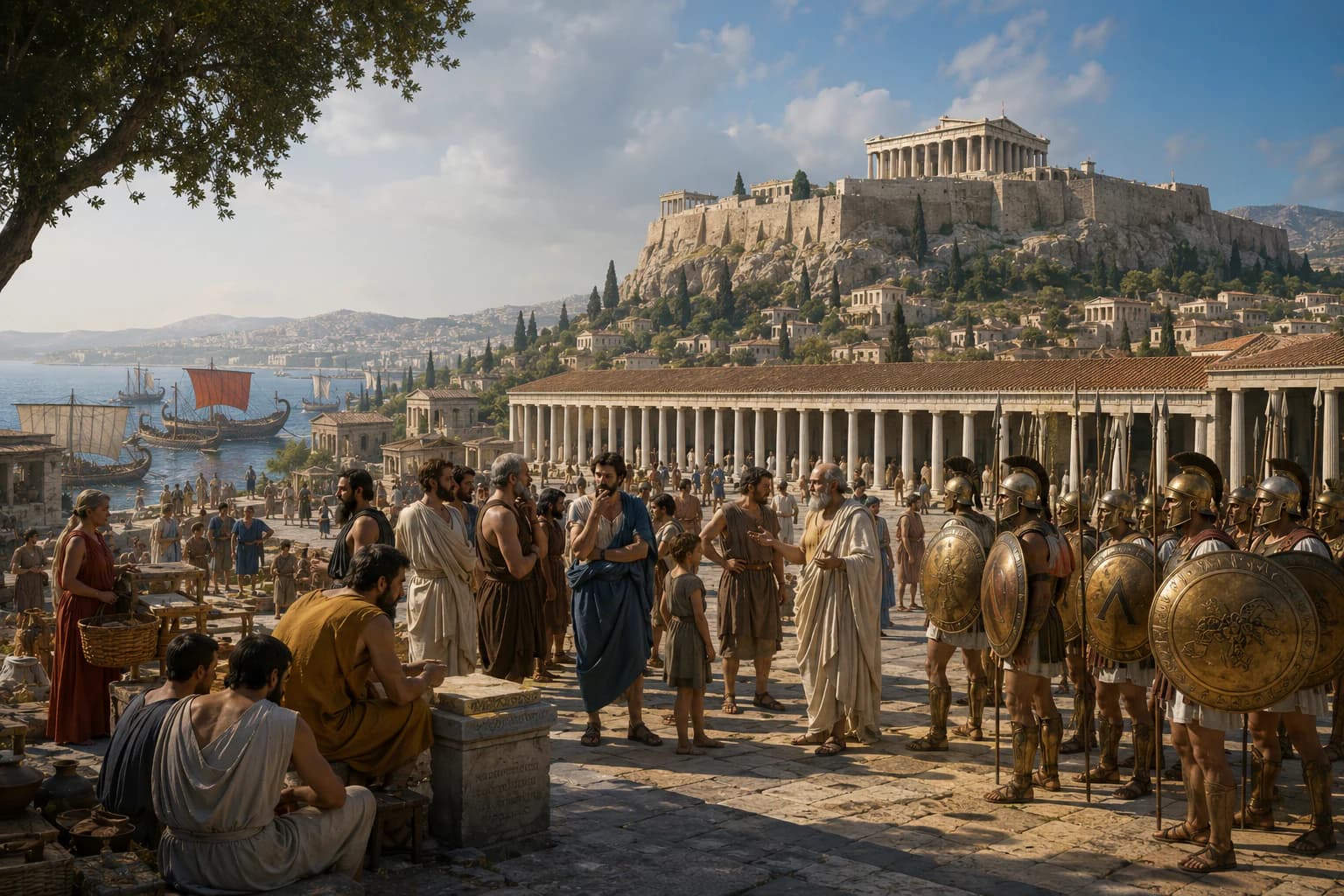
At Mieza, Alexander studied with Aristotle, one of the most influential thinkers in Greek history. The lessons likely included ethics, politics, poetry, natural philosophy, medicine, geography, and literature, especially Homer. Later tradition often imagines Aristotle neatly forming Alexander's mind, but the relationship should not be overstated. Alexander became no philosopher-king in the calm sense. He remained a warrior monarch shaped by Macedonian court politics and battlefield command. Yet Aristotle's education widened his mental map. Alexander learned to frame conquest through Greek culture, heroic memory, and inquiry into the wider world. His later interest in cities, scholars, plants, animals, mapping, and local customs was not accidental. The education gave his ambition a cultural language, even when his actions were violent and pragmatic.

-336

Sudden kingship

Philip's assassination at Aegae threw Macedon into immediate danger. Alexander was only twenty, and his claim could have been challenged by rival branches of the royal family, hostile nobles, or Greek states hoping Macedonian control would collapse. He acted with speed and ruthlessness. Potential claimants were removed, the army was secured, and southern Greece was forced back into line. The destruction of Thebes in 335 BC, after the city rebelled, sent a terrifying message: Alexander could be young without being weak. This early consolidation is essential to understanding him. Before he conquered Persia, he proved he could survive Macedonian politics. His reign began not as a romantic adventure but as a hard lesson in succession, fear, and the cost of hesitation.

-334

Crossing into Asia

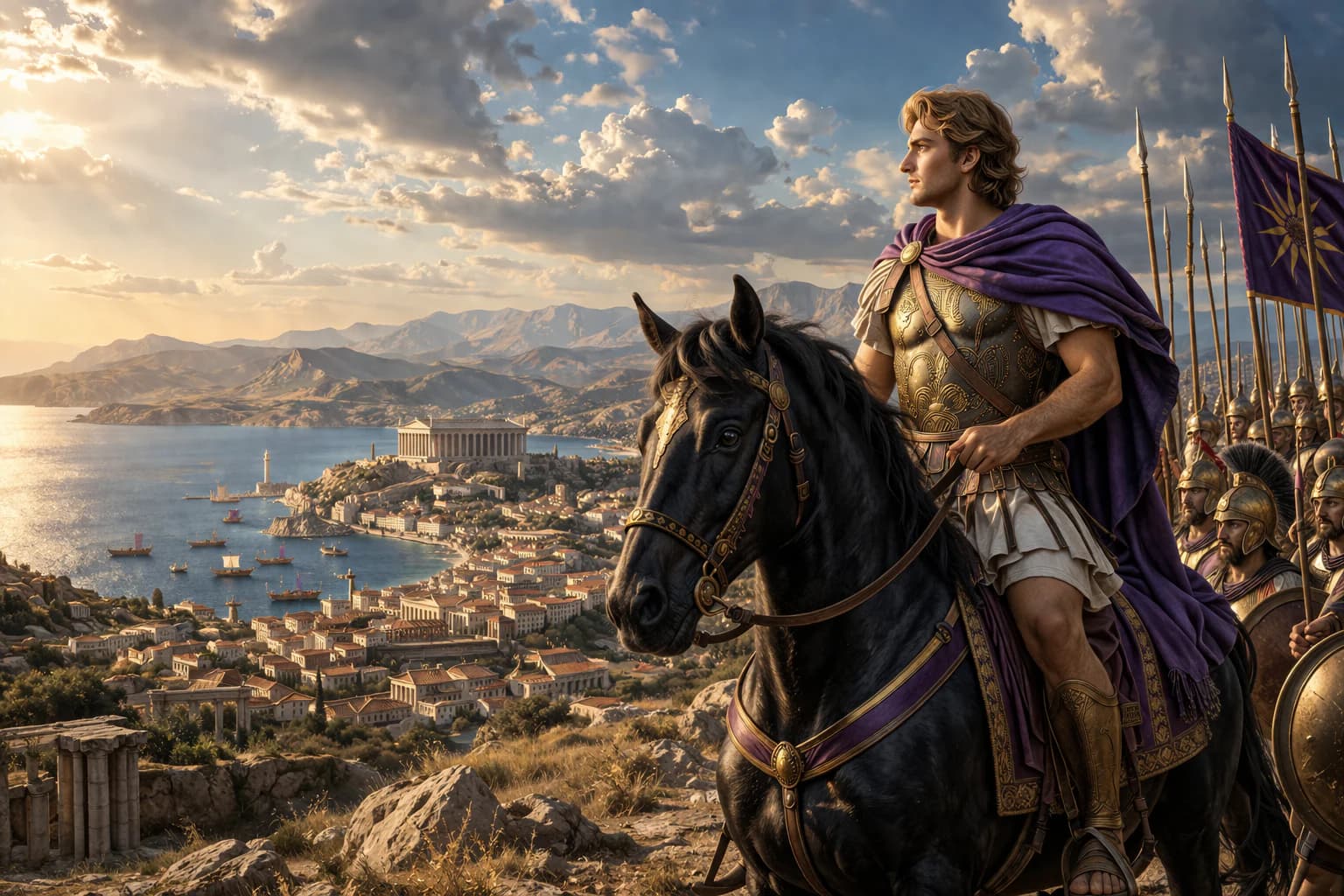
Alexander crossed the Hellespont in 334 BC with a Macedonian-led army and a powerful story: he was avenging earlier Persian invasions of Greece. The reality was also strategic. Macedon needed wealth, legitimacy, and a unifying external war. At the Granicus River, Alexander defeated Persian satraps and opened Asia Minor. His method became recognizable: aggressive cavalry leadership, flexible use of the phalanx, careful exploitation of enemy weakness, and personal risk that inspired loyalty while courting disaster. He visited Troy, honored heroic memory, and staged his campaign as both revenge and destiny. But each victory also brought practical gains: cities, treasuries, ports, supplies, and defecting elites. The campaign moved from raid to regime change because success kept widening what seemed possible.

-333 to -331

Empire taking shape

The battles of Issus in 333 BC and Gaugamela in 331 BC made Alexander more than a successful invader. They made him the destroyer of the Achaemenid Empire's central authority. Darius III survived both defeats for a time, but his ability to command loyalty collapsed. Alexander captured major centers including Babylon, Susa, Persepolis, and eventually the routes into Iran and Central Asia. He did not simply burn everything and move on. He used Persian administrative systems, appointed satraps, took over treasuries, and increasingly adopted elements of Persian kingship. This unsettled Macedonian companions who had expected a Greek revenge campaign, not a fusion of courts. Alexander's genius was military, but his problem became imperial: how to rule lands too large and diverse to govern as an enlarged Macedon.

-332

Into Egypt

Egypt was one of Alexander's most important political successes because it showed his ability to convert conquest into legitimacy. Persian rule had often been resented there, and Alexander entered with little resistance in 332 BC. He respected Egyptian religious forms, was recognized as pharaoh, and visited the oracle of Zeus-Ammon at Siwa, an episode later wrapped in claims about divine sonship. He also founded Alexandria on the Mediterranean coast, a city that would become one of the great intellectual, commercial, and cultural centers of the ancient world under the Ptolemies. Egypt reveals the dual nature of Alexander's rule. He could be brutally destructive elsewhere, but he could also adopt local symbols when they strengthened his authority. His empire was built by armies, then held together by performance, patronage, and translation across cultures.

-327 to -325

Reaching India

The eastern campaigns were among Alexander's hardest. In Bactria and Sogdiana he faced guerrilla resistance, difficult terrain, and the challenge of ruling regions that could not be subdued by one decisive battle. He married Roxana, a Bactrian noblewoman, in a move that carried both personal and political meaning. In 326 BC he crossed into the Punjab and fought King Porus at the Hydaspes River, a costly victory against an enemy using war elephants and local knowledge. Alexander wanted to continue toward the Ganges, but his army refused at the Hyphasis. They had marched for years, crossed deserts and mountains, and no longer trusted that conquest had an endpoint. This mutiny did what Darius had not: it stopped Alexander. The limit of his empire was not set by an enemy army but by the endurance of his own men.

-325 to -323

Return and strain

The return from India was brutal, especially the march through the Gedrosian desert, where heat, hunger, and poor planning cost many lives. Back in the imperial heartlands, Alexander found corruption, disorder, and overmighty officials who had assumed he would not return. He punished some governors and tried to bind the empire through new policies: mass marriages at Susa, inclusion of Persian troops, adoption of court rituals, and the training of young eastern soldiers in Macedonian methods. These moves were visionary to some and offensive to others. Macedonian veterans feared replacement; companions resented proskynesis and Persian dress; old loyalties strained under imperial ambition. Alexander was no longer simply a conquering king. He was attempting to invent a ruling class for a world empire, and he was doing it at speed, with impatience, charisma, and violence.

-323 and beyond

Unfinished legacy

Alexander died in Babylon in June 323 BC, aged thirty-two, after a sudden illness whose cause remains debated. Poison stories circulated, but evidence is uncertain, and disease is more plausible. His death exposed the greatest weakness of his achievement: there was no secure succession. His half-brother Philip III Arrhidaeus and posthumous son Alexander IV became symbolic kings, while the real struggle fell to the Diadochi, the rival generals who carved the empire into kingdoms. Politically, Alexander failed to create a durable united empire. Historically, he changed the map of culture. Greek became a language of administration and elite life across vast regions. Cities such as Alexandria linked Mediterranean, Egyptian, Near Eastern, and later Roman worlds. Monarchs from the Ptolemies to the Seleucids ruled in the shadow of his example. Alexander's legacy is therefore double-edged: a breathtaking conquest that fractured almost immediately, and a Hellenistic age that reshaped art, science, trade, kingship, and identity for centuries.

Continue in context

Connected stories

Move from the profile into the wider events and settings this figure belongs to.

Tertiary paths

Content note

This profile is written for educational use and connects to related Stories of History pages. The main portrait is an AI-assisted historical reconstruction, included as an illustrative aid rather than documentary evidence. Image policy

References

Sources & Further Reading

Reliable reference works, archives and reading paths connected to this profile.

Sources used

  1. Encyclopaedia Britannica, Alexander the Great,” accessed June 2026.Open source
  2. The Metropolitan Museum of Art, The Hellenistic Period,” accessed June 2026.Open source

Further reading

  1. Paul Cartledge, Alexander the Great, Overlook Press, 2004.

Primary sources

  1. Fordham University, Internet Ancient History Sourcebook,” accessed June 2026.Open source

Reviewed claim sources

Loading reviewed claim sources...

A weekly route through history

Find out first about the latest published stories, feature notes and occasional Premium offers in one weekly email.