People

William Lamb

William Lamb, 2nd Viscount Melbourne, was a Whig Prime Minister of Britain and mentor to Queen Victoria. His biography spans Regency scandal, reform politics and early Victorian government.

Born
1779 CE
Died
1848 CE
Role
Whig Prime Minister

Whig Prime Minister (1779–1848)

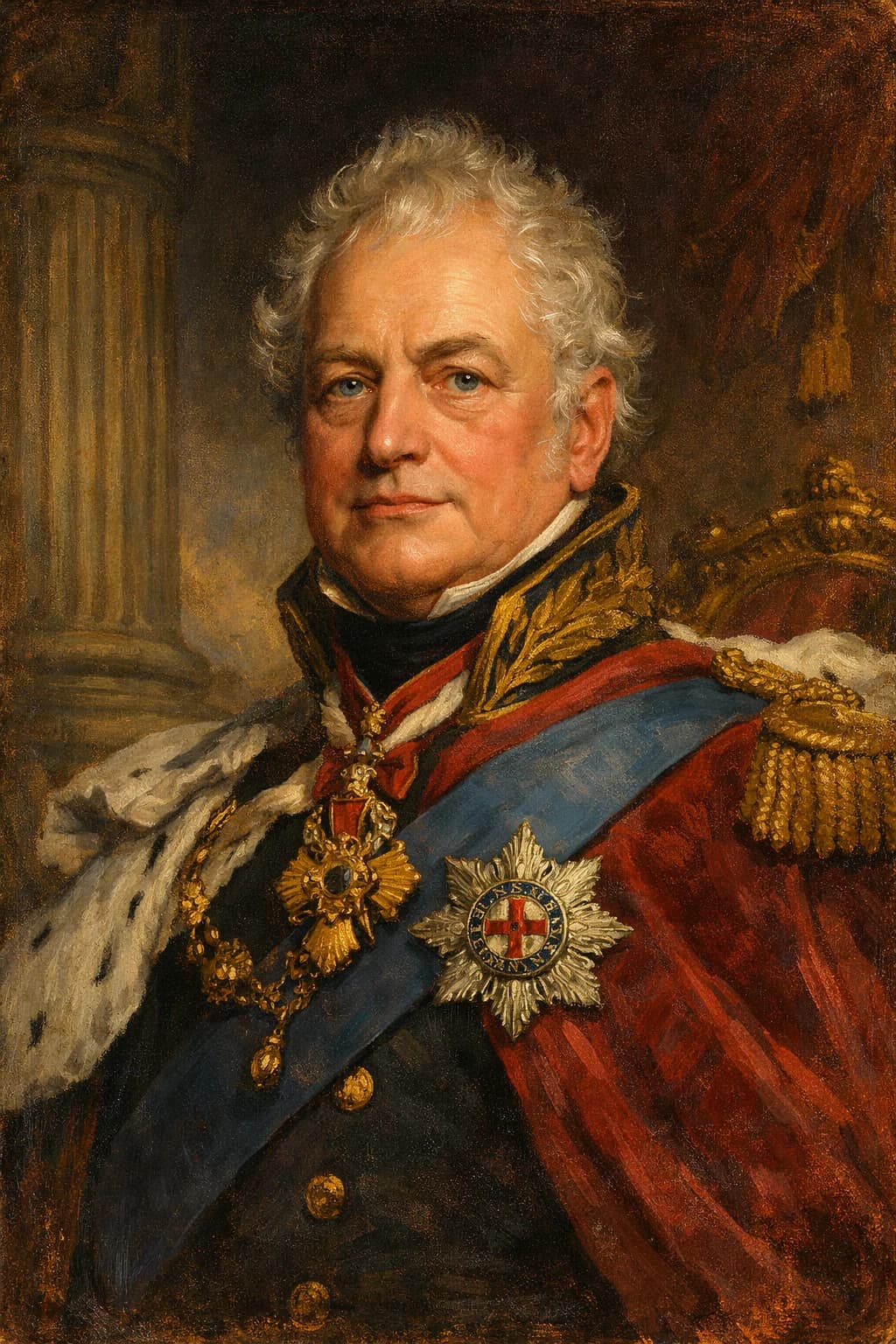
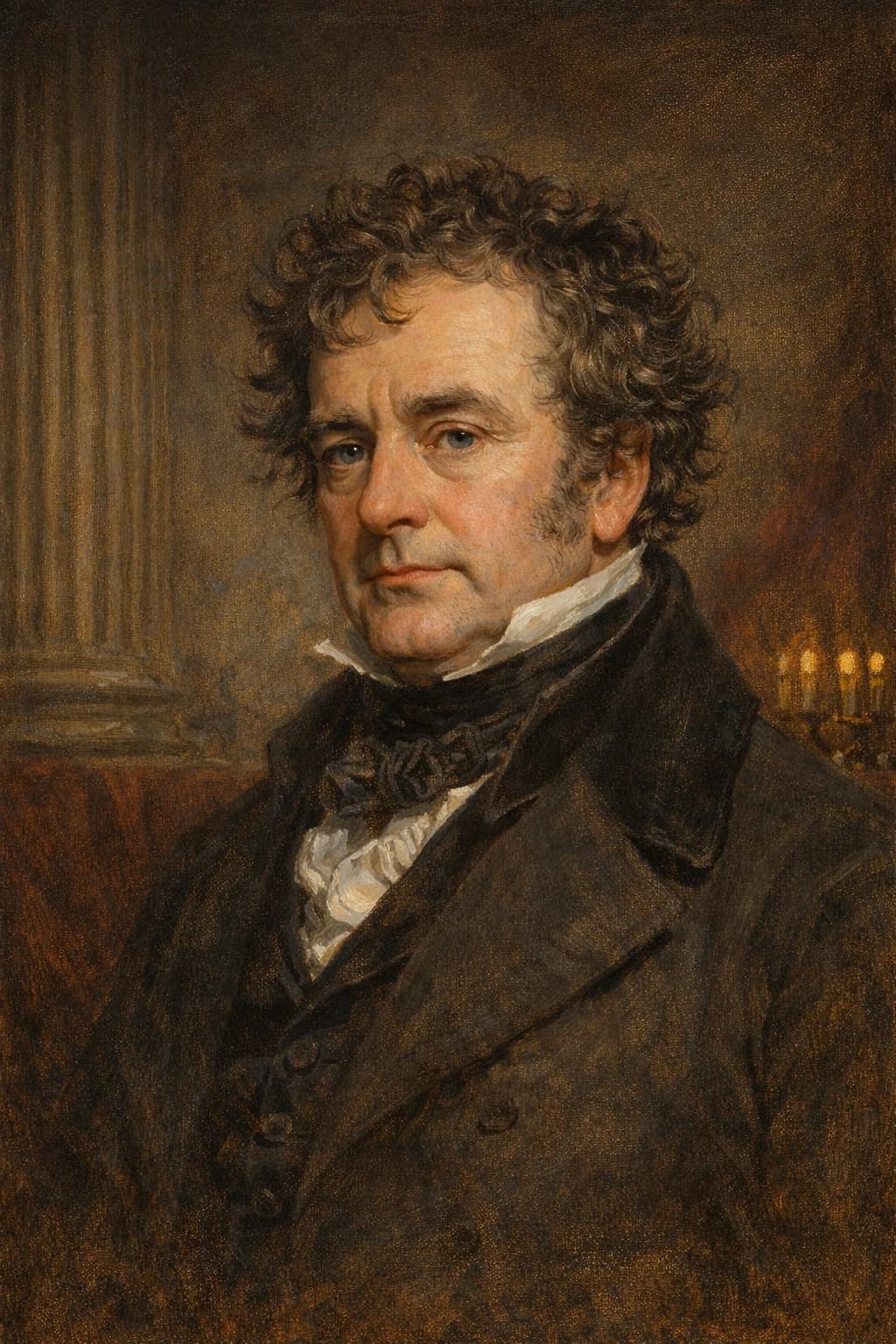
AI-generated portrait of Viscount Melbourne in formal Regency-era attire
AI-assisted historical reconstruction

An illustrative reconstruction based on historical context. It is not a photograph or documentary likeness. Image policy

Quick answer

William Lamb, 2nd Viscount Melbourne, was a Whig Prime Minister of Britain and mentor to Queen Victoria. His biography spans Regency scandal, reform politics and early Victorian government.

Born
1779 CE
Died
1848 CE
Role
Whig Prime Minister
Years
1779-1848 CE
Quick facts

Profile details

Additional identity and tagging details that are not already covered in the introduction.

Full name
William Lamb, 2nd Viscount Melbourne
Also known as
Viscount Melbourne, Lord Melbourne, William Lamb, Viscount Melbourne
Facts

William Lamb timeline facts

Selected specifics from this profile's life story.

1779
Privileged beginnings

William Lamb was born in 1779 into a wealthy Whig family whose social confidence and political connections opened the road to Parliament.

1810s
Private difficulties

Melbourne's marriage to Caroline Lamb brought celebrity, scandal and pain, especially through her public infatuation with Lord Byron.

1837
Guiding a young queen

When Queen Victoria came to the throne in 1837 at eighteen, Melbourne became her trusted adviser, political tutor and daily companion.

1848
Enduring legacy

Melbourne died in 1848 remembered less for landmark legislation than for political steadiness and his formative influence on Queen Victoria.

Life Journey

Scandal, Whig government, and Victoria's first tutor

Follow the story in a more continuous narrative, with a reading mode that matches how much depth you want.

Complete chronology

1779

Privileged beginnings

William Lamb's origins were privileged, complicated and intensely social. His mother, Lady Melbourne, moved at the centre of aristocratic Whig society, and the family home was a place where politics, gossip, patronage and personal intrigue overlapped. His father, the 1st Viscount Melbourne, supplied title and position; his mother supplied much of the family's social force. Lamb therefore grew up understanding power as conversation as much as command. He was not raised to be a crusader. He learned the arts of ease, timing, irony and emotional self-control, qualities that later made him seem either wise or evasive depending on the observer.

1790s

Elite education

Lamb's education followed the route of elite preparation but left him with a mind more sceptical than doctrinaire. Eton gave him polish, Cambridge placed him among the governing class, and legal study sharpened his ability to weigh cases without appearing hurried by conviction. He read widely, enjoyed conversation and developed the relaxed intellectual style that became his political signature. Unlike reformers who carried a system in their heads, Melbourne carried a temperament: worldly, tolerant, amused by human weakness and suspicious of over-serious plans to perfect society. That temperament would later comfort Queen Victoria, but it also limited his appetite for deep structural reform.

1806

Entering Parliament

Lamb's early parliamentary career was not spectacular. He entered the Commons in 1806 and developed slowly, more observer than firebrand. Britain was at war with Napoleonic France, domestic politics were strained by demands for Catholic emancipation and parliamentary reform, and Whiggism itself contained aristocratic caution alongside reformist energy. Lamb's instinct was moderate. He disliked cruelty and repression, but he also distrusted agitation and abstract enthusiasm. This made him useful in government but rarely inspirational. He rose because colleagues trusted his judgment, his manners and his ability to keep arguments from becoming disasters.

1810s

Private difficulties

The most famous drama of Lamb's private life came through his wife, Caroline Lamb, whose brilliance, instability and affair with Lord Byron became one of the scandals of Regency society. Her description of Byron as 'mad, bad, and dangerous to know' outlived all three of them. For Melbourne, the episode brought humiliation without the simple option of retreat. He treated Caroline with a mixture of affection, exasperation and restraint, remaining publicly composed while the marriage became impossible. Later accusations in the Caroline Norton affair again exposed him to public sexual scandal, though he survived politically. These experiences hardened his instinct for calm. Melbourne understood that public storms often pass if one refuses to perform panic for them.

1820s

Climbing to office

Lamb became Viscount Melbourne in 1828 and moved into higher office as the old Tory order fractured. As Chief Secretary for Ireland, he confronted a country shaped by Catholic emancipation, land grievance and nationalist mobilisation. As Home Secretary under Earl Grey, he dealt with labour unrest, machine-breaking, criminal justice and the nervous aftermath of the 1832 Reform Act. He was not a great legislative innovator, but he was a practical administrator in a state learning to govern a more politically alert society. His moderation suited Whig leadership after reform: enough sympathy for change to avoid reaction, enough caution to restrain revolution.

1834

Becoming prime minister

Melbourne first became prime minister almost by succession rather than conquest. Earl Grey resigned in 1834, and Melbourne, acceptable and unthreatening, took over a Whig government still managing the consequences of reform. King William IV soon dismissed him and invited Robert Peel to govern, but Peel could not command the Commons for long. Melbourne returned in 1835, and the episode became constitutionally important because it showed the monarch's declining ability to choose ministers against parliamentary arithmetic. Melbourne's government relied on Whigs, Radicals and Irish support, especially from Daniel O'Connell's followers. It survived through management more than momentum, which was exactly Melbourne's gift and exactly his limitation.

1837

Guiding a young queen

Melbourne's most memorable historical role began with Victoria's accession in June 1837. The young queen had been sheltered, controlled by her mother and Sir John Conroy, and was suddenly sovereign. Melbourne gave her what she needed most: patient instruction without humiliation. He explained papers, parties, personalities and constitutional habits, while also offering emotional steadiness. Their closeness caused political problems, especially during the Bedchamber Crisis of 1839, when Victoria resisted replacing Whig ladies of the household after Peel was asked to form a government. Melbourne's influence helped Victoria learn monarchy, but it also tied her too visibly to the Whigs. His tutorship was invaluable and politically risky at the same time.

1841

Retirement from power

By 1841, Melbourne's government had run out of energy. Economic difficulties, weak parliamentary numbers and the sense that the ministry existed to survive rather than govern all worked against him. Peel's Conservatives won the election, and Melbourne left office with dignity. For Victoria, the loss was personally painful; for the political system, it was a necessary adjustment. The queen had to learn to work with a minister she had not chosen emotionally. Melbourne's departure therefore completed part of his own lesson to her: constitutional monarchy required trust beyond personal affection. His health declined after a stroke in 1842, and he never returned to central power.

1848

Enduring legacy

Melbourne's legacy is subtle because his achievement was often preventive. He did not reshape Britain like Grey, Peel or Gladstone. He did not lead a mass movement or build a doctrine. He governed in the uncertain space after the Reform Act, when the political nation had expanded but the old aristocratic habits had not yet disappeared. His greatest influence was on Victoria, whom he helped turn from an inexperienced teenager into a constitutional monarch with a working grasp of government. That influence had limits: he encouraged her Whig sympathies and did not always push her toward political detachment quickly enough. Still, his patience mattered. Melbourne's biography shows that some figures shape history by lowering the temperature at moments when inexperience, scandal or constitutional friction might otherwise have done lasting damage.

Continue in context

Connected stories

Move from the profile into the wider events and settings this figure belongs to.

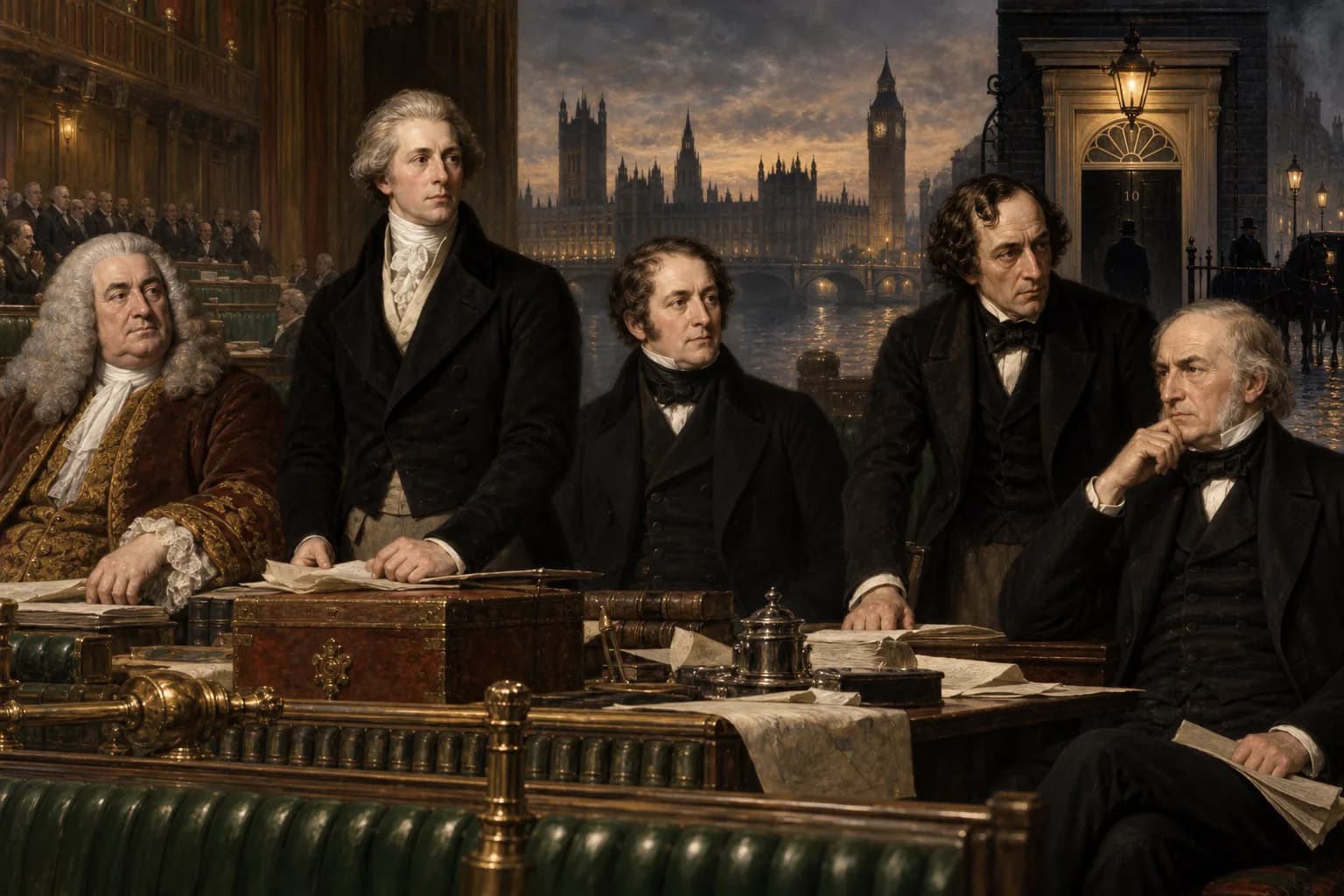
British Prime Ministers lineage
LineagePrime ministers in sequence
British Prime Ministers
1721 CE–present

Explore British prime ministers from Walpole to the present.

View lineage
Tertiary paths

Content note

This profile is written for educational use and connects to related Stories of History pages. The main portrait is an AI-assisted historical reconstruction, included as an illustrative aid rather than documentary evidence. Image policy

References

Sources & Further Reading

Reliable reference works, archives and reading paths connected to this profile.

Further reading

  1. Encyclopaedia Britannica, Search results for William Lamb,” accessed June 2026.Open source
  2. WorldCat, Books and library holdings for William Lamb,” accessed June 2026.Open source

Primary sources

  1. Library of Congress, Search results for William Lamb,” accessed June 2026.Open source

Reviewed claim sources

Loading reviewed claim sources...

A weekly route through history

Find out first about the latest published stories, feature notes and occasional Premium offers in one weekly email.