People

William IV

William IV, the Sailor King, ruled Britain from 1830 to 1837. His reign is remembered for the Reform Act of 1832, the Melbourne dismissal and the transition to Queen Victoria.

Born
1765 CE
Died
1837 CE
Role
King of Great Britain

King of Great Britain (1765–1837)

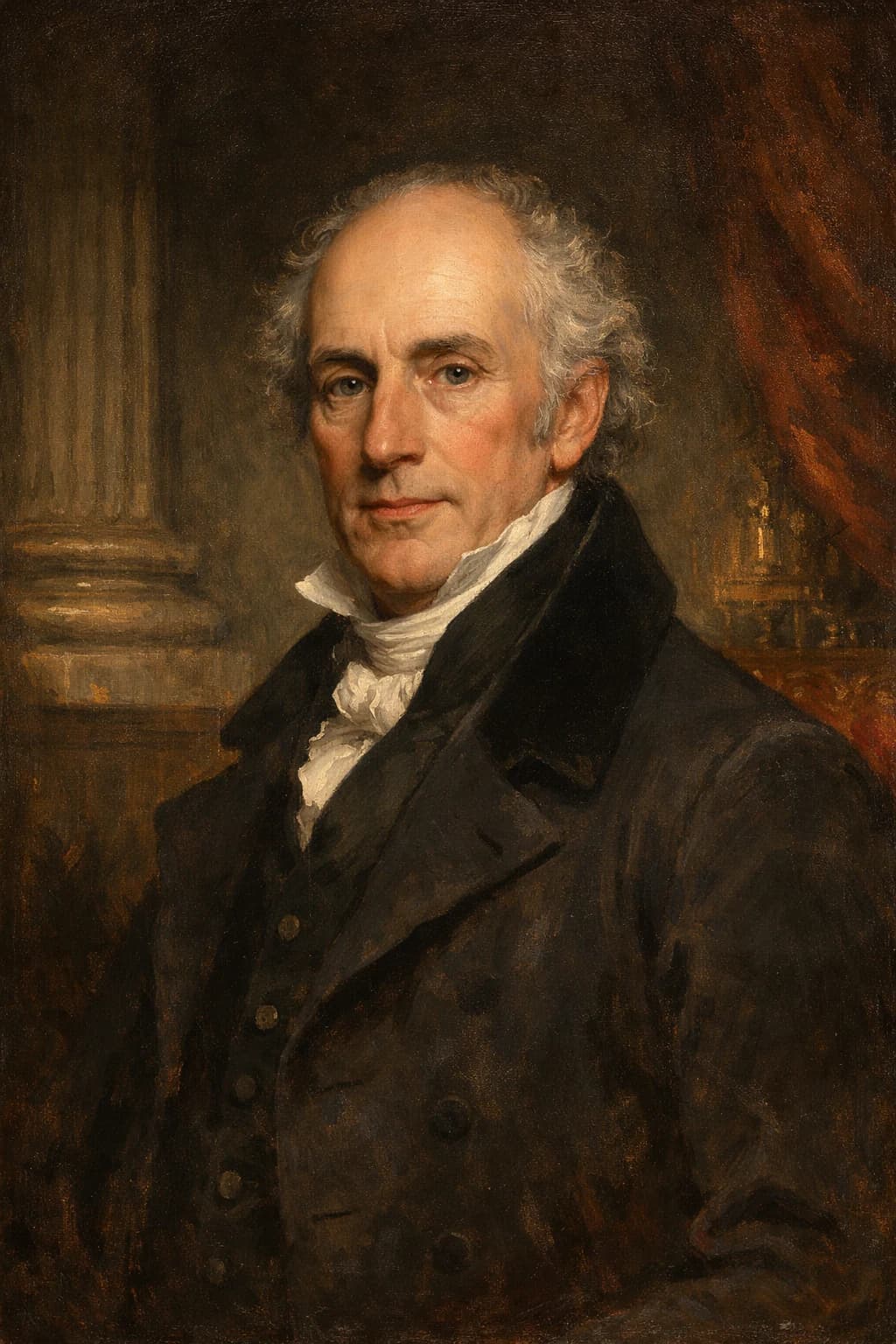
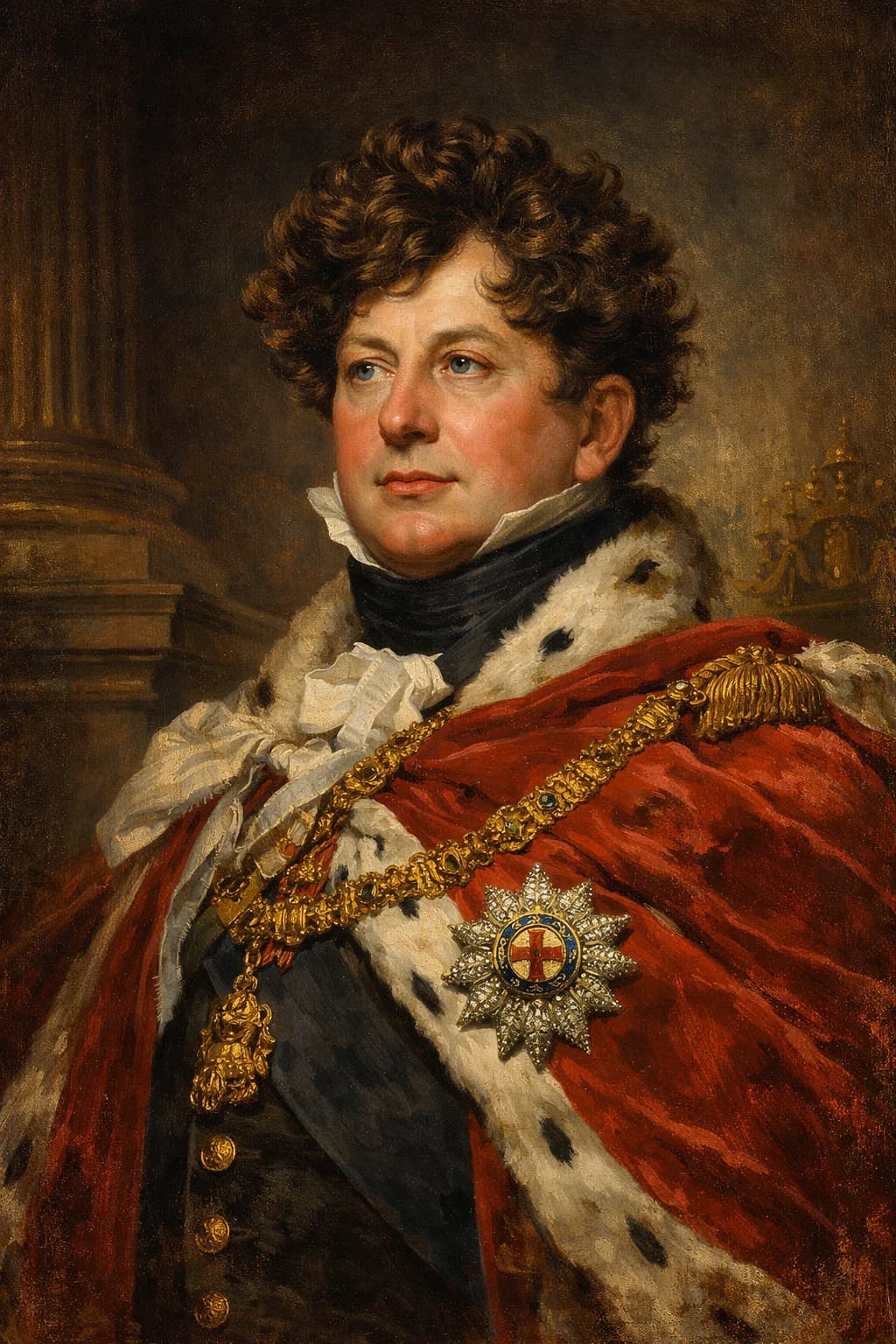
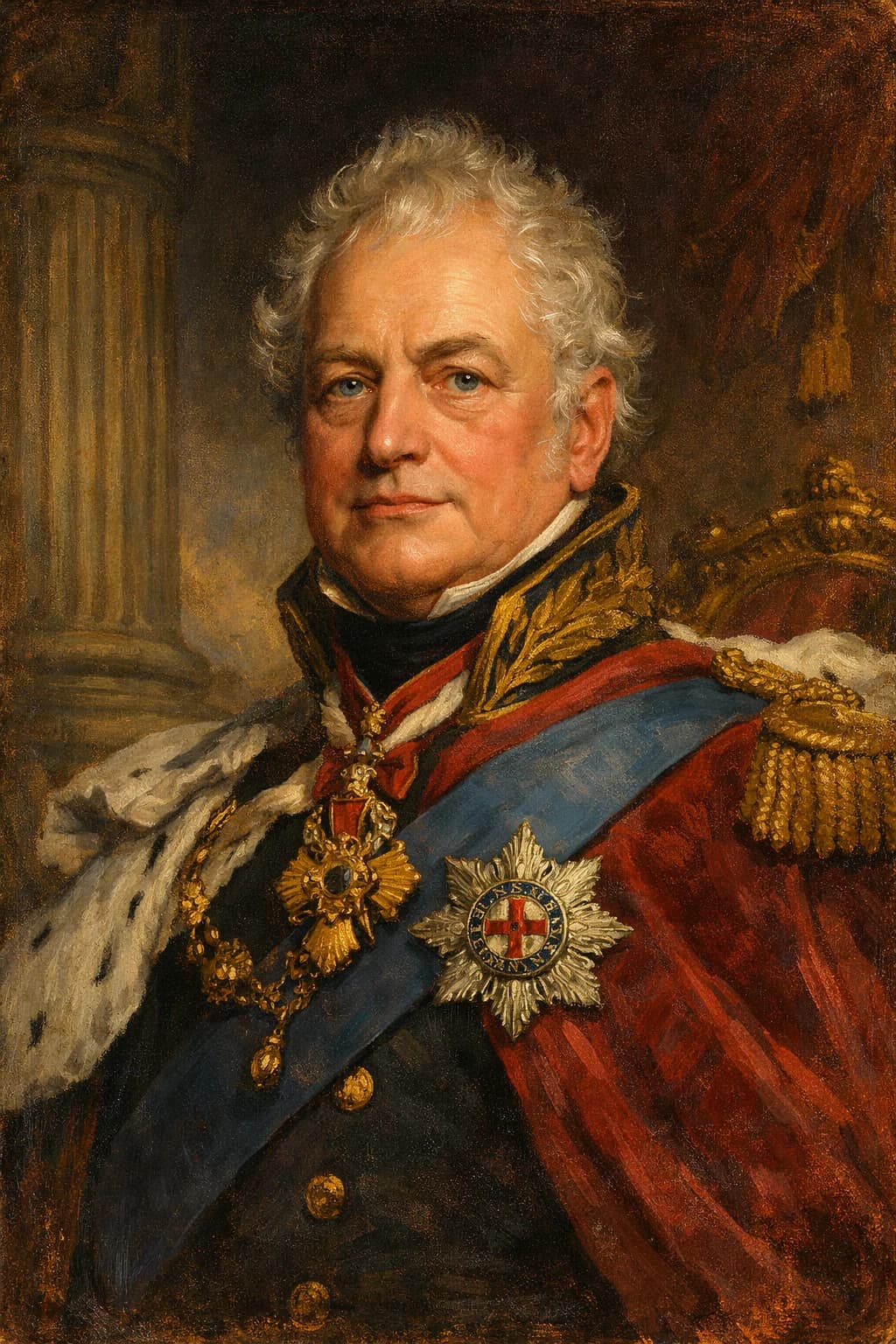
AI-generated portrait of William IV in early Victorian-era royal attire
AI-assisted historical reconstruction

An illustrative reconstruction based on historical context. It is not a photograph or documentary likeness. Image policy

Quick answer

William IV, the Sailor King, ruled Britain from 1830 to 1837. His reign is remembered for the Reform Act of 1832, the Melbourne dismissal and the transition to Queen Victoria.

Born
1765 CE
Died
1837 CE
Role
King of Great Britain
Years
1765-1837 CE
Quick facts

Profile details

Additional identity and tagging details that are not already covered in the introduction.

Also known as
The Sailor King
Facts

William IV timeline facts

Selected specifics from this profile's life story.

1765–1790s
Third son, naval career

As the third son of George III with no expectation of the throne, William pursued a genuine naval career from adolescence, seeing action in America and the Caribbean.

1830
Accession at sixty-four

George IV died in June 1830, and William came to the throne at sixty-four with a directness and informality that immediately distinguished him from his predecessor.

1834
Dismissal of Melbourne

William IV dismissed the Whig government under Melbourne in November 1834, the last time a British monarch removed a ministry that commanded a parliamentary majority.

Post-1837
The brief consequential reign

William IV's seven-year reign is remembered for the Reform Act of 1832, the limits of royal intervention and the smooth handover from Georgian Britain to Queen Victoria.

Life Journey

The Sailor King, reform crisis, and the road to Victoria

Follow the story in a more continuous narrative, with a reading mode that matches how much depth you want.

Complete chronology

1765–1790s

Third son, naval career

William Henry was born in August 1765 as the third son of George III and Queen Charlotte. With two elder brothers ahead of him in succession, he was destined for a service career rather than kingship, and the navy was chosen. He joined as a midshipman in 1779 at the age of thirteen and served in genuinely active conditions, including the American Revolutionary War and operations in the Caribbean. He served under Horatio Nelson, who described the young prince as a steady, firm man and perhaps the best midshipman in the navy. William developed a genuine affection for naval life and the blunt, unvarnished manner of the lower deck that would contrast memorably with the ceremonial requirements of monarchy he never entirely acquired. His naval service was real, not ceremonial.


1790–1811

Dorothea Jordan and family

William's long relationship with the comic actress Dorothea Jordan began in 1790 and lasted for over two decades. She was already an established and celebrated performer; he was a prince in financial difficulties who had caused his father problems with a series of inappropriate attachments. Their relationship was genuinely happy and produced ten children, all of whom bore the surname FitzClarence. Mrs Jordan continued her theatrical career throughout, partly to contribute to the household expenses given William's chronic shortage of funds. In 1811, when the dynastic crisis following the death of Princess Charlotte made a legitimate royal heir essential, William ended the arrangement. Dorothea Jordan died in France in 1816 in obscure financial distress. The episode was not uniquely cruel by the standards of the age, but it was not kind either.

1818

Marriage and the succession

The death in childbirth of Princess Charlotte in 1817, the only legitimate grandchild of George III at the time, created a succession crisis that required the bachelor and separated royal dukes to find legitimate wives with appropriate urgency. William married Princess Adelaide of Saxe-Meiningen in 1818 in a ceremony held on the same day as a sibling's wedding, in what contemporaries noted as a somewhat perfunctory affair. The marriage turned out to be quietly successful: Adelaide was a woman of sense and warmth, and the two developed a genuine mutual affection. Their two daughters died in infancy, leaving the succession ultimately to his brother Edward's daughter Victoria, but the marriage gave William's later years a personal stability that his earlier life had lacked.

1830

Accession at sixty-four

William IV's accession was greeted with something like relief by a public that had grown very tired of George IV's concealed and reclusive final years. William was informal, accessible, and eccentric rather than magnificent. He shook hands with strangers in the street, visited shops without ceremony, and behaved with the unpretentiousness of a naval officer who had never expected to be king. His coronation was deliberately low-key and cheaper than his brother's, which he called that useless and ill-timed expense. The contrast with the preceding reign was immediate and, for many, welcome. He was clearly not going to be a dramatic figure, but he was also not going to be a disgraced one, which represented genuine progress.

1831–1832

Reform crisis

The Reform Act crisis of 1831–1832 was the most serious constitutional confrontation of William's reign and the defining event of his legacy. The Whig government under Earl Grey introduced a bill to reform the corrupt and unrepresentative parliamentary system — the rotten boroughs, the pocket boroughs, the exclusion of the new industrial towns from representation. The House of Lords repeatedly blocked or threatened to block the bill, and the political temperature in the country reached levels that alarmed those who remembered the French Revolution. William eventually agreed to create enough new peers to pass the bill through the Lords if necessary. This threat was enough: sufficient Tory peers abstained, and the Reform Act passed in June 1832. The constitutional change was significant; the process by which it was enabled was equally so.

June 1832

The Reform Act

The Reform Act of 1832 was not a democratic revolution — the electorate remained small, the working class was largely excluded, and property qualifications continued — but it was a significant realignment of political representation. It abolished the most egregious rotten boroughs, redistributed seats to the new industrial towns of Birmingham, Manchester, and Leeds that had never previously returned members, and extended the vote to a wider range of property owners. It also established the principle, which proved impossible to reverse, that the composition of the Commons should bear some relationship to the distribution of population and power in the country. William IV's willingness to facilitate this change, despite his own instinctive conservatism, was the pivotal royal contribution to a constitutional development that shaped British politics for generations.

1834

Dismissal of Melbourne

In November 1834, William IV dismissed the Melbourne government, which had a working majority in the Commons but which William had grown to distrust. He invited Robert Peel to form a government, which the subsequent general election failed to give a working majority, requiring the return of Melbourne. The episode was the last exercise of the royal prerogative to dismiss a ministry that commanded parliamentary confidence and marked an important constitutional moment: it demonstrated that the monarch could not indefinitely determine who governed if parliamentary arithmetic ran in the other direction. The action was legally within William's rights but practically futile, and it established a precedent that subsequent monarchs followed in declining to repeat it.

1835–1837

Final years

William IV's final years were spent in declining health and modest circumstance by royal standards. He had been a heavy drinker for much of his adult life, and the physical toll was visible. His relationship with Melbourne's restored government was less confrontational than before, and political life moved in a parliamentary direction that reduced the monarch's active role. He was aware that he was likely to die before Victoria came of age, which would have required a regency under her mother the Duchess of Kent, whom he cordially disliked. He survived just long enough to prevent it: Victoria turned eighteen in May 1837, and William died in June. He reportedly told his physicians that he wished to live long enough to prevent the regency, which they took as a medical prescription of unusual specificity.

Post-1837

The brief consequential reign

William IV is not a dramatic historical figure, and his reign lacks the personal fireworks of George IV or the national sweep of Victoria. Yet his constitutional importance is larger than his modest personality suggests. His willingness to facilitate the Reform Act of 1832 — by threatening the creation of peers and breaking the Lords' resistance without actually flooding the chamber — marked the point at which the unreformed parliamentary system became indefensible. His failed dismissal of Melbourne in 1834 also clarified the practical limits of royal choice once parliamentary confidence pointed elsewhere. William's reign therefore matters as a hinge. He was old-fashioned in instinct, informal in manner and sometimes erratic in judgment, but he presided over a monarchy learning to survive by yielding ground.

Continue in context

Connected stories

Move from the profile into the wider events and settings this figure belongs to.

British Monarchs lineage
Lineage42 rulers
British Monarchs
1066 CE–present

Trace the English and later British monarchy from William I to today.

View lineage
Tertiary paths

Content note

This profile is written for educational use and connects to related Stories of History pages. The main portrait is an AI-assisted historical reconstruction, included as an illustrative aid rather than documentary evidence. Image policy

References

Sources & Further Reading

Reliable reference works, archives and reading paths connected to this profile.

Further reading

  1. Encyclopaedia Britannica, Search results for William IV,” accessed June 2026.Open source
  2. WorldCat, Books and library holdings for William IV,” accessed June 2026.Open source

Primary sources

  1. Library of Congress, Search results for William IV,” accessed June 2026.Open source

Reviewed claim sources

Loading reviewed claim sources...

A weekly route through history

Find out first about the latest published stories, feature notes and occasional Premium offers in one weekly email.