People

William Gladstone

William Ewart Gladstone was a four-time Liberal Prime Minister of the United Kingdom. He championed free trade, fiscal reform, Irish Home Rule, education, civil service reform and Victorian Liberalism.

Born
1809 CE
Died
1898 CE
Role
Four-time Liberal Prime Minister

Four-time Liberal Prime Minister (1809–1898)

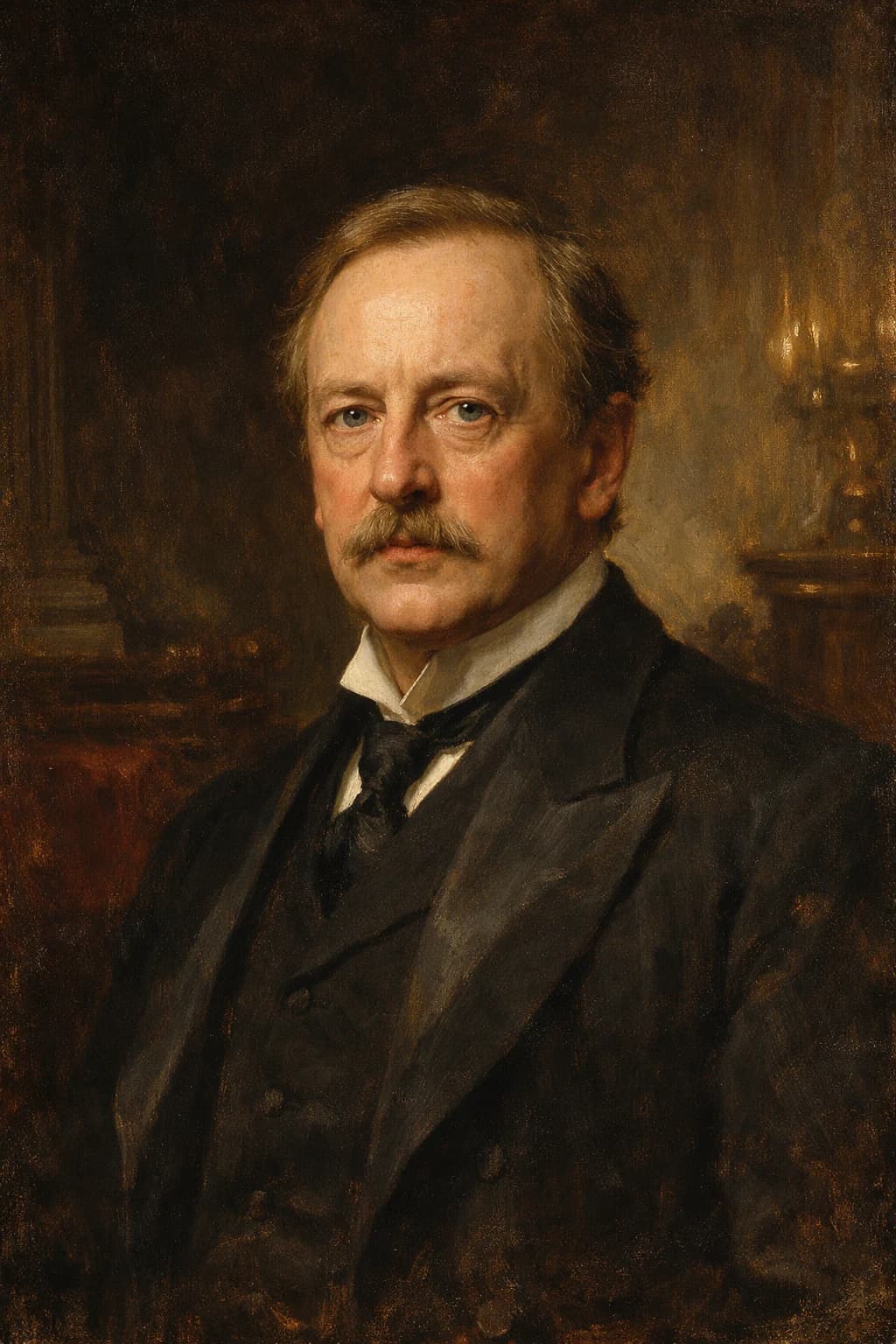
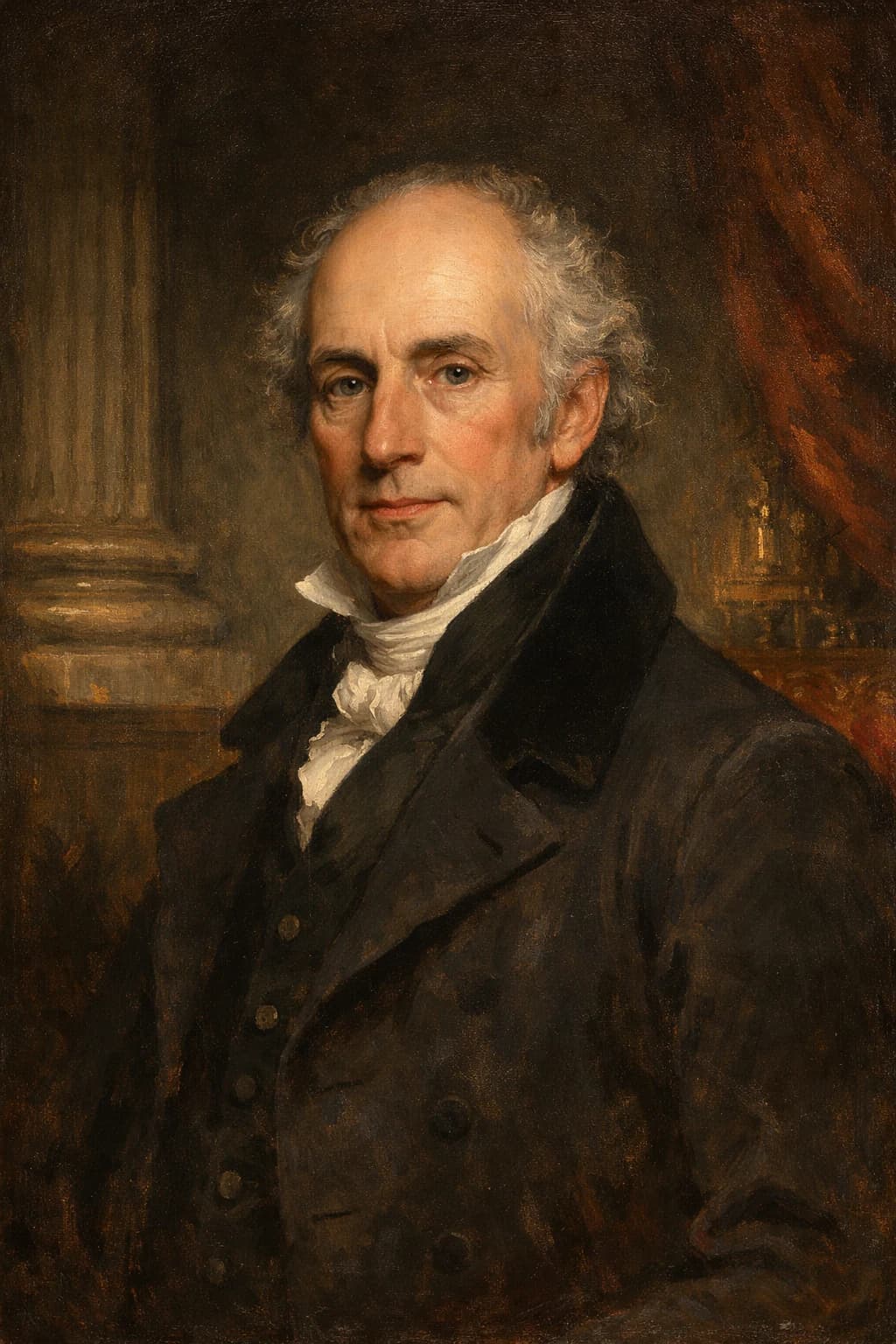
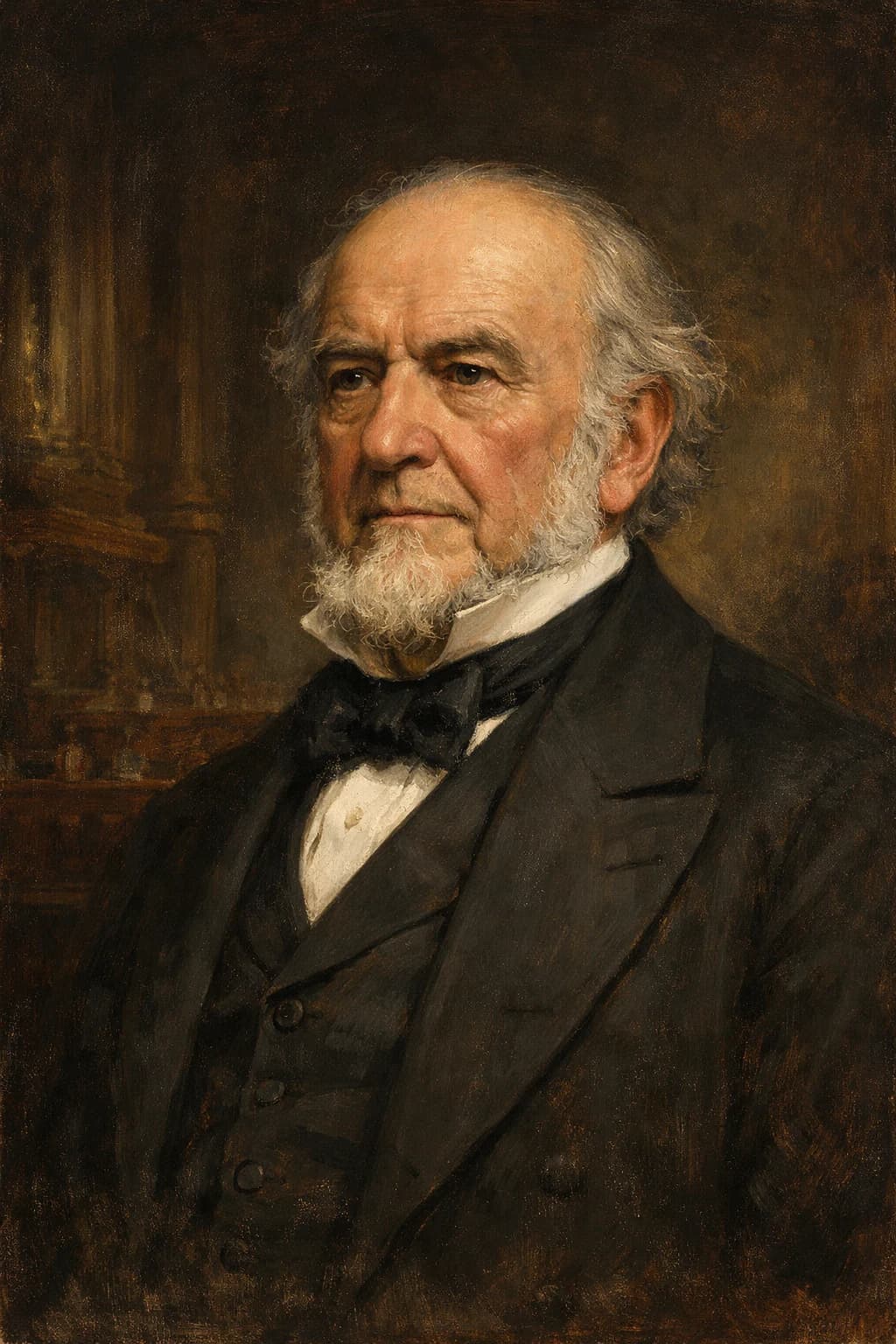
AI-generated portrait of William Ewart Gladstone in formal Victorian attire
AI-assisted historical reconstruction

An illustrative reconstruction based on historical context. It is not a photograph or documentary likeness. Image policy

Quick answer

William Ewart Gladstone was a four-time Liberal Prime Minister of the United Kingdom. He championed free trade, fiscal reform, Irish Home Rule, education, civil service reform and Victorian Liberalism.

Born
1809 CE
Died
1898 CE
Role
Four-time Liberal Prime Minister
Years
1809-1898 CE
Quick facts

Profile details

Additional identity and tagging details that are not already covered in the introduction.

Full name
William Ewart Gladstone
Also known as
W. E. Gladstone, Gladstone
Facts

William Gladstone timeline facts

Selected specifics from this profile's life story.

1809
Merchant family roots

William Ewart Gladstone was born in Liverpool in 1809 into a wealthy merchant family shaped by empire, commerce and intense Anglican faith.

1840s–1850s
Shift toward reform

In the 1840s and 1850s, Gladstone moved through Peelism toward Liberalism, embracing free trade, administrative reform and fiscal retrenchment.

1880–1894
Repeated returns

Gladstone returned as prime minister in 1880, 1886 and 1892, using mass campaigning and moral argument to sustain extraordinary longevity.

1898
Enduring legacy

Gladstone died in 1898 as the grand old man of Liberalism, leaving a legacy of reform, moral politics and unresolved Irish conflict.

Life Journey

Moral politics, Liberal reform, and the battle over Ireland

Follow the story in a more continuous narrative, with a reading mode that matches how much depth you want.

Complete chronology

1809

Merchant family roots

Gladstone's origins combined privilege with moral tension. His father, John Gladstone, made a fortune in trade and owned slave plantations in the Caribbean, a fact that later sits uneasily beside William's reputation as a moral statesman. The family was prosperous, ambitious and deeply religious. Gladstone inherited wealth, education and access, but also a powerful sense that public life was a field of duty before God. This mixture drove him throughout his career. He could be financially precise, administratively formidable and morally thunderous, often all at once. The roots of Victorian Liberalism's conscience politics were already visible in the seriousness of his upbringing.
1828–1831

Oxford formation

Gladstone's Oxford years refined his intellect and deepened his religious seriousness. He excelled in classics and mathematics and became a commanding speaker at the Oxford Union. At this stage, he was no Liberal radical. He defended church establishment, hierarchy and moral order, believing the state had religious obligations. His early book on church and state impressed some conservatives and alarmed others with its intensity. Oxford also placed him inside elite networks that opened parliamentary doors. Gladstone emerged as a young man of dazzling ability, formidable discipline and a tendency to treat political disagreement as a moral trial.

1832

Entering Parliament

Gladstone's early parliamentary career began under Conservative patronage in the pocket borough of Newark. He was eloquent, diligent and deeply conservative, defending the established church and colonial interests. Yet he was never intellectually lazy. His mastery of detail made him valuable in office, especially at the Board of Trade and Colonial Office. Over time, the same habits that made him a strong defender of tradition made him capable of rethinking it. He followed evidence, finance and conscience with unusual intensity. This is the key to Gladstone's transformation: he did not abandon seriousness; he redirected it.

1840s–1850s

Shift toward reform

The turning point was the age of Sir Robert Peel. Gladstone supported Peel's free-trade direction and followed him away from protectionist Conservatism after the Corn Law split. As Chancellor of the Exchequer, he became famous for budgets that combined low taxation, free trade, balanced finance and moral language about public trust. He believed government should be economical, honest and open to talent. This was not socialism; it was Liberal reform rooted in self-help, markets, peace and civic responsibility. By the 1860s, Gladstone had become one of the central architects of Liberal politics, though traces of his old conservatism never entirely vanished.

1868–1874

First term in power

Gladstone's first government was one of the great reforming ministries of Victorian Britain. It disestablished the Church of Ireland, passed an Irish Land Act, created a national framework for elementary education, abolished the purchase of army commissions, opened the civil service through competitive examination and introduced the secret ballot. The aim was to remove privilege, modernise institutions and make government more morally defensible. The pace was exhausting. Supporters admired the energy; opponents saw an assault on inherited order. Gladstone treated reform as purification, not mere efficiency. That made him powerful and difficult: he wanted policy to redeem public life.

1870s

Clash with Disraeli

The Gladstone-Disraeli rivalry was personal, ideological and theatrical. Disraeli distrusted Gladstone's moral intensity and turned monarchy, empire and party storytelling into political weapons. Gladstone attacked Disraeli's imperial policy, especially in the Balkans, with righteous force. Their conflict helped create modern party politics as public drama: mass meetings, press battles, moral campaigns and sharply opposed national visions. Queen Victoria preferred Disraeli's charm and disliked Gladstone's lecturing manner, which only sharpened the contrast. The two men defined each other. Gladstone looked earnest because Disraeli looked dazzling; Disraeli looked cynical because Gladstone looked severe.

1880–1894

Repeated returns

Gladstone's later career defied normal political ageing. His Midlothian campaign of 1879-1880 attacked Disraeli's foreign policy and helped pioneer mass democratic leadership outside Parliament. Back in office, he faced Egypt, Ireland, franchise reform and party strain. He expanded the vote in 1884, bringing more working men into the electorate, but Ireland increasingly dominated his final decades. Gladstone's repeated returns showed both personal resilience and the Liberal Party's dependence on him. He remained capable of electrifying voters, yet his dominance also made succession difficult. He became an institution, and institutions are hard to retire.

1880s–1890s

Irish Home Rule

Gladstone's conversion to Irish Home Rule was the most divisive act of his career. He concluded that coercion and limited land reform could not solve Ireland's demand for self-government. His 1886 Home Rule Bill split the Liberals, driving Liberal Unionists into alliance with Conservatives and transforming British party politics. A second bill passed the Commons in 1893 but was destroyed in the House of Lords. Gladstone saw Home Rule as justice and reconciliation within the empire; opponents saw it as surrender to nationalism and a threat to the Union. He failed in immediate terms, but he forced Ireland to the centre of British politics in a way no later government could ignore.

1898

Enduring legacy

Gladstone's legacy is immense and conflicted. He helped make British government more meritocratic, fiscally accountable and responsive to public opinion. He expanded education, attacked institutional privilege and gave Liberalism a language of conscience. He also carried the limitations of his age: imperial assumptions, moral certainty that could become self-righteousness, and a complicated family connection to slavery's profits. His failure to achieve Home Rule left the Irish question unresolved, but his commitment changed the terms of debate. Gladstone matters because he made politics feel like a moral vocation. That elevated public life, and sometimes made compromise nearly impossible.

Continue in context

Connected stories

Move from the profile into the wider events and settings this figure belongs to.

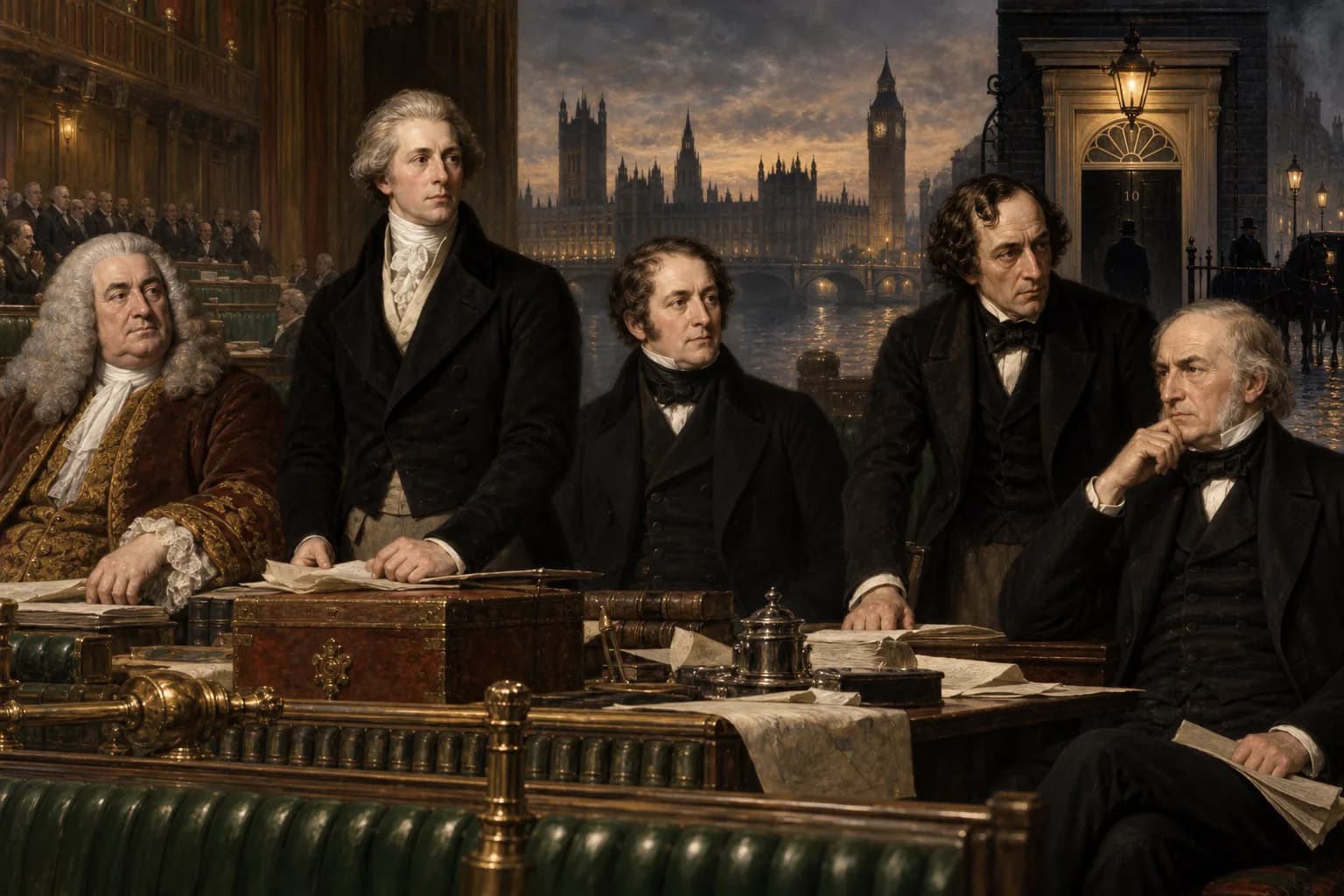
British Prime Ministers lineage
LineagePrime ministers in sequence
British Prime Ministers
1721 CE–present

Explore British prime ministers from Walpole to the present.

View lineage
Tertiary paths

Content note

This profile is written for educational use and connects to related Stories of History pages. The main portrait is an AI-assisted historical reconstruction, included as an illustrative aid rather than documentary evidence. Image policy

References

Sources & Further Reading

Reliable reference works, archives and reading paths connected to this profile.

Further reading

  1. Encyclopaedia Britannica, Search results for William Gladstone,” accessed June 2026.Open source
  2. WorldCat, Books and library holdings for William Gladstone,” accessed June 2026.Open source

Primary sources

  1. Library of Congress, Search results for William Gladstone,” accessed June 2026.Open source

Reviewed claim sources

Loading reviewed claim sources...

A weekly route through history

Find out first about the latest published stories, feature notes and occasional Premium offers in one weekly email.