People

Benjamin Disraeli

Benjamin Disraeli, 1st Earl of Beaconsfield, was a Victorian Conservative Prime Minister, novelist, rival of William Gladstone, architect of One Nation Toryism, and champion of British imperial policy.

Born
1804 CE
Died
1881 CE
Role
Victorian Prime Minister

Victorian Prime Minister (1804–1881)

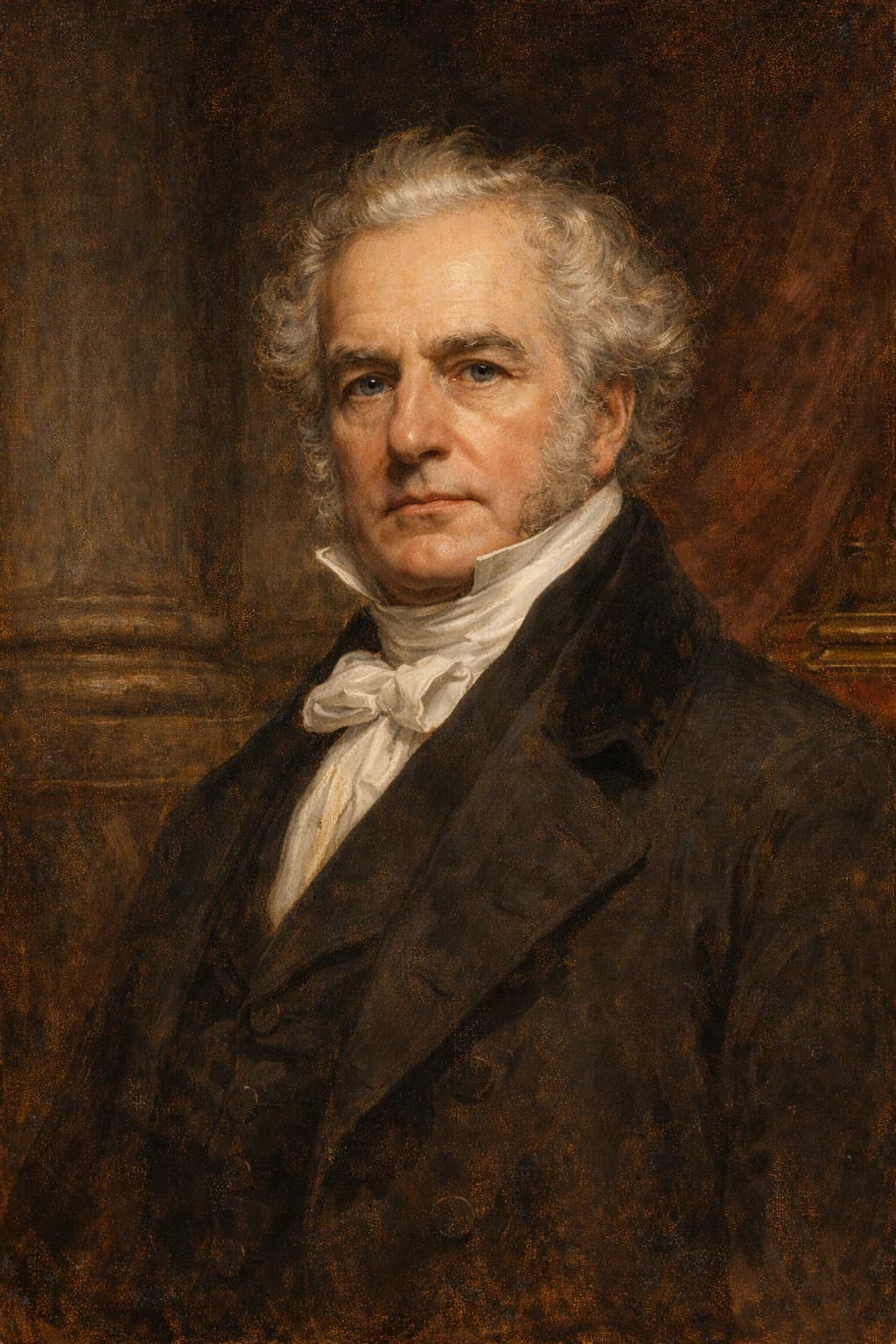
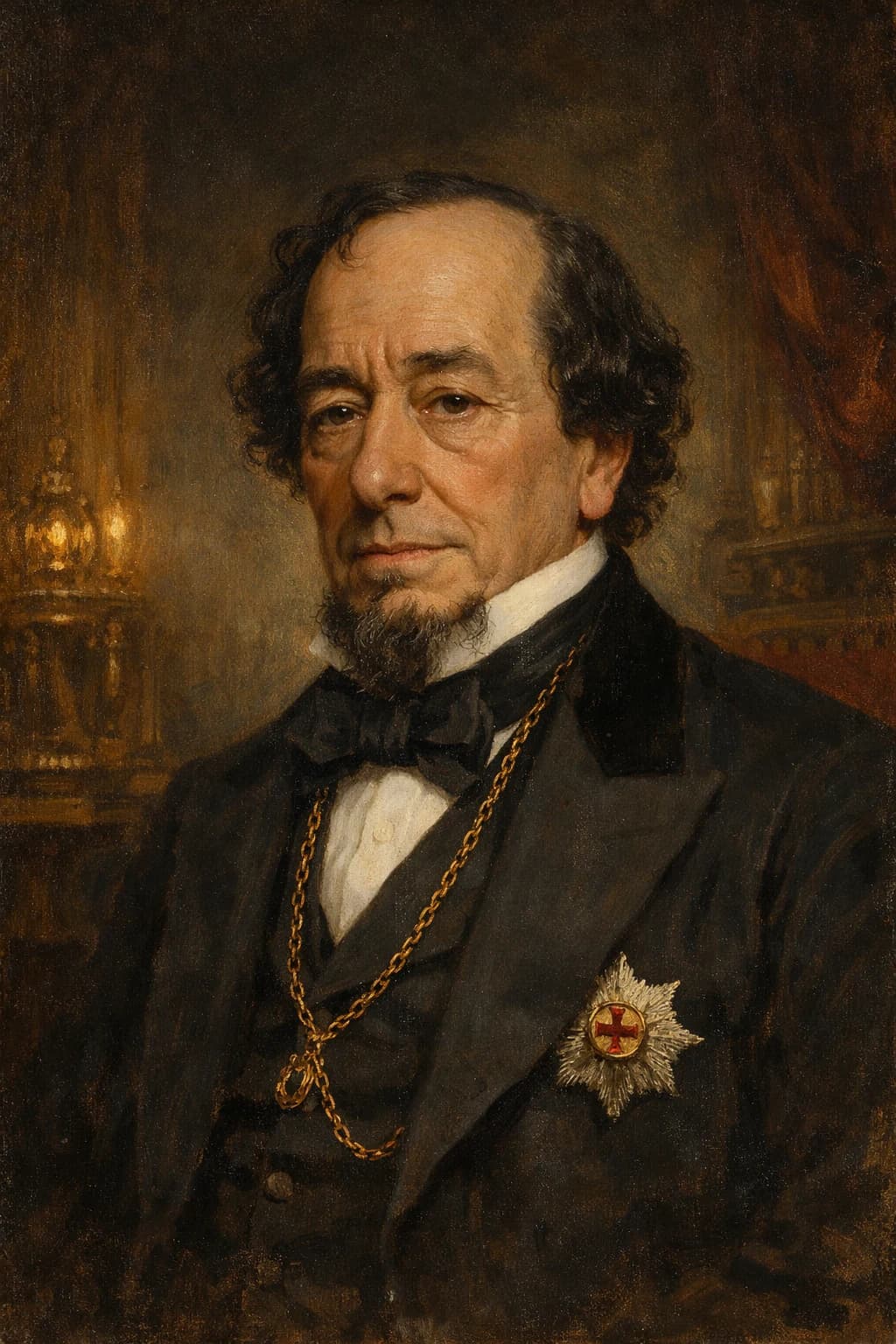
AI-generated portrait of Benjamin Disraeli in formal Victorian attire
AI-assisted historical reconstruction

An illustrative reconstruction based on historical context. It is not a photograph or documentary likeness. Image policy

Quick answer

Benjamin Disraeli, 1st Earl of Beaconsfield, was a Victorian Conservative Prime Minister, novelist, rival of William Gladstone, architect of One Nation Toryism, and champion of British imperial policy.

Born
1804 CE
Died
1881 CE
Role
Victorian Prime Minister
Years
1804-1881 CE
Quick facts

Profile details

Additional identity and tagging details that are not already covered in the introduction.

Full name
Benjamin Disraeli, 1st Earl of Beaconsfield
Also known as
Earl of Beaconsfield, 1st Earl of Beaconsfield, Disraeli
Facts

Benjamin Disraeli timeline facts

Selected specifics from this profile's life story.

1804
Unusual beginnings

Benjamin Disraeli was born in London into a Jewish family later baptised into the Church of England, shaping his outsider status in British society.

1840s–1850s
Conservative ascent

He became a leading figure in the Conservative Party, reshaping its ideas and positioning himself as a key voice in national debates.

1870s
Imperial expansion

He played a key role in expanding British influence abroad, including strengthening ties to India and securing strategic assets.

1881 onwards
Enduring legacy

His ideas reshaped British conservatism and left a lasting impression on political strategy, leadership style, and imperial outlook.

Life Journey

From literary dreamer to imperial strategist

Follow the story in a more continuous narrative, with a reading mode that matches how much depth you want.

Complete chronology

1804

Unusual beginnings

Benjamin Disraeli was born in London in 1804 into a Jewish family of Italian Sephardic background. His father, Isaac D'Israeli, was a writer and scholar who had Benjamin baptized into the Church of England after a dispute with the synagogue. That baptism made a parliamentary career legally possible in a way it would not have been for an openly Jewish man before Jewish emancipation. Yet Disraeli's Jewish heritage remained central to how others saw him and how he fashioned himself. In an aristocratic and Anglican political culture, he was always marked as unusual: brilliant, theatrical, socially ambitious, and vulnerable to prejudice. Rather than hide difference completely, he turned it into drama. Disraeli learned early that identity could be a political instrument as well as a private inheritance.

1820s

Literary ambitions

Disraeli first sought fame through literature, speculation, and social performance rather than the steady path of a conventional statesman. His early novels, including Vivian Grey, mixed ambition, satire, romance, and political fantasy. They were not merely youthful distractions. They helped him practice the art of persona: how to create memorable characters, turn society into theater, and make language shimmer with intention. He also suffered financial failures, including debts linked to speculative ventures, which haunted his early adulthood. These experiences gave him a sharper understanding of risk, image, and reinvention. Disraeli's politics would always retain something novelistic. He thought in symbols, contrasts, moods, and national stories. That made him suspect to plainer men, but it made him unforgettable in Parliament.

1837

Entering Parliament

Disraeli entered Parliament in 1837 after several failed attempts, and his first major speech was mocked so badly that he ended with a famous warning that the time would come when they would hear him. The ridicule mattered because it exposed every vulnerability: his clothes, manner, ancestry, ambition, and lack of old political belonging. He did not retreat. He studied the Commons, learned its rhythms, and turned wit into a weapon. He aligned with the Conservatives but remained intellectually restless, joining the Young England circle and imagining a Toryism that could speak to social distress rather than merely defend property. The early humiliation became part of his mythology. Disraeli understood that failure, if survived publicly, could be converted into prophecy.

1840s–1850s

Conservative ascent

Disraeli's rise inside Conservatism was tied to the great split over the Corn Laws. When Sir Robert Peel repealed the Corn Laws in 1846, many Conservatives felt betrayed. Disraeli became one of Peel's most devastating attackers, using parliamentary brilliance to help destroy Peel's authority among protectionist Conservatives. This was both conviction and opportunity. He presented himself as defender of party, land, and national social balance against technocratic betrayal. Over the 1850s he became indispensable in the Commons, especially as a financial spokesman and party strategist. He argued for a Conservatism that could appeal to more than rural elites, warning against a nation divided between rich and poor. His idea of One Nation Toryism was not modern egalitarianism, but it gave the party a language of social duty, hierarchy, and national cohesion.

1868

First premiership

Disraeli first became prime minister in 1868 after Lord Derby retired, but the timing was poor. The Conservatives lacked a secure majority, and the country was moving toward an election under the expanded electorate created by the Second Reform Act of 1867, which Disraeli had helped steer through Parliament. That reform was one of his boldest acts: a Conservative government extended the vote to many urban working men, partly from principle, partly from tactical calculation, and partly because Disraeli sensed the party had to adapt or shrink. His first premiership lasted only months before Gladstone's Liberals won the election. Yet symbolically it was extraordinary. The mocked outsider had reached the highest office. Politically, it confirmed that his real chance would come only with a stronger mandate.

1874

Return to power

Disraeli returned to power in 1874 with a genuine majority, giving him the chance to govern rather than merely survive. His second ministry passed significant domestic legislation on public health, housing, trade unions, factory regulation, and social conditions. These reforms did not create a welfare state, but they helped present Conservatism as a party capable of practical social improvement. Disraeli understood that an expanded electorate required a broader political imagination. He also understood monarchy as a political asset. His close relationship with Queen Victoria gave his government glamour and emotional symbolism, especially as he elevated her imperial title. His rivalry with Gladstone sharpened everything: Disraeli offered empire, monarchy, and national cohesion; Gladstone offered moral earnestness, finance, reform, and liberal conscience.

1870s

Imperial expansion

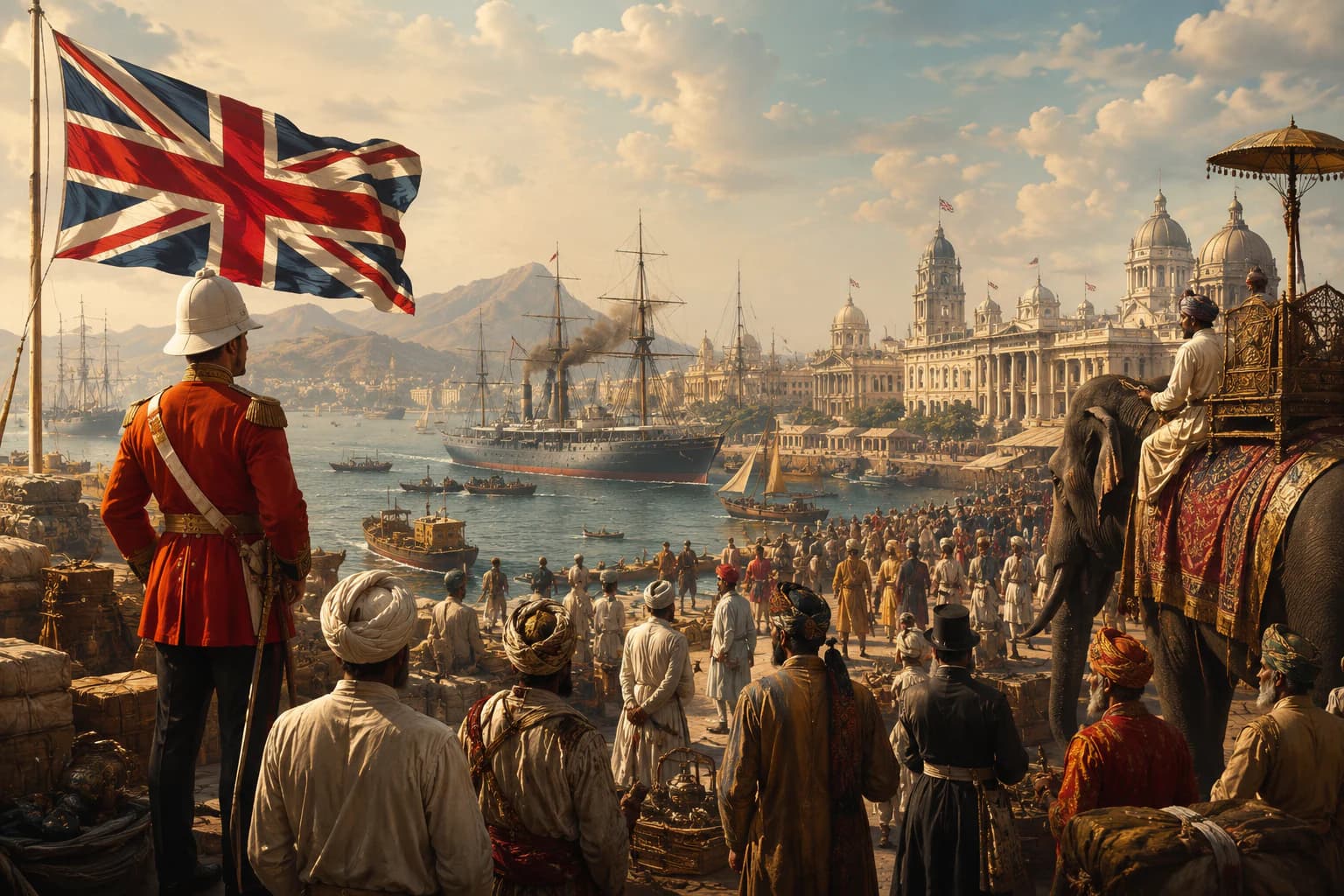
Disraeli's foreign policy made him the great theatrical imperialist of Victorian politics. In 1875 his government purchased a major shareholding in the Suez Canal Company, securing influence over a route vital to India. In 1876 he made Queen Victoria Empress of India, a symbolic act that delighted the monarch and advertised imperial unity. At the Congress of Berlin in 1878, he presented himself as the statesman who had secured 'peace with honour' while limiting Russian gains after the Russo-Turkish War. The reality was more complicated, and his government also became entangled in conflicts in Afghanistan and southern Africa. Disraeli understood empire as strategy, spectacle, and national myth. His imperial policy strengthened British confidence, but it also helped deepen assumptions of superiority and control that later generations would challenge.

1880s

Final years

Disraeli's final years were marked by declining health and political reversal. The 1880 election brought Gladstone back to power after Liberal attacks on Disraeli's imperial policy, especially in relation to Afghanistan, South Africa, and the moral costs of empire. Disraeli, by then Earl of Beaconsfield, remained a commanding presence in the Lords and in Conservative memory, but his active career was nearly over. He died in 1881. Victoria mourned him deeply, and Conservatives cultivated his image as the brilliant defender of monarchy, empire, and national imagination. His final phase shows how completely he had transformed his position. The man once laughed down in the Commons ended as a near-mythic party ancestor, admired not only for policies but for style, resilience, and the sheer audacity of his self-creation.

1881 onwards

Enduring legacy

Disraeli's legacy is larger than his time in office. He helped remake the Conservative Party after the Peel split, gave it a language of social responsibility, embraced the politics of empire and monarchy, and showed that mass politics could be shaped through story as well as interest. His One Nation language has been revived repeatedly by later Conservatives, often in forms he would not fully recognize. His imperial vision remains more contested: to admirers it expressed confidence and strategic imagination; to critics it clothed domination in romance. His life also remains significant as the career of a baptized man of Jewish birth who reached the summit of a society saturated with prejudice. Disraeli matters because he understood politics as theater without thinking theater was trivial. He knew that nations are governed by institutions, but moved by stories.

Continue in context

Connected stories

Move from the profile into the wider events and settings this figure belongs to.

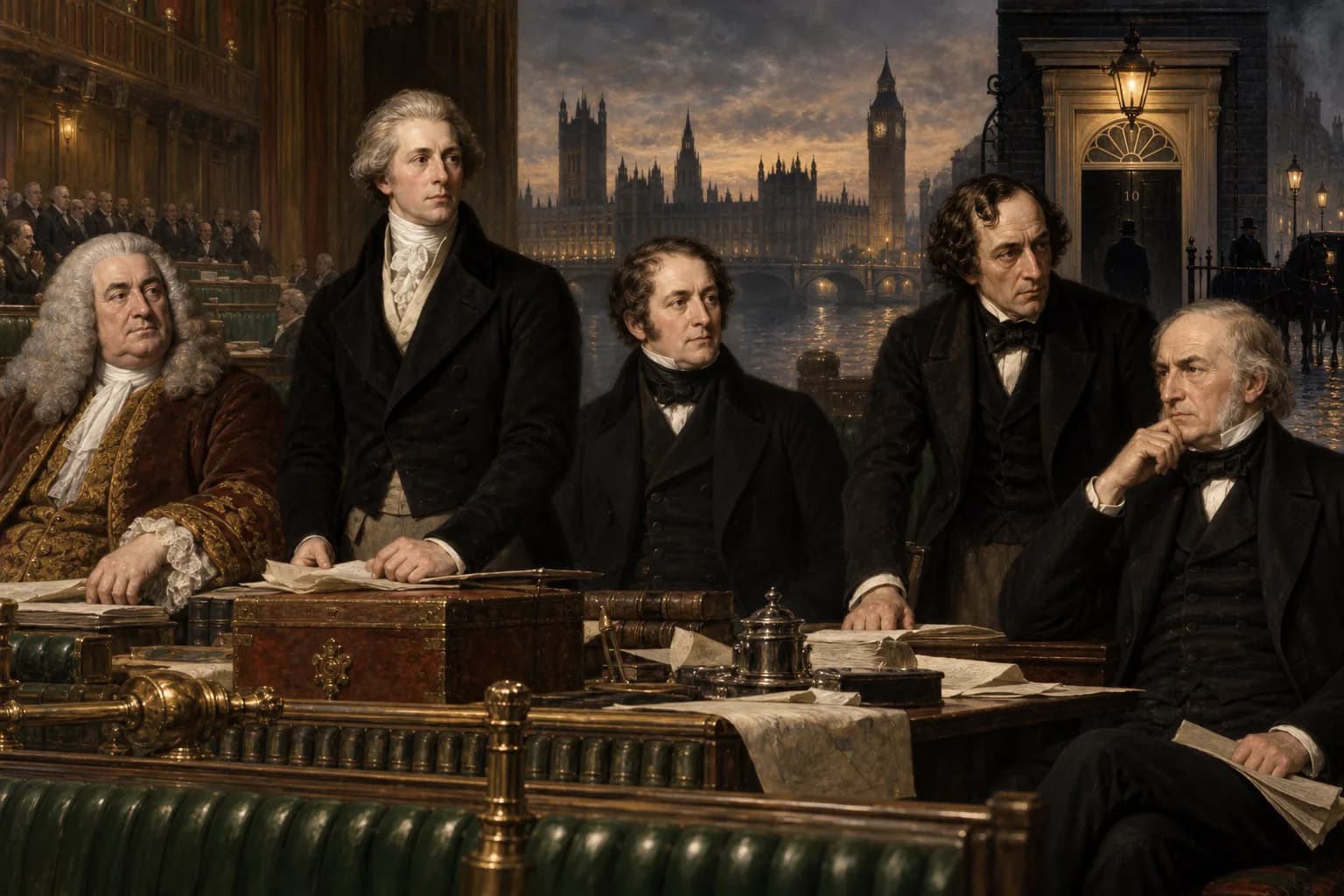
British Prime Ministers lineage
LineagePrime ministers in sequence
British Prime Ministers
1721 CE–present

Explore British prime ministers from Walpole to the present.

View lineage
Tertiary paths

Content note

This profile is written for educational use and connects to related Stories of History pages. The main portrait is an AI-assisted historical reconstruction, included as an illustrative aid rather than documentary evidence. Image policy

References

Sources & Further Reading

Reliable reference works, archives and reading paths connected to this profile.

Further reading

  1. Encyclopaedia Britannica, Search results for Benjamin Disraeli,” accessed June 2026.Open source
  2. WorldCat, Books and library holdings for Benjamin Disraeli,” accessed June 2026.Open source

Primary sources

  1. Library of Congress, Search results for Benjamin Disraeli,” accessed June 2026.Open source

Reviewed claim sources

Loading reviewed claim sources...

A weekly route through history

Find out first about the latest published stories, feature notes and occasional Premium offers in one weekly email.