← People

Martin Luther King Jr.

Martin Luther King Jr. was a minister and civil rights leader. He turned the pulpit into a platform for mass protest, helped challenge segregation and carried the struggle towards voting rights, peace and economic justice.

Born
1929 CE
Died
1968 CE
Role
Minister and civil rights leader
Also known as
Martin Luther King, Jr., Martin Luther King Jr, Dr. Martin Luther King Jr.

Minister and civil rights leader (1929–1968)

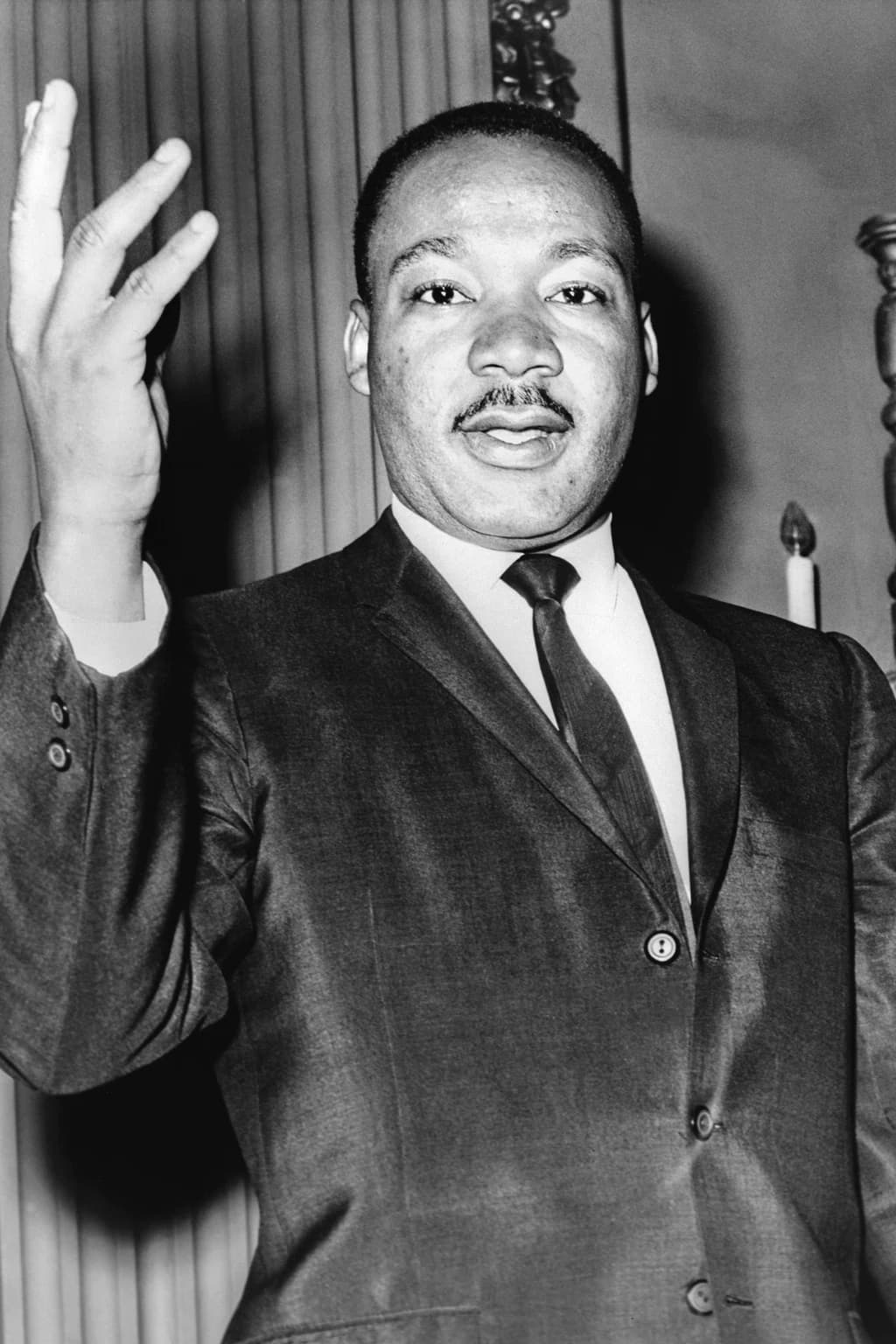
Martin Luther King Jr. in a 1964 photograph by Dick DeMarsico.
Historical photograph

A real historical or editorial image is used here. Source, licence and transformation details are publicly recorded. Image policy Attribution

Life Journey

A voice carried by a movement

Follow King through church leadership, mass protest, landmark laws and the economic struggle of his final years.

Complete chronology

1929–1954

Atlanta beginnings

Born in Atlanta in 1929, King grew up within a Black church community where preaching and public leadership met. Morehouse College, Crozer Theological Seminary and Boston University widened his education. In 1954 he became pastor of Dexter Avenue Baptist Church in Montgomery. He brought Christian convictions to a city where segregation organised ordinary life, but the campaign that made him famous would grow from a community already preparing to resist.
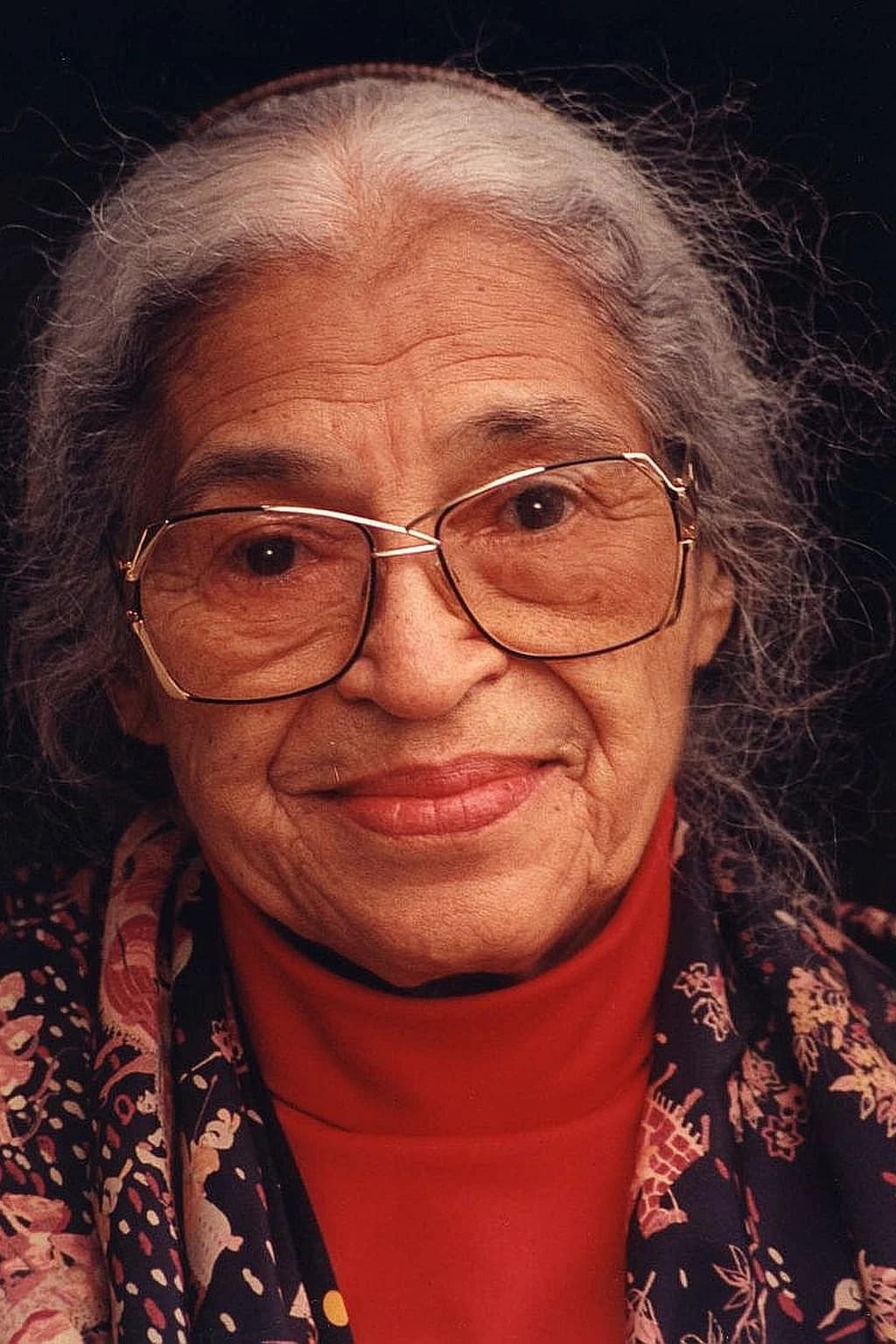
1955–1956

Montgomery holds the line

The boycott began in December 1955 after Rosa Parks refused to surrender her bus seat. King became president of the Montgomery Improvement Association, giving the campaign a powerful public voice. The daily work belonged to thousands of people walking, sharing cars and raising money. Bombings and arrests tested their resolve. A federal court case, Browder v. Gayle, helped secure the end of bus segregation in Montgomery.

1957–1963

The struggle goes national

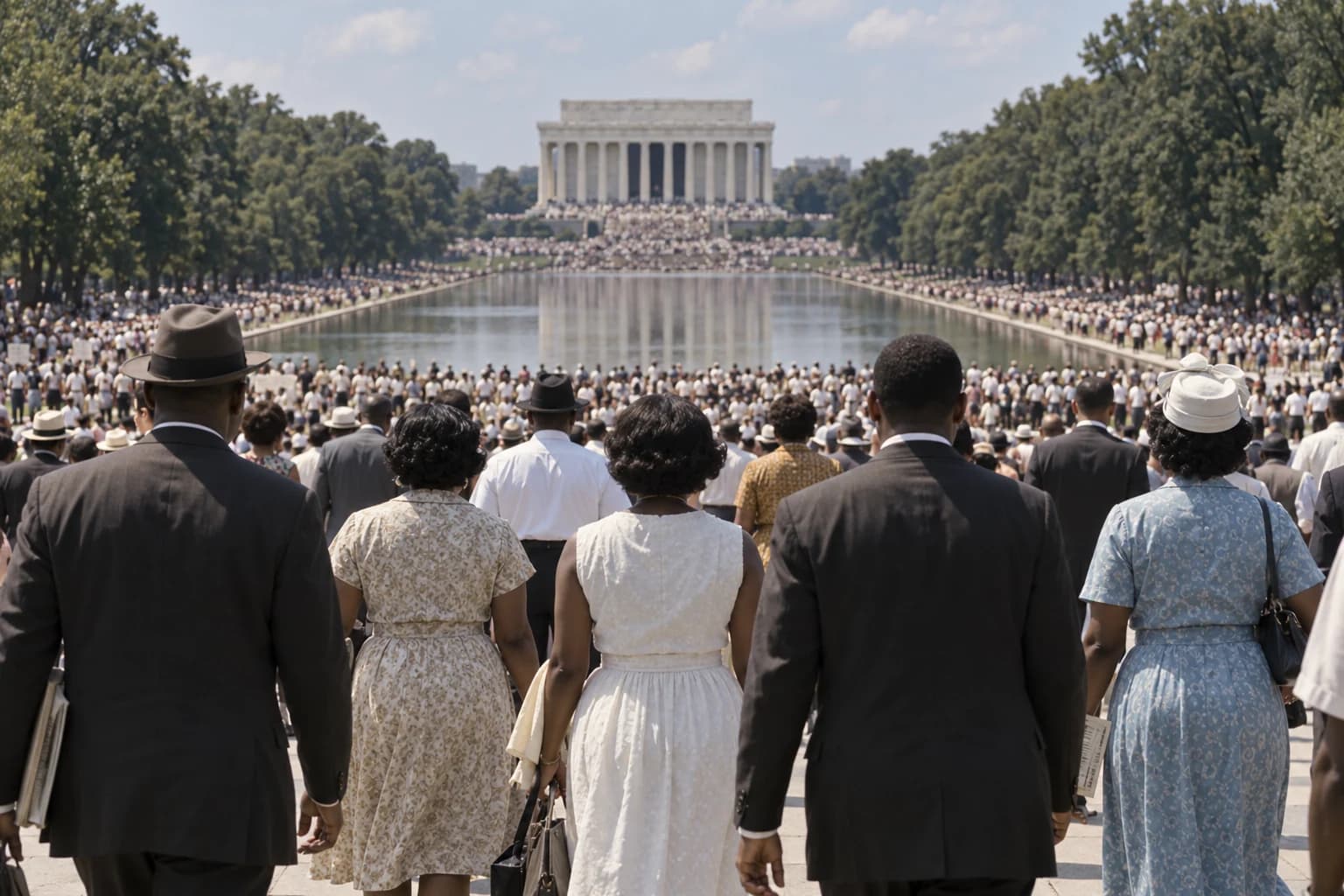
The Southern Christian Leadership Conference connected local campaigns with a wider strategy of nonviolent protest. Results were uneven: Albany exposed the difficulty of confronting officials who adapted their tactics. Birmingham in 1963 brought mass arrests and images of police violence before the nation. That August, King spoke at the March on Washington for Jobs and Freedom, where a broad coalition joined demands for civil rights with demands for decent work.

1964–1965

Voting rights and recognition

The Civil Rights Act of 1964 prohibited major forms of racial discrimination, but access to the ballot still required confrontation with entrenched local power. King’s Nobel Peace Prize recognised the nonviolent struggle while that struggle continued. In Selma, local organisers, SNCC and SCLC helped force voting rights onto the national agenda. After Bloody Sunday, a protected march reached Montgomery. The Voting Rights Act followed in August 1965.

1966–1968

Towards economic justice

King’s later campaigns moved beyond Southern segregation towards unequal housing, poverty and war. The Chicago campaign showed how racial exclusion also shaped Northern cities. His public opposition to the Vietnam War attracted sharp criticism, including from former allies. While preparing the Poor People’s Campaign, he went to Memphis to support sanitation workers seeking dignity and better conditions. He was assassinated there on 4 April 1968, leaving an unfinished programme as well as a national symbol.

Continue in context

Connected stories

Move from the profile into the wider events and settings this figure belongs to.

Tertiary paths

Content note

This profile is written for educational use and connects to related Stories of History pages. The main portrait uses a real historical or editorial image, with source and licence details recorded for attribution review. Image policy Image attribution

References

Sources & Further Reading

Reliable reference works, archives and reading paths connected to this profile.

Sources used

  1. Stanford University, King Institute, “Introduction to the King Papers,” accessed October 2026.Open source
  2. Stanford University, King Institute, “Major King Events Chronology: 1929–1968,” accessed October 2026.Open source
  3. National Park Service, “Martin Luther King, Jr.,” accessed October 2026.Open source

Further reading

  1. Encyclopaedia Britannica, “Search results for Martin Luther King Jr.,” accessed June 2026.Open source
  2. WorldCat, “Books and library holdings for Martin Luther King Jr.,” accessed June 2026.Open source

Primary sources

  1. Library of Congress, “Search results for Martin Luther King Jr.,” accessed June 2026.Open source

Reviewed claim sources

Loading reviewed claim sources...

A monthly route through history

Find out first about the latest published stories, feature notes and occasional Premium offers in one monthly email.