← People

Rosa Parks

Rosa Parks was a civil rights activist. Her refusal on a Montgomery bus became a turning point in a long life of organising, resistance and work for justice that continued in Detroit.

Born
1913 CE
Died
2005 CE
Role
Civil rights activist
Full name
Rosa Louise McCauley Parks

Civil rights activist (1913–2005)

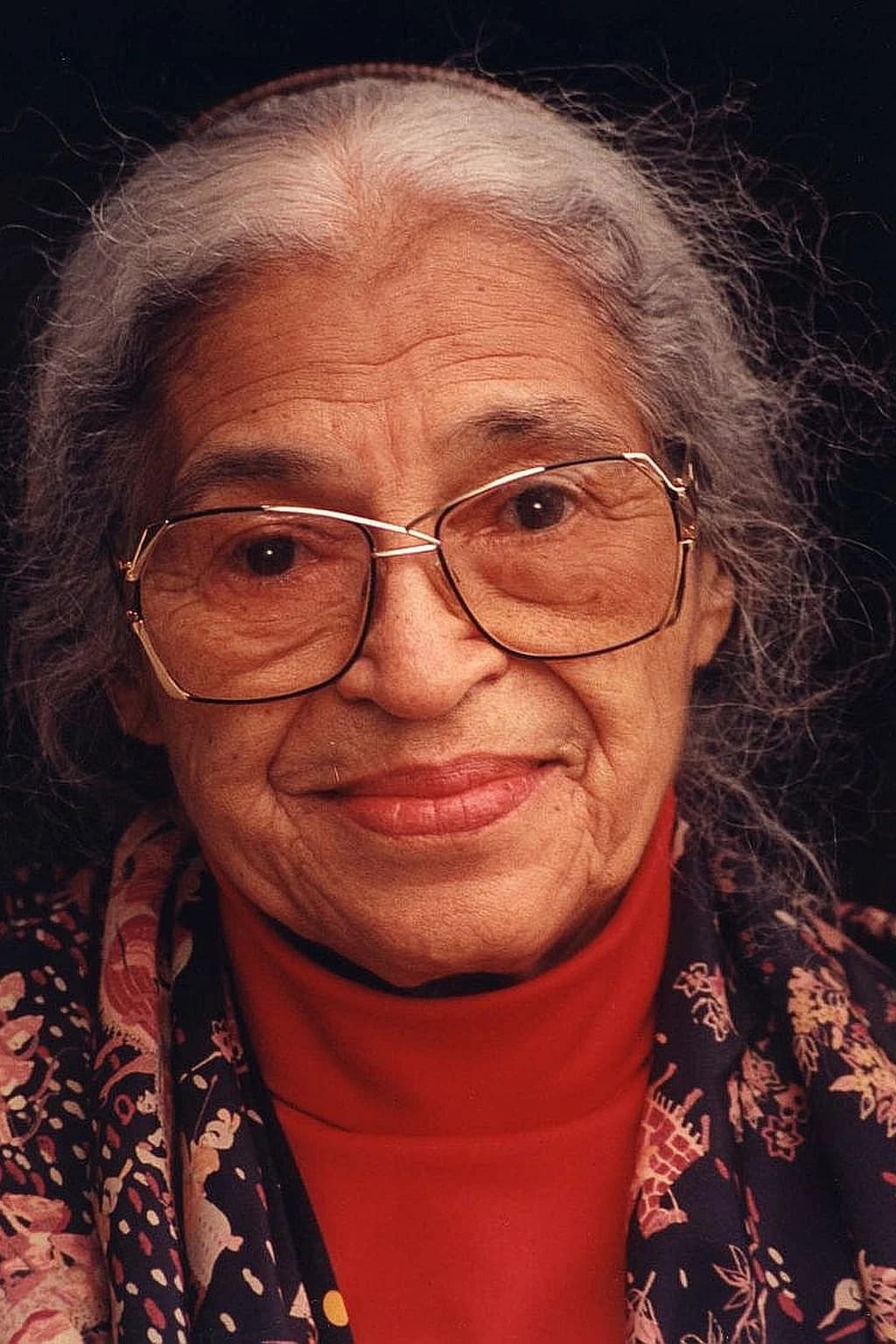
Rosa Parks in a photograph by John Mathew Smith.
Licensed archival image

A real historical or editorial image is used here. Source, licence and transformation details are publicly recorded. Image policy Attribution

Life Journey

Beyond a seat on the bus

Follow Parks through years of organising, the Montgomery boycott and her continuing struggle for justice in Detroit.

Complete chronology

1913–1932

Learning the rules of exclusion

Rosa Louise McCauley was born in Tuskegee in 1913 and grew up near Montgomery. Racial violence and unequal schooling made the limits of citizenship visible early. Marriage to Raymond Parks in 1932 connected her with another committed opponent of racial injustice. Her later bus protest was rooted in these experiences. The familiar image of a tired passenger leaves out the political education and determination that came before it.

1943–1955

An organiser before the boycott

Parks joined the Montgomery branch of the National Association for the Advancement of Colored People and became its secretary in 1943. She documented injustice, supported campaigns and worked with young people. Her efforts included the campaign for justice after the assault on Recy Taylor. In 1955 she attended Highlander Folk School. These networks placed her within an organised struggle, even though no one could know exactly what would follow her refusal that December.

1955–1956

The refusal and the boycott

Parks’s arrest became a rallying point because local organisers could turn indignation into collective action. The Women’s Political Council spread the call for a boycott, and the Montgomery Improvement Association coordinated the campaign. Parks lost her job as the struggle unfolded. The boycott’s eventual success depended on sustained participation and a separate legal challenge to bus segregation. Her courage mattered alongside the organisation that made the refusal impossible to ignore.

1957–1988

A new struggle in Detroit

Leaving Montgomery did not end Parks’s political life. In Detroit she encountered discrimination in housing, employment and policing beyond the Southern bus system. She supported local campaigns and worked in John Conyers’s congressional office from 1965 until 1988. This later career complicates the idea that civil rights ended with desegregated transport. Her attention remained on the obstacles people faced when trying to turn formal citizenship into security and fair treatment.

1987–2005

Keeping the history alive

In 1987 Parks and Elaine Steele founded the Rosa and Raymond Parks Institute for Self Development. Its work connected young people with the history of resistance and the possibilities of their own lives. National honours followed, including the Congressional Gold Medal in 1999. Parks died in Detroit in 2005. Public remembrance often returned to the bus seat, but her papers preserve the wider record: decades of campaigning, correspondence and concern for people denied justice.

Continue in context

Connected stories

Move from the profile into the wider events and settings this figure belongs to.

Tertiary paths

Content note

This profile is written for educational use and connects to related Stories of History pages. The main portrait uses a real historical or editorial image, with source and licence details recorded for attribution review. Image policy Image attribution

References

Sources & Further Reading

Reliable reference works, archives and reading paths connected to this profile.

Sources used

  1. Library of Congress, “Beyond the Bus: Rosa Parks’ Life of Activism,” accessed October 2026.Open source
  2. National Park Service, “Rosa Parks,” accessed October 2026.Open source
  3. Rosa and Raymond Parks Institute, “About Us,” accessed October 2026.Open source

Further reading

  1. Encyclopaedia Britannica, “Search results for Rosa Parks,” accessed June 2026.Open source
  2. WorldCat, “Books and library holdings for Rosa Parks,” accessed June 2026.Open source

Primary sources

  1. Library of Congress, “Search results for Rosa Parks,” accessed June 2026.Open source

Reviewed claim sources

Loading reviewed claim sources...

A monthly route through history

Find out first about the latest published stories, feature notes and occasional Premium offers in one monthly email.