People

Jahangir

Jahangir was Mughal emperor from 1605 to 1627. His reign was known for court culture, painting, luxury production, trade and the influence of Nur Jahan.

Born
1569 CE
Died
1627 CE
Role
Mughal emperor

Mughal emperor (1569-1627)

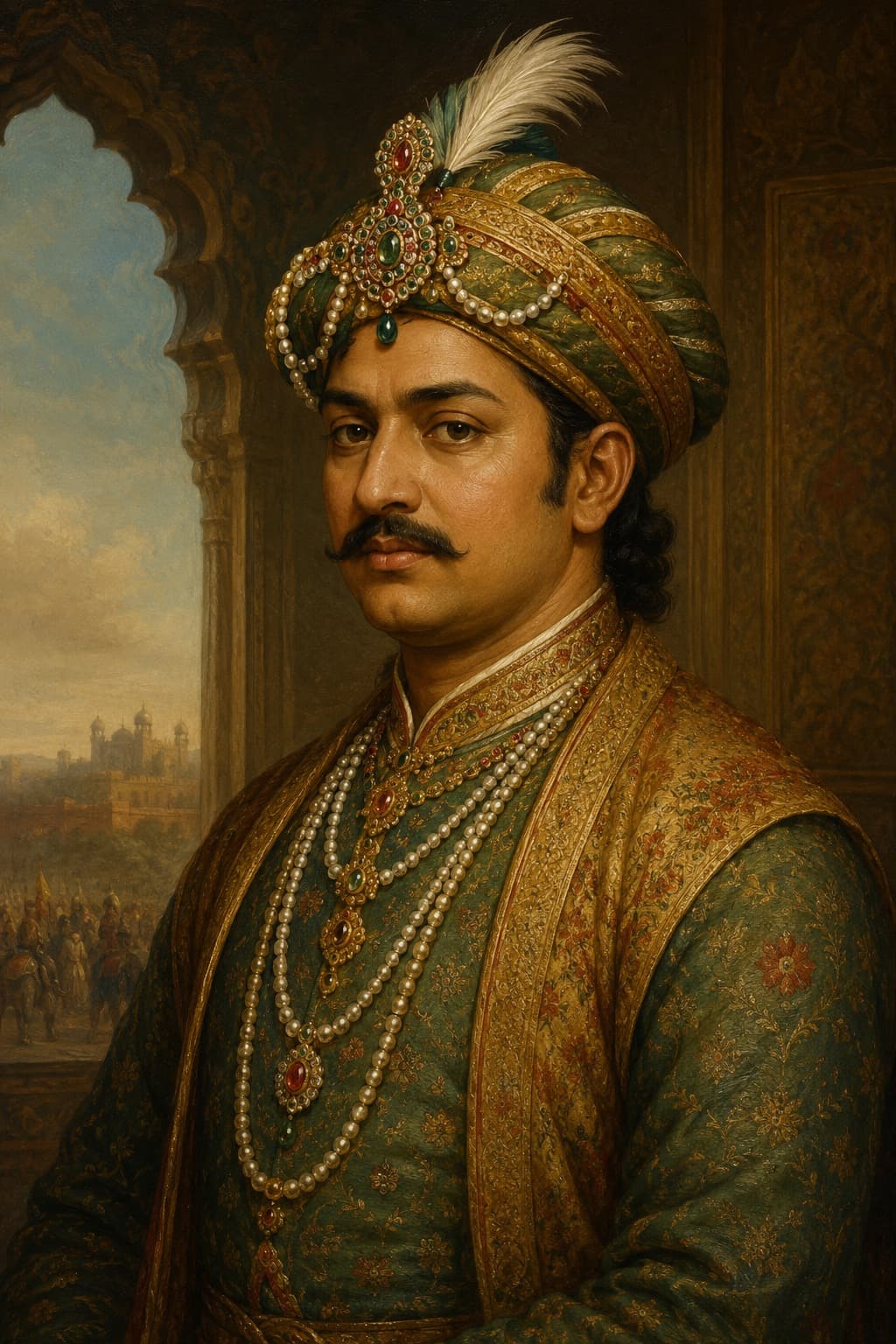
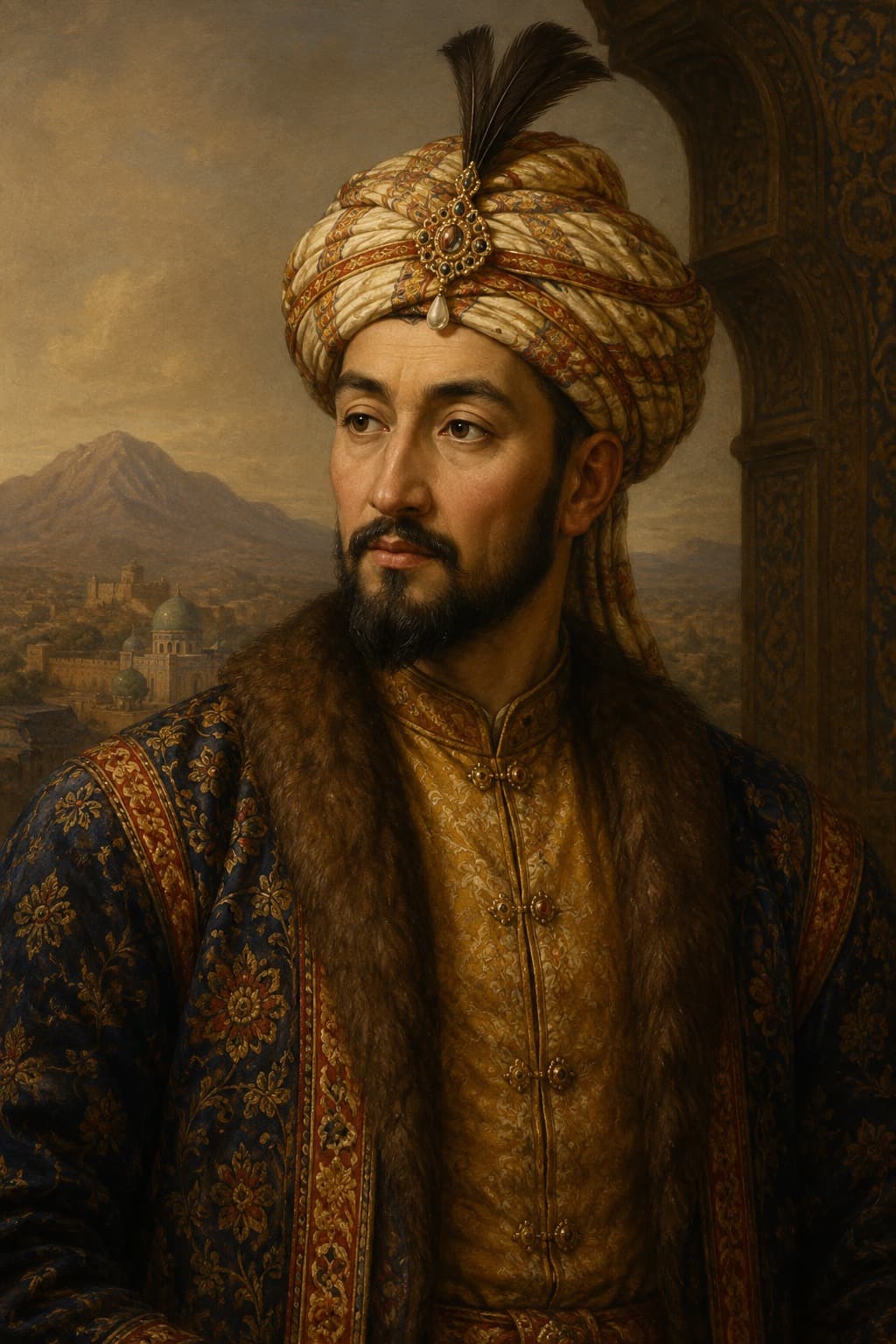
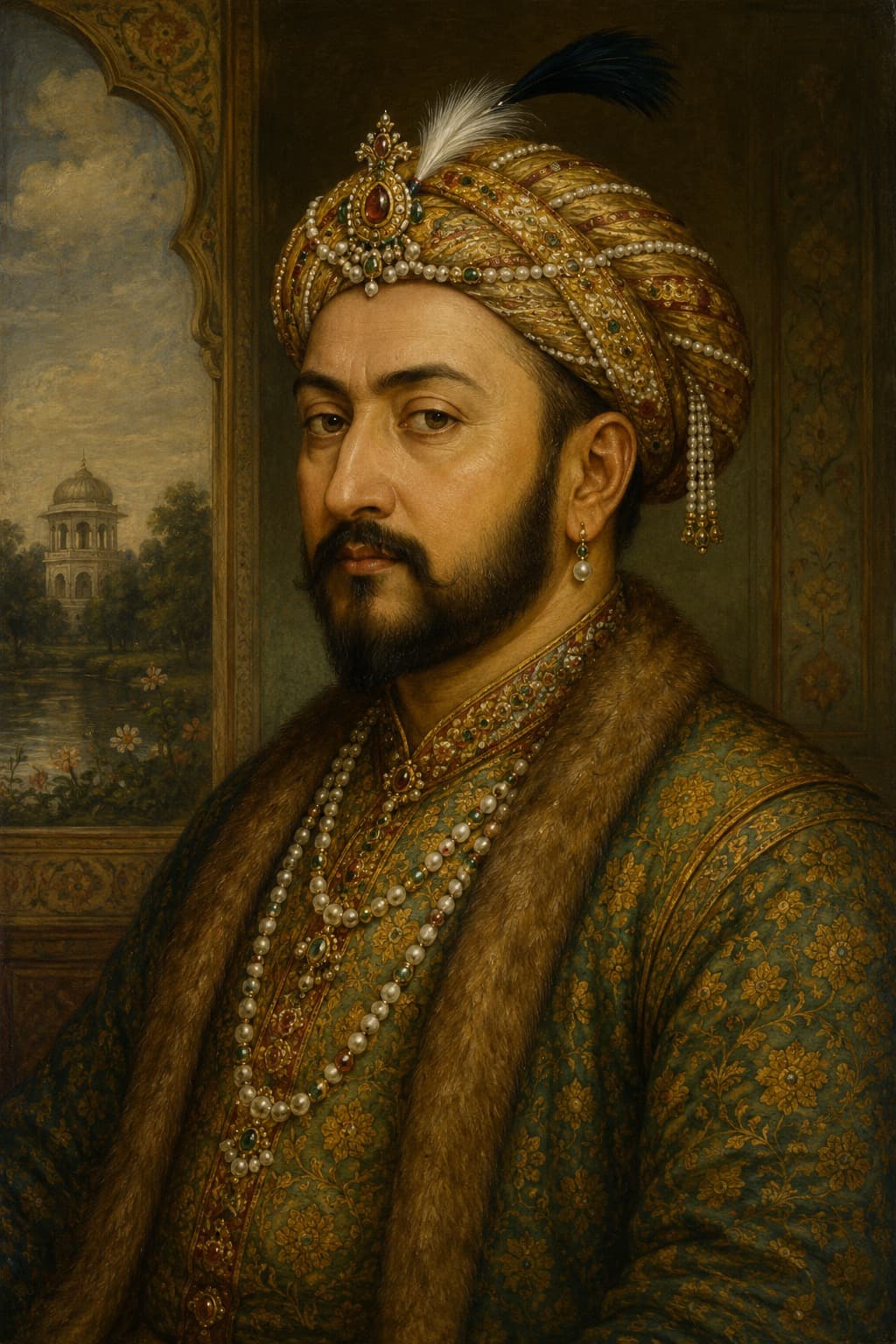
AI-generated portrait of Jahangir in Mughal imperial dress
AI-assisted historical reconstruction

An illustrative reconstruction based on historical context. It is not a photograph or documentary likeness. Image policy

Quick answer

Jahangir was Mughal emperor from 1605 to 1627. His reign was known for court culture, painting, luxury production, trade and the influence of Nur Jahan.

Born
1569 CE
Died
1627 CE
Role
Mughal emperor
Years
1569-1627 CE
Quick facts

Profile details

Additional identity and tagging details that are not already covered in the introduction.

Full name
Nur al-Din Muhammad Jahangir
Also known as
Prince Salim
Region
South Asia, Northern India, Mughal Empire, Mughal India
Facts

Jahangir timeline facts

Selected specifics from this profile's life story.

1605
Akbar's Heir

Jahangir succeeded Akbar in 1605, inheriting a large and wealthy imperial system.

1605-1627
The Eye of the Court

Jahangir's reign became famous for refined painting, luxury goods, natural observation and court ceremony.

1610s
Trade and Diplomacy

European merchants and envoys reached Jahangir's court as Mughal India connected to wider commercial networks.

1627 onward
Inherited Splendour

Jahangir left Shah Jahan an empire rich enough to project authority through architecture on an extraordinary scale.

Life Journey

Court culture, wealth and imperial refinement

Follow Jahangir through succession, artistic splendour, diplomacy and the politics of court influence.

Complete chronology

1605

Akbar's Heir

Jahangir came to power after Akbar had transformed the Mughal state. The challenge was no longer simply survival. It was managing a vast empire, powerful nobles, regional elites and the expectations of a court used to splendour and order.
1605-1627

The Eye of the Court

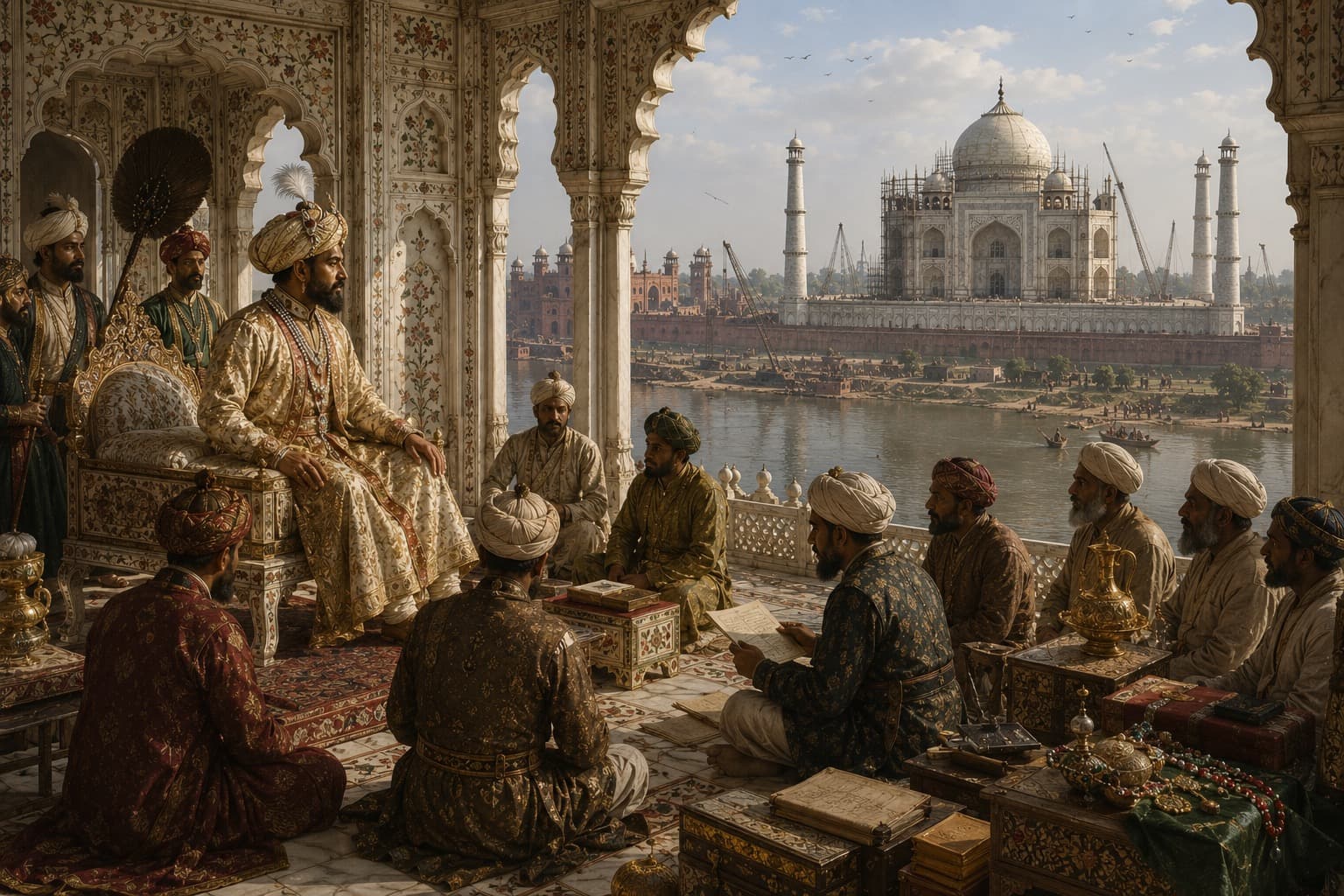
Jahangir's court valued close looking. Painters developed a highly refined style, portraits carried political meaning, and natural studies revealed the emperor's fascination with the world around him. This culture was not separate from power. It showed that the empire could command talent, materials and attention on a grand scale.

1610s-1620s

Nur Jahan's Influence

Jahangir's reign cannot be understood without Nur Jahan's influence. She acted through family networks, patronage, court ritual and political decision-making. Her prominence shows that Mughal power was not only the emperor's personal command. It also moved through households, marriages, factions and the people who controlled access to the throne.

1610s

Trade and Diplomacy

Mughal India was one of the great centres of early modern wealth. Textiles, luxury goods and precious materials linked the empire to Indian Ocean and overland trade. European companies were still minor political actors, but their presence at court showed how commercial networks were expanding around Mughal prosperity.

1627 onward

Inherited Splendour

Jahangir's reign sits between Akbar's state-building and Shah Jahan's architectural peak. It preserved and displayed the wealth that made later monumental building possible. The empire looked stable and magnificent, even as court factions and succession pressures continued below the surface.

Continue in context

Connected stories

Move from the profile into the wider events and settings this figure belongs to.

Tertiary paths

Content note

This profile is written for educational use and connects to related Stories of History pages. The main portrait is an AI-assisted historical reconstruction, included as an illustrative aid rather than documentary evidence. Image policy

References

Sources & Further Reading

Reliable reference works, archives and reading paths connected to this profile.

Further reading

  1. Encyclopaedia Britannica, Search results for Jahangir,” accessed June 2026.Open source
  2. WorldCat, Books and library holdings for Jahangir,” accessed June 2026.Open source

Primary sources

  1. Library of Congress, Search results for Jahangir,” accessed June 2026.Open source

Reviewed claim sources

Loading reviewed claim sources...

A weekly route through history

Find out first about the latest published stories, feature notes and occasional Premium offers in one weekly email.