People

Hammurabi

Hammurabi was king of Babylon from about 1792 to 1750 BCE. He conquered much of Mesopotamia and issued the famous Code of Hammurabi, one of the best preserved law codes of the ancient world.

Born
1810 BCE
Died
1750 BCE
Role
Babylonian king

Babylonian king (1810 BC–1750 BC)

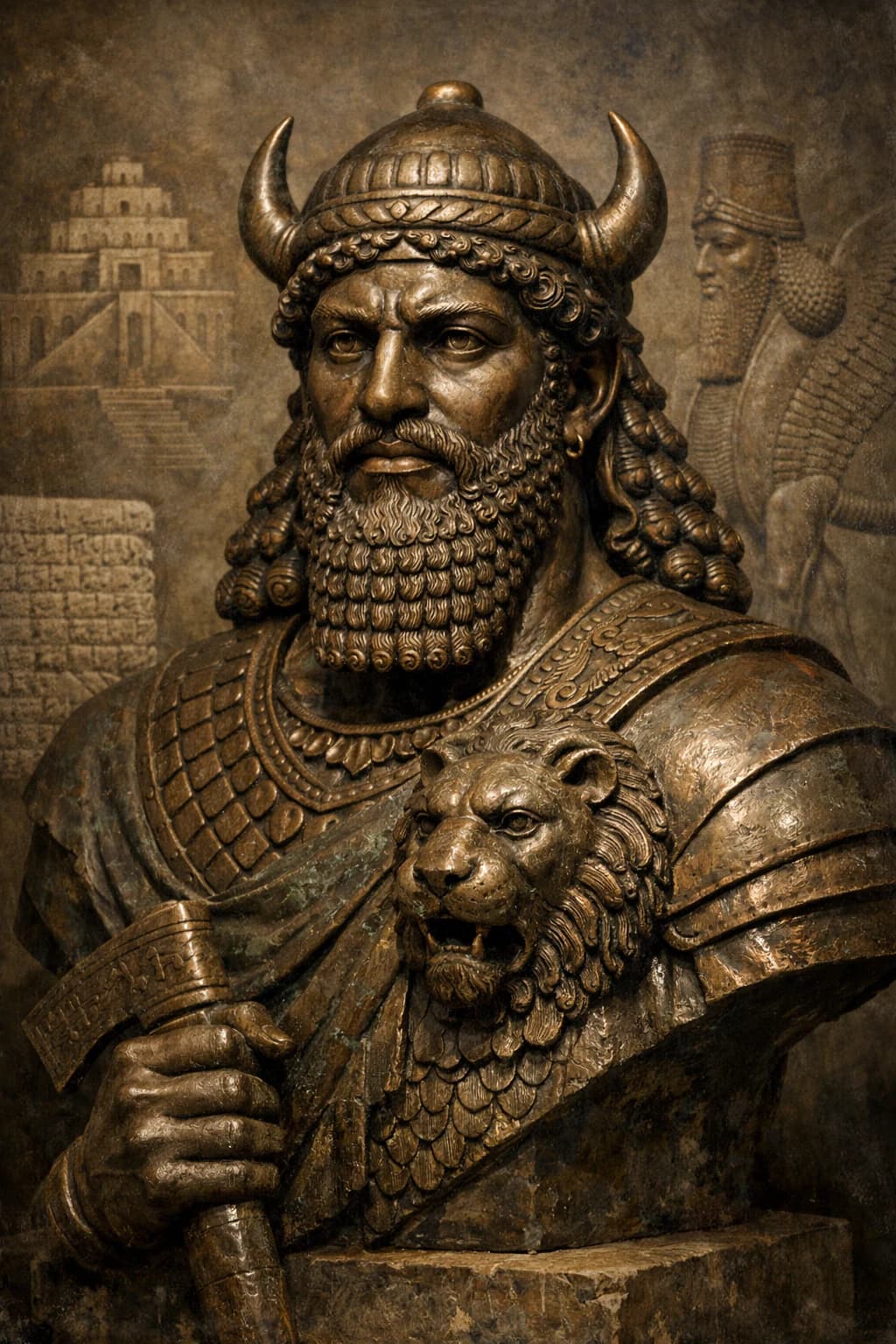
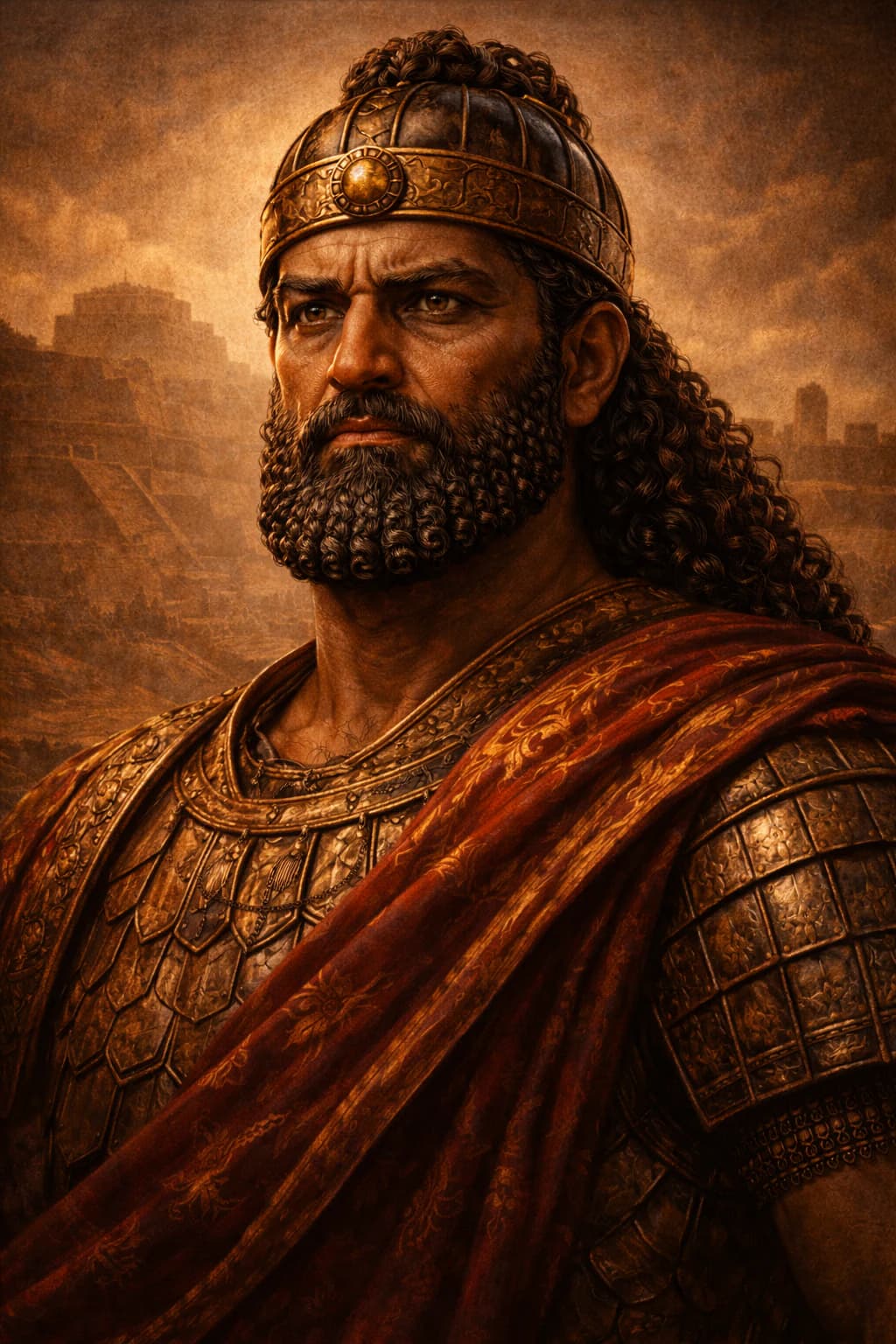
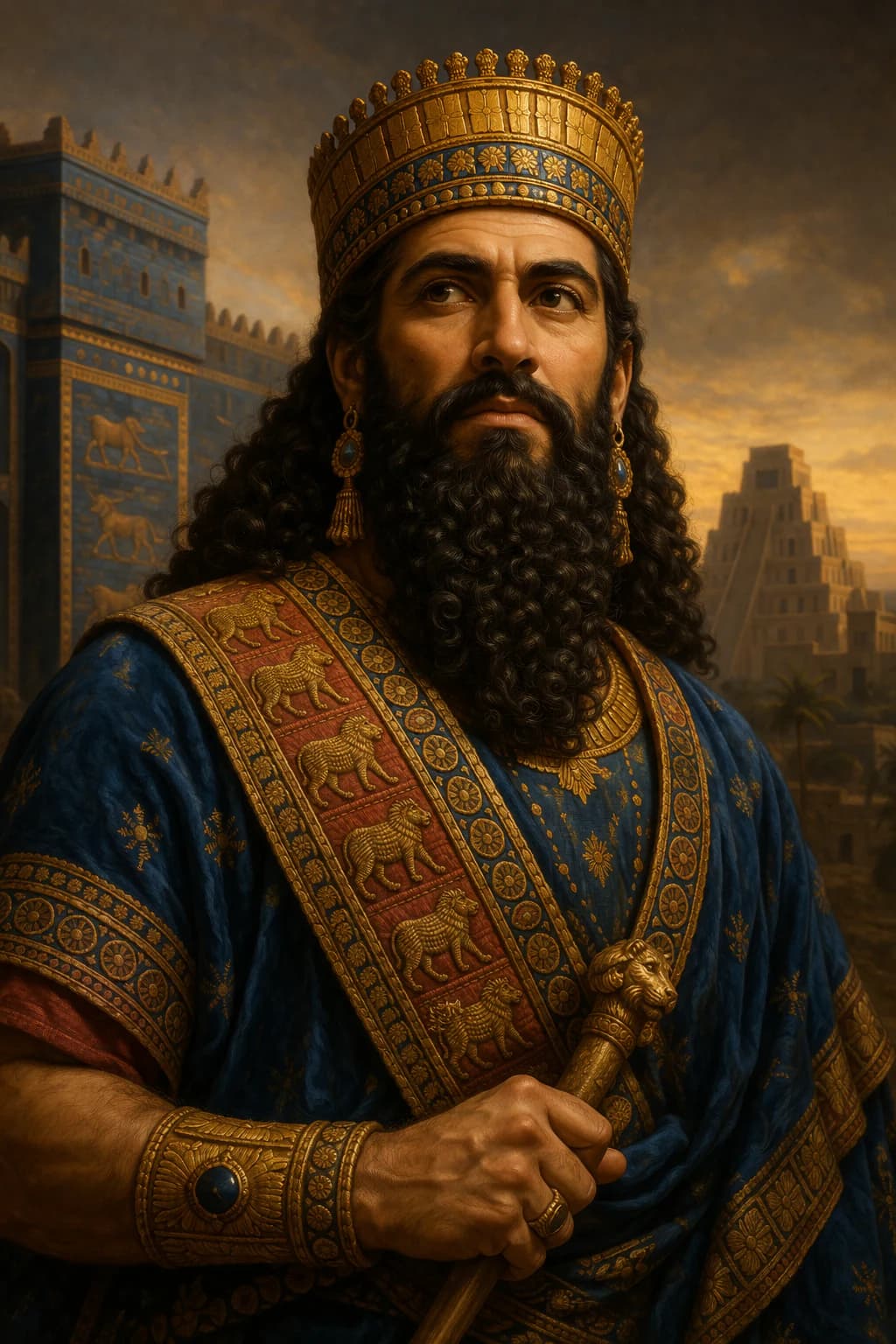
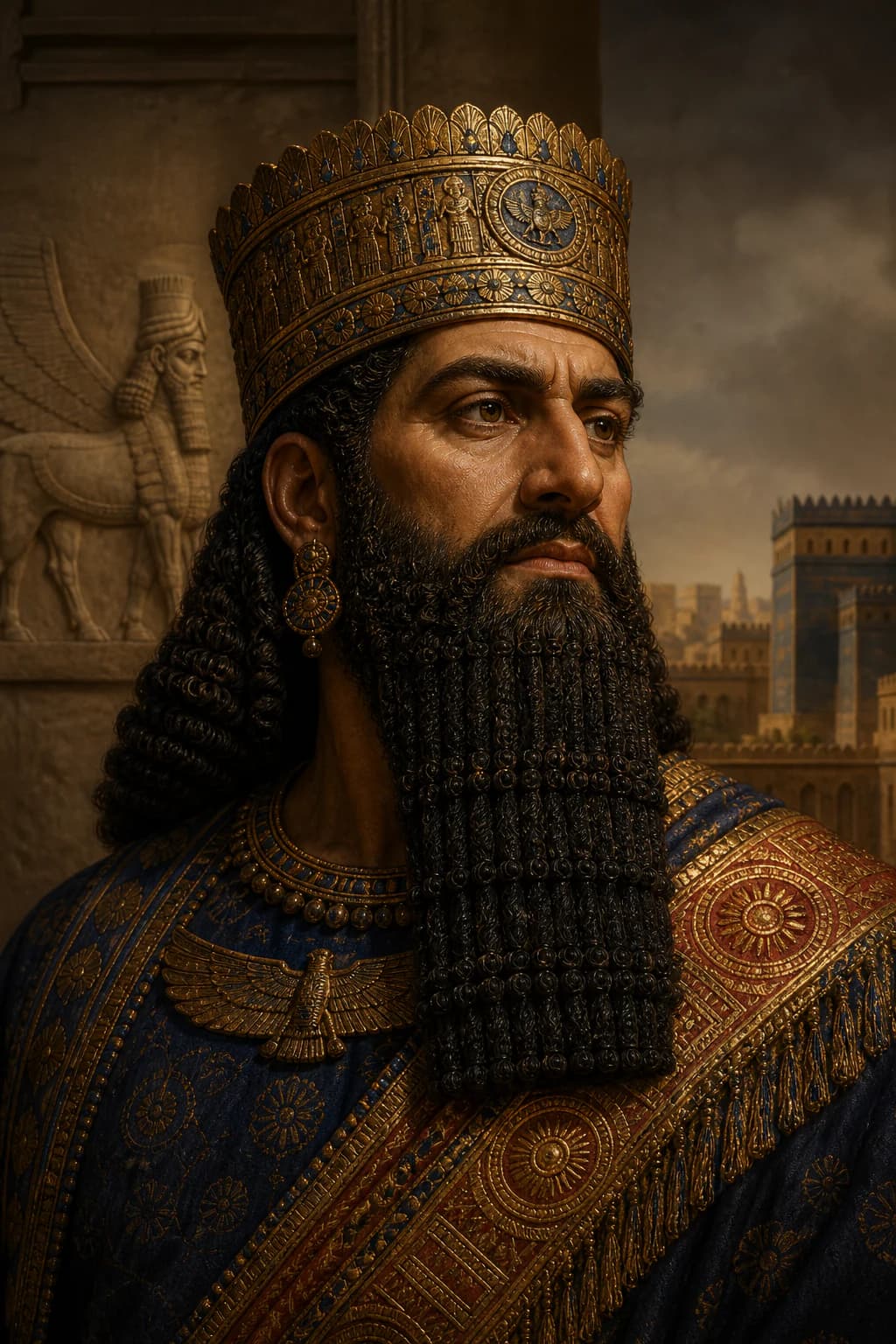
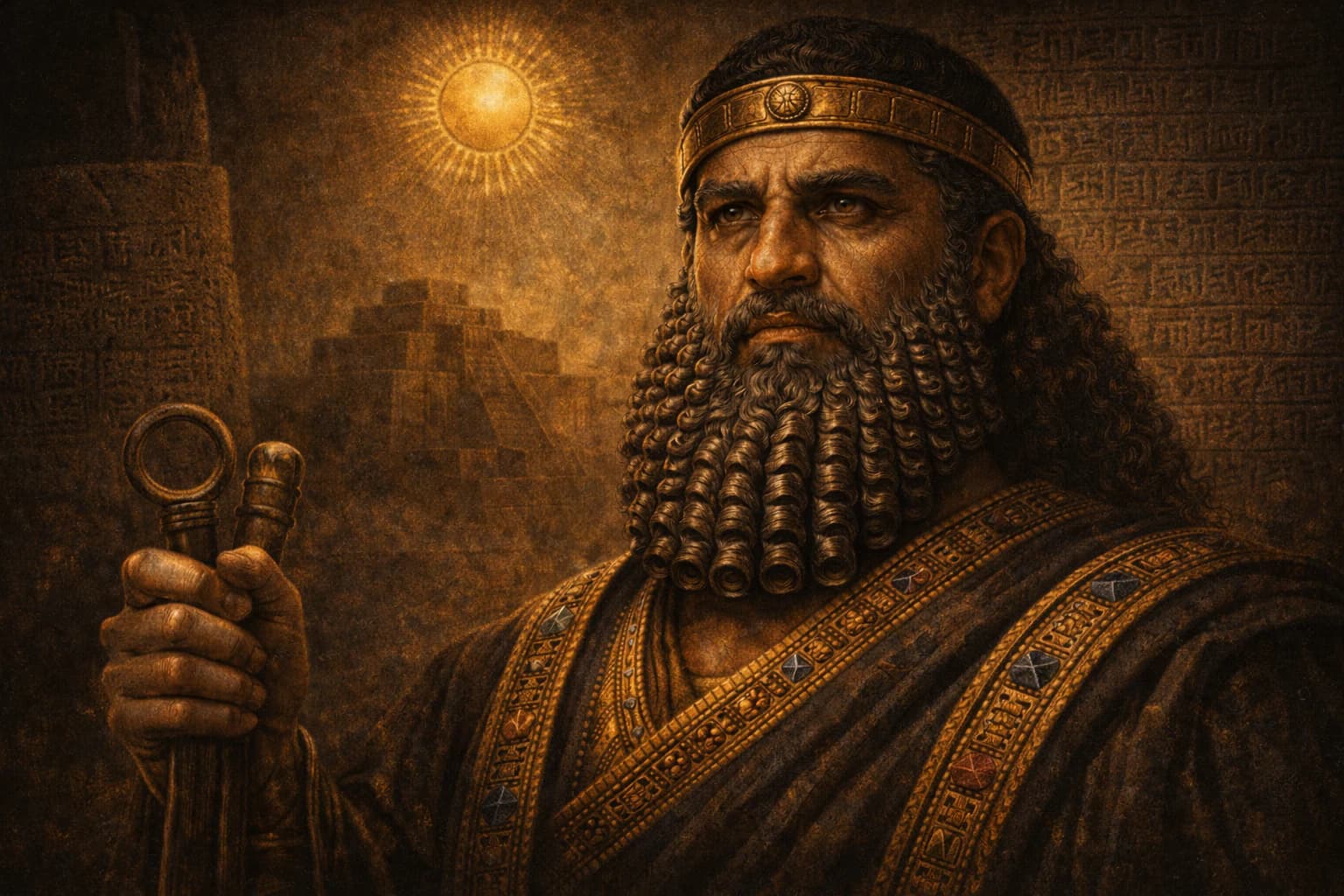
AI-generated portrait of Hammurabi in ancient Babylonian royal attire
AI-assisted historical reconstruction

An illustrative reconstruction based on historical context. It is not a photograph or documentary likeness. Image policy

Quick answer

Hammurabi was king of Babylon from about 1792 to 1750 BCE. He conquered much of Mesopotamia and issued the famous Code of Hammurabi, one of the best preserved law codes of the ancient world.

Born
1810 BCE
Died
1750 BCE
Role
Babylonian king
Years
1810-1750 BCE
Facts

Hammurabi timeline facts

Selected specifics from this profile's life story.

c.1810 BCE
Royal beginnings

Hammurabi was born into the Amorite dynasty of Babylon, a city with potential but not yet the commanding power it later became under his rule.

1760s BCE
Military expansion

In the later part of his reign, Hammurabi defeated major rivals including Larsa, Eshnunna, Mari, and others, making Babylon the leading power in Mesopotamia.

1750s BCE
Height of power

At his height, Hammurabi ruled much of Mesopotamia, but his empire depended on constant management of water, labour, taxes, trade, temples, and loyalty.

after 1750 BCE
Enduring influence

Hammurabi's empire weakened after his death, but his law code became one of history's most famous witnesses to early kingship, justice, and written authority.

Life Journey

A reign that shaped law and order

Follow the story in a more continuous narrative, with a reading mode that matches how much depth you want.

Complete chronology

c.1810 BCE

Royal beginnings

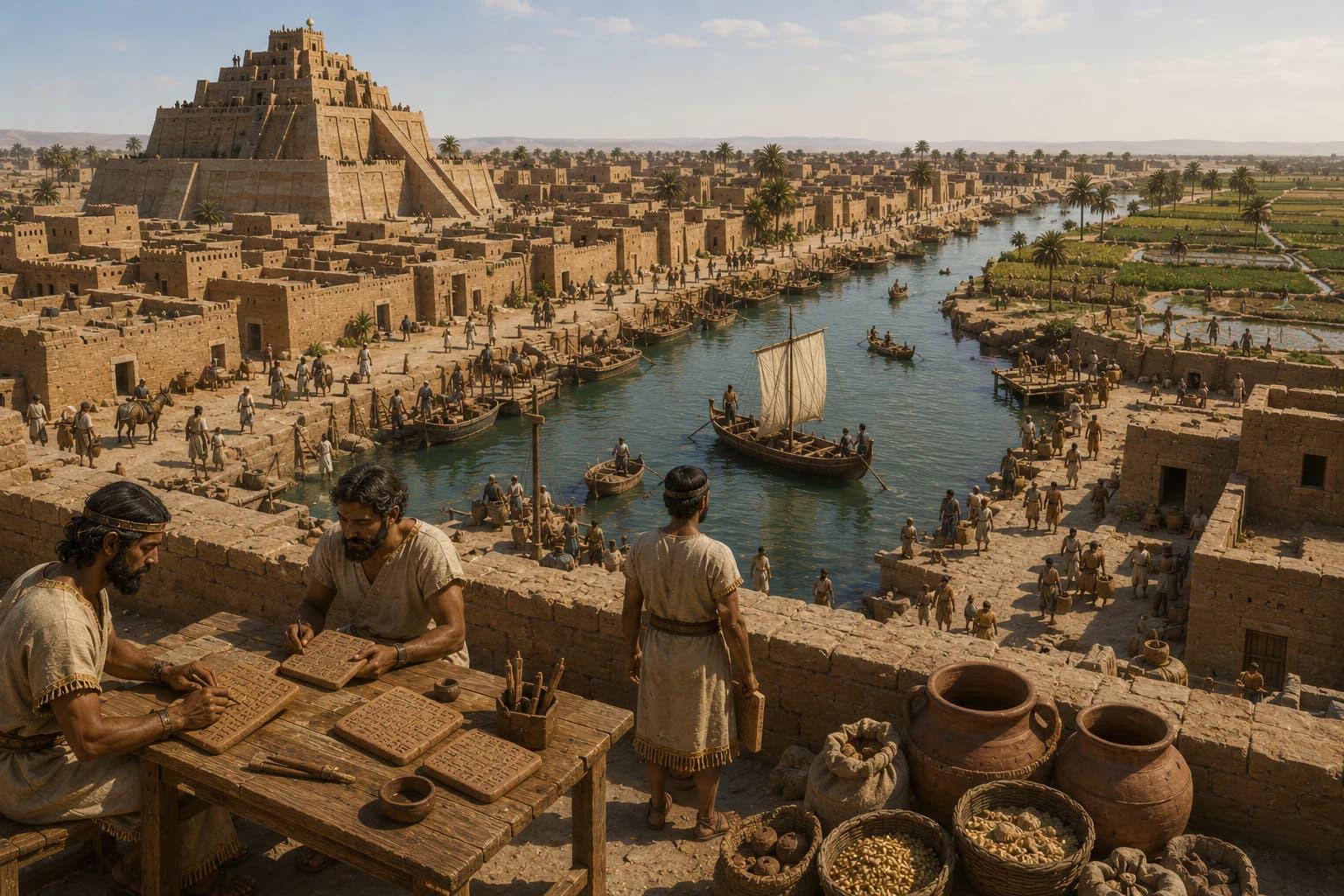
Hammurabi was born into a Mesopotamian world crowded with old cities, rival kings, temple economies, irrigation networks, and shifting alliances. Babylon was important, but it was not yet the imperial centre later generations imagined. Older powers such as Larsa, Eshnunna, Mari, and Assyria competed for territory, trade routes, water, labour, and prestige. Hammurabi's family belonged to an Amorite ruling house that had taken root in the region, adapting itself to the deep Sumerian and Akkadian traditions of southern Mesopotamia. His early life is not richly documented in personal terms, but the political setting is clear. He grew up in a court where kingship meant negotiation as much as command. A ruler had to repair canals, honour gods, reward officials, manage merchants, and watch neighbours carefully. Babylon's future depended on timing.
c.1792 BCE

Ascending the throne

When Hammurabi took the throne, he did not immediately become the lawgiver-conqueror of memory. His early years were careful. Babylon needed security before expansion, and security in Mesopotamia began with water, walls, fields, gods, and officials. Royal inscriptions present him as a pious builder and protector, repairing temples and improving canals that sustained agriculture. Those acts were political, not merely devotional. A king who kept irrigation functioning kept harvests, taxes, and loyalty alive. Hammurabi also operated within a diplomatic chessboard, forming relationships with stronger rulers while avoiding premature confrontation. This patience explains much of his later success. He built the administrative and economic base from which a more aggressive policy could operate. His reign shows that ancient conquest often began not with a battle cry, but with paperwork, drainage, storage, and patience.

1780s BCE

Strategic alliances

Hammurabi's rise was not a straight march outward. Mesopotamian politics depended on alliance systems that could change rapidly as rulers died, cities rebelled, or wars opened opportunity. Hammurabi worked within this system with notable flexibility. He could cooperate with a ruler one year and move against him later when the balance shifted. Correspondence from the age shows how intensely kings monitored one another, seeking troops, intelligence, gifts, and guarantees. Babylon's strength grew partly because Hammurabi avoided fighting everyone at once. He waited while larger conflicts weakened rivals, then acted when the advantage was clearer. This makes his achievements more interesting than simple conquest. Hammurabi was important because he understood power as sequence: first endure, then position, then strike, then justify the new order as if it had been inevitable all along.

1760s BCE

Military expansion

Hammurabi's expansion came most dramatically after decades of preparation. In the 1760s and 1750s BCE he moved against rival powers with a combination of military force and political calculation. Larsa, long dominant in the south, fell to Babylon. Eshnunna and Mari were brought down or absorbed in the wider struggle. Some of these states had once been useful partners, which reminds us that ancient diplomacy was rarely sentimental. The result was a major reordering of Mesopotamia. Babylon gained control over cities, fields, trade routes, and populations that gave Hammurabi authority far beyond his original kingdom. Yet conquest also created a problem: the more he won, the more diverse and difficult his realm became. Victory turned Babylon into an empire, but empire required a language of legitimacy broad enough to hold many communities under one king.

mid-1700s BCE

Unifying the realm

The hardest part of Hammurabi's career began after the battles. Mesopotamian cities had strong local identities, temple institutions, legal habits, and economic networks. A king in Babylon could not simply declare unity and expect canals to flow, taxes to arrive, or judges to obey. Hammurabi governed through officials, correspondence, royal orders, inspections, and the prestige of divine kingship. His administration had to settle disputes, protect fields, mobilise labour, and integrate conquered territories without destroying the productive systems that made them valuable. The law code belongs in this context. It was not a modern constitution, and we should not imagine every case across the empire being decided from one public stele. It was a royal statement of order: a way of making Babylonian rule appear principled, ancient, god-approved, and capable of protecting social hierarchy from chaos.

c.1754 BCE

The law code

The Code of Hammurabi is why his name survives so powerfully. Carved in Akkadian cuneiform on a dark stone stele, it framed the king as a ruler chosen by the gods to establish justice, protect the vulnerable, and prevent the strong from oppressing the weak. The laws themselves reveal a stratified society. Penalties varied by social status; enslaved people, commoners, and elites did not stand equally before every rule. Some punishments were severe, including forms of retaliation associated with the phrase 'an eye for an eye'. Yet the code's historical importance is not that it invented fairness in the modern sense. It made royal justice visible, systematic, and memorable. It covered real pressures of urban life: contracts, builders, surgeons, inheritance, marriage, debt, theft, land, and responsibility. Hammurabi used law to present empire as order rather than mere domination.

1750s BCE

Height of power

Hammurabi's achievement was not only territorial. He briefly made Babylon the organising centre of a region that had long resisted lasting unity. That required practical intelligence. Mesopotamian prosperity rested on irrigation agriculture, and irrigation demanded coordination, maintenance, and authority. Trade connected cities to wider networks, but trade needed trust, weights, contracts, and enforcement. Armies could win submission, but garrisons and governors had to keep it. The code, building works, royal correspondence, and military success all belonged to one project: making royal power legible across a complicated society. Even so, the system was fragile. The empire was strongly tied to Hammurabi's personal authority and administrative energy. His reign shows both the possibilities of early state formation and its limits. Centralisation could be achieved, but it had to be renewed constantly.

late reign

Later years

By the end of his reign, Hammurabi had achieved something remarkable, but not something effortless. A kingdom enlarged by conquest needed successors, loyal officials, disciplined communication, and enough local cooperation to function after the shock of victory faded. His son Samsu-iluna inherited the throne in 1750 BCE, but also inherited rebellions and pressures that revealed how dependent the system had been on Hammurabi's command. This does not diminish Hammurabi's importance. It clarifies it. He was a builder of imperial order in a world where city traditions remained powerful and geography made control difficult. His later reign should be imagined less as peaceful retirement than as constant maintenance: defending routes, supporting administration, asserting justice, and trying to turn a coalition of conquered places into a kingdom that could survive him.

after 1750 BCE

Enduring influence

Hammurabi was not the first lawgiver in Mesopotamia, and his code was not a democratic guarantee of equality. Earlier Sumerian and Akkadian legal traditions existed before him, and real court practice was more varied than a single monument can show. His legacy rests on the survival, scale, and political brilliance of the stele. It lets modern readers see how an ancient king wanted justice to be imagined: divine in origin, royal in delivery, public in display, and embedded in a ranked society. Babylon's first empire did not last as Hammurabi might have hoped, but the idea attached to his name endured. To ask why Hammurabi was important is to see a turning point in the history of governance: law becoming not just custom or judgment, but a public language through which power explained itself.

Continue in context

Connected stories

Move from the profile into the wider events and settings this figure belongs to.

Tertiary paths

Content note

This profile is written for educational use and connects to related Stories of History pages. The main portrait is an AI-assisted historical reconstruction, included as an illustrative aid rather than documentary evidence. Image policy

References

Sources & Further Reading

Reliable reference works, archives and reading paths connected to this profile.

Further reading

  1. Encyclopaedia Britannica, Search results for Hammurabi,” accessed June 2026.Open source
  2. WorldCat, Books and library holdings for Hammurabi,” accessed June 2026.Open source

Primary sources

  1. Library of Congress, Search results for Hammurabi,” accessed June 2026.Open source

Reviewed claim sources

Loading reviewed claim sources...

A weekly route through history

Find out first about the latest published stories, feature notes and occasional Premium offers in one weekly email.