People

Gilgamesh

Gilgamesh was a legendary king of Uruk in ancient Mesopotamia. The Epic of Gilgamesh made him a lasting figure in world literature, exploring kingship, friendship, mortality, and legacy.

Born
2800 BCE
Died
2500 BCE
Role
Legendary king of Uruk

Legendary king of Uruk (2800 BC–2500 BC)

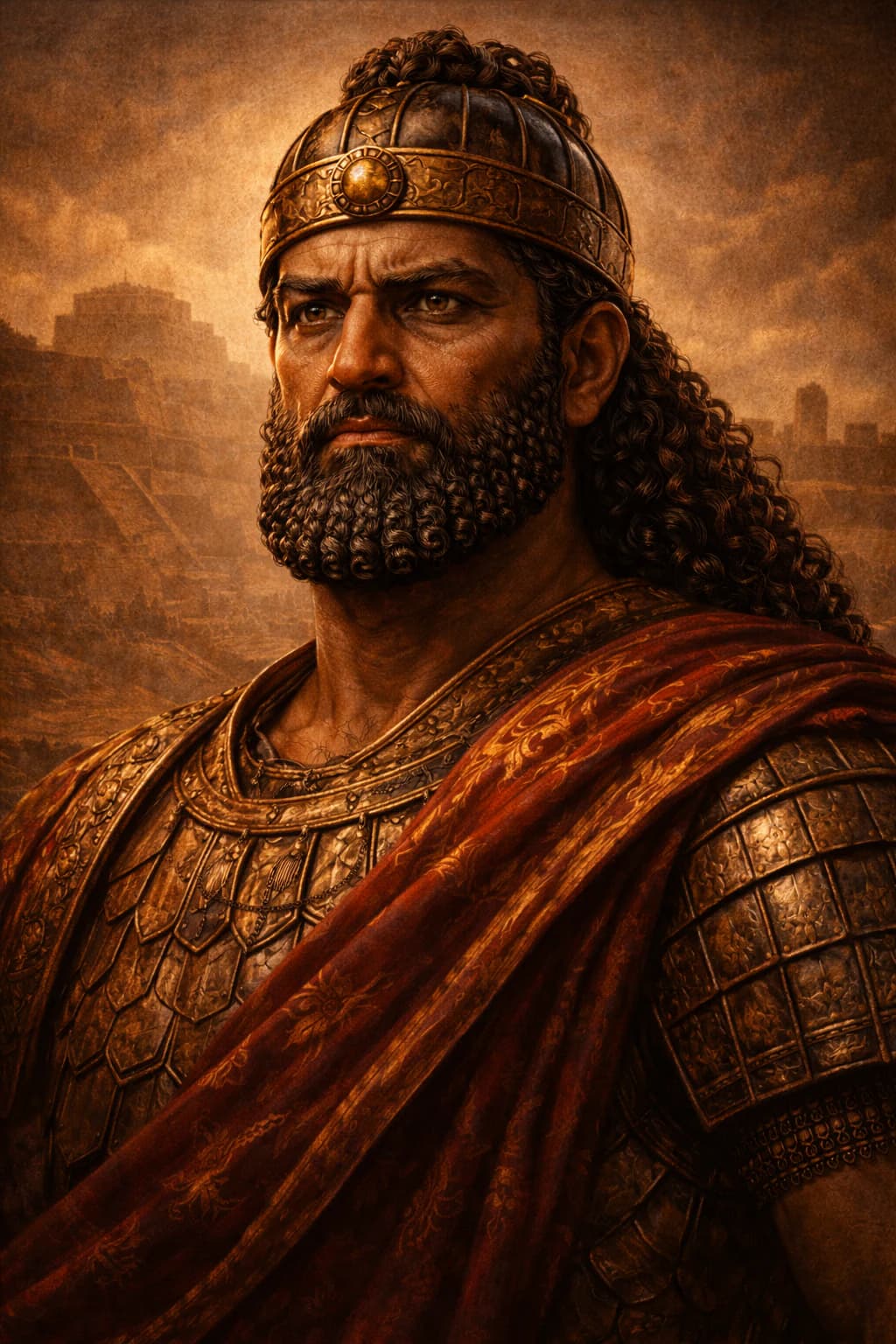
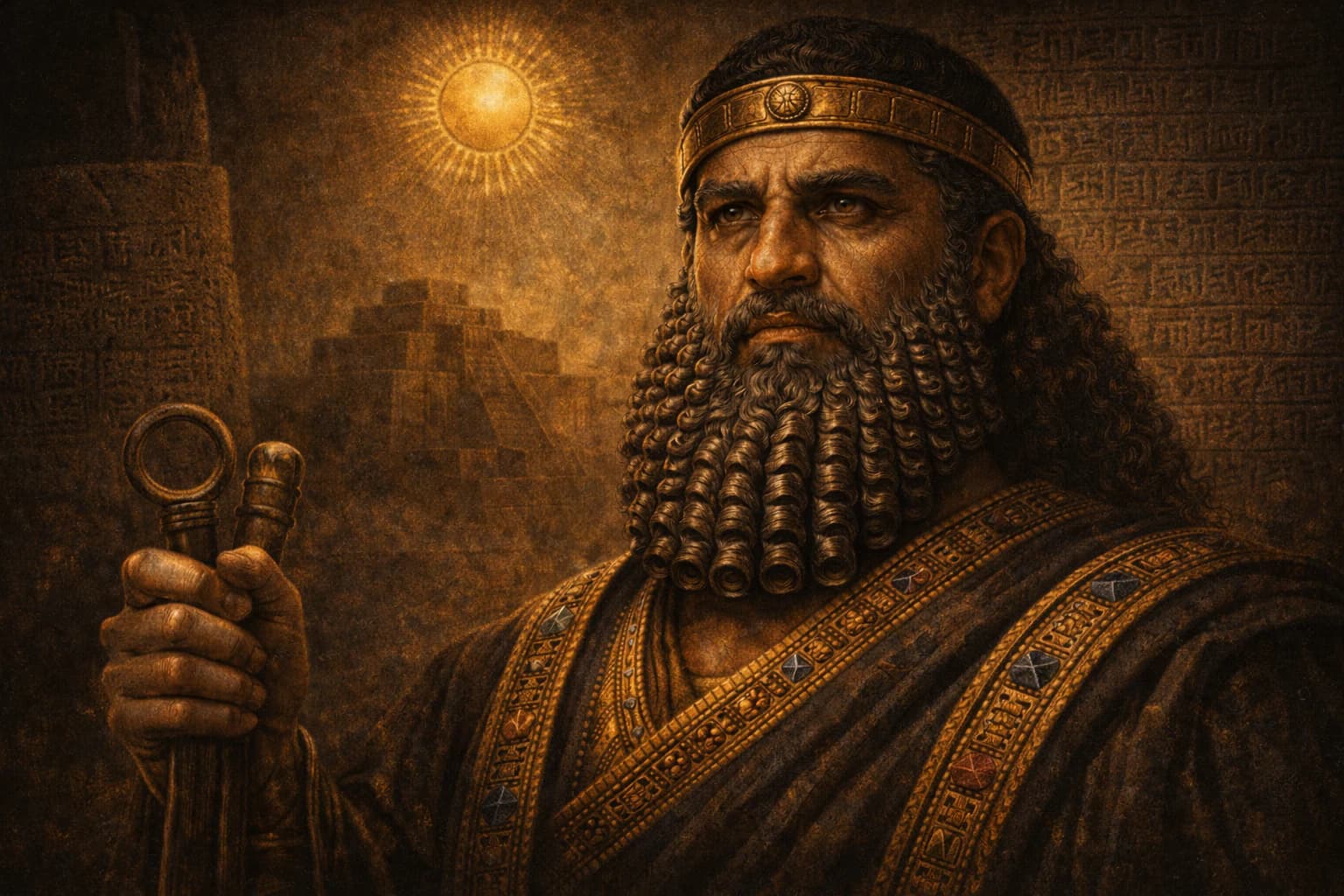
AI-generated portrait of Gilgamesh in ancient Mesopotamian royal attire
AI-assisted historical reconstruction

An illustrative reconstruction based on historical context. It is not a photograph or documentary likeness. Image policy

Quick answer

Gilgamesh was a legendary king of Uruk in ancient Mesopotamia. The Epic of Gilgamesh made him a lasting figure in world literature, exploring kingship, friendship, mortality, and legacy.

Born
2800 BCE
Died
2500 BCE
Role
Legendary king of Uruk
Years
2800-2500 BCE
Facts

Gilgamesh timeline facts

Selected specifics from this profile's life story.

-2800
Origins of a king

Gilgamesh was remembered as a partly divine king of Uruk, one of ancient Mesopotamia's great early cities, where history and legend became inseparable.

-2720
Quest for glory

Together, Gilgamesh and Enkidu set out on dangerous journeys, seeking fame by defeating powerful creatures and leaving their mark on the world.

-2700
Search for immortality

Haunted by fear of death, Gilgamesh set out to find a way to live forever, seeking wisdom from distant and ancient figures.

-2500
Enduring legacy

Gilgamesh's story survived on clay tablets, making him a central figure in the history of literature as well as ancient Mesopotamian kingship.

Life Journey

From mighty ruler to seeker of meaning

Follow the story in a more continuous narrative, with a reading mode that matches how much depth you want.

Complete chronology

-2800

Origins of a king

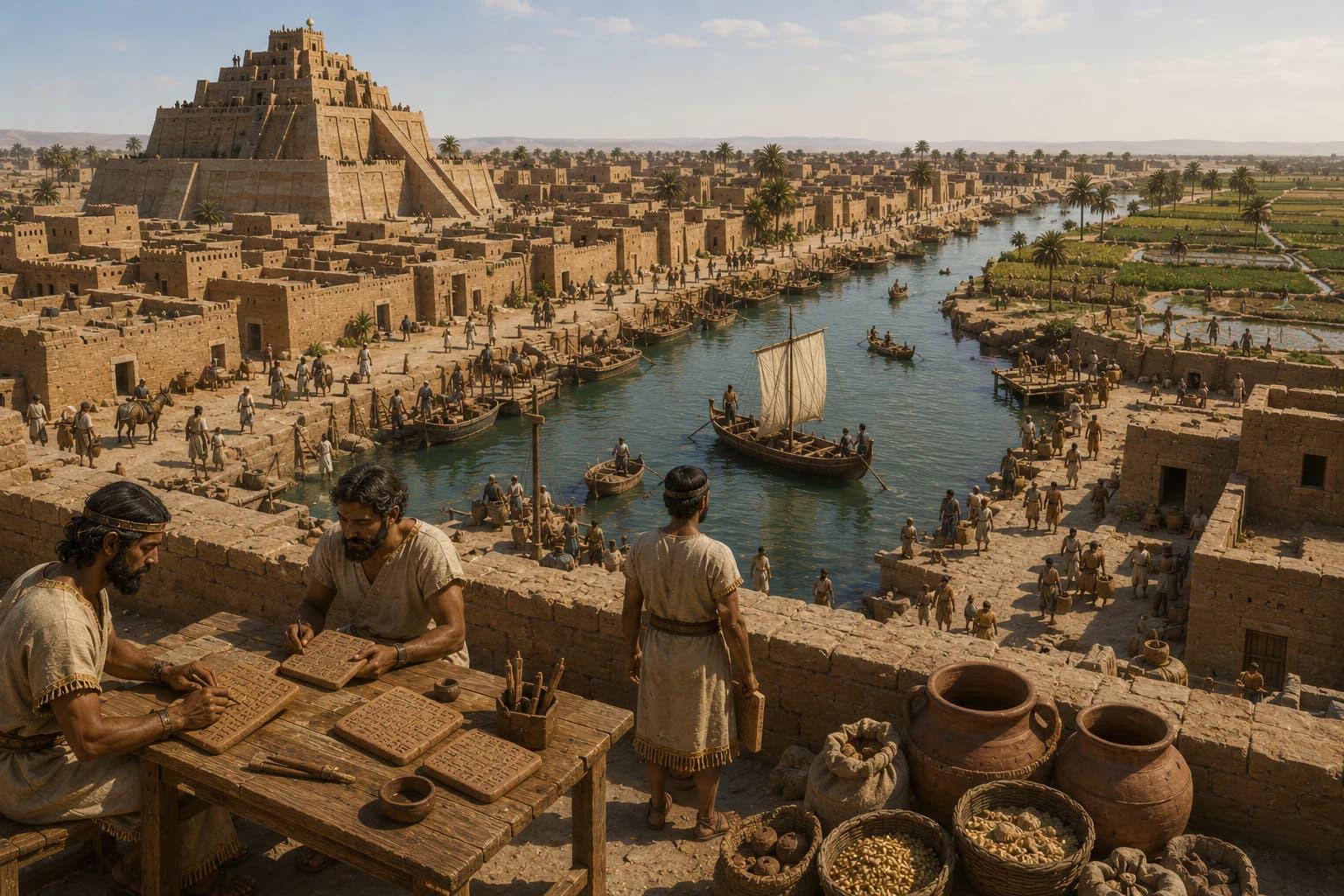
Gilgamesh stands at the border between history and myth. Later king lists present him as a ruler of Uruk, and the city itself was entirely real: a major Sumerian centre of temples, walls, administration, and scribal culture in southern Mesopotamia. The epic tradition made him more than a king. He was said to be two-thirds divine and one-third human, a formula that captures the central tension of his story. He has strength beyond ordinary men, but he cannot escape grief, fear, or death. That combination made him ideal material for ancient storytellers. Through Gilgamesh, Mesopotamian scribes could ask what kingship was for, what fame could achieve, and what even the strongest ruler could not command.
-2750

Harsh early rule

The story does not introduce Gilgamesh as a perfect hero. It begins with complaint. His people suffer under a king whose energy has no boundary and whose authority overwhelms the city he should protect. This is one reason the epic still feels sharp: it understands that greatness can become dangerous when it is not disciplined by responsibility. Uruk's walls are praised, but the ruler inside them is restless, excessive, and lonely in his superiority. The gods respond not by destroying him, but by creating a counterweight. The problem is not that Gilgamesh is strong. The problem is that no one can stand beside him as an equal, and so his strength has turned inward against his own community.

-2730

Arrival of Enkidu

Enkidu enters from outside the city, living among animals and embodying a world beyond walls, kingship, and cultivated order. His arrival creates one of literature's earliest great confrontations: city and steppe, ruler and outsider, civilisation and wildness. Yet the clash does not end in simple victory. Enkidu becomes the equal Gilgamesh lacked, and equality changes both men. Their friendship is not sentimental decoration; it is the engine of the plot. Through Enkidu, Gilgamesh learns resistance, companionship, and the possibility that greatness may be shared rather than imposed. The king who once dominated Uruk begins to look outward.

-2720

Quest for glory

With Enkidu beside him, Gilgamesh redirects his restless force into heroic action. The pair leave Uruk to seek glory, most famously in the expedition against Humbaba, guardian of the Cedar Forest, and later in the killing of the Bull of Heaven after Gilgamesh rejects the goddess Ishtar. These episodes are adventure stories, but they are also moral tests. The companions want a name that will outlive them, and in ancient Mesopotamia reputation was one of the few answers to mortality. Yet the epic refuses to treat fame as uncomplicated. Their victories disturb divine order, reveal their pride, and expose the thin line between courage and overreach.

-2710

Divine consequences

The gods' judgment turns the epic from triumph into tragedy. Enkidu, not Gilgamesh, is marked for death, and the choice is devastating because it strikes at the bond that had begun to humanise the king. In Mesopotamian thought the gods were powerful, unpredictable, and not always morally reassuring by modern standards. Their decision reflects a world in which human beings could achieve greatness but not equality with the divine. Enkidu's decline is slow enough for the story to dwell on fear, bitterness, and regret. Heroic adventure gives way to a more intimate terror: the body failing, the friend watching, and no strength able to reverse it.

-2705

Loss and grief

Enkidu's death breaks Gilgamesh more completely than any enemy could. He mourns with a rawness that feels startlingly close across four thousand years: he refuses comfort, clings to the body, and then recoils when decay makes death undeniable. The loss is personal, but it also destroys his worldview. If Enkidu, his equal and companion, can vanish, then Gilgamesh's own strength is temporary. The king who sought fame now seeks escape. His grief becomes a philosophical crisis, pushing him beyond normal human society in search of someone who has crossed the boundary he cannot accept.

-2700

Search for immortality

Gilgamesh's search for immortality carries him to the edge of the known world. He passes through darkness, meets figures who warn him that human life has fixed limits, and finally reaches Utnapishtim, the flood survivor granted eternal life by the gods. This encounter is one of the epic's deepest layers. Utnapishtim's story links Gilgamesh to ancient flood traditions and teaches that immortality was not a prize available through effort. It was an exceptional divine grant, not a human achievement. Even when Gilgamesh is shown a plant that can renew youth, he loses it. The answer he wants keeps slipping away because the question itself is wrong.

-2695

Acceptance of limits

Gilgamesh returns without immortality, but not empty-handed. The epic turns his attention back to Uruk's walls, the visible work of human hands and organised society. This ending is subtle. It does not pretend that architecture defeats death in the way Gilgamesh wanted. It suggests instead that meaning is made within limits: in cities, memory, friendship, craftsmanship, justice, and the stories communities preserve. The king who once treated Uruk as a stage for his force now sees it as his responsibility and his monument. His failure becomes wisdom because he learns that the human task is not to become a god, but to live well as a mortal.

-2500

Enduring legacy

The historical Gilgamesh, if he existed as later tradition claimed, is almost unreachable behind the legend. The literary Gilgamesh is one of the most enduring figures humanity has preserved. Sumerian poems, Akkadian versions, and later scholarly copies carried his story across centuries, with tablets from the library of Ashurbanipal at Nineveh eventually allowing modern readers to recover the epic. Its survival is extraordinary: a Bronze Age meditation on friendship, tyranny, fame, grief, death, and the limits of power. Gilgamesh matters because he is ancient without feeling remote. He asks the questions that still follow human beings wherever they build cities and bury friends.

Continue in context

Connected stories

Move from the profile into the wider events and settings this figure belongs to.

Tertiary paths

Content note

This profile is written for educational use and connects to related Stories of History pages. The main portrait is an AI-assisted historical reconstruction, included as an illustrative aid rather than documentary evidence. Image policy

References

Sources & Further Reading

Reliable reference works, archives and reading paths connected to this profile.

Further reading

  1. Encyclopaedia Britannica, Search results for Gilgamesh,” accessed June 2026.Open source
  2. WorldCat, Books and library holdings for Gilgamesh,” accessed June 2026.Open source

Primary sources

  1. Library of Congress, Search results for Gilgamesh,” accessed June 2026.Open source

Reviewed claim sources

Loading reviewed claim sources...

A weekly route through history

Find out first about the latest published stories, feature notes and occasional Premium offers in one weekly email.