← People

Fannie Lou Hamer

Fannie Lou Hamer was a voting rights and economic justice organiser. She moved from Mississippi’s cotton fields into voter organising, challenged her state’s exclusionary delegation and made economic survival part of the fight for freedom.

Born
1917 CE
Died
1977 CE
Role
Voting rights and economic justice organiser

Voting rights and economic justice organiser (1917–1977)

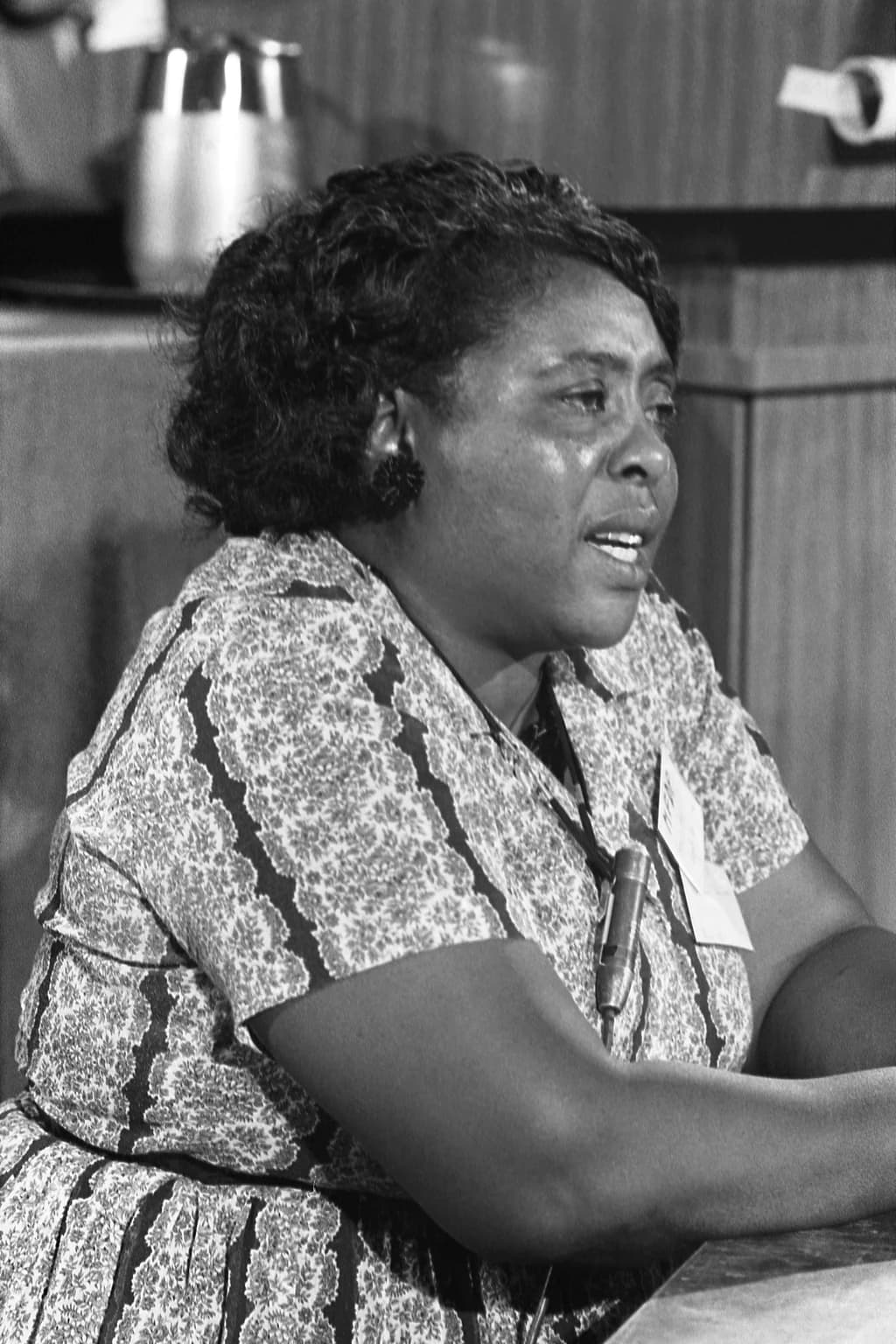
Fannie Lou Hamer at the 1964 Democratic National Convention, photographed by Warren K. Leffler.
Historical photograph

A real historical or editorial image is used here. Source, licence and transformation details are publicly recorded. Image policy Attribution

Life Journey

Making a voice impossible to ignore

Follow Hamer from the Mississippi cotton fields to voter organising, the convention challenge and Freedom Farm.

Complete chronology

1917–1961

Life in the cotton fields

Born in 1917, Hamer grew up in Sunflower County, Mississippi. School gave way to work in the cotton fields while she was still a child. As an adult she became a plantation timekeeper, but employment did not bring equal citizenship or security. Her later politics grew from knowledge of this everyday dependence: a person could be denied a ballot and also lose a home or livelihood for trying to obtain one.

1962

Trying to register

A voter-registration trip to Indianola brought Hamer into the movement. The journey exposed the barriers local authorities placed between Black residents and the ballot. Her employer demanded that she abandon her application; she refused and lost her place on the plantation. Threats followed. Rather than retreating, she became an organiser, using direct speech and singing to steady people confronting danger together. The attempt to silence her helped create a more determined public voice.

1963–1964

Organising through violence

In 1963 Hamer was arrested in Winona, Mississippi, and severely beaten while in custody. The injuries had lasting consequences, but she continued organising. During the following year, voter-registration efforts and Freedom Summer brought new volunteers into an existing local struggle. Hamer connected national attention with the people who would remain after visitors left. Her authority came from shared experience, including the knowledge that participation could put a family’s safety at risk.

1964

Challenging the convention

The MFDP challenged the all-white Mississippi delegation at the Democratic National Convention in Atlantic City. Hamer’s testimony described the violence and exclusion behind the official claim to represent the state. Party leaders offered a limited compromise that did not meet the delegation’s demand. The immediate defeat exposed a wider conflict: a national party could praise civil rights while resisting the activists who wanted meaningful political power inside it.

1969–1977

Freedom needs food and land

Hamer’s organising did not stop with the major voting-rights victories. In 1969 she founded the Freedom Farm Cooperative, seeking a more secure basis for families facing poverty and retaliation. Land, food and livelihoods were part of the same struggle as the ballot. The project faced financial difficulties, showing the limits of moral authority without lasting resources. Hamer died in 1977, leaving a vision of freedom measured in the conditions of everyday life.

Continue in context

Connected stories

Move from the profile into the wider events and settings this figure belongs to.

Tertiary paths

Content note

This profile is written for educational use and connects to related Stories of History pages. The main portrait uses a real historical or editorial image, with source and licence details recorded for attribution review. Image policy Image attribution

References

Sources & Further Reading

Reliable reference works, archives and reading paths connected to this profile.

Sources used

  1. SNCC Legacy Project and Duke University, “Fannie Lou Hamer,” accessed October 2026.Open source
  2. National Women’s History Museum, “Fannie Lou Hamer,” accessed October 2026.Open source

Further reading

  1. Encyclopaedia Britannica, “Search results for Fannie Lou Hamer,” accessed June 2026.Open source
  2. WorldCat, “Books and library holdings for Fannie Lou Hamer,” accessed June 2026.Open source

Primary sources

  1. Library of Congress, “Search results for Fannie Lou Hamer,” accessed June 2026.Open source

Reviewed claim sources

Loading reviewed claim sources...

A monthly route through history

Find out first about the latest published stories, feature notes and occasional Premium offers in one monthly email.