People

Clement Attlee

Clement Attlee was Britain’s Labour Prime Minister from 1945 to 1951. His government created the NHS, expanded the welfare state, nationalised major industries, managed postwar austerity, and oversaw Indian independence and the early Cold War.

Born
1883 CE
Died
1967 CE
Role
Labour Prime Minister

Labour Prime Minister (1883–1967)

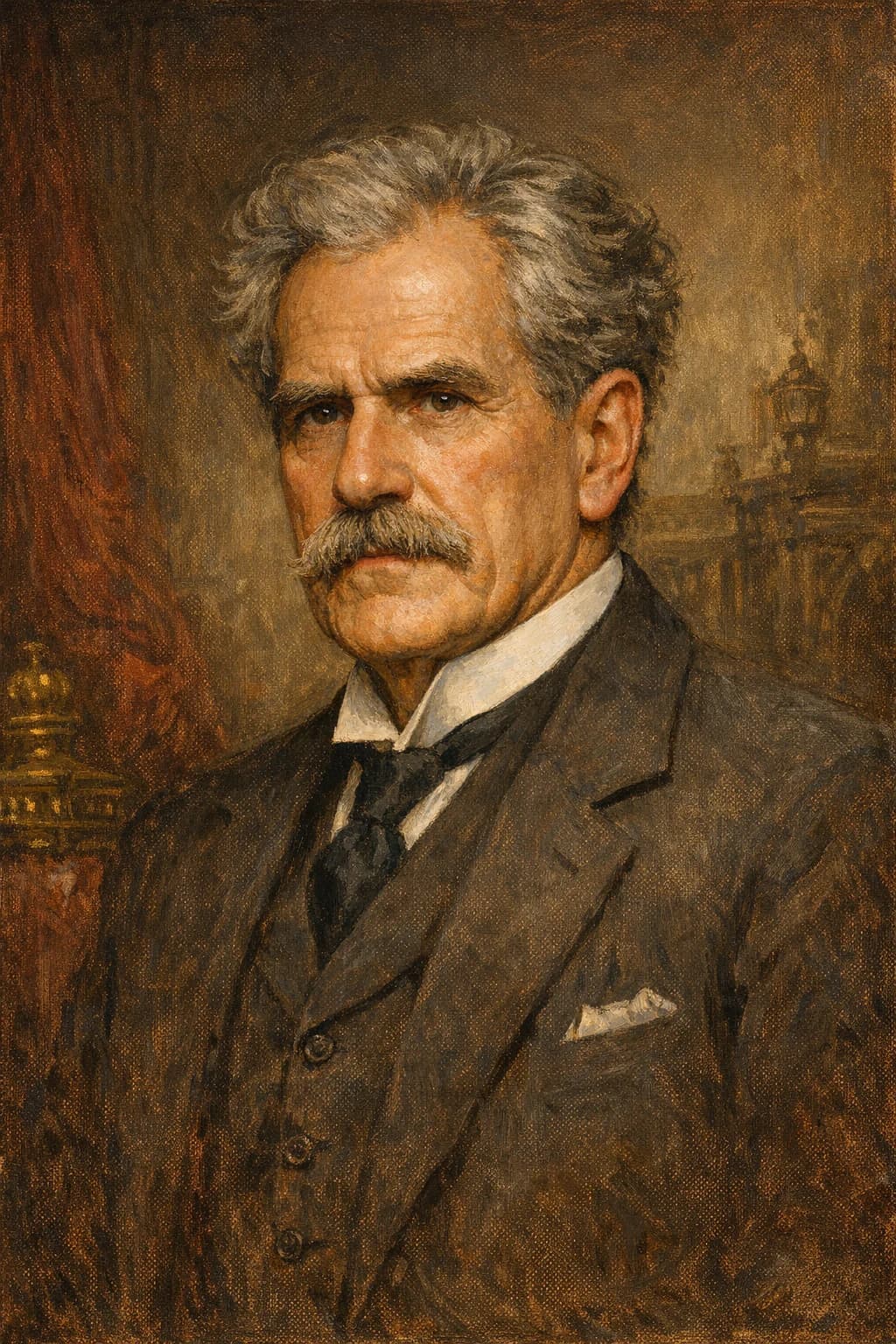
Portrait photograph of Clement Attlee
Licensed archival image

A real historical or editorial image is used here. Source, licence and transformation details are publicly recorded. Image policy Attribution

Quick answer

Clement Attlee was Britain’s Labour Prime Minister from 1945 to 1951. His government created the NHS, expanded the welfare state, nationalised major industries, managed postwar austerity, and oversaw Indian independence and the early Cold War.

Born
1883 CE
Died
1967 CE
Role
Labour Prime Minister
Years
1883-1967 CE
Quick facts

Profile details

Additional identity and tagging details that are not already covered in the introduction.

Also known as
Clement Richard Attlee, Attlee, Prime Minister Attlee
Facts

Clement Attlee timeline facts

Selected specifics from this profile's life story.

1883–1905
London upbringing

Born into a comfortable London family, Attlee’s early life gave little hint that he would later champion sweeping social change for ordinary citizens.

1935
Labour leadership

After years of party service, Attlee unexpectedly became leader of the Labour Party, guiding it through a turbulent political landscape.

1945–1951
Building the welfare state

His government introduced major reforms, including the National Health Service, transforming how the state supported citizens in everyday life.

Post-1967
Enduring legacy

Attlee is remembered as a leader whose quiet determination produced lasting reforms that continue to influence British society and governance.

Life Journey

A quiet reformer who rebuilt a nation

Follow the story in a more continuous narrative, with a reading mode that matches how much depth you want.

Complete chronology

1883–1905

London upbringing

Clement Richard Attlee was born in Putney in 1883 into a comfortable, respectable, middle-class family. His father was a solicitor, and Attlee’s education at Haileybury and University College, Oxford, placed him firmly inside the world of privilege that produced many imperial administrators and Conservative politicians. Nothing about his early path made socialism inevitable. He trained in law, absorbed the values of duty and service, and seemed destined for a conventional professional life. The decisive change came not through a sudden conversion but through contact with East London poverty. Attlee saw overcrowding, insecurity, poor health, and low wages at close range. That experience gave his politics a practical edge. He did not become a theatrical revolutionary; he became a man convinced that decent government had to alter the conditions in which ordinary people lived.

1905–1914

Turn to social work

Attlee worked at Haileybury House, a charitable settlement in Stepney, where social problems were not abstractions but daily facts. East London sharpened his view of class. He came to believe that poverty was not mainly a failure of character, as comfortable Britain often suggested, but the result of low wages, bad housing, unemployment, poor education, and weak public provision. He joined the Independent Labour Party and then the wider Labour movement, drawn by its seriousness about municipal services, trade unions, and democratic reform. This mattered for his later premiership. Attlee’s socialism was rooted in administration as much as ideology. He wanted systems that worked: clinics, houses, insurance, schools, jobs, and reliable public services. His politics grew from streets and council work before it reached Westminster.

1914–1922

War and entry

The First World War tested Attlee’s sense of duty in a literal way. He served at Gallipoli, in Mesopotamia, and on the Western Front, was wounded, and rose to the rank of major. The war reinforced his respect for discipline, planning, and collective sacrifice, but it also placed him among men whose lives were shaped by decisions made far above them. After the war he returned to Stepney politics, serving as mayor and working on housing, public health, and local administration. In 1922 he entered Parliament as Labour MP for Limehouse. His parliamentary style was dry, economical, and almost anti-theatrical. He was easy to underestimate, which became one of his advantages. He listened, mastered briefs, kept colleagues together, and treated politics as work rather than performance.

1935

Labour leadership

Attlee became Labour leader in 1935 after the party had been battered by the National Government crisis, electoral defeat, and arguments over pacifism, rearmament, empire, and socialism. He was not chosen because he dazzled the country. He was chosen because he was trusted, competent, and acceptable to different wings of the party. That modest beginning concealed real political skill. Attlee kept Labour broadly united while the dictatorships in Germany and Italy transformed European politics. He criticised appeasement, accepted the need for rearmament more clearly over time, and positioned Labour as a party of national responsibility rather than protest alone. His leadership made Labour credible for government. In a party rich with stronger personalities, he supplied the one thing they needed most: disciplined cohesion.

1940–1945

Wartime coalition

In the wartime coalition, Churchill gave Britain language, defiance, and strategic drama; Attlee gave the government much of its steadiness. As deputy prime minister and a central figure in the War Cabinet, he chaired committees, handled domestic coordination, and helped keep Labour committed to the national struggle. His role is easy to miss because it was deliberately unflashy. Yet coalition government required trust, detail, and an ability to turn broad decisions into working machinery. Attlee saw the state mobilize labour, industry, rationing, health, evacuation, and planning on a scale peacetime Britain had rarely attempted. That experience fed directly into Labour’s postwar programme. If the state could organize survival in war, Attlee believed it could organize security, healthcare, and reconstruction in peace.

1945

Election victory

Labour’s landslide victory in 1945 was shocking only if wartime gratitude is mistaken for a domestic programme. Churchill remained admired, but millions of voters wanted guarantees that the poverty, unemployment, and insecurity of the interwar years would not return. Labour offered full employment, homes, social insurance, public ownership, and a National Health Service inspired by the Beveridge Report and wartime planning. Attlee became prime minister with a huge majority and a formidable cabinet that included Ernest Bevin, Stafford Cripps, Hugh Dalton, Herbert Morrison, and Aneurin Bevan. The challenge was immense: bomb damage, debt, rationing, dollar shortages, imperial commitments, and exhausted industry. Attlee’s calm mattered because his government was attempting not one reform but a reconstruction of the relationship between citizen and state.

1945–1951

Building the welfare state

The Attlee government’s achievements were unusually dense. It created the National Health Service in 1948, making medical care available on the basis of need rather than ability to pay. It expanded national insurance and assistance, built on the Beveridge vision of attacking want, disease, ignorance, squalor, and idleness, and pursued a large housing programme under severe material constraints. It nationalised coal, railways, civil aviation, the Bank of England, gas, electricity, and steel, believing key industries should serve national recovery rather than private profit alone. The record was not flawless. Austerity continued, the 1947 convertibility crisis exposed Britain’s financial weakness, and some nationalised industries struggled. Yet the settlement endured because it answered a deep public demand for security. Attlee made social citizenship a practical expectation, not a slogan.

1951–1967

Loss and later years

Attlee’s premiership also unfolded beyond Britain’s domestic settlement. His government granted independence to India and Pakistan in 1947, accepted the end of the British Mandate in Palestine, helped found NATO, developed Britain’s atomic weapons programme, and aligned closely with the United States during the early Cold War. These decisions were shaped by principle, pressure, and necessity: Britain was still a global power in language, but its resources had been permanently reduced. Labour narrowly won in 1950 and lost in 1951 despite receiving more votes than the Conservatives. Attlee remained Labour leader until 1955, then entered the House of Lords as Earl Attlee. His later public life was restrained, but the central argument of his career had already been made in institutions that people used every day.

Post-1967

Enduring legacy

Clement Attlee’s legacy is the proof that quiet leadership can be radical in outcome. He did not dominate public memory through speeches, glamour, or a cult of personality. He chaired, decided, delegated, and held a strong cabinet together long enough to change the country. The NHS became one of Britain’s most valued institutions. The welfare state altered expectations of security from cradle to grave. Decolonisation, though uneven and often painful, marked the beginning of the end of Britain’s imperial identity. Critics argue that nationalisation was too bureaucratic, that austerity blunted reform, and that Britain’s global commitments remained too expensive. Those criticisms matter. Even so, Attlee’s importance is hard to overstate. He turned the moral lessons of depression and war into policy, making postwar Britain more equal, more protected, and more recognisably modern.

Continue in context

Connected stories

Move from the profile into the wider events and settings this figure belongs to.

British Prime Ministers lineage
LineagePrime ministers in sequence
British Prime Ministers
1721 CE–present

Explore British prime ministers from Walpole to the present.

View lineage
Tertiary paths

Content note

This profile is written for educational use and connects to related Stories of History pages. The main portrait uses a real historical or editorial image, with source and licence details recorded for attribution review. Image policy Image attribution

References

Sources & Further Reading

Reliable reference works, archives and reading paths connected to this profile.

Further reading

  1. Encyclopaedia Britannica, Search results for Clement Attlee,” accessed June 2026.Open source
  2. WorldCat, Books and library holdings for Clement Attlee,” accessed June 2026.Open source

Primary sources

  1. Library of Congress, Search results for Clement Attlee,” accessed June 2026.Open source

Reviewed claim sources

Loading reviewed claim sources...

A weekly route through history

Find out first about the latest published stories, feature notes and occasional Premium offers in one weekly email.