People

Mahatma Gandhi

Mahatma Gandhi was an Indian independence leader who used satyagraha, nonviolent resistance and mass civil disobedience to challenge British rule.

Born
1869 CE
Died
1948 CE
Role
Leader of the Indian independence movement

Indian independence leader (1869-1948)

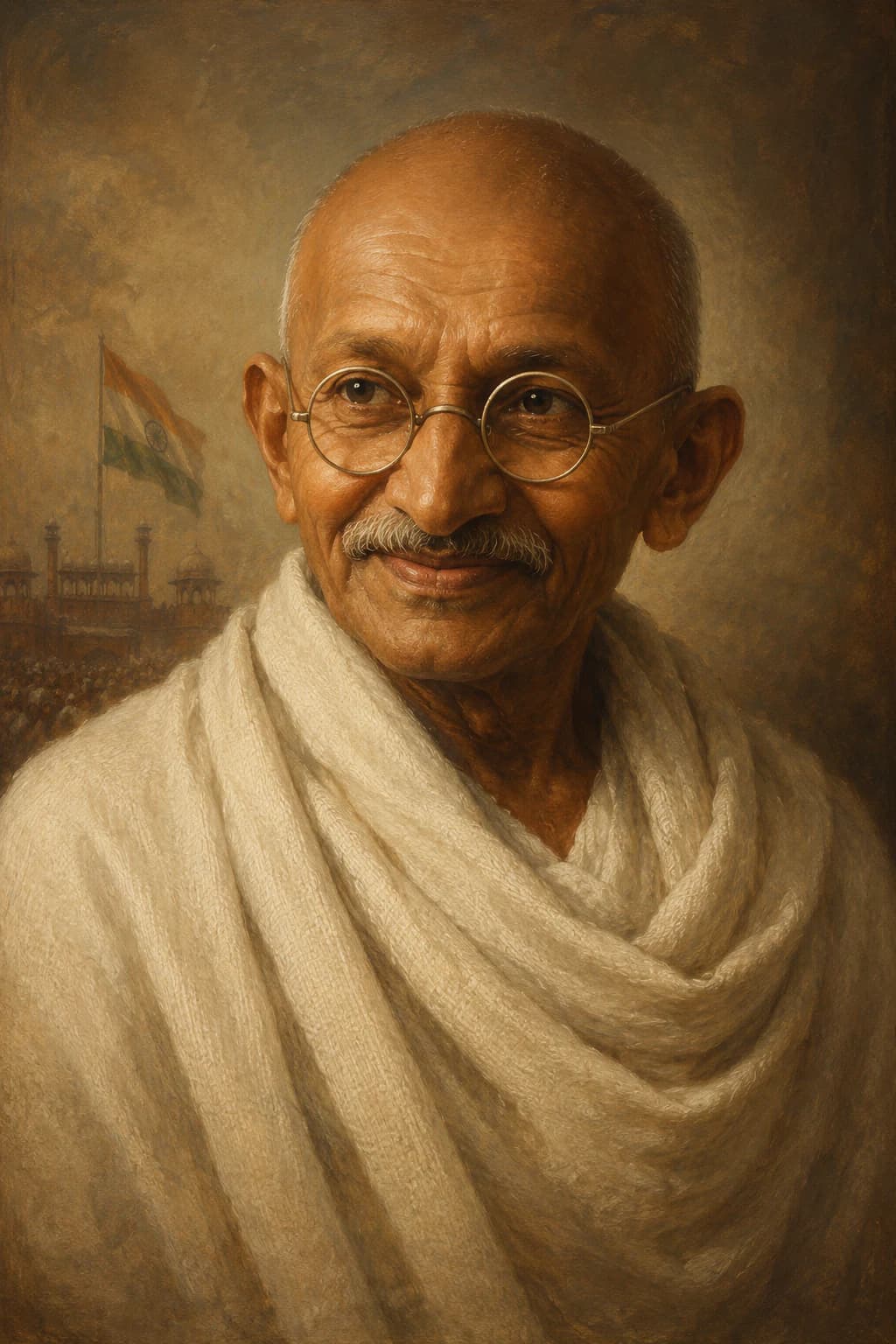
Portrait of Mahatma Gandhi wearing round spectacles and a white shawl
Quick facts

Profile details

Additional identity and tagging details that are not already covered in the introduction.

Full name
Mohandas Karamchand Gandhi
Also known as
Mohandas Gandhi, M. K. Gandhi
Facts

Mahatma Gandhi timeline facts

Selected specifics from this profile's life story.

1869
Porbandar childhood

Mohandas Karamchand Gandhi was born in Porbandar, in western India, into a family connected to local princely administration.

1906
Satyagraha

Gandhi developed satyagraha, a method of disciplined nonviolent resistance rooted in truth, courage and collective sacrifice.

1930
Salt March

Gandhi's Salt March turned a tax on salt into a national and international symbol of colonial injustice.

1947-1948
Partition and assassination

Gandhi opposed communal violence during Partition and was assassinated in 1948 by Nathuram Godse.

Life Journey

The lawyer who made nonviolence a mass politics

Follow the story in a more continuous narrative, with a reading mode that matches how much depth you want.

1869

Porbandar childhood

Mohandas Karamchand Gandhi was born in Porbandar, in western India, into a family connected to local princely administration.

1888-1891

London training

Gandhi studied law in London, where he encountered new ideas while trying to preserve his personal discipline.

1893

South African awakening

Gandhi's experience of racial discrimination in South Africa pushed him toward political activism.

1906

Satyagraha

Gandhi developed satyagraha, a method of disciplined nonviolent resistance rooted in truth, courage and collective sacrifice.

1915

Return to India

Gandhi returned to India and gradually emerged as a national leader through local campaigns and moral authority.

1920-1922

Non-cooperation

Gandhi led the Non-Cooperation Movement, urging Indians to withdraw support from British institutions.

1930

Salt March

Gandhi's Salt March turned a tax on salt into a national and international symbol of colonial injustice.

1942

Quit India

During the Second World War, Gandhi demanded that Britain leave India, leading to mass arrests and intense repression.

1947-1948

Partition and assassination

Gandhi opposed communal violence during Partition and was assassinated in 1948 by Nathuram Godse.

Continue in context

Connected stories

Move from the profile into the wider events and settings this figure belongs to.

Tertiary paths

Content note

This profile is written for educational use and connects to related Stories of History pages. Illustrations are original artistic interpretations.

References

Sources & Further Reading

Reliable reference works, archives and reading paths connected to this profile.

Sources used

  1. Encyclopaedia Britannica, Mahatma Gandhi,” accessed June 2026.Open source
  2. Stanford University, Mohandas K. Gandhi,” accessed June 2026.Open source

Further reading

  1. Ramachandra Guha, Gandhi: The Years That Changed the World, Knopf, 2018.

Primary sources

  1. Gandhi Heritage Portal, Collected Works of Mahatma Gandhi,” accessed June 2026.Open source

A weekly route through history

Find out first about the latest published stories, feature notes and occasional Premium offers in one weekly email.