Complete chronology
Full overview and deeper context for every journey step.
c. 573-610
Meccan Companion
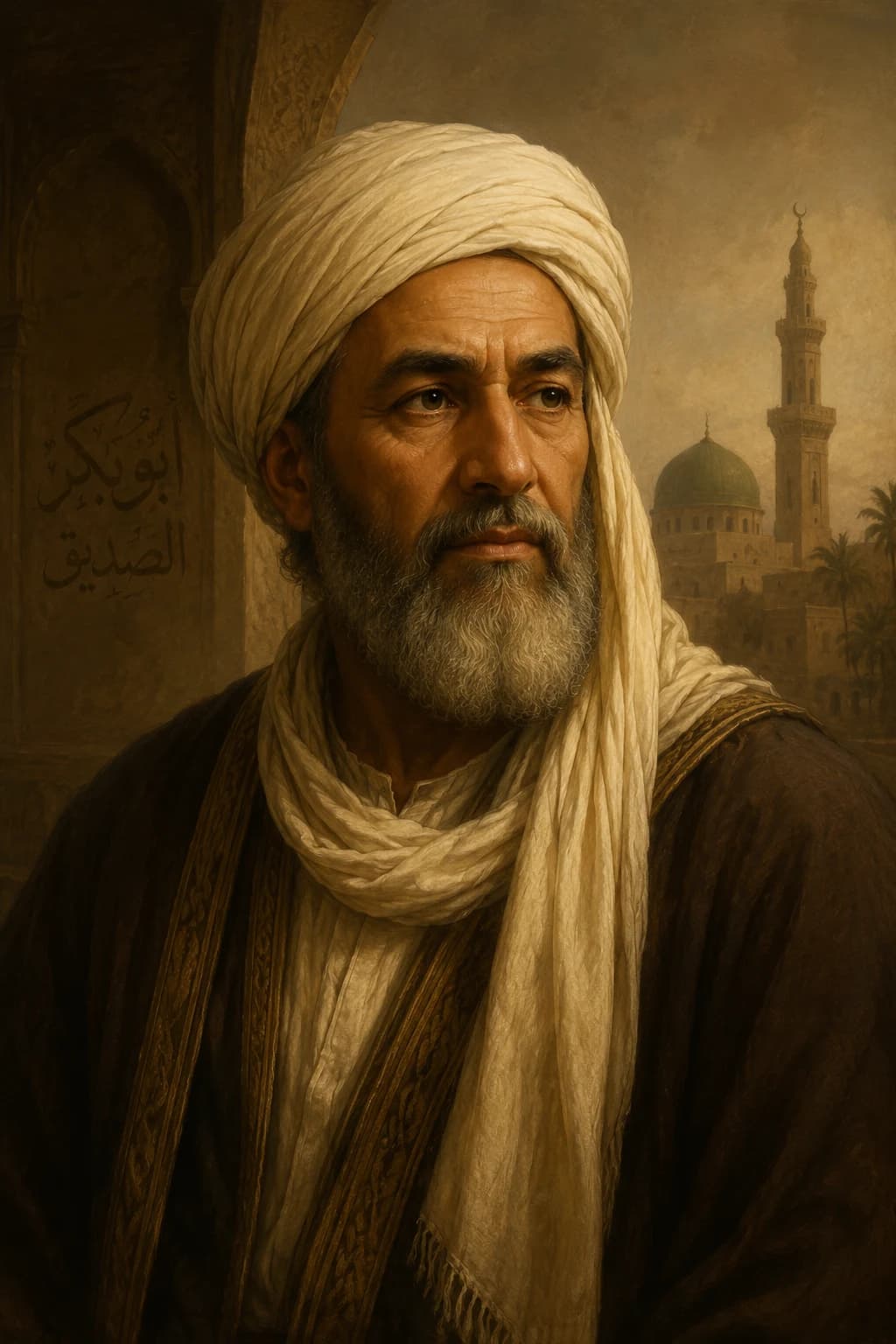
Abu Bakr belonged to the Quraysh, the Meccan tribe connected with the Kaaba and the city's networks of trade, sanctuary and clan status. Islamic tradition remembers him as a respected early supporter of Muhammad and as one of the first adult men to accept Islam. His importance rested not on royal office or inherited command, but on trust, loyalty and social standing inside the early community. In a movement under pressure, a reliable companion could become politically decisive.
Early loyalty can become historically decisive when a movement is still fragile.
610-622
Early Muslim Supporter
The first Muslims faced ridicule, pressure and danger in Mecca. Abu Bakr's support mattered because Muhammad's message challenged the city's religious habits and social hierarchy. Islamic tradition presents Abu Bakr as using his influence and resources to help vulnerable Muslims, including enslaved converts. The details belong largely to Islamic memory, but the larger pattern is clear: Abu Bakr was remembered as someone who gave the movement practical support before it had political power.
Support offered before success often reveals the depth of conviction.
622
The Hijra
The Hijra in 622 changed Islam from a pressured Meccan movement into an organised community in Medina. Islamic tradition closely associates Abu Bakr with Muhammad during the migration, including the journey away from Mecca and the danger surrounding it. Whether told as sacred memory or political turning point, the Hijra placed Abu Bakr near the centre of Islam's decisive transition. In Medina, faith had to become law, alliance, defence and public order.
Moments of movement can bind leaders and followers into a shared historical memory.
622-632
A Senior Companion
During the Medinan years, Abu Bakr stood among the senior companions whose loyalty and status mattered as the community faced conflict, negotiation and rapid growth. The community was no longer only hearing revelation; it was making decisions about war, treaties, worship, property and obligation. Abu Bakr's closeness to Muhammad helped make him a figure of continuity. That reputation would become crucial when Muhammad's death created an immediate leadership crisis.
Influence often grows through trusted presence before it becomes formal authority.
632
First Caliph
Muhammad's death in 632 created an urgent question: who would lead the Muslim community after a prophet whose authority could not simply be inherited? Abu Bakr was recognised as caliph, a successor in leadership but not a replacement for Muhammad's prophetic role. That distinction mattered deeply. Revelation had ended, but the community still needed command, judgement, defence and unity. Abu Bakr's accession established the caliphate as the political form through which the early Muslim community tried to survive.
A succession crisis tests whether a community can outlive its founder.
632-633
The Ridda Wars
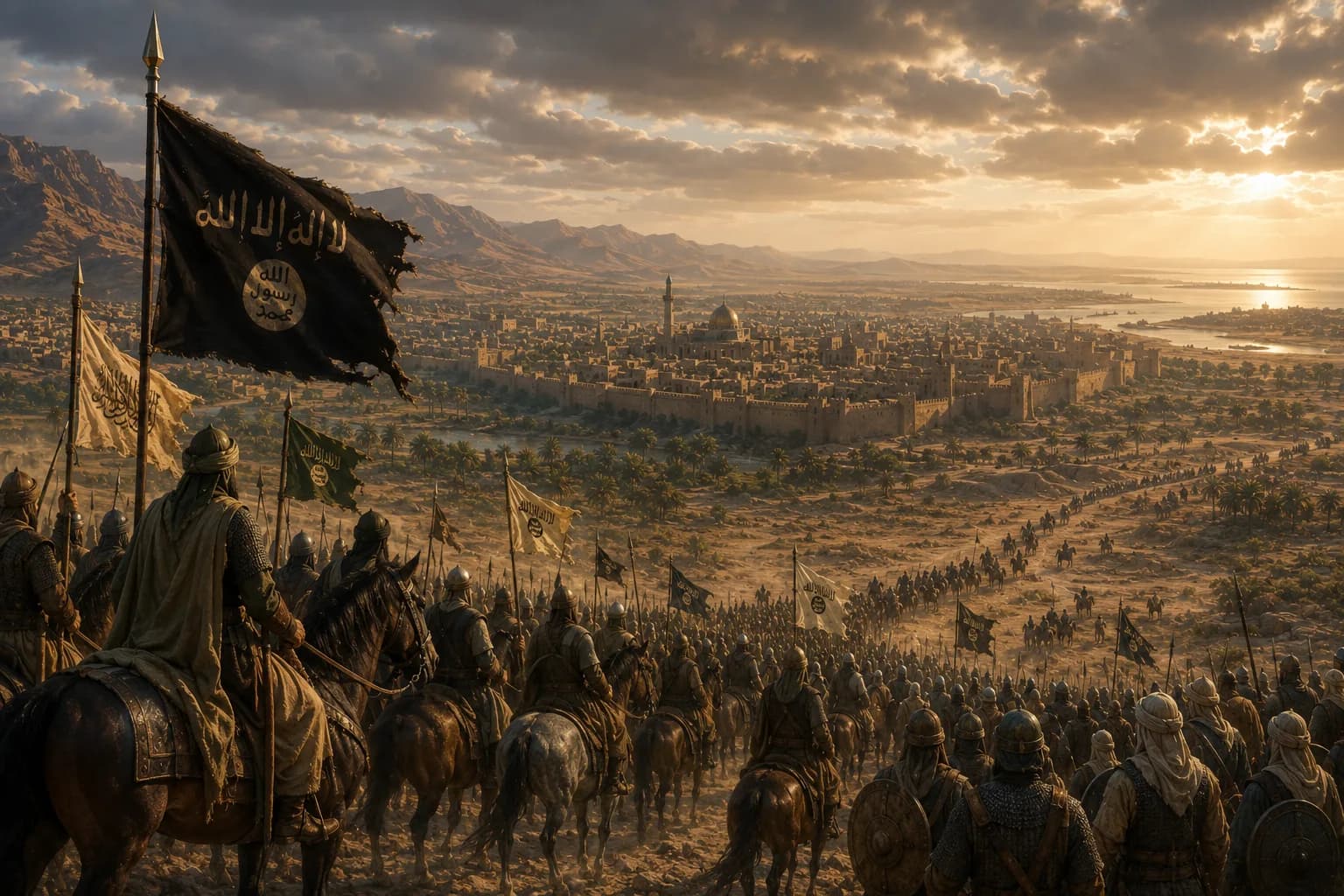
The first crisis of Abu Bakr's caliphate was not expansion beyond Arabia. It was survival inside Arabia. Some tribes treated their ties to Medina as personal agreements with Muhammad and refused obligations after his death. Others followed rival prophetic claimants or resisted taxation and authority. Abu Bakr's campaigns, known as the Ridda Wars, forced a stark question: would the Muslim community remain one political-religious order, or dissolve back into separate tribal arrangements? His answer was uncompromising.
Founding institutions often survive because someone insists they are more than personal loyalty.
633-634
Opening the Caliphate
After the Ridda Wars, the early caliphate began directing military energy outward toward the Byzantine and Sasanian frontiers. Abu Bakr did not live to see the full transformation of Syria, Iraq and Persia, but his short rule helped preserve the unity that made those campaigns possible. The caliphate he led was still improvised and fragile, yet it had crossed a threshold. It could command armies, enforce obligations and claim leadership beyond one city or one tribe.
Short periods of leadership can set conditions for changes that unfold after a leader's death.
634 onward
Enduring Memory
Abu Bakr died in 634 after only about two years as caliph, but those years were foundational. Sunni tradition remembers him as the first of the Rashidun, the rightly guided caliphs. His legacy is tied to loyalty to Muhammad, preservation of community unity, the Ridda Wars and the first shape of caliphal authority. Later Muslim traditions remembered early succession differently, especially across Sunni and Shi'a lines, but Abu Bakr remained unavoidable in any account of how Islam moved from Muhammad's lifetime into the age of the caliphs.
Historical importance is sometimes measured less by length of rule than by the crisis a leader survives.